
Cloudberry
Complete Homestead Growing Guide
Botanical Name: Rubus chamaemorus. Cloudberry is the sole species in its group within the Rubus genus and does not hybridize readily with other brambles. It stands alone among bramble fruits as a low growing, herbaceous, non thorny perennial of arctic and subarctic regions.
Origin: Cloudberries are circumpolar in distribution, native to the bogs, tundra, and boreal forests of northern Europe, Scandinavia, Russia, Canada, and parts of the northern United States (primarily Maine, New Hampshire, Minnesota, and Alaska). They hold deep cultural significance across Scandinavian countries, where they are considered a national treasure, particularly in Norway, Sweden, and Finland. In Scandinavian food culture, cloudberries command extraordinary reverence and premium prices. They also feature prominently in the traditional diets of Inuit, Sami, and other indigenous arctic peoples, who have gathered wild cloudberries for thousands of years.
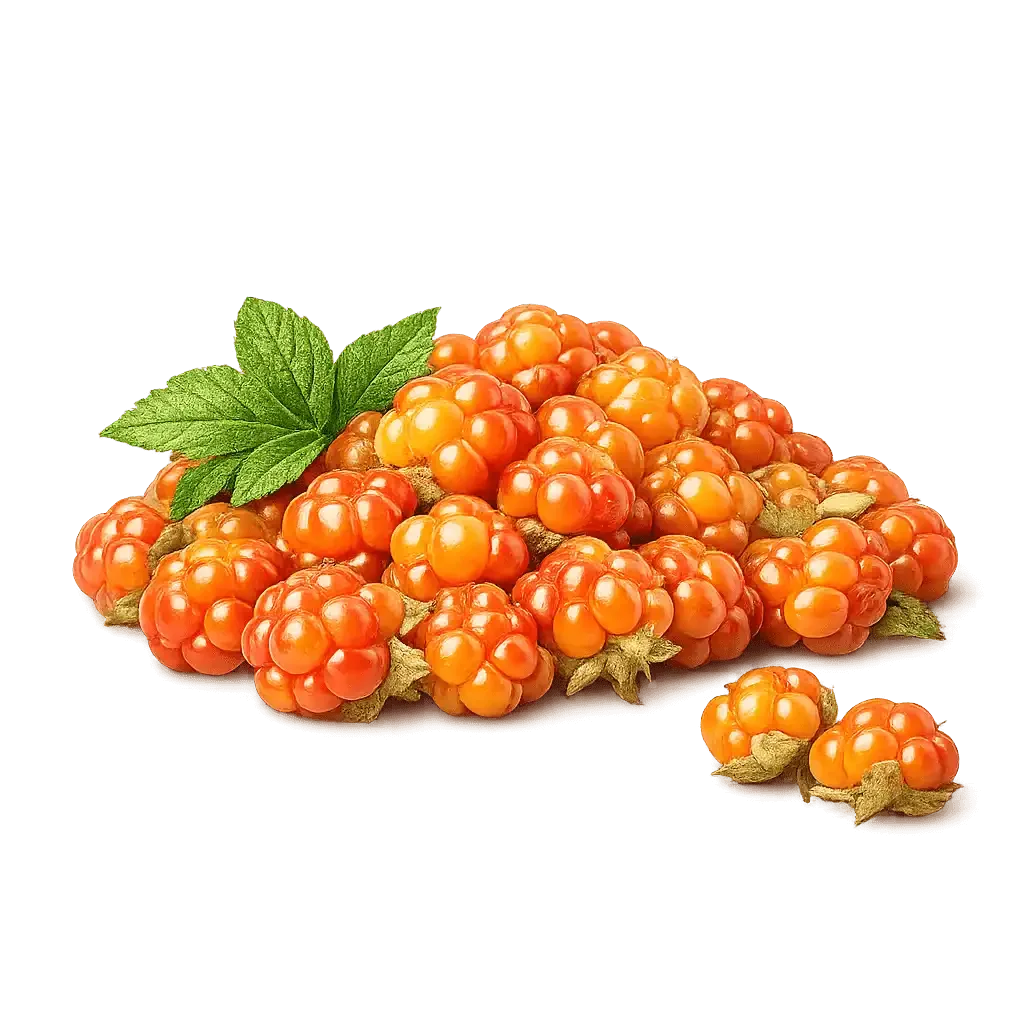
Description: The cloudberry is a low growing, herbaceous perennial that produces a single berry per stem. Unlike other Rubus species, cloudberry has no thorns, no woody canes, and dies back to the ground each winter, regrowing from its extensive underground rhizome network each spring. The plant is dioecious, meaning individual plants are either male or female, and both sexes must be present for fruit production. The berry is an aggregate drupe similar in structure to a raspberry, but larger, softer, and with a flavor entirely its own: intensely aromatic, creamy, sweet tart, with notes often compared to baked apples, apricot, and honey. Cloudberries are among the rarest and most prized wild fruits in the world.
Size: Individual cloudberry plants stand just 4 to 10 inches tall, with a single unbranched stem bearing 1 to 3 rounded, lobed leaves and a single flower or berry at the top. What the plant lacks in above ground stature it makes up for underground. The rhizome system spreads extensively, forming large colonies over time. A cloudberry patch may cover dozens or even hundreds of square feet, with each visible stem representing one node in a vast underground network.
Why It Matters for Homesteaders: Cloudberries are the ultimate cold climate specialty crop. They thrive in conditions that kill or stunt virtually every other fruit plant: boggy, acidic soil, short growing seasons, extreme cold (hardy to USDA Zone 2 and below), and minimal summer heat. For homesteaders in northern Maine, Minnesota, Alaska, or the Canadian provinces, cloudberries are one of very few fruit crops that are truly in their element. Fresh cloudberries are almost never available commercially, and frozen or preserved cloudberries from Scandinavia sell for $30 to $60 per pound. The combination of rarity, extraordinary flavor, and premium value makes cloudberries a compelling crop for homesteaders with the right climate and the patience to establish them. This is not a beginner crop, but for the right homesteader in the right location, it is a genuinely extraordinary one.
How Long Does It Take to Grow?
Cloudberries are slow to establish and demand patience. The timeline below assumes starting from nursery transplants or divisions of established rhizomes.
Year 1: Establishment. Plants focus on developing their rhizome network underground. Above ground growth is modest: a few short stems with leaves. No flowers or fruit should be expected. Keep the bed consistently moist, acidic, and weed free. Plants may appear to do very little, but critical root establishment is happening below the surface.
Year 2: Continued rhizome spreading. More stems emerge as the underground network expands. A few flowers may appear on female plants, but fruit set is typically poor or nonexistent at this stage due to incomplete colony establishment and limited pollination.
Year 3: Light flowering and possible first berries. If both male and female plants are present and pollinators are active, you may harvest a handful of berries. Production is still very light, perhaps a few ounces per planting.
Years 4 to 5: Production begins to build. The rhizome network is now well established and producing more fruiting stems each year. Expect 1/4 to 1 pound of berries per 10 square feet of established colony. The balance between male and female plants is becoming effective for pollination.
Years 6 to 8: Approaching full production. Dense colonies with good male to female ratios produce 1 to 2 pounds per 10 square feet. The patch is visibly filling in and the annual spring emergence of stems is becoming robust and reliable.
Years 8 and Beyond: Full, sustained production. Mature cloudberry colonies can produce for decades with minimal intervention, as the rhizome system continuously regenerates. Wild cloudberry bogs in Scandinavia have been harvested from the same locations for centuries.
From Seed: Cloudberry seeds require 3 to 5 months of cold, moist stratification and germination rates are low and erratic (often below 30%). Seedlings grow slowly. Starting from seed adds 2 to 3 years to the production timeline. Rhizome divisions or nursery transplants are strongly preferred.
Berry Shelf Life
Fresh: Cloudberries are extremely soft and perishable. Fresh berries keep only 1 to 2 days at room temperature before becoming mushy and fermenting. Refrigerated at 34 to 38 degrees Fahrenheit, expect 3 to 5 days of usable shelf life. Handle with extreme care, as the ripe berries are even more fragile than raspberries. In Scandinavia, fresh cloudberries are considered a fleeting seasonal luxury for exactly this reason.
Frozen: Cloudberries freeze well and this is the standard preservation method across their native range. Spread berries carefully in a single layer on a parchment lined baking sheet, freeze for 2 hours, then transfer gently to vacuum sealed bags or rigid freezer containers (bags risk crushing the soft fruit). Properly stored at 0 degrees Fahrenheit, frozen cloudberries keep 12 to 18 months.
Preserved in Sugar: The traditional Scandinavian method is to layer fresh cloudberries with sugar in sterilized jars (approximately equal parts by weight) and refrigerate. The sugar draws out juice and creates a self preserving syrup. These "sugared cloudberries" keep refrigerated for 6 to 12 months and are the classic accompaniment to waffles, pancakes, and ice cream in Norway and Sweden.
Jams and Preserves: Cloudberry jam is a premium product across Scandinavia. Water bath canned cloudberry jam keeps 12 to 18 months in a cool pantry.
Homestead Storage Tip: Process cloudberries within hours of harvest, not days. The berries begin breaking down almost immediately once picked. Have your jars, sugar, and freezer trays ready before you start picking. The traditional Scandinavian sugar layering method is the simplest and fastest way to preserve a harvest: no cooking, no canning equipment, just berries, sugar, and clean jars. It works beautifully and honors a preservation tradition that is centuries old.
Berry Color and Appearance
Flowers: Cloudberry flowers are solitary, appearing one per stem, with 5 white petals surrounding a cluster of stamens or pistils (depending on whether the plant is male or female). They bloom in June to early July and measure approximately 3/4 to 1 inch across. The flowers are simple, attractive, and pollinated primarily by bees and flies. Male flowers produce pollen but no fruit. Female flowers, once pollinated, develop into the berry.
Unripe Berries: Young cloudberries start as small, hard, pale green clusters of drupelets that gradually enlarge and turn bright red as they develop. At the red stage, berries are firm, tart, and not yet ripe. This is a common source of confusion for first time growers, because the red berry looks like it should be ripe but is not.
Ripe Berries: Here is the key distinction. Cloudberries ripen from red to golden amber to soft, translucent orange gold. A fully ripe cloudberry is soft, almost custard like in texture, and a warm, luminous amber gold color. The color transition from red to gold is the opposite of most berries and catches many people off guard. If the berry is still red and firm, leave it on the plant. When it turns golden, soft, and yields to the lightest touch, it is ready.
Size: Individual cloudberries are large for a wild berry, measuring 3/4 to 1 inch in diameter. They resemble a large, golden raspberry in shape, consisting of 5 to 25 plump drupelets arranged around a central receptacle.
Cluster Pattern: Each stem produces a single berry. There are no clusters. This one berry per stem habit is part of what makes cloudberries a low yield, high value crop. The berries sit prominently at the top of each short stem, making them easy to spot above the foliage.
Seeds: Each drupelet contains a single small, somewhat hard seed. The seeds are noticeable when eating fresh (more so than raspberry seeds) but are not objectionable. They strain out easily for jellies and syrups. In jam, the seeds are part of the traditional texture.
Ripening Time: Cloudberries ripen in mid to late summer, typically July to August in most of their range. In Alaska and the far north, harvest may extend into early September. The ripening window at any given location is short, often just 2 to 3 weeks, and berries within a patch ripen unevenly, requiring multiple picking passes.
Visual Appeal: A cloudberry patch in fruit is quietly beautiful. The golden amber berries glowing above the low, green foliage look almost jewel like, especially in the low angled light of northern summers. The plants also provide attractive groundcover when not in fruit, with their distinctive, rounded, maple like leaves.
How Much Berry Can You Collect?
Young Colonies (Years 1 to 4): Negligible to very light harvest. A few ounces to perhaps 1/2 pound from an establishing patch.
Mature Colonies (Years 6 and Up): A well established cloudberry colony produces 1 to 2 pounds per 10 square feet annually in good years. Production varies significantly from year to year based on weather, pollination success, and late frost timing.
Bed Estimates: A 100 square foot homestead cloudberry bed (10 by 10 feet) at maturity can yield 10 to 20 pounds per year in a strong season. A 200 square foot bed might produce 20 to 40 pounds. These are modest numbers compared to most berry crops, but the extraordinary value of the fruit compensates.
Wild Harvest Context: In Scandinavia, experienced foragers typically collect 2 to 5 pounds per hour from productive wild bogs. Homestead beds with dense, well pollinated colonies should offer similar or slightly better picking rates due to closer plant spacing and managed conditions.
Harvest Season: Short and concentrated. Typically 2 to 3 weeks in July to August. Berries must be picked at the precise golden ripe stage, which requires checking the patch every 2 to 3 days during the ripening window.
Ease of Harvest: The lack of thorns and the low, open growth habit make cloudberry picking physically easy. No bending into thorny brambles, no reaching overhead. Simply walk through the patch, spot the golden berries above the foliage, and gently pluck them. The challenge is not the mechanics but the softness of ripe fruit, which must be handled with the gentleness you would give a ripe peach. Expect 2 to 4 pounds per hour with careful picking.
Homestead Reality: Cloudberries will never be a volume crop. They are a low yield, ultra premium specialty berry. A 100 to 200 square foot bed producing 10 to 40 pounds of berries per year is a realistic and valuable homestead goal. At Scandinavian import prices ($30 to $60 per pound), even a modest harvest represents significant value. Manage your expectations around quantity and focus instead on the extraordinary quality and rarity of what you are growing.
Why Cloudberries Are Good for You
Key Vitamins and Minerals: Cloudberries are exceptionally rich in vitamin C, providing approximately 100 to 150 mg per 100 grams of fresh fruit, which is 2 to 3 times the vitamin C content of oranges and among the highest of any berry. They also provide meaningful amounts of vitamin E (unusually high for a fruit), vitamin A, potassium, magnesium, and iron. Dietary fiber is approximately 6 to 7 grams per cup, supporting digestive health.
Antioxidants: Cloudberries contain a diverse antioxidant profile including ellagic acid, ellagitannins, anthocyanins (primarily in the unripe red stage), carotenoids, and tocopherols (vitamin E compounds). The combination of high vitamin C and vitamin E gives cloudberries a uniquely potent dual antioxidant capacity. Research published in the Journal of Agricultural and Food Chemistry has documented strong free radical scavenging activity in cloudberry extracts.
Anti Inflammatory Properties: Ellagic acid and ellagitannins, both abundant in cloudberries, have demonstrated anti inflammatory effects in laboratory and animal studies. These compounds may help modulate chronic inflammatory pathways linked to cardiovascular disease and metabolic syndrome.
Skin Health: The high vitamin E and vitamin C content supports skin health, collagen production, and protection against UV induced oxidative damage. Cloudberry seed oil has become a valued ingredient in premium Scandinavian skincare products due to its concentrated essential fatty acid and antioxidant content.
Cardiovascular Support: The combination of fiber, potassium, ellagic acid, and vitamin C contributes to cardiovascular health through blood pressure regulation, reduced LDL oxidation, and improved vascular function.
Traditional Medicinal Uses: Across Scandinavia, cloudberries have been valued as a scurvy preventive for centuries, a use directly supported by their exceptional vitamin C content. Sami people of northern Scandinavia consumed cloudberries fresh, preserved, and in traditional dishes as a critical nutritional resource during long arctic winters. Inuit and other indigenous arctic peoples similarly relied on cloudberries as one of the few available sources of vitamins and minerals in their environment. In Finnish and Russian folk medicine, cloudberry leaf tea was used for urinary tract health and as a mild diuretic. The berries were consumed to support recovery from illness and to promote general vitality during the dark months.
What You Can Make with Cloudberries
Sugared Cloudberries (Multebær): The classic Scandinavian preparation. Layer fresh cloudberries with an equal weight of sugar in sterilized jars. Seal and refrigerate. Within 24 hours, the sugar draws out the juice, creating a self preserving amber syrup with whole berries suspended in it. Serve over waffles, pancakes, ice cream, or fresh cream. This is the single most traditional and beloved cloudberry preparation in Norway and Sweden.
Jam and Preserves: Cloudberry jam (multebærsyltetøy in Norwegian) is the most iconic Scandinavian preserve. The flavor is complex, floral, and unlike any other jam. Cook berries gently with sugar (roughly 3/4 cup sugar per cup of berries), simmer for 10 to 15 minutes, and jar. Many traditional recipes use no added pectin, as the slightly underripe berries provide enough natural pectin for a soft set.
Cream Desserts: Cloudberries and cream is the simplest and most celebrated dessert in northern Scandinavia. Fold sugared cloudberries into whipped cream for a Nordic version of a fool, or serve alongside panna cotta, cheesecake, or rice pudding.
Liqueur: Cloudberry liqueur (lakkalikööri in Finnish) is a prized Scandinavian spirit. Steep 2 cups cloudberries in 2 cups vodka with 1 cup sugar for 4 to 6 weeks, shaking occasionally. Strain and bottle. The result is a golden, aromatic, uniquely flavored liqueur that makes an exceptional after dinner drink or gift.
Syrup: Simmer 4 cups cloudberries with 1.5 cups sugar and 1/2 cup water for 15 minutes. Strain gently (do not press too hard or the syrup clouds). Bottle and refrigerate for up to 4 weeks, or water bath can for shelf stable storage. Cloudberry syrup elevates pancakes, yogurt, and desserts.
Baked Goods: Cloudberries can be folded into muffins, scones, and tarts, though their softness means they dissolve more than firmer berries. Use frozen berries folded in at the last moment for best texture retention.
Savory Pairings: In Scandinavian cuisine, cloudberry preserves are traditionally served alongside strong cheeses (particularly brunost, Norwegian brown cheese), game meats (reindeer, elk, grouse), and cured fish. The sweet tart, aromatic flavor cuts through rich, savory dishes beautifully.
Homestead Tip: Because cloudberry harvests are modest, treat every berry as precious. The sugar layering method preserves the full, uncooked flavor and requires the least effort. Reserve your finest, most perfect berries for sugared cloudberries and cream desserts. Use any slightly crushed or less perfect berries for jam, syrup, or liqueur.
Best Ways to Store, Can, or Make Jam
Sugar Layering (Recommended Primary Method): Gently sort berries, discarding any that are damaged or still red. In sterilized glass jars, alternate layers of cloudberries and granulated sugar in roughly equal parts by weight. Seal tightly and refrigerate. The sugar will dissolve and form a preserving syrup within 24 hours. Keeps refrigerated for 6 to 12 months. This is the traditional method and preserves the most authentic fresh flavor.
Freezing: Handle berries with extreme care. Spread in a single layer on a parchment lined baking sheet, leaving space between berries. Freeze for 2 to 3 hours. Transfer gently to rigid freezer containers (preferred over bags to prevent crushing) or vacuum sealed bags. Label with date and weight. Keeps 12 to 18 months at 0 degrees Fahrenheit.
Canning Cloudberry Jam
Ingredients: 4 cups cloudberries, 3 cups granulated sugar, 2 tablespoons lemon juice
Method:
Combine cloudberries, sugar, and lemon juice in a heavy bottomed pot. Let stand for 30 minutes to draw out juices.
Bring to a gentle boil over medium heat, stirring carefully to avoid breaking berries more than necessary.
Boil gently for 10 to 15 minutes until the mixture thickens and reaches 220 degrees Fahrenheit on a candy thermometer, or passes the wrinkle test on a chilled plate.
Remove from heat and skim any foam.
Ladle into sterilized half pint jars, leaving 1/4 inch headspace.
Wipe rims clean, apply lids and bands finger tight.
Process in a boiling water bath for 10 minutes (adjust for altitude: add 5 minutes above 6,000 feet).
Cool undisturbed for 12 to 24 hours. Check seals before storing.
Yield: Approximately 4 to 5 half pint jars.
Cloudberry Liqueur: Combine 2 cups cloudberries, 2 cups vodka (80 proof), and 1 cup sugar in a clean glass jar. Seal tightly and store in a dark cabinet for 4 to 6 weeks, shaking gently every few days. Strain through fine cheesecloth and bottle. Keeps at room temperature for 2 years or more.
Other Preservation Methods: Cloudberry syrup (strained and bottled) can be water bath canned for 10 minutes in half pint jars for shelf stable storage. Cloudberry seed oil, while a more advanced project, can be cold pressed from the seeds for skincare use. Dried cloudberries are not traditional and the results are mediocre compared to other preservation methods due to the high moisture and soft texture of the fruit.
Pros of Growing Cloudberries
Unmatched Arctic Hardiness: Cloudberries thrive in USDA Zone 2 and colder, tolerating winter temperatures below minus 40 degrees Fahrenheit. For homesteaders in the coldest climates on the continent, cloudberries are one of the very few fruit crops that are genuinely at home.
Extraordinary Flavor and Rarity: The flavor of cloudberries is unlike any other fruit: creamy, aromatic, sweet tart, and complex. Fresh cloudberries are virtually unavailable commercially in North America, and imported preserved cloudberries sell for $30 to $60 per pound. Growing your own gives you access to one of the world's most prized and inaccessible wild fruits.
No Thorns: Unlike virtually all other Rubus species, cloudberry plants are completely thornless. Harvesting and maintenance are thorn free, which is a rare luxury among bramble fruit growers.
Low Maintenance Once Established: Mature cloudberry colonies require minimal care. No pruning, no trellising, no spraying. The plants die back naturally each winter and reemerge each spring. Annual maintenance amounts to weed control and moisture management.
Exceptional Nutritional Density: With 2 to 3 times the vitamin C of oranges, high vitamin E, and strong antioxidant activity, cloudberries are among the most nutritionally concentrated fruits available in cold climates.
Attractive Groundcover: The low, herbaceous growth with distinctive lobed leaves and golden berries creates an attractive, unique groundcover for bog gardens and moist areas of the homestead.
Extreme Longevity: Cloudberry rhizome colonies can persist and produce for many decades. Wild patches in Scandinavia have been harvested for centuries from the same locations.
Cons of Growing Cloudberries
Very Specific Climate Requirements: Cloudberries need cool summers, cold winters, and high humidity. They do not perform well south of USDA Zone 5 or in regions with hot, dry summers. This limits the crop to northern tier states, Alaska, and Canada for most North American growers.
Dioecious Plants Require Both Sexes: Because individual plants are either male or female, you must plant both to get fruit. Nurseries do not always sex their plants reliably, and determining sex before flowering is difficult. Plant at least 5 to 10 individuals to ensure adequate representation of both sexes. A ratio of approximately 1 male to 3 or 4 females is generally recommended.
Slow Establishment and Low Yields: The 5 to 8 year timeline to full production and the modest per area yields (1 to 2 pounds per 10 square feet) make cloudberries a long term, low volume commitment. This is not a crop for homesteaders who want quick or abundant returns.
Difficult to Source Plants: Cloudberry transplants are not widely available at standard nurseries. Sourcing plants often requires specialty arctic or native plant nurseries, and availability is inconsistent. Wild collection of rhizome divisions is an option where legal and ethical.
Demanding Soil and Moisture Conditions: Cloudberries require acidic (pH 3.5 to 5.0), boggy, peat rich soil with consistent moisture. Creating these conditions artificially requires significant effort and investment in peat, water management, and bed construction.
Variable Annual Production: Cloudberry yields fluctuate significantly from year to year based on weather, frost timing during flowering, and pollination success. A late frost during bloom can eliminate an entire year's crop. This unpredictability is inherent to the species.
Extremely Perishable Fruit: Ripe cloudberries are among the most fragile of all berries, requiring same day processing and the gentlest possible handling. This limits flexibility and demands readiness during the short harvest window.
Growing Tips for Homesteaders
Site Selection: Choose a cool, moist, partially shaded location. Cloudberries are bog plants and perform best in conditions that mimic their natural habitat: open, northern facing bogs with consistent moisture, acidic soil, and moderate light. Full sun is tolerated in cool climates (Alaska, northern Canada, Maine) but can cause heat stress in warmer parts of their range. A site near a pond, stream, or naturally moist depression is ideal. Avoid hot, south facing slopes and dry, exposed locations.
Building the Cloudberry Bed: Like cranberries, cloudberries often require a constructed bed. Excavate 10 to 14 inches and fill with a mix of sphagnum peat moss (70% to 80%) and coarse sand (20% to 30%). Target a pH of 3.5 to 5.0. The bed should retain moisture but not become stagnant. Install a drip irrigation or soaker hose system for consistent moisture delivery. A bed lined with pond liner (with drainage holes) can help maintain moisture and acidity in drier soils.
Planting: Set rhizome divisions or transplants 12 to 18 inches apart. Plant at the same depth they were growing previously, pressing firmly into the peat mix. Water thoroughly. Plant a minimum of 5 to 10 individuals to ensure both male and female plants are present. Spring planting (May to June) is preferred in most northern climates. Mulch lightly with sphagnum moss or additional peat.
Watering: Maintain consistently moist (but not waterlogged) conditions year round. The bed should feel like a wrung out sponge at root level. Cloudberries are bog plants, and allowing the bed to dry out, even briefly during summer, can set plants back significantly. Drip irrigation on a timer provides the most reliable moisture management.
Pollination: Ensure adequate pollinator activity during the June to July bloom period. Bumblebees are the primary pollinators of cloudberries. Avoid pesticide use anywhere near the cloudberry bed. If pollinator populations are low, consider hand pollination by gently transferring pollen from male flowers to female flowers with a small paintbrush.
Weed and Pest Management: Hand weed carefully to avoid disturbing the shallow rhizome network. Sphagnum moss mulch suppresses weeds and maintains surface moisture. Cloudberries have very few pest or disease problems. The primary threats are slugs (in wet conditions), late spring frosts that damage flowers, and browsing by deer or rodents. Row cover during bloom can protect against both frost and browsing.
Companion Planting and Variety Selection: Cloudberries grow naturally alongside sphagnum moss, Labrador tea, cranberries, and other bog plants. On the homestead, they pair well with cranberries and lingonberries in adjacent bog beds. Avoid planting near vigorous, competitive species that would shade out the low growing cloudberry stems. Named cultivars are rare. Most available plants are wild type selections or regional ecotypes. Source plants from nurseries as close to your latitude and climate as possible for best adaptation. Norwegian and Finnish seed banks have developed some improved selections, but these are difficult to source in North America. Your best approach is to obtain divisions from productive wild stands or from other northern homesteaders.
Conclusion
Cloudberries are not for every homesteader. They need cold, they need bogs, they need patience, and they need the kind of climate that sends most people running for warmer ground. But for the homesteader in Alaska, northern Canada, Maine, Minnesota, or similar northern environments, cloudberries offer something no other crop can: a genuinely world class fruit, prized across Scandinavia as a culinary treasure, growing naturally in the conditions you already have. You are not fighting your climate to grow cloudberries. You are working with it.
The yields will be modest. The establishment period is long. The berries are fragile and fleeting. But a jar of your own cloudberry jam, a bowl of sugared cloudberries over fresh cream, or a bottle of golden cloudberry liqueur represents something rare and extraordinary, a harvest that almost no one else on your continent is producing. The value, both economic and personal, is difficult to overstate.
Start with a small bog bed, plant a mix of transplants to ensure both sexes, keep the peat moist and acidic, and give the colony time to establish. In five to eight years, you will be harvesting golden berries from a patch that will continue producing for decades, a quiet, beautiful, and deeply rewarding addition to a cold climate homestead.
Explore more guides on different types of berries