
Cranberry
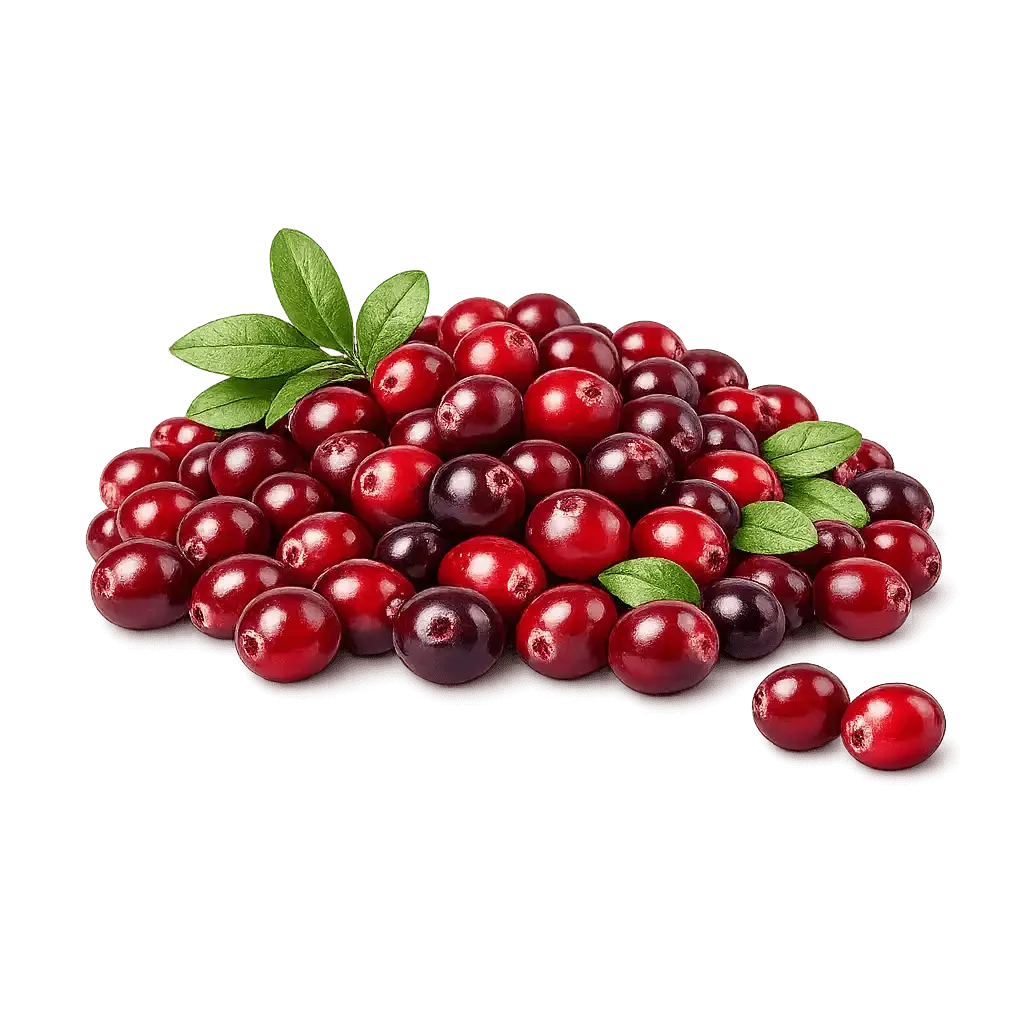
Complete Homestead Growing Guide
Botanical Name: Vaccinium macrocarpon (American cranberry) is the primary cultivated species. Vaccinium oxycoccos (small or European cranberry) is a closely related wild species found across northern bogs in both North America and Eurasia but is rarely cultivated for production.
Origin: Cranberries are native to the acidic bogs, marshes, and wetlands of northeastern North America, with their natural range extending from Newfoundland south through the Appalachian highlands and west across the Great Lakes region into parts of Minnesota and Wisconsin. Indigenous peoples harvested wild cranberries for thousands of years, using them fresh, dried, mixed into pemmican, and as a dye and poultice. Commercial cultivation began in Massachusetts in the early 1800s, and the United States (primarily Wisconsin, Massachusetts, New Jersey, Oregon, and Washington) remains the world's largest cranberry producer.
Description: Cranberries are low growing, creeping, evergreen perennial vines that produce firm, round to oblong, bright red berries in fall. The plant is a member of the heath family (Ericaceae), closely related to blueberries, huckleberries, and lingonberries. Unlike most fruits, cranberries contain internal air chambers that allow them to float, which is the basis for the iconic wet harvest method used in commercial production. The flavor is intensely tart, astringent, and tannic when raw, making cranberries primarily a cooking and processing berry rather than a fresh eating fruit. That tartness is their defining culinary strength, and it translates into some of the most distinctive preserves, sauces, and beverages on the homestead table.
Size: Individual cranberry vines are low and trailing, growing just 2 to 8 inches tall with runners extending 1 to 6 feet across the ground. The plants form dense, mat like groundcovers over time. A cranberry bed does not grow tall like other berry bushes. Instead, it spreads horizontally, filling in to create a living carpet of evergreen foliage, delicate flowers, and jewel toned berries. This compact habit makes cranberries suitable for dedicated beds, raised bog gardens, and even large containers.
Why It Matters for Homesteaders: Cranberries occupy a unique position in the homestead food system. They ripen in fall when most other berries are long finished, extending the fresh fruit season into October and November. They store fresh for months in cold storage without processing. They are the foundation of cranberry sauce, a Thanksgiving staple that most families buy commercially but can easily produce at home. Dried cranberries, cranberry juice, and cranberry preserves are pantry essentials with a retail value of $8 to $15 per pound dried. The plants are hardy to USDA Zones 2 through 7, evergreen, attractive as groundcover, and once established, can produce for 100 years or more. For the homesteader willing to provide the specific growing conditions cranberries demand (acidic, moist, well managed beds), they offer a lifetime crop with extraordinary storage qualities and culinary value that no other berry can replicate.
How Long Does It Take to Grow?
Cranberries are slow to establish compared to many homestead berries, but their extreme longevity makes the wait a worthwhile investment.
Year 1: Establishment and runner growth. Plants focus on sending out horizontal runners (stolons) that root at nodes and begin colonizing the bed. There will be little to no fruit production. Keep beds consistently moist, weed free, and mulched with a thin layer of sand (the traditional cranberry mulch). Expect runners to extend 6 to 12 inches by season's end.
Year 2: Continued spreading. The vine mat is filling in but still has bare patches. A few flowers and scattered berries may appear, but production is negligible. Upright shoots (the short vertical stems that bear fruit) are beginning to develop from the runners.
Year 3: Light fruiting begins. Expect a modest harvest of 1/4 to 1/2 pound per 10 square feet of bed. The mat is becoming denser and more uprights are forming. This is the first encouraging sign that your cranberry bed is on track.
Years 4 to 5: Production increases steadily. The vine mat is approaching full coverage of the bed. Expect 1 to 2 pounds per 10 square feet. The balance of runners and fruiting uprights is becoming well established.
Years 6 to 7: Full production. A mature, dense cranberry bed produces 2 to 4 pounds per 10 square feet (approximately 1 pound per square foot in optimal commercial settings, somewhat less for homestead beds). Plants are now fully established and the bed requires only annual maintenance.
Years 8 and Beyond: Sustained production for decades. Well maintained cranberry bogs in Massachusetts and Wisconsin have been in continuous production for over 100 years. With periodic sanding (a thin layer of clean sand applied every 2 to 3 years to encourage new upright growth) and consistent water management, a homestead cranberry bed can produce indefinitely.
From Cuttings: Cranberries propagate easily from stem cuttings. Cut 4 to 6 inch sections of healthy runner, press them into moist, acidic sand or peat, and keep consistently moist. Rooting occurs within 4 to 6 weeks. This adds about 1 year to the production timeline compared to purchasing established plugs.
Berry Shelf Life
Fresh: This is where cranberries truly shine. Whole, undamaged cranberries store 2 to 4 months refrigerated at 34 to 40 degrees Fahrenheit. This is far longer than any other common berry. The firm skin, low moisture surface, and high acid content act as natural preservatives. Simply spread berries in a single layer in a shallow container or perforated bag and refrigerate. Discard any soft or discolored berries promptly, as one spoiled berry can accelerate decay in its neighbors.
Frozen: Cranberries freeze exceptionally well with no blanching required. Spread on baking sheets, freeze for 2 hours, and transfer to vacuum sealed bags or heavy duty freezer bags. Frozen cranberries keep 12 to 18 months at 0 degrees Fahrenheit and can be used directly from frozen in most recipes.
Dried: Dehydrate at 135 degrees Fahrenheit for 10 to 16 hours until leathery and slightly sticky. Home dried cranberries are tangier and less sweet than commercial versions (which are typically sugar infused). Store in airtight containers for 6 to 12 months. For sweeter dried cranberries, toss in a light sugar syrup before dehydrating.
Jams, Sauces, and Preserves: Water bath canned cranberry sauce and jam keep 12 to 18 months in a cool pantry. The naturally high acid content of cranberries makes them one of the safest fruits for water bath canning.
Homestead Storage Tip: Take full advantage of cranberries' extraordinary fresh storage life. Harvest in October, refrigerate in shallow trays, and you will have fresh cranberries available through January or even February without any processing at all. This is the simplest, lowest effort preservation method available for any berry crop, and it means you can spread your processing (sauce, jam, drying) across the quiet winter months rather than doing everything at harvest time.
Berry Color and Appearance
Flowers: Cranberry flowers are small, delicate, and distinctive. Each blossom has four recurved (swept back) pink petals that expose a cluster of stamens, giving the flower a shape that early observers compared to the head and beak of a crane, which is the likely origin of the name "crane berry," later shortened to cranberry. Flowers appear in June to early July in most zones and are pollinated primarily by bees.
Unripe Berries: Young cranberries are small, hard, and pale green to white, blending in with the foliage. They are virtually invisible on the vine at this stage. As summer progresses, berries gradually develop blushes of pink and light red.
Ripe Berries: Fully ripe cranberries are firm, glossy, and deep red to crimson. The color is uniform and vibrant across the berry surface. The skin is taut and waxy, contributing to their outstanding storage qualities. When cut open, ripe cranberries reveal four internal air chambers (locules), which is what allows them to float and bounce. A good test for quality is the "bounce test": a firm, ripe cranberry will bounce when dropped onto a hard surface. Soft berries that do not bounce are overripe or damaged.
Size: Individual cranberries measure 3/8 to 3/4 inch in diameter, roughly the size of a marble. Improved cultivars like Stevens and Ben Lear produce berries at the larger end of this range.
Cluster Pattern: Berries grow individually on short, upright stems (pedicels) rising from the fruiting uprights. They sit at or just above the foliage mat, creating a striking visual effect as hundreds of red berries dot the green carpet of vine. They do not grow in clusters like blueberries or elderberries.
Seeds: Each cranberry contains several small, hard seeds that are barely noticeable in most preparations. In sauces and jams, the seeds are undetectable. In dried cranberries, they add a slight crunch that is part of the expected texture.
Ripening Time: Cranberries ripen from mid September through November, depending on cultivar and location. In USDA Zones 3 through 5, harvest typically falls in October. In milder zones, harvest may extend into early November. Berries deepen in color after the first light frosts, and many growers wait for a frost or two before harvesting, as cold temperatures enhance color and sugar development.
Visual Appeal: A mature cranberry bed in fall is one of the most beautiful sights on a homestead. The dense, evergreen mat studded with hundreds of glossy red berries is visually stunning. In spring, the delicate pink flowers add another season of interest. Cranberry beds function as attractive, productive groundcover year round.
How Much Berry Can You Collect?
Young Plants (Years 1 to 3): Minimal to light harvest. By year 3, expect 1/4 to 1/2 pound per 10 square feet.
Mature Beds (Years 6 and Up): A fully established homestead cranberry bed produces 2 to 4 pounds per 10 square feet annually. A well managed 100 square foot bed (10 by 10 feet) should yield 20 to 40 pounds of berries per year at maturity.
Larger Scale Estimates: A 200 square foot bed (a modest homestead planting) can yield 40 to 80 pounds per year. A 500 square foot bed could produce 100 to 200 pounds. Commercial cranberry bogs yield approximately 150 to 200 barrels per acre (one barrel equals 100 pounds), translating to roughly 15,000 to 20,000 pounds per acre under intensive management.
Harvest Season: Typically 2 to 4 weeks in October, sometimes extending into early November. The concentrated fall timing aligns well with the slower pace of homestead work after the main summer and early fall harvest rush.
Ease of Harvest: On a homestead scale, cranberries are dry harvested by hand, using a cranberry scoop (rake) or simply picking by hand. A cranberry scoop is a wide tined rake that combs through the vines and collects berries efficiently. With a scoop, an experienced harvester can collect 10 to 20 pounds per hour from a dense bed. Hand picking is slower (3 to 6 pounds per hour) but gentler on the vines. The berries are firm and handle well, so there is virtually no crushing or damage during harvest, unlike soft berries.
Homestead Reality: A 100 to 200 square foot cranberry bed is the practical sweet spot for most homesteads. This size is manageable to build and maintain, produces 20 to 80 pounds of berries annually, and supplies more than enough cranberries for a family's sauce, jam, juice, dried cranberry, and baking needs for the entire year. The initial setup (building the bed, establishing acidity, managing water) requires real effort, but once the bed is established, annual maintenance is modest and the plants will outlast you.
Why Cranberries Are Good for You
Key Vitamins and Minerals: A 1 cup serving of fresh cranberries provides approximately 22% of the daily value of vitamin C, 9% of vitamin E, and meaningful amounts of manganese, copper, vitamin K1, and dietary fiber (about 5 grams per cup). They are low in sugar compared to most fruits (only about 4 grams per cup), which contributes to their tart flavor and makes them a lower glycemic berry option.
Antioxidants: Cranberries are exceptionally rich in proanthocyanidins (PACs), a class of polyphenols that gives cranberries their distinctive astringency and many of their health benefits. They also contain quercetin, myricetin, peonidin, ursolic acid, and A type proanthocyanidins, a structural variant that is relatively rare in the plant kingdom and has been the focus of significant clinical research.
Urinary Tract Health: This is cranberry's most well known and well researched health benefit. A systematic review and meta analysis published in the Cochrane Database of Systematic Reviews (2023 update) confirmed that cranberry products reduce the risk of symptomatic urinary tract infections, particularly in women with recurrent UTIs, children, and people susceptible to UTIs following medical interventions. The mechanism involves A type PACs that prevent certain bacteria (particularly E. coli) from adhering to the urinary tract lining.
Cardiovascular Health: Research has demonstrated that regular cranberry consumption can improve several cardiovascular risk markers, including HDL cholesterol, blood pressure, and arterial stiffness. A randomized controlled trial published in Food and Function found that daily cranberry juice consumption over 8 weeks improved flow mediated dilation, a marker of endothelial function.
Oral Health: The same anti adhesion properties that benefit the urinary tract may also inhibit the bacteria responsible for dental plaque and gum disease. While not a substitute for dental hygiene, cranberry compounds have shown promise in laboratory studies targeting oral pathogens.
Traditional Medicinal Uses: Native American tribes, including the Wampanoag, Lenape, and Algonquin, used cranberries extensively for both food and medicine. Crushed cranberry poultices were applied to wounds to draw out infection and reduce inflammation. Cranberry tea was consumed for bladder and kidney complaints. Dried cranberries were mixed into pemmican (with dried meat and fat) as a high energy, long storing trail food. These traditional uses align remarkably well with modern research on cranberry's antimicrobial and anti inflammatory properties.
What You Can Make with Cranberries
Cranberry Sauce: The essential Thanksgiving condiment. Simmer 12 ounces of cranberries with 1 cup sugar and 1 cup water for 10 to 15 minutes until berries burst and sauce thickens. Add a strip of orange zest for depth. This simple recipe takes minutes and is incomparably better than canned versions.
Jam and Preserves: Cranberry jam is intensely flavored and sets beautifully thanks to the berry's naturally high pectin content. For a more complex preserve, combine cranberries with oranges, apples, or pears. Cranberry butter (cooked and pureed smooth) makes an elegant spread.
Dried Cranberries: Home dried cranberries replace expensive store bought versions in trail mixes, salads, baked goods, and oatmeal. For closer to commercial sweetness, simmer berries briefly in a light sugar syrup before dehydrating.
Juice and Concentrate: Simmer 4 cups cranberries with 4 cups water for 20 minutes, mash, and strain. Sweeten to taste. This concentrated juice stores refrigerated for 2 to 3 weeks or can be frozen in ice cube trays for year round use. Dilute with water or sparkling water for a refreshing, tart beverage.
Baked Goods: Cranberries work beautifully in muffins, scones, quick breads, coffee cakes, and cookies. Their tartness cuts through sweet batters and pairs naturally with orange, walnut, and white chocolate. Frozen cranberries can be folded directly into batter without thawing.
Chutney and Relish: Cranberry chutney (berries cooked with vinegar, onion, ginger, sugar, and warm spices) is an outstanding condiment with roast poultry, pork, and cheese boards. Cranberry relish (raw berries, orange, and sugar processed in a food processor) is a no cook classic.
Wine and Mead: Cranberry wine produces a tart, bright, rose colored wine with excellent acidity and structure. Use 4 to 5 pounds of berries per gallon and balance with sugar to offset the high acid. Cranberry mead (with honey) is another excellent option.
Homestead Tip: Make cranberry sauce in bulk during harvest season and water bath can it in half pint jars. A single afternoon of canning produces enough sauce for Thanksgiving, Christmas, and everyday meals throughout the year, plus beautiful homemade gifts.
Best Ways to Store, Can, or Make Jam
Fresh Cold Storage (Recommended First Option): Sort berries, discarding any soft, shriveled, or discolored fruit. Spread in a single layer in shallow trays or perforated bags. Refrigerate at 34 to 40 degrees Fahrenheit. Whole, undamaged cranberries keep 2 to 4 months under cold storage. Check periodically and remove any spoiling berries.
Freezing: Spread sorted berries on parchment lined baking sheets and freeze for 2 hours. Transfer to vacuum sealed bags or heavy duty freezer bags. No blanching or preparation needed. Frozen cranberries keep 12 to 18 months at 0 degrees Fahrenheit and can go directly from freezer to recipe.
Canning Cranberry Jam
Ingredients: 4 cups chopped or coarsely ground cranberries (about 1 pound), 2 cups water, 3.5 cups granulated sugar, 1 package (1.75 ounces) powdered pectin, 2 tablespoons orange juice
Method:
Combine cranberries and water in a large, heavy bottomed pot. Simmer for 10 minutes until berries soften and burst.
Stir in powdered pectin and orange juice. Bring to a full rolling boil over high heat, stirring constantly.
Add sugar all at once. Return to a full rolling boil and boil for exactly 1 minute, stirring constantly.
Remove from heat and skim any foam.
Ladle hot jam into sterilized half pint jars, leaving 1/4 inch headspace.
Wipe rims clean, apply lids and bands finger tight.
Process in a boiling water bath for 10 minutes (adjust for altitude: add 5 minutes above 6,000 feet).
Cool undisturbed for 12 to 24 hours. Check seals before storing.
Yield: Approximately 5 to 6 half pint jars.
Canning Whole Berry Cranberry Sauce: Combine 4 cups cranberries, 2 cups sugar, and 1.5 cups water. Bring to a boil, stirring until sugar dissolves. Boil gently for 5 minutes until berries burst. Ladle into sterilized half pint or pint jars, leaving 1/4 inch headspace. Process in a boiling water bath for 15 minutes.
Drying: Blanch whole cranberries in boiling water for 30 to 60 seconds to crack the skins (this dramatically speeds drying). Drain and spread on dehydrator trays. Dry at 135 degrees Fahrenheit for 10 to 16 hours. For sweetened dried cranberries, toss blanched berries in a light sugar syrup (1 cup sugar to 1 cup water) before dehydrating. Condition in sealed jars for 5 to 7 days. Store in airtight containers for up to 12 months.
Other Preservation Methods: Cranberry concentrate (juice reduced by half on the stove) freezes in ice cube trays for year round use in drinks, sauces, and dressings. Cranberry infused vinegar (berries steeped in white wine vinegar for 3 to 4 weeks) makes a vibrant salad dressing base. Cranberry chutney water bath cans safely in half pint jars processed for 10 minutes, providing a shelf stable condiment year round.
Pros of Growing Cranberries
Extraordinary Fresh Storage Life: No other berry comes close to cranberry's 2 to 4 month refrigerated shelf life. This single trait makes cranberries the easiest berry to store and the most forgiving in terms of processing timelines.
Extreme Longevity: Cranberry beds can produce for 50 to 100 years or more with basic maintenance. This is a true generational planting that outlasts virtually every other fruit crop on the homestead.
Fall Harvest Timing: Cranberries ripen after all other berries are finished, extending the fresh fruit season into October and November and aligning harvest with slower homestead workloads.
High Acid, Naturally Safe for Canning: The low pH of cranberries (approximately 2.3 to 2.5) makes them one of the safest fruits for water bath canning. Botulism risk is virtually nonexistent at this acidity level.
Cold Hardiness: American cranberry is hardy to USDA Zone 2, surviving winter temperatures well below minus 30 degrees Fahrenheit. For northern homesteaders, cranberries are among the most reliable perennial fruit crops available.
Attractive Evergreen Groundcover: Cranberry beds provide year round visual interest as a dense, low, evergreen mat with seasonal flowers and bright red fall berries. They function as both food production and beautiful landscaping.
Low Pest Pressure: Cranberries have relatively few serious pest problems on a homestead scale. Birds are minimal threats (the tart berries are not preferred), and most insect pests are managed through the periodic flooding that cranberry beds can receive.
Cons of Growing Cranberries
Specific Growing Conditions Required: Cranberries demand acidic soil (pH 4.0 to 5.5), consistent moisture, and excellent drainage simultaneously. Meeting these requirements often means building a dedicated cranberry bed with imported peat, sand, and controlled water management. This is not a plant you can simply stick in the ground.
Slow Establishment: The 5 to 7 year timeline to full production is longer than most homestead berries. Patience and long term thinking are essential.
Bed Construction Labor: Building a proper cranberry bed requires significant upfront work: excavation, importing acidic growing media (peat and sand mix), establishing drainage and irrigation, and sourcing plant material. Costs for a 100 square foot bed can run $100 to $300 in materials depending on your starting soil conditions.
Water Management: Cranberries need consistent moisture but not standing water during the growing season. Overwatering causes root rot; underwatering causes crop loss. In winter, cranberry beds benefit from flooding or heavy mulching to protect plants from desiccating cold. This water management is not complex but does require attention.
Intensely Tart Flavor: Cranberries are not a snacking berry. They require sugar or other sweeteners in virtually every preparation. Homesteaders looking for a fresh eating berry will need to grow other crops alongside cranberries.
Limited Climate Range for Best Production: While hardy to Zone 2, cranberries do not perform well in hot, dry climates. They struggle south of Zone 7 and are poorly suited to arid regions without significant irrigation and microclimate management.
Weed Management: Cranberry beds require vigilant weed control, especially during the first 3 to 4 years before the vine mat fills in completely. Hand weeding is the primary method, as herbicides are impractical in the dense vine mat.
Growing Tips for Homesteaders
Site Selection: Choose a level site with full sun (6 to 8 hours minimum). Cranberries need bright light for best fruit production and color development. The site should have access to water for irrigation and, ideally, the ability to flood the bed briefly in late fall or winter for cold protection. Avoid steep slopes, deep shade, and sites with alkaline soil or limestone bedrock. A low lying, naturally moist area is ideal if drainage can be managed.
Building the Cranberry Bed: This is the critical step. Excavate 8 to 12 inches of existing soil from your bed area. Line the bottom with landscape fabric if your native soil is alkaline, to prevent pH contamination from below. Fill with a mix of 50% acidic peat moss and 50% clean, coarse sand. This mix provides the acidity (target pH 4.0 to 5.5), moisture retention, and drainage cranberries demand. Top with 1 to 2 inches of pure sand as a planting and mulching layer. Install a drip irrigation line or soaker hose for consistent moisture delivery.
Planting: Plant rooted cuttings or plugs 6 to 12 inches apart in all directions. Press stems firmly into the sandy surface and water thoroughly. Runners will fill in the gaps over 2 to 4 years. The best planting time is early spring (April to May) in most zones. Avoid planting in summer heat.
Watering: Maintain consistent moisture throughout the growing season. The bed should feel damp but never waterlogged at root level. During hot, dry periods, water daily or every other day. Drip irrigation on a timer is the most reliable approach. In late fall, after harvest, flood the bed with 2 to 4 inches of water if possible, then drain after a few days. This winter flooding protects crowns from desiccating winds and extreme cold. If flooding is not feasible, apply 4 to 6 inches of clean straw mulch after the ground freezes and remove it in early spring.
Sanding: Every 2 to 3 years, apply a thin layer (1/2 to 1 inch) of clean, coarse sand over the cranberry bed in early spring before new growth begins. Sanding encourages new upright development, buries old woody runners that have become less productive, and helps manage certain pests and diseases. This is the single most important maintenance practice for long term cranberry bed health.
Companion Planting and Variety Selection: Cranberries grow naturally alongside sphagnum moss, blueberries, and other acid loving bog plants. On the homestead, they pair well with blueberries and lingonberries planted in adjacent (but separate) beds with similar soil requirements. Avoid planting near lime loving plants or in areas where alkaline runoff could contaminate the bed. For cultivar selection, Stevens (large berries, heavy yields, widely adapted) is the standard recommendation for homestead production. Ben Lear (early ripening, good flavor, moderate yields) and Pilgrim (large berries, late ripening, excellent storage) are strong alternatives. Planting early and late cultivars extends the harvest window by 2 to 3 weeks.
Conclusion
Cranberries ask more of the homesteader upfront than almost any other berry. Building the bed, establishing the acidity, managing the water, and waiting 5 to 7 years for full production requires real commitment. But what you get in return is extraordinary: a dense, evergreen, beautiful groundcover that produces firm, brilliantly red berries every October for the rest of your life and likely your children's lives after that. No other berry stores fresh for months without any processing. No other berry is this safe and simple to can. And no other berry anchors the Thanksgiving table the way a jar of your own homemade cranberry sauce does.
The key is accepting that cranberries are a specialty crop with specific needs, not a drop anywhere shrub like elderberry or a wild scrambler like dewberry. Build the right bed, maintain the acidity and moisture, sand every few years, and the plants will do the rest for decades. A single 100 square foot bed will produce 20 to 40 pounds of berries annually at maturity, enough for sauce, jam, juice, dried cranberries, baking, and plenty of gifts.
Start small. Build one raised cranberry bed this spring, plant it with plugs of Stevens or Ben Lear, and keep it watered and weeded. By year 3 you will see your first real harvest. By year 6, you will be picking cranberries by the bushel from a bed that asks for almost nothing except moisture and patience. A century from now, that bed could still be producing, which is about the most lasting thing a homesteader can build.
Explore more guides on different types of berries