
Dewberry
Complete Homestead Growing Guide
Botanical Name: Rubus flagellaris (Northern dewberry) and Rubus trivialis (Southern dewberry) are the two most common species. Several other Rubus species across North America also carry the common name dewberry, including Rubus hispidus (swamp dewberry) and Rubus enslenii. All are trailing or low growing members of the blackberry genus.
Origin: Dewberries are native to North America, with species distributed from southern Canada through the eastern and central United States deep into the Gulf Coast states and Texas. They are among the most widespread wild bramble fruits on the continent. Southern dewberry (R. trivialis) is particularly abundant across the southeastern United States, where it has been gathered from wild stands for generations. Unlike blackberries, which have been extensively hybridized and commercialized, dewberries have remained largely wild and uncultivated, making them a true forager's berry that is now gaining recognition among homesteaders interested in native food plants.
Description: Dewberries are trailing, low growing brambles that creep along the ground rather than growing upright like their blackberry cousins. The canes are slender, thorny, and vine like, rooting at the tips where they contact soil and forming dense, spreading mats. The plants produce berries that are nearly identical in structure to blackberries (aggregate drupelets around a central receptacle) but are generally smaller, softer, and ripen 2 to 4 weeks earlier in the season. The flavor is often described as sweeter, more delicate, and less tannic than standard blackberries, with a bright, almost wine like quality that many foragers and homesteaders consider superior.
Size: Individual dewberry canes grow 4 to 10 feet long but remain low to the ground, rarely exceeding 1 to 2 feet in height unless trained upward on a trellis or fence. The trailing habit means a single plant can spread 6 to 10 feet across the ground. On a trellis, canes can be managed within a 3 to 4 foot wide, 4 to 5 foot tall footprint, making them more practical for organized homestead production.
Why It Matters for Homesteaders: Dewberries fill a valuable niche in the homestead berry calendar. They ripen 2 to 4 weeks before blackberries, extending the bramble fruit season into late spring and early summer when few other berries are available. They thrive in poor, sandy, acidic soils and disturbed ground where other crops struggle. They require minimal care once established. The berries command premium prices at farmers markets ($6 to $10 per pint) because they are almost never commercially cultivated and must be hand picked. For the homesteader with marginal land, sandy soils, or a desire to grow native food plants that practically take care of themselves, dewberries are an outstanding and underutilized choice.
How Long Does It Take to Grow?
Dewberries establish quickly and begin fruiting sooner than many homesteaders expect. Their aggressive growth habit means they fill in fast once planted.
Year 1: Establishment and vegetative growth. Plants send out long, trailing canes that root at the tips and begin colonizing available ground. First year canes (primocanes) are vegetative and will not fruit. Focus on guiding canes along your trellis or desired growing area and keeping competing weeds suppressed. Expect canes to reach 4 to 8 feet long by season's end.
Year 2: First harvest. The primocanes from year 1 become floricanes in their second year and produce flowers and fruit. Expect a light but rewarding harvest of 1 to 2 pounds per plant. Meanwhile, new primocanes are already growing and will fruit the following year. This biennial cane cycle is the same as standard blackberries.
Year 3: Production increases as the planting fills in. Expect 2 to 4 pounds per plant. The trailing canes have now rooted and spread, and the patch is becoming a dense, productive mat of fruiting and vegetative canes.
Years 4 to 5: Full production. A well managed dewberry patch will yield 4 to 8 pounds per plant annually. The planting is fully established, and the cycle of primocanes and floricanes is producing consistent harvests each year.
Years 5 and Beyond: Sustained production. Dewberry patches can produce indefinitely as new canes continuously replace spent floricanes. With basic annual maintenance (removing spent canes and managing spread), a dewberry planting will continue bearing for 15 to 20 years or more. Wild dewberry patches have been documented persisting and fruiting for decades in the same location.
From Cuttings or Tip Layering: Dewberries propagate effortlessly by tip layering (burying the tip of a trailing cane in soil, where it roots within weeks). Root cuttings also work well. Either method produces a transplantable plant within one growing season, making expansion essentially free.
Berry Shelf Life
Fresh: Dewberries are softer and more delicate than upright blackberries, making them more perishable. Expect 1 to 2 days at room temperature and 3 to 5 days refrigerated at 34 to 38 degrees Fahrenheit. Do not wash berries until ready to use, and store them in a single layer on paper towels in a shallow container to minimize crushing and moisture buildup.
Frozen: Dewberries freeze well and this is the best method for preserving large quantities. Spread berries in a single layer on a parchment lined baking sheet, freeze for 2 hours until solid, then transfer to vacuum sealed bags or heavy duty freezer bags. Properly stored at 0 degrees Fahrenheit, frozen dewberries keep 10 to 14 months. Expect some softening and juice release upon thawing, which is ideal for jams, pies, and smoothies.
Dried: Dehydrate at 135 degrees Fahrenheit for 14 to 20 hours until berries are leathery and no longer sticky. Dried dewberries are intensely flavored but quite seedy. They store 6 to 12 months in airtight containers in a cool, dark location. Best used rehydrated in baking or ground into powder for smoothies and teas.
Jams and Preserves: Properly water bath canned dewberry jam has a shelf life of 12 to 18 months in a cool pantry. The natural pectin in slightly underripe dewberries aids gel set, though most recipes benefit from added pectin for consistent results.
Homestead Storage Tip: Because dewberries are so soft and perishable, plan to process your harvest the same day you pick. Bring berries straight from the patch to the kitchen or freezer. If you cannot process immediately, spread berries on towel lined trays in the refrigerator rather than piling them in a bowl, where the bottom berries will crush and mold within hours.
Berry Color and Appearance
Flowers: Dewberry flowers are classic bramble blossoms: 5 petaled, white to pale pink, and approximately 3/4 to 1 inch across. They appear in mid to late spring (April to May in southern zones, May to June further north), typically 2 to 4 weeks ahead of upright blackberry flowers. The flowers grow in small clusters at the tips of short lateral branches along the floricanes and are visited by bees, butterflies, and other pollinators.
Unripe Berries: Young dewberries start as small, hard, green clusters of drupelets. As they develop, they transition through bright red (similar in appearance to red raspberries at this stage) before beginning to darken. Red and partially red berries are sour and underdeveloped.
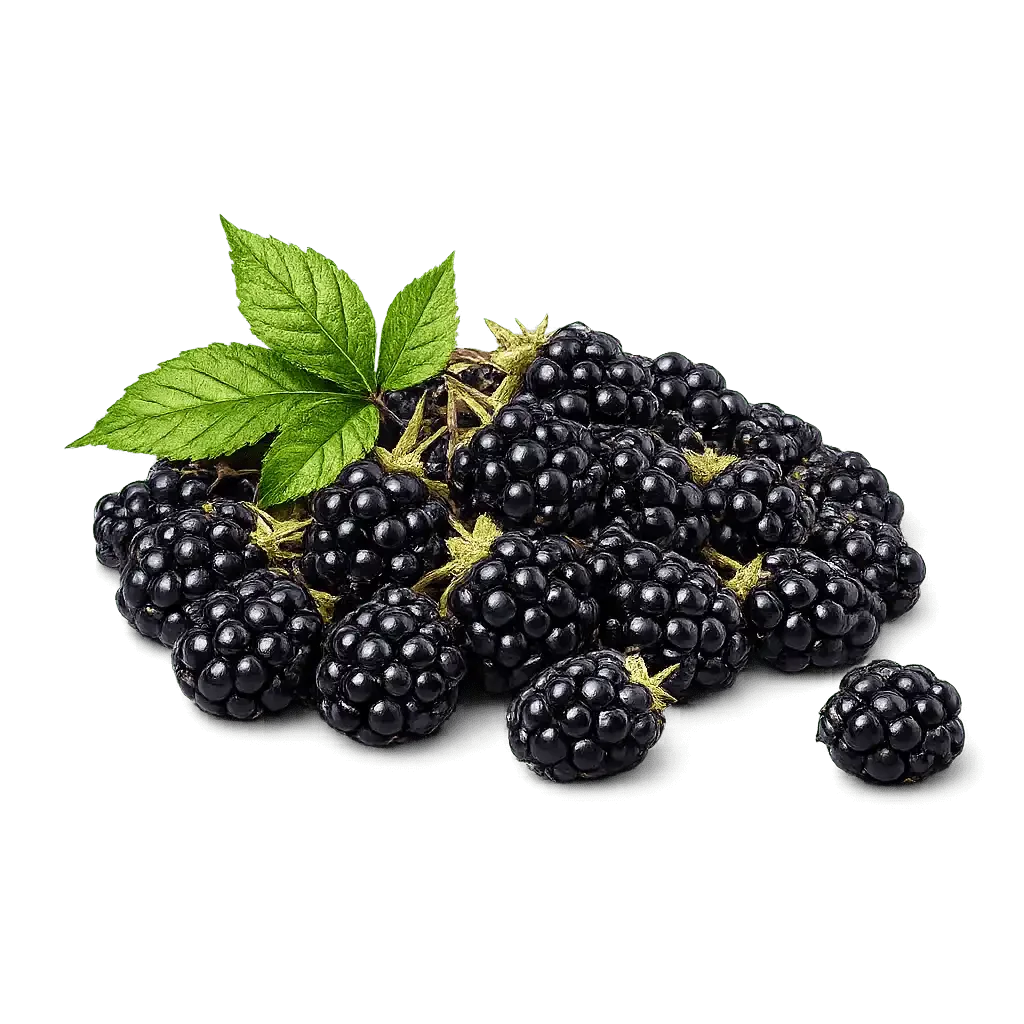
Ripe Berries: Fully ripe dewberries are glossy black to deep purple black. The key ripeness indicator, just like blackberries, is that the berry detaches from the plant with a gentle tug. If you have to pull hard, the berry is not ready. Ripe dewberries are noticeably softer than ripe blackberries, and the drupelets are plumper and more loosely held together. The fruit is juicy, fragile, and stains immediately on contact.
Size: Dewberries are generally smaller than cultivated blackberries, measuring 1/2 to 3/4 inch in diameter and 1/2 to 1 inch long. Some well nourished plants on good soil can produce berries approaching the size of small blackberries, but most are modestly sized. What they lack in individual size, they compensate for in flavor intensity.
Cluster Pattern: Berries form in small clusters of 3 to 8 at the tips and along the lateral branches of floricanes. They ripen unevenly within each cluster, with the terminal (tip) berry ripening first. This means you will pick the same cluster multiple times over a 1 to 2 week window as individual berries reach full ripeness.
Seeds: Like all blackberries, each drupelet in a dewberry contains a small, hard seed. Dewberry seeds are proportionally larger relative to the fruit size than those of big cultivated blackberries, and they are noticeable when eating fresh. Seeds strain out easily for jellies and syrups. In jams and pies, the seeds are part of the expected texture.
Ripening Time: Dewberries ripen 2 to 4 weeks earlier than upright blackberries. In the Gulf Coast states and Deep South (Zones 8 and 9), harvest begins as early as late April to early May. In USDA Zones 5 through 7, expect harvest from late May through late June. Peak production typically lasts 3 to 4 weeks.
Visual Appeal: Dewberry plants have a wild, untamed beauty. The trailing, vine like canes create a lush groundcover that is attractive when in flower and striking when loaded with ripening berries in shades of green, red, and glossy black. Trained along a low fence or trellis, dewberries make an appealing and productive edible border.
How Much Berry Can You Collect?
Young Plants (Years 1 to 2): No harvest in year 1. By year 2, expect 1 to 2 pounds per plant as the first floricanes fruit.
Mature Plants (Years 4 and Up): A well managed dewberry planting produces 4 to 8 pounds per plant annually. Plants with ample room to spread and good soil conditions can reach the upper end of this range.
Per Row Estimate: A 100 foot row planted at 4 foot spacing (25 plants) on a low trellis should produce 100 to 200 pounds of berries per year once mature. Ground level (untrained) patches may produce slightly less due to reduced air circulation, increased disease pressure, and berries lost to ground contact and soil splash.
Per Acre Estimate: At a managed planting density of approximately 2,000 plants per acre (4 by 5 foot spacing on trellises), a mature planting could yield 8,000 to 16,000 pounds per acre. Realistically, most homestead scale dewberry patches are smaller and more informal, but these numbers illustrate the productive potential of the plant when managed intentionally.
Harvest Season: Typically 3 to 4 weeks, beginning 2 to 4 weeks ahead of upright blackberries. In southern states, this means late April through May. In northern zones, late May through late June. The early timing is a major advantage, filling a gap before the main blackberry and raspberry season begins.
Ease of Harvest: This is dewberry's biggest practical challenge. The trailing, ground hugging habit means a lot of bending, kneeling, or squatting. The thorny canes snag clothing and skin. Berries hide under leaves and in tangles. And the soft fruit must be handled gently to avoid crushing. Expect to harvest 2 to 4 pounds per hour. Training canes on a low trellis (2 to 3 feet high) dramatically improves harvest ergonomics and speed.
Homestead Reality: Dewberries are not a high efficiency crop. The harvest is slow, thorny, and physically demanding. But the berries are free (in the case of wild patches), early in the season, and outstandingly flavored. For most homesteads, a managed patch of 15 to 25 plants on a simple trellis, or a maintained wild stand along a fence line, provides 60 to 150 pounds of berries per year. That is more than enough for a family's jam, pies, syrup, and freezer supply with fruit to spare.
Why Dewberries Are Good for You
Key Vitamins and Minerals: Dewberries share a very similar nutritional profile with blackberries. A 1 cup serving provides approximately 30 mg of vitamin C (about 35% of the daily value), along with meaningful amounts of vitamin K (36% DV), vitamin A, manganese (47% DV), folate, potassium, and magnesium. Dietary fiber is excellent at approximately 7 to 8 grams per cup, supporting digestive health and blood sugar regulation.
Antioxidants: Dewberries are rich in anthocyanins (the same pigments responsible for their deep purple black color), ellagic acid, gallic acid, and other polyphenols. Research on wild Rubus species has consistently shown high total antioxidant capacity, often comparable to or exceeding that of cultivated blackberry varieties. The smaller, more intensely pigmented dewberry may concentrate certain antioxidants more densely than its larger cultivated relatives.
Anti Inflammatory Properties: The ellagic acid and anthocyanins in dewberries have demonstrated anti inflammatory activity in multiple laboratory and animal studies. Chronic inflammation is implicated in cardiovascular disease, diabetes, and other conditions, making regular consumption of polyphenol rich fruits a practical dietary strategy.
Heart and Metabolic Health: The combination of high fiber, potassium, and anthocyanins supports cardiovascular function. Fiber helps manage cholesterol levels, potassium supports healthy blood pressure, and anthocyanins improve endothelial function and reduce LDL oxidation.
Cancer Research: Ellagic acid, which is abundant in dewberries and other Rubus species, has been the subject of significant research for its potential antiproliferative properties. Studies published in Nutrition and Cancer and other journals have shown that ellagic acid can inhibit certain cancer cell growth pathways in laboratory settings, though human clinical trials are ongoing.
Traditional Medicinal Uses: Native American and early American settler communities used dewberries and closely related wild blackberries for a range of medicinal purposes. Root and leaf decoctions were used to treat diarrhea, dysentery, and digestive complaints, a use backed by the astringent tannin content of these plant parts. Leaf teas were consumed as a general tonic and to ease sore throats. Berry preparations were used to support overall vitality and recovery from illness. The root bark was chewed or brewed for relief of mouth sores and gum inflammation.
What You Can Make with Dewberries
Jam and Preserves: Dewberry jam is a Southern classic, prized for its bright, sweet, almost wine like flavor that many prefer over standard blackberry jam. The natural sweetness of fully ripe dewberries means you can use slightly less sugar than a typical blackberry jam recipe. Spread on hot biscuits with butter for a true Southern homestead breakfast.
Pies and Cobblers: Dewberry cobbler is a beloved traditional dessert across the American South and Midwest. The soft berries break down beautifully during baking, creating a rich, deeply colored filling. Use a standard blackberry cobbler recipe, reducing sugar by 2 to 3 tablespoons if berries are very sweet. Top with a buttermilk biscuit crust for the most authentic version.
Syrup: Simmer 4 cups dewberries with 2 cups sugar and 1 cup water for 15 minutes, mashing gently. Strain through fine mesh to remove seeds. Bottle and refrigerate for up to 4 weeks, or water bath can for shelf stable storage. Dewberry syrup over pancakes, waffles, or vanilla ice cream is exceptional.
Wine: Dewberry wine has a long history in rural America. The berries produce a medium bodied, richly colored wine with a fruity, slightly floral character. Use 4 to 5 pounds of berries per gallon. The early harvest timing means your dewberry wine can be fermenting while you are still picking other summer fruits.
Jelly: For a seed free product, cook dewberries with a small amount of water, strain through a jelly bag, and process the clear juice with sugar and pectin. Dewberry jelly is crystal clear with a beautiful ruby to garnet color and a pure, bright berry flavor.
Sauces and Reductions: A dewberry reduction sauce (berries simmered with a splash of balsamic vinegar, a spoonful of sugar, and cracked black pepper) pairs beautifully with grilled pork, duck, venison, or strong cheeses. The early season availability makes dewberry sauce a welcome addition to spring dinners when most other berry sauces are months away.
Baked Goods: Dewberries work in muffins, scones, coffee cakes, and quick breads. Fold frozen berries into batter to minimize juice bleed and staining. They also make excellent fruit leather when pureed and dried at 135 degrees Fahrenheit for 8 to 12 hours.
Homestead Tip: Strain half your dewberry harvest into seedless juice or puree for jellies, syrups, and sauces. Use the other half whole (seeds and all) for jams, pies, and cobbler. This split approach gives you maximum culinary versatility from a single harvest.
Best Ways to Store, Can, or Make Jam
Freezing (Recommended Primary Method): Handle berries gently. Do not wash unless visibly dirty. Spread in a single layer on parchment lined baking sheets and freeze for 2 hours. Transfer to vacuum sealed bags or heavy duty freezer bags, pressing out all air carefully to avoid crushing. Label with date and weight. Keeps 10 to 14 months at 0 degrees Fahrenheit. Frozen dewberries work beautifully in all cooked and baked applications.
Canning Dewberry Jam
Ingredients: 5 cups crushed dewberries (about 2.5 to 3 pounds whole berries), 3.5 cups granulated sugar, 1 package (1.75 ounces) powdered pectin, 2 tablespoons lemon juice
Method:
Gently wash and crush berries in a large, heavy bottomed pot using a potato masher.
Stir in powdered pectin and lemon juice. Bring to a full rolling boil over high heat, stirring constantly.
Add sugar all at once. Return to a full rolling boil and boil for exactly 1 minute, stirring constantly.
Remove from heat and skim any foam from the surface.
Ladle hot jam into sterilized half pint jars, leaving 1/4 inch headspace.
Wipe rims clean, apply lids and bands finger tight.
Process in a boiling water bath for 10 minutes (adjust for altitude: add 5 minutes above 6,000 feet).
Remove jars and cool undisturbed for 12 to 24 hours. Check seals before storing.
Yield: Approximately 6 to 7 half pint jars.
Dewberry Jelly (Seedless): Combine 4 cups dewberries and 1/2 cup water in a saucepan. Simmer for 10 minutes, mashing gently. Pour into a damp jelly bag and allow to drip for 2 to 4 hours (do not squeeze or the jelly will be cloudy). Measure 3 cups of juice. Combine juice, 1 package powdered pectin, and 2 tablespoons lemon juice. Bring to a boil, add 4 cups sugar, return to a full boil for 1 minute, skim, and process in half pint jars for 10 minutes.
Dewberry Syrup: Combine 4 cups dewberries, 2 cups sugar, and 1 cup water. Simmer for 15 to 20 minutes, mashing gently. Strain through fine mesh cheesecloth, pressing to extract maximum juice. Pour into sterilized jars and process in a boiling water bath for 10 minutes. Refrigerated syrup keeps 3 to 4 weeks.
Drying: Spread clean berries on dehydrator trays in a single layer. Dry at 135 degrees Fahrenheit for 14 to 20 hours. Dewberries take longer than many berries due to their juicy, multi drupelet structure. Berries are done when leathery and no longer sticky. Condition in sealed jars for 5 to 7 days. Store in airtight containers for up to 12 months.
Other Preservation Methods: Dewberry fruit leather (puree blended smooth and strained of seeds, spread 1/8 inch thick, dried at 135 degrees Fahrenheit for 8 to 12 hours) is an excellent way to use berries that are too soft or crushed for other methods. Dewberry shrub (equal parts berries, sugar, and apple cider vinegar, macerated 1 to 2 weeks, strained) makes a tangy drinking vinegar that mixes well with sparkling water. Dewberry infused vinegar (berries steeped in white wine vinegar for 3 to 4 weeks) produces a beautiful, flavorful salad dressing base.
Pros of Growing Dewberries
Earliest Bramble Fruit: Dewberries ripen 2 to 4 weeks before upright blackberries and most raspberries, filling the early summer berry gap when fresh fruit is scarce. This early timing extends the homestead bramble season significantly.
Exceptional Flavor: Many foragers and homesteaders consider dewberries superior in flavor to cultivated blackberries. The berries are sweeter, less tannic, and more aromatic, with a bright, complex character that shines in jams, pies, and wine.
Thrives on Marginal Land: Dewberries are native to sandy, acidic, poor soils and disturbed ground. They grow vigorously on land that would not support most other food crops, making them ideal for converting otherwise unproductive areas of the homestead into food producing space.
Low Input Requirements: Once established, dewberries need no fertilizer, no irrigation in most climates, and no pest management. They are truly low maintenance, native food plants that produce reliably with minimal human intervention.
Easy and Free Propagation: Dewberries root wherever their cane tips touch the ground. Propagation is as simple as cutting a rooted tip and transplanting it. Expanding your patch costs nothing and requires almost no skill.
Cold Hardiness: Northern dewberry is hardy to USDA Zone 3, while Southern dewberry thrives in Zones 5 through 9. Between the two species, dewberries cover a vast range of North American climates.
Wildlife and Ecological Value: Dewberry patches provide early season food for pollinators (flowers) and songbirds (berries). The dense, thorny growth offers cover and nesting habitat for ground dwelling birds and small mammals. They are valuable ecological plants on the homestead.
Cons of Growing Dewberries
Aggressive Spreading: Dewberries spread vigorously by tip rooting and root suckers. Without management, they will colonize any available open ground and can become invasive within the homestead landscape. Regular boundary maintenance (mowing, edging, or root barriers) is necessary.
Thorny Canes: The slender canes are armed with sharp, recurved thorns that snag clothing, skin, and gloves. Pruning and harvesting require thick gloves and long sleeves. Some homesteaders consider the thorns the plant's worst feature. There are currently no widely available thornless dewberry cultivars.
Low Growing Habit: The trailing, ground level growth means bending, kneeling, and reaching into tangled canes to harvest. This is hard on the back and knees over long picking sessions. Trellising helps enormously but adds setup work and cost.
Soft, Perishable Fruit: Dewberries are noticeably softer and more fragile than upright blackberries. They crush easily during harvest and deteriorate quickly afterward. Same day processing is strongly recommended, which limits flexibility during busy homestead seasons.
Seedy Berries: The seeds are proportionally large relative to berry size and can be objectionable to some eaters, especially in fresh eating and thin sauced applications. Straining for jellies and syrups addresses this but adds a processing step.
Limited Cultivar Selection: Because dewberries have not been widely commercialized, named cultivars with improved traits (larger fruit, thornlessness, disease resistance) are extremely limited compared to blackberries and raspberries. Most homesteaders grow wild type plants or locally adapted selections.
Disease Susceptibility: Like other Rubus species, dewberries can be affected by anthracnose, cane blight, and orange rust. Good air circulation, removal of spent canes, and avoiding overhead watering reduce disease pressure significantly.
Growing Tips for Homesteaders
Site Selection: Dewberries thrive in full sun to partial shade. Full sun (6 to 8 hours) produces the sweetest, most abundant berries. They tolerate light shade but yields decrease. Choose a location with good air circulation to reduce fungal disease. Sandy, well drained soil is ideal, as dewberries are native to sandy roadsides, forest edges, and open woodlands. Avoid poorly drained, waterlogged sites. South or west facing slopes warm up earlier in spring and promote the earliest possible harvest.
Soil Preparation: Dewberries are remarkably undemanding regarding soil. They prefer a pH of 5.0 to 6.5 and thrive in sandy, acidic soils that would challenge most other crops. On decent garden soil, no amendment is necessary. On very heavy clay, incorporate sand and coarse organic matter to improve drainage, or plant on raised mounds. A light application of compost at planting is helpful but not essential. The plant's native habitat is poor, lean ground, and overly rich soil can actually promote excessive vegetative growth at the expense of fruit.
Planting and Trellising: Space plants 4 to 5 feet apart along a low trellis for managed production. A simple two wire trellis with wires at 18 inches and 36 inches supported by T posts every 10 feet is sufficient. Train primocanes along the wires as they grow, tying loosely with soft twine. This keeps fruit off the ground, improves air circulation, reduces disease, and makes harvest dramatically easier. For informal or wild managed patches, simply clear competing vegetation, mark boundaries, and allow plants to spread naturally. Plant in early spring (Zones 3 through 6) or late fall (Zones 7 through 9).
Pruning and Cane Management: The pruning system mirrors standard blackberries. After harvest, cut all spent floricanes (the canes that just fruited) to the ground. These canes are done and will not fruit again. Train the current season's primocanes along the trellis. These will become next year's floricanes and produce the following season's berries. Remove any canes that have rooted outside your intended growing area to control spread. In late winter, tip prune primocane laterals to 12 to 18 inches to encourage branching and concentrated fruit production.
Watering and Feeding: Dewberries are drought tolerant once established and rarely need supplemental irrigation in areas receiving 25 or more inches of annual rainfall. During prolonged dry spells, especially during fruit development, provide 1 inch of water per week. Fertilize lightly, if at all. A thin layer of compost applied in early spring is more than sufficient for most soils. Avoid heavy nitrogen, which promotes rank cane growth and can reduce fruit quality.
Companion Planting and Variety Selection: Dewberries grow naturally alongside native grasses, wildflowers, and open woodland plants. On the homestead, they pair well with other native brambles, blueberries (which share acidic soil preferences), and pollinator plantings. Clover or native grass between rows suppresses weeds and builds soil. For variety selection, most homesteaders rely on locally adapted wild type plants transplanted from nearby stands or shared by neighbors. If purchasing named stock, look for selections from university extension programs in your region. The University of Arkansas and Texas A&M have both evaluated dewberry selections. When transplanting wild dewberries, select canes from the most productive, largest fruited, best flavored plants you can find, and propagate from those.
Conclusion
Dewberries are the overlooked native bramble that deserves a place on every homestead with a patch of sandy, marginal, or underused ground. They produce sweet, intensely flavored berries weeks before the first blackberry ripens, they thrive on soil too poor for most food crops, and they ask for almost nothing in return. No fertilizer, no pesticides, no fussing. A row of dewberries on a simple low trellis, or a managed wild patch along a fence line, will supply your kitchen with some of the finest jam, cobbler, and wine you have ever tasted, made from a fruit that your neighbors probably walk past without a second glance.
The thorns are real, the berries are soft, and the harvest requires hands and knees work if you skip the trellis. But these are small prices for a native fruit crop that is essentially free to propagate, impossible to kill, and genuinely delicious. The early ripening season means you are putting up jam and filling the freezer before the main summer rush of preservation work begins, spreading your workload across more of the calendar.
Start by identifying wild dewberry patches on or near your property. Transplant the best performers to a prepared row with a low trellis. Or order plants from a native plant nursery and establish a new patch. Within two seasons, you will be picking berries, and within four, you will have more dewberries than you know what to do with. That is the kind of problem every homesteader should be lucky enough to have.
Explore more guides on different types of berries