
Elderberry
Complete Homestead Growing Guide
Botanical Name: Sambucus nigra (European elderberry) and Sambucus canadensis (American elderberry). Both species produce edible flowers and berries, but S. canadensis is the most widely grown in North American homestead settings. Several improved cultivars of both species are available for fruit production.
Origin: Elderberries are native to both Europe and North America and have been used by humans for thousands of years. European elderberry has a deep history in British, Scandinavian, and Central European folk traditions stretching back to the ancient Greeks and Romans. American elderberry is native from eastern Canada south through the central and eastern United States, extending into parts of Central America. Indigenous peoples throughout North America used elderberries extensively for food, medicine, and dye. The plant holds a uniquely important cultural position across the Northern Hemisphere, woven into folklore, herbal medicine, and homestead practice for millennia.
Description: Elderberry is a fast growing, multi stemmed, deciduous shrub or small tree that produces large, flat topped clusters (cymes) of tiny creamy white flowers in early summer followed by dense clusters of small, dark purple to black berries in late summer and early fall. The plant is a member of the Adoxaceae family (formerly classified under Caprifoliaceae). Both the flowers and the ripe berries are edible and useful, though all other parts of the plant, including the leaves, bark, stems, roots, and unripe berries, contain cyanogenic glycosides and are toxic. Raw ripe berries can cause nausea in some individuals and are best cooked or processed before consumption.
Size: Elderberry plants grow quickly and can reach 6 to 12 feet tall with an equal spread, depending on species and cultivar. American elderberry (S. canadensis) typically grows 6 to 10 feet tall as a suckering, multi stemmed shrub. European elderberry (S. nigra) can reach 10 to 20 feet and take on a more tree like form if left unpruned. For most homestead purposes, plants are maintained at 6 to 8 feet through annual pruning, which also improves fruit production and accessibility.
Why It Matters for Homesteaders: Elderberry is one of the most versatile and valuable plants a homesteader can grow. The berries are the foundation of elderberry syrup, the single most popular home remedy for immune support during cold and flu season, a product that retails for $15 to $25 for a small bottle. The flowers produce elderflower cordial, fritters, and champagne. The berries make outstanding wine, jam, pie, and tinctures. The plants grow fast, tolerate wet soil, fix ecological niches that other crops cannot, attract massive numbers of pollinators and beneficial insects, and produce reliably across USDA Zones 3 through 9. For the homesteader pursuing both food sovereignty and natural medicine, elderberry is arguably the single most important shrub to plant.
How Long Does It Take to Grow?
Elderberries are among the fastest establishing perennial fruit crops. Their growth rate is almost aggressive, and production begins remarkably early.
Year 1: Explosive vegetative growth. Plants commonly grow 3 to 6 feet in their first season from nursery stock. Some vigorous cultivars may even produce a few flower clusters in the first year, though production is minimal. Focus on establishment: consistent water, weed suppression, and letting the root system build out. Remove flower clusters in the first year if you want to maximize root and cane development.
Year 2: First real harvest. Most elderberry cultivars will produce a moderate crop of both flowers and berries in the second year, typically 2 to 4 pounds of berries per plant. The bush is filling out rapidly and may begin producing root suckers.
Year 3: Strong production. Expect 5 to 10 pounds of berries per plant. The multi stemmed framework is well established and the plant is approaching its mature size. This is the year your elderberry planting becomes genuinely productive.
Years 4 to 5: Full production. Mature elderberry bushes yield 12 to 20 pounds of berries per plant annually under good management. Some cultivars in ideal conditions have been documented producing even more. Plants are at full size and producing abundant suckers that can be divided or transplanted to expand your planting.
Years 6 and Beyond: Sustained production. With proper pruning (removing canes older than 3 years), elderberry plants will continue producing heavily for 15 to 25 years. The overall planting can persist indefinitely as suckers replace aging canes.
From Cuttings: Elderberry propagates exceptionally easily from hardwood cuttings taken in late fall or winter. Success rates of 80% to 95% are common. Simply cut 8 to 12 inch sections of dormant wood, bundle them, store in a cool moist location (or stick directly into the ground in mild climates), and plant in spring. This is one of the easiest fruit plants to propagate for free, and add only 1 year to the timeline above.
Berry Shelf Life
Fresh: Fresh elderberries are moderately perishable. The small berries hold up better than raspberries but not as well as blueberries. Expect 1 to 2 days at room temperature and 5 to 7 days refrigerated at 34 to 38 degrees Fahrenheit. Keep clusters intact on the stem until ready to process, as this extends freshness and reduces handling damage.
Frozen: Elderberries freeze excellently and this is the preferred bulk storage method. Freeze entire berry clusters on baking sheets for 2 hours, then strip the frozen berries from the stems (they pop off cleanly when frozen, which is much faster and cleaner than stripping fresh berries). Transfer to vacuum sealed bags or heavy duty freezer bags. Properly stored at 0 degrees Fahrenheit, frozen elderberries keep 12 to 18 months with no significant quality loss.
Dried: Dehydrate stripped berries at 135 degrees Fahrenheit for 12 to 16 hours until berries are hard, shriveled, and rattle when shaken. Dried elderberries store 12 to 24 months in airtight containers in a cool, dark location. Dried berries are the standard form for making elderberry syrup and tinctures throughout the year.
Syrups and Tinctures: Elderberry syrup (cooked and strained) keeps 2 to 3 months refrigerated. Elderberry tincture (berries extracted in alcohol) keeps 3 to 5 years stored in a cool, dark cabinet. Both are mainstay homestead preparations.
Homestead Storage Tip: The single best elderberry processing technique is the freeze then strip method. Freezing the clusters before removing berries from stems saves enormous time and mess. Fresh elderberry stems are flexible and clingy, making stripping tedious and staining. Frozen stems are brittle and berries pop off with a simple shake or gentle hand raking over a bowl. Process your entire harvest this way and your elderberry season will be far more efficient.
Berry Color and Appearance
Flowers: Elderberry flowers are one of the plant's great gifts. They appear in large, flat topped clusters (cymes) measuring 6 to 10 inches across, composed of hundreds of tiny, creamy white, star shaped individual flowers. They bloom in June to early July in most zones and produce a sweet, floral, almost muscat like fragrance that is unmistakable. The flower clusters are highly ornamental and attract enormous numbers of pollinators.
Unripe Berries: After pollination, small green berry clusters develop where the flowers were. The berries remain green and hard through midsummer, gradually transitioning through reddish purple stages. Unripe green or red elderberries are toxic and should never be consumed.
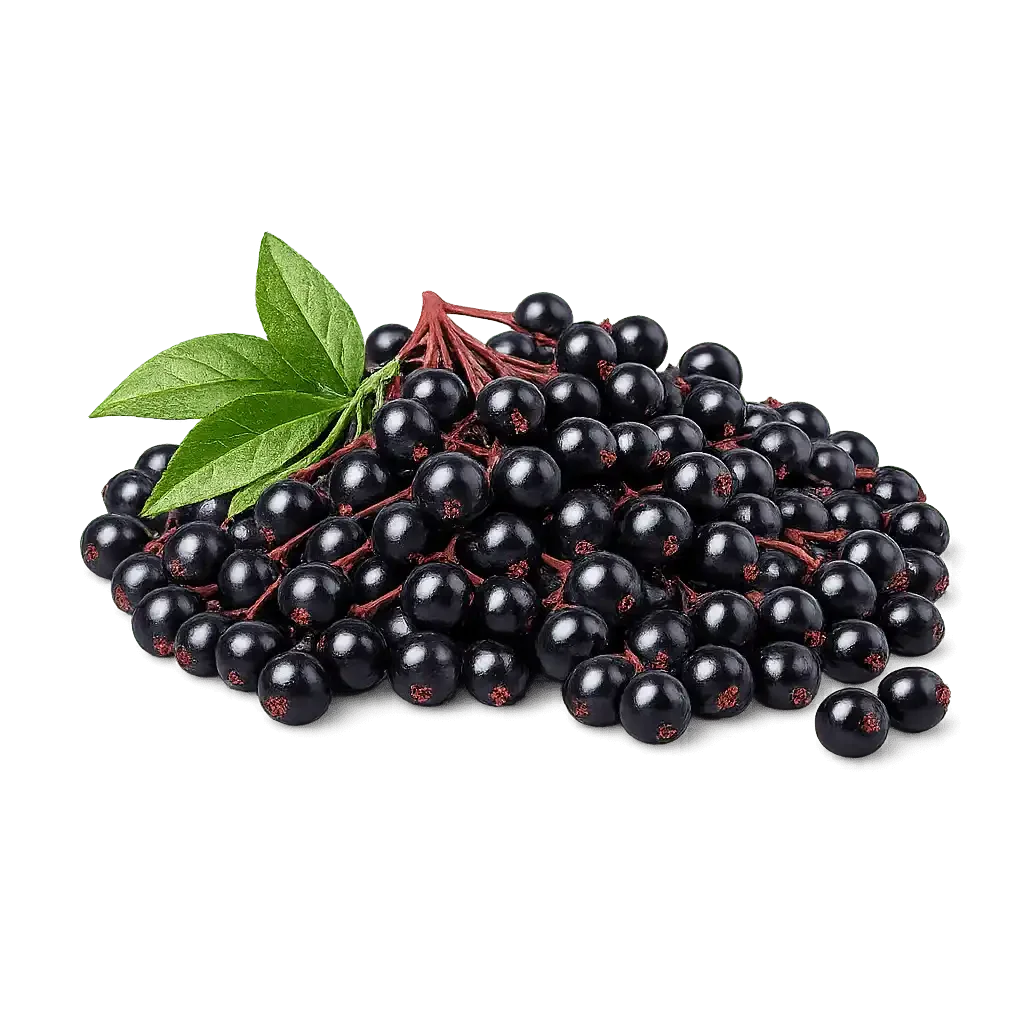
Ripe Berries: Fully ripe elderberries are deep purple to blue black, small, round, and glossy. The color is uniformly dark across the entire cluster when fully ripe. Individual berries that remain red or green within an otherwise ripe cluster should be discarded. The deep pigment stains everything it contacts, from fingers and clothing to cutting boards and countertops.
Size: Individual elderberries are small, measuring 1/8 to 1/4 inch in diameter. They are among the smallest commonly harvested berries. What they lack in individual size they make up for in sheer quantity, as each cluster contains dozens to hundreds of berries.
Cluster Pattern: This is what makes elderberry harvest practical despite the tiny berry size. Berries grow in large, dense, drooping clusters (cymes) that can weigh 4 to 8 ounces each. The entire cluster is harvested at once by cutting the stem with pruners, then berries are stripped from the stems during processing. A single mature bush can carry 20 to 40 or more clusters in a good year.
Seeds: Each elderberry contains 3 to 5 small, hard seeds. The seeds are noticeable if eating berries fresh (which is not recommended anyway) but are strained out in syrup, tincture, and jelly preparations. In jams and pies, the seeds are small enough to be acceptable.
Ripening Time: Elderberries ripen from late August through October in most of North America, with peak harvest in September for USDA Zones 4 through 7. Clusters within a single bush ripen over a 2 to 4 week period, with the highest, most sun exposed clusters ripening first. Berries ripen later in cooler zones and at higher elevations.
Visual Appeal: Elderberry bushes are among the most attractive edible shrubs for the homestead landscape. The large, lacy flower clusters in early summer are stunning. The heavy, drooping berry clusters in fall are visually dramatic. The compound leaves give a lush, tropical feel. Several ornamental cultivars (Black Lace, Black Beauty) offer deep burgundy to black foliage that is genuinely beautiful year round while still producing usable flowers and fruit.
How Much Berry Can You Collect?
Young Plants (Years 1 to 2): Minimal harvest in year 1. By year 2, expect 2 to 4 pounds per plant from strong cultivars.
Mature Plants (Years 4 and Up): A well managed, mature elderberry bush consistently produces 12 to 20 pounds of berries per plant annually. Exceptional plants of high yielding cultivars like York, Adams, and Wyldewood can produce 20 to 30 pounds in peak years under ideal conditions.
Per Row Estimate: A 100 foot hedgerow planted at 6 foot spacing (16 to 17 plants) should produce 190 to 340 pounds of berries per year once mature. This is outstanding volume from a single row.
Per Acre Estimate: At a commercial density of approximately 800 to 1,000 plants per acre (6 by 6 to 6 by 8 foot spacing), a mature planting can yield 10,000 to 20,000 pounds of fresh berries per acre. These numbers explain why elderberry has become one of the fastest growing specialty crops in the United States.
Harvest Season: Typically 3 to 5 weeks from late August through early October. Planting early and late ripening cultivars can extend the window to 6 weeks. Flower harvest occurs separately in June to July.
Ease of Harvest: Elderberry is one of the easier berry crops to harvest because you cut entire clusters rather than picking individual berries. Use hand pruners to clip ripe clusters into a bucket or basket. An experienced harvester can collect 15 to 25 pounds per hour. The subsequent destemming is the more time consuming step, but the freeze then strip method (described above) makes this dramatically faster.
Homestead Reality: Elderberry is one of the most productive berry crops a homesteader can grow, period. A planting of 6 to 10 mature bushes will produce 70 to 200 pounds of berries annually, far more than most families can process as syrup alone. Plan for multiple uses: syrup, tincture, wine, jam, pie, and dried berry storage. You will also have abundant flower clusters for cordial, fritters, and tea. A family of four focused primarily on elderberry syrup production will find that 4 to 6 bushes provide enough berries for a year's supply of syrup with plenty left over for other uses.
Why Elderberries Are Good for You
Key Vitamins and Minerals: Elderberries are an excellent source of vitamin C (providing roughly 50 to 60 mg per cup, approximately 55% to 65% of the daily value), vitamin A, potassium, iron, vitamin B6, and dietary fiber (approximately 10 grams per cup, which is exceptionally high for a berry). They also supply meaningful amounts of calcium, phosphorus, and folate.
Antioxidants: Elderberries are exceptionally rich in anthocyanins, particularly cyanidin 3 glucoside and cyanidin 3 sambubioside, which give the berries their deep purple pigment. Total antioxidant capacity ranks among the highest of commonly consumed fruits. Research published in the Journal of Functional Foods has documented elderberry's powerful free radical scavenging activity.
Immune Support: This is the headline benefit and the reason elderberry syrup has become a household staple. A meta analysis published in Complementary Therapies in Medicine (2019) reviewed multiple randomized controlled trials and concluded that elderberry supplementation substantially reduced upper respiratory symptoms associated with colds and influenza. The mechanisms appear to involve both direct antiviral activity and immune system modulation, including enhanced cytokine production.
Anti Inflammatory Properties: The anthocyanins and other phenolic compounds in elderberries exhibit strong anti inflammatory activity. Research has shown reductions in markers of systemic inflammation with regular elderberry consumption, which may benefit cardiovascular health, joint comfort, and general recovery.
Cardiovascular Health: The high anthocyanin and flavonoid content supports cardiovascular function through improved endothelial function, reduced LDL oxidation, and beneficial effects on blood lipid profiles. Elderflower preparations have also been traditionally used to support healthy blood pressure.
Traditional Medicinal Uses: Elderberry's medicinal history is among the longest and most thoroughly documented of any plant. Hippocrates referred to the elder tree as his "medicine chest." European folk medicine used elderberry preparations for colds, flu, fever, pain, inflammation, and respiratory complaints. Native American tribes across eastern North America used elderberry for infections, fever, rheumatism, and skin conditions. Elder flowers were used as a diaphoretic (to promote sweating during fevers) and as a gentle remedy for sinus congestion and hay fever. The bark was used externally in poultices. Modern research has largely validated the immune supporting and anti inflammatory properties that traditional users recognized for centuries.
What You Can Make with Elderberries
Elderberry Syrup: The flagship homestead product. Simmer 1 cup dried elderberries (or 2 cups fresh) with 3 cups water, 1 cinnamon stick, 4 to 5 whole cloves, and 1 tablespoon fresh grated ginger for 45 minutes until liquid reduces by half. Strain, cool to lukewarm, and stir in 1 cup raw honey. Bottle and refrigerate. Take 1 tablespoon daily for adults and 1 teaspoon for children over 1 year during cold and flu season. This single preparation justifies growing elderberry on any homestead.
Elderflower Cordial: Steep 20 to 25 fresh elderflower clusters in a syrup of 4 cups sugar, 6 cups water, and the zest and juice of 3 lemons for 24 to 48 hours. Strain and bottle. Dilute with sparkling water for a refreshing summer drink. Cordial keeps refrigerated for 4 to 6 weeks or can be frozen in ice cube trays.
Wine: Elderberry wine is one of the finest country wines, producing a full bodied, deeply colored wine comparable to a robust red grape wine. Use 3 to 4 pounds of berries per gallon. Elderflower wine, made from the flowers alone, produces a delicate, aromatic white wine. Many homestead winemakers consider elderberry their best vintage.
Jam and Jelly: Elderberry jam is rich, deeply flavored, and sets well with added pectin. Elderberry jelly (strained of seeds and pulp) has a beautiful jewel like clarity. Both are outstanding on biscuits, toast, and as a glaze for roasted meats.
Pies and Baked Goods: Elderberry pie is a traditional Appalachian and Midwestern dessert that deserves wider recognition. Combine elderberries with a squeeze of lemon, sugar, and a thickener (cornstarch or tapioca) for a filling with deep, complex berry flavor. Elderberries also work in muffins, cobblers, and quick breads.
Tincture: Fill a mason jar halfway with dried elderberries, cover with 80 proof vodka, seal, and store in a dark cabinet for 4 to 6 weeks, shaking daily. Strain and bottle. Elderberry tincture keeps 3 to 5 years and provides a concentrated, shelf stable immune support preparation.
Shrub (Drinking Vinegar): Combine equal parts elderberries, sugar, and apple cider vinegar. Macerate for 1 to 2 weeks, strain, and bottle. Mix 1 to 2 tablespoons with sparkling water for a probiotic rich, refreshing beverage.
Homestead Tip: Process your elderberry harvest in stages. Freeze the bulk of your berries immediately using the freeze and strip method. Then make syrup and tincture in batches throughout fall and winter as needed, using your frozen or dried stock. This spreads the workload and ensures you always have fresh, potent preparations on hand during peak cold and flu season.
Best Ways to Store, Can, or Make Jam
Freezing (Recommended Primary Method): Harvest whole clusters by cutting stems with pruners. Lay clusters flat on baking sheets and freeze for 2 to 3 hours. Once frozen, strip berries from stems by running a fork or your fingers along the stem over a bowl. Frozen berries pop off cleanly with minimal mess. Transfer stripped berries to vacuum sealed bags or heavy duty freezer bags. Label with date and weight. Keeps 12 to 18 months at 0 degrees Fahrenheit.
Drying: Strip berries from stems (fresh or using the freeze method). Spread in a single layer on dehydrator trays. Dry at 135 degrees Fahrenheit for 12 to 16 hours until berries are hard, dark, and completely dry. They should rattle when shaken and snap rather than squish when pressed. Condition in sealed glass jars for 5 to 7 days, shaking daily. Store in airtight containers or vacuum sealed bags for up to 24 months. Dried berries are the standard form for syrup and tincture making.
Canning Elderberry Jam
Ingredients: 4 cups crushed elderberries (about 3 pounds fresh, destemmed), 1/4 cup lemon juice, 1 package (1.75 ounces) powdered pectin, 4.5 cups granulated sugar
Method:
Combine crushed elderberries and lemon juice in a large, heavy bottomed pot.
Stir in powdered pectin. Bring to a full rolling boil over high heat, stirring constantly.
Add sugar all at once. Return to a full rolling boil and boil for exactly 1 minute, stirring constantly.
Remove from heat and skim any foam.
Ladle hot jam into sterilized half pint jars, leaving 1/4 inch headspace.
Wipe rims clean, apply lids and bands finger tight.
Process in a boiling water bath for 10 minutes (adjust for altitude: add 5 minutes above 6,000 feet).
Remove jars and cool undisturbed for 12 to 24 hours. Check seals before storing.
Yield: Approximately 6 to 7 half pint jars.
Elderberry Syrup for Canning: For shelf stable syrup (without honey, which is heat sensitive), simmer 2 cups dried elderberries with 4 cups water and spices for 45 minutes. Strain. Add 2 cups sugar to the hot liquid and stir until dissolved. Pour into sterilized half pint jars and process in a boiling water bath for 10 minutes. Shelf stable for 12 to 18 months. Note: the honey based syrup described in the recipe section is for refrigerator storage only and is not suitable for water bath canning.
Other Preservation Methods: Elderberry shrub (drinking vinegar) stores refrigerated for 6 months or more due to the vinegar content. Elderberry infused honey (dried berries steeped in raw honey for 4 to 6 weeks) keeps at room temperature for 12 months. Elderflower cordial can be frozen in ice cube trays for year round use. Elderberry leather (puree spread thin and dried at 135 degrees Fahrenheit for 8 to 12 hours) makes a nutrient dense, shelf stable snack.
Pros of Growing Elderberries
Exceptional Medicinal Value: No other homestead berry crop comes close to elderberry's documented immune supporting properties. Growing your own eliminates the cost of commercial syrups and tinctures, which can run $15 to $25 per bottle, and ensures you know exactly what goes into your preparations.
Extraordinary Productivity: At 12 to 20 pounds per mature bush, elderberry is one of the highest yielding berry crops available. A small planting of 6 to 10 bushes produces more fruit than most families can use, creating opportunities for barter, gifting, and sale.
Rapid Establishment: Few perennial fruit crops match elderberry's growth rate. Real production by year 2 and full production by year 4 means you are not waiting half a decade for a return on your investment.
Dual Harvest (Flowers and Berries): Elderberry is a two crop plant. The flowers in June and July provide cordial, fritters, tea, and champagne. The berries in September and October provide syrup, wine, jam, and tincture. No other homestead shrub offers this kind of dual value.
Pollinator and Wildlife Habitat: Elderberry flowers support enormous numbers of bees, butterflies, and beneficial insects. The berries feed songbirds and other wildlife in fall. The dense growth provides cover and nesting habitat. Elderberry plantings improve the overall ecology of the homestead.
Wet Soil Tolerance: Unlike most fruit crops, elderberries tolerate and even thrive in moist to wet soil conditions. They are ideal for planting along streams, ditches, pond edges, and low lying areas where other food crops would drown.
Easy Propagation: Elderberries root readily from hardwood cuttings, allowing you to expand your planting for free and share plants with neighbors and fellow homesteaders.
Cons of Growing Elderberries
Toxicity of Raw and Unripe Parts: All parts of the elderberry plant except ripe berries and flowers contain cyanogenic glycosides. Even ripe raw berries can cause nausea and digestive upset in some people. All berry preparations should be cooked or processed before consumption. This requires awareness and care, especially on homesteads with young children.
Aggressive Suckering: Elderberries spread vigorously by root suckers and can colonize areas beyond their intended planting if not managed. Regular sucker removal or mowing around the planting is necessary to maintain boundaries.
Bird Competition: Birds are intensely attracted to ripe elderberries and can strip a bush within days of full ripeness. Netting is often essential for a reliable harvest. Install netting as soon as berries begin turning color, not after you notice birds feeding.
Pruning Requirements: For best production, elderberry bushes need annual pruning to remove canes older than 3 years and maintain a productive framework of younger wood. Without pruning, plants become dense, overgrown, and less productive within a few years.
Short Fresh Shelf Life: Fresh elderberries deteriorate quickly (1 to 2 days at room temperature). The harvest must be processed promptly by freezing, drying, or cooking. This is not a fruit you can pick and leave on the counter.
Large Space Requirements: At 6 to 12 feet tall and wide, elderberry bushes take up significant garden real estate. They are not suited to small raised beds or tight urban lots unless you have room for at least a few large shrubs along a fence line or property border.
Processing Labor: While harvest is fast (cutting whole clusters), the subsequent destemming, cooking, and straining are time consuming. A serious elderberry harvest of 100 or more pounds requires a dedicated processing day or weekend. The freeze then strip method helps enormously but does not eliminate the work entirely.
Growing Tips for Homesteaders
Site Selection: Choose a location with full sun to partial shade. Elderberries produce best in full sun (6 to 8 hours) but tolerate light shade without major yield loss. They thrive in moist, fertile bottomland soils and along waterways. Avoid excessively dry, sandy sites unless irrigation is available. Elderberries tolerate wind well and can serve as windbreaks or living fences on exposed homesteads.
Soil Preparation: Elderberries prefer rich, moist, well drained to moderately wet soil with a pH of 5.5 to 6.5. They are adaptable to a wide range of soil types but perform best with generous organic matter. Incorporate 3 to 4 inches of compost or well rotted manure into the planting area. In heavy clay, raise planting rows slightly (6 to 8 inches) to improve drainage around the crown while still allowing roots to access the moisture below.
Planting: Space bushes 6 to 8 feet apart within rows and 10 to 12 feet between rows. Plant at the same depth as the nursery container or 1 to 2 inches deeper. Water deeply at planting and mulch heavily with 4 to 6 inches of wood chips, straw, or composted bark. Elderberries are heavy feeders and heavy drinkers, so do not skimp on mulch or water during establishment. Spring planting is preferred in most regions.
Cross Pollination: Elderberries benefit significantly from cross pollination between two different cultivars. While some cultivars are partially self fertile, planting at least two different named varieties dramatically improves fruit set, berry size, and overall yield. Plant pollination partners within 60 feet of each other. Good pairings include York with Adams, Bob Gordon with Wyldewood, and Ranch with Scotia.
Watering and Feeding: Provide 1 to 2 inches of water per week, especially during flower and fruit development. Elderberries are not drought tolerant and will drop fruit and reduce yields under water stress. Feed annually in early spring with a balanced fertilizer (10-10-10) at 1/4 pound per year of plant age, up to 1 pound per mature plant, or top dress generously with 2 to 3 inches of compost.
Pruning: Prune in late winter or early spring before bud break. The system is simple: elderberries fruit best on 2 and 3 year old canes. Each winter, remove all canes older than 3 years (cut to the ground), any dead or damaged wood, and thin excess first year canes to prevent overcrowding. A mature bush should carry 8 to 12 canes total, with a balanced mix of 1, 2, and 3 year old wood. This annual renewal keeps the bush productive and accessible.
Companion Planting and Variety Selection: Elderberries grow well alongside other moisture loving plants such as willows, dogwoods, and native wetland perennials. On the homestead, they pair naturally with comfrey (as a mulch plant beneath), bee balm, and other pollinator attractors. Avoid planting in deep shade under large trees, as this reduces yields significantly. For cultivar selection in most North American homesteads, York (large berries, heavy yields, late ripening) and Adams (reliable, early ripening, good for northern zones) are the proven standards. Bob Gordon (extremely high yields, vigorous) and Wyldewood (productive, good flavor) are excellent newer options. For ornamental and edible dual purpose, Black Lace and Black Beauty offer stunning dark foliage with usable flowers and fruit, though berry yields are lower than dedicated fruiting cultivars.
Conclusion
Elderberry stands in a class of its own among homestead plants. No other single shrub delivers this combination of medicinal value, culinary versatility, ecological benefit, and sheer productivity. A row of 6 to 10 bushes along a fence line or stream bank will produce hundreds of pounds of berries and dozens of flower clusters annually, supplying your family with immune supporting syrup, world class wine, rich jam, fragrant cordial, and enough surplus to share with your entire community. Add in the pollinator habitat, wildlife value, and wet site tolerance, and elderberry becomes one of the most important plants on any homestead.
The work is real but manageable. Annual pruning keeps the bushes productive. Netting protects the harvest from birds. The freeze then strip method transforms what was once a tedious destemming chore into a fast, clean process. And the processing itself, whether simmering syrup on a fall evening or racking elderberry wine into bottles, is deeply satisfying homestead work that connects you to a tradition stretching back thousands of years.
Plant two or more cultivars this spring, give them rich soil and consistent water, and by next fall you will be harvesting your first clusters of deep purple berries. Within three years, you will have more elderberries than you imagined possible and a medicine cabinet, pantry, and wine cellar that reflect the extraordinary generosity of this ancient, essential plant.
Explore more guides on different types of berries