
Goji Berry
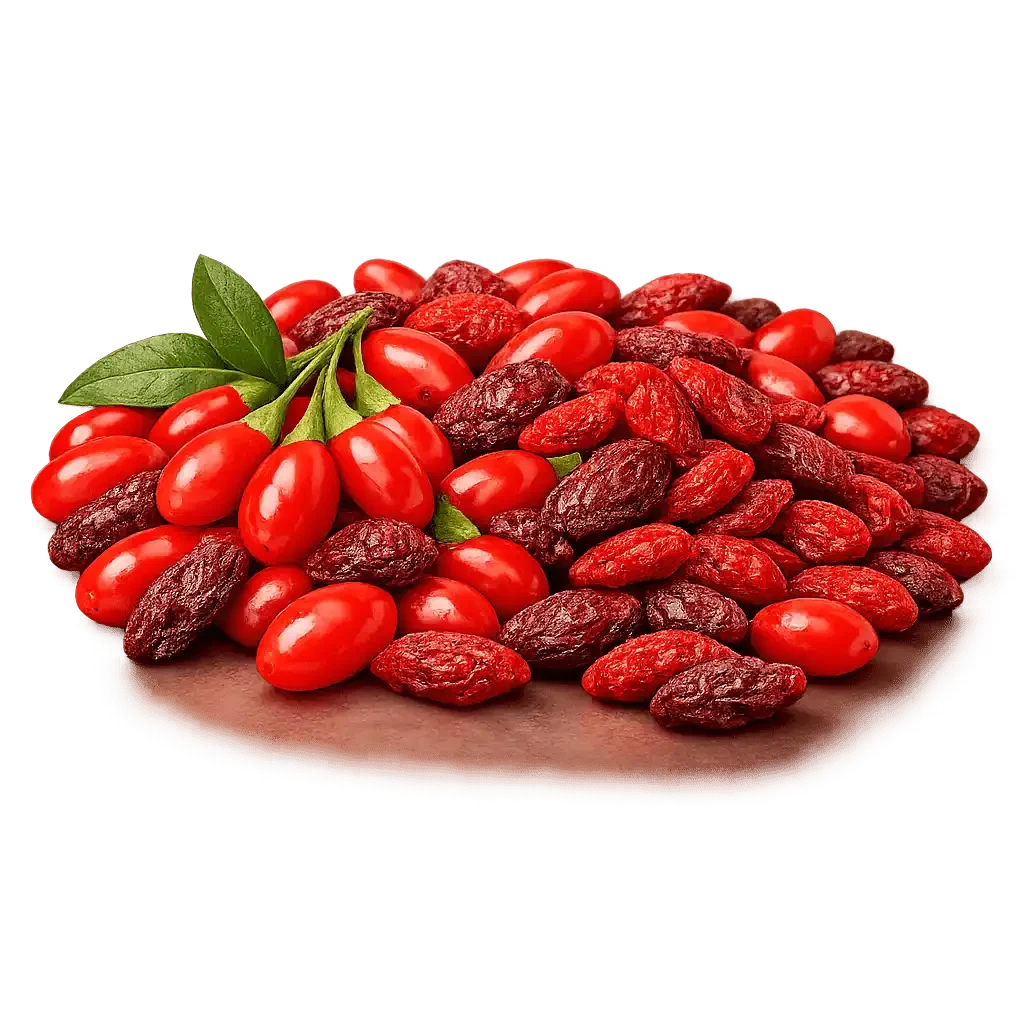
Complete Homestead Growing Guide
Botanical Name: Lycium barbarum (most commonly cultivated) and Lycium chinense (Chinese matrimony vine). Both species produce edible berries, but L. barbarum is the primary species grown for fruit production.
Origin: Goji berries are native to eastern Asia, with their center of origin in the Ningxia region of northwestern China, where they have been cultivated for over 2,000 years. The plant also occurs naturally across parts of Mongolia, Tibet, and the Himalayan foothills. Goji berries hold a revered place in traditional Chinese medicine and have been a dietary staple across central and eastern Asia for centuries. Commercial production remains concentrated in China, but the plant is fully adapted to a wide range of climates across North America, Europe, and beyond.
Description: The goji berry plant is a vigorous, semi woody, deciduous to semi evergreen shrub that produces small, bright red to orange red, oblong berries on arching, somewhat thorny canes. It belongs to the nightshade family (Solanaceae), making it a botanical relative of tomatoes, peppers, and potatoes. The plant grows as a sprawling, vining shrub that can be managed as a freestanding bush, trained on a trellis or fence, or grown as an informal hedge. The berries have a mild, slightly sweet flavor when fresh, with earthy and herbal undertones that deepen significantly when dried.
Size: Goji berry plants are vigorous growers, reaching 5 to 10 feet tall with an equal or greater spread if left unpruned. The long, arching canes give the plant a somewhat unruly, fountain like habit. With regular pruning and trellising, plants can be maintained at 4 to 6 feet tall and 3 to 4 feet wide. Without management, goji can spread aggressively by root suckers, forming dense thickets over time.
Why It Matters for Homesteaders: Goji berries are one of the few superfood crops that homesteaders can grow reliably in their own backyards across most of North America. They thrive in USDA Zones 3 through 10, tolerate drought, poor soil, heat, and cold, and begin producing fruit within 2 to 3 years of planting. Dried goji berries retail for $15 to $30 per pound, and the fresh berries are virtually impossible to find commercially, making homegrown goji berries both economically and nutritionally valuable. For homesteaders interested in growing nutrient dense foods that store easily, require minimal inputs, and thrive on neglect, goji berries are a compelling addition to the perennial food system.
How Long Does It Take to Grow?
Goji berries establish quickly and begin producing fruit sooner than most perennial fruit crops. The timeline below assumes starting from nursery transplants.
Year 1: Establishment and vigorous vegetative growth. Plants focus on developing their root system and sending up long, arching canes. You may see scattered flowers in the first season, particularly in late summer, and a handful of berries may set. Production is negligible. Expect plants to reach 3 to 5 feet tall by fall.
Year 2: Light but visible production. Plants begin fruiting more consistently, typically yielding 1/4 to 1 pound per plant. The root system is now well established and the plant begins producing root suckers. Growth is aggressive, with new canes reaching 4 to 6 feet.
Year 3: Meaningful production begins. Expect 1 to 3 pounds per plant. The bush is developing its mature framework, and the fruiting wood from the previous season's growth is producing well. This is when most homesteaders start to see a real return on their investment.
Years 4 to 5: Production increases substantially. Well managed plants will yield 3 to 7 pounds per bush annually. Plants are reaching their mature size and the balance between vegetative growth and fruit production is improving with proper pruning.
Years 6 and Beyond: Full production. Mature, well pruned goji berry plants can produce 7 to 12 pounds per bush per year. In ideal conditions with careful management, some growers report yields exceeding 15 pounds. Plants will continue producing for 15 to 20 years or more, and the overall planting can persist indefinitely as new suckers replace aging canes.
From Seed: Goji berries can be grown from seed, though it adds 1 to 2 years to the production timeline. Seeds germinate readily in 7 to 14 days at 68 to 75 degrees Fahrenheit, but seedling plants take longer to reach fruiting size. Named cultivars do not come true from seed, so vegetative propagation (cuttings or purchased plants) is preferred for consistent fruit quality.
Berry Shelf Life
Fresh: Fresh goji berries are extremely perishable. The thin, delicate skin bruises easily and the berries begin to darken and deteriorate within 1 to 2 days at room temperature. Refrigerated at 34 to 38 degrees Fahrenheit, expect 3 to 5 days of usable shelf life. Handle with extreme care and process or eat fresh berries the same day they are picked whenever possible.
Frozen: Goji berries freeze well, though the texture becomes soft upon thawing (suitable for smoothies, cooking, and baking, but not fresh eating). Spread berries in a single layer on a parchment lined baking sheet, freeze for 2 hours, then transfer to vacuum sealed bags. Properly stored at 0 degrees Fahrenheit, frozen goji berries keep 12 to 18 months.
Dried: This is the traditional and most practical storage method for goji berries. Dehydrate at 135 degrees Fahrenheit for 16 to 24 hours until berries are shriveled, chewy, and similar in texture to raisins. Properly dried goji berries store 12 to 24 months in airtight containers in a cool, dark location. Drying concentrates both flavor and nutrition, and dried goji berries are the form most commonly used in cooking, teas, and snacking.
Jams and Preserves: Goji berry jam, while less traditional than other berry preserves, cans well using standard water bath methods with a shelf life of 12 to 18 months. The mild flavor benefits from pairing with citrus, ginger, or other berries.
Homestead Storage Tip: Invest in a quality food dehydrator if you plan to grow goji berries seriously. Drying is by far the most practical and space efficient way to store large quantities. Sun drying works in arid climates (the traditional method in Ningxia), but a dehydrator gives consistent results regardless of your weather. Vacuum seal dried berries in small batches (1/2 pound bags) for maximum shelf life.
Berry Color and Appearance
Flowers: Goji berry flowers are small (about 1/2 inch across), star shaped to funnel shaped, and a striking lavender to purple color. They appear in clusters along the stems beginning in early to midsummer and continue blooming in waves through fall, which is part of what makes goji unique: the plant flowers and fruits simultaneously over a long season. The flowers are attractive to bees, butterflies, and other pollinators.
Unripe Berries: Young goji berries start as small, pale green ovals. As they develop, they transition through light yellow, then orange, before reaching their final red color. Unripe berries are bitter and should not be consumed in quantity.
Ripe Berries: Fully ripe goji berries are bright red to orange red, glossy, and slightly translucent. They are oblong to teardrop shaped, resembling miniature peppers or elongated cherry tomatoes. The color is vivid and eye catching on the plant, making ripe berries easy to identify among the foliage.
Size: Individual berries measure 1/2 to 1 inch long and about 1/4 to 1/3 inch wide. They are small but produced in large quantities along the stems. Improved cultivars like Crimson Star and Phoenix Tears produce berries at the larger end of the range.
Cluster Pattern: Berries grow individually or in small clusters of 2 to 5 along the arching canes, typically at leaf axils. They are distributed along the length of the branch, with the heaviest concentration on second year wood and short lateral spurs.
Seeds: Each goji berry contains 10 to 30 tiny, flat, yellowish seeds. The seeds are small enough to be unnoticeable when eating fresh or dried berries and pose no issue in cooking, baking, or jam making.
Ripening Time: Goji berries have one of the longest harvest seasons of any temperate fruit. Berries begin ripening in midsummer (July in most zones) and continue through the first hard frost, often into October or November. Peak production typically occurs in August and September. This extended harvest window is a major advantage for homesteaders, as it spreads the workload over months rather than weeks.
Visual Appeal: Goji berry plants are attractive in the landscape, with graceful arching canes, bright green foliage, purple flowers, and vivid red berries often present simultaneously from midsummer onward. They work well as ornamental edible hedges, living fence plantings, or trained specimens on trellises and arbors.
How Much Berry Can You Collect?
Young Plants (Years 1 to 2): Minimal harvest. A handful to 1 pound per plant by the end of year 2.
Mature Plants (Years 5 and Up): Well managed goji berry plants consistently produce 7 to 12 pounds per bush annually. Some growers with optimized trellising and pruning report yields of 12 to 15 pounds per plant in peak years.
Per Row Estimate: A 100 foot row planted at 5 foot spacing (20 plants) should produce 140 to 240 pounds of fresh berries per year once mature. Keep in mind that fresh berries reduce to roughly 1/5 their weight when dried, so 200 pounds fresh equals approximately 40 pounds dried.
Per Acre Estimate: At a commercial density of approximately 1,200 plants per acre (5 by 7 foot spacing on trellises), a mature planting can yield 8,000 to 14,000 pounds of fresh berries per acre, or roughly 1,600 to 2,800 pounds dried.
Harvest Season: July through October or first frost, with peak production in August and September. The extended season means you will be picking multiple times per week over 3 to 4 months rather than harvesting all at once.
Ease of Harvest: Goji berries require gentle handling. The berries stain skin and clothing on contact (the juice leaves a persistent reddish orange stain). Many growers wear latex or nitrile gloves during harvest. Picking is done by gently plucking individual berries or small clusters by hand. Expect to harvest 2 to 4 pounds per hour. A faster method is to hold a container below the branch and gently shake or strip berries with a gloved hand, though this risks bruising. The arching canes and small thorns on some cultivars slow the process.
Homestead Reality: The long harvest season is both a blessing and a commitment. You will not be overwhelmed by a 2 week avalanche of fruit, but you will need to pick 2 to 3 times per week for several months. For a family of four, 5 to 8 mature plants will produce a generous supply of dried berries for year round use, along with plenty for fresh eating, smoothies, and cooking during the harvest season. Plan to run your dehydrator frequently from midsummer through fall.
Why Goji Berries Are Good for You
Key Vitamins and Minerals: Goji berries are remarkably nutrient dense. A 1 ounce serving of dried berries (about 1/4 cup) provides approximately 140% of the daily value for vitamin A (as beta carotene and zeaxanthin), 10% to 15% of daily vitamin C, and meaningful amounts of iron (11% DV), vitamin B2, selenium, potassium, and zinc. Protein content is notably high for a fruit, at approximately 4 grams per ounce of dried berries.
Antioxidants: Goji berries are exceptionally rich in carotenoids, particularly zeaxanthin and beta carotene, as well as polysaccharides (known as Lycium barbarum polysaccharides, or LBPs) that have been the focus of extensive research. They also contain significant levels of vitamin C, flavonoids, and phenolic compounds. ORAC (Oxygen Radical Absorbance Capacity) values for goji berries rank among the highest of commonly consumed fruits.
Eye Health: The exceptionally high zeaxanthin content makes goji berries one of the best dietary sources of this carotenoid, which concentrates in the macula of the eye and helps protect against age related macular degeneration and other oxidative eye damage. A study published in Optometry and Vision Science found that daily goji berry consumption increased plasma zeaxanthin levels and provided protective antioxidant effects in the eyes of elderly participants.
Immune Function: The unique polysaccharides (LBPs) in goji berries have been shown in multiple studies to modulate immune function, enhancing the activity of natural killer cells and other immune markers. Research published in the Journal of Medicinal Food documented improvements in general wellbeing, immune function, and energy in participants consuming goji berry juice over a 14 day period.
Anti Aging and Skin Health: The high antioxidant load, particularly beta carotene and vitamin C, supports skin health and may help protect against UV induced oxidative damage. Traditional Chinese medicine has long classified goji berries as a longevity tonic.
Traditional Medicinal Uses: Goji berries have been a cornerstone of traditional Chinese medicine for over 2,000 years, classified as a superior tonic herb that nourishes the liver, kidneys, and eyes. They are commonly used in soups, teas, and herbal formulations. In Tibetan medicine, goji berries are used to support vitality, improve sleep, and enhance overall constitution. In traditional Mongolian medicine, the berries were consumed to promote endurance and recovery. While modern clinical research is still catching up to the scope of traditional claims, the nutritional profile of the berry is well established and impressive by any standard.
What You Can Make with Goji Berries
Trail Mix and Snacking: Dried goji berries are a perfect snacking fruit, similar to raisins but with more nutritional density and a pleasant, mildly sweet, slightly herbal flavor. Combine with nuts, seeds, dark chocolate chips, and other dried fruits for a premium homemade trail mix.
Tea and Infusions: One of the oldest and simplest preparations. Steep a tablespoon of dried goji berries in hot water for 5 to 10 minutes. The berries plump up and the water turns a beautiful amber. Drink the tea and eat the rehydrated berries. Add honey, lemon, or fresh ginger for variation. Goji berries are also traditional additions to Chinese herbal soups and bone broth.
Smoothies: Add 2 to 3 tablespoons of dried or a handful of frozen goji berries to any smoothie for a nutritional boost. They blend well with banana, mango, yogurt, and greens.
Jam and Preserves: Goji berry jam has a subtle, earthy sweetness that pairs well with ginger, lemon, or vanilla. Because the flavor is mild, combining goji berries 50/50 with a more assertive berry (raspberry, blackberry, or cranberry) creates a more dynamic preserve.
Baked Goods: Use dried goji berries in place of raisins or cranberries in muffins, scones, granola bars, cookies, and quick breads. They rehydrate slightly during baking, adding pockets of chewy sweetness.
Sauces and Savory Applications: Goji berries are excellent in savory cooking. Add dried berries to rice pilafs, grain salads, stir fries, and braised meats. A goji berry and red pepper sauce makes a vibrant accompaniment to roasted chicken or pork. In Chinese cooking, goji berries are commonly added to soups and stews in the last 10 to 15 minutes of cooking.
Wine and Infused Spirits: Goji berry wine produces a unique, amber colored wine with a mildly sweet, herbal character. Use 5 to 6 pounds of fresh berries per gallon. Dried goji berries can also be steeped in vodka, brandy, or rice wine for 4 to 6 weeks to produce a tonic liqueur with roots in traditional Chinese practice.
Homestead Tip: Keep a large jar of dried goji berries on the counter as a daily snacking and cooking staple. A small handful added to morning oatmeal, afternoon trail mix, or evening soup provides a consistent, low effort nutritional boost throughout the day. This is the simplest and most sustainable way to integrate your harvest into daily life.
Best Ways to Store, Can, or Make Jam
Drying (Recommended Primary Method): Gently rinse berries and remove any stems. Spread in a single layer on dehydrator trays, leaving space between berries for air circulation. Dry at 135 degrees Fahrenheit for 16 to 24 hours, checking periodically. Berries are done when they are shriveled, chewy, and similar in texture to raisins with no visible moisture when cut open. Condition by sealing in glass jars for 5 to 7 days, shaking daily. If condensation appears, return to the dehydrator. Vacuum seal in 1/2 to 1 pound bags and store in a cool, dark location for up to 24 months.
Freezing: Rinse berries gently and pat dry. Spread in a single layer on a parchment lined baking sheet, freeze for 2 hours, then transfer to vacuum sealed bags or heavy duty freezer bags. Label with date and weight. Keeps 12 to 18 months at 0 degrees Fahrenheit. Best used in smoothies, cooking, and baking after thawing (texture will be soft).
Canning Goji Berry Jam
Ingredients: 4 cups fresh goji berries (or 2 cups dried berries rehydrated in 2 cups warm water for 30 minutes), 2 cups granulated sugar, 1 package (1.75 ounces) powdered pectin, 3 tablespoons lemon juice, 1 teaspoon freshly grated ginger (optional)
Method:
Mash or pulse goji berries in a blender until roughly pureed (some texture is desirable).
Combine puree, lemon juice, and ginger (if using) in a large, heavy bottomed pot. Stir in pectin.
Bring to a full rolling boil over high heat, stirring constantly.
Add sugar all at once. Return to a full rolling boil and boil for exactly 1 minute, stirring constantly.
Remove from heat and skim any foam.
Ladle hot jam into sterilized half pint jars, leaving 1/4 inch headspace.
Wipe rims clean, apply lids and bands finger tight.
Process in a boiling water bath for 10 minutes (adjust for altitude: add 5 minutes above 6,000 feet).
Cool undisturbed for 12 to 24 hours. Check seals before storing.
Yield: Approximately 4 to 5 half pint jars.
Goji Berry Syrup: Combine 4 cups fresh goji berries (or 2 cups dried, rehydrated), 2 cups sugar, and 1.5 cups water. Simmer for 20 minutes, mashing gently. Strain through fine mesh cheesecloth. Pour into sterilized jars and process in a boiling water bath for 10 minutes. Refrigerated syrup keeps 3 to 4 weeks.
Other Preservation Methods: Goji berries infused in honey make an excellent medicinal and culinary preparation. Pack a jar loosely with dried goji berries and cover with raw honey. Allow to infuse for 2 to 4 weeks, turning the jar occasionally. The resulting goji honey is a potent spread for toast, a tea sweetener, and a traditional wellness remedy. Goji berry vinegar (dried berries steeped in apple cider vinegar for 3 to 4 weeks, then strained) makes a flavorful salad dressing base with added nutritional value.
Pros of Growing Goji Berries
Extreme Climate Adaptability: Goji berries grow successfully in USDA Zones 3 through 10, tolerating winter cold to minus 30 degrees Fahrenheit and summer heat well above 100 degrees Fahrenheit. Very few fruit crops match this range.
Drought Tolerance: Once established, goji berry plants are remarkably drought tolerant, making them ideal for dry climate homesteads, water restricted properties, and xeriscaped landscapes where irrigation is limited.
Extended Harvest Season: The 3 to 4 month fruiting window from July through frost means a steady, manageable flow of berries rather than an overwhelming glut. This suits the rhythms of a busy homestead perfectly.
Exceptional Nutritional Density: Few fruits can match the concentrated nutrition of goji berries, particularly their zeaxanthin, polysaccharide, and protein content. Growing your own ensures freshness and eliminates the need to purchase expensive imported dried berries.
High Market Value: Dried goji berries retail for $15 to $30 per pound. Even a small homestead planting can produce significant economic value, whether sold, bartered, or simply replacing a costly store bought product.
Low Input Requirements: Goji berries thrive in poor, alkaline, sandy, or rocky soils where most fruit crops fail. They need minimal fertilizer, no pesticides in most situations, and tolerate conditions that would stress or kill many other food plants.
Dual Ornamental and Edible Use: The purple flowers, vivid red berries, and graceful arching form make goji berries attractive landscape plants. They function well as hedges, trellis plants, and edible ornamentals.
Cons of Growing Goji Berries
Aggressive Spreading: Goji berries spread vigorously by root suckers and can become invasive if not managed. Regular removal of suckers is necessary to keep plants contained. In some regions, goji berries have escaped cultivation and naturalized, which has raised ecological concerns. Plant with containment in mind, using root barriers, raised beds, or regular mowing around the planting.
Perishable Fresh Fruit: The berries are extremely delicate and deteriorate within 1 to 2 days of picking at room temperature. This necessitates immediate processing (drying, freezing, or cooking) and makes fresh market sales challenging.
Labor Intensive Harvest: The small berry size, long harvest season, and staining juice make picking slow and messy. At 2 to 4 pounds per hour, harvesting requires consistent effort over several months. Gloves and dedicated harvest clothing are recommended.
Pruning and Training Requirements: Without regular pruning, goji berry plants become tangled, unproductive thickets of long, arching canes. Annual pruning and training (ideally on a trellis or support system) is necessary for good yields and manageable plants.
Mild Fresh Flavor: Unlike intensely flavored berries such as raspberries or blackberries, fresh goji berries have a subtle, earthy sweetness that some people find underwhelming. The flavor improves significantly with drying and concentrates in cooked applications, but fresh eating appeal is limited compared to other homestead berries.
Potential Nightshade Sensitivity: As a member of the Solanaceae family, goji berries may cause reactions in individuals sensitive to nightshades. Consult a healthcare provider if you have known nightshade sensitivities before consuming goji berries regularly.
Pest and Disease Issues in Humid Climates: While largely pest free in dry climates, goji berries can develop fungal issues (leaf spot, powdery mildew) in humid environments. Good air circulation, proper spacing, and trellising help manage these problems.
Growing Tips for Homesteaders
Site Selection: Choose a location with full sun (6 to 8 hours minimum). Goji berries produce best in full, direct sunlight and tolerate heat well. Good drainage is essential as they are susceptible to root rot in waterlogged soil. Avoid low lying, poorly drained areas. South or west facing slopes are ideal. In regions with very hot summers (Zone 9 and above), light afternoon shade can reduce heat stress on the berries themselves without significantly impacting production.
Soil Preparation: Goji berries are uniquely tolerant of poor, alkaline, and sandy soils. They prefer a pH of 6.5 to 8.0, which is more alkaline than most fruit crops require. Do not amend soil with sulfur or acidifying materials. If your soil is heavy clay, improve drainage by incorporating sand, gravel, and coarse compost, or plant in raised beds. On most homesteads, minimal soil preparation is needed. Simply loosen the soil to a depth of 12 to 18 inches and incorporate a few inches of compost.
Planting: Space plants 5 to 6 feet apart if growing as freestanding bushes, or 3 to 4 feet apart on a trellis system. Install a sturdy trellis or support at planting time (T posts with 2 to 3 horizontal wires work well). Plant at the same depth as the nursery container. Water deeply at planting and mulch with 2 to 3 inches of straw, wood chips, or gravel. Spring planting after the last frost is preferred in most regions.
Trellising and Training: A trellis system dramatically improves fruit quality, harvest efficiency, and plant health. Train 1 to 3 main upright canes per plant, tying them to the support. Allow lateral branches to develop along the horizontal wires. This keeps fruit accessible, improves air circulation, and makes pruning straightforward. Without a trellis, plants will sprawl and produce much of their fruit in a tangled interior that is difficult to access.
Pruning: Prune annually in late winter or early spring before new growth begins. Remove dead, weak, and crossing canes. Cut back lateral branches to 6 to 8 inches to encourage productive fruiting spurs. Remove excess root suckers, leaving only those needed to replace aging main canes. The goal is an open, well spaced framework that allows light and air to reach all parts of the plant.
Watering: Water consistently during the first 2 years of establishment (1 inch per week). Once established, reduce watering to deep, infrequent irrigation during extended dry periods. Overwatering is a bigger risk than underwatering for goji berries. Drip irrigation is ideal and keeps foliage dry, reducing disease risk.
Companion Planting and Variety Selection: Goji berries grow well alongside other drought tolerant perennials such as lavender, rosemary, sage, and yarrow. Avoid planting near other nightshade family crops to reduce shared disease pressure. For cultivar selection, Crimson Star (also sold as Big Lifeberry) is widely recommended for North American homesteads due to its large fruit size, sweet flavor, and strong yields. Phoenix Tears is another improved cultivar with good reports. Avoid generic unnamed seedlings if possible, as fruit size and flavor vary widely in seedling populations. Purchase named cultivars from reputable nurseries for the most consistent results.
Conclusion
Goji berries bring something to the homestead that few other plants can: a nutrient dense, high value crop that thrives in difficult conditions where most food plants struggle. They tolerate drought, poor soil, extreme cold, and intense heat, yet produce thousands of bright red berries over a harvest season that stretches from midsummer to frost. For the homesteader in a dry, alkaline, or challenging climate, goji berries may be one of the most practical and rewarding perennial plantings available.
The trade offs are real. The berries are perishable and require prompt processing. The plants spread aggressively without management. The harvest is slow and staining. But these are manageable challenges, especially for a homesteader who invests in a good dehydrator, installs a simple trellis, and stays on top of annual pruning and sucker removal. The reward is a steady supply of one of the most nutritionally concentrated fruits on the planet, grown on your own land, dried and stored for year round use without depending on expensive imported products.
Start with 5 to 8 plants of a named cultivar, install a trellis at planting, and commit to keeping them pruned and contained. Within 3 years, you will have a reliable harvest of berries that fuel your family's health through smoothies, teas, trail mixes, and cooking throughout the year. Few crops pack this much nutrition, this much resilience, and this much long term value into such a forgiving, low maintenance package.
Explore more guides on different types of berries