
Gooseberry
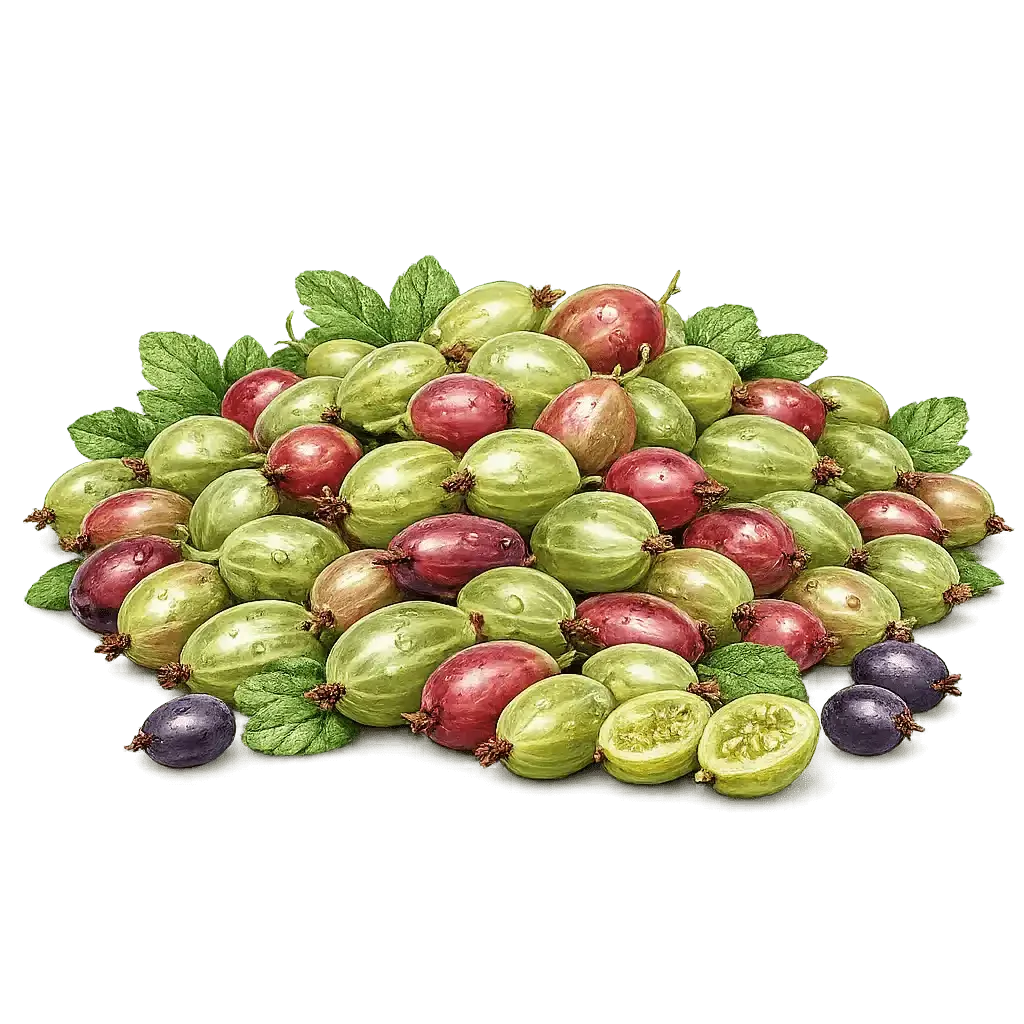
Complete Homestead Growing Guide
Botanical Name: Ribes uva-crispa (European gooseberry), Ribes hirtellum (American gooseberry), and numerous hybrid cultivars combining both species
Origin: Gooseberries have a long history across both Europe and North America. European gooseberries (R. uva-crispa) have been cultivated in England, France, Germany, and Scandinavia since at least the 1500s, where competitive gooseberry growing clubs were once a serious cultural tradition. American gooseberries (R. hirtellum) are native across much of the northern United States and Canada. Modern cultivars are often hybrids that combine the larger fruit size and superior flavor of European varieties with the disease resistance and hardiness of American species.
Description: Gooseberries are small, thorny, deciduous shrubs that produce translucent, veined berries ranging from marble to grape sized. The fruit has a distinctive tart to sweet flavor profile that shifts dramatically depending on ripeness, making it one of the most versatile culinary berries available to homesteaders. Green, underripe gooseberries are intensely tart and ideal for savory applications and preserves, while fully ripe berries become sweet, aromatic, and complex enough to eat straight off the bush. The plants are part of the currant family (Grossulariaceae) and share many cultural requirements with red and black currants.
Size: Most gooseberry bushes reach 3 to 5 feet tall with a similar spread. They grow as multi stemmed, arching shrubs that can be maintained as freestanding bushes, trained along fences, or pruned into single stemmed standards (a traditional European technique). The compact, manageable size makes gooseberries ideal for small homesteads, kitchen gardens, and tight spaces where larger fruit plants would not fit.
Why It Matters for Homesteaders: Gooseberries are one of the most reliable, productive, and underappreciated fruit crops for the homestead. They tolerate cold winters (USDA Zones 3 through 8), partial shade, and a wider range of soil types than most berry crops. They produce heavy yields on compact plants, ripen in the early to midsummer gap between spring strawberries and late summer brambles, and are virtually unknown in grocery stores, meaning everything you grow is something you simply cannot buy. The culinary range is extraordinary: from pies and jams to chutneys, wines, fools, and savory sauces. For the homesteader who values self sufficiency and culinary diversity, gooseberries are an essential planting.
How Long Does It Take to Grow?
Gooseberries are among the faster establishing perennial fruit crops, rewarding homesteaders with production relatively quickly.
Year 1: Establishment season. Plants focus on root development and putting out new canes. You may see scattered flowers on larger nursery stock, but fruit production will be minimal. Pinch off any fruit that does set to direct energy into building a strong root system and framework. Plants typically reach 12 to 18 inches by season's end.
Year 2: Light but real production begins. Expect 1 to 2 pounds per plant from vigorous cultivars. The bush is developing its characteristic arching form and producing strong new canes from the base. This is an encouraging year that confirms your planting is on track.
Year 3: Production increases significantly. Well managed bushes will yield 3 to 6 pounds per plant. The framework of the bush is now largely established and fruiting wood is plentiful.
Years 4 to 5: Plants reach full maturity. Expect 6 to 10 pounds per bush annually, depending on cultivar, pruning, and growing conditions. European types and hybrids with larger fruit will be at the upper end of this range.
Years 6 and Beyond: Sustained full production. A properly pruned gooseberry bush will continue producing 8 to 12 pounds per year for 15 to 20 years. Some well maintained bushes have remained productive for 25 years or more. Productivity depends heavily on annual pruning to maintain a balance of young, productive wood.
From Cuttings: Gooseberries propagate easily from hardwood cuttings taken in late fall. Success rates of 60% to 80% are typical with proper technique. Add 1 year to the production timeline when starting from cuttings rather than nursery plants.
Berry Shelf Life
Fresh: Gooseberries have a firmer skin than most soft fruits, giving them better shelf life than raspberries or honeyberries. Expect 5 to 7 days at room temperature for underripe (green) berries and 3 to 5 days for fully ripe fruit. Refrigerated at 34 to 38 degrees Fahrenheit, gooseberries keep 2 to 3 weeks, which is exceptional for a fresh berry.
Frozen: Gooseberries freeze outstandingly well. Their firm texture holds up to freezing and thawing better than most berries. Spread on a parchment lined baking sheet, freeze for 2 hours, then transfer to vacuum sealed bags or heavy duty freezer bags. Properly stored at 0 degrees Fahrenheit, frozen gooseberries keep 12 to 18 months with minimal quality loss.
Dried: Dehydrate at 135 degrees Fahrenheit for 10 to 14 hours until leathery and slightly sticky. Dried gooseberries have a concentrated tart sweetness similar to dried cranberries. They store 6 to 12 months in airtight containers in a cool, dark location and work well in baking, trail mixes, and as a snacking fruit.
Jams and Preserves: Water bath canned gooseberry jam and preserves keep 12 to 18 months in a cool pantry. Gooseberries are naturally high in pectin, especially when slightly underripe, making them one of the easiest fruits to set into jam without commercial pectin.
Homestead Storage Tip: Harvest gooseberries at two stages for maximum versatility. Pick half of your crop while still green and firm for cooking, canning, and long term fresh storage. Let the other half ripen fully on the bush for fresh eating, desserts, and wine. The green berries will keep in the refrigerator for 2 to 3 weeks, giving you a generous window for processing.
Berry Color and Appearance
Flowers: Gooseberry flowers are small (about 1/4 to 1/2 inch), bell shaped, and appear in mid spring (April to May in most zones). They are typically greenish white to pinkish and hang individually or in clusters of 2 to 3 beneath the branches. While not showy, they are visited readily by bees and other early season pollinators.
Unripe Berries: Young gooseberries are small, hard, bright green spheres with prominent longitudinal veins visible through the translucent skin. They have fine, soft hairs on some cultivars (smooth skinned on others). At this stage, the flavor is intensely tart, almost sour, which is prized for cooking.
Ripe Berries: Fully ripe gooseberries transform dramatically. Depending on cultivar, they ripen to pale green, golden yellow, pinkish red, or deep purple. The skin becomes more translucent, revealing the seeds and internal structure. The veining pattern remains visible and gives gooseberries their distinctive, almost jewel like appearance. Flavor shifts from sharply tart to sweet, aromatic, and complex, with notes often compared to grape, kiwi, and citrus.
Size: Gooseberries range from 1/2 inch to over 1 inch in diameter depending on cultivar. European varieties and modern hybrids produce the largest fruit, with some cultivars like Invicta and Leveller reaching the size of a small grape or cherry tomato. American types tend to be smaller but more numerous.
Cluster Pattern: Berries grow individually or in pairs along the branches, typically at the base of leaf clusters and often tucked close to the thorny stems. This placement makes harvest slower than open clustered berries but protects the fruit from bird damage.
Seeds: Each gooseberry contains 15 to 30 small, soft seeds distributed through the flesh. They are barely noticeable when eating fresh and strain out easily when making jellies or syrups. In jams and pies, they add no objectionable texture.
Ripening Time: Gooseberries ripen from early June through late July depending on cultivar and location. In USDA Zones 5 and 6, peak harvest typically falls in late June to mid July. Berries ripen over a 3 to 4 week window on each bush, allowing for staggered picking.
Visual Appeal: Gooseberry bushes are attractive in the landscape, with lobed, maple like leaves and arching branch structure. The translucent, jewel toned berries hanging along the branches are genuinely beautiful and make gooseberries a worthy addition to any edible ornamental planting.
How Much Berry Can You Collect?
Young Plants (Years 1 to 2): Minimal harvest in year 1. By year 2, expect 1 to 2 pounds per plant from healthy, well sited bushes.
Mature Plants (Years 4 and Up): A well pruned, mature gooseberry bush consistently produces 8 to 12 pounds per plant annually. Exceptional bushes of large fruited European cultivars can exceed 15 pounds in a strong year.
Per Row Estimate: A 100 foot row planted at 4 foot spacing (25 plants) should produce 200 to 300 pounds of berries per year once mature. This is outstanding productivity for a compact hedge planting.
Per Acre Estimate: At a commercial density of approximately 2,000 plants per acre (4 by 5 foot spacing), a mature planting can yield 16,000 to 24,000 pounds per acre. Even at small homestead scale, these numbers illustrate the remarkable productivity of gooseberries relative to their footprint.
Harvest Season: Typically 3 to 5 weeks from early June through late July, depending on zone and cultivar. Planting early, mid, and late season varieties can stretch the harvest window to 6 weeks or more.
Ease of Harvest: Here is the trade off. Gooseberries are thorny, and picking requires care. Thick leather gloves or thorn proof garden gloves are highly recommended. Experienced pickers can harvest 3 to 5 pounds per hour by hand. A useful technique is to run a gloved hand along the branch, stripping berries into a bucket held below. Some growers prune bushes into an open goblet shape specifically to make interior berries more accessible.
Homestead Reality: Gooseberries are a high yield, moderate effort crop. The thorns slow you down, but the sheer volume of fruit per bush compensates. A planting of 8 to 12 mature bushes will produce 60 to 140 pounds of fruit annually, far more than a typical family can eat fresh. Plan for serious preservation. This is a crop that fills the pantry.
Why Gooseberries Are Good for You
Key Vitamins and Minerals: Gooseberries are exceptionally high in vitamin C, providing 40 to 70 mg per cup (roughly 45% to 80% of the daily value). They also deliver meaningful amounts of vitamin A, vitamin B5, vitamin B6, potassium, manganese, and copper. Dietary fiber content is approximately 6 grams per cup, which is higher than most berries and contributes to digestive health.
Antioxidants: Gooseberries contain a diverse array of antioxidants including anthocyanins (especially in red and purple cultivars), flavonols, phenolic acids, and organic acids. Research published in Food Chemistry has demonstrated that gooseberries exhibit strong free radical scavenging activity, comparable to or exceeding many commonly consumed berries.
Digestive Health: The high fiber content combined with natural organic acids (citric and malic acid) supports healthy digestion. Gooseberries have traditionally been considered a mild digestive tonic across European folk medicine traditions.
Immune Support: The exceptional vitamin C content makes gooseberries a powerful immune supporting food. A single cup provides nearly a full day's requirement of vitamin C, and regular consumption during the harvest season builds nutrient reserves heading into fall and winter.
Blood Sugar Regulation: Some research suggests that compounds in gooseberries, particularly chlorogenic acid, may help moderate blood sugar response after meals. Indian gooseberry (Phyllanthus emblica, a different species) has extensive research in Ayurvedic medicine for blood sugar management, and while European and American gooseberries are distinct species, they share some beneficial compound classes.
Traditional Medicinal Uses: In European folk medicine, gooseberries were used to treat fevers, reduce inflammation, and support liver and kidney function. Gooseberry leaf tea was a traditional remedy for urinary tract complaints. In Russian and Scandinavian traditions, gooseberry juice was considered a spring tonic to restore vitality after long winters. While modern research has not validated all historical uses, the nutritional density and antioxidant profile of the berry is well documented.
What You Can Make with Gooseberries
Jam and Preserves: Gooseberry jam is a classic English preserve with good reason. The natural pectin content means gooseberries set easily, often without added commercial pectin. The flavor is bright, tart, and complex. For a traditional approach, use equal parts green gooseberries and sugar by weight, simmered until set.
Pies and Crumbles: Gooseberry pie and gooseberry crumble are iconic British desserts that deserve wider recognition. The tart fruit needs more sugar than blueberries or strawberries (typically 3/4 to 1 cup per pie), but the result is a filling with extraordinary depth of flavor. Pair with a generous pour of fresh cream or custard.
Gooseberry Fool: This classic English dessert is simply cooked, sweetened gooseberry puree folded into whipped cream. It takes 15 minutes to prepare and is one of the most elegant, simple desserts a homesteader can put on the table.
Syrup: Simmer 4 cups gooseberries with 2 cups sugar and 1 cup water for 15 to 20 minutes. Strain and bottle. Gooseberry syrup has a beautiful pale green to golden color and a refreshing tartness that works on pancakes, in cocktails, or drizzled over vanilla ice cream.
Wine: Gooseberry wine is considered one of the finest country wines, often compared favorably to white grape wines. The high acid and sugar content of ripe gooseberries creates a wine with excellent structure and complexity. Use 4 to 6 pounds of ripe berries per gallon.
Chutneys and Sauces: Green gooseberry chutney (berries cooked with onion, vinegar, sugar, mustard seed, and ginger) is a spectacular condiment with roast pork, grilled fish, or strong cheeses. A simple gooseberry sauce made by stewing green berries with sugar and a knob of butter is the traditional English accompaniment to roast mackerel and other oily fish.
Baked Goods: Gooseberries work in muffins, scones, and coffee cakes. Their tartness cuts through sweet batters beautifully. Combine with elderflower for a classic English flavor pairing.
Homestead Tip: Green (underripe) and ripe gooseberries serve completely different culinary purposes. Harvest in two passes. Use green berries for cooking, preserving, and savory applications. Let the rest ripen for fresh eating, desserts, and wine. This dual harvest approach maximizes the value of every bush.
Best Ways to Store, Can, or Make Jam
Freezing (Recommended Primary Method): Top and tail berries (snip off the stem and blossom ends with small scissors or pinch off by hand). Spread in a single layer on parchment lined baking sheets and freeze for 2 hours. Transfer to vacuum sealed bags or heavy duty freezer bags. Label with date, quantity, and ripeness stage (green or ripe). Keeps 12 to 18 months at 0 degrees Fahrenheit.
Canning Gooseberry Jam (No Added Pectin)
Ingredients: 5 cups topped and tailed green gooseberries, 4 cups granulated sugar, 1/2 cup water, 2 tablespoons lemon juice
Method:
Combine gooseberries and water in a large, heavy bottomed pot. Bring to a simmer over medium heat and cook for 8 to 10 minutes, stirring frequently, until berries have burst and softened.
Add sugar and lemon juice. Stir until sugar dissolves completely.
Increase heat and bring to a full rolling boil. Boil for 10 to 15 minutes, stirring frequently, until the mixture reaches 220 degrees Fahrenheit on a candy thermometer or passes the wrinkle test (a spoonful on a chilled plate wrinkles when pushed).
Remove from heat and skim any foam.
Ladle hot jam into sterilized half pint jars, leaving 1/4 inch headspace.
Wipe rims clean, apply lids and bands finger tight.
Process in a boiling water bath for 10 minutes (adjust for altitude: add 5 minutes above 6,000 feet).
Remove jars and cool undisturbed for 12 to 24 hours. Check seals before storing.
Yield: Approximately 5 to 6 half pint jars.
Gooseberry Syrup: Combine 4 cups gooseberries, 2 cups sugar, and 1.5 cups water. Simmer for 20 minutes, mashing gently. Strain through fine mesh cheesecloth. Pour into sterilized jars and process in a boiling water bath for 10 minutes. Refrigerated syrup keeps 3 to 4 weeks.
Drying: Top and tail berries, then halve larger specimens for faster drying. Spread on dehydrator trays and dry at 135 degrees Fahrenheit for 10 to 14 hours until leathery and slightly tacky. Condition in sealed jars for 5 to 7 days. Store in airtight containers for up to 12 months.
Other Preservation Methods: Gooseberry chutney is an outstanding preservation method that water bath cans safely due to the high acid and vinegar content. Process in half pint jars for 10 minutes. Gooseberries can also be bottled whole in heavy syrup (3 cups sugar to 4 cups water) and water bath canned in pint jars for 15 minutes. This preserves whole berry texture for winter pies and crumbles.
Pros of Growing Gooseberries
Outstanding Productivity: At 8 to 12 pounds per mature bush, gooseberries are among the highest yielding small fruit crops relative to their compact size. A small planting fills the pantry fast.
Natural Pectin Powerhouse: The high natural pectin content of green gooseberries makes them one of the easiest fruits to preserve as jam, jelly, or conserve. No commercial pectin needed, which saves money and simplifies the process.
Cold Hardiness: Most cultivars are hardy to USDA Zone 3, with some American types surviving Zone 2 conditions. They also tolerate late spring frosts better than many fruit crops because they bloom relatively early but the flowers are frost resistant.
Shade Tolerance: Gooseberries produce reasonable crops in partial shade (4 to 6 hours of direct sun). This makes them invaluable for homesteads with limited full sun exposure, north facing slopes, or shaded orchard understories.
Culinary Versatility: Few fruits match the range of gooseberries. From savory chutneys and fish sauces to sweet pies, fools, and fine wines, they serve the homestead kitchen in ways that most berries cannot.
Long Fresh Storage: Green gooseberries keep 2 to 3 weeks refrigerated, giving you a generous processing window that most soft fruits do not offer. This reduces harvest pressure significantly.
Self Fertility: Many gooseberry cultivars are self fertile, meaning you can get a crop from a single bush. Cross pollination with a second cultivar improves yields and berry size, but it is not strictly required.
Compact Size: At 3 to 5 feet tall and wide, gooseberries fit into tight spaces, small gardens, and even large containers. They are one of the best fruit crops for urban homesteaders and small lot growers.
Cons of Growing Gooseberries
Thorns: Most gooseberry cultivars are armed with sharp thorns along the stems, making pruning and harvesting a prickly affair. Thorn proof gloves are mandatory. Some newer cultivars (like Captivator and Black Velvet) are nearly thornless, but the selection is limited.
Powdery Mildew Susceptibility: European gooseberry cultivars are particularly prone to powdery mildew, a fungal disease that coats leaves and fruit in a white, powdery film. Good air circulation, resistant cultivars, and proper pruning are essential preventive measures.
Federal and State Planting Restrictions: In some U.S. states, Ribes species (gooseberries and currants) are restricted or banned because they can serve as alternate hosts for white pine blister rust, a disease that threatens five needle pines. Check your state's regulations before purchasing plants. Most restrictions have been relaxed in recent decades, but a few states still have limitations.
Moderate Pruning Demands: Unlike some set it and forget it crops, gooseberries need annual pruning to maintain productivity and manage disease. Without pruning, bushes become dense, unproductive, and mildew prone within a few years.
Bird and Insect Pressure: Birds will eat ripe gooseberries, and gooseberry sawfly larvae can defoliate a bush rapidly if not caught early. Regular monitoring during the growing season is necessary, and netting may be needed for ripe fruit.
Limited Commercial Availability: Fresh gooseberries are rarely found in American grocery stores. While this increases their homestead value, it also means sourcing plants can require specialty nurseries or online ordering, especially for the best cultivars.
Heat Sensitivity: Gooseberries prefer cool summers and do not perform well in prolonged heat above 90 degrees Fahrenheit. In USDA Zone 8 and warmer, production declines and plant stress increases. This is primarily a cool to moderate climate crop.
Growing Tips for Homesteaders
Site Selection: Choose a location with morning sun and afternoon shade in warm climates, or full sun in cooler regions (Zones 3 through 5). Good air circulation is critical for preventing powdery mildew. Avoid planting in enclosed corners, against south facing walls (too hot), or in low areas where cold, damp air settles. A north or east facing slope with well drained soil is ideal in most locations.
Soil Preparation: Gooseberries prefer well drained, fertile soil with a pH of 6.0 to 6.8. They are more flexible than blueberries but less tolerant of extremes than currants. Incorporate 3 to 4 inches of well rotted compost or aged manure into the planting area. Heavy clay soils should be amended with compost and coarse organic matter, or plants should be set in raised beds with at least 8 to 10 inches of improved soil.
Planting: Space bushes 4 to 5 feet apart in rows 6 to 8 feet apart. Plant 1 to 2 inches deeper than the nursery container to encourage strong basal shoots. Water deeply and mulch with 3 to 4 inches of straw, wood chips, or composted bark. Keep mulch a few inches from the stems to prevent crown rot. Fall planting (October through November) is preferred in Zones 5 through 8; spring planting is better in Zones 3 and 4.
Pruning for Productivity: Gooseberries fruit best on 2 and 3 year old wood. The goal of annual pruning is to maintain a balanced mix of 1, 2, and 3 year old canes. Each winter, remove canes older than 3 years (they decline in productivity), any weak or crossing growth, and enough interior branches to allow light and air into the center of the bush. A mature bush should have 9 to 12 canes total: roughly 3 each of 1, 2, and 3 year old wood.
Disease Management: Select mildew resistant cultivars whenever possible. Invicta, Hinnonmaki Red, Poorman, and Captivator all show good resistance. Ensure generous spacing and open pruning for air circulation. If mildew appears, remove affected growth promptly and consider organic sulfur or potassium bicarbonate sprays. Avoid overhead watering during humid weather.
Companion Planting and Variety Selection: Gooseberries grow well alongside currants, jostaberries, and other Ribesspecies. Underplant with comfrey, clover, or chives to attract pollinators and suppress weeds. Tansy and wormwood planted nearby may help deter sawfly. For cultivar selection, Invicta (green, heavy yielding, mildew resistant) and Hinnonmaki Red (red, excellent flavor, good disease resistance) are strong choices for most homesteads. Captivator (nearly thornless, red, mildew resistant) is an excellent option for families with children who will be helping with the harvest. For wine making, Poorman or Pixwell (both prolific American types) provide reliable volume.
Conclusion
Gooseberries are one of the most productive, versatile, and undervalued fruit crops available to the North American homesteader. A dozen bushes tucked along a fence line or in a partially shaded corner of the property will produce 100 to 140 pounds of fruit per year once mature, enough to fill your pantry with jam, chutney, pie filling, syrup, and wine while still leaving plenty for fresh eating. The fact that you cannot buy fresh gooseberries at the supermarket makes every jar and every pie that much more valuable.
The thorns are real, the pruning is necessary, and mildew takes some management, but these are small prices to pay for a fruit crop this generous. Gooseberries reward basic, consistent care with decades of production from compact, attractive bushes that thrive in conditions too cool or too shaded for many other fruits. They are a homesteader's crop through and through: practical, prolific, and perfectly suited to a life built around growing and preserving your own food.
Plant a row this fall, pick your first real harvest by year 2, and by year 4 you will wonder how you ever managed a homestead without them. Few crops deliver this much food, this much culinary range, and this much satisfaction from this little space.
Explore more guides on different types of berries