
Marionberry
Complete Homestead Growing Guide
Botanical Name: Rubus L. subgenus Rubus (Marionberry is a cultivar within the trailing blackberry group, officially designated as 'Marion')
Origin: The Marionberry was developed at Oregon State University and released in 1956. It is a cross between the Chehalem and Olallieberry varieties, both of which carry complex lineage involving wild blackberry, raspberry, and loganberry genetics. The cultivar was named after Marion County, Oregon, where much of the original test growing took place.
Description: The Marionberry is a trailing blackberry that produces long, thorny canes that require trellising for optimal production. It is widely regarded as the gold standard of blackberries for flavor, combining a rich sweetness with a complex, earthy tartness that no other blackberry cultivar has been able to replicate. The berries are medium sized, elongated, and dark purple to black when fully ripe. Marionberries account for the majority of blackberry acreage in Oregon, which remains the largest commercial producer.
Plant Size: Mature canes can reach 15 to 20 feet in length if left unmanaged. When trained on a standard two wire trellis system, the effective plant width is typically 4 to 6 feet, with row spacing of 8 to 10 feet recommended for adequate airflow and harvest access.
Why It Matters for Homesteaders: Few berry crops offer the combination of yield, flavor, and preservation versatility that the Marionberry delivers. A single mature plant can produce 10 to 20 pounds of fruit per season. The berries freeze exceptionally well, make outstanding jam, and can be dried or turned into wine. For homesteaders in USDA Zones 6 through 9, the Marionberry is one of the most productive and rewarding berry crops you can grow.
How Long Does It Take to Grow?
Year One: Bare root or potted plants are set out in late winter to early spring. During this first season, the plant focuses entirely on establishing its root system and producing primocanes (first year vegetative canes). No fruit is produced. Your primary job is training canes onto the trellis and keeping weeds under control. Expect canes to reach 6 to 10 feet by late summer.
Year Two: The primocanes from year one becomes floricanes (fruiting canes) in their second year. You will get your first harvest, typically a modest one of 3 to 6 pounds per plant. Meanwhile, new primocanes are growing alongside the fruiting canes, setting up production for the following year.
Year Three and Beyond: By the third growing season, the plant hits its stride. Expect 10 to 20 pounds per plant under good conditions. Marionberry plantings can remain productive for 15 to 20 years with proper management, though most commercial growers replant every 10 to 12 years to maintain peak yields. For a homestead, a well maintained planting can easily last two decades.
Key Timeline Note: Marionberries fruit on floricanes only, meaning there is always a one year delay between cane growth and fruit production. Understanding this biennial bearing cycle is essential for pruning and management decisions.
Berry Shelf Life
Fresh: Marionberries are highly perishable. At room temperature, expect 1 to 2 days before noticeable softening and mold. Refrigerated at 32 to 34 degrees Fahrenheit, they will hold 3 to 5 days if kept dry and in a single layer. Do not wash until ready to use.
Frozen: Flash freeze berries on a sheet pan in a single layer, then transfer to freezer bags or vacuum sealed bags. Properly frozen Marionberries maintain excellent quality for 10 to 12 months at 0 degrees Fahrenheit. They hold their shape better than most blackberry varieties after thawing.
Dried: Dehydrated at 135 degrees Fahrenheit for 12 to 18 hours, Marionberries become chewy, intensely flavored snacks. Store in airtight containers in a cool, dark place for up to 12 months. They are outstanding in trail mix and granola.
Jams and Preserves: Properly canned Marionberry jam processed in a boiling water bath has a shelf life of 12 to 18 months when stored in a cool, dark pantry. Once opened, refrigerate and use within 3 to 4 weeks.
Homestead Storage Tip: Freezing is the single best preservation method for Marionberries on a homestead. It preserves the most flavor and nutrition with the least effort. Invest in a vacuum sealer if you are serious about putting up berries for the year.
Berry Color and Appearance
Flowers: Marionberry blossoms are white to pale pink, five petaled, and roughly 1 inch across. They appear in late spring, typically May in the Pacific Northwest, and are attractive to pollinators including honeybees and native bumblebees.
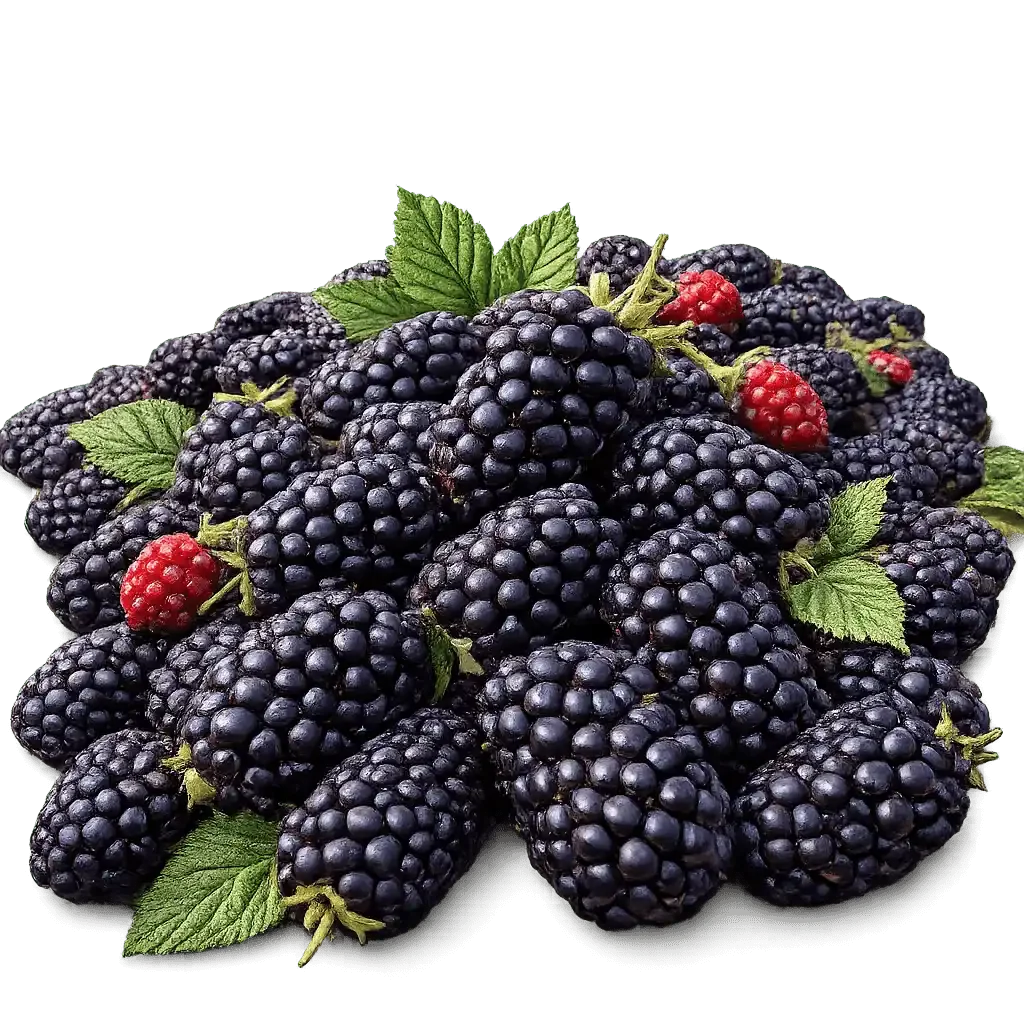
Unripe Berries: Developing fruit starts out bright green, transitions to red, then deep red before reaching the final dark purple to black color. Each stage lasts roughly 5 to 7 days under normal conditions.
Ripe Berries: Fully ripe Marionberries are glossy black with a slight purple hue. They are elongated and conical, averaging 1 to 1.5 inches long and about 0.75 inches wide. The surface is composed of individual drupelets, each containing a small seed. A ripe berry should detach from the plant with minimal pressure and leave no plug behind.
Cluster Pattern: Berries form in clusters of 5 to 15 on lateral shoots off the floricanes. Not all berries in a cluster ripen at the same time, which extends the harvest window but requires multiple picking passes.
Seeds: Marionberry seeds are small and generally less noticeable than those of wild blackberries. They are soft enough to be unobtrusive when eating fresh but will be noticeable in dried berries and some preserves.
Ripening Window: In most growing regions, Marionberries ripen from early July through mid August, with peak harvest occurring over a 3 to 4 week window. The exact timing depends on your climate, with warmer regions ripening 1 to 2 weeks earlier.
Visual Appeal: Few berries rival the visual beauty of a ripe Marionberry cluster. The contrast between glossy black ripe fruit, red turning fruit, and green developing fruit on the same cluster makes them photogenic and appealing at farmers markets.
How Much Berry Can You Collect?
Young Plants (Year 2): Expect 3 to 6 pounds per plant during the first fruiting year. Plants are still building their root system and cane density, so yields are modest.
Mature Plants (Year 3 and Beyond): A well managed plant on a trellis system will produce 10 to 20 pounds per season. Exceptional plants in ideal conditions with heavy feeding and irrigation can push beyond 20 pounds.
Per Row and Per Acre: With plants spaced 6 feet apart in rows 10 feet apart, you get roughly 726 plants per acre. At 15 pounds average, that translates to approximately 10,890 pounds per acre, or about 5 tons. For a homestead row of 10 plants over 60 linear feet, expect 100 to 200 pounds of fruit per season.
Harvest Season: The main harvest runs 4 to 6 weeks. You will need to pick every 2 to 3 days during peak production to avoid overripe fruit falling or attracting pests.
Ease of Harvest: This is where honesty matters. Marionberries have thorns, and the trailing cane habit means you are reaching into a tangle of prickly growth. Wear thick leather gloves, long sleeves, and plan your trellis system carefully to minimize frustration. Harvest speed averages 3 to 5 pounds per hour for a careful picker.
Homestead Reality: Ten mature plants will give a family of four more Marionberries than they can eat fresh, with plenty left over for freezing, jamming, and sharing. Twenty plants is enough to supply a small farm stand or barter network. Start with 5 to 10 plants and expand once you understand the management demands.
Why Marionberry Berries Are Good for You
Key Vitamins and Minerals: Marionberries are an excellent source of vitamin C, providing roughly 35% of the daily value per cup. They also deliver meaningful amounts of vitamin K (36% DV per cup), manganese (47% DV per cup), and dietary fiber (7.6 grams per cup). They contain smaller but notable amounts of folate, vitamin E, and potassium.
Antioxidants: Marionberries rank among the highest antioxidant berries tested. They are particularly rich in anthocyanins, the dark pigments responsible for their deep purple black color. Research published in the Journal of Agricultural and Food Chemistry has shown that Marionberries contain higher levels of total anthocyanins and total phenolics than many other blackberry cultivars, including Evergreen and Thornless Evergreen.
Research Backed Health Benefits: Studies at Oregon State University have linked regular consumption of dark berries like Marionberries to reduced inflammation, improved cardiovascular markers, and better blood sugar regulation. The high fiber content supports digestive health, and the combination of vitamin C and anthocyanins may support immune function. Research also suggests that the ellagic acid found in blackberries, including Marionberries, may have anti cancer properties, though human clinical trials remain limited.
Traditional Medicinal Uses: Indigenous peoples of the Pacific Northwest used wild blackberry species for a range of medicinal purposes. The leaves were brewed into tea to treat diarrhea and sore throats. Root bark preparations were used as astringents. While these uses refer to wild relatives rather than the modern Marionberry cultivar specifically, the chemical compounds responsible for these effects are present in Marionberries as well.
What You Can Make with Marionberry Berries
Jam and Preserves: Marionberry jam is the single most popular product made from these berries. The natural balance of sweetness and acidity makes it ideal for preserving. A basic batch requires just berries, sugar, pectin, and lemon juice.
Pies and Cobblers: Marionberry pie is an Oregon institution. The berries hold their shape during baking better than most blackberries, creating a filling that is juicy but not soupy. Use a lattice top crust to show off that gorgeous dark purple filling.
Syrup: Marionberry syrup is simple to make and stunning on pancakes, waffles, or vanilla ice cream. Simmer 4 cups of berries with 1 cup of sugar and 1/2 cup of water, strain, and bottle. It keeps refrigerated for 2 to 3 weeks or can be water bath canned for shelf stability.
Wine and Mead: The complex flavor profile of Marionberries translates beautifully into homemade wine and mead. The high sugar content (around 10 to 12 Brix at peak ripeness) provides a solid base for fermentation. Expect a deep ruby wine with berry forward notes and earthy undertones.
Baked Goods: Muffins, scones, crisps, and coffee cakes all benefit from Marionberries. Frozen berries work nearly as well as fresh for baking, so you can enjoy these recipes year round.
Sauces and Glazes: A Marionberry reduction makes an outstanding sauce for pork, duck, or venison. Combine berries with balsamic vinegar, a touch of honey, and fresh thyme for a savory glaze that elevates any homestead meal.
Homestead Tip: When you are in the thick of harvest season and cannot process everything immediately, just freeze the berries on sheet pans and bag them up. You can make jam, syrup, or wine from frozen berries anytime during the winter months when the pace of homestead life slows down.
Best Ways to Store, Can, or Make Jam
Freezing (Best Overall Method): Spread washed, dried berries in a single layer on parchment lined sheet pans. Freeze for 2 to 4 hours until solid, then transfer to vacuum sealed bags or heavy duty freezer bags with air removed. Label with the date. Use within 10 to 12 months for best quality.
Canning Marionberry Jam: This is a tried and true recipe that produces a reliable set every time.
Ingredients: 5 cups crushed Marionberries (about 2.5 quarts whole berries), 7 cups granulated sugar, 1 box (1.75 ounces) powdered pectin, 1/4 cup lemon juice.
Method: Sterilize eight 8 ounce jars, lids, and bands. Crush berries in a large pot using a potato masher, leaving some texture. Stir in pectin and lemon juice. Bring to a full rolling boil over high heat, stirring constantly. Add sugar all at once, return to a full rolling boil, and boil for exactly 1 minute. Remove from heat, skim foam, and ladle into prepared jars, leaving 1/4 inch headspace. Wipe rims, apply lids and bands, and process in a boiling water bath for 10 minutes (adjust for altitude: add 5 minutes above 1,000 feet, 10 minutes above 6,000 feet). Remove and let cool undisturbed for 12 to 24 hours. Check seals before storing.
Syrup Preservation: Prepare syrup as described in the previous section. Pour hot syrup into sterilized half pint jars, leaving 1/4 inch headspace. Process in a boiling water bath for 10 minutes. Yields approximately 3 to 4 half pint jars per batch.
Drying: Use a food dehydrator set to 135 degrees Fahrenheit. Spread berries in a single layer on dehydrator trays. Drying takes 12 to 18 hours depending on berry size and humidity. Berries are done when they are leathery with no visible moisture when squeezed. Condition by placing in a sealed jar for one week, shaking daily to redistribute moisture. Store in airtight containers for up to 12 months.
Other Preservation Ideas: Marionberry fruit leather, Marionberry infused vinegar, and Marionberry shrub (a drinking vinegar) are all excellent ways to extend your harvest. Fruit leather made from pureed Marionberries dried at 135 degrees for 8 to 10 hours keeps for 6 months in airtight storage.
Pros of Growing Marionberry
• Exceptional Flavor: No other blackberry cultivar matches the complex sweet tart profile of the Marionberry. Once you have tasted a ripe one straight from the cane, grocery store blackberries will never satisfy again.
• Outstanding Yields: At 10 to 20 pounds per mature plant, a small planting of 10 to 15 plants can supply a household with hundreds of pounds of fruit per season.
• Excellent Preservation Quality: Marionberries freeze, can, dry, and ferment better than most blackberry varieties. Their firm texture and balanced chemistry make them ideal for long term homestead food storage.
• Long Productive Lifespan: A well maintained Marionberry planting can produce for 15 to 20 years, providing decades of harvests from a single planting investment.
• High Market Value: If you sell at farmers markets or through a farm stand, Marionberries command premium prices, often $4 to $6 per pint, because of their reputation and limited commercial availability outside the Pacific Northwest.
• Pollinator Friendly: The abundant spring blossoms provide valuable forage for honeybees and native pollinators during a critical time of year.
• Adaptable to Homestead Scale: Whether you have a small backyard or several acres, Marionberries can be scaled to fit. Even 5 plants on a simple trellis can provide a meaningful harvest.
Cons of Growing Marionberry
• Thorny Canes: Marionberries have aggressive thorns that make pruning and harvesting painful without heavy gloves and protective clothing. This is the single biggest complaint from growers.
• Trellising Required: As a trailing type, Marionberries must be trained on a trellis system. Without support, canes sprawl on the ground, reducing yield and increasing disease pressure. Plan for posts, wire, and labor to maintain the trellis.
• Cold Sensitivity: Marionberry canes can suffer winter injury at temperatures below 0 to 5 degrees Fahrenheit. In USDA Zone 6 and colder parts of Zone 7, you will need to lay canes down and mulch heavily for winter protection.
• One Year Fruiting Delay: Because fruit is produced on floricanes only, there is always a one year gap between growing a cane and harvesting from it. New plantings will not produce any fruit until the second year.
• Intensive Pruning Needs: Spent floricanes must be removed after harvest, and new primocanes must be trained onto the trellis annually. Neglecting this task leads to an impenetrable thicket within two seasons.
• Perishability: Fresh Marionberries last only 3 to 5 days refrigerated. You must have a plan to process or freeze berries within days of picking, which can be overwhelming during peak harvest.
• Pest and Disease Pressure: Spotted wing drosophila (SWD), cane borer, and various fungal diseases including cane botrytis and anthracnose can affect Marionberries. Integrated pest management and good sanitation are essential.
Growing Tips for Homesteaders
Site Selection: Choose a site with full sun (minimum 6 to 8 hours daily), well drained soil, and good air circulation. Avoid low lying areas where cold air pools in winter and spring. A gentle south facing slope is ideal. Soil pH should be between 5.5 and 6.5. If your soil is heavy clay, amend with compost and consider raised rows to improve drainage. Do not plant where tomatoes, peppers, potatoes, or other brambles have grown in the past 3 years to reduce verticillium wilt risk.
Planting: Set bare root plants in late winter to early spring, as soon as the ground can be worked. Space plants 4 to 6 feet apart within rows, with 8 to 10 feet between rows. Dig a hole wide enough to spread roots without bending. Plant at the same depth as the nursery mark on the cane. Water deeply at planting and apply 3 to 4 inches of mulch (straw, wood chips, or bark) around the base, keeping mulch a few inches away from the crown to prevent rot.
Trellis Setup: Install a two wire trellis system with posts every 15 to 20 feet. Set the lower wire at 3 feet and the upper wire at 5 to 6 feet. Train primocanes along the wires during their first year. The following year, these canes will fruit, and new primocanes can be bundled and trained separately or allowed to trail on the ground until the spent floricanes are removed after harvest.
Maintenance: Fertilize in early spring with a balanced fertilizer (such as 10 10 10) at a rate of about 5 pounds per 100 linear feet of row. Irrigate consistently during fruit development, providing 1 to 2 inches of water per week. Drip irrigation is preferred over overhead watering to reduce fungal disease. After harvest, remove all spent floricanes at ground level and dispose of them away from the planting. Train new primocanes onto the trellis for the following year's crop.
Companion Planting: Marionberries benefit from companions that attract pollinators and deter pests. Plant comfrey at the base of trellises to act as a dynamic nutrient accumulator and mulch source. Clover between rows fixes nitrogen and supports beneficial insects. Avoid planting near wild blackberries, which can harbor diseases that spread to cultivated varieties. Garlic and chives planted nearby may help deter some insect pests.
Variety Note: If you want a thornless alternative with a similar flavor profile, look into the Columbia Star or the newer thornless trailing varieties being developed at Oregon State University. However, many experienced growers maintain that none of the thornless types quite match the original Marionberry in flavor intensity and yield. If thorns are a dealbreaker, consider planting a few Marionberry plants alongside a thornless variety so you can compare for yourself.
Conclusion
The Marionberry is not just another blackberry. It is a purpose bred cultivar with a flavor profile that has earned it a devoted following among growers, bakers, and homesteaders for nearly seven decades. For those of us who prioritize growing food that tastes exceptional and stores well, the Marionberry checks every box. The yields are generous, the preservation options are endless, and a well managed planting will reward you with fruit for 15 to 20 years.
Yes, the thorns are real, and the trellising and pruning demand consistent effort. But the payoff is measured in buckets of dark, glossy berries every July, freezers stocked with fruit for winter baking, and shelves lined with jewel toned jars of jam. If you are in USDA Zones 6 through 9 and you have not tried growing Marionberries yet, this is your sign. Start with a half dozen plants, build a simple trellis, and in two years you will understand why Oregon growers have made this berry the cornerstone of their operations.
On a homestead, few crops deliver as much value per square foot as the Marionberry. It feeds your family, fills your pantry, supports your pollinators, and gives you something genuinely worth trading at the neighbor's gate. That is the kind of plant every homestead deserves.
Explore more guides on different types of berries