
Mulberry
Complete Homestead Growing Guide
Overview
Mulberry (Morus spp.) is a fast-growing, remarkably productive deciduous tree producing sweet, elongated berries that resemble slender blackberries. Belonging to the Moraceae family (which also includes figs, breadfruit, and jackfruit), mulberries have been cultivated for thousands of years across Asia, Europe, and North America. Three primary species are grown for fruit: white mulberry (Morus alba), native to China and historically grown to feed silkworms; red mulberry (Morus rubra), native to eastern North America; and black mulberry (Morus nigra), native to western Asia and widely considered the finest-flavored of the three. Despite the species names, fruit color does not reliably indicate species - "white" mulberry trees frequently produce dark purple or black fruit. Trees grow 10 to 50 feet tall depending on species and variety, with some dwarf cultivars staying under 10 feet. For homesteaders, mulberry offers staggering yields with almost zero maintenance, extremely fast growth, a long fruiting season, multi-purpose value as animal feed, and one of the easiest fruit trees to grow in virtually any climate.
How Long Does It Take to Grow?
Mulberry is one of the fastest fruit-producing trees a homesteader can plant, often bearing fruit within the first few years.
Year 1: Mulberry trees are exceptionally fast growers when young. Expect 3 to 6 feet or more of growth in the first season under good conditions. Some grafted or cutting-grown trees may produce a handful of fruit in their very first year.
Year 2 to 3: Grafted and cutting-grown trees begin meaningful fruit production by the second or third year. Seedling-grown trees take longer, often 8 to 10 years to fruit. Growth remains rapid, adding several feet per year.
Year 4 to 5: Trees reach substantial size and fruit production increases significantly. A well-established tree at this age may yield 10 to 20 pounds or more of berries annually.
Full Production: Most mulberry trees reach full production between years 5 and 10. Black mulberry (M. nigra) is the slowest to mature, sometimes taking up to 15 years for peak yields. White and red mulberries are much faster.
Mature Size: White mulberry can reach 30 to 60 feet tall. Red mulberry grows 35 to 50 feet. Black mulberry is the smallest, typically 20 to 30 feet, sometimes growing as a large shrub. Dwarf varieties like Dwarf Everbearing stay under 10 feet and are ideal for small homesteads or container growing.
Lifespan: Black mulberry is extraordinarily long-lived, with some specimens surviving 500 to 1,000 years. White and red mulberries typically live 100 to 250 years. These are truly generational trees.
Homestead Timeline: With a grafted tree, expect your first real harvest by year 2 to 3. This is faster than nearly any other fruit tree, making mulberry an ideal choice for homesteaders who want fruit production quickly.
Berry Shelf Life
Mulberries are soft and perishable, requiring prompt handling after harvest.
Fresh Berries: Store in the refrigerator for 2 to 3 days maximum. The berries are fragile and begin to deteriorate quickly at room temperature - mold can develop within hours on a warm day. Spread in a shallow layer and do not wash until ready to use.
Frozen Berries: Spread clean, dry berries in a single layer on a parchment-lined baking sheet, freeze until solid, then transfer to freezer bags. Frozen mulberries store 10 to 12 months at 0°F. Freezing is one of the best preservation methods for mulberries.
Dried Berries: Mulberries dry extremely well, and dried mulberries are a popular commercial product, especially from Turkey and Central Asia. Dehydrate at 135°F for 12 to 24 hours until leathery. Dried mulberries store 12 to 18 months in airtight containers and have a sweet, fig-like flavor.
Jams and Preserves: Properly canned mulberry jam stores 12 to 18 months in a cool, dark pantry.
Wine and Juice: Mulberry juice can be frozen or canned. Mulberry wine ferments beautifully and stores for years.
Homestead Storage Tip: Mulberries ripen over a 2 to 6 week period, so plan for multiple harvests. The easiest collection method is to spread a clean tarp or sheet beneath the tree and shake the branches - ripe berries fall readily. Process or freeze the same day.
Berry Color & Appearance
Flowers: Inconspicuous male and female catkins (single-sex flower spikes) appearing in spring. Male catkins are longer and pendulous; female catkins are shorter and compact. Male trees produce heavy, allergy-causing pollen. Most nursery-sold trees are female-only, producing seedless fruit without pollination.
Unripe Berries: Green, hard, tightly clustered, and inedible.
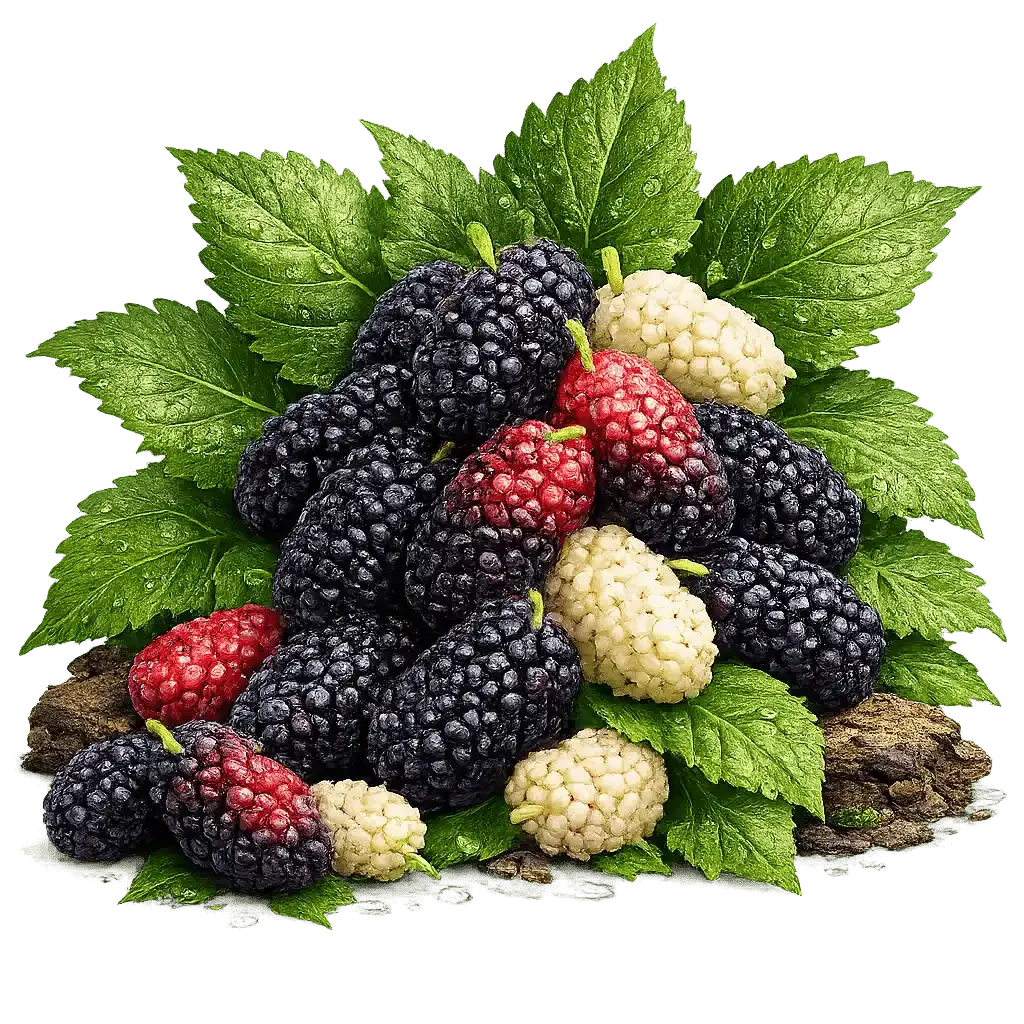
Ripening Berries: Progress from green to white or pale yellow, then pink, then red, deepening to dark purple or black at full ripeness (for dark-fruited varieties). Some white-fruited cultivars remain white or pale lavender when ripe.
Ripe Berries: Elongated aggregate fruits approximately 3/4 to 1.5 inches long (some varieties like Pakistan reach 2 to 3 inches), resembling a slender blackberry. Colors range from white to lavender, red, purple, and deep black depending on variety. Fully ripe dark berries transition from shiny black to dull black.
Cluster Pattern: Berries form individually along stems rather than in large clusters. They ripen sequentially over weeks, with a few berries maturing each day.
Seeds: Some mulberries contain tiny seeds, though many cultivated varieties produce seedless or nearly seedless fruit. Seeds are small and unnoticeable when eating.
Ripening Time: Late spring through midsummer in most climates, typically over a 2 to 6 week period. Everbearing varieties produce sporadically through the entire warm season.
Visual Appeal: The large, lobed leaves create dense, attractive shade canopies. Fall color is a pleasant yellow. The staining power of dark mulberry juice is legendary - avoid planting dark-fruited varieties over walkways, driveways, or patios.
How Much Berry Can You Collect?
Mulberry is among the most prolific fruit producers available to homesteaders.
Young Trees (Year 2 to 3): A few cups to several pounds per tree as production ramps up.
Mature Trees (Year 5 to 10): A single mature mulberry tree can produce 60 to 100 pounds or more of fruit per season depending on size and variety. Large, mature white mulberry trees have been reported to yield well over 100 pounds annually.
Dwarf Varieties: Compact trees like Dwarf Everbearing or Issai produce smaller total yields (10 to 30 pounds) but are manageable for picking and work well in containers or small spaces.
Harvest Season: Berries ripen over 2 to 6 weeks for standard varieties. Everbearing types can produce fruit over several months. Daily harvesting during peak production is common.
Ease of Harvest: For large trees, the easiest method is spreading a tarp beneath the tree and gently shaking branches to dislodge ripe fruit. Berries that fall with a light shake are ripe; those that hold on need more time. Hand-picking works well for dwarf varieties and young trees. Dark-fruited varieties will stain hands, clothing, and surfaces.
Homestead Reality: A single mature standard-sized mulberry tree provides more fruit than most families can eat fresh. Two or three trees supply enough berries for fresh eating, freezing, drying, jam-making, wine-making, and feeding chickens, pigs, and other livestock - with fruit left over for the birds. Mulberry is one of the few fruit trees where overproduction, not underproduction, is the primary challenge.
Why Mulberry Berries Are Good for You
Mulberries are low in calories but pack a surprisingly dense nutritional punch, particularly in vitamin C, iron, and bioactive plant compounds.
Outstanding Vitamin C Content
One cup of fresh mulberries (140 grams) provides approximately 51 milligrams of vitamin C, roughly 85% of the recommended daily intake - comparable to a medium-sized orange. Vitamin C supports immune function, collagen production, skin health, wound healing, and protects cells from oxidative damage.
Exceptional Iron Content
Mulberries are one of the richest fruit sources of iron, providing approximately 1.85 milligrams per 100 grams (about 23% of the daily recommended intake). This makes mulberries particularly valuable for plant-based diets and for addressing iron deficiency. The vitamin C content simultaneously enhances iron absorption.
Vitamin K
Mulberries provide a meaningful amount of vitamin K1 (phylloquinone), which is essential for blood clotting and bone health.
Powerful Antioxidant Compounds
Mulberries are rich in a diverse array of bioactive plant compounds. Anthocyanins (particularly cyanidin) give dark mulberries their deep color and may help protect against heart disease by inhibiting the oxidation of LDL cholesterol. Resveratrol, the same compound found in red wine grapes, supports cardiovascular health by promoting healthy blood vessel function. Chlorogenic acid provides anti-inflammatory benefits. Rutin may help protect against chronic diseases including cancer and diabetes. Myricetin may offer protective effects against certain cancers. Black mulberries contain the highest concentration of these antioxidant compounds.
Additional Nutrients
Mulberries also provide vitamin E, B-complex vitamins (including riboflavin, niacin, B6, and folate), potassium, manganese, magnesium, phosphorus, calcium, zinc, and selenium. The selenium content in mulberries is notably high - 5 to 20 times greater than that found in apples. Among the 19 amino acids identified in mulberries, seven are essential for humans, making mulberries a surprisingly good plant-based protein contributor.
Research-Backed Health Benefits
Cholesterol Reduction: A clinical trial found that consuming freeze-dried mulberry fruit daily for six weeks significantly reduced LDL cholesterol and total cholesterol levels.
Blood Sugar Management: Mulberry leaf and fruit compounds, particularly 1-deoxynojirimycin (DNJ), have been shown to help regulate blood sugar by decreasing carbohydrate absorption, offering potential benefits for type 2 diabetes management.
Liver Protection: Animal studies suggest mulberry compounds may help protect the liver from damage and support overall liver function.
Anti-Cancer Potential: Several bioactive compounds in mulberries, including anthocyanins, rutin, and myricetin, have shown anti-cancer properties in laboratory studies.
Weight Management: The fiber content supports satiety, and animal studies have shown mulberry extracts may reduce body weight and visceral fat.
Traditional Medicinal Uses
Mulberry has been documented in Chinese medicine since the Tang Dynasty (AD 659) and appears in successive medical classics. The fruit was recognized for its ability to nourish blood, generate fluids, and moisten dryness. Native American peoples including the Iroquois, Cherokee, and Seminole ate mulberries fresh and dried, made sauces and cornbread with them, and used the bark, leaves, and twigs for dyes. Mulberry leaf tea has been consumed across Asia for centuries to support metabolic health.
What You Can Make with Mulberry Berries
Mulberries' sweet, mild flavor and abundant yields make them one of the most versatile homestead fruits.
Fresh Eating
Ripe mulberries eaten straight from the tree are a quintessential homestead pleasure. The flavor ranges from honey-sweet (white varieties) to a complex sweet-tart balance (black mulberry) reminiscent of a cross between blackberry, raspberry, and fig.
Mulberry Jam or Preserves
Combine 4 cups crushed berries with sugar and pectin. Mulberries' mild sweetness means they pair well with a squeeze of lemon juice for brightness. The resulting jam is deeply colored and richly flavored.
Dried Mulberries
One of the best ways to preserve the abundant harvest. Dried mulberries develop a sweet, chewy, fig-like flavor and are excellent in trail mix, granola, oatmeal, and baked goods. Dried mulberries are a popular commercial snack throughout the Middle East and Central Asia.
Mulberry Wine
Mulberries produce a richly colored, full-bodied wine with complex berry and earthy flavors. Their natural sugar content and abundant yields make them ideal for home winemaking. Mulberry wine has been produced for centuries.
Mulberry Syrup and Sauce
Simmer berries with sugar and water, strain if desired, and reduce to a thick syrup. Use as a topping for pancakes, yogurt, ice cream, or mixed into cocktails and lemonade. Mulberry sauce pairs beautifully with pork, duck, and game meats.
Baked Goods
Substitute mulberries for blackberries or blueberries in muffins, pies, cobblers, crumbles, cakes, and scones. Mulberry cobbler is a classic homestead dessert.
Mulberry Fruit Leather
Puree cooked berries, spread thin on parchment, and dry in a dehydrator or low oven. The concentrated sweetness makes this a favorite with children.
Animal Feed
Traditionally, mulberry trees were planted beside chicken yards, pig pens, and fish ponds. Chickens, turkeys, pigs, goats, and fish eagerly consume fallen mulberries. The leaves are also excellent livestock fodder, particularly for goats.
Homestead Tip: Mulberries that are slightly under-ripe (still red) add welcome tartness to balance the intense sweetness of fully ripe berries. Mix ripeness levels for more complex flavor in jams and wines.
Best Ways to Store, Can, or Make Jam
Freezing (Best All-Purpose Method)
Spread clean, dry berries in a single layer on a parchment-lined baking sheet. Freeze until solid, then transfer to labeled freezer bags, pressing out air. Frozen mulberries keep 10 to 12 months and work perfectly in smoothies, baking, and jam-making.
Drying (Best for Long-Term Snacking)
Spread berries on dehydrator trays. Dry at 135°F for 12 to 24 hours until leathery and chewy with no moisture remaining. Store in airtight containers for 12 to 18 months. Dried mulberries are one of the most delicious dried fruits available.
Canning Mulberry Jam
Ingredients:
4 cups crushed mulberries
2 tablespoons lemon juice
5 to 6 cups sugar
1 box pectin
Method:
Combine crushed berries, lemon juice, and pectin in a large pot
Bring to a full rolling boil, stirring constantly
Add sugar all at once and return to a hard boil for 1 minute
Remove from heat and skim foam
Ladle into sterilized jars leaving 1/4 inch headspace
Wipe rims, apply lids and bands
Process in boiling water bath for 10 minutes
Store up to 18 months
Mulberry Syrup
Simmer 4 cups berries with 1 cup water and 1.5 cups sugar for 20 to 30 minutes. Strain through cheesecloth. Return to pot and reduce to desired thickness. Can in a boiling water bath or refrigerate up to 3 weeks.
Mulberry Wine
Crush 4 to 5 pounds of ripe berries per gallon of wine desired. Add sugar, water, wine yeast, and yeast nutrient. Ferment according to standard country wine procedures. Mulberry wine benefits from 6 to 12 months of aging.
Pros of Growing Mulberry
Staggering Productivity: A single mature tree can produce 60 to 100+ pounds of fruit annually. Few fruit trees match mulberry for sheer volume of production relative to effort invested.
Fastest Fruiting Tree: Grafted trees can bear fruit in year 1 to 2, with substantial harvests by year 3 to 4. No other fruit tree delivers returns this quickly.
Virtually No Maintenance: Once established, mulberry trees require no spraying, minimal pruning, no fertilizing in decent soil, and tolerate drought remarkably well. They are nearly pest and disease free.
Extremely Wide Climate Range: White mulberry survives temperatures to -25°F (USDA zone 4) and tolerates heat, drought, poor soil, urban pollution, and salt. Varieties exist for USDA zones 4 through 10, covering most of the United States.
Multi-Purpose Tree: Fruit for humans, forage for livestock (chickens, pigs, goats), leaves for animal feed, shade, windbreak, and historical silk production. Few trees offer as many uses.
Tolerates Poor Conditions: Grows in sandy, clay, alkaline, or infertile soils. Drought tolerant once established. Tolerates urban pollution and compacted soil.
Long-Lived: Black mulberry can live 500 to 1,000 years. Even white mulberry survives 100 to 250 years. A true plant-once, harvest-forever investment.
Excellent Drying Fruit: Unlike many berries, mulberries dry beautifully for long-term storage and snacking.
Self-Fertile: Most nursery-sold female trees produce fruit without a pollinator, and many produce seedless berries.
Delicious and Nutritious: Sweet, mild flavor appeals to adults and children alike. Outstanding vitamin C and iron content.
Cons of Growing Mulberry
Extreme Staining: Dark-fruited mulberry varieties stain everything they touch - walkways, driveways, patios, car paint, shoes, clothing, and carpets. Site selection is critical. White-fruited varieties avoid this problem.
Messy Fruit Drop: Abundant production means abundant fallen fruit. Dropped berries attract flies, ferment, and create slippery, staining messes beneath the tree. Not suitable for planting near pools, outdoor living areas, or anywhere foot traffic is common.
Invasive Potential: White mulberry (M. alba) is classified as invasive in many U.S. states. It hybridizes with native red mulberry, threatening that species. Check local regulations before planting. Red and black mulberry are not considered invasive.
Can Grow Too Large: Standard-sized mulberry trees can reach 40 to 60 feet, overwhelming small properties. Heavy pruning or dwarf variety selection is necessary for manageable homesteads.
Male Trees Cause Allergies: Male mulberry trees produce massive amounts of allergenic pollen. Some cities have banned male mulberry planting. Always purchase female or self-fertile trees from reputable nurseries.
Short Fresh Shelf Life: Berries last only 2 to 3 days refrigerated and begin spoiling within hours at room temperature. Requires prompt processing.
Brittle Branches: Mulberry wood is somewhat brittle, and branches can break in storms or under heavy fruit loads. Regular structural pruning when young helps prevent this.
Bird Competition: Birds love mulberries and can consume a significant portion of the crop on smaller trees. Larger trees produce more than enough for both birds and humans.
Growing Tips for Homesteaders
Site Selection
Sunlight: Full sun for best fruit production. Tolerates light shade but yields decline. Red mulberry is naturally an understory tree and handles more shade than other species.
Soil: Adapts to almost any soil type - sandy, clay, loamy, acidic, or alkaline. Prefers well-drained, fertile soil but tolerates poor conditions. Does not tolerate waterlogged or constantly wet soil.
Location: Plant away from sidewalks, driveways, patios, pools, and buildings to avoid staining from fallen dark fruit. Consider planting near chicken yards, pig pens, or compost areas where fallen fruit is beneficial rather than problematic. White-fruited varieties are safer near hardscapes.
Spacing: Allow 25 to 30 feet between standard-sized trees. Dwarf varieties can be planted 10 to 15 feet apart or grown in large containers.
Planting
Timing: Plant bare-root trees in late winter to early spring while dormant. Container-grown trees can be planted spring through fall.
Method: Dig a hole twice as wide as the root ball and equally deep. Spread roots if planting bare root. Backfill with original soil mixed with compost, firm gently, and water deeply. Mulch 2 to 3 feet out from the trunk to reduce grass competition and retain moisture.
Water: Water weekly throughout the first year. Once established, mulberries are remarkably drought tolerant, though consistent deep watering during fruiting improves berry size and prevents fruit drop.
Maintenance
Fertilizing: Generally unnecessary. Avoid high-nitrogen fertilizers, which promote weak, storm-susceptible growth. A light compost top-dressing in spring is sufficient if growth seems slow.
Pruning: Prune when young to establish a strong branching structure with wide-angled crotches. Avoid narrow V-shaped crotches that split easily. Once the framework is established, little pruning is needed beyond removing dead, damaged, or crossing branches. Branches can be kept short to limit tree size and make harvesting easier.
Watering: Deep water every one to two weeks during the growing season, especially when fruiting. Fruit drop or dried fruit on the tree indicates insufficient water. Reduce watering in fall to encourage dormancy.
Variety Selection
Best Flavor: Black mulberry (M. nigra) - widely considered the finest-flavored species. Try Persian or other M. nigra cultivars. Best for zones 7 to 10 with dry summers.
Best for Cold Climates: Illinois Everbearing (M. alba x rubra hybrid) - hardy, productive, long fruiting season. Russian mulberry (M. alba tartarica) - the hardiest of all, surviving -25°F and below.
Best for Small Spaces: Dwarf Everbearing - compact size, can be grown in containers, fruits abundantly on small plants. Contorted mulberry stays 6 to 8 feet tall with interesting twisted branches.
Non-Staining: Big White, Tehama, King White Pakistan - white-fruited varieties that avoid the staining problems of dark-fruited types.
Largest Fruit: Pakistan (M. macroura) - produces spectacular 2 to 3 inch elongated fruit but is less cold-hardy (zones 7 to 10).
Conclusion
Mulberry is perhaps the single most productive and low-maintenance fruit tree available to homesteaders. No other tree offers such a staggering combination of fast growth, early fruiting, massive yields, wide climate adaptability, and near-zero maintenance requirements. A single mulberry tree, planted today, can provide 60 to 100 pounds of nutritious, delicious fruit per year for decades or even centuries to come.
The challenges are real but entirely manageable. Staining from dark fruit requires thoughtful site selection. Invasive potential of white mulberry demands responsible variety choice. The overwhelming abundance of fruit calls for creative preservation strategies and generous sharing with livestock and neighbors.
For the homesteader seeking a true plant-and-forget fruit tree that feeds the family, the chickens, and the birds all at once, mulberry has no equal. Choose a female or self-fertile grafted tree of a variety suited to your climate, plant it in full sun away from your walkways, give it water the first year, and then stand back. Within two to three years, you will be harvesting buckets of sweet berries and wondering why every homestead does not have a mulberry tree growing in the yard. Just be prepared - those dark berries stain everything they touch, and your fingers will be purple all summer long!
Explore more guides on different types of berries