
Barberry
Written By Arthur Simitian
Barberry is one of the most functional and underutilized plants available to homesteaders who need real perimeter security without the cost and maintenance of conventional fencing. Its dense, viciously thorned branches form impenetrable barriers that deter both animals and intruders, its foliage provides year-round visual interest, and several species also offer edible and medicinal berries as a secondary yield. For anyone building a productive and secure homestead, barberry deserves serious consideration.
This guide covers barberry in full: what it is, how it works as a living fence and security hedge, planting and spacing for barrier effectiveness, pruning, variety selection, its secondary uses as a food and medicine plant, and an honest look at its strengths and real limitations.
What Is Barberry
Barberry is the common name for plants in the genus Berberis, a large and diverse group of deciduous and evergreen shrubs found across temperate and subtropical regions of Asia, Europe, and the Americas. The genus contains several hundred species, ranging from compact ornamental forms to large, sprawling barrier shrubs capable of stopping livestock and deterring human passage.
The defining characteristic shared across the genus is the presence of sharp, rigid spines, typically arranged in clusters of three along the stems. These spines are not incidental: they are one of the primary reasons barberry has been planted as a defensive hedge for centuries across many cultures. A mature, well-established barberry hedge is a genuinely formidable physical barrier.
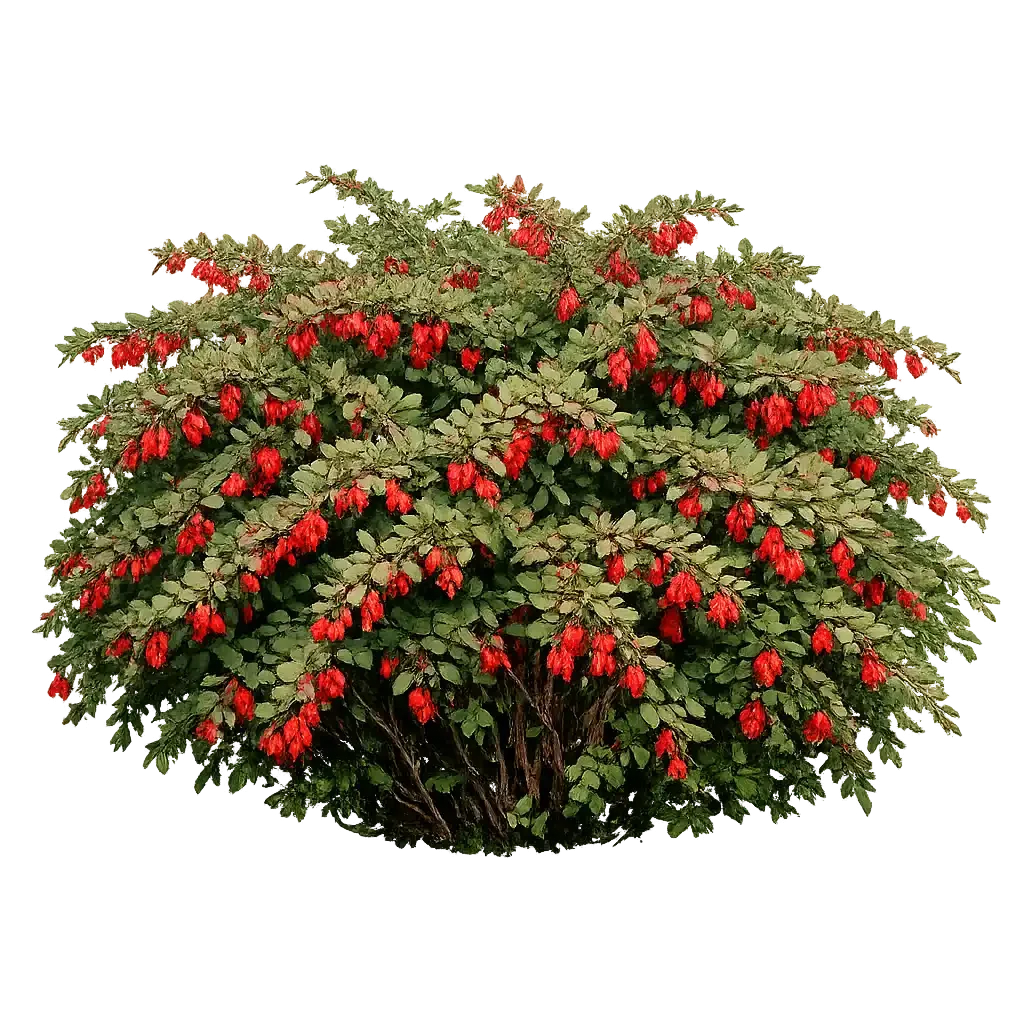
The foliage varies by species from small, rounded leaves in deciduous types to stiff, holly-like leaves in evergreen species. Many deciduous varieties produce striking fall color in shades of red, orange, and yellow. Small yellow flowers appear in spring, followed by oval berries that ripen red, orange, or dark blue to black depending on species, persisting on the branches well into winter and providing food for birds.
The inner bark, roots, and berries of many barberry species contain berberine, an alkaloid compound with well-documented antimicrobial and anti-inflammatory properties that has made barberry a significant plant in traditional medicine across multiple cultures.
Why Use Barberry for Living Fences and Security
The case for barberry as a security hedge begins with a straightforward observation: a dense planting of thorned shrubs is a more effective deterrent against casual intrusion than most people expect, and it achieves this without ongoing electrical costs, mechanical failure, or the visual harshness of razor wire and chain link.
A mature barberry hedge three to five feet tall and two to three feet deep presents a physical obstacle that most animals, including deer, dogs, and livestock, will not attempt to push through. The spines are long, rigid, and sharply pointed, and they penetrate clothing and skin readily. For boundary plantings along property edges, garden perimeters, or the approaches to chicken runs and vegetable beds, a well-established barberry planting provides protection that improves with age rather than deteriorating.
Beyond physical deterrence, a dense barberry hedge also provides visual screening, wind reduction, habitat for beneficial birds, and in many species a modest secondary harvest of berries with genuine medicinal value. It earns its space through multiple functions simultaneously.
Climate and Growing Zones
The cold hardiness of barberry varies considerably by species, and selecting the right species for your climate is the first and most important decision.
Japanese barberry, Berberis thunbergii, is the most widely planted species in North America and is reliably hardy in zones 4 through 8. It is deciduous, highly adaptable, and available in an enormous range of varieties with different foliage colors, sizes, and growth habits. It is also, however, considered invasive in many eastern and midwestern states and some other regions, which is a critical consideration discussed later in this guide.
Common barberry, Berberis vulgaris, is hardy in zones 3 through 7 and produces edible berries with the highest berberine content of commonly cultivated species. It is also considered invasive in parts of North America and is a host for wheat stem rust, leading to active eradication programs in some grain-growing regions.
Korean barberry, Berberis koreana, is hardy to zone 3 and produces good ornamental and security value with attractive red berries, and is generally considered a safer choice from an invasiveness standpoint in many regions. Mentor barberry, Berberis mentorensis, is a hybrid hardy to zone 5 that is semi-evergreen, tolerates drought well, and has shown lower invasive potential.
For evergreen security hedging in warmer climates, species such as Berberis darwinii and Berberis julianaeprovide year-round visual screening in addition to physical deterrence and are well suited to zones 6 through 9.
Important before planting: Japanese barberry and common barberry are regulated or banned in several US states and Canadian provinces due to invasive spread. Always check current local regulations before purchasing or planting any barberry species. Korean barberry and Mentor barberry are generally considered lower-risk alternatives in most regions.
Sunlight Requirements
Barberry is one of the more adaptable shrubs in terms of light tolerance. It performs best and grows most densely in full sun, with six or more hours of direct sunlight daily producing the tightest, most impenetrable growth habit and the best foliage color in colored-leaf varieties.
It tolerates partial shade reasonably well and will grow and function as a barrier in sites receiving three to five hours of sun, though growth will be somewhat looser and foliage color less intense. Deep shade produces thin, open growth that provides little barrier value. For security hedge applications, prioritizing sun exposure will always produce a better result.
Soil Requirements
Barberry is one of the least demanding shrubs in terms of soil requirements, which is part of what makes it such a practical choice for difficult sites. It grows well in a wide range of soil types including sandy, loamy, and moderately clay soils, and tolerates both acidic and slightly alkaline conditions across a pH range of roughly 5.0 to 8.0.
It is notably drought tolerant once established and handles compacted, poor, or disturbed soils that would challenge most other shrubs. This tolerance for difficult conditions makes it a practical option for boundary plantings along roadsides, fence lines, and other sites where soil quality is low.
The one meaningful soil requirement is adequate drainage. Like most woody shrubs, barberry does not perform well in persistently waterlogged soil and will decline in poorly drained low spots. In heavy or wet soils, planting on a slight mound or raised area improves both drainage and establishment.
Designing an Effective Barberry Security Hedge
The effectiveness of a barberry hedge as a physical barrier depends on how it is planted from the outset. A single row of plants spaced too far apart will never form a true barrier. A well-designed double row planted correctly will become essentially impassable within a few years.
For maximum barrier effectiveness, plant in a double staggered row, with plants in the second row offset from those in the first. This creates a dense, interlocking canopy with no easy passage points. Single-row plantings can work for lighter deterrence purposes but are less effective against determined animals or intruders.
18 to 24 inches apart within each row for a dense, gap-free barrier hedge
18 to 24 inches between the two rows in a double-row planting
2 to 3 feet apart for a less formal mixed hedgerow where barrier density is secondary to visual effect
3 to 4 feet apart for specimen or ornamental plantings where security is not the primary goal
The target mature height and width of the hedge should guide variety selection. A barrier intended to stop deer needs to reach at least five feet in height and two feet in depth. A barrier intended to deter small livestock or dogs can be effective at three to four feet. Plan for the mature dimensions of the chosen variety rather than the size at planting.
When to Plant Barberry
Barberry can be planted in spring after the last frost or in fall before the ground freezes. Spring planting is preferred in zones 4 and 5, allowing the roots to establish through the growing season before their first winter. Fall planting works well in zones 6 and warmer, where mild autumn conditions support root establishment without summer heat stress.
Container-grown plants are the most common form available and can be planted at any point during the growing season with attentive watering, though spring and fall planting are always preferable for ease of establishment. Bare-root plants, when available, are an economical option for establishing long hedge runs and plant well in early spring while dormant.
Planting Process
Mark the planting line clearly before beginning. For a double-row barrier hedge, mark both rows with string or stakes to ensure consistent spacing throughout.
Dig planting holes two to three times the width of each root ball and equal in depth. For long hedge runs, a trenching spade or mechanical auger significantly reduces labor.
Set each plant so the crown sits at or just slightly above the surrounding soil level. Barberry planted too deeply is more susceptible to crown rot.
Backfill with native soil. Barberry does not require or benefit from heavily amended soil, and planting in lean native soil encourages vigorous root spread.
Water thoroughly after planting to settle the soil. For long hedge runs, set up drip irrigation or plan a consistent hand-watering schedule through the first growing season.
Apply two to three inches of mulch along the planting run, keeping it a few inches back from each stem base.
Watering Needs
Barberry is drought tolerant once established and requires minimal supplemental irrigation from its second or third year onward. During the establishment period, consistent moisture helps the root system develop and reduces transplant stress. Deep watering once or twice per week during dry spells in the first season is appropriate.
Once established, barberry growing in average soils requires supplemental watering only during extended drought. Its drought resilience is one of its genuine practical advantages for low-maintenance boundary plantings where regular irrigation is impractical.
Fertilization Strategy
Barberry is a light feeder and performs well without regular fertilization in average soils. An annual top dressing of compost in early spring is sufficient to maintain healthy growth in most situations.
Avoid high-nitrogen fertilizers, which produce excessive soft growth and can actually reduce the density and thorniness of the plant over time. For a security hedge, lean, slightly stressed growth produces tighter, more heavily armed plants than lush, heavily fed ones. Restraint in fertilization is the appropriate approach.
Pruning Barberry
Pruning barberry requires thick gloves and long sleeves without exception. The spines are long, rigid, and penetrate most gardening gloves with uncomfortable ease. Rose gauntlets or heavy leather gloves and long sleeves are the minimum appropriate protection. Eye protection is also sensible.
For a formal clipped hedge, shear barberry once or twice annually, in late winter before new growth begins and again in midsummer if a second flush of growth requires attention. Barberry tolerates hard shearing well and responds with dense regrowth. When shearing for a barrier hedge, a slightly wider base than top profile, a trapezoid cross section, ensures light reaches the lower branches and prevents the base from thinning and opening up over time.
For a more naturalistic hedgerow style, minimal pruning is needed. Remove dead or damaged branches in late winter and trim back any growth that extends too far into pathways or adjacent areas. Occasional removal of the oldest, most congested stems from the base every few years renews the plant and maintains productive growth.
Barberry tolerates hard renovation pruning well. Plants that have become overgrown or misshapen can be cut back severely in late winter and will typically regrow vigorously from the base.
When to Expect Effective Barrier Coverage
Barberry establishes and grows into an effective barrier more quickly than many other security hedge plants. Plants set out at 18 to 24 inch spacing typically close their canopies and begin to form a continuous barrier within two to three years. By year four or five a well-established double-row planting is a genuinely formidable obstacle.
During the establishment period, temporary fencing along the planting run provides interim protection while the hedge matures. This is particularly important for plantings intended to contain or exclude livestock, where a gap in the barrier has immediate practical consequences.
Berries: Secondary Harvest and Medicinal Value
Most barberry species produce small berries that ripen in fall and persist on the branches through winter, providing both ornamental interest and a secondary yield for growers interested in their medicinal properties.
The berries of Berberis vulgaris, common barberry, are the most widely used medicinally and culinarily. They are tart and high in vitamin C, and have historically been used in Persian cuisine in rice dishes and as a souring agent in cooking. Dried barberries are a standard ingredient in Persian cooking and are available in Middle Eastern groceries under the name zereshk.
All barberry species contain berberine, an alkaloid that has been extensively studied for its antimicrobial, anti-inflammatory, and blood-sugar-regulating properties. Berberine-containing preparations from barberry root bark and berries have a long history of use in Ayurvedic, Traditional Chinese, and European herbal medicine. While this guide is not a medical reference, the medicinal reputation of barberry is substantial and supported by a meaningful body of modern research.
The berries are edible raw but intensely tart, and are most palatable dried, cooked into jams and syrups, or used as a flavoring ingredient rather than eaten fresh in quantity.
Wildlife Value
Barberry's persistent winter berries are a valuable food source for birds, particularly during the cold months when other food is scarce. Cedar waxwings, robins, and other frugivorous birds will work a barberry hedge systematically through winter. The dense, thorned branches also provide excellent nesting habitat and shelter for small birds, offering protection from raptors and cats that heavier-stemmed plants cannot match.
This wildlife value is genuine and meaningful, though it is also the mechanism by which invasive barberry species spread: birds consume the berries and deposit the seeds widely, which is why some species have naturalized aggressively across large areas of eastern North America. This dual role, valuable wildlife habitat and potential invasive spreader, is part of why variety selection and regional appropriateness matter so much with barberry.
Pests and Diseases
Barberry is notably resistant to most serious pests and diseases and requires little intervention in most growing conditions.
Verticillium wilt can occasionally affect plants in poorly drained or previously diseased soils. Bacterial leaf scorch and anthracnose can appear in humid conditions with poor air circulation, though neither is typically serious in well-sited plantings. Maintaining adequate spacing between plants and avoiding excess moisture at the root zone prevents most disease problems.
As noted above, common barberry serves as an alternate host for wheat stem rust, a serious fungal disease that can devastate small grain crops. Planting common barberry near wheat, barley, or oat fields is therefore inappropriate and is actively restricted or prohibited in many grain-producing regions. Japanese barberry does not share this problem and can be planted near grain crops without this concern, though its invasive potential remains a separate issue.
Invasiveness: A Critical Consideration
This cannot be overstated: Japanese barberry and common barberry have demonstrated significant invasive potential in parts of North America, particularly in the eastern and midwestern United States. Both species produce abundant seed that is distributed by birds, and both can naturalize in forest understories, fields, and disturbed areas, outcompeting native vegetation and altering soil chemistry in ways that affect broader plant communities.
Japanese barberry is listed as invasive or noxious in more than twenty US states. Common barberry is subject to eradication programs in grain-growing regions of the US and Canada due to its role as a wheat rust host. Before planting either species, check current state and provincial regulations. In regions where these species are regulated, Korean barberry, Mentor barberry, or native thorned alternatives such as hawthorn and wild plum are the responsible choices.
Sterile varieties of Japanese barberry, which produce little or no viable seed, have been developed and offer a potential middle path for growers in affected regions who want the ornamental and security value of the species without the invasive spread risk. Confirm the sterility claims of any variety before purchasing.
Alternatives for Regulated Regions
For growers in regions where commonly planted barberry species are regulated or banned, there are effective alternatives that provide comparable security hedge value without the invasiveness concerns.
Korean barberry, Berberis koreana, hardy to zone 3, lower invasive risk, good ornamental value and red berries
Mentor barberry, Berberis mentorensis, a hybrid hardy to zone 5, semi-evergreen, good drought tolerance, reduced seed production
Hawthorn species, particularly Crataegus monogyna and native hawthorns, which provide formidable thorned barrier hedging with strong ecological value
Wild plum, Prunus americana, which forms dense thorned thickets and produces edible fruit
Osage orange, Maclura pomifera, the traditional American living fence plant, with extremely formidable thorning and excellent barrier density
Pros and Cons of Planting Barberry
Advantages
Highly effective physical barrier against animals and intruders
Establishes relatively quickly into barrier coverage
Extremely adaptable to poor soils and difficult sites
Drought tolerant once established
Tolerates hard pruning and formal shearing well
Outstanding fall foliage color in many varieties
Winter berries provide wildlife food and ornamental interest
Berries and root bark have documented medicinal properties
Low maintenance once established
Available in a wide range of sizes, colors, and growth habits
Limitations
Several species are invasive in parts of North America
Common barberry is a wheat rust host, restricted in grain regions
Pruning and maintenance require significant protective gear
Temporary fencing needed during the establishment period
Berries are too tart for pleasant fresh eating in most species
Dense thicket habit can harbor rodents if not managed
Not evergreen in most cold-climate species
Spines create risk during planting and maintenance
Long-Term Planning Considerations
A barberry hedge planted with care and appropriate variety selection is a long-term asset that improves with age. The initial establishment period of two to four years before the hedge reaches full barrier effectiveness requires patience and interim protection, but the result is a living fence that requires far less maintenance than conventional fencing, never rusts or rots, and actually becomes more effective over time rather than deteriorating.
The invasiveness question is the most significant long-term consideration. A planting made with a regulated species in a region where that species spreads readily is a problem that extends beyond the homestead boundary and affects neighboring land and natural areas. Choosing appropriate species from the outset is both the responsible and the practical approach, as established invasive hedges may eventually require removal under regulatory pressure.
For homesteads building a long-term security planting, combining barberry with complementary species in a mixed defensive hedgerow produces a more ecologically balanced and visually interesting result than a monoculture hedge. Combining barberry with hawthorn, wild plum, or rose species creates a layered barrier with staggered bloom times, varied wildlife value, and reduced risk from any single pest or disease.
Final Thoughts
Barberry is a genuinely effective security hedge plant with a long track record across many climates and cultures. Where it can be planted responsibly, meaning with appropriate species selection and awareness of local invasiveness concerns, it delivers real barrier value that few other plants can match at a comparable cost and maintenance level.
The work required upfront, in research, appropriate variety selection, careful planting, and patient establishment, pays off in a living fence that protects the homestead for decades while also providing wildlife habitat, seasonal beauty, and a modest secondary harvest. For homesteaders serious about security and self-reliance, barberry belongs in the conversation.