
Blueberry
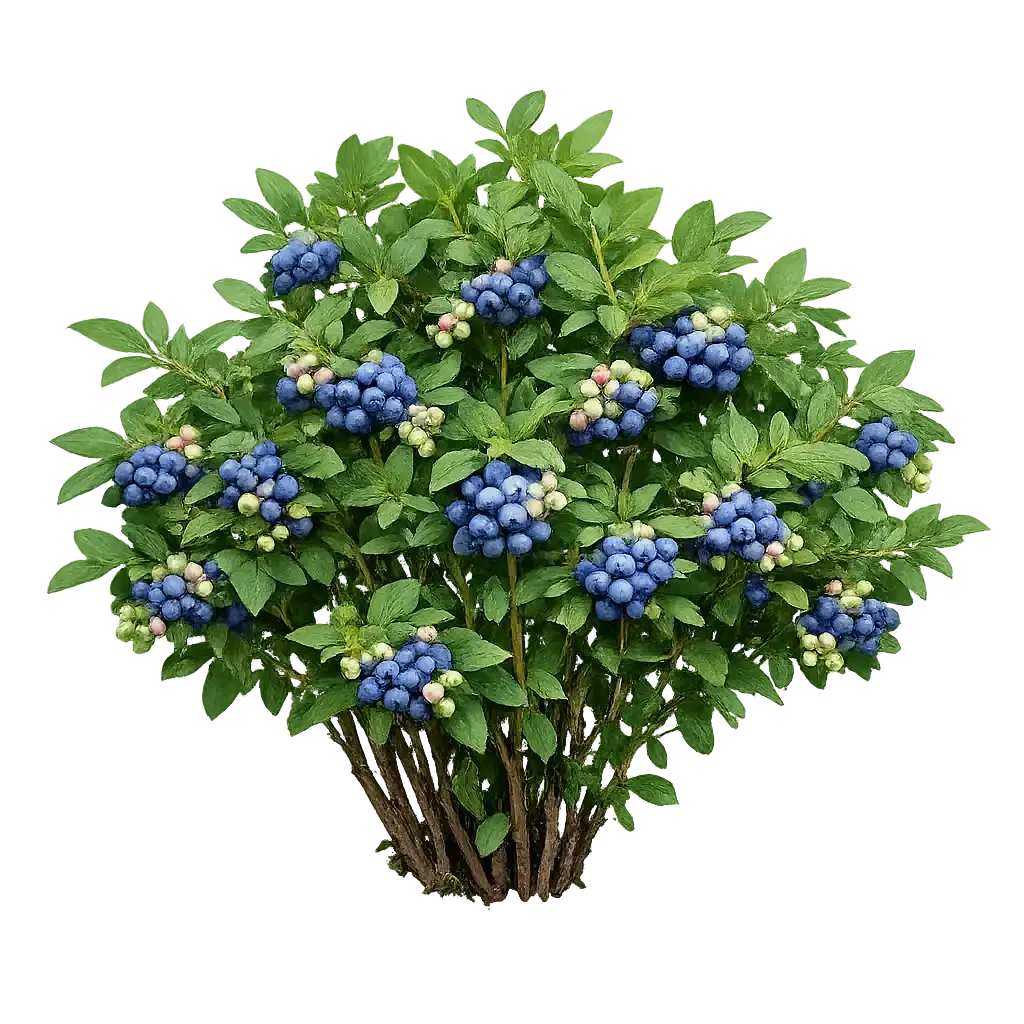
Botanical Name: Vaccinium corymbosum (Highbush) / Vaccinium angustifolium (Lowbush)
Written by Arthur Simitian | simitiannest.com
If you want a fruit-bearing shrub that pays you back for decades with almost no structural work once it is established, blueberry is one of the best investments you can make on a homestead. A mature plant delivers 5 to 10 pounds of berries per season, lives 50 years or longer with basic care, and doubles as ornamental landscaping with white spring flowers, deep green summer foliage, and brilliant red fall color.
But blueberry has one requirement that trips up more growers than any other: it needs acidic soil, and it needs it consistently. If your soil pH is wrong, the plant will sit there looking fine for a season, then slowly yellow, stall, and decline while you try to figure out what is happening. Get the soil right before you plant, and blueberry is one of the most rewarding and trouble-free shrubs you can grow.
This is everything I have learned about growing blueberries, what you can realistically expect from them, and what to watch out for.
Where It Grows and What It Needs
Blueberries are native to North America. The two main species you will encounter for homestead planting are the Highbush (Vaccinium corymbosum), native to the eastern U.S. and most commonly grown in home gardens, and the Lowbush (Vaccinium angustifolium), native to northeastern North America and the foundation of the commercial wild blueberry industry. There are also Southern Highbush and Rabbiteye types bred for warmer climates.
Highbush blueberry is hardy in USDA Zones 4 through 7. Southern Highbush varieties extend this down to Zone 8 and even Zone 9 with low chill-hour requirements. Lowbush types are extremely cold hardy, surviving in Zones 3 through 6. Rabbiteye varieties (Vaccinium virgatum) are the best choice for Zones 7 through 9, particularly in the Southeast where summers are long and hot.
Highbush plants grow 4 to 6 feet tall and 3 to 4 feet wide in an upright, multi-stemmed habit. Lowbush plants are ground-hugging, typically 1 to 2 feet tall, spreading by underground rhizomes to form a low mat. Rabbiteye plants can reach 10 to 15 feet at full maturity, more like a small tree than a shrub, though most home growers prune them to 6 to 8 feet.
Sun: Full sun produces the best yields. You need a minimum of 6 hours of direct sunlight per day, and 8 hours is better. Blueberry will grow in part shade but fruit production drops significantly, and the berries tend to be smaller and less sweet. If you are choosing a planting spot, put it where it gets unobstructed morning and midday sun.
Soil: This is the non-negotiable part. Blueberry needs acidic soil with a pH between 4.5 and 5.5. Most garden soil in North America sits between 6.0 and 7.0, which is too alkaline for blueberries to absorb iron and other micronutrients. Before you plant, test your soil pH. Do not guess. A basic soil test costs $15 at a garden center or through your local cooperative extension service, and it will save you years of frustration.
If your soil is above 5.5, you need to lower it before planting. Granular sulfur is the most effective long-term amendment. It takes 6 to 12 months to fully acidify the soil, so plan ahead and amend the season before planting if possible. For container growing, use a dedicated acidic potting mix formulated for blueberries or acid-loving plants, or mix your own with peat moss and pine bark.
Blueberry also needs excellent drainage. It does not tolerate standing water. The roots are fine and fibrous, lacking the tough bark of most woody plants, and they rot quickly in waterlogged conditions. Raised beds or mounded planting rows are a practical solution in areas with heavy clay or poor drainage.
Water: Consistent moisture is critical, especially from bloom through fruit development. Blueberry roots are shallow and dense, sitting in the top 12 to 18 inches of soil, and they dry out quickly. The plants need 1 to 2 inches of water per week during the growing season. Drip irrigation or soaker hoses are ideal because they deliver water directly to the root zone without wetting foliage, which can encourage fungal disease.
Spacing: Plant highbush varieties 4 to 6 feet apart within a row, with 8 to 10 feet between rows. Rabbiteye varieties need more room, 6 to 8 feet apart within a row. Lowbush varieties can be planted much closer, 18 to 24 inches apart, as they spread naturally to fill in gaps.
Mulch: This is arguably the single most important maintenance practice for blueberries. A 4 to 6 inch layer of acidic organic mulch, pine bark, wood chips, pine needles, or sawdust, does several things at once: it conserves soil moisture, moderates soil temperature, suppresses weeds, and as it breaks down, it continuously feeds the acidic soil conditions the plant needs. Keep mulch pulled back slightly from the crown to prevent rot. Refresh it annually.
The Root System: Shallow and Sensitive
Blueberry has a uniquely fine, fibrous root system that lacks the root hairs most plants use to absorb water and nutrients. Instead, it relies on a symbiotic relationship with mycorrhizal fungi in the soil to facilitate nutrient uptake. This is one reason why blueberry is so sensitive to soil conditions: if the fungal community in the soil is disrupted or absent, the plant cannot feed itself efficiently even if all the nutrients it needs are present.
The practical implications are:
Avoid tilling. Cultivation near blueberry plants damages the shallow root system and disrupts the fungal network in the soil. Weed by hand or with a hoe at the very surface, and rely on mulch to suppress weeds so you rarely need to do even that.
Do not over-fertilize. Blueberry roots are sensitive to salt burn from synthetic fertilizers. Use fertilizers formulated for acid-loving plants (look for ammonium sulfate or those labeled for azaleas and rhododendrons) and apply at the lower end of recommended rates. Heavy nitrogen fertilization without adequate acid soil pH leads to lush green growth with poor fruit production.
Transplanting takes time. Because the root system is fine and shallow, blueberries take a full season or two to establish after planting before they produce well. Do not push the plant for fruit in the first year.
Pollination: Two Is Always Better
Most highbush blueberry varieties are self-fruitful to some degree, meaning a single plant will produce some berries. But "some" does not mean "a good harvest." Cross-pollination between two or more different varieties planted nearby consistently produces larger berries, higher yields, and more reliable fruit set across the entire plant. In some cases, cross-pollinated plants produce two to three times more fruit than self-pollinated ones.
For pollination to work, the varieties you plant need to bloom at roughly the same time. Early, midseason, and late varieties exist for a reason, to spread the harvest window, but if you mix an early variety with a late variety, their bloom periods may not overlap and you lose the cross-pollination benefit. When selecting varieties, match early with early or midseason with midseason. For a homestead planting of two to four plants, choose two varieties from the same bloom timing category and plant them within 10 to 15 feet of each other.
Bees are the primary pollinators. Blueberry flowers are bell-shaped and slightly harder for pollinators to access than open flowers. Bumblebees are particularly effective because they use buzz pollination, vibrating their flight muscles against the flower to shake out pollen. If you have beehives on your property, they will happily work blueberry flowers in spring.
Timeline: When Do You Actually Get Fruit?
Year 1: No berries. Remove all flower buds in the first spring if the plant produces any. This is hard to make yourself do, but it is the right call. Redirecting that energy into root and shoot development means significantly better production starting in year 3 and every year after. You will not regret it.
Year 2: A small first harvest. Depending on the variety and how well the plant established, you might pick a handful to a pound of berries. Enough to taste and confirm you made the right choice. Leave most flowers on this year.
Year 3: The first meaningful harvest. A healthy young plant in good soil will produce 2 to 3 pounds.
Year 4 and beyond: Full production. A mature highbush plant in good conditions produces 5 to 10 pounds of berries per year. Some established plants in excellent soil have been known to produce 15 pounds or more. Two to four mature plants will supply a household with more fresh blueberries than you can eat during peak season, plus plenty to freeze, dry, and preserve.
Longevity: This is where blueberry truly sets itself apart from most homestead fruits. A well-sited and properly maintained blueberry bush can produce for 50 years. Fifty years of fruit from a single planting. The upfront investment in soil preparation and proper establishment pays dividends for most of a lifetime.
Berries ripen in clusters over a period of several weeks. Not every berry in a cluster ripens at the same time, which means you will harvest from the same plant multiple times over a 4 to 6 week window. Fully ripe blueberries separate from the cluster with almost no resistance. If you have to tug, give it another few days. A ripe blueberry has deep blue color all the way to the base, with no hint of red or pink, and a slightly dusty appearance from the natural bloom on the skin.
What You Can Make: Food and Preservation
Fresh eating is the obvious one, but blueberries are also one of the most versatile homestead fruits for preservation and processing. Unlike elderberry, you can eat them raw, right off the plant, and they are delicious.
Freezing is the easiest and most practical long-term storage method. Rinse, spread on a baking sheet to freeze individually, then transfer to freezer bags or containers. Frozen blueberries keep their quality for 10 to 12 months and are indistinguishable from fresh when used in cooked applications. This is how most homesteaders bank their harvest surplus.
Blueberry Jam and Preserves are straightforward to make and shelf-stable when properly water bath canned. Blueberries are naturally low in pectin, so most recipes call for added pectin or high sugar ratios to achieve a good set. The flavor is mild and sweet, without the astringency you get in some other wild fruits. A batch of jam requires roughly 5 to 6 cups of fresh berries for 4 to 5 half-pint jars.
Blueberry Syrup is simple to make and incredibly useful: simmer berries with water and sugar, strain, and bottle. Use it over pancakes and waffles, stir it into yogurt, mix it into drinks, or spoon it over vanilla ice cream. Stored in the refrigerator, it keeps for several months.
Dried Blueberries are one of the best trail foods and additions to homemade granola, oatmeal, and baked goods you can produce. Dehydrate at 130 to 135 degrees Fahrenheit for 18 to 24 hours until leathery but still slightly chewy. Pre-dipping fresh berries briefly in boiling water (blanching) cracks the skin and dramatically speeds up drying time. Dried blueberries store for up to a year in airtight containers away from light.
Blueberry Wine and Mead are traditional fermented products. Blueberry wine has a mild, fruit-forward character that many people prefer to the more tannic red wines. It pairs well with honey additions for a blueberry mead. If you already ferment other fruits at home, blueberry is an excellent rotation.
Other products: muffins and quick breads (the classic application), smoothie base, blueberry vinegar, fruit leather, shrubs (drinking vinegars), cheesecake topping, blueberry lemonade, and blueberry barbecue sauce. The mild, sweet flavor of blueberries makes them compatible with both sweet and savory preparations.
Medicinal and Nutritional Value
Blueberries are one of the most nutritionally dense foods you can grow. They are rich in vitamin C, vitamin K, manganese, and a broad spectrum of antioxidants, particularly anthocyanins, which are the compounds responsible for the deep blue-purple color. Anthocyanins have been studied extensively for their potential role in reducing oxidative stress and inflammation.
Regular blueberry consumption has been associated in research with improved cardiovascular health, better cognitive function and memory, enhanced insulin sensitivity, and support for gut microbiome diversity. They are genuinely one of the foods that earns the description "superfood" without marketing exaggeration.
The leaves and bark of Vaccinium species have traditional medicinal uses as well, primarily for urinary tract support (similar to their relative the cranberry) and as mild astringents. However, the practical homestead value is the fruit itself, which is significant.
Pros and Cons for the Homestead
Why Plant It
Long lifespan, 50 or more years of productivity from a single planting. High annual yield once established, 5 to 10 pounds per plant per year. One of the safest fruits you can grow, edible raw right off the plant with no toxicity concerns. Exceptional nutritional and antioxidant profile. Double ornamental value with spring flowers and vivid fall color. Excellent choice for pollinators in spring. Lower pest and disease pressure than many other fruit crops when planted correctly. Adaptable to containers if your native soil pH is not correctable. Wide variety selection allows you to match cultivars to your climate and spread your harvest window across 6 to 8 weeks. No thorns or irritating sap. Fruit stores and processes extremely well, frozen blueberries are nearly identical to fresh for cooking purposes.
Why Think Twice
Strict soil pH requirement is the biggest barrier. If you cannot achieve or maintain pH 4.5 to 5.5, the plant will struggle. Testing, amending, and monitoring soil pH is an ongoing commitment, not a one-time fix. Slow to reach full production, you are looking at year 3 to 4 before a real harvest. Birds love blueberries as much as you do. Without netting, you will lose a significant portion of your crop every season, and netting mature highbush plants is more involved than it sounds. Shallow roots make mulching and careful watering non-negotiable rather than optional. You need two different varieties for best yields, which doubles your initial investment. Deer pressure can be severe in some areas, blueberry is highly palatable to deer and they will browse it hard if given access.
Pruning and Long-Term Maintenance
Blueberry fruits best on wood that is 1 to 3 years old. Older wood produces smaller berries in fewer numbers. The goal of annual pruning is to maintain a renewal cycle of vigorous young canes while removing the older, less productive wood.
Prune in late winter to early spring while the plant is still dormant. For the first 3 years, focus only on removing dead, damaged, or crossing branches. Do not remove productive wood during the establishment phase.
From year 4 onward, the full pruning approach:
Remove any dead or diseased canes at the base. Remove canes that are lying on the ground or crossing through the center of the plant in a way that blocks light. Remove the oldest, thickest canes (more than an inch in diameter), cutting them to the ground. Aim to remove 1 to 3 of the oldest canes per plant per year. Shorten any canes that are excessively tall or gangly. Leave 6 to 8 healthy, vigorous canes of varying ages per plant.
In the summer during harvest, you will notice some canes produce abundant, large, easily picked clusters while others have sparse, small berries high up on the plant. Make a mental note or a physical marker on the underperforming canes. Those are the candidates for removal next winter.
One maintenance task many growers overlook: soil pH monitoring. Test your soil every 1 to 2 years and add sulfur as needed to maintain the acidic range. Soil pH naturally drifts upward over time, especially if you are irrigating with alkaline water. A small annual sulfur application is much easier than trying to rescue a yellowing plant that has lost 2 full pH points.
Quick Reference
Zones 4 to 7 (Highbush), Zones 3 to 6 (Lowbush), Zones 7 to 9 (Rabbiteye/Southern Highbush)
Height 4 to 6 feet for standard Highbush varieties
Width 3 to 4 feet at full maturity
Root depth is shallow, roughly 12 to 18 inches
Root habit is fine and fibrous, not spreading or invasive
Full sun, 6 to 8 hours minimum
Requires well-drained, acidic soil with a pH of 4.5 to 5.5
Needs 1 to 2 inches of water per week during the growing season
Requires two or more different varieties with overlapping bloom times for best yields
First meaningful harvest in year 3
Annual yield is 5 to 10 pounds per mature plant
Harvest window runs 4 to 6 weeks in summer, varying by region and variety
Top products include fresh eating, frozen berries, jam, syrup, dried fruit, and wine
Productive lifespan of 50 or more years with proper care
Blueberry is one of the most rewarding long-term investments on any homestead. It asks for careful soil preparation upfront and a few years of patience before it hits its stride. In return, it gives you decades of high-quality, nutritious fruit with minimal labor once established. Get the soil pH right, give it full sun and consistent moisture, net it during harvest season, and a blueberry planting started today will still be feeding your household long after most other fruit plants in your garden have come and gone.