
Highbush Cranberry
Written By Arthur Simitian
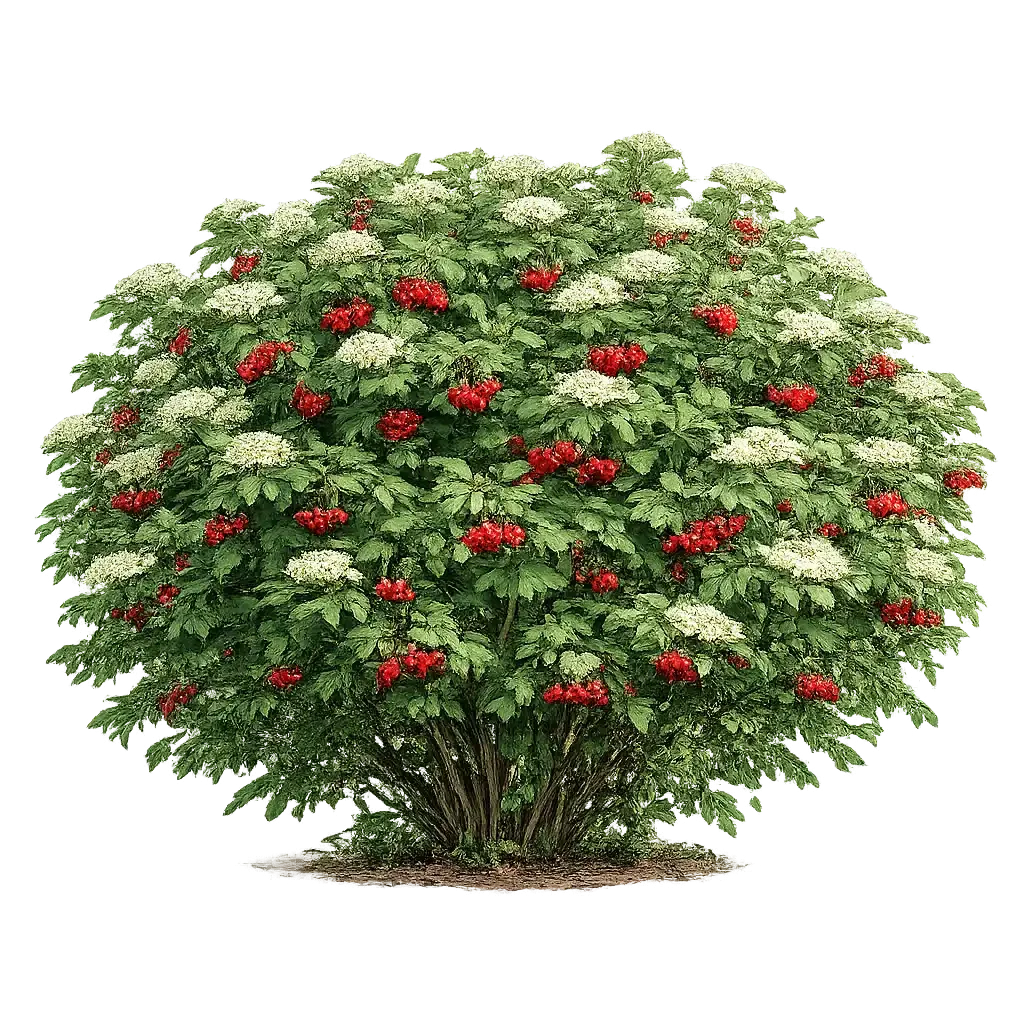
Highbush cranberry is one of those native shrubs that earns its place in the homestead landscape through sheer generosity across every season. In spring it covers itself in flat-topped white flower clusters that feed bees and other pollinators. Through summer it holds its bold, maple-like foliage clean and handsome. In autumn it turns to fire and loads itself with translucent red berry clusters that remain on the plant well into winter, feeding birds through the hungriest months of the year. And through all of this it produces fruit that, with proper handling, makes one of the most distinctive and flavorful preserves available from any North American native plant. For cold-climate homesteads looking for a plant that does everything simultaneously, highbush cranberry is difficult to surpass.
This guide covers highbush cranberry completely: the critical distinction between the native North American species and its European lookalike, wildlife habitat value across all four seasons, edible and culinary applications, planting and care, variety selection, and everything else needed to grow it well and use it fully.
What Is Highbush Cranberry and Why the Naming Matters
Highbush cranberry is the common name shared by two closely related but distinct shrubs that look nearly identical at a glance and require attention to tell apart. Understanding the difference between them is the first and most important practical step for any grower planning to plant one.
The native North American species is Viburnum opulus var. americanum, also sold and classified as Viburnum trilobum, commonly called American highbush cranberry or American cranberrybush viburnum. It is native across a broad range of northern North America from British Columbia and the northern Great Plains east through the Great Lakes region to New England and the Maritime provinces of Canada, extending south along the Appalachians.
The European species is Viburnum opulus, the European cranberrybush viburnum, native to Europe and northern Asia, which was widely planted as an ornamental across North America and is now established in the nursery trade alongside the native form. It is largely indistinguishable from the native species in flower, fruit color, and leaf shape to the casual observer.
The practical difference between the two is significant for anyone planning to eat the berries: the fruit of the European species has a noticeably more unpleasant smell, sometimes described as strong, pungent, or reminiscent of dirty socks, that makes cooking with it considerably less pleasant and the resulting jams and jellies less appealing than those made from the native American species. The European form is not toxic but its fruit quality for human culinary use is substantially inferior.
When purchasing highbush cranberry for any purpose that includes edible harvest, verify that you are purchasing the American species, Viburnum trilobum or Viburnum opulus var. americanum, and not the European form. Named cultivars from American breeding programs are the safest way to ensure this, as discussed in the variety section.
Both species are members of the genus Viburnum in the family Adoxaceae, which also includes elderberry. Despite the common name, highbush cranberry is not related to the true cranberry, Vaccinium macrocarpon, which is a low-growing bog plant. The name references the similar tart, bright red berry color and culinary applications rather than any botanical relationship.
Wildlife Value Across All Four Seasons
Highbush cranberry is among the most consistently wildlife-productive shrubs available for the North American homestead, with contributions that span every season and benefit a remarkable diversity of species. This year-round productivity is what distinguishes it from plants that are valuable in one season only and makes it one of the highest-value single plantings for growers who want to support native biodiversity.
In spring, the flat-topped flower clusters, called corymbs, provide accessible pollen and nectar for a wide range of native bees, hoverflies, beetles, and other early-season pollinators. The flower structure, with small fertile flowers in the center of the cluster and larger sterile ray flowers around the perimeter that serve as visual attractants, makes the nectar and pollen of the fertile flowers accessible to a broader range of insect body sizes than tubular flowers, supporting generalist and specialist pollinators equally.
Through summer, the dense, multi-stemmed shrub provides nesting cover and predator protection for a range of songbirds. The complexity of the branching structure and the density of the foliage makes it one of the better nesting shrubs available in the Viburnum genus. Several warbler species and other neotropical migrants use viburnums as stopover habitat during spring and fall migration, feeding on invertebrates in the foliage and resting in the protective canopy.
In autumn, the fruit ripens to brilliant translucent red and the foliage turns shades of orange, red, and burgundy in one of the finer fall color displays available from a native understory shrub. The berries are consumed by cedar waxwings, robins, thrushes, ruffed grouse, and other fruit-eating birds. The timing of bird consumption varies: some species take the fruit immediately at ripeness while others, including waxwings, often wait until midwinter when other food sources have been depleted.
In winter, the persistent berry clusters that have not yet been taken by birds provide one of the most important cold-season food sources in the landscape, sustaining wintering bird populations through the period when food is most scarce. The bright red clusters against bare stems or snow create one of the most striking and ecologically meaningful winter displays available from any native shrub.
Edible Berry Value for Humans
The berries of American highbush cranberry are edible and culinarily interesting, with a flavor profile that is distinctly tart and slightly bitter, with complexity that intensifies and improves after frost. They are not pleasant eating raw in quantity, but cooked with sugar they produce preserves, jellies, sauces, and syrups of genuine distinction that occupy a flavor niche quite different from commercial cranberry and from most other native fruit.
The flavor of highbush cranberry jelly is often described as a cross between cranberry and quince, with a fragrant, slightly floral character that makes it more complex than straight cranberry preparations. It pairs exceptionally well with game meats, roasted pork, aged cheeses, and hearty winter dishes in the same way that traditional European berry preserves complement rich foods.
Jelly and jam, the most common preparation, where the natural pectin content and tart flavor produce excellent results with relatively simple processing
Fruit syrup for flavoring drinks, cocktails, and desserts
Cranberry-style sauce served alongside poultry and game
Fruit leather dried from cooked, strained pulp
Juice fermented into a distinctive country wine
Shrubs and drinking vinegars infused with the tart berry flavor
Combined with apple or other milder fruits in mixed preserves that balance the tartness
Harvest the berries in late September through October, after the first frost has softened their flavor somewhat. The berries are easiest to harvest in clusters by snipping the entire stem cluster and then stripping the individual berries from the stems over a bowl. Each berry contains a single flat seed that is strained out through a food mill or jelly bag during processing.
The berries contain moderate levels of vitamin C and various antioxidant compounds, and they have been used medicinally by Indigenous peoples of North America for a range of applications including as an antispasmodic for muscle cramps, a use supported by the presence of the compound scopoletin in the bark and fruit, which has demonstrated smooth muscle relaxant properties in research settings.
Smell test before you cook: If you are unsure whether your plant is the American or European species, crush a small number of berries and smell them. The American species has a mildly tart, pleasant, cranberry-like scent. The European species has a distinctly strong, unpleasant odor that makes its identity immediately obvious. If the smell is off-putting, the fruit is still safe but the culinary quality will be substantially lower than from the American species.
Climate and Growing Zones
American highbush cranberry is one of the most cold-hardy native fruiting shrubs available for the North American homestead, reliably hardy from USDA zone 2 through zone 7. Its native range across the northern tier of North America, where it grows in some of the most severe winter climates on the continent, reflects genuine cold hardiness that few other productive fruiting shrubs can match.
It performs best in the cool to cold temperate climates of zones 2 through 6, where its native ecological relationships with soil organisms, pollinators, and wildlife are most fully intact and its cold hardiness is a genuine competitive advantage over less hardy alternatives. In zones 7 and 8 it grows and performs adequately in sheltered, partially shaded sites with reliable moisture, but it is less vigorous and less productive than in cooler zones and may struggle in the heat of long southern summers.
For cold-climate homesteads in zones 2 through 5 where the plant list of productive native fruiting shrubs with four-season landscape value is genuinely limited, highbush cranberry is one of the most important and versatile additions available. Its performance in these conditions is not merely adequate but excellent, and it ranks among the top native shrubs for cold-climate wildlife support and edible landscaping simultaneously.
Sunlight Requirements
American highbush cranberry grows in full sun to partial shade and is one of the more shade-tolerant native fruiting shrubs available, which gives it useful flexibility in homestead landscape placement. In full sun it produces the most prolific fruit set, the best fall color, and the most compact, well-branched habit. In partial shade of three to four hours of direct sun it grows somewhat more openly but fruits reasonably well and provides good wildlife habitat value.
Its natural occurrence as an understory and forest edge shrub in its native range reflects genuine shade tolerance rather than a mere ability to survive in shade, and this makes it one of the better native fruiting shrubs for the partially shaded areas of a food forest system or the edges of a woodland garden where full sun shrubs would underperform.
In hot southern climates at the warm edge of its range, afternoon shade is beneficial and improves the plant's performance compared to full sun exposure in intense summer heat. The combination of morning sun and afternoon shade replicates the forest edge conditions of its natural habitat most closely in these warmer settings.
Soil Requirements
American highbush cranberry is adaptable to a range of soil types and tolerates both moderately wet and moderately dry conditions, reflecting its native occurrence across a diverse range of riparian edges, forest margins, and upland thickets. It grows well in loamy, clay loam, and sandy loam soils across a pH range of approximately 5.5 to 7.5.
It tolerates periodic flooding and seasonal waterlogging better than many other native fruiting shrubs, which makes it particularly valuable for moist, low-lying sites within the homestead that are too wet for plants like serviceberry or hazelnut but too dry for willows to reach their full potential. This intermediate wet-tolerance fills a useful niche in the wet-site plant palette.
Good drainage is preferred but not strictly required. On well-drained soils it grows most vigorously and produces the best fruit crops. On moderately wet soils it grows somewhat more slowly but remains healthy and productive. On persistently waterlogged soils it will decline, though it is more tolerant of wet feet than most viburnums.
Pollination and Fruit Set
American highbush cranberry is largely self-fertile and produces fruit reliably from a single plant without cross-pollination, which makes it more convenient for small homestead gardens than American hazelnut or some other fruiting plants that require multiple plants for production. A single well-sited plant will fruit productively.
Cross-pollination from a second plant of a different variety or from another nearby plant does improve fruit set and yield, and for growers prioritizing maximum berry production, planting two or more plants within pollination distance is worth considering. The improvement in yield from cross-pollination is meaningful but the single-plant performance is still productive enough to justify the planting on wildlife and ornamental grounds alone even if space limits the planting to one.
How Far Apart to Plant
4 to 6 feet apart for a productive wildlife hedgerow or informal screen planting where canopy closure is desired
6 to 8 feet apart for a mixed native shrub border combining highbush cranberry with other native species
8 to 10 feet apart for specimen plants developed for maximum ornamental and fruit production value
At least 4 feet from fences, structures, and paths to allow for mature spread and harvest access
When to Plant
American highbush cranberry is best planted in early spring while dormant or in fall after the summer heat has passed. Bare-root plants from native plant nurseries are available in early spring and are economical for establishing multiple plants in hedgerow and wildlife planting applications. Container-grown plants are available throughout the growing season from native plant specialists and are the standard form for named cultivars.
Spring planting in zones 2 through 5 is strongly preferred, giving the root system a full growing season before its first winter in the ground. In zones 6 and 7, fall planting also works well. Where possible, source plants grown from regionally local seed for the strongest ecological relationships with local pollinators and soil organisms.
Planting Process
Verify that you are purchasing the American species, Viburnum trilobum or Viburnum opulus var. americanum, if edible fruit quality matters for your planting. Ask the nursery directly and confirm the botanical name on the label before purchasing.
Choose a site in full sun to partial shade with good to moderate drainage. Avoid the most exposed, wind-swept sites, where highbush cranberry performs less well than in more sheltered conditions. Forest edges, fence lines, and the north and east sides of windbreaks are all appropriate settings.
Dig a planting hole two to three times the width of the root ball and equal in depth. No soil amendment is necessary on average soils. On very sandy or poor soils, modest compost incorporation at planting supports good establishment.
Set the plant at the same depth it was growing, with the crown at soil level. Backfill with native soil and firm gently around the root ball to eliminate air pockets.
Water thoroughly after planting and apply two to three inches of mulch around the base, keeping it pulled back from the main stems. Highbush cranberry benefits from consistent moisture in its establishment year and mulch is the most practical way to maintain it between waterings.
Protect newly planted shrubs from deer browsing if deer pressure is significant in the area. Deer browse viburnum foliage readily and can damage or kill newly planted shrubs before they reach a size that tolerates browsing. Wire cages around individual plants through the first two seasons are effective protection.
Watering Needs
American highbush cranberry develops good moisture tolerance across a range of soil types once established and is less demanding of supplemental irrigation than many other native fruiting shrubs. On moist to average soils in temperate climates with reasonable summer rainfall, established plants typically require no supplemental watering beyond their first growing season.
During the establishment year, consistent moisture supports strong root development and reduces the transplant stress that is the primary cause of establishment failure in young viburnum plants. Deep watering once or twice per week during dry conditions through the first growing season is appropriate.
Adequate moisture during the fruit development period in late summer improves berry size and the richness of the autumn color display. On very sandy or free-draining soils in regions with dry summers, supplemental irrigation through August and September is a productive use of water resources for growers focused on maximum fruit and ornamental yield.
Fertilization Strategy
American highbush cranberry performs well with modest annual nutrition and benefits from an application of compost worked lightly into the soil around the drip line each spring. On average to fertile soils this annual compost application is sufficient to maintain vigorous growth and productive fruiting. On poor, sandy, or nutrient-depleted soils a balanced organic fertilizer applied in early spring of the second and third years after planting accelerates establishment.
Avoid high-nitrogen fertilizers, which encourage excessive vegetative growth that can make the plant susceptible to powdery mildew and reduces the energy available for fruit production. Moderate, balanced fertility produces the firm, disease-resistant growth and prolific fruiting that represent highbush cranberry at its best.
Pruning American Highbush Cranberry
American highbush cranberry requires relatively little pruning to maintain its productive form and attractive appearance, and over-pruning is more often a problem than under-pruning on established plants. The natural arching, multi-stemmed habit is one of the plant's most ornamentally appealing characteristics, and heavy shearing that imposes an artificial form on it eliminates both the natural grace of the plant and much of its berry-producing wood.
The appropriate maintenance approach is light annual renewal pruning in late winter or early spring: remove dead, damaged, or crossing canes at the base, cut the oldest and most congested canes at ground level every three to five years to encourage vigorous new growth from the crown, and selectively thin any inward-facing growth that reduces airflow through the canopy. This light renewal approach maintains plant vigor and keeps production high without removing the productive branching structure that carries the flower and fruit clusters.
American highbush cranberry flowers on the previous year's wood, which means that any pruning done in late winter removes some of the current season's flowering potential. Keep renewal pruning to the oldest and least productive canes rather than cutting back healthy, well-positioned stems that will carry this season's flowers and fruit.
For plants that have become overgrown or developed a poor structure through years of neglect, hard renovation pruning to twelve to eighteen inches above the ground in late winter produces vigorous regrowth from the base over one to two seasons, sacrificing the fruit crop for one year in exchange for a productive, well-structured plant thereafter.
Four-Season Ornamental Value
Few native shrubs match American highbush cranberry for sustained ornamental contribution across all four seasons, and this year-round presence in the landscape is one of the qualities that distinguishes it from plants that are notable in one season and invisible in the others.
In spring, the flat-topped white flower clusters are both ornamentally attractive and ecologically functional, appearing in late May to June on bold, maple-like foliage that has one of the most distinctive leaf shapes of any native shrub in its range. The combination of the large, three-lobed leaves and the white flower clusters creates a display that is formal enough for structured garden settings and wild enough for naturalistic plantings.
In summer the foliage is clean, bold, and handsome, holding its deep green through the season without the disease problems that plague many other shrubs. The developing berry clusters, green through summer and beginning to color by late August, add visual interest before the full autumn display.
In autumn the combination of brilliant red berry clusters and foliage that colors to orange, red, and deep burgundy simultaneously is one of the finest fall displays available from any native shrub. The timing is consistent and reliable, providing a dependable autumn landscape contribution that the grower can plan around.
In winter the persistent red berry clusters against bare stems, and often against snow, provide one of the most striking and practically wildlife-valuable winter displays in the temperate native plant palette. A planting of highbush cranberry visible from a kitchen window in January, loaded with red berries and frequented by waxwings and other winter birds, is one of the most satisfying wildlife garden experiences available.
Pests and Diseases
American highbush cranberry is generally healthy and free of serious pest and disease problems when well sited, with adequate air circulation and appropriate soil moisture. Its main vulnerabilities are relatively minor and manageable without chemical intervention in most growing conditions.
Viburnum leaf beetle, Pyrrhalta viburni, is the most significant pest concern in eastern North America, where this introduced European beetle has spread progressively westward since its first detection in the early 1990s. The larvae and adults both feed on viburnum foliage, causing progressive defoliation that can kill plants after several consecutive years of heavy infestation. American highbush cranberry is among the more susceptible native viburnum species to this pest. Removing egg-bearing twig sections in late summer, which contain the overwintering eggs laid in characteristic pits in the stem surface, is the most effective management approach on small homestead plantings. Natural predator populations including parasitic wasps are increasingly establishing effective control of viburnum leaf beetle populations in regions where the pest has been established for some years.
Powdery mildew can affect the foliage in late summer in humid climates and on plants with poor air circulation. It is unsightly but rarely a serious health threat to established plants. Ensuring adequate spacing and avoiding overhead irrigation minimizes pressure.
Aphid colonies occasionally appear on new growth in spring but are typically managed by beneficial insects without intervention. Deer browsing is the most significant threat to young and newly planted plants, as noted in the planting section.
Variety Selection
Named cultivars of American highbush cranberry offer improvements in berry production, fruit flavor, or ornamental characteristics over wild seedlings, and for growers who want the best combination of edible fruit quality and landscape performance, selecting a named variety is worthwhile.
Wentworth is one of the most widely recommended selections specifically for edible fruit production, bearing large, flavorful berries with less of the strong scent that affects the European species, and producing reliably heavy crops on a vigorous, attractive plant. It is the standard recommendation for growers prioritizing the culinary harvest.
Andrews is another fruit-selected cultivar with consistently good berry quality and productive yields, often recommended alongside Wentworth for cross-pollination to maximize fruit set.
Hahs is a selection noted for particularly heavy crops and fruit that is sweeter and less astringent than wild-type plants at fresh eating stage, making it more approachable for growers who want to eat some berries fresh rather than processing them all.
Compactum is a named selection of the European species, Viburnum opulus, rather than the American, offered primarily for ornamental use as a smaller-growing hedge plant. It is not recommended for edible harvest applications and should not be confused with the American fruiting cultivars.
Pros and Cons of Planting Highbush Cranberry
Advantages
Outstanding four-season ornamental value across flowers, foliage, fruit, and winter display
One of the most cold-hardy native fruiting shrubs, reliable from zone 2 to zone 7
Persistent red berries provide critical winter food for birds through the hungriest months
Flat-topped spring flowers support a wide range of native pollinators
Self-fertile, produces fruit reliably from a single plant
Tolerates partial shade, wet sites, and a range of soil types
Edible berries make excellent jelly, sauce, and syrup with distinctive flavor
Native to much of North America with strong ecological relationships
Low maintenance once established, tolerates renewal pruning well
No invasiveness concern as a native species across most of its range
Limitations
European lookalike commonly sold under the same name produces inferior fruit
Viburnum leaf beetle is a serious pest concern in eastern North America
Berries are too tart for pleasant fresh eating without processing and sweetening
Not well suited to zones 8 and warmer, struggles in heat and humidity
Pruning in late winter removes some of the current season's flowering wood
Deer browse the foliage readily, requiring protection during establishment
Powdery mildew can affect foliage in humid climates without adequate spacing
Full berry harvest requires timely picking before birds take the entire crop
Long-Term Planning Considerations
American highbush cranberry planted on an appropriate site improves with age in every dimension simultaneously. The root system deepens and broadens, supporting larger and more productive plants. The branching structure fills and becomes more complex, providing richer nesting and shelter habitat for wildlife. The berry crop grows more abundant as the plant reaches full maturity. The fall color intensifies on established plants that have had years to develop their root reserves.
The most important long-term planning considerations are confirming the species identity at purchase, siting the planting where the four-season display can be appreciated from the most-used areas of the homestead, monitoring for viburnum leaf beetle in regions where that pest is established, and managing the annual competition with birds for the berry harvest to ensure that the household preserving goals are met before the winter bird populations take the remainder.
A mature American highbush cranberry planting of three to five well-sited plants provides enough berry production to meet both household culinary needs and leave a substantial crop for wildlife, enough habitat to support nesting birds and overwintering pollinators, enough ornamental display to anchor the four-season native garden, and enough confidence in its long-term value to consider it one of the most complete and rewarding plantings available for the cold-climate North American homestead.
Final Thoughts
American highbush cranberry does not ask to be chosen over other plants by being the best at any single thing. It asks to be chosen because it is excellent at several things simultaneously, and because the combination of those things, timed across all four seasons, produces a plant that is never quite finished contributing. The white flowers in May feed the bees. The dense summer canopy shelters the nesting birds. The brilliant autumn display and abundant red berries feed the eye in October and the waxwings in January. The jelly in the pantry feeds the household through winter.
That is a great deal to ask of a single shrub. American highbush cranberry delivers it reliably, year after year, without drama or difficulty. It belongs on nearly every cold-climate North American homestead that has space for it, and on most of them it should have been planted years ago.