
Lilac
Written By Arthur Simitian
There is a moment in late spring on the cold-climate homestead when the lilac comes into bloom and the entire property smells different. That fragrance, one of the most recognized and beloved in the temperate plant world, is the lilac's most obvious gift. But it is not the only one. A well-chosen, well-sited lilac is also a substantial and long-lived landscape shrub, a generous spring nectar source for native bees and early butterflies, a reliable cut flower, and a plant that, once established, asks very little in return for decades of performance. The oldest lilacs in New England grow on the sites of farmsteads that have otherwise long since disappeared. They outlast the buildings, outlast the families that planted them, and bloom each spring with the same reliable abundance as ever.
This guide covers lilac from the ground up: the species worth knowing, what distinguishes common lilac from the newer reblooming types, pruning for reliable annual bloom, the cold requirement that governs where lilac can and cannot thrive, variety selection across a wide range of colors and forms, pollinator value, and the straightforward care that keeps a lilac productive for a lifetime.
What Is Lilac
Lilac is the common name for shrubs and small trees in the genus Syringa, a member of the olive family Oleaceae. The genus contains approximately twenty to twenty-five species native to southeastern Europe and Asia, with the greatest species diversity concentrated in China. The plant most people mean when they say lilac is the common lilac, Syringa vulgaris, native to the rocky hillsides of the Balkan Peninsula in southeastern Europe and introduced to western European gardens in the sixteenth century, from where it spread to North America with European colonists in the seventeenth century.
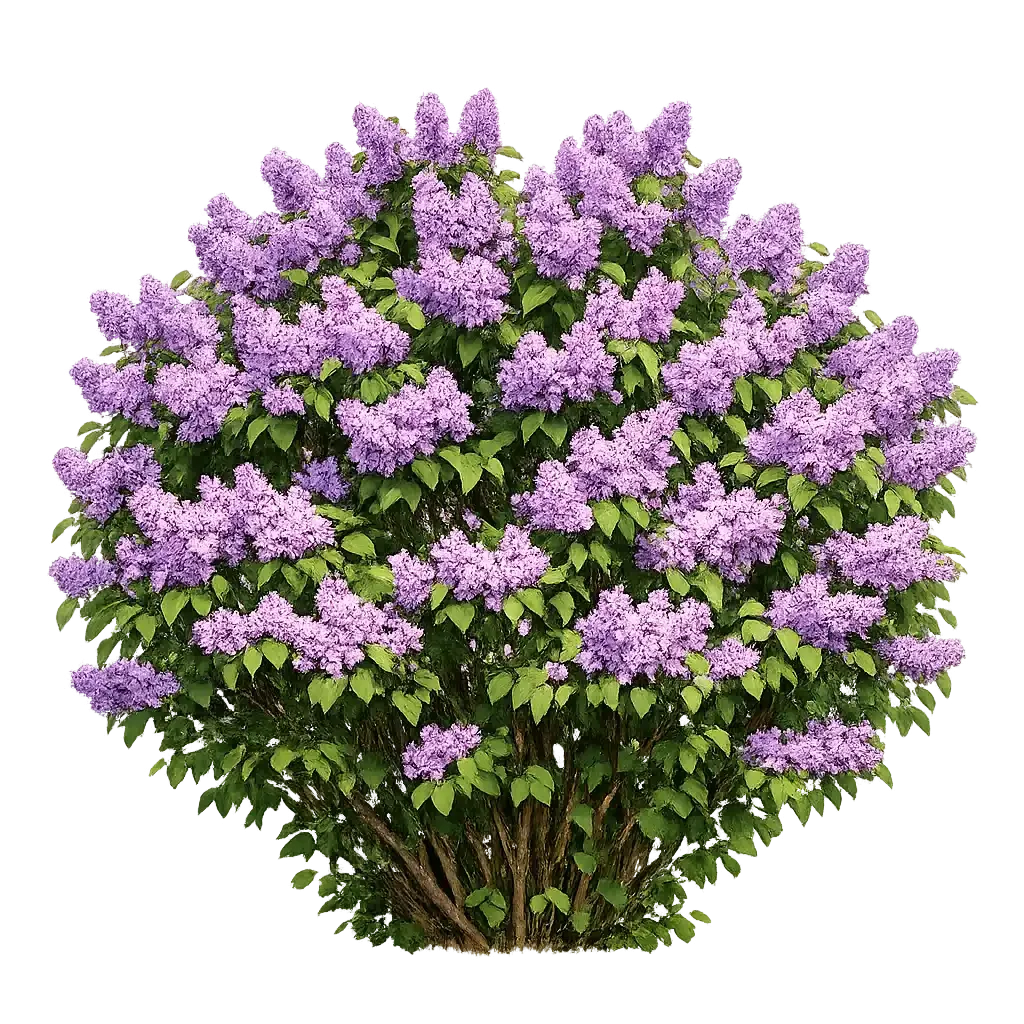
Common lilac is a large, multi-stemmed, deciduous shrub reaching eight to fifteen feet in height and comparable spread at maturity, with broad, heart-shaped, deep green leaves and the dense, upright flower panicles called thyrses that are its defining ornamental feature. The individual flowers within each panicle are small, tubular, and four-petaled, carried in enormous numbers per cluster to produce the massed color and fragrance display that makes the shrub one of the most spectacular spring-flowering plants in the temperate world.
Beyond common lilac, several other species deserve attention on the homestead for their extended bloom season, different flower character, or specific site tolerances. Persian lilac, Syringa persica, is a smaller, more graceful shrub to six feet with smaller, fragrant flower clusters. Meyer lilac, Syringa meyeri, is a compact, dense, very floriferous species hardy to zone 3 that blooms reliably and is among the best choices for smaller gardens. Peking lilac, Syringa pekinensis, grows as a small tree with creamy white flowers and attractive peeling bark, extending the lilac season later than common lilac by several weeks. Late lilac, Syringa villosa, and its hybrids with other species bloom two to three weeks after common lilac has finished, extending the total lilac season on a homestead that includes multiple species.
The Cold Requirement: Why Lilac Thrives Where It Does
Common lilac has a chilling requirement that is one of the most important factors governing where it can be grown successfully. It requires a sustained period of winter cold, typically a minimum of six to eight weeks of temperatures below 40 degrees Fahrenheit, to break dormancy properly and flower reliably the following spring. Without adequate winter chilling, the flower buds fail to develop fully and the plant blooms poorly or not at all.
This cold requirement is the reason that common lilac is one of the finest flowering shrubs for zones 3 through 7 and a poor performer in zones 8 and warmer, where winters are too mild to provide the chilling hours the plant requires. In the mild-winter climates of the deep South, California's Central Valley, and similar regions, common lilac sulks, grows slowly, and flowers intermittently at best.
For gardeners in zones 8 and 9 who want to grow lilac, low-chill varieties bred specifically for mild-winter climates represent the practical path. Descanso Hybrids, developed at Descanso Gardens in California, are the most widely available low-chill selections and include varieties such as Lavender Lady, Blue Boy, and White Angel that bloom adequately in zone 9 conditions. These are not common lilac in the classical sense but represent the best available solution for warm-climate growers drawn to the lilac's flower form and fragrance.
At the cold end of the hardiness range, several species and varieties are reliably hardy into zone 2, including Meyer lilac and a number of common lilac selections, making lilac one of the relatively few ornamental flowering shrubs that performs at its best in genuinely cold climates where the plant list for reliable bloom can be limited.
Why your lilac is not blooming: The most common reason an established lilac in an appropriate climate fails to flower is over-pruning or pruning at the wrong time. Lilacs bloom on old wood, meaning the flower buds for next spring are set on the current season's growth by midsummer. Pruning after midsummer removes those buds and eliminates the following year's bloom. If a lilac is healthy and well-sited but not flowering, review the pruning timing before assuming a more complex problem.
Fragrance and Its Variation
The fragrance of lilac is one of the most familiar and evocative scents in the temperate world, and it varies significantly across species and even across varieties of common lilac. Understanding this variation helps growers choose plants that deliver the fragrance experience they are looking for rather than discovering after planting that a particular variety is nearly scentless.
Common lilac, Syringa vulgaris, and its cultivars carry the classic, intensely sweet, heady fragrance that the word lilac conjures. The fragrance is strongest on warm, calm days and most intense in the morning hours. Most named cultivars of common lilac are fragrant, though the intensity varies among varieties, and some of the modern double-flowered selections sacrifice some fragrance for the showiness of their flower form.
Meyer lilac, Syringa meyeri, is fragrant but more lightly scented than common lilac, with a cleaner, less heady note that some growers prefer for use near sitting areas where the intensity of common lilac can be overwhelming at close range.
The Preston hybrid lilacs, Syringa prestoniae, bred in Canada in the early twentieth century primarily for cold hardiness and late bloom, are generally less fragrant than common lilac and are chosen primarily for their extended season and cold hardiness rather than their scent.
When fragrance is the primary selection criterion, the classic single-flowered cultivars of common lilac, including Monge (dark reddish-purple), Sensation (purple with white-edged petals), and the old garden variety President Lincoln (clear blue-lavender), are consistently among the most intensely fragrant.
Pollinator Value
Lilac is a significant early-season nectar and pollen source for native bees, honeybees, and the first adult butterflies of spring, and its value to pollinators goes beyond the visual pleasure of watching bees work through the flower clusters on a warm May morning.
The timing of lilac bloom in late April through May in most of its hardiness range coincides with the period when native bee populations are growing rapidly and their demand for pollen and nectar is at its most intense. Bumblebee queens emerging from overwintering and establishing their first colonies, mason bees filling their nesting chambers with pollen provisions, and a range of native solitary bees all use lilac as a productive foraging resource during this critical early-season period.
Hummingbirds visit lilac flowers for nectar in regions where they overlap with the bloom period, and early-season butterflies including eastern tiger swallowtail, spicebush swallowtail, and various native fritillaries use lilac nectar readily. The scent that carries lilac's fragrance across the garden is the same compound mixture that guides these pollinators to the flowers from a distance, and an established lilac in full bloom serves as a landmark for pollinators across a significant radius.
Single-flowered varieties of common lilac are more accessible to a wider range of pollinator body types than double-flowered varieties, where the extra petals create a more complex flower structure that reduces nectar and pollen accessibility for smaller insects. For wildlife support value, single-flowered forms are consistently more productive than doubles.
Lilac as a Cut Flower
Lilac is one of the finest and most abundant cut flowers available from the homestead garden, and a mature lilac in full bloom can supply enough cut flowers to fill every room in the house for the two to three weeks of its spring display with no measurable impact on the following year's flowering.
For cut flower use, harvest stems in the early morning when the panicle is between one-third and two-thirds open. Stems cut when the entire panicle is fully open shatter and drop their flowers within a day or two in the vase. Stems cut earlier hold considerably longer. Strip the lower leaves from the cut stem and make a long angled cut at the base, then split or lightly crush the bottom inch of the woody stem with a mallet or hammer before placing in water. This crushing of the woody stem base dramatically improves water uptake and extends vase life from one or two days to four to six days when done consistently.
The fragrance of lilac cut flowers filling a room is one of the most pleasant and distinctive experiences spring gardening offers, and growing a plant primarily for this purpose is entirely justified for households that value the cut flower harvest. A single mature common lilac can produce enough flowering wood in one spring for a generous household cut flower supply and still leave the bulk of the display intact on the plant.
Climate and Growing Zones
Common lilac is reliably hardy in USDA zones 3 through 7 and performs at its best in zones 4 through 6, where the combination of cold winters that satisfy its chilling requirement, moderate spring temperatures that extend the bloom season, and cool summers that keep the foliage clean and healthy creates ideal growing conditions. It is one of the premier flowering shrubs for cold-climate homesteads and one of the few that actually requires cold winters for its best performance.
Meyer lilac and many Preston hybrid selections are hardy into zone 2, making them appropriate for homesteads in the coldest temperate climates where common lilac may be marginal. For zone 2 and 3 homesteads, these hardier species are the more reliable choices alongside the hardiest common lilac cultivars.
In zone 7, common lilac performs adequately in most years but may bloom unreliably in winters that are unusually mild, and the warmer summers contribute to increased powdery mildew pressure that can make the foliage unattractive through summer. At the warm edge of its range it is a reliable spring performer but a less presentable garden shrub through the rest of the season compared to its performance in zones 4 and 5.
Sunlight Requirements
Lilac requires full sun for reliable and prolific bloom and is one of the most light-demanding of the major spring-flowering shrubs. A minimum of six hours of direct sun is necessary for adequate flowering, and eight or more hours produces the best performance. In shade or even significant partial shade, lilac grows but flowers poorly, with sparse, short panicles on a leggy, open-growing plant that bears little resemblance to the same variety grown in full sun.
Full sun also helps manage the powdery mildew that is the most common foliage problem on lilac, since the drier leaf surface conditions in full sun and good air circulation reduce the humid conditions that mildew spores require to establish. Lilacs planted in shaded, still-air locations are significantly more prone to powdery mildew than the same plants in open, sunny, well-ventilated positions.
Soil Requirements
Lilac grows best in well-drained soils with a near-neutral to slightly alkaline pH, ideally between 6.5 and 7.5. It is one of the relatively few ornamental shrubs that actually benefits from slightly alkaline soil conditions, and on acidic soils below pH 6.0 it can show reduced vigor, chlorotic foliage, and diminished flowering. A modest lime application to raise the pH on acidic soils is the appropriate correction and can produce a noticeable improvement in plant performance within one to two growing seasons.
Good drainage is important. Lilac does not tolerate persistently wet or waterlogged soils and will decline in heavy clay with poor drainage. On well-drained loam and clay loam soils it grows vigorously and flowers prolifically. On very sandy, droughty soils it grows more slowly and benefits from the moisture retention of incorporated organic matter at planting.
Lilac is notably tolerant of poor soil fertility and performs well without heavy fertilization, reflecting its origin on rocky, shallow Balkan hillside soils that are far from rich. On average soils with no amendments, established lilacs are typically vigorous and productive without any supplemental feeding.
How Far Apart to Plant
6 to 8 feet apart for common lilac in a hedgerow or informal screen where individual plants will grow together over time
8 to 12 feet apart for common lilac developed as individual specimen shrubs with full canopy development
4 to 5 feet apart for Meyer lilac and other compact species in a mixed shrub border
At least 6 feet from structures and fences to allow for the mature spread of common lilac and maintenance access from multiple sides
At least 10 feet from underground utility lines, which common lilac roots can reach and disturb at maturity
When to Plant
Lilac is best planted in early spring while dormant or in early fall after summer heat has subsided. Bare-root lilacs from mail-order nurseries are typically available in early spring and are economical for establishing multiple plants. Container-grown plants are available throughout the growing season and can be planted at any time, though spring and early fall are preferred.
Fall planting in zones 4 through 6 is an excellent approach, allowing several weeks of root establishment before the ground freezes and positioning the plant for strong early growth the following spring. In zones 3 and 2, spring planting is safer to ensure adequate establishment before the onset of severe winter conditions.
Newly planted lilacs typically do not bloom in their first one to two years in the ground, and this is normal and expected. Common lilac planted from a small nursery container typically begins blooming reliably in its third to fourth year. Patience through the establishment period is rewarded by decades of reliable flowering thereafter.
Planting Process
Test soil pH if possible and apply lime in advance of planting if the pH is below 6.5. A pH reading in the range of 6.5 to 7.5 is ideal. This correction is worth making before planting rather than after, as pH adjustment takes time to fully integrate into the soil profile.
Choose a site in full sun with good drainage and good air circulation. Avoid planting in enclosed corners or against walls where air movement is restricted, as this creates the stagnant, humid conditions that promote powdery mildew on the foliage through summer.
Dig a planting hole two to three times the width of the root ball and equal in depth. Backfill with native soil, incorporating modest compost on very poor or sandy soils. On average soils no amendment is necessary.
Set the plant so the crown is at soil level or very slightly above. Grafted lilacs should be planted with the graft union two to three inches below the soil surface to encourage the desirable variety to develop its own roots over time and reduce the suckers that arise from the rootstock below the graft.
Water thoroughly and apply a two to three inch mulch layer around the base, keeping mulch pulled back from the main stems. Lime can be scratched into the soil surface around the planting hole if soil pH correction is needed.
Do not fertilize at planting. Lilacs establish best on lean soil and do not benefit from nitrogen-rich fertilizers at any stage of their establishment or mature life.
Watering Needs
Lilac is moderately drought tolerant once established and requires minimal supplemental irrigation in temperate climates with reasonable summer rainfall. In its first growing season, consistent moisture supports root development and reduces transplant stress, and deep watering once per week during dry conditions is appropriate. From year two onward, supplemental irrigation is typically needed only during extended dry spells in summer.
Overwatering, particularly in heavy or poorly drained soils, is more damaging to lilac than drought and is one of the causes of the slow decline that is sometimes attributed to other factors. Once established, lilac on a well-drained site in a temperate climate rarely needs irrigation, and the grower whose instinct is to water during a dry summer should resist the impulse unless the plant is showing clear signs of moisture stress.
Fertilization Strategy
Lilac is one of the shrubs that benefits least from fertilization and suffers most from excessive nitrogen. High-nitrogen fertilizers encourage rapid, lush vegetative growth at the direct expense of flowering, making an overfed lilac a large, leafy shrub with sparse or absent bloom. This is the opposite of what most growers are aiming for.
On average soils, no fertilization is needed or beneficial for established lilacs. On genuinely poor or depleted soils, a light application of balanced compost in early spring of the first two to three years after planting supports establishment without creating the nitrogen-driven vegetative growth that suppresses bloom. Once established, the annual leaf fall and natural organic matter cycle of a well-mulched planting provides all the nutrition a lilac requires.
If a lilac shows signs of nutrient deficiency, the more likely explanation in most cases is pH imbalance rather than simple nutrient shortage. A pH correction that unlocks the existing soil nutrients is more productive than adding more fertilizer that will also be unavailable at the wrong pH.
Pruning for Reliable Annual Bloom
Pruning is the most consequential management practice for lilac, and getting it right is the difference between a lilac that blooms reliably every year and one that blooms unreliably or fails to bloom entirely. The core principle is straightforward: lilac flowers on old wood, meaning the flower buds for next spring's display are formed on the current season's growth in midsummer and must be present on the plant by late summer to produce flowers the following spring. Any pruning after the end of June removes these developing buds and eliminates the following year's bloom.
The only correct time to prune lilac is immediately after flowering, in late spring when the current season's flowers have finished and before the new growth that will carry next year's buds has extended significantly. Pruning within two to three weeks after bloom preserves the most productive growth while still removing spent flower heads and any unwanted wood.
Annual maintenance pruning consists of removing spent flower panicles at the base of the cluster, taking out any dead, damaged, or rubbing canes, and cutting the oldest and thickest canes at ground level every three to five years to encourage vigorous renewal growth from the crown. This last practice, removing the oldest canes periodically, is the most important long-term management step for keeping a mature lilac flowering productively rather than allowing it to build an increasingly congested mass of old, barely flowering wood.
Suckers arising from the base of grafted plants should be removed promptly at ground level before they develop into significant competing stems. Suckers from grafted plants are from the rootstock, not the desirable variety, and will produce inferior flowers if left to develop. Suckers from own-rooted plants are the same variety as the parent and can be allowed to develop as part of the natural multi-stemmed habit or removed to maintain a cleaner, more open form.
Variety Selection
The variety landscape for common lilac is one of the richest of any ornamental shrub, with several hundred named cultivars available across a color range from the deepest purple through magenta, pink, lavender, blue-violet, and pure white, in both single and double-flowered forms. The Lemoine hybrids developed in France from the late nineteenth century onward represent the peak of classical lilac breeding and include many of the most fragrant and beautiful varieties still widely grown today.
Among purple and violet varieties, Monge offers very dark reddish-purple single flowers with outstanding fragrance. Charles Joly is a well-regarded dark magenta-purple double. Sensation is a distinctive single-flowered variety with purple florets individually edged in white, unique in the lilac world and reliably fragrant.
Among blue and lavender varieties, President Lincoln is consistently cited as one of the clearest blue-lavender singles available and remains one of the most popular classic selections. Wedgwood Blue is a compact selection with clear pale lavender-blue flowers appropriate for smaller homestead gardens.
Among pink varieties, Lucie Baltet is a soft coppery-pink single of exceptional fragrance, one of the most distinctive colors in the common lilac range. Miss Kim, technically a selection of Syringa pubescens subsp. patula rather than common lilac, is a compact, late-blooming, very fragrant selection that is hardy to zone 3 and one of the best choices for small gardens.
Among white varieties, Madame Lemoine is a classic double white of excellent fragrance and reliable bloom, one of the finest white lilacs available. Angel White is a more compact modern selection appropriate for smaller spaces.
For zone 2 and 3 homesteads, the Villosa hybrids and Preston hybrids bred in Canada offer reliable cold hardiness alongside good late-season bloom that extends the lilac flowering period beyond that of common lilac. James MacFarlane, a Preston hybrid with clear pink single flowers, and Donald Wyman are reliably hardy and widely available.
For reblooming performance, the Bloomerang series offers a compact, mounding habit with a main spring flowering followed by rebloom from late summer through frost. The fragrance is lighter than classic common lilac but the extended bloom season provides a longer nectar window for pollinators and a longer ornamental season for the garden.
Powdery Mildew Management
Powdery mildew, a fungal disease that produces the characteristic white, powdery coating on the upper leaf surface in late summer, is the most common and most visible problem on established lilacs in most growing regions. It is unsightly but rarely a serious health threat to vigorous, well-established plants, and the affected foliage drops naturally in autumn without permanent damage to the plant's long-term health or following year's bloom.
Several factors consistently reduce powdery mildew pressure. Full sun and good air circulation are the most effective preventive conditions, as mildew establishes more readily in shaded, still-air sites. Avoiding overhead irrigation keeps the leaf surface drier through summer. Selecting mildew-resistant varieties, including most Meyer lilac selections and some common lilac cultivars specifically noted for mildew resistance, reduces the problem at the variety selection stage.
For growers who find summer mildew unacceptable despite these precautions, a baking soda solution or potassium bicarbonate spray applied at the first signs of mildew appearance reduces its spread without chemical fungicides. On the homestead where aesthetic perfection is less important than function, the reasonable approach is simply to site the plants well, choose resistant varieties where available, and accept that the foliage will be less attractive in August than in June.
Pests and Other Problems
Beyond powdery mildew, lilac is generally healthy and free of serious pest problems in appropriate growing conditions. The lilac borer, Podosesia syringae, is a native clearwing moth whose larvae tunnel into the woody stems of mature lilacs, causing wilting of individual canes and, in heavy infestations, progressive weakening of the overall plant. The characteristic entry holes at the base of affected canes and the sawdust-like frass around them identify the problem. Removing and destroying infested canes in late winter or early spring and maintaining plant vigor through good cultural practices is the primary management approach.
Lilac scale, various aphid species, and leaf miners occasionally affect foliage without causing serious long-term harm to healthy plants. Natural predator populations typically manage these pests adequately on homestead plantings that are not treated with broad-spectrum insecticides.
Deer browse lilac foliage and young stems, and in areas with significant deer pressure newly planted lilacs require protection until they reach a size that tolerates browsing without being seriously set back.
Pros and Cons of Planting Lilac
Advantages
Among the most intensely fragrant flowering shrubs available in the temperate world
Outstanding spring nectar source for native bees, butterflies, and hummingbirds
Reliable and abundant cut flower harvest for two to three weeks each spring
Performs best in cold climates where the plant list for reliable bloom is often limited
Extremely long-lived, with well-sited specimens persisting and blooming for over a century
Low fertilization and irrigation needs once established
Enormous variety selection across colors, flower forms, sizes, and bloom times
Reblooming varieties extend the fragrance and pollinator season into autumn
Hardy to zone 2 in the most cold-tolerant species and varieties
No invasiveness concerns across its established growing range
Limitations
Requires sustained winter cold to bloom reliably, not suitable for zones 8 and warmer without special low-chill varieties
Blooms for only two to three weeks, no ornamental contribution the rest of the season
Powdery mildew makes foliage unattractive through late summer in most climates
Pruning at the wrong time eliminates the following year's bloom entirely
Newly planted shrubs do not bloom for two to four years
Requires pH correction on acidic soils for reliable performance
Produces suckers that require ongoing removal on grafted plants
Lilac borer can weaken mature plants if not monitored and managed
Long-Term Planning Considerations
Lilac is one of the most genuinely permanent plants a homestead can establish. A common lilac planted today in an appropriate site will be blooming on that same spot long after every structure currently on the property has been replaced, and the planning mindset for lilac is accordingly long-term. Site it where it can grow to full size without interference from structures or utility lines, where it will be visible and accessible for cut flower harvest during its brief but spectacular bloom period, and where the summer mildew on the foliage will not be the dominant visual feature of the main garden.
Planting multiple lilac species and varieties with different bloom times, from early-blooming common lilac through mid-season Meyer lilac to late-blooming Preston hybrids and peking lilac, extends the total fragrance and pollinator season from three weeks to six or more weeks. This staggered bloom sequence is one of the most productive investments of lilac planting space on a homestead that has room for it.
The patience required through the first few non-blooming years is the most significant psychological challenge of establishing new lilacs. Once it has passed, the plant repays it generously and with compounding interest for the remainder of a very long useful life.
Final Thoughts
Lilac occupies a specific and irreplaceable position in the cold-climate homestead planting that no other shrub quite fills. The fragrance alone justifies it. The pollinator value reinforces it. The cut flower harvest confirms it. And the longevity of a well-sited plant, blooming reliably on the same spot for fifty or a hundred years, gives it a permanence in the homestead landscape that matches its permanence in the cultural memory of everyone who has ever walked past a lilac in full bloom in May.
Prune it at the right time. Give it full sun and good drainage. Correct the pH if needed. Then step back and let it do what it has been doing reliably on North American homesteads since the seventeenth century.