
Honeyberry (Haskap)
Written By Arthur Simitian
Honeyberries, also known as haskap, are among the most cold-hardy edible fruit bushes in the world. Long cultivated in Russia, Japan, and Canada, they are now gaining well-deserved recognition among homesteaders, food gardeners, and small-scale growers across North America and Europe. For anyone living in a cold climate who has struggled to grow reliable fruit crops, the honeyberry is one of the most practical and rewarding plants available.
They ripen earlier than almost any other fruit, tolerate brutal winters, and produce nutritious, flavorful berries that are excellent fresh and outstanding for preservation. This guide covers honeyberries in full, including what they are, why they deserve a place in your garden, planting requirements, pruning, first harvest timelines, lifespan, uses, and the honest advantages and drawbacks of growing them.
What Are Honeyberries
Honeyberries are deciduous fruiting shrubs in the Lonicera genus, specifically Lonicera caerulea and its subspecies. They are sometimes called haskap, a name derived from the Ainu people of northern Japan, where the plant grows wild and has been eaten for centuries. In Russia and Siberia, honeyberries have long been cultivated for their hardiness and medicinal properties.
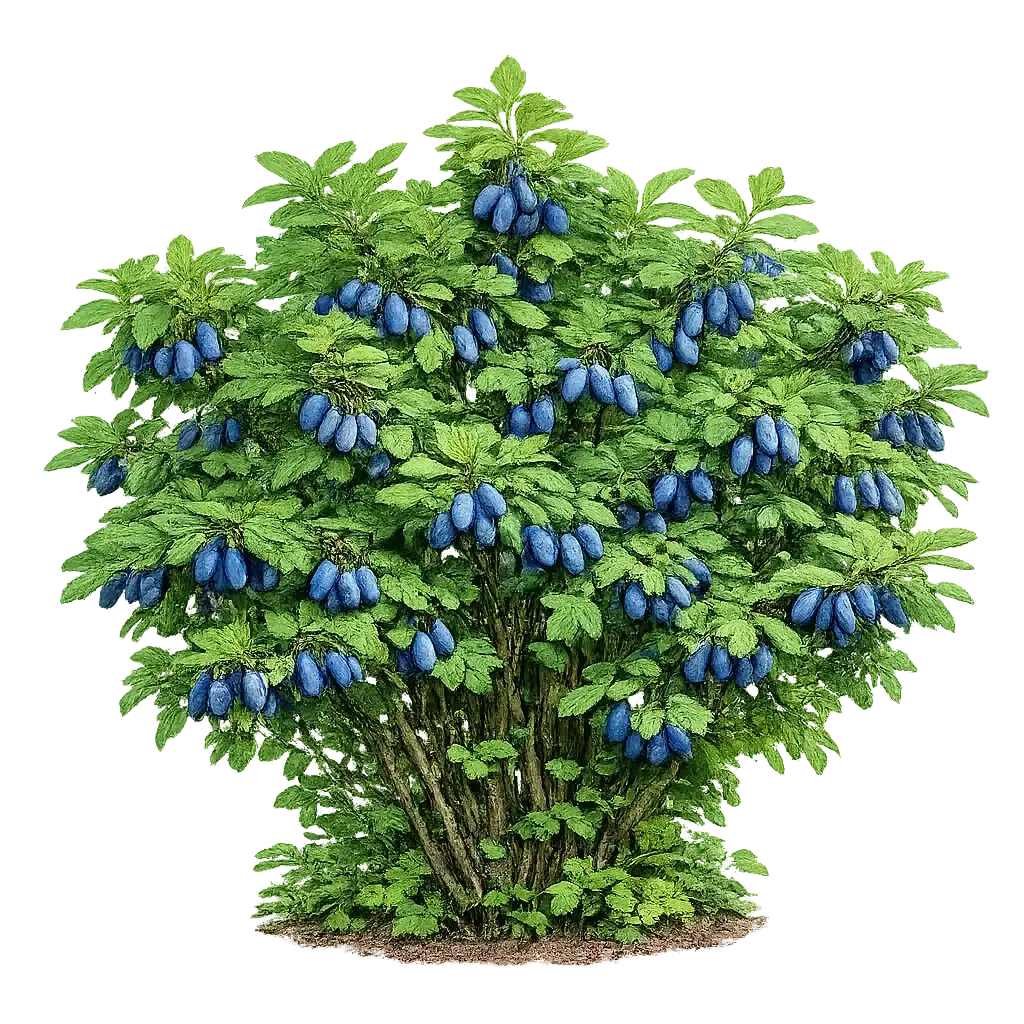
The berries are elongated and dark blue to nearly black when ripe, resembling a stretched blueberry in appearance. The flavor is complex and varies by variety, ranging from sweet-tart with blueberry-like notes to deeper, more wine-like profiles with hints of elderberry or black currant. Some varieties have a slight bitterness near the skin that mellows considerably when cooked.
The bushes are upright and multi-stemmed, typically reaching four to six feet in height and three to five feet in width at maturity, though this varies considerably by variety. They are woody perennials that establish slowly but become increasingly productive and long-lived once mature.
Why Grow Honeyberries
The most compelling reason to grow honeyberries is their extraordinary cold hardiness. Mature bushes can survive temperatures as low as minus forty degrees Fahrenheit, and their flowers can withstand spring frosts down to around twenty degrees. This makes them one of the only fruiting shrubs that can be grown reliably in the harshest northern climates where peaches, cherries, and even apples may fail.
They also ripen exceptionally early. In most temperate climates, honeyberries are the first fruit of the season, often ready to harvest in late May or June, weeks ahead of strawberries and well before any other berry bush produces ripe fruit. For homesteads focused on extending the fresh fruit season, this early ripening is a significant advantage.
Honeyberries are also rich in antioxidants, particularly anthocyanins, which give the berries their deep color. Their nutritional profile is comparable to blueberries, and in some studies their antioxidant content has measured even higher.
Once established, honeyberry bushes are remarkably low maintenance. They are resistant to most pests and diseases, require only modest annual pruning, and tolerate a range of soil conditions.
Pollination Requirements
This is one of the most important things to understand about honeyberries before planting. Most varieties require cross-pollination from a second, compatible variety to set fruit. A single bush planted alone will produce little to no fruit.
For best results, plant at least two different compatible varieties in close proximity. Many growers plant three or more to maximize yield and extend the harvest window. Check variety compatibility before purchasing, as not all honeyberry varieties pollinate each other effectively.
Pollinators, particularly bumblebees, are essential for transferring pollen between plants. Honeyberries bloom very early in spring before many bees are active in large numbers, so planting in a location that warms quickly and encourages early pollinator activity is beneficial.
Climate and Growing Zones
Honeyberries grow best in USDA hardiness zones 2 through 7. They are one of the few fruiting shrubs well suited to zones 2 and 3, where the growing options for perennial fruit are extremely limited.
They prefer cool to cold climates and actually require a period of winter chilling to break dormancy and flower properly. In warmer climates below zone 7, they may struggle to accumulate sufficient chill hours and can decline over time.
Some newer varieties have been bred for slightly warmer climates, extending the viable range modestly, but honeyberries remain fundamentally a plant for cold and cool regions.
Sunlight Requirements
Honeyberries prefer full sun and perform best with at least six hours of direct sunlight daily. Full sun promotes strong growth, earlier ripening, and better fruit quality.
They will tolerate partial shade and can still produce a useful harvest with four to five hours of sun, but yields will be reduced and ripening may be delayed. In northern climates where growing seasons are short, maximizing sun exposure is especially important.
Soil Requirements
Honeyberries are tolerant of a wide range of soil conditions, which is one of their practical advantages over more demanding fruit crops like blueberries.
They prefer slightly acidic to neutral soil with a pH between 5.5 and 7.0 and grow well in loamy, well-drained soil with adequate organic matter. Unlike blueberries, they do not require strongly acidic soil and will tolerate near neutral conditions without significant problems.
Incorporating compost before planting improves both drainage and nutrient availability. Honeyberries do not perform well in waterlogged soil, so good drainage is important regardless of soil type.
How Far Apart to Plant Honeyberries
Spacing depends on the mature size of the variety chosen, as honeyberries vary considerably in their growth habit.
General recommended spacing:
• 3 to 5 feet between plants of compact varieties
• 5 to 6 feet between plants of larger varieties
• 6 to 8 feet between rows
Always plant at least two compatible varieties within pollination range of each other, ideally no more than fifty feet apart. Planting them closer together improves pollination and fruit set.
When to Plant Honeyberries
The best time to plant honeyberries is early spring while plants are still dormant, or in fall after the summer heat has passed. Spring planting is preferred in colder climates to give roots the full growing season to establish before winter.
Honeyberries break dormancy and begin growing very early in spring. They should be planted as early as the ground can be worked to allow maximum establishment time before the heat of summer.
Container-grown plants are the most common form available and can be planted throughout the growing season with attentive watering, though spring and fall establishment is still preferable.
Planting Process
To plant honeyberries successfully:
1. Dig a hole twice as wide as the root ball and equal in depth.
2. Set the plant so the crown is at or slightly above the soil surface.
3. Backfill with native soil amended with compost.
4. Water thoroughly to settle the soil around the roots.
5. Apply two to three inches of mulch around the base to conserve moisture and suppress weeds.
Watering Needs
Honeyberries are more drought tolerant than many fruiting shrubs once established, but consistent moisture during the first two to three years is important for strong root development.
During fruit development, adequate moisture helps berries size up properly. Deep watering once or twice per week is preferable to frequent shallow watering. Mulching significantly reduces moisture loss and is especially beneficial in the establishment years.
Fertilization Strategy
Honeyberries are light feeders that do not require heavy fertilization. An annual application of compost in early spring is typically sufficient for healthy growth and consistent yields.
Avoid high-nitrogen fertilizers, which promote excessive leafy growth at the expense of fruiting. If growth is weak or leaves appear pale, a light compost top dressing is usually the appropriate response.
Pruning Honeyberries
Honeyberries require minimal pruning in their first several years. During establishment, the focus should be on allowing the plant to build a strong framework of canes rather than removing growth.
Once mature, typically after year five or six, annual pruning becomes more important. Honeyberries fruit primarily on one and two year old wood, so the goal of pruning is to encourage a steady supply of younger productive canes while removing older, less productive wood.
Each year on mature bushes, remove:
• Dead or damaged canes
• Very old, woody canes that are no longer productive
• Crossing or crowded interior branches that restrict airflow
Pruning should be done in late winter or early spring while the plant is still dormant. Because honeyberries break dormancy and begin flowering very early, timing is important. Prune before the buds begin to open to avoid removing developing flower buds.
When to Expect First Fruit
Honeyberries are slower to establish and reach peak production than some other berry bushes. Most plants produce a small amount of fruit in their second or third year, but meaningful harvests typically do not begin until year three or four.
Peak production usually occurs between years five and ten and continues for many years beyond that with proper care. The patience required during the establishment period is one of the more significant drawbacks of honeyberries, but growers who persist are rewarded with decades of reliable harvests.
Harvest Timing and Yield
One of the most exciting features of honeyberries is how early they ripen. In most climates they are ready to harvest in late May through June, making them the first fresh berry of the season by a significant margin.
An important note for growers new to honeyberries is that the berries turn dark blue and look ripe before they actually are. Fully ripe honeyberries should be allowed to stay on the bush for one to two weeks after turning blue, as sweetness and flavor continue to develop during this period. A ripe berry will detach easily with a gentle tug.
A mature honeyberry bush can produce 5 to 15 pounds of fruit per season depending on the variety, growing conditions, and age of the plant. Larger commercial varieties tend toward the higher end of that range.
How Long Honeyberry Bushes Live
Honeyberries are exceptionally long-lived. Well-maintained bushes can remain productive for 30 to 50 years or more. In their native range in Siberia and Japan, wild plants have been known to survive for decades under harsh conditions with minimal care.
This longevity makes honeyberries one of the best long-term investments available to a homestead or food garden. The slow start is offset by the prospect of decades of reliable production from a single planting.
Pests and Diseases
Honeyberries are notably resistant to most pests and diseases, which is one of their practical advantages for low-input gardening.
The most common concern is birds. Honeyberries ripen so early in the season that birds actively seek them out before other fruit is available. Netting is often the most effective protection and is strongly recommended for growers who want to retain their full harvest.
Aphids can occasionally appear but rarely cause serious damage. Fungal diseases are uncommon when plants are given adequate spacing and airflow. Overall, honeyberries require far less pest management than most fruiting shrubs.
Uses of Honeyberries
Honeyberries are versatile in the kitchen and can be used much like blueberries, though their flavor is more complex and varies more between varieties.
Common uses include:
• Fresh eating
• Jams and preserves
• Smoothies and juices
• Baking in muffins, pies, and cakes
• Wine and fruit vinegars
• Syrups and cordials
Their deep color produces striking jams and syrups. Berries can also be frozen successfully and retain their flavor and nutritional value well in storage.
Nutritional Value
Honeyberries are exceptionally rich in anthocyanins, which are the antioxidant compounds responsible for their deep blue-black color. Studies have found their antioxidant content to be among the highest of any commonly grown fruit.
They also provide vitamin C, potassium, magnesium, and dietary fiber. Their nutritional density makes them a valuable crop for homesteads focused on growing food with genuine health benefits rather than empty sweetness.
Companion Planting
Honeyberries grow well alongside other cold-hardy shrubs and perennial herbs. Good companions include chives, borage, and other pollinator-attracting plants that bloom early in spring to support the bees needed for pollination.
They can also be planted alongside other Lonicera species and integrate well into food forest systems. Avoid planting in low-lying frost pockets, as late frosts at flowering time can significantly reduce fruit set.
Pros of Planting Honeyberries
• Among the most cold-hardy fruiting shrubs available, hardy to zone 2
• Ripens earlier than any other common fruit bush
• Exceptionally long-lived, productive for 30 to 50 years
• High antioxidant content, comparable to or exceeding blueberries
• Resistant to most pests and diseases
• Tolerates a wide range of soil conditions
• Low maintenance once established
Cons of Planting Honeyberries
• Require at least two compatible varieties for pollination and fruit set
• Slow to establish, with meaningful harvests often not beginning until year three or four
• Berries look ripe before they are, requiring growers to learn the correct harvest timing
• Birds target the fruit aggressively due to early ripening
• Not well suited to warm climates below zone 7
• Flavor varies considerably between varieties, requiring careful selection
Long Term Planning Considerations
Honeyberries are one of the most genuine long-term investments in the edible landscape. Their slow start can be frustrating, but growers who understand what they are planting and plan accordingly are rewarded with decades of production from a single planting.
Selecting the right varieties from the outset is critical. Choose varieties specifically selected for your climate, confirm compatibility for cross-pollination, and prioritize varieties bred for flavor rather than just yield if fresh eating is a goal.
For cold-climate homesteads, honeyberries fill a gap in the fruit season that no other plant covers as effectively. Planted alongside other early and mid-season fruits, they become the opening chapter of the annual harvest.
Final Thoughts
Honeyberries are not a plant for impatient growers or warm climates. But for those in cold regions who are willing to plan ahead and give them time to establish, they are among the most rewarding fruiting shrubs available.
Their combination of extreme cold hardiness, early season ripening, exceptional nutritional value, and remarkable longevity sets them apart from nearly every other edible shrub. They ask for patience and provide abundance in return.
With proper variety selection, thoughtful placement, and a long-term perspective, honeyberry bushes can become one of the most valuable and enduring plants in a resilient food garden.