
Abyssinian
Overview
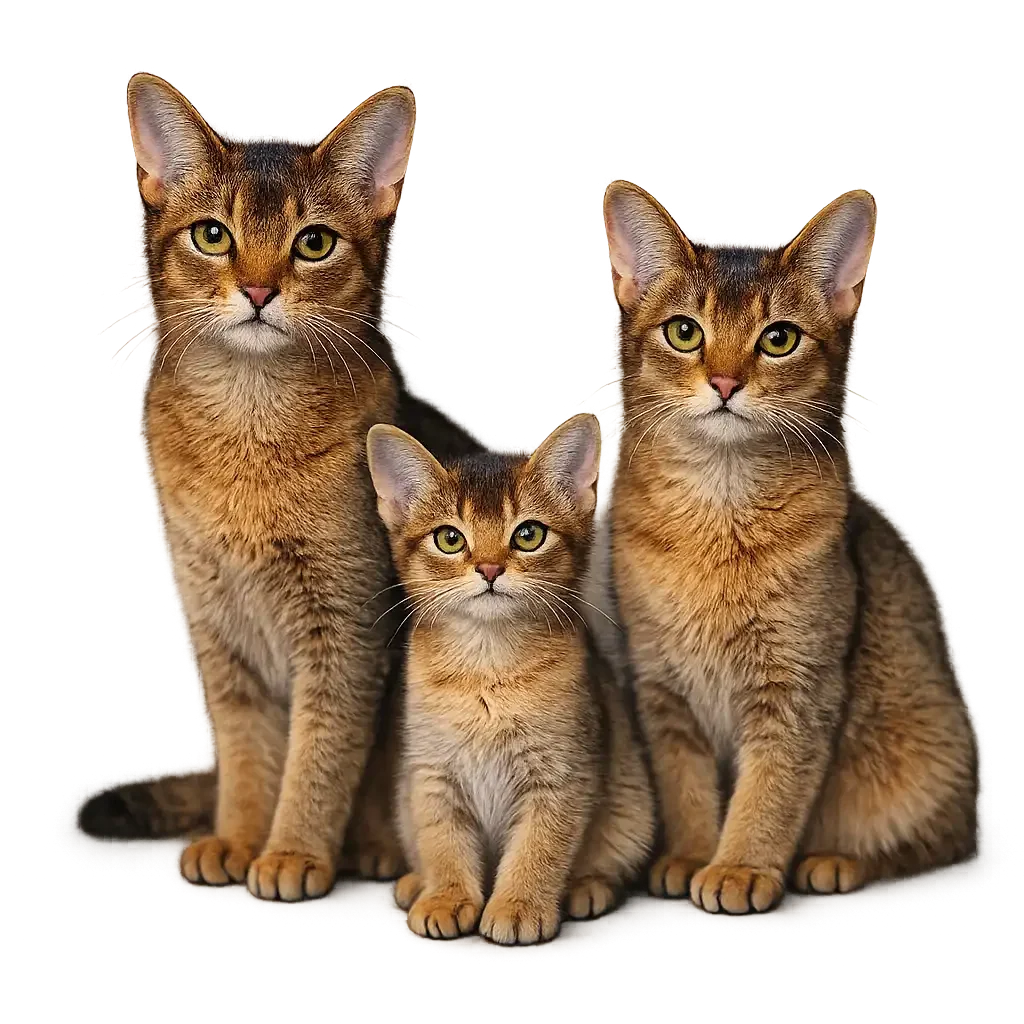
The Abyssinian, often called "Aby," is one of the oldest and most distinctive cat breeds, resembling the sacred cats depicted in ancient Egyptian art. With their ticked coat that creates a wild, cougar-like appearance, large alert ears, and athletic build, Abyssinians are stunning to behold. But beyond their exotic beauty lies an extraordinarily active, intelligent, and social cat that thrives on interaction and exploration.
Abyssinians are not typical lap cats - they are energetic athletes who love to climb, jump, and explore every corner of their environment. Their high energy levels, exceptional curiosity, and strong hunting instincts make them effective working cats on farms, though their social nature means they prefer environments where they receive regular human interaction. These cats are often described as having dog-like personalities due to their loyalty, trainability, and tendency to follow their owners around.
Origin & History
Origin: Disputed - possibly Ethiopia (formerly Abyssinia) or Southeast Asia
Ancient Appearance: Resembles cats in ancient Egyptian artwork and sculptures
First Recognition: Britain in the late 1800s
Foundation Cat: "Zula" - brought from Alexandria, Egypt in 1868
Development: Refined in Britain through selective breeding
Introduction to US: Early 1900s
Near Extinction: Almost lost during WWI and WWII; rebuilt from remaining stock
Recognition: One of the oldest recognized cat breeds
Current Status: One of the most popular short-haired pedigreed breeds
Physical Characteristics
Size: Medium
Weight: Males 8-12 lbs; Females 6-9 lbs
Body Type: Lithe, muscular, athletic, fine-boned
Build: Foreign/Oriental type - long, lean, graceful
Coat: Short, fine, dense, close-lying
Coat Pattern: Ticked tabby (agouti) - each hair banded with multiple colors
Colors: Ruddy (reddish-brown), red (cinnamon), blue, fawn
Ruddy Color: Most common - burnt sienna ticked with black/dark brown
Head: Wedge-shaped, moderate, slightly rounded
Eyes: Large, almond-shaped, alert expression (gold, green, or hazel)
Ears: Large, alert, wide-set, cupped at base
Legs: Long, slim, giving "tiptoe" appearance
Paws: Small, oval, compact
Tail: Long, thick at base, tapering to a point
Overall Appearance: Wild, exotic, cougar-like appearance
Reproduction & Breeding
Sexual Maturity: Females 6-10 months; Males 6-9 months
Breeding Age: Best to wait until 18-24 months
Heat Cycle: Every 2-3 weeks during breeding season
Gestation Period: 63-65 days (approximately 9 weeks)
Litter Size: Average 3-4 kittens (range 2-6, smaller than most breeds)
Birthing: Generally easy births; attentive mothers
Kitten Development: Eyes open at 7-10 days; very active from early age
Kitten Activity: Extremely playful and adventurous kittens
Weaning: 8-10 weeks
Breeding Frequency: Should limit to 1-2 litters per year
Fertility Period: Productive breeding years 2-8 years old
Lifespan & Health
Average Lifespan: 12-15 years
Record Lifespan: Some live into their late teens
Health Status: Generally healthy with some breed-specific concerns
Common Health Issues:
Progressive retinal atrophy (PRA) - hereditary eye disease
Pyruvate kinase deficiency (PKD) - blood disorder
Renal amyloidosis - kidney disease (less common)
Patellar luxation - knee joint issues
Periodontal disease - dental issues
Genetic Testing: Available for PRA and PKD
Dental Health: Regular dental care important
Weight Management: Active metabolism helps maintain healthy weight
Vaccinations: Standard feline vaccines (FVRCP, rabies)
Parasite Control: Regular flea/tick prevention for outdoor cats
Spay/Neuter: Recommended at 5-6 months if not breeding
Temperament & Personality
Abyssinians are exceptionally active, intelligent, and people-oriented cats with endless energy and curiosity. They are often described as the "border collies" of the cat world due to their high activity levels and need for mental stimulation. These cats are constantly on the move - climbing, jumping, exploring, and investigating everything in their environment.
Highly social and affectionate, Abyssinians form strong bonds with their families and often choose a favorite person to follow around. They are interactive cats that want to be involved in all household activities. Unlike many cats, Abyssinians generally enjoy being around people and other pets, though they can be demanding of attention.
These cats are remarkably intelligent and can learn tricks, play fetch, and even walk on leashes. They are vocal cats with soft, quiet voices that they use to communicate their needs. Abyssinians have playful, kitten-like personalities that persist throughout their lives. They are not typically lap cats but show affection by being near their people and engaging in interactive play.
Hunting & Working Ability
Prey Drive: Very high - strong natural hunting instincts
Hunting Skills: Exceptional - quick, agile, precise stalkers
Target Prey: Mice, small rats, insects, birds, small reptiles
Hunting Style: Fast, athletic, ambush-style hunters
Working Ability: Effective at pest control with high energy
Territory Coverage: Will patrol extensively due to curiosity
Climbing Ability: Exceptional - hunts at all vertical levels
Speed: Very fast runners and jumpers
Focus: Can become intensely focused on prey
Intelligence: Problem-solvers who outsmart prey
Care & Maintenance
Grooming: Minimal - weekly brushing sufficient
Coat Care: Short coat requires little maintenance
Shedding: Low to moderate shedding
Bathing: Rarely needed (self-grooming sufficient)
Nail Trimming: Every 2-3 weeks
Dental Care: Weekly tooth brushing recommended (prone to dental issues)
Feeding: High-quality, high-protein cat food; 1/3 to 1/2 cup daily (split into 2-3 meals)
Caloric Needs: Higher due to activity level
Water: Fresh water always available; may prefer running water
Litter Box: One per cat plus one extra; scoop daily
Exercise: Very high - needs extensive playtime and activity
Environmental Enrichment: Critical - needs cat trees, toys, climbing structures, interactive play
Mental Stimulation: Puzzle toys, training, interactive games essential
Climate Adaptability
Climate Tolerance: Best in moderate to warm climates
Cold Tolerance: Poor - short coat provides minimal insulation
Heat Tolerance: Good - handles warm weather well
Best Climate: Temperate to warm regions
Indoor/Outdoor: Can do both but needs supervision due to curiosity
Shelter Needs: Requires warm shelter in cold weather
Weather Sensitivity: Should not be outdoors in cold, wet conditions
Advantages for Farmhouse Living
Exceptional hunting ability - very effective pest control
High energy and curiosity ensures thorough property patrol
Athletic build allows hunting at all levels (ground, shelves, rafters)
Intelligent and trainable - can learn boundaries and routines
Social nature - good with farm families and other animals
Low grooming requirements despite active lifestyle
Minimal shedding - short coat stays clean easily
Very active metabolism means stays lean and fit
Strong prey drive ensures constant vigilance against pests
Quick reflexes and speed catch fast-moving prey
Loves exploration - will investigate all farm buildings
Generally healthy breed with good longevity
Vocal nature helps locate them on property
Adapts well to routine farm schedules
Disadvantages for Farmhouse Living
Poor cold tolerance - not suitable for harsh winter climates
Requires significant human interaction and attention
High activity level needs mental stimulation beyond just hunting
Can become destructive or anxious if bored or lonely
Extreme curiosity can lead to dangerous situations
May wander far from home exploring
Not suited for being solely outdoor/barn cat - needs family interaction
Can be demanding and vocal when needs aren't met
May hunt beneficial wildlife (birds) due to strong prey drive
Short coat provides no protection in cold/wet weather
Smaller litters mean slower population growth for working colonies
Higher initial cost for pedigreed cats ($900-$1,500)
Prone to some genetic health issues requiring testing
Social needs make them less independent than some farm cats
Athletic ability means can escape enclosures easily
Best Suited For
Warm to temperate climate farms
Active farm families with time for interaction
Indoor/outdoor situations with supervised access
Farms with outbuildings providing warm shelter
Operations seeking highly active pest control
Households with other pets (social nature)
Experienced cat owners who understand active breeds
Farms where cats are part of the family, not just workers
Properties with extensive vertical spaces to explore
Situations where mental stimulation can be provided
Economic Considerations
Initial Cost: Pedigreed kittens $900-$1,500; Show quality $1,200-$2,500
Annual Veterinary Care: $250-$450 (vaccines, checkups, preventatives, genetic screening)
Food Costs: $250-$400 annually (high-quality protein diet)
Enrichment: $100-$200 annually (toys, climbing structures)
Spay/Neuter: $50-$200 one-time cost
Pest Control Value: Excellent - very efficient hunters
Long-term Value: 12-15 year lifespan provides extended service
Maintenance: Low grooming costs but higher enrichment needs
Fun Facts
Abyssinians resemble the sacred cats depicted in ancient Egyptian art
They are one of the oldest known cat breeds
The ticked coat pattern is one of the oldest natural cat coat patterns
Each hair shaft has 4-6 bands of color creating the shimmering effect
Abyssinians are sometimes called "Aby-silly-ans" due to their playful antics
They are one of the most popular short-haired pedigreed breeds
Many Abyssinians love water and may play in sinks or fountains
They can jump up to 6 feet high from a standing position
Abyssinians often greet their owners at the door like dogs
The breed almost went extinct twice during the World Wars
Some Abyssinians can be trained to walk on leashes
They are known to open cabinets and doors with their paws
Abyssinians often carry toys in their mouths and play fetch
The ruddy color is caused by the same gene as in rabbits and deer
They are sometimes called the "clowns of the cat kingdom"