
American Bobtail
Overview
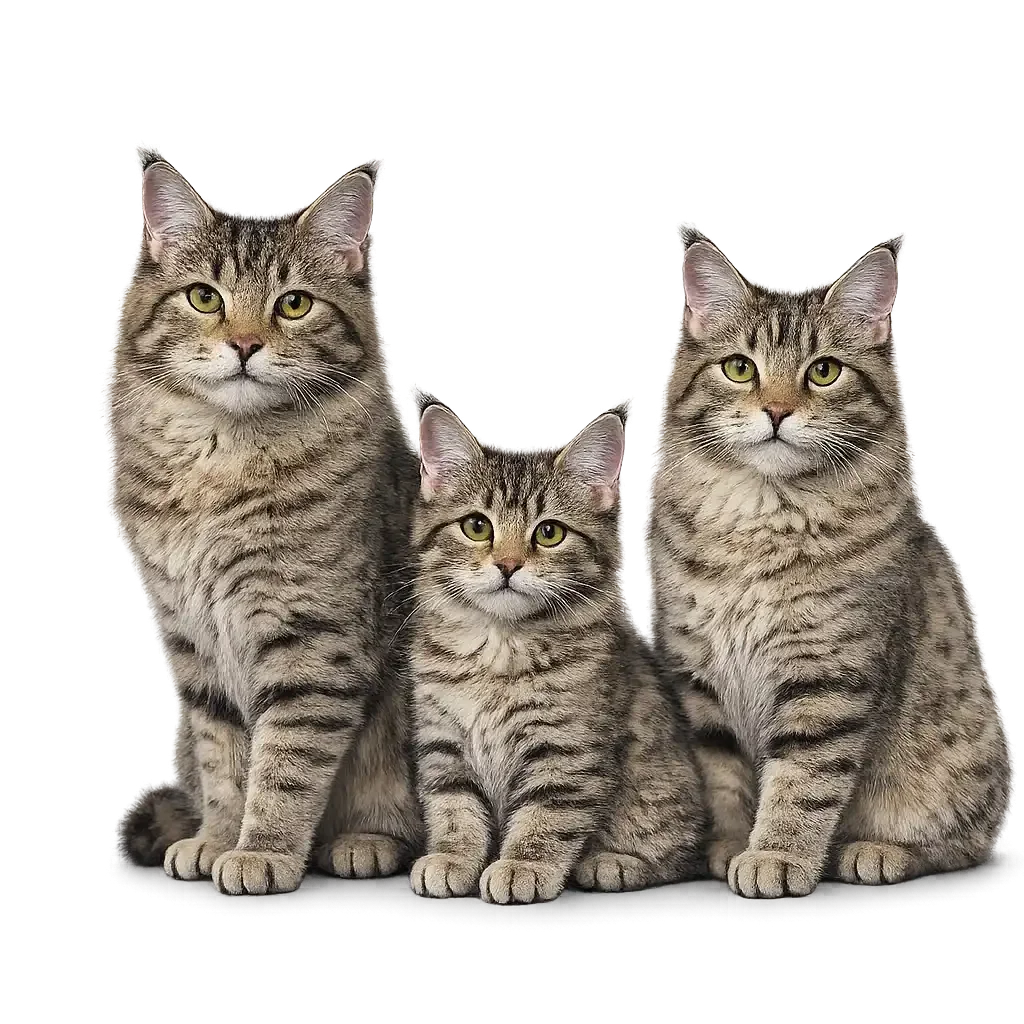
The American Bobtail is a distinctive and relatively rare cat breed known for its naturally short, "bobbed" tail and wild, lynx-like appearance. Despite their feral look, these cats are exceptionally friendly, intelligent, and adaptable, often described as having dog-like personalities. Developed naturally in North America, American Bobtails are sturdy, athletic cats that combine the independence needed for farm work with the affectionate nature that makes them beloved companions.
American Bobtails are prized for their hunting abilities, adaptability to various climates, hardy constitution, and unusual combination of wild appearance with gentle temperament. Their strong, muscular build and natural hunting instincts make them excellent working cats, while their social nature and intelligence allow them to integrate seamlessly into family farm life. The breed's distinctive bobbed tail, which can vary from 1-4 inches in length, gives them a unique, unmistakable appearance.
Origin & History
Origin: United States (natural mutation)
Foundation: Late 1960s in Arizona
Foundation Cat: "Yodi" - a short-tailed brown tabby male found on an Arizona reservation
Development: Crossed with domestic cats; selected for bobtail trait
Genetic Basis: Dominant gene for short tail (natural mutation, not bred from Japanese Bobtail)
Breeding Program: Established in the 1970s-1980s
Recognition: TICA (The International Cat Association) recognized in 1989
CFA Recognition: Achieved championship status in 2006
Current Status: Still relatively rare but growing in popularity
Physical Characteristics
Size: Medium to large
Weight: Males 12-16 lbs; Females 7-11 lbs
Body Type: Substantial, rectangular, muscular, athletic
Build: Stocky, powerful, well-muscled
Coat Length: Comes in both shorthair and longhair varieties
Coat Texture: Dense, semi-dense, resilient, weather-resistant
Longhair: Medium-long, shaggy appearance
Shorthair: Medium-short, springy texture
Colors: All colors and patterns accepted
Common Patterns: Tabby, tortoiseshell, colorpoint, solid
Head: Broad, wedge-shaped with slight curve from nose to brow
Eyes: Large, almond-shaped, deep-set (all colors accepted)
Ears: Medium, wide-based, slightly rounded with lynx-tipping preferred
Legs: Medium length, substantial, strong-boned
Paws: Large, round, may have toe tufts
Tail: SHORT - 1-4 inches long, flexible, expressive (defining characteristic)
Tail Variations: Straight, curved, kinked, or bumpy (all acceptable)
Overall Appearance: Wild, untamed look reminiscent of bobcat or lynx
Reproduction & Breeding
Sexual Maturity: Females 6-10 months; Males 6-9 months
Breeding Age: Best to wait until 18-24 months
Heat Cycle: Every 2-3 weeks during breeding season
Gestation Period: 63-65 days (approximately 9 weeks)
Litter Size: Average 3-5 kittens (range 2-7)
Birthing: Generally easy births; good mothers
Kitten Development: Eyes open at 7-10 days; very active and playful
Tail Development: Bobtail visible from birth; varies among littermates
Tail Genetics: Dominant gene means breeding two bobtails produces mostly bobtailed kittens
Weaning: 8-10 weeks
Breeding Frequency: Should limit to 1-2 litters per year
Fertility Period: Productive breeding years 2-8 years old
Genetic Diversity: Outcrossing to domestic cats allowed to maintain health
Lifespan & Health
Average Lifespan: 13-15 years
Record Lifespan: Some live into their late teens or early 20s
Health Status: Generally very healthy and hardy
Common Health Issues:
Hip dysplasia (rare, due to stocky build)
Spine/tail sensitivity (handle tail gently)
Generally fewer genetic issues than many purebreds
Genetic Diversity: Good - outcrossing program maintains health
Dental Health: Regular dental care recommended
Weight Management: Monitor to prevent obesity
Vaccinations: Standard feline vaccines (FVRCP, rabies)
Parasite Control: Regular flea/tick prevention for outdoor cats
Spay/Neuter: Recommended at 5-6 months if not breeding
Hardy Constitution: Robust health due to diverse genetic background
Temperament & Personality
American Bobtails are renowned for their dog-like personalities - they are loyal, intelligent, and often follow their owners from room to room. Despite their wild appearance, they are exceptionally friendly, social, and affectionate cats that form strong bonds with their families. They are confident and adaptable, handling changes in routine and environment better than many breeds.
These cats are moderately active - playful and energetic but not hyperactive. They enjoy interactive play and games like fetch, and many can be trained to walk on leashes. American Bobtails are social with people and generally get along well with children, other cats, and even dogs when properly socialized.
They are intelligent problem-solvers known for figuring out how to open doors and cabinets. American Bobtails are moderately vocal, using chirps, clicks, and trills to communicate. They are affectionate without being overly demanding, making them ideal companions for busy farm families. Their calm, even temperament combined with strong hunting instincts makes them excellent working cats.
Hunting & Working Ability
Prey Drive: High - strong natural hunting instincts
Hunting Skills: Excellent stalkers and pounce-hunters
Target Prey: Mice, rats, moles, voles, rabbits, birds
Hunting Style: Patient stalkers with explosive strikes
Working Ability: Very effective pest control on farms
Size Advantage: Stocky build allows tackling larger prey
Territory Size: Will patrol several acres
All-Weather Hunter: Dense coat allows hunting in various weather
Night Hunting: Excellent nocturnal hunters
Intelligence: Strategic hunters who learn prey patterns
Endurance: Good stamina for extended hunting sessions
Care & Maintenance
Grooming (Shorthair): Minimal - weekly brushing sufficient
Grooming (Longhair): Moderate - 2-3 times weekly brushing
Coat Care: Dense coat resists matting; easier than Persian-type cats
Shedding: Moderate year-round; heavier seasonally
Bathing: Rarely needed (most are water-tolerant)
Nail Trimming: Every 2-3 weeks
Dental Care: Weekly tooth brushing recommended
Feeding: High-quality cat food; 1/2 to 3/4 cup daily (split into 2 meals)
Water: Fresh water always available
Litter Box: One per cat plus one extra; scoop daily
Exercise: Moderate - daily play sessions recommended
Environmental Enrichment: Climbing structures, toys, outdoor access ideal
Tail Care: Handle tail gently; some sensitivity possible
Climate Adaptability
Climate Tolerance: Excellent - adapts to various climates
Cold Tolerance: Very good - dense, weather-resistant coat
Heat Tolerance: Good - handles warm weather adequately
Best Climate: Adaptable to most climates
Weather Resistance: Semi-water-resistant coat handles rain/snow
Indoor/Outdoor: Thrives in both; outdoor access beneficial
Shelter Needs: Appreciates warm shelter but very hardy
Seasonal Adaptation: Coat adjusts to seasonal changes
Advantages for Farmhouse Living
Excellent hunting ability - strong pest control instincts
Hardy, robust constitution - few health issues
Weather-resistant coat for all-season outdoor work
Dog-like loyalty - tends to stay close to home
Adaptable to various climates and conditions
Social nature - good with children and other animals
Intelligent and trainable - learns boundaries easily
Moderate activity level - not hyperactive or destructive
Stocky build allows handling larger pests
Both shorthair and longhair options available
Good longevity (13-15 years) provides extended service
Confident temperament - not easily spooked
Low to moderate grooming needs (depending on coat length)
Naturally bobbed tail reduces injury risk (no long tail to catch on things)
Genetic diversity means fewer breed-specific health problems
Disadvantages for Farmhouse Living
Relatively rare breed - can be expensive to purchase ($600-$1,200+)
May be difficult to find breeding stock
Longhair variety requires regular grooming
Moderate shedding requires some cleanup
Social nature means needs human interaction (not suited to purely outdoor life)
May hunt beneficial wildlife due to strong prey drive
Can be escape artists - intelligent enough to open latches
Stocky build means higher food requirements than smaller cats
Some tail sensitivity - must handle gently
May bring large prey items as "gifts"
Can become overweight if overfed and under-exercised
Outdoor access increases parasite risk in longer coats
Best Suited For
Working farms needing effective pest control
Family farms with children and other animals
Various climate zones (very adaptable)
Owners seeking unique-looking working cats
Rural properties with rodent populations
Farms wanting social, interactive cats
Indoor/outdoor living situations
Operations with adequate shelter for cats
Households wanting trainable, dog-like cats
Farms in regions with variable weather
Economic Considerations
Initial Cost: Pedigreed kittens $600-$1,200; Show quality $1,000-$2,000+
Annual Veterinary Care: $200-$400 (vaccines, checkups, preventatives)
Food Costs: $250-$400 annually (moderate appetite)
Grooming: $0-$100 annually (DIY grooming usually sufficient)
Spay/Neuter: $50-$200 one-time cost
Pest Control Value: Excellent ROI - effective hunters
Long-term Value: 13-15 year lifespan provides extended service
Maintenance: Low to moderate overall costs
Availability: May need to travel or wait for kittens (rare breed)
Fun Facts
American Bobtails are sometimes called the "Golden Retrievers of the cat world"
The bobtail gene is dominant, unlike the Japanese Bobtail's recessive gene
Each American Bobtail's tail is unique - like a fingerprint
They are one of the few cat breeds developed entirely in North America
The breed was developed from a naturally occurring mutation, not selective breeding
American Bobtails are often used as therapy cats due to their calm, empathetic nature
Many American Bobtails enjoy playing in water
They can learn to play fetch and walk on leashes like dogs
The breed standard accepts all colors and patterns
American Bobtails are known for their expressive faces and "hunting gaze"
Some American Bobtails have extra toes (polydactyl trait)
They mature slowly, taking 2-3 years to reach full size
The bobbed tail doesn't affect their balance or jumping ability
American Bobtails often chirp and trill more than they meow
They are known for being excellent with children and forming strong family bonds