
Armenian Van
Overview
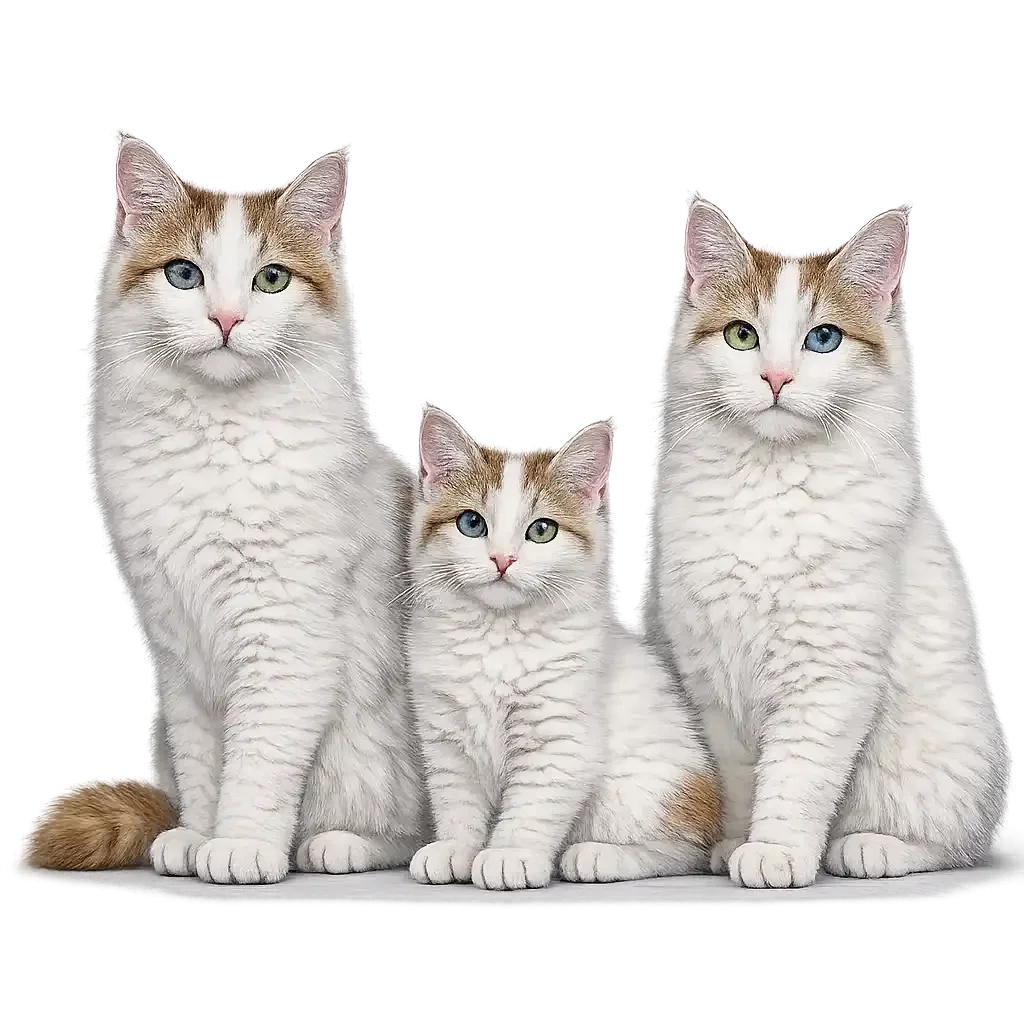
The Van Cat is an ancient, naturally occurring breed from the Lake Van region in the Eastern Anatolian highlands, an area with a rich history spanning Armenian and Kurdish cultures. These striking cats are famous for their love of water - a rare trait among felines - and their distinctive color pattern known as "Van pattern" (white body with colored head and tail). Van Cats are large, athletic, and intelligent cats that evolved naturally in the rugged highland terrain around Lake Van, one of the world's largest soda lakes.
Van Cats are prized for their striking appearance, robust health, strong hunting instincts, and unique affinity for water. Their semi-longhaired, water-resistant coat, powerful build, and adaptability to harsh climates make them excellent working cats for farms in challenging environments. These cats are energetic, playful, and form strong bonds with their families, combining independence with affection in an ideal balance for farm life.
Origin & History
Origin: Lake Van region, Eastern Anatolian Highlands
Geographic Area: Historic Armenian highlands, now eastern Turkey
Development: Ancient natural breed, evolved over thousands of years
Cultural Heritage: Part of the region's diverse cultural history (Armenian, Kurdish)
Local Name: Known locally as "Van Cat"
Discovery by West: 1950s when British travelers brought cats to Europe
Recognition: Recognized by major cat registries since 1970s
Swimming Tradition: Cats traditionally swam in Lake Van during hot summers
Natural Breed: Not selectively bred; evolved naturally in highland environment
Current Status: Rare breed, protected in their region of origin
Physical Characteristics
Size: Large
Weight: Males 12-18 lbs; Females 9-14 lbs
Body Type: Long, sturdy, muscular, substantial
Build: Athletic, powerful, well-developed
Coat Length: Semi-longhair (medium-long)
Coat Texture: Soft, silky, cashmere-like, water-resistant
Coat Seasonal: Thicker in winter; shorter, silkier in summer
Color Pattern: "Van pattern" - white body with colored markings on head and tail
Head Markings: Colored patches on head (between/around ears)
Tail: Fully colored (contrasts with white body)
Common Colors: Red (auburn), cream, black, blue, tortoiseshell
Eye Color: Amber, blue, or odd-eyed (one amber, one blue - highly prized)
Head: Broad, wedge-shaped, strong bone structure
Ears: Medium to large, upright, well-tufted
Legs: Medium length, strong, well-muscled
Paws: Large, tufted between toes
Tail Length: Medium to long, brush-like, well-feathered
Overall Appearance: Elegant yet powerful, distinctive coloring
Reproduction & Breeding
Sexual Maturity: Females 7-10 months; Males 7-9 months
Breeding Age: Best to wait until 18-24 months (slower maturation)
Heat Cycle: Every 2-3 weeks during breeding season
Gestation Period: 63-65 days (approximately 9 weeks)
Litter Size: Average 3-5 kittens (range 2-6)
Birthing: Generally easy births; attentive mothers
Kitten Development: Eyes open at 7-10 days; very active and curious
Coat Development: Full coat develops by 3-5 years
Color Development: Van pattern visible from birth; colors deepen with age
Weaning: 8-10 weeks
Breeding Frequency: Should limit to 1-2 litters per year
Fertility Period: Productive breeding years 2-8 years old
Maturation: Slow-maturing breed; full size at 3-5 years
Lifespan & Health
Average Lifespan: 13-17 years
Record Lifespan: Some live into their late teens or early 20s
Health Status: Very healthy, robust natural breed
Common Health Issues:
Very few breed-specific problems
Hypertrophic cardiomyopathy (HCM) - rare but can occur
Deafness in white cats (especially blue-eyed or odd-eyed)
Dental Health: Regular dental care recommended
Weight Management: Active metabolism helps maintain healthy weight
Vaccinations: Standard feline vaccines (FVRCP, rabies)
Parasite Control: Regular flea/tick prevention for outdoor cats
Spay/Neuter: Recommended at 6-9 months if not breeding
Hardy Constitution: Evolved in harsh climate; very resilient
Temperament & Personality
Van Cats are energetic, intelligent, and highly interactive cats with strong personalities. They are playful well into adulthood and maintain high activity levels throughout their lives. These cats are known for being affectionate and loyal to their families, often choosing one person as their special favorite, though they are friendly with all family members.
Van Cats are confident, bold, and curious, fearlessly exploring their environment. They are athletic jumpers and climbers who enjoy being at high vantage points. Unlike many cats, Van Cats genuinely enjoy water and may seek out opportunities to play in sinks, bathtubs, ponds, or streams. They are highly intelligent and can learn tricks, play fetch, and solve problems.
These cats are moderately vocal, using a soft chirping voice to communicate. Van Cats can be demanding of attention when they want interaction but are also independent enough to entertain themselves. They generally get along well with other pets when properly socialized, though their high energy may overwhelm calmer animals. Their combination of affection, intelligence, and independence makes them ideal for active farm families.
Hunting & Working Ability
Prey Drive: Very high - excellent natural hunters
Hunting Skills: Superior stalkers and pounce-hunters
Target Prey: Mice, rats, moles, voles, rabbits, birds, fish
Hunting Style: Patient, strategic, powerful strikes
Working Ability: Highly effective pest control on farms
Size Advantage: Large, powerful build allows tackling bigger prey
Water Hunting: Unique ability to catch fish and water-dwelling prey
Territory Size: Will patrol extensive areas energetically
All-Weather Hunter: Water-resistant coat allows hunting in wet conditions
Stamina: High endurance for extended hunting sessions
Intelligence: Problem-solvers who adapt hunting strategies
Climbing: Excellent climbers for hunting birds and tree-dwelling pests
Care & Maintenance
Grooming: Moderate - brush 2-3 times weekly
Coat Care: Semi-longhair coat resists matting (cashmere-like texture)
Seasonal Shedding: Heavy spring shed; moderate year-round
Bathing: Rarely needed; many enjoy water and will self-bathe
Nail Trimming: Every 2-3 weeks
Dental Care: Weekly tooth brushing recommended
Feeding: High-quality, high-protein cat food; 1/2 to 3/4 cup daily (split into 2-3 meals)
Caloric Needs: Higher due to size and activity level
Water: Fresh water always available; may enjoy water features
Litter Box: Large boxes needed; one per cat plus one extra
Exercise: High - needs extensive playtime and space
Environmental Enrichment: Cat trees, toys, climbing structures, water play essential
Swimming Access: Optional but appreciated in warm weather
Climate Adaptability
Climate Tolerance: Excellent - evolved in harsh highland climate
Cold Tolerance: Excellent - thick winter coat provides insulation
Heat Tolerance: Very good - sheds to lighter coat in summer
Temperature Range: Handles extreme temperature variations
Best Climate: Adaptable but thrives in areas with seasonal variation
Water Resistance: Cashmere-like coat repels water
Indoor/Outdoor: Thrives with outdoor access
Shelter Needs: Benefits from shelter but very hardy
Highland Adaptation: Well-suited to mountainous, rugged terrain
Advantages for Farmhouse Living
Exceptional hunting ability - very effective pest control
Large, powerful build for tackling bigger pests
Unique water-hunting ability (fish, water rodents)
Hardy constitution - evolved in harsh highland climate
Water-resistant coat for all-weather work
Excellent cold tolerance with thick winter coat
High energy and curiosity ensures thorough property patrol
Intelligent and trainable - learns boundaries
Long lifespan (13-17 years) provides extended service
Adaptable to extreme temperature variations
Good with families and children when socialized
Natural breed with few genetic health problems
Semi-longhair coat resists matting despite length
Athletic and agile - excellent climbers and jumpers
Striking appearance - beautiful farm cats
Disadvantages for Farmhouse Living
Very high energy level - needs extensive mental stimulation
Can be demanding of attention and interaction
May be too energetic for calm household environments
Requires regular grooming (2-3 times weekly)
Heavy spring shedding requires extra maintenance
Large size means higher food costs
May hunt beneficial wildlife (birds, fish) due to strong prey drive
Rare breed - difficult and expensive to obtain ($800-$1,500+)
Some white cats may be deaf (especially blue-eyed)
Bold personality may lead to risky behavior
Can be mischievous and get into trouble
May attempt to swim in unsafe water sources
Slow maturation means prolonged "teenage" energy phase
Strong-willed personality requires confident handling
Best Suited For
Active farms with space for energetic cats
Properties with water features (ponds, streams)
Cold-climate farms and highlands
Rural properties with extensive rodent populations
Experienced cat owners who understand active breeds
Families with time for interactive play
Farms with varied terrain to explore
Operations seeking unique, striking working cats
Households with other active pets
Mountainous or rugged terrain environments
Economic Considerations
Initial Cost: Rare breed - $800-$1,500+; Show quality $1,500-$2,500+
Availability: Very limited - may require international shipping
Annual Veterinary Care: $250-$450 (vaccines, checkups, preventatives)
Food Costs: $350-$500 annually (large, active cat)
Grooming Supplies: $50-$100 annually
Spay/Neuter: $75-$250 (higher for larger cats)
Pest Control Value: Excellent - highly effective hunters
Long-term Value: 13-17 year lifespan provides extended service
Maintenance: Moderate grooming; high enrichment needs
Fun Facts
Van Cats are one of the few cat breeds that genuinely enjoy swimming
The breed originated naturally around Lake Van, one of the world's largest soda lakes
Odd-eyed Van Cats (one amber, one blue eye) are highly prized and considered good luck
Their cashmere-like coat is water-resistant, allowing them to swim comfortably
Van Cats have been documented in the region for thousands of years
The "Van pattern" (white body with colored head and tail) is named after this breed
They are considered a national treasure in their region of origin
Van Cats can take 3-5 years to reach full maturity and coat development
Their coat changes texture and length seasonally - thicker in winter, silkier in summer
Many Van Cats will play in sinks, bathtubs, or seek out water sources
The breed has lived in the harsh highland climate for millennia
Van Cats are excellent jumpers and have been known to leap 5-6 feet vertically
They often use their paws to scoop and play with water
The breed is sometimes called "the swimming cat"
Van Cats are one of the oldest natural cat breeds in existence