
Burmese
Overview
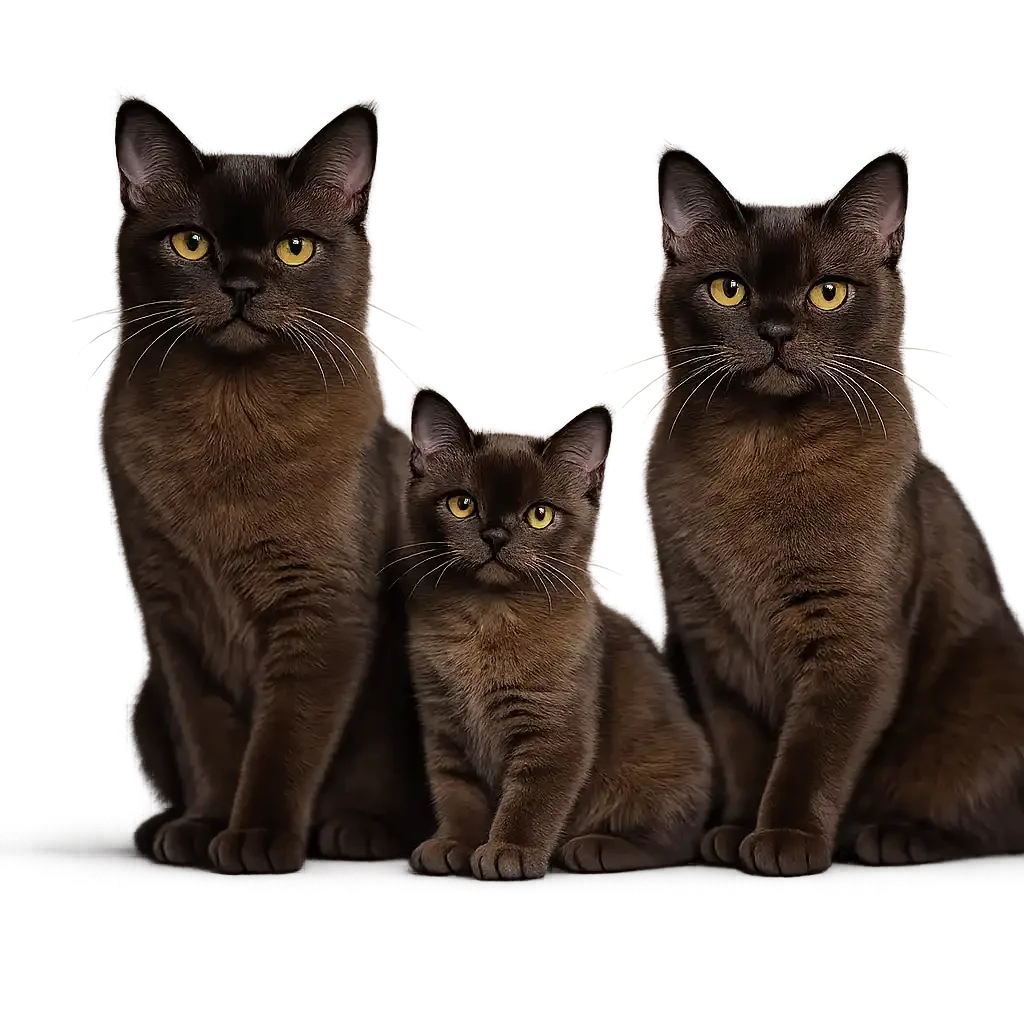
The Burmese is a medium-sized, muscular cat breed known for its silky coat, expressive golden eyes, and remarkably social, people-oriented personality. Often described as "a brick wrapped in silk," Burmese cats are surprisingly heavy for their size, with compact, powerful bodies and athletic builds. Originating from Burma (Myanmar), these cats combine the affectionate, playful nature of a Siamese with a softer voice and calmer temperament.
Burmese cats are prized for their dog-like devotion to their families, high intelligence, exceptional athleticism, and strong hunting instincts. Their social nature means they thrive on interaction and should not be left alone for extended periods. These cats are energetic, playful well into adulthood, and maintain kitten-like curiosity throughout their lives. For farm families who want an interactive, affectionate working cat that doubles as a beloved companion, the Burmese is an excellent choice.
Origin & History
Origin: Burma (Myanmar) and Thailand region
Development in West: 1930s United States
Foundation Cat: "Wong Mau" - brought to San Francisco in 1930 by Dr. Joseph Thompson
Foundation Breeding: Wong Mau bred with Siamese to establish breed
Genetic Discovery: Wong Mau was actually a Siamese-Burmese hybrid
Selective Breeding: Developed solid brown (sable) color through careful breeding
Recognition: CFA recognized in 1936
American vs. European: Two breed standards developed - American (stockier) and European (more moderate)
Color Development: Additional colors developed beyond original sable
Current Status: Popular breed worldwide, especially in Australia and UK
Physical Characteristics
Size: Medium
Weight: Males 10-14 lbs; Females 6-10 lbs
Weight Character: "Heavier than they look" - very dense, muscular
Body Type: Compact, muscular, substantial (foreign type)
Build: Athletic, powerful, well-rounded
Coat: Short, fine, glossy, satin-like
Coat Texture: Silky, close-lying, minimal undercoat
Colors (American): Sable (dark brown), champagne (warm beige), blue, platinum (lilac)
Colors (European): Additional colors including red, cream, tortoiseshell
Most Iconic: Sable (rich, warm, dark brown)
Color Pattern: Solid colors with subtle shading (darker on points)
Head: Rounded, full face, blunt wedge
Eyes: Large, round, expressive (gold to yellow, very luminous)
Ears: Medium, wide-set, rounded tips, tilted forward
Legs: Proportionate, slender but strong
Paws: Oval, neat
Tail: Medium length, straight, rounded tip
Overall Appearance: Elegant yet substantial, sleek and muscular
Reproduction & Breeding
Sexual Maturity: Females 6-9 months; Males 6-8 months
Breeding Age: Best to wait until 18-24 months
Heat Cycle: Every 2-3 weeks during breeding season
Vocalization: Very vocal when in heat (Siamese heritage)
Gestation Period: 63-65 days (approximately 9 weeks)
Litter Size: Average 4-6 kittens (range 3-7, larger litters than many breeds)
Birthing: Generally easy births; excellent, attentive mothers
Kitten Development: Eyes open at 7-10 days; very active and social
Color Development: Kittens born lighter; color darkens with age
Weaning: 8-10 weeks
Breeding Frequency: Should limit to 1-2 litters per year
Fertility Period: Productive breeding years 2-8 years old
Maternal Behavior: Very nurturing, devoted mothers
Lifespan & Health
Average Lifespan: 12-16 years
Record Lifespan: Some live into their late teens or early 20s
Health Status: Generally healthy with some breed-specific concerns
Common Health Issues:
Hypokalemia (low potassium) - Burmese-specific genetic condition
Hypertrophic cardiomyopathy (HCM) - heart condition
Diabetes mellitus - higher risk than some breeds
Flat-chested kitten syndrome - rare developmental issue
Orofacial pain syndrome - rare neurological condition
Genetic Testing: Available for some conditions
Dental Health: Regular dental care important
Weight Management: Monitor to prevent obesity
Vaccinations: Standard feline vaccines (FVRCP, rabies)
Parasite Control: Regular flea/tick prevention for outdoor cats
Spay/Neuter: Recommended at 5-6 months if not breeding
Temperament & Personality
Burmese cats are extraordinarily social, affectionate, and people-oriented - often called "dog-like" in their devotion to their families. They form intense bonds with their owners and follow them from room to room, wanting to be involved in all activities. Burmese are highly interactive cats that demand attention and companionship; they do not do well when left alone for long periods.
These cats are playful, energetic, and maintain kitten-like behavior well into adulthood. They are athletic jumpers and climbers who love interactive play and games. Burmese are highly intelligent and can learn tricks, play fetch, and solve problems. They are social with strangers, children, and other pets when properly socialized.
Burmese cats are moderately vocal - less chatty than Siamese but more talkative than many breeds. They use soft, sweet voices to communicate their needs. These cats are confident, curious, and fearless, exploring their environment thoroughly. Their intense need for companionship means they're best suited for farms where they receive regular human interaction, not solitary barn cat situations.
Hunting & Working Ability
Prey Drive: High - strong natural hunting instincts
Hunting Skills: Excellent stalkers and pounce-hunters
Target Prey: Mice, rats, moles, voles, birds, insects
Hunting Style: Athletic, agile, relentless hunters
Working Ability: Very effective pest control
Athleticism: Powerful jumpers and climbers for vertical hunting
Territory Coverage: Will patrol extensively
Stamina: High energy for extended hunting sessions
Intelligence: Strategic hunters who adapt quickly
Strength: Muscular build provides power for catching prey
Speed: Quick reflexes and fast movements
Care & Maintenance
Grooming: Minimal - weekly brushing or hand-stroking sufficient
Coat Care: Short, silky coat requires little maintenance
Shedding: Low to moderate - minimal shedding
Bathing: Rarely needed (self-grooming sufficient)
Nail Trimming: Every 2-3 weeks
Dental Care: Weekly tooth brushing recommended
Feeding: High-quality, high-protein cat food; 1/3 to 1/2 cup daily (split into 2-3 meals)
Water: Fresh water always available
Litter Box: One per cat plus one extra; scoop daily
Exercise: High - needs extensive interactive playtime
Social Needs: CRITICAL - requires daily human interaction and companionship
Environmental Enrichment: Toys, climbing structures, interactive play essential
Companionship: Consider getting two if owner away frequently
Climate Adaptability
Climate Tolerance: Moderate - best in temperate climates
Cold Tolerance: Poor to moderate - short coat provides minimal insulation
Heat Tolerance: Good - handles warm weather well
Best Climate: Warm to temperate regions
Indoor/Outdoor: Can adapt to both but needs warm shelter
Shelter Needs: Requires warm, comfortable shelter in cold weather
Weather Resistance: Short coat offers minimal protection
Advantages for Farmhouse Living
Excellent hunting ability - strong prey drive and skills
Athletic and agile - effective at catching fast prey
Highly intelligent - learns routines and boundaries quickly
Social with family - wonderful companions for farm families
Good with children and other pets when socialized
Low grooming maintenance - minimal coat care
Minimal shedding - easy cleanup
Playful and entertaining - adds joy to farm life
Muscular build provides hunting strength
Dog-like loyalty - tends to stay close to home
Trainable - can learn commands and boundaries
Active metabolism maintains healthy weight
Good longevity (12-16 years) with proper care
Devoted personality creates strong bonds
Disadvantages for Farmhouse Living
VERY social - NOT suited for solitary barn cat life
Requires extensive daily human interaction and attention
Can become anxious, depressed, or destructive if lonely
Poor cold tolerance - not suited for harsh winters without indoor access
Vocal nature can be demanding
High energy requires significant playtime commitment
Cannot be left alone for extended periods
May be too demanding for very busy farm schedules
Some genetic health concerns (hypokalemia, HCM)
Friendly nature may make them vulnerable to theft
May follow owners everywhere, underfoot during farm work
Higher initial cost for pedigreed cats ($800-$1,500)
Short coat provides no weather protection
May hunt beneficial wildlife due to strong prey drive
Best Suited For
Family farms with people home regularly
Warm to temperate climate farms
Owners seeking interactive, affectionate cats
Farms with indoor access for cats
Households with children (good playmates)
Operations where cats are family members, not just workers
Multi-pet households (social with other animals)
Owners with time for daily interaction and play
NOT suited for purely outdoor/barn cat situations
Best for farms wanting companion cats that also hunt
Economic Considerations
Initial Cost: Pedigreed kittens $800-$1,500; Show quality $1,200-$2,500
Annual Veterinary Care: $250-$450 (vaccines, checkups, preventatives, screening)
Food Costs: $250-$400 annually
Enrichment: $100-$200 annually (toys, interactive items)
Spay/Neuter: $50-$200
Pest Control Value: Excellent - effective hunters
Long-term Value: 12-16 year lifespan
Maintenance: Low grooming but high social/enrichment needs
Fun Facts
Burmese cats are often described as "a brick wrapped in silk" due to their surprising weight
They are one of the few breeds developed in the United States
The original foundation cat, Wong Mau, was a hybrid herself
Burmese have some of the most expressive, luminous eyes of any cat breed
They remain playful and kitten-like well into their senior years
The sable (dark brown) color is unique to the Burmese breed
Burmese are known for their "dog-like" personalities and loyalty
They often play fetch and can be trained to walk on leashes
Burmese cats typically sleep with their owners, often under the covers
The breed is extremely popular in Australia and the UK
American and European Burmese have developed into distinct types
Many Burmese will greet their owners at the door like dogs
They are known for their soft, sweet voices despite being vocal
Burmese cats often choose a "favorite person" in the household
The breed has been used to develop other breeds like Bombay and Burmilla