
Chartreux
Overview
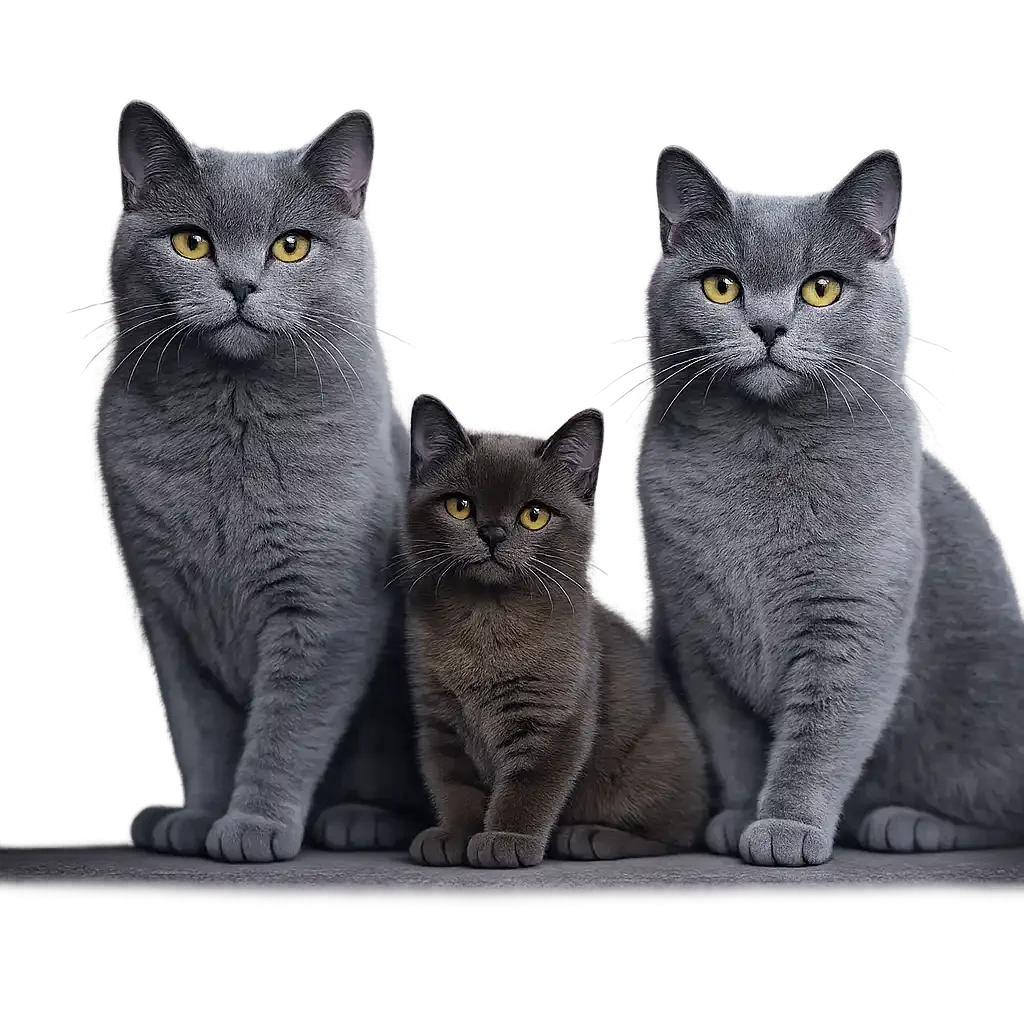
The Chartreux (pronounced "shar-TROO") is an ancient French breed known for its beautiful blue-gray coat, distinctive "smile," and legendary mousing abilities. These sturdy, muscular cats have been valued as working cats in France for centuries, particularly by Carthusian monks who bred them for pest control in monasteries. Chartreux cats are recognized for their robust build, woolly double coat, and striking copper or gold eyes that contrast beautifully with their blue-gray fur.
Chartreux are prized for their exceptional hunting skills, quiet temperament, adaptability, and robust health. Often called "the smiling cat" due to their distinctive facial structure, these cats combine a calm, gentle nature with serious hunting prowess. Their independent yet affectionate personality, weather-resistant coat, and centuries-old reputation as superior mousers make them ideal working cats for farms and homesteads. The Chartreux is a rare breed outside France but highly valued by those who know them.
Origin & History
Origin: France
Development: Ancient breed, documented since 16th century
Monastery Connection: Associated with Carthusian monks at Grande Chartreuse monastery
Historical Role: Valued as mousers in monasteries, homes, and shops
Working Heritage: Centuries of selective breeding for hunting ability
Near Extinction: Severely depleted after World Wars I and II
Revival: Saved through careful breeding programs in 1920s-1930s
Outcrossing: Bred with British Blue Shorthairs and Persian Blues to rebuild
Recognition: FIFe recognized since 1930s; CFA championship status 1987
National Treasure: Considered a French national treasure
Current Status: Rare outside France; growing popularity worldwide
Physical Characteristics
Size: Medium to large
Weight: Males 12-16 lbs; Females 7-11 lbs
Body Type: Robust, muscular, substantial (primitive type)
Build: Stocky, powerful, broad-chested
Coat: Short to medium, dense, woolly double coat
Coat Texture: Water-repellent, plush, slightly woolly feel
Coat Protection: Weather-resistant, insulating
Color: ONLY blue-gray (any shade from ash to slate)
Color Uniformity: Solid blue with no tabby markings or white
Coat Sheen: Healthy coat has slight sheen
Head: Rounded, broad, with full cheeks
Facial Expression: "Smiling" appearance (characteristic trait)
Eyes: Large, round, expressive (copper, gold, or orange - never green or blue)
Ears: Medium, set high, slightly rounded
Legs: Medium length, sturdy, fine-boned but muscular
Paws: Medium, round, well-developed
Tail: Medium length, heavy at base, tapering slightly
Overall Appearance: Sturdy, elegant, distinctive blue coloring
Reproduction & Breeding
Sexual Maturity: Females 6-10 months; Males 7-9 months
Breeding Age: Best to wait until 18-24 months (slow-maturing)
Heat Cycle: Every 2-3 weeks during breeding season
Gestation Period: 63-65 days (approximately 9 weeks)
Litter Size: Average 3-5 kittens (range 2-6)
Birthing: Generally easy births; excellent mothers
Kitten Development: Eyes open at 7-10 days; develop slowly
Color Development: Kittens born with faint tabby markings that fade by 6-12 months
Coat Development: Full woolly coat develops by 2-3 years
Eye Color: Kittens born with blue eyes; change to orange/copper by 3 months
Weaning: 8-10 weeks
Breeding Frequency: Should limit to 1-2 litters per year
Fertility Period: Productive breeding years 2-8 years old
Maturation: Slow-maturing; full development at 3-5 years
Lifespan & Health
Average Lifespan: 13-16 years
Record Lifespan: Some live into their late teens or early 20s
Health Status: Very healthy, robust breed
Common Health Issues:
Very few breed-specific problems
Patellar luxation - knee joint issues (rare)
Polycystic kidney disease (PKD) - rare due to outcrossing
Hardy Constitution: Exceptionally healthy natural breed
Dental Health: Regular dental care recommended
Weight Management: Monitor to prevent obesity (hearty appetite)
Vaccinations: Standard feline vaccines (FVRCP, rabies)
Parasite Control: Regular flea/tick prevention for outdoor cats
Spay/Neuter: Recommended at 6-9 months if not breeding
Disease Resistance: Excellent overall health and longevity
Temperament & Personality
Chartreux cats are known for their gentle, quiet, and observant personalities. They are notably quiet cats - many are almost entirely silent, rarely meowing even when in heat or distressed. When they do vocalize, it's usually a soft chirp or trill. This quiet nature made them ideal for monastery life and makes them perfect for those who prefer peaceful environments.
These cats are intelligent, adaptable, and form strong bonds with their families, though they're not overly demanding of attention. Chartreux are playful in a dignified way, enjoying games and toys but with a calm, composed demeanor. They are excellent with children and other pets, showing patience and tolerance. Chartreux cats are observant and curious but not hyperactive.
The breed maintains a perfect balance between affection and independence - they enjoy companionship but don't require constant interaction, making them ideal for working farm situations. Chartreux are devoted to their families but can be reserved with strangers initially. Their calm, stable temperament combined with serious hunting instincts makes them outstanding working cats.
Hunting & Working Ability
Prey Drive: Excellent - legendary mousing abilities
Hunting Skills: Superior hunters with centuries of working heritage
Target Prey: Mice, rats, moles, voles, birds
Hunting Style: Patient, methodical, strategic stalkers
Working Ability: Exceptional pest control - bred for this purpose
Historical Reputation: Valued by French monasteries for mousing prowess
Strength: Muscular build provides power for catching prey
Territory Size: Will patrol moderate to large areas
Stamina: Good endurance for extended hunting sessions
Intelligence: Strategic hunters who learn prey patterns
Silence: Quiet nature makes them stealthy hunters
Care & Maintenance
Grooming: Moderate - brush 2-3 times weekly
Coat Care: Woolly double coat benefits from regular grooming
Shedding: Moderate to heavy seasonally (spring shed)
Brushing Benefit: Removes dead undercoat, prevents matting
Bathing: Rarely needed; coat is water-resistant
Nail Trimming: Every 2-3 weeks
Dental Care: Weekly tooth brushing recommended
Feeding: High-quality cat food; 1/3 to 1/2 cup daily (split into 2 meals)
Appetite: Hearty eaters - monitor portions
Water: Fresh water always available
Litter Box: One per cat plus one extra; scoop daily
Exercise: Moderate - provide climbing/play opportunities
Environmental Enrichment: Toys, perches, outdoor access ideal
Climate Adaptability
Climate Tolerance: Excellent - very adaptable
Cold Tolerance: Excellent - thick woolly coat provides insulation
Heat Tolerance: Good - sheds to lighter coat in summer
Weather Resistance: Water-repellent coat handles rain/snow
Best Climate: Temperate to cool regions (French climate)
Indoor/Outdoor: Thrives with outdoor access
Shelter Needs: Benefits from shelter but very hardy
Seasonal Adaptation: Coat adjusts to seasonal changes
Advantages for Farmhouse Living
Legendary mousing ability - centuries of working cat breeding
Exceptionally quiet - won't disturb with excessive vocalization
Perfect independence/affection balance - ideal farm cat temperament
Extremely hardy and healthy - robust constitution
Weather-resistant woolly coat for outdoor work
Excellent cold tolerance for northern farms
Patient, gentle nature - good with children and animals
Calm, stable temperament - not easily stressed
Strong, muscular build for effective hunting
Long lifespan (13-16 years) provides extended service
Adaptable to various living situations
Few genetic health problems
Devoted to family but not demanding
Distinctive, beautiful appearance
Ancient working heritage ensures instincts
Disadvantages for Farmhouse Living
Requires regular grooming (2-3 times weekly)
Heavy seasonal shedding in spring
Can become overweight - requires portion control
Slow maturation means prolonged kitten/adolescent phase
Rare breed - expensive and difficult to obtain ($1,000-$2,000+)
Limited availability outside France
May be reserved with strangers initially
Woolly coat can collect debris in outdoor environments
Moderate shedding requires cleanup
May hunt beneficial wildlife due to strong prey drive
Best Suited For
Working farms needing exceptional mousers
Cold to temperate climate farms
Families wanting quiet, calm cats
Operations valuing independent yet affectionate cats
Farms with children and other animals
Rural properties with rodent populations
Indoor/outdoor living situations
Owners seeking rare, distinctive breeds
Those appreciating French heritage breeds
Farms where cats patrol but aren't constantly underfoot
Economic Considerations
Initial Cost: Rare breed - $1,000-$2,000; Show quality $1,500-$3,000+
Availability: Very limited in North America - may require waiting lists
Annual Veterinary Care: $200-$400 (vaccines, checkups, preventatives)
Food Costs: $250-$400 annually (hearty appetite)
Grooming Supplies: $50-$100 annually
Spay/Neuter: $50-$200
Pest Control Value: Excellent - legendary mousing ability
Long-term Value: 13-16 year lifespan provides extended service
Maintenance: Moderate grooming; low overall costs
Fun Facts
Chartreux is one of the oldest natural cat breeds in the world
They are known as "the smiling cats of France" due to facial structure
Carthusian monks may have bred them for centuries at monasteries
Many Chartreux are almost completely silent - they rarely meow
The breed has been featured in French literature and art for centuries
Chartreux nearly went extinct after both World Wars
They only come in shades of blue-gray - no other colors exist
French General Charles de Gaulle owned a Chartreux named "Gris-Gris"
The breed was valued by French shopkeepers for protecting goods from rodents
Kittens are born with faint tabby markings that disappear
Their woolly coat is similar to sheep's wool in texture
Chartreux can take 3-5 years to reach full maturity
The breed is considered a French national treasure
Their distinctive smile has made them popular in French advertising
Despite being quiet, they are highly communicative through body language