
Chausie
Overview
The Chausie cat is a large, athletic, and strikingly exotic hybrid breed developed by crossing domestic cats with the Jungle Cat (Felis chaus), a wild cat native to the wetlands, reed beds, and river valleys of South and Southeast Asia, the Middle East, and the Nile region of Egypt. The name Chausie is derived directly from the Latin species name of its wild ancestor, Felis chaus, and the breed was developed deliberately to produce a large, capable, and visually dramatic domestic cat that retains the appearance and athleticism of its wild heritage while being fully manageable as a companion animal.
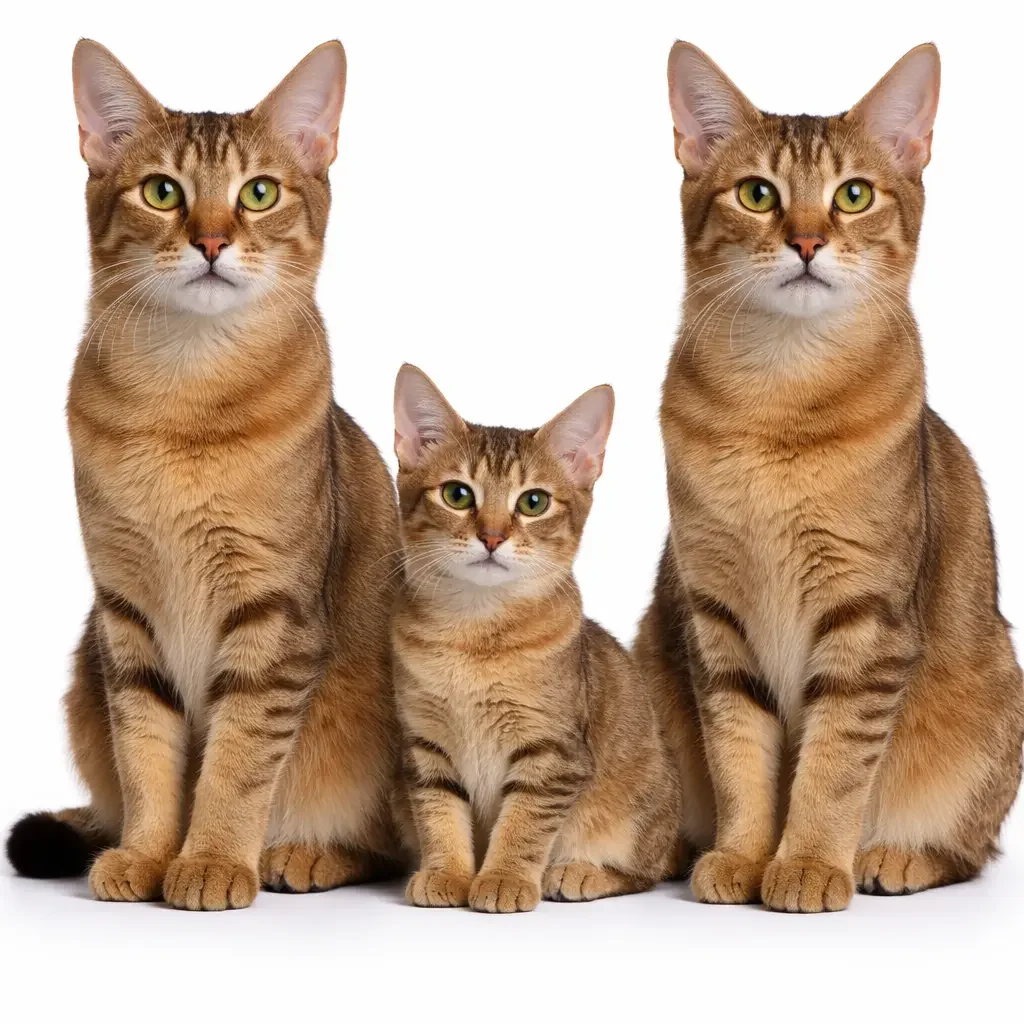
Chausies are tall, lean, and extraordinarily powerful, with long legs, a deep chest, and a ticked coat that closely echoes the markings of the Jungle Cat. They are among the most athletically capable of all domestic and hybrid cat breeds, combining exceptional speed, jumping ability, and endurance with a confident, intelligent, and surprisingly affectionate temperament when properly socialized.
For homesteaders and farm families in warm to temperate climates, the Chausie offers one of the most impressive combinations of working ability and companion temperament available. They are active, fearless, and highly capable hunters, but they are also deeply social animals that form strong bonds with their families and require consistent engagement and stimulation to thrive. Like the Savannah, they are a serious commitment requiring experienced ownership, but for the right property and the right owner, they are among the most rewarding working companion cats in existence.
Origin and History
Origin: United States; wild ancestry from South and Southeast Asia, the Middle East, and Egypt
Geographic Area: Developed in North America; Jungle Cat (Felis chaus) ancestor ranges from Egypt through the Middle East to South and Southeast Asia
Development: Deliberate hybridization of domestic cats with the Jungle Cat began in the 1960s and 1970s; formal breed development accelerated in the 1990s
Wild Ancestor: The Jungle Cat (Felis chaus) is a medium-sized wild cat weighing 9 to 35 lbs; it is the largest of the small wild cats and is known for its exceptional swimming ability, speed, and adaptability to varied environments
Ancient History: Jungle Cats were likely domesticated or semi-domesticated in ancient Egypt; cat mummies identified as Jungle Cats have been found in Egyptian archaeological sites, suggesting a long history of human association
Breed Development: Breeders including Judy Sugden worked in the 1990s to establish consistent breed standards and temperament; the goal was a large, athletic domestic cat resembling the Jungle Cat
Recognition: TICA accepted the Chausie for registration in 1995 and granted advanced new breed status; full championship status followed in 2013
Filial Generations: Like the Savannah, Chausies are classified by filial generation (F1 through F4+); F1 is closest to the Jungle Cat, F4 and beyond are most domestic in behavior and temperament
Legal Status: Legal in most US states; fewer restrictions than the Savannah; always verify local laws before acquiring
Current Status: Rare breed with a dedicated following; most popular in North America and Europe among owners seeking a large, exotic, and highly capable cat
Physical Characteristics
Size: Large to very large; one of the largest domestic and hybrid cat breeds
Weight: Males 15 to 25 lbs; Females 10 to 15 lbs; F1 males can be significantly heavier
Body Type: Long, lean, and deeply muscled; tall-legged with a deep chest, long neck, and substantial bone structure
Build: Powerful and athletic; built for speed, endurance, and jumping; the body is longer and less cobby than most domestic breeds
Coat Length: Short to medium
Coat Texture: Dense and resilient; slightly coarse guard hairs with a soft undercoat
Coat Pattern: Three accepted patterns in TICA: brown ticked tabby (most common and most resembling the wild Jungle Cat), black grizzled tabby, and solid black
Ticking: The ticked tabby pattern produces a wild, agouti appearance similar to the Abyssinian and the Jungle Cat; each hair has multiple bands of color
Eye Color: Gold, yellow, or light brown; large and slightly slanted; give an alert and intensely focused expression
Head: Long and angular; high cheekbones; slightly convex forehead; strong muzzle; gives a distinctly wild expression
Ears: Tall, wide-set, and upright; often carry small tufts at the tips reflecting Jungle Cat ancestry; set high on the head
Legs: Exceptionally long; rear legs longer than front legs; contribute directly to jumping height and running speed
Paws: Large, round, and firm
Tail: Medium length; relatively short compared to overall body length; thick and tapering
Overall Appearance: Tall, lean, and unmistakably wild; the ticked coat, long legs, and tall ears create a powerful impression of contained wild energy
Reproduction and Breeding
Sexual Maturity: Females 12 to 18 months; Males 12 to 24 months; later in early generations
Breeding Age: Best to wait until 18 to 24 months
Fertility: F1 males are almost always sterile; F1 females are fertile; fertility increases reliably with each subsequent generation
Heat Cycle: Every 2 to 3 weeks during breeding season
Gestation Period: 63 to 66 days (approximately 9 weeks)
Litter Size: Average 3 to 5 kittens (range 2 to 6)
Birthing: Can be more complicated in early generations due to size; experienced breeder supervision recommended for F1 and F2 litters
Kitten Development: Active and bold from an early age; early generation kittens require extensive socialization to develop manageable temperaments
Coat Development: Ticked pattern visible from birth; full adult coat develops by 18 months
Weaning: 8 to 10 weeks
Breeding Complexity: Producing F1 Chausies requires access to a Jungle Cat; highly specialized operation requiring extensive experience and facilities
Breeding Frequency: Limit to 1 to 2 litters per year for health of queen
Maturation: Slow-maturing; full size reached at 2 to 3 years; early generations mature more slowly
Lifespan and Health
Average Lifespan: 12 to 14 years
Health Status: Generally healthy in later generations; early generations carry some specific health considerations
Primary Health Concern: Hypertrophic cardiomyopathy (HCM); cardiac screening strongly recommended in all breeding animals
Gastrointestinal Sensitivity: Chausies, particularly in early generations, are prone to inflammatory bowel disease and gastrointestinal sensitivity; they often do poorly on grain-heavy commercial diets and require high-meat or raw diets
Gluten Sensitivity: Many Chausies demonstrate sensitivity to gluten and plant proteins; a species-appropriate high-protein diet is strongly recommended by most experienced breeders
Anesthesia Note: As with other hybrid breeds, inform your veterinarian of the breed before any procedure requiring anesthesia; some hybrid-experienced vets recommend modified protocols
Vaccination Note: Some breeders advise against modified live virus vaccines in early generation Chausies; consult a feline-specialist veterinarian with hybrid experience
Dental Health: Regular dental care recommended
Vaccinations: Standard feline vaccines; discuss protocol with a hybrid-experienced veterinarian
Parasite Control: Regular flea, tick, and intestinal parasite prevention; important for outdoor cats
Hardy Constitution: Hybrid vigor in early generations contributes to robust overall health outside of specific dietary and gastrointestinal concerns
Temperament and Personality
The Chausie is a cat of impressive contradictions. They are wild in appearance and extraordinary in physical capability, yet they are also deeply social, family-oriented animals that form genuine and lasting bonds with their people. The key variable is generation and socialization; a well-socialized F3 or F4 Chausie is a warm, engaged, and highly interactive companion, while an undersocialized early-generation cat can be challenging to manage for inexperienced owners.
Activity level is very high across all generations. Chausies are not cats that sit on windowsills and observe. They explore every surface, investigate every sound, and engage with their environment with a focused intensity that reflects their wild ancestry. They are not destructive in the way that anxious or bored cats can be, but they are relentlessly active and will find ways to occupy themselves that may not align with household preferences if adequate outlets are not provided.
Intelligence is exceptional and practical. Chausies observe their environment carefully, learn quickly, and apply what they learn with a purposefulness that many owners find remarkable. They can be leash-trained, taught commands, and engaged with puzzle feeders and interactive toys with consistent success. They remember the layout and contents of their territory reliably and respond to changes in their environment with immediate, focused investigation.
With their family, well-socialized Chausies are affectionate, attentive, and reliably present. They seek out their people, follow them through the home, and maintain a warm and engaged closeness that surprises owners who expect a more detached exotic temperament. They do not do well with extended solitude and are best suited to households with other cats or frequent human presence.
For farms and homesteads, the Chausie's combination of exceptional working ability, fearless outdoor confidence, and devoted family temperament makes it one of the most capable and rewarding hybrid working cats available for owners who are prepared for its demands.
Hunting and Working Ability
Prey Drive: Exceptional; one of the highest prey drives of any domestic or hybrid cat breed; directly inherits the Jungle Cat's specialized hunting instincts
Hunting Skills: Outstanding in every category; exceptional stalker, ambush predator, and pursuit hunter; highly effective across varied terrain and prey types
Target Prey: Mice, rats, rabbits, birds, large insects, lizards, and potentially larger prey in early generations
Hunting Style: Versatile and adaptive; the Jungle Cat is known for both terrestrial hunting and exceptional swimming ability; Chausies inherit both
Water Affinity: The Jungle Cat is one of the most water-adapted of all wild cats, hunting fish and water-dwelling prey regularly; Chausies frequently inherit this water affinity and may hunt in or near water sources on the property
Working Ability: Outstanding on farms and rural properties with significant pest pressure; one of the most capable working hybrid cats available
Size Advantage: Large, powerful build allows tackling prey considerably larger than most domestic cats can manage
Jumping Ability: Can leap to extraordinary heights from a standing position; rear legs are built for powerful vertical and horizontal launches
Territory: Will patrol and hunt extensively across large properties with consistent energy and focus
Stamina: Very high; built for sustained active hunting and does not tire quickly
Alertness: Extraordinarily alert; detects and responds to movement, sound, and scent with immediate precision
Care and Maintenance
Grooming: Minimal; short to medium dense coat requires only weekly brushing
Coat Care: A rubber grooming mitt or soft bristle brush maintains the coat effectively; the ticked pattern requires no special treatment
Shedding: Moderate year-round; no dramatic seasonal coat blow
Bathing: Rarely needed for coat maintenance; many Chausies enjoy water and will tolerate or seek out bathing
Nail Trimming: Every 2 to 3 weeks; large, strong claws require consistent attention
Dental Care: Weekly tooth brushing recommended
Feeding: High-quality, high-protein diet is critical; grain-free or raw diet strongly recommended; 1/2 to 1 cup daily depending on generation and size; plant proteins and gluten should be minimized or eliminated
Caloric Needs: High due to large size and very high activity level
Water: Fresh water always available; many Chausies play in and drink from running water sources
Litter Box: XL boxes required; kept very clean
Exercise: Very high; needs extensive daily active play, outdoor access, or large enclosed space
Enrichment: Cat wheels, leash walks, puzzle feeders, climbing structures, and interactive play all essential
Containment: Secure outdoor enclosures strongly recommended; Chausies are exceptional jumpers and problem-solvers
Space Requirements: Not suited to small or confined environments; needs significant indoor and outdoor space to remain mentally healthy
Climate Adaptability
Climate Tolerance: Good; Jungle Cat ancestry spans a wide range of climates from Egyptian wetlands to South Asian forests
Cold Tolerance: Moderate; short to medium coat provides reasonable insulation but not exceptional cold weather performance; indoor shelter important in cold climates
Heat Tolerance: Very good; warm and temperate climates are well managed
Temperature Range: Best suited to temperate to warm climates; Jungle Cat ancestry includes warm and tropical environments
Best Climate: Warm to temperate environments; performs best in climates similar to the Jungle Cat's native range
Indoor/Outdoor: Requires significant outdoor access or very large indoor space; must be in a secure enclosure outdoors
Shelter Needs: Appreciates warm, dry indoor shelter; more cold-tolerant than breeds with minimal coats but less so than northern working breeds
Adaptability: Adapts well to varied environments provided space, warmth, and stimulation needs are met
Advantages for Farmhouse Living
One of the most athletically capable and high-performing working hybrid cats available
Exceptional prey drive directly inherited from the Jungle Cat; among the strongest of any domestic or hybrid breed
Outstanding jumping ability; can access and hunt in areas inaccessible to other breeds
Water affinity from Jungle Cat ancestry; effective hunting in and near water sources on the property
Large, powerful build for tackling significant prey
Highly intelligent and trainable; leash-walks and responds to commands reliably
Fearless and confident outdoors; not easily startled by farm activity, machinery, or large animals
Deep bonding with family when well socialized; devoted and engaging companion
Low grooming requirement despite impressive size and appearance
Fewer legal restrictions than the Savannah in most US states
Long patrol range and very high stamina for extensive property coverage
Thrives in warm, open farm environments with space to roam and hunt
Disadvantages for Farmhouse Living
Gastrointestinal sensitivity and dietary requirements are more demanding than most breeds; grain-free or raw diet is a consistent commitment
Very high energy and space requirements; not suited to confined or small environments
Strong prey drive is a significant risk to poultry, rabbits, and other small farm animals
Early generation cats (F1 and F2) require highly experienced handling and extensive socialization
Exceptional jumping and problem-solving ability makes containment difficult and expensive
Requires a veterinarian experienced with hybrid cat breeds
Short to medium coat offers moderate cold weather protection; not ideal for cold climate farms
Specialized dietary needs add ongoing cost
Rare breed; limited availability and high purchase price
Does not tolerate extended solitude; requires consistent company or a feline companion
Some insurance providers will not cover hybrid cat breeds
Best Suited For
Warm to temperate climate farms and rural properties with significant pest pressure
Properties with water features including ponds, streams, and irrigation systems where water-hunting ability is an advantage
Experienced cat owners who understand hybrid breed requirements and dietary needs
Homesteaders seeking one of the most capable and athletically impressive working cat breeds available
Properties with secure outdoor enclosures or large fenced areas
Active owners who can provide daily high-intensity engagement, stimulation, and a species-appropriate diet
Operations in states and countries where Chausie ownership is legally permitted
Farms free of vulnerable small animals or with secure separation between the cat and at-risk livestock
Economic Considerations
Initial Cost: F1 Chausies $5,000 to $10,000+; F2 $2,000 to $5,000; F3 to F4 $1,000 to $2,500
Availability: Rare; specialist breeders primarily in North America and Europe; significant waitlists for early generation cats
Annual Vet Care: $400 to $800 (vaccines, checkups, hybrid-experienced veterinarian, gastrointestinal monitoring)
Food Costs: $700 to $1,200 annually (large cat with high-protein or raw diet requirement)
Grooming Supplies: $20 to $40 annually; minimal grooming needs
Containment Infrastructure: Secure outdoor enclosures $500 to $5,000+ depending on size
Spay/Neuter: $100 to $350; requires a vet experienced with hybrid breeds
Pest Control Value: Outstanding; one of the most effective and athletically capable hunting cats available
Long-term Value: 12 to 14 year lifespan; extraordinary hunting performance and companionship value for the right owner and property
Fun Facts
The Chausie's name is derived directly from Felis chaus, the Latin species name of its wild Jungle Cat ancestor
The Jungle Cat is one of the most widely distributed wild cats in the world, ranging from Egypt through the Middle East and Central Asia to South and Southeast Asia
Cat mummies identified as Jungle Cats have been found in ancient Egyptian archaeological sites, suggesting that the Jungle Cat, like the African Wildcat, had a long history of association with human settlements in the Nile region
The Jungle Cat is one of the most water-adapted of all wild cat species, regularly hunting fish, frogs, and water birds in reed beds and along river margins; Chausies frequently inherit this affinity for water
F1 male Chausies are almost universally sterile, a common consequence of the large genetic distance between the Jungle Cat and domestic cat species
Despite having no confirmed domestic cat ancestry, the Jungle Cat has coexisted with humans for thousands of years in agricultural settings throughout its range, making it one of the most pre-adapted wild cats to domestic hybridization
The Chausie is one of the tallest domestic and hybrid cat breeds, with adults regularly reaching heights at the shoulder that exceed those of many small dog breeds
Well-socialized F3 and F4 Chausies are described by experienced owners as genuinely dog-like in their loyalty, trainability, and desire for active engagement with their human family
The ticked tabby coat pattern of the brown Chausie is almost identical in appearance to the natural coat of the wild Jungle Cat, making it one of the most convincing wild-appearing coat patterns in any domestic or hybrid breed
TICA granted the Chausie full championship status in 2013, nearly two decades after accepting the breed for registration, reflecting the time required to establish consistent temperament and type across multiple generations
Chausies are known to retrieve thrown objects, walk on leashes, and respond to their names with a reliability that reflects their exceptional intelligence and trainability
The Jungle Cat is the largest member of the genus Felis, the group of small wild cats that also includes the domestic cat's ancestor the African Wildcat; it is significantly larger than the African Wildcat, which contributes to the Chausie's impressive size
Unlike the Savannah, whose wild ancestor the African Serval is classified in a separate genus from domestic cats, the Jungle Cat belongs to the same genus Felis as the domestic cat, making the Chausie one of the closer domestic-to-wild hybrid pairings available
Chausies have been documented jumping to heights exceeding six feet from a standing position, a direct reflection of the Jungle Cat's extraordinary leaping ability used in the wild for catching birds in flight
The grizzled tabby color pattern accepted in the Chausie breed standard is extremely rare in domestic cats and is believed to be a direct inheritance from the Jungle Cat genome; it produces a distinctive salt-and-pepper appearance not found in any purely domestic breed