
Cornish Rex
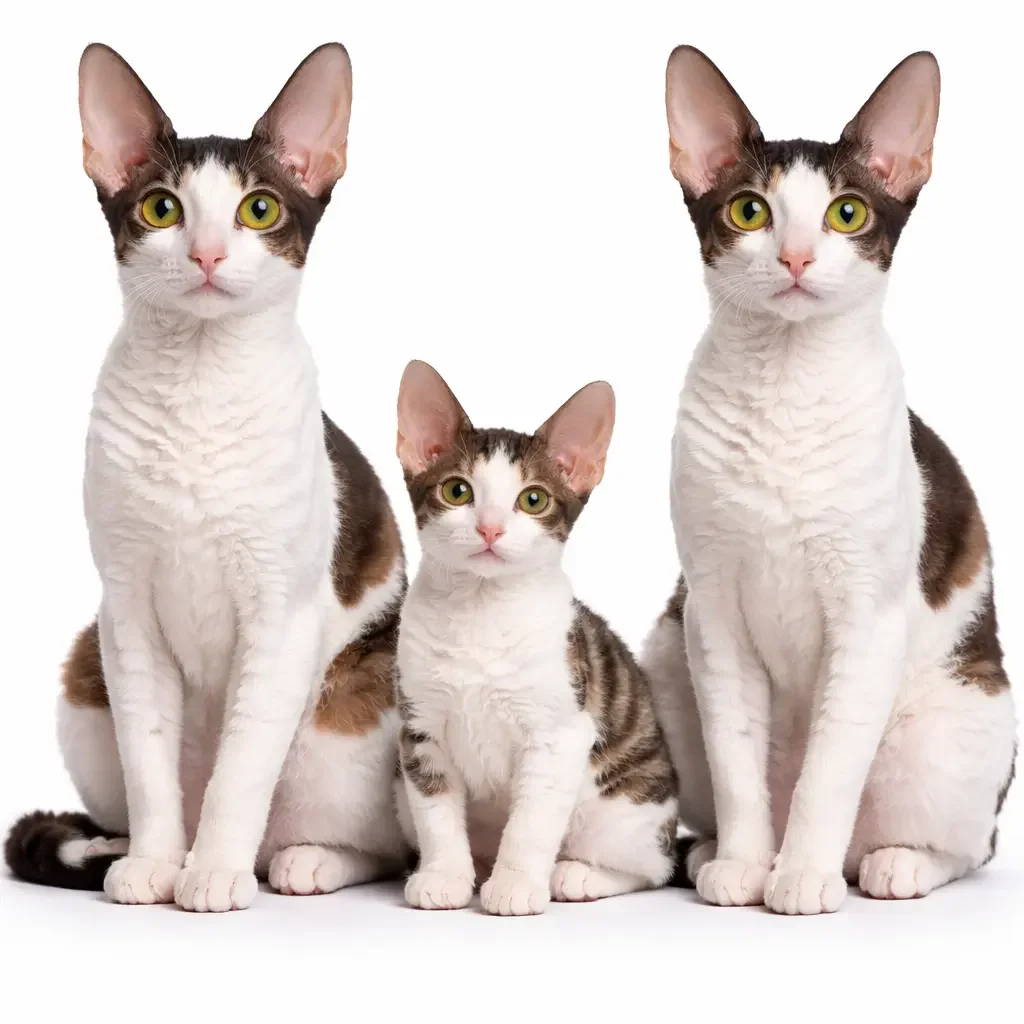
Overview
The Cornish Rex cat is a slender, highly distinctive breed originating from Cornwall, England, where a spontaneous genetic mutation in 1950 produced a kitten with an extraordinary wavy coat unlike anything seen before in the domestic cat world. Defined by its uniquely soft, rippled coat composed entirely of down hairs with no guard hairs or awn hairs present, the Cornish Rex is one of the most physically unusual domestic breeds, combining the texture of warm velvet or cashmere with a whippet-like body, enormous ears, and an energy level that borders on perpetual.
Cornish Rex cats are among the most active, playful, and people-oriented of all domestic breeds. They are dog-like in their enthusiasm for interaction, relentlessly curious, and capable of maintaining a kitten-like exuberance well into old age. Their warm-to-the-touch coat, the result of the absence of insulating guard hairs, makes them genuinely heat-seeking animals that prefer warm environments and close physical contact with their people.
For homesteaders and farm families, the Cornish Rex is a compelling companion cat with a genuine hunting instinct, exceptional athleticism, and an endlessly engaging personality. However, their coat offers minimal weather protection, and their need for warmth and human interaction makes them better suited to the farmhouse than to demanding outdoor working roles in cold or variable climates.
Origin and History
Origin: Bodmin Moor, Cornwall, England
Geographic Area: Southwest England; developed in Cornwall and spread worldwide through dedicated breeding programs
Development: A spontaneous genetic mutation appeared in a litter of barn kittens on a farm near Bodmin Moor in 1950; the curly-coated kitten, named Kallibunker, became the foundation of the entire breed
Founding Cat: Kallibunker, a red and white male kitten born July 21, 1950 on the farm of Nina Ennismore, is the founder of the Cornish Rex breed
Early Breeding: Nina Ennismore worked with geneticist A.C. Jude to establish that the curl was caused by a recessive gene; Kallibunker was bred back to his mother to produce more curly-coated kittens
Breed Development: To maintain genetic diversity, Cornish Rex were outcrossed to domestic shorthairs, Siamese, Burmese, and British Shorthairs in the early decades of the breed
United States Introduction: First Cornish Rex imported to the United States in 1957; the breed quickly gained a following among cat enthusiasts drawn to its unique appearance and personality
Recognition: CFA and TICA both recognize the Cornish Rex; full championship status granted in the 1960s
Rex Gene: The Cornish Rex curl is caused by a recessive mutation in the KRT71 gene; it is entirely distinct from the genes responsible for curls in the Devon Rex, LaPerm, and Selkirk Rex
Farm Origin: Like the LaPerm and Pixie-Bob, the Cornish Rex originated directly on a working farm; Kallibunker was born in a barn cat litter
Current Status: Moderately popular worldwide; dedicated following among cat enthusiasts who appreciate its unique coat and personality
Physical Characteristics
Size: Medium
Weight: Males 8 to 10 lbs; Females 5 to 8 lbs
Body Type: Foreign; long, slender, and deeply arched; the back forms a natural upward curve from shoulders to hips
Build: Lean, muscular, and athletic; far stronger than the slender frame suggests; built for speed and agility
Coat Length: Short; the shortest effective coat of any recognized breed
Coat Texture: Extremely soft, warm, and velvety; composed entirely of down hairs; no guard hairs or awn hairs; the coat forms tight, uniform waves or marcel-like ripples across the entire body
Coat Temperature: Noticeably warm to the touch due to the absence of insulating guard hairs; body heat is not trapped by an outer coat layer
Coat Colors: All colors and patterns accepted; no restrictions
Eye Color: Medium to large, oval, and slightly slanted; all colors accepted
Head: Small, egg-shaped; high cheekbones; strongly curved profile from forehead to nose; prominent whisker break
Ears: Very large, wide at the base, set high on the head; a defining visual characteristic; give the Cornish Rex an alert and otherworldly expression
Whiskers and Eyebrows: Also curly or wavy, reflecting the same gene that affects the coat
Legs: Long, slender, and well-muscled; the Cornish Rex stands high on its legs
Paws: Small and oval
Tail: Long, slender, and tapering; flexible
Overall Appearance: Alien, elegant, and unforgettable; unlike any other domestic breed in body type or coat character
Reproduction and Breeding
Sexual Maturity: Females 7 to 10 months; Males 8 to 12 months
Breeding Age: Best to wait until 12 to 18 months
Heat Cycle: Every 2 to 3 weeks during breeding season; Cornish Rex females can be vocal and persistent in heat
Gestation Period: 63 to 65 days (approximately 9 weeks)
Litter Size: Average 3 to 5 kittens (range 2 to 6)
Birthing: Generally straightforward; attentive mothers
Kitten Development: Active and bold from a very early age; curl visible at birth
Curl Gene: Recessive; both parents must carry the gene to produce curly-coated kittens; outcrossing to straight-coated cats produces straight-coated carriers
Coat Development: Full adult wave pattern established by 6 to 12 months; some variation in wave intensity by season and age
Weaning: 8 to 10 weeks
Breeding Frequency: Limit to 1 to 2 litters per year for health of queen
Fertility Period: Productive breeding years 2 to 7 years old
Maturation: Reaches full size by 2 years
Lifespan and Health
Average Lifespan: 11 to 15 years
Health Status: Generally healthy; small founding population creates some genetic considerations requiring responsible breeding management
Primary Health Concern: Hypertrophic cardiomyopathy (HCM); cardiac screening strongly recommended in all breeding animals
Blood Type: Cornish Rex have a higher than average incidence of Type B blood; blood typing before surgery or transfusion is strongly recommended
Hypotrichosis: Some individuals may experience coat thinning with age; not painful but cosmetically significant
Skin Sensitivity: The absence of guard hairs means the skin is more exposed than in other breeds; monitor for sunburn in outdoor cats and skin irritation from rough surfaces
Cold Sensitivity: The absence of insulating guard hairs means the Cornish Rex loses body heat rapidly; cold environments are a genuine health risk
Dental Health: Regular dental care recommended
Vaccinations: Standard feline vaccines (FVRCP, rabies)
Parasite Control: Regular flea and tick prevention; the thin coat means parasites are easier to spot but also have less insulation to contend with
Genetic Diversity: Responsible breeders maintain outcrossing programs to preserve genetic health; the founding population was very small
Temperament and Personality
The Cornish Rex is, by any measure, one of the most intensely people-oriented and perpetually active cat breeds in existence. They are not content to observe from a distance; they want to be in the middle of everything, participating in every activity, sitting on every keyboard, investigating every bag, and inserting themselves into every conversation with cheerful, insistent enthusiasm. They are the cat equivalent of a highly social, energetic child who never quite grows up.
Their playfulness is remarkable in its persistence. Cornish Rex maintain a genuine kitten-like energy and curiosity throughout their lives, playing fetch, chasing toys, climbing to the highest available surface, and launching themselves from furniture with an athleticism that defies their delicate appearance. They are fast, agile, and genuinely acrobatic, using their long legs and arched back for explosive speed and direction changes.
Affection is expressed physically and constantly. Cornish Rex seek warmth from their people not just emotionally but literally, burrowing under blankets, draping themselves across warm laptops, and pressing against human bodies for the heat they cannot generate efficiently themselves. This need for warmth creates an unusually close physical bond with their families that many owners find deeply endearing.
Intelligence is high and mischievous in character. Cornish Rex learn quickly, remember what interests them, and apply their intelligence primarily to finding ways to access food, attention, and amusement. They are trainable and respond well to interactive engagement, but they are also independent enough to pursue their own agenda when their needs are not being met.
For farm households, the Cornish Rex is best suited to the farmhouse itself rather than outdoor working roles, providing warmth, entertainment, and devoted companionship in the domestic environment while other working breeds manage outdoor pest control duties.
Hunting and Working Ability
Prey Drive: Moderate to high; farm origins and athletic build support a genuine hunting instinct
Hunting Skills: Fast, agile, and precise; excellent reflexes and speed make it an effective hunter of small, fast-moving prey
Target Prey: Mice, rats, insects, small birds, lizards
Hunting Style: Active and energetic pursuit hunter; uses speed and agility rather than patient ambush
Working Ability: Capable indoor and barn mouser; not suited to demanding outdoor working roles in cold or wet conditions
Speed Advantage: Lean, muscular build and long legs provide exceptional speed and agility in confined spaces
Physical Limitation: Absent guard hairs and cold sensitivity limit outdoor performance in cold, wet, or variable weather conditions
Best Working Role: Indoor and warm-climate barn pest control; farmhouse and storage building mousing
Alertness: Highly alert and reactive; responds immediately to movement and sound
Territory: Prefers a defined indoor or warm outdoor territory rather than extensive outdoor roaming
Care and Maintenance
Grooming: Minimal in terms of brushing; however the coat and skin require specific attention
Coat Care: The delicate wave pattern can be disrupted by vigorous brushing; use the hands or a very soft cloth to smooth the coat rather than a brush or comb
Shedding: Very low; the absence of guard hairs and minimal undercoat means the Cornish Rex sheds significantly less than most other breeds
Bathing: Regular bathing every 2 to 4 weeks is recommended; the absence of guard hairs means skin oils accumulate more quickly than in other breeds and can cause a greasy feel and skin irritation if not managed
Ear Cleaning: Large ears accumulate wax more visibly than in other breeds; clean weekly with a veterinarian-approved ear cleaner
Skin Monitoring: Check skin regularly for irritation, sunburn, and dryness; the exposed skin is more vulnerable than in guard-hair-bearing breeds
Nail Trimming: Every 2 to 3 weeks
Dental Care: Weekly tooth brushing recommended
Feeding: High-quality, high-protein diet; the Cornish Rex has a notably fast metabolism and tends to eat more than its size suggests; 1/3 to 1/2 cup daily but monitor individually
Caloric Needs: Higher than average for size; fast metabolism and high activity level mean the Cornish Rex burns calories quickly and should not be underfed
Water: Fresh water always available
Warmth: Critical; the Cornish Rex must have access to warm environments at all times; heated beds, warm blankets, and climate-controlled spaces are not luxuries but necessities
Litter Box: Standard size; kept very clean
Exercise: Very high; needs extensive daily active play to remain mentally and physically healthy
Climate Adaptability
Climate Tolerance: Poor to moderate; the absent guard hairs and high body heat loss make climate management essential
Cold Tolerance: Very low; the Cornish Rex loses body heat rapidly and is genuinely at risk in cold environments; indoor warmth is non-negotiable
Heat Tolerance: Very good; warm environments are preferred and managed well; the warm-to-touch coat reflects natural heat retention close to the body
Temperature Range: Strictly requires warm, stable indoor environments; outdoor exposure in cold or variable conditions carries real health risk
Best Climate: Warm, stable indoor environments; warm climate regions where outdoor temperatures rarely drop significantly
Indoor/Outdoor: Primarily indoor; outdoor access should be limited to warm, supervised conditions
Shelter Needs: Must have warm, climate-controlled indoor shelter at all times; heated beds strongly recommended
Adaptability: Limited by coat structure; adapts well to warm indoor environments but cannot safely adapt to cold or variable outdoor conditions
Advantages for Farmhouse Living
Exceptional farmhouse companion; deeply affectionate, entertaining, and warm in every sense
Very low shedding; the absent guard hairs mean minimal cat hair on furniture and clothing
Genuine hunting instinct for indoor and warm barn pest control
Exceptional speed and agility in confined spaces
Highly intelligent and trainable; learns routines and responds to interactive engagement
Low grooming time commitment despite bathing requirement; no brushing needed
Kitten-like energy throughout life; endlessly engaging and entertaining household companion
Deep physical bonding with family; seeks warmth and closeness consistently
Gets along well with children, other cats, and calm dogs
Distinctive and unforgettable appearance; one of the most visually striking of all farm cat companions
Farm-breed origins; Kallibunker was born in a working barn litter
Disadvantages for Farmhouse Living
Very low cold tolerance; genuinely unsuited to cold climate outdoor farm work
Requires warm indoor environments at all times; heating costs are a practical consideration
Regular bathing every 2 to 4 weeks is a consistent maintenance commitment
Large ears require weekly cleaning
Not suited to demanding outdoor working roles in cold, wet, or variable climates
High metabolism means food consumption is higher than size suggests; food costs add up
Skin more vulnerable to sunburn, irritation, and parasite exposure than in guard-hair-bearing breeds
Very high energy demands consistent daily interaction and stimulation
Does not tolerate extended solitude well; needs regular company
Blood type consideration requires veterinary awareness before any surgical procedure
Small gene pool requires careful sourcing from health-tested breeders
Best Suited For
Warm climate farms and homesteads where indoor temperatures are consistently maintained
Farmhouse companion roles alongside other outdoor working breeds
Active households with frequent human presence and daily interactive engagement
Owners who appreciate a deeply warm, physically close, and perpetually entertaining companion
Allergy-sensitive households; very low shedding makes the Cornish Rex one of the more tolerable breeds for mild cat allergies
Multi-pet households where the Cornish Rex will have consistent company and stimulation
Indoor and warm-climate barn pest control in contained spaces
Experienced cat owners who understand the breed's warmth requirements and bathing schedule
Economic Considerations
Initial Cost: $800 to $1,300 from reputable breeders; show quality $1,300 to $2,500+
Availability: Moderately available; specialist breeders in North America, Europe, and Australia
Annual Vet Care: $250 to $500 (vaccines, checkups, cardiac screening, blood typing record)
Food Costs: $300 to $500 annually (higher than average food consumption relative to size)
Grooming Supplies: $40 to $80 annually (cat shampoo, ear cleaner, soft cloth); no brushes needed
Heating: Warm bedding and climate control are practical ongoing costs; heated cat beds recommended
Spay/Neuter: $75 to $200; inform vet of blood type consideration before any procedure
Pest Control Value: Good for indoor and warm barn mousing in contained spaces
Long-term Value: 11 to 15 year lifespan; exceptional companionship value for warm climate households and farmhouses
Fun Facts
The entire Cornish Rex breed traces to a single kitten named Kallibunker, born in a barn litter on a farm near Bodmin Moor, Cornwall, on July 21, 1950
Kallibunker was named by his owner Nina Ennismore, who initially described him as looking like a small, curly-coated rabbit
The Cornish Rex coat is composed entirely of down hairs, the soft undercoat layer; there are no guard hairs or awn hairs present; this is unique among all domestic cat breeds
The absence of guard hairs makes the Cornish Rex coat noticeably warm to the touch; body heat radiates directly from the skin without being trapped by an outer coat layer
Cornish Rex cats have a faster metabolism than most domestic breeds and tend to remain slender throughout their lives despite eating more relative to their size than heavier breeds
The curly whiskers and eyebrows of the Cornish Rex are affected by the same gene as the coat; they grow in waves or loose curls rather than straight
Cornish Rex are known for playing fetch with a consistency and enthusiasm that rivals retrieving dog breeds
The Cornish Rex curl gene is entirely distinct from the genes responsible for curls in the Devon Rex, LaPerm, Selkirk Rex, and American Wirehair; crossing a Cornish Rex with a Devon Rex produces straight-coated kittens that carry both recessive curl genes
Cornish Rex cats are among the breeds most frequently recommended by allergy specialists for mildly allergic cat owners due to their very low shedding; however they are not hypoallergenic as they still produce Fel d 1 protein
The breed was nearly lost in its early years; the founding population was very small and required careful genetic management to survive as a viable breeding population
Cornish Rex are known to enjoy eating foods that most cats ignore, including vegetables, fruit, and unusual human foods; their curiosity extends fully to food
The arched back of the Cornish Rex, which gives it a permanent ready-to-spring posture, is a structural characteristic of the breed rather than a behavioral pose
Cornish Rex have been documented jumping to heights exceeding six feet from a standing position, a reflection of their extraordinary hind leg power relative to body weight
Nina Ennismore, the farmer who discovered Kallibunker, originally believed the unusual coat was a fault and considered not continuing the line; it was geneticist A.C. Jude who recognized the scientific and breeding significance of the mutation
The name Rex, used across several curly-coated cat breeds, was borrowed from the term used for curly-coated rabbit breeds and later curly-coated dog breeds such as the Rex rabbit and Rex guinea pig