
Egyptian Mau
Overview
The Egyptian Mau cat is one of the oldest naturally spotted domestic cat breeds in the world, believed to descend directly from the sacred cats of ancient Egypt that were worshipped, depicted in hieroglyphs, and mummified alongside pharaohs over three thousand years ago. Lean, muscular, and extraordinarily fast, the Egyptian Mau is the only domestic cat breed with a naturally occurring spotted coat pattern rather than one produced by selective breeding, and it holds the distinction of being the fastest domestic cat breed, capable of running at speeds exceeding thirty miles per hour.
The word Mau is simply the ancient Egyptian word for cat, a fitting name for a breed that has remained remarkably consistent in appearance and character across three millennia. Egyptian Maus are alert, athletic, and intensely loyal to their families, combining a genuine and powerful hunting instinct with a warm, devoted, and occasionally demanding social personality. They are not a breed for the passive owner; they are a breed for those who want a deeply engaged, highly capable, and genuinely ancient working companion.
For homesteaders and farm families, the Egyptian Mau offers exceptional speed, one of the highest prey drives of any domestic breed, outstanding athleticism, and a warm bond with its family that makes it as rewarding a companion as it is a working cat.
Origin and History
Origin: Egypt; believed to descend from domestic cats of ancient Egypt
Geographic Area: Northeastern Africa; spread throughout the Mediterranean world in antiquity
Ancient History: Cats matching the Egyptian Mau's spotted description appear in Egyptian art and papyrus documents dating to at least 1550 BCE; the spotted cat was sacred to the sun god Ra and associated with the goddess Bastet
Sacred Status: In ancient Egypt, cats were revered, legally protected, and mummified; hundreds of thousands of cat mummies have been found in Egyptian archaeological sites, many bearing the spotted pattern of the Mau
Modern Development: The modern breed was established in the 1950s by Russian Princess Nathalie Troubetskoy, who acquired spotted street cats in Cairo and Rome and brought them to the United States in 1956
Founding Cats: Baba, Liza, and Jojo, three cats brought by Princess Troubetskoy, formed the foundation of the Western Egyptian Mau breeding population
Recognition: CFA granted the Egyptian Mau championship status in 1977; TICA and other major registries also recognize the breed
Natural Spots: The Egyptian Mau's spots are naturally occurring; they are not the result of deliberate crossbreeding programs as in the Ocicat or Bengal
Speed Record: The Egyptian Mau holds the record as the fastest domestic cat breed, documented at speeds exceeding 30 miles per hour
Current Status: Rare breed; dedicated following among cat enthusiasts who appreciate its ancient heritage and exceptional athleticism
Physical Characteristics
Size: Medium
Weight: Males 8 to 12 lbs; Females 6 to 10 lbs
Body Type: Semi-foreign; medium length, well-muscled, and graceful; neither cobby nor extreme
Build: Lean, athletic, and powerful; the hind legs are longer than the front legs, contributing to exceptional running speed
Unique Feature: A distinctive loose skin flap extends from the flank to the rear knee, allowing an exceptionally long stride; this is unique among domestic cats
Coat Length: Short
Coat Texture: Dense, resilient, and silky; medium-fine texture with a natural sheen
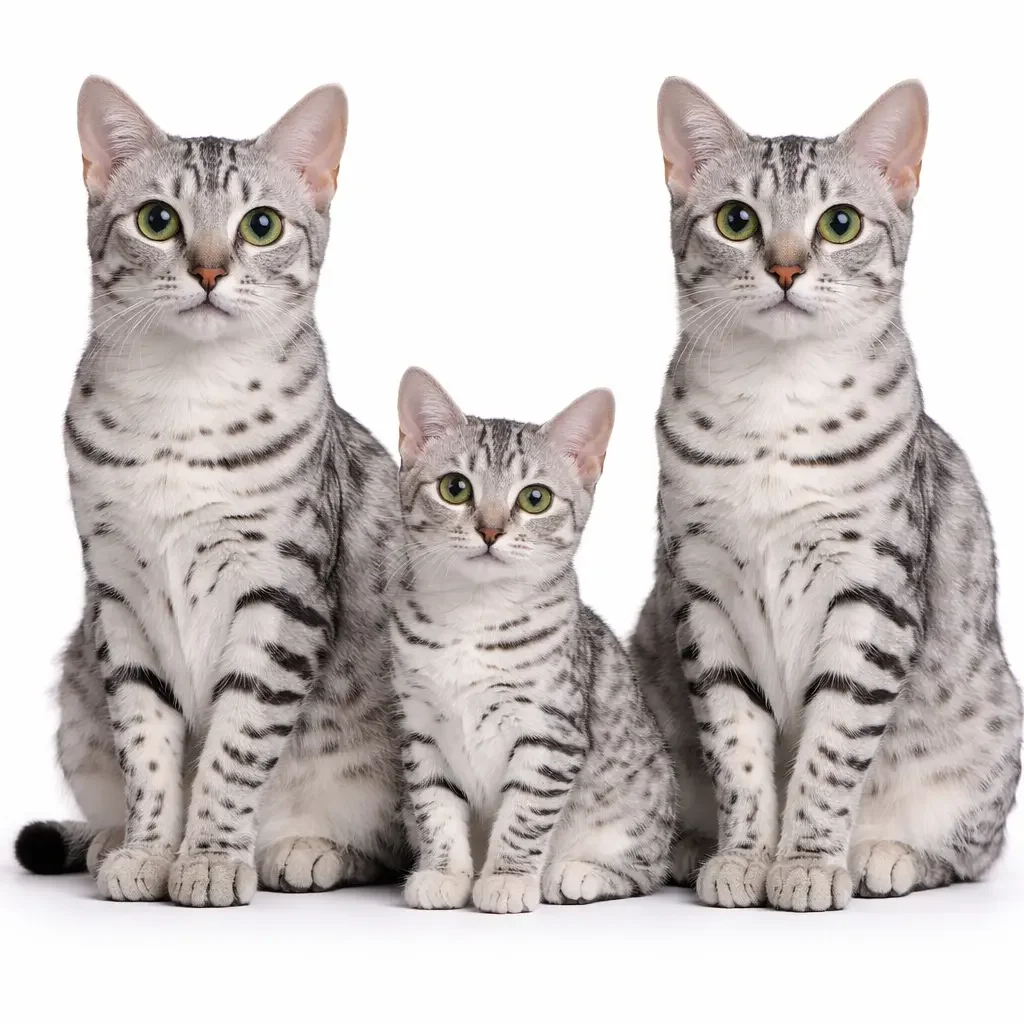
Coat Pattern: Spotted only; random spots of various sizes distributed across the body; spots on the spine may merge into a dorsal stripe; legs and tail are banded
Coat Colors: Silver, bronze, and smoke accepted by CFA; black and blue smoke also seen
Eye Color: Gooseberry green; a defining breed characteristic; the vivid green color develops fully by 18 months; younger cats may show amber tones
Forehead Markings: Distinctive M-shaped marking on the forehead; mascara lines running from the corners of the eyes
Head: Gently rounded wedge; medium length; not extreme in any direction
Ears: Medium to large, broad at the base, slightly pointed; alert and forward-facing
Legs: Long and well-muscled; hind legs noticeably longer than front
Paws: Small, oval, and compact
Tail: Medium length, broad at the base, tapering; banded throughout
Overall Appearance: Elegant, athletic, and unmistakably ancient; the spotted coat and green eyes give an impression of controlled wild energy
Reproduction and Breeding
Sexual Maturity: Females 7 to 10 months; Males 8 to 12 months
Breeding Age: Best to wait until 12 to 18 months
Heat Cycle: Every 2 to 3 weeks during breeding season; Egyptian Mau females can be vocal and persistent in heat
Gestation Period: 63 to 73 days; the Egyptian Mau has one of the longest documented gestation periods of any domestic cat breed
Litter Size: Average 3 to 5 kittens (range 2 to 6)
Birthing: Generally straightforward; attentive and protective mothers
Kitten Development: Active and alert from a very early age; spots visible at birth
Eye Color Development: Kittens born with blue eyes; transition through amber to gooseberry green; full green not reached until 18 months
Coat Development: Full adult coat and spot clarity develop by 12 to 18 months
Weaning: 8 to 10 weeks
Breeding Frequency: Limit to 1 to 2 litters per year for health of queen
Fertility Period: Productive breeding years 2 to 7 years old
Maturation: Reaches full size by 2 years; eye color fully develops by 18 months
Lifespan and Health
Average Lifespan: 12 to 15 years
Health Status: Generally healthy; small founding population creates some genetic concerns requiring responsible breeding management
Primary Health Concern: Hypertrophic cardiomyopathy (HCM); cardiac screening strongly recommended in all breeding animals
Leukodystrophy: A neurological condition identified in some Egyptian Mau lines; responsible breeders screen for this
Pyruvate Kinase Deficiency: Possible in some lines; DNA testing available and recommended
Small Gene Pool: The modern breed traces to a very small founding population; maintaining genetic diversity is an active concern for responsible breeders
Dental Health: Regular dental care recommended
Vaccinations: Standard feline vaccines (FVRCP, rabies)
Parasite Control: Regular flea and tick prevention for outdoor cats
Temperature Sensitivity: Egyptian origin means the Mau is more sensitive to cold than breeds developed in cooler climates; warm shelter is important
Temperament and Personality
The Egyptian Mau is a cat of striking contrasts. With its family, it is deeply warm, loyal, and demonstratively affectionate, known for chirping, trilling, and what owners describe as talking to its people with an expressive range of vocalizations. It seeks out contact, headbutts with enthusiasm, and maintains a consistently devoted presence with the people it trusts. With strangers, it is reserved to the point of withdrawal, preferring to observe from a distance until it makes its own assessment.
This selectivity in trust is one of the defining characteristics of the breed. The Egyptian Mau chooses its people carefully and bonds to them with an intensity that reflects its ancient history as a companion to specific households rather than a general community animal. Once that bond is formed, it is deep, enduring, and expressed daily.
Energy level is high. Egyptian Maus are among the most athletic and active of all domestic cat breeds, and they require significant daily exercise and stimulation to remain mentally and physically healthy. They are fast, agile, and highly responsive to movement, making interactive play sessions not just enjoyable for them but genuinely necessary. A bored Egyptian Mau will become restless, vocal, and potentially destructive.
Their intelligence is substantial and practical. They observe their environment carefully, remember the layout and contents of their territory reliably, and respond to changes with immediate interest and investigation. They learn quickly, can be taught to walk on a leash, and engage with puzzle feeders and interactive toys with an intensity that reflects their ancient hunting heritage.
For farm and homestead environments, the Egyptian Mau's combination of exceptional speed, very high prey drive, athletic ability, and devoted family temperament makes it an outstanding working companion for those who can meet its need for stimulation and engagement.
Hunting and Working Ability
Prey Drive: Very high; one of the strongest and most focused hunting instincts of any domestic cat breed
Hunting Skills: Exceptional speed, reflexes, and focus; the fastest domestic cat available; capable of catching prey other breeds cannot
Target Prey: Mice, rats, birds, lizards, insects, voles, and any small fast-moving prey
Hunting Style: High-speed pursuit combined with precise ambush; uses extraordinary acceleration for decisive strikes
Working Ability: Outstanding for properties requiring active, high-performance pest control; particularly effective against fast-moving prey in open areas
Speed Advantage: Documented speeds exceeding 30 miles per hour make the Egyptian Mau uniquely effective at catching prey that escapes other cats
Unique Stride: The loose skin flap connecting flank to rear knee allows a longer stride than any other domestic breed, directly contributing to hunting speed and agility
Territory: Will actively patrol and hunt across extensive areas with consistent intensity
Stamina: High; built for explosive speed and sustained active patrol
Alertness: Extraordinarily alert; detects and responds to movement, sound, and scent with immediate, focused precision
All-Weather Note: Cold sensitivity means outdoor performance may be reduced in very cold conditions; best suited to temperate to warm climate farm environments
Care and Maintenance
Grooming: Minimal; short, dense coat requires only weekly brushing
Coat Care: A soft bristle brush or rubber grooming mitt is sufficient; the natural sheen is maintained without special products
Shedding: Light to moderate year-round; no dramatic seasonal coat blow
Bathing: Rarely needed
Nail Trimming: Every 2 to 3 weeks
Dental Care: Weekly tooth brushing recommended
Feeding: High-quality, high-protein diet; 1/3 to 1/2 cup daily split into 2 meals; active cats may need more
Caloric Needs: Moderate to high due to activity level; monitor weight in less active individuals
Water: Fresh water always available; many Egyptian Maus enjoy running water fountains
Litter Box: Standard size; kept very clean as Egyptian Maus are fastidious
Exercise: Very high; needs daily vigorous interactive play and ideally outdoor access in a safe environment
Enrichment: Leash walks, puzzle toys, fetch games, climbing structures, and outdoor enclosures all important
Warmth: Important; Egyptian origin means the Mau is less cold-tolerant than northern breeds; warm indoor shelter essential in cool climates
Climate Adaptability
Climate Tolerance: Moderate; Egyptian origin means preference for warmth; less suited to cold climates than northern working breeds
Cold Tolerance: Low to moderate; short coat and lean build provide limited insulation; indoor warmth essential in cold climates
Heat Tolerance: Very good; originated in a hot, dry North African climate; manages warmth well
Temperature Range: Best suited to temperate to warm climates
Best Climate: Warm, dry environments; Mediterranean, Southern US, and similar climates are ideal
Indoor/Outdoor: Benefits from outdoor access in warm climates; outdoor time should be managed carefully in cold conditions
Shelter Needs: Must have warm, dry indoor shelter; not suited to cold outdoor environments
Adaptability: Adapts well to warm and temperate environments; requires additional warmth management in cool climates
Advantages for Farmhouse Living
One of the oldest working cat breeds in documented history; over three thousand years of hunting heritage
The fastest domestic cat breed; capable of catching prey that escapes other cats
Unique loose skin flap provides an exceptionally long stride for maximum hunting speed
Very high prey drive and focused, intense hunting instinct
Deeply loyal and affectionate with family; outstanding companion alongside working duties
Minimal grooming requirement; short coat needs little maintenance
Highly alert and observant; exceptional early detection of pest activity
Intelligent and trainable; can be leash-walked and taught commands
Naturally spotted coat; no selective breeding required to produce the wild appearance
Active and engaged; brings energy and focus to the farm environment daily
Culturally and historically one of the most significant cat breeds in existence
Disadvantages for Farmhouse Living
Low cold tolerance; not suited to cold climate outdoor farm work without warm shelter
Very high energy demands consistent daily exercise and stimulation
Reserved with strangers; may not adapt easily to farms with frequent visitors or new workers
Small gene pool requires careful sourcing from health-tested breeding programs
Rare breed; limited availability and higher purchase price
Strong prey drive is a risk to poultry and small farm animals if not managed
Can become anxious or destructive when under-stimulated or isolated
Requires a warm climate or climate-controlled environment for outdoor effectiveness
Not suited to extended solitude; needs consistent companionship or a feline companion
Best Suited For
Warm to temperate climate farms and rural homesteads
Properties with significant rodent and fast-moving pest pressure
Owners who want the fastest and most athletically capable domestic hunting cat available
Active households with time for daily high-intensity play and engagement
Families who appreciate a deeply loyal, ancient, and culturally significant breed
Multi-pet households where the Egyptian Mau will have consistent company
Properties where outdoor access can be provided safely in warm conditions
Experienced cat owners who understand and can meet the breed's high stimulation needs
Homesteaders seeking a visually striking, historically profound, and genuinely capable working companion
Economic Considerations
Initial Cost: $800 to $1,800 from reputable breeders; show quality $1,800 to $3,000+
Availability: Rare; specialist breeders primarily in North America and Europe; waitlists common
Annual Vet Care: $250 to $500 (vaccines, checkups, cardiac screening, genetic monitoring)
Food Costs: $300 to $500 annually (active cat with moderate to high appetite)
Grooming Supplies: $20 to $40 annually; minimal grooming requirement
Spay/Neuter: $75 to $200
Pest Control Value: Outstanding; speed and prey drive make it one of the most effective hunting cats available for warm climate properties
Long-term Value: 12 to 15 year lifespan; exceptional working ability and deep companionship value for the right property and climate
Fun Facts
The word Mau is the ancient Egyptian word for cat, making the Egyptian Mau one of the only breeds whose name is the same word ancient people used for the species itself
The Egyptian Mau is the only domestic cat breed with a naturally occurring spotted coat; all other spotted breeds achieved their pattern through deliberate crossbreeding programs
Egyptian Maus have been documented running at speeds exceeding 30 miles per hour, making them the fastest of all domestic cat breeds
The loose skin flap running from the Egyptian Mau's flank to its rear knee is unique among domestic cats; it allows an exceptionally extended stride that directly contributes to the breed's speed
Cats matching the Egyptian Mau's spotted description appear in Egyptian papyrus documents and wall paintings dating to at least 1550 BCE
In ancient Egypt, killing a cat was punishable by death, and when a household cat died, family members shaved their eyebrows as a sign of mourning
The modern Western breeding population traces to just three cats brought to the United States by Russian Princess Nathalie Troubetskoy in 1956, making genetic diversity management an ongoing priority
Egyptian Mau females have one of the longest documented gestation periods of any domestic cat breed, ranging from 63 to 73 days
The distinctive M-shaped marking on the Egyptian Mau's forehead and the mascara lines running from its eyes are natural features also seen in images of sacred cats in ancient Egyptian art
Gooseberry green is the only accepted eye color for show Egyptian Maus; this distinctive shade develops fully only by 18 months of age
The Egyptian Mau was worshipped in ancient Egypt as a physical manifestation of the sun god Ra, who was said to take the form of a spotted cat to do battle with the serpent Apophis each night
Princess Nathalie Troubetskoy, who established the modern breed, was herself a Russian exile who had lived in Egypt and Italy before bringing her cats to the United States; the breed's survival in the West is owed entirely to her dedication
Egyptian Maus are known to wag their tails and tread their paws rapidly when excited, behaviors more commonly associated with dogs than cats
The bronze coat color of the Egyptian Mau, described as warm copper-brown with dark spots, is considered the most traditional and historically accurate coloration for the breed
Despite being one of the oldest breeds in recorded history, the Egyptian Mau remains one of the rarest recognized breeds in Western cat registries, with relatively few litters registered each year compared to more popular breeds