
Japanese Bobtail
Overview
The Japanese Bobtail cat is an ancient, naturally occurring breed from Japan, where it has lived alongside people for well over a thousand years. Defined by its distinctive short, pom-pom tail, the Japanese Bobtail is one of the most culturally significant cat breeds in the world, immortalized in Japanese art, folklore, and the iconic Maneki-neko, the beckoning cat figurine believed to bring good fortune to homes and businesses throughout Asia and beyond.
Japanese Bobtails are medium-sized, lean, and athletic, with a triangular face, high cheekbones, and large oval eyes that give them an alert and expressive appearance unlike any other breed. They are lively, vocal, and deeply people-oriented, known for their chirping, melodic voices and their enthusiastic participation in household life. Historically prized as working cats in Japanese silk factories, temples, and farms, they combine a genuine hunting instinct with a warm and engaging social personality.
For homesteaders and farm families, the Japanese Bobtail offers an alert, capable, and historically proven working companion with the added benefit of an exceptionally affectionate and communicative temperament. They are easy to live with, hardy in their natural constitution, and deeply connected to the working heritage of rural Japanese life.
Origin and History
Origin: Japan
Geographic Area: Throughout Japan; documented in historical records across the Japanese archipelago
Development: Ancient natural breed; believed to have arrived in Japan from China or Korea over a thousand years ago; the bobtail mutation became fixed through centuries of island breeding
Historical Role: Kept in Japanese silk factories to protect silk worms from rodents; maintained in Buddhist temples; worked on farms and in homes throughout Japan
Imperial Decree: In 1602 the Japanese government ordered all cats to be set free to combat a rodent plague threatening the silkworm industry; this period contributed significantly to the breed's spread and working tradition
Cultural Significance: The Japanese Bobtail is the direct inspiration for the Maneki-neko, the beckoning cat figurine found in businesses and homes across Asia; tri-color (mi-ke) individuals are considered especially lucky
Maneki-neko Connection: The raised paw of the Maneki-neko is modeled on the Japanese Bobtail's characteristic posture; white with red and black patches is the most traditional and auspicious color
Western Introduction: First imported to the United States in 1968 by breeder Elizabeth Freret
Recognition: CFA accepted the shorthair Japanese Bobtail in 1976; longhair variety accepted in 1993; TICA recognizes both
Current Status: Moderately popular worldwide; highly revered in Japan; growing appreciation in North America and Europe
Physical Characteristics
Size: Medium
Weight: Males 7 to 10 lbs; Females 5 to 8 lbs
Body Type: Long, lean, and well-muscled; elegant without being fragile
Build: Athletic and agile; built for speed, jumping, and sustained activity
Coat Length: Shorthair and longhair varieties; both accepted by major registries
Coat Texture: Shorthair has a soft, silky coat with minimal undercoat; longhair has a soft, flowing coat that does not mat easily
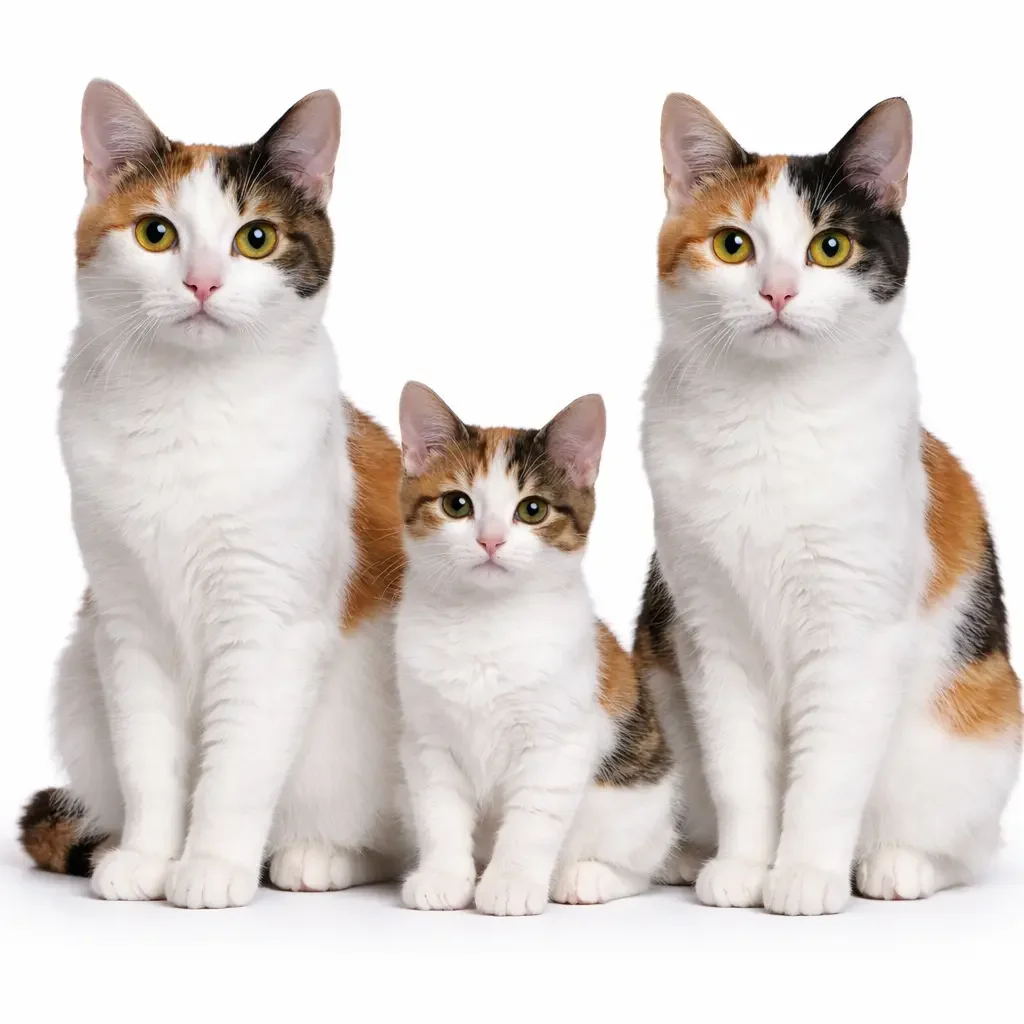
Coat Colors: All colors and patterns accepted; mi-ke (tricolor white with black and red patches) is the most traditional and culturally prized
Tail: Unique to each individual; the tail is short, typically 3 to 5 inches, with the hair fanning out to create a pom-pom or bunny tail appearance; no two tails are exactly alike
Tail Genetics: The bobtail gene in the Japanese Bobtail is recessive and distinct from the dominant gene in the Manx; two copies are required to produce a bobtail; homozygous bobtail cats do not suffer the health complications seen in the Manx
Eye Color: Large, oval, and slightly slanted; all colors accepted; odd-eyed individuals (one blue, one gold) are highly prized
Head: Equilateral triangle with gentle curves; high cheekbones and a long, parallel nose
Ears: Large, upright, and set wide apart; slightly forward-tilting; give an alert and engaged expression
Legs: Long and slender; rear legs noticeably longer than front legs
Paws: Oval and neat
Overall Appearance: Elegant, athletic, and expressive; the pom-pom tail and striking face are immediately distinctive
Reproduction and Breeding
Sexual Maturity: Females 7 to 10 months; Males 8 to 12 months
Breeding Age: Best to wait until 12 to 18 months
Heat Cycle: Every 2 to 3 weeks during breeding season
Gestation Period: 63 to 65 days (approximately 9 weeks)
Litter Size: Average 3 to 4 kittens (range 2 to 6)
Birthing: Generally straightforward; attentive and capable mothers
Kitten Development: Active and alert from an early age; bobtail visible at birth
Tail Genetics: Bobtail gene is recessive; both parents must carry the gene to produce bobtail offspring; Japanese Bobtail to Japanese Bobtail breeding reliably produces bobtail kittens
Tail Variation: Each kitten's tail is unique in shape, length, and curl; no two Japanese Bobtail tails are identical
No Health Risk: Unlike the dominant Manx gene, the recessive Japanese Bobtail gene does not cause spinal or neurological complications when homozygous
Coat Development: Full adult coat develops by 12 to 18 months
Weaning: 8 to 10 weeks
Breeding Frequency: Limit to 1 to 2 litters per year for health of queen
Fertility Period: Productive breeding years 2 to 7 years old
Maturation: Reaches full size by 2 years
Lifespan and Health
Average Lifespan: 15 to 18 years; a notably long-lived breed
Health Status: Exceptionally healthy natural breed with no known breed-specific hereditary conditions
Tail Health: The Japanese Bobtail bobtail gene does not cause spinal abnormalities, nerve damage, or mobility problems; the tail is structurally sound and pain-free
Heart Health: Hypertrophic cardiomyopathy (HCM) possible as in any breed; cardiac screening recommended in breeding animals
No Genetic Disease: Unlike several other popular breeds, the Japanese Bobtail has no confirmed breed-specific genetic disease; this is a significant health advantage
Dental Health: Regular dental care recommended
Vaccinations: Standard feline vaccines (FVRCP, rabies)
Parasite Control: Regular flea and tick prevention for outdoor cats
Hardy Constitution: Over a thousand years of natural development in Japan contributes to a robust and resilient constitution
Low Veterinary Cost: Absence of breed-specific conditions means lower expected lifetime veterinary expenses than many other popular breeds
Temperament and Personality
The Japanese Bobtail is one of the most lively, communicative, and people-oriented cat breeds in existence. They are vocal in a distinctive and musical way, producing a wide range of chirps, trills, and soft melodic sounds rather than the loud persistent meowing of more vocal breeds. Japanese Bobtails hold what many owners describe as conversations, responding to speech with their own varied vocalizations in a way that feels genuinely communicative.
Energy level is high. Japanese Bobtails are active, playful, and enthusiastic throughout their lives, retaining a kitten-like curiosity and drive well into adulthood. They are not destructive or reckless, but they are genuinely athletic and need outlets for their energy. They play fetch with enthusiasm, enjoy puzzle feeders and interactive toys, and will involve themselves in whatever is happening in the household with cheerful, unsolicited participation.
Their social nature is exceptional. Japanese Bobtails greet visitors warmly, adapt to new people and environments with confidence, and generally treat the world as an interesting and welcoming place. They get along well with children, dogs, and other cats, and they thrive in active, social households where there is always something happening. They do not do well with extended solitude and are best suited to homes where they have consistent company.
For farm and homestead life, the Japanese Bobtail's combination of historical working heritage, genuine hunting instinct, confident outdoor nature, and warm social personality makes it an outstanding all-round working companion. They bring energy, alertness, and affection to the farm environment in equal measure, and their legendary association with good fortune is, for many homesteaders, an appealing bonus.
Hunting and Working Ability
Prey Drive: High; over a thousand years of working in Japanese silk factories, temples, and farms has produced a refined and reliable hunting instinct
Hunting Skills: Fast, agile, and focused; excellent at pursuing and catching small, fast-moving prey
Target Prey: Mice, rats, insects, small birds, lizards, voles
Hunting Style: Active and energetic pursuit hunter; uses speed, agility, and jumping ability effectively
Working Ability: Historically outstanding; the Japanese government released cats specifically to protect the silk industry from rodents in 1602; the Japanese Bobtail was central to that effort
Size Consideration: Medium build suited to standard household and barn pest control
Jumping Ability: Excellent; long rear legs provide powerful launches for catching airborne prey
Territory: Will actively patrol a defined area with consistent enthusiasm
Stamina: High; built for sustained active hunting and does not tire easily
Alertness: Highly alert and reactive; responds immediately to movement, sound, and environmental change
Confined Space Performance: Effective in tight spaces such as storage buildings, barns, and granaries
Care and Maintenance
Grooming (Shorthair): Minimal; weekly brushing sufficient to manage light shedding
Grooming (Longhair): Low to moderate; the longhair coat has minimal undercoat and resists matting unusually well; brush 1 to 2 times weekly
Coat Care: Both coat lengths are surprisingly easy to maintain; a soft bristle brush or rubber mitt works well
Shedding: Light to moderate; minimal undercoat means less shedding than most longhaired or double-coated breeds
Bathing: Rarely needed; both coat lengths stay clean with regular grooming
Tail Care: The pom-pom tail requires no special grooming; brush gently to keep the fan of hair clean and untangled
Nail Trimming: Every 2 to 3 weeks
Dental Care: Weekly tooth brushing recommended
Feeding: High-quality, high-protein diet; 1/3 to 1/2 cup daily split into 2 meals
Caloric Needs: Moderate to high due to active lifestyle; monitor weight in less active individuals
Water: Fresh water always available
Litter Box: Standard size; kept very clean as Japanese Bobtails are fastidious
Exercise: High; needs daily vigorous interactive play and ideally outdoor or farm access
Enrichment: Fetch games, puzzle toys, climbing structures, outdoor access, and consistent human interaction all essential
Companionship: Benefits greatly from another cat or frequent human presence; does not thrive in extended solitude
Climate Adaptability
Climate Tolerance: Good; Japan's varied climate has produced a breed adaptable to a wide range of conditions
Cold Tolerance: Moderate to good; minimal undercoat provides less insulation than double-coated breeds; indoor shelter important in cold climates
Heat Tolerance: Very good; lean build and minimal coat manage warm conditions well
Temperature Range: Adaptable to most temperate climates
Best Climate: Comfortable in temperate to warm environments
Indoor/Outdoor: Benefits significantly from outdoor access; thrives on farms and rural properties with space to patrol
Shelter Needs: Appreciates warm, dry indoor shelter in cold or wet conditions
Adaptability: Highly adaptable; confident and capable in varied living and working environments
Advantages for Farmhouse Living
Over a thousand years of documented working history in Japanese farms, silk factories, and temples
High prey drive and active hunting style effective in barn and outdoor environments
Excellent jumping ability from long rear legs; effective at catching airborne and climbing prey
Deeply social and affectionate; outstanding family companion alongside working duties
Musical, communicative voice that alerts owners to activity without being persistently loud
Low grooming requirement in both shorthair and longhair varieties
Exceptionally long lifespan (15 to 18 years) for extended farm service
No known breed-specific hereditary health conditions; lower expected veterinary costs
Adapts confidently to new environments and people
Gets along well with children, dogs, and other cats
Culturally associated with good fortune and prosperity; the Maneki-neko connection
Highly active and playful throughout life; engaged and entertaining farm companion
Disadvantages for Farmhouse Living
High energy demands consistent daily interaction and stimulation
Does not tolerate extended solitude; needs regular company or a feline companion
Moderate cold tolerance; minimal undercoat less suited to cold climate outdoor work
Medium size limits effectiveness against larger pests compared to heavier working breeds
Vocal nature, while musical, means they will express dissatisfaction audibly
Can become anxious or destructive if under-stimulated or isolated for long periods
Moderately rare outside Japan and dedicated Western breeding programs
Longhair variety may be less suited to very wet outdoor environments due to coat length
Best Suited For
Active farms and homesteads with frequent human presence
Properties requiring reliable indoor, barn, and outdoor rodent and pest control
Warm to temperate climate farms and rural properties
Families with children, dogs, and other pets
Homesteaders seeking a historically proven working cat with deep cultural significance
Multi-pet households where the Japanese Bobtail will always have company
Owners who appreciate a vocal, communicative, and highly engaged companion
Operations seeking a distinctive, auspicious, and capable farm cat with outstanding longevity
Economic Considerations
Initial Cost: $600 to $1,200 from reputable breeders; show quality mi-ke individuals $1,200 to $2,000+
Availability: Moderately available; specialist breeders in Japan, North America, and Europe
Annual Vet Care: $200 to $400 (vaccines, checkups, preventatives)
Food Costs: $250 to $400 annually (medium-sized cat with moderate to high appetite)
Grooming Supplies: $20 to $40 annually (shorthair); $30 to $60 (longhair); both very low maintenance
Spay/Neuter: $75 to $200
Pest Control Value: Very good; high prey drive and active hunting style effective across farm and barn environments
Long-term Value: 15 to 18 year lifespan; outstanding working ability and companionship value for the right property
Fun Facts
The Japanese Bobtail is the direct inspiration for the Maneki-neko, the beckoning cat figurine found in homes and businesses throughout Asia and increasingly worldwide
In 1602 the Japanese government issued a decree ordering all cats to be released from their leashes to combat a plague of rodents threatening the silk industry; the Japanese Bobtail played a central role in that national pest control effort
Each Japanese Bobtail has a completely unique tail; no two individuals have the same tail shape, length, or curl pattern
The bobtail gene in the Japanese Bobtail is recessive and does not cause any of the spinal or neurological complications associated with the dominant Manx tailless gene
Mi-ke, the tricolor white with black and red patches, is the most traditional and culturally auspicious Japanese Bobtail color pattern; mi-ke cats are believed to bring the greatest fortune
Odd-eyed Japanese Bobtails, with one blue and one gold eye, are considered especially lucky in Japanese tradition
The Japanese Bobtail has been depicted in Japanese paintings, woodblock prints, and temple art for over a thousand years
Unlike most cat breeds that meow in a single tone, Japanese Bobtails produce a range of chirps, trills, and melodic sounds that owners describe as singing
Japanese Bobtails are one of the few cat breeds specifically mentioned by name in historical government documents, reflecting their central role in Japanese agricultural and economic history
The first Japanese Bobtails imported to the United States in 1968 by breeder Elizabeth Freret established the foundation of the entire Western breeding population
Japanese Bobtails are known to carry toys in their mouths and bring them to their owners, a retrieving behavior more commonly associated with dogs
The CFA accepted the Japanese Bobtail shorthair for championship competition in 1976, making it one of the earlier Asian breeds to receive full Western recognition
In Japan, white Japanese Bobtails with a single colored patch are called mi-ke only when the patch includes both red and black; the color combination is associated with the three fortunes of health, happiness, and prosperity
Japanese Bobtails have been recorded living past 20 years in several documented cases, reflecting their exceptional natural constitution
The beckoning paw of the Maneki-neko traditionally represents different things depending on which paw is raised; the left paw beckons customers while the right paw invites good fortune and money