
Norwegian Forest Cat
Overview
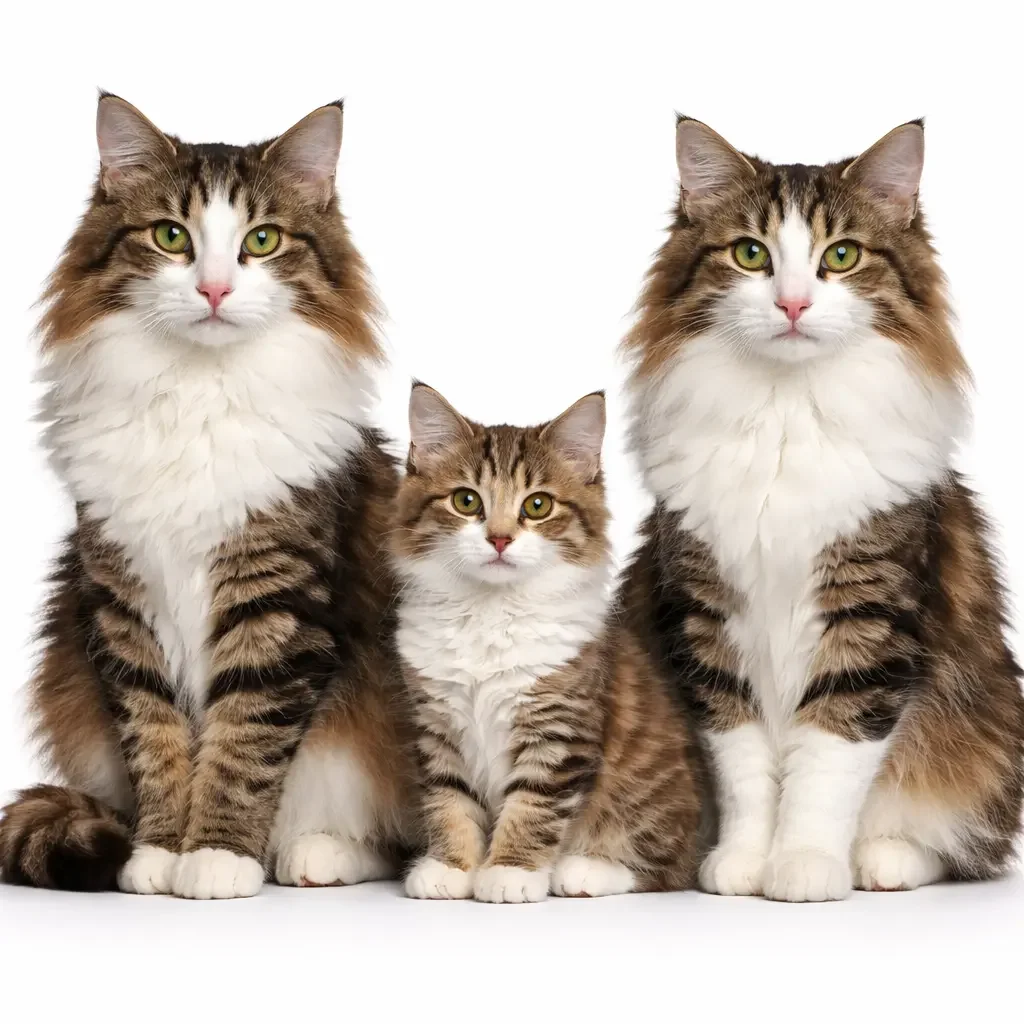
The Norwegian Forest Cat is a large, ancient, and naturally occurring breed from the forests and farms of Norway, where it has lived and worked for thousands of years. Known in Norway as the Norsk Skogkatt, this powerful, heavily coated cat evolved through centuries of natural selection in one of the harshest climates in Europe, developing a waterproof double coat, exceptional climbing ability, and a robust constitution that make it one of the most capable and weather-hardy working cats in existence.
Norwegian Forest Cats are calm, confident, and independently affectionate. They bond deeply with their families but retain a strong self-sufficient streak that reflects their forest and farm origins. They are not demanding or clingy, but they are consistently present, warm, and engaged on their own terms. Their large size, powerful build, high prey drive, and extraordinary cold-weather performance make them one of the finest working companion cats available for homesteads, farms, and rural properties in cool and cold climates.
In Norway, the Norwegian Forest Cat holds the status of national cat and occupies a central place in Norse mythology, where large forest cats were said to pull the chariot of the goddess Freya. This cultural significance reflects the breed's deep and ancient roots in Scandinavian farm and forest life.
Origin and History
Origin: Norway
Geographic Area: Scandinavian forests and farms; throughout Norway
Development: Ancient natural breed; believed to have existed in Norway for at least 1,000 years and possibly much longer
Mythological Significance: Large cats described in Norse mythology as pulling the chariot of Freya are widely believed to be ancestors of the Norwegian Forest Cat
Farm Role: Historically kept on Norwegian farms as working mousers and ratters; valued for cold-weather hardiness and hunting ability
Near Extinction: Population severely reduced during World War II; breed almost lost entirely
Revival: Norwegian Forest Cat Club founded in 1938; serious revival effort began in the 1970s
Royal Recognition: King Olav V of Norway officially designated the Norwegian Forest Cat as the national cat of Norway
Recognition: FIFe recognized the breed in 1977; TICA and CFA followed in subsequent years
Current Status: Extremely popular in Scandinavia and growing in popularity worldwide; consistently among the top ten most popular breeds in several European countries
Physical Characteristics
Size: Large
Weight: Males 12 to 18 lbs; Females 8 to 12 lbs
Body Type: Long, substantial, and heavily muscled; strong bone structure throughout
Build: Powerful and athletic; built for climbing, jumping, and sustained outdoor activity
Coat Length: Longhair; semi-long with a distinctive layered structure
Coat Texture: Waterproof outer coat of long, coarse, glossy guard hairs over a dense, woolly undercoat; one of the most weather-resistant coats of any domestic breed
Coat Seasonal: Full, heavy winter coat with mane, bib, and britches; shorter and less dense in summer
Coat Colors: All colors and patterns accepted except colorpoint; tabby, solid, tortoiseshell, bicolor all common
Eye Color: All colors accepted; large, almond-shaped, slightly oblique; expressive and alert
Head: Equilateral triangle shape from all angles; flat forehead, straight nose, strong chin; distinctly different from the rounded head of the Maine Coon
Ears: Medium to large, wide at base, heavily tufted inside and with prominent lynx tips; set in line with the head triangle
Legs: Medium length, substantial, and heavily muscled; rear legs slightly longer than front
Paws: Large, round, heavily tufted between toes; act as natural snowshoes
Tail: Long, full, and bushy; carried high; ideally as long as the body
Overall Appearance: Majestic and wild; the full winter coat gives an impression of great size and power
Reproduction and Breeding
Sexual Maturity: Females 8 to 12 months; Males 9 to 12 months
Breeding Age: Best to wait until 18 to 24 months given the larger, slower-maturing build
Heat Cycle: Every 2 to 3 weeks during breeding season
Gestation Period: 63 to 65 days (approximately 9 weeks)
Litter Size: Average 3 to 5 kittens (range 2 to 6)
Birthing: Generally uncomplicated; attentive and protective mothers
Kitten Development: Active and bold from an early age; full coat begins developing in first weeks
Coat Development: Full adult winter coat with mane and britches develops by 2 to 3 years
Weaning: 8 to 10 weeks
Breeding Frequency: Limit to 1 to 2 litters per year for health of queen
Fertility Period: Productive breeding years 2 to 8 years old
Maturation: Slow-maturing; full size and coat reached at 3 to 5 years
Lifespan and Health
Average Lifespan: 12 to 16 years
Health Status: Generally robust but carries two significant breed-specific hereditary concerns
Primary Health Concern: Hypertrophic cardiomyopathy (HCM); relatively common in the breed; cardiac screening strongly recommended in all breeding animals
Secondary Health Concern: Glycogen storage disease type IV (GSD IV); a fatal metabolic disease; DNA testing available and should be performed on all breeding cats
GSD IV Status: Responsible breeders test all breeding animals; disease has been significantly reduced through testing programs
Other Concerns: Hip dysplasia possible in large individuals; retinal dysplasia reported in some lines
Dental Health: Regular dental care recommended
Vaccinations: Standard feline vaccines (FVRCP, rabies)
Parasite Control: Regular flea and tick prevention for outdoor cats
Hardy Constitution: Centuries of natural selection in harsh Scandinavian climate contribute to overall robustness
Temperament and Personality
The Norwegian Forest Cat is calm, confident, and quietly affectionate in the manner of a cat that has worked alongside humans for centuries without ever becoming fully dependent on them. They are deeply bonded to their families but retain a strong independence that means they do not demand constant attention or become anxious when left to their own devices. They are present without being needy, affectionate without being overwhelming.
With strangers, the Norwegian Forest Cat is typically reserved at first but rarely fearful or aggressive. They will observe new people carefully before deciding whether to approach, reflecting their self-possessed and deliberate character. In households with regular visitors, they often warm up quickly once they have made their own assessment.
Norwegian Forest Cats are patient and gentle with children and generally tolerant of dogs and other cats, particularly when introduced gradually. Their large size and calm confidence mean they rarely feel threatened and therefore rarely react with aggression. They navigate multi-pet environments with a quiet authority that tends to set the tone for the household.
Activity level is moderate to high. Norwegian Forest Cats are not hyperactive but they are genuinely athletic and need space to express their natural climbing and hunting abilities. They are exceptional climbers, preferring high vantage points and will scale the tallest available surface with ease and confidence. On a farm or rural property with outdoor access, they are in their element, patrolling, hunting, and exploring with a purposeful independence that reflects their ancient working heritage.
Hunting and Working Ability
Prey Drive: Very high; centuries of working as a farm and forest hunter have produced a refined and powerful hunting instinct
Hunting Skills: Exceptional stalker; patient, silent, and precise; outstanding at ambush in varied terrain
Target Prey: Mice, rats, moles, voles, rabbits, squirrels, birds, fish, insects
Hunting Style: Patient, methodical ambush hunter; uses terrain, cover, and elevated positions effectively
Working Ability: Outstanding; one of the most historically proven working cats in the world; farm and granary mousing is deeply embedded in the breed's heritage
Size Advantage: Large, powerful build allows tackling prey significantly larger than most domestic cats can manage
Climbing Advantage: Exceptional climbing ability allows access to elevated hunting positions unavailable to other breeds; can descend trees headfirst unlike most cats
All-Weather Performance: Waterproof double coat allows hunting in rain, snow, sleet, and cold with no performance reduction
Territory: Will confidently patrol extensive property areas; bold and self-sufficient outdoors
Stamina: Very high; built for sustained outdoor activity across long distances and varied terrain
Water Affinity: Known to fish in streams and ponds; one of the few domestic breeds comfortable hunting in or near water
Care and Maintenance
Grooming: Moderate; brush 2 to 3 times weekly; daily during heavy seasonal sheds
Coat Care: Waterproof outer coat resists matting better than most longhaired breeds; the undercoat requires consistent attention during seasonal blows
Seasonal Shedding: Very heavy spring shed when the full winter coat is lost; moderate year-round shedding outside of the seasonal blow
Bathing: Rarely needed; waterproof coat repels dirt and debris naturally; can be difficult to wet thoroughly due to water resistance
Nail Trimming: Every 2 to 3 weeks
Dental Care: Weekly tooth brushing recommended
Feeding: High-quality, high-protein diet; 1/2 to 3/4 cup daily split into 2 to 3 meals
Caloric Needs: Higher due to large size and active outdoor lifestyle
Water: Fresh water always available; many Norwegian Forest Cats enjoy playing in and drinking from running water
Litter Box: XL boxes required; one per cat plus one extra recommended
Exercise: High; needs outdoor access, climbing opportunities, and space to patrol and hunt
Enrichment: Very tall cat trees, outdoor enclosures, puzzle toys, and open farm access all ideal
Climbing: Must have access to significant vertical space; a Norwegian Forest Cat without climbing opportunities will find its own solutions
Climate Adaptability
Climate Tolerance: Exceptional; purpose-built for one of the coldest and wettest climates in Europe
Cold Tolerance: Outstanding; waterproof double coat and heavily tufted paws provide exceptional insulation and traction in snow and ice
Heat Tolerance: Moderate; sheds heavily to a much lighter summer coat; needs shade and water in hot conditions
Temperature Range: Best suited to cool to cold climates; can adapt to temperate conditions
Best Climate: Thrives in northern latitudes, mountainous regions, and anywhere with cold winters and variable weather
Water Resistance: Among the most waterproof coats of any domestic cat; the outer guard hairs shed water effectively
Indoor/Outdoor: Strongly benefits from outdoor access; thrives on a working farm with space to roam
Shelter Needs: Appreciates warm, dry indoor shelter but is significantly more cold-hardy than virtually any other domestic breed
Advantages for Farmhouse Living
One of the historically proven farm and working cats in the world; mousing heritage spans at least a thousand years
Outstanding cold and wet weather performance; among the most weather-hardy of all domestic breeds
Very high prey drive and exceptional hunting skill across varied terrain
Large, powerful build for tackling significant prey
Exceptional climbing ability; can access and hunt in spaces unavailable to other breeds
Known to fish in streams and ponds; effective in water-adjacent environments
Calm, self-sufficient temperament ideally suited to farm life and independent outdoor work
Patient and gentle with children, dogs, and other farm animals
Waterproof coat requires less grooming than most longhaired breeds despite its impressive length
Long lifespan (12 to 16 years) for extended farm service
Adapts naturally and confidently to outdoor and rural environments
Deep historical and cultural connection to farm and forest working life
Disadvantages for Farmhouse Living
Heavy seasonal shedding requires significant grooming effort twice per year
HCM and GSD IV are serious breed concerns; responsible sourcing and health testing essential
Large size means higher food costs
Slow to mature; full working capability not reached until 3 to 5 years of age
Moderate heat tolerance; not ideally suited to hot climate farms without cool shelter
Strong prey drive is a risk to poultry and small farm animals if not managed
Requires significant outdoor space and climbing opportunities to remain mentally healthy
Dense undercoat can mat if grooming is neglected during seasonal shed
Niche breed in some regions; may require sourcing from specialist breeders with waitlists
Best Suited For
Cold to temperate climate farms, ranches, and rural homesteads
Properties with significant rodent and pest pressure
Farms with varied terrain including woodland, rocky ground, and water features
Families with children, dogs, and other farm animals
Homesteaders seeking one of the most historically proven and capable working cats available
Properties in northern latitudes or mountainous regions where cold-weather performance is essential
Owners who appreciate a calm, self-sufficient, and deeply capable working companion
Multi-pet households where the Norwegian Forest Cat's calm authority can set a stable tone
Operations seeking a majestic and striking working cat with deep historical roots
Economic Considerations
Initial Cost: $800 to $1,500 from reputable breeders; show quality $1,500 to $2,500+
Availability: Widely available in Scandinavia; moderately available in North America and Europe
Annual Vet Care: $300 to $550 (vaccines, checkups, cardiac screening, GSD IV monitoring)
Food Costs: $400 to $600 annually (large, active cat requiring high-protein diet)
Grooming Supplies: $60 to $120 annually (quality brushes and combs for double coat)
Spay/Neuter: $80 to $250
Pest Control Value: Outstanding; one of the most effective and historically proven farm working cats available
Long-term Value: 12 to 16 year lifespan; exceptional working and companionship value for cold-climate properties
Fun Facts
The Norwegian Forest Cat is believed to be the large forest cat described in Norse mythology as pulling the chariot of Freya, the goddess of love and fertility
King Olav V of Norway officially designated the Norwegian Forest Cat as the national cat of Norway
The breed is known in Norway as the Norsk Skogkatt, which translates directly to Norwegian Forest Cat
Norwegian Forest Cats are one of the very few domestic cat breeds capable of descending trees headfirst, a skill that reflects their forest hunting heritage
Their waterproof coat is so effective that bathing a Norwegian Forest Cat is genuinely difficult; the water beads and runs off the outer guard hairs
The breed nearly went extinct during World War II when food scarcity and disrupted breeding programs drastically reduced the population
Norwegian Forest Cats are known to fish actively in streams and shallow water, a behavior rarely seen in other domestic breeds
The heavily tufted paws of the Norwegian Forest Cat function as natural snowshoes, providing traction and insulation on snow and ice
Viking ships are believed to have carried Norwegian Forest Cats as working mousers on long voyages, spreading the breed's ancestors throughout Europe and possibly beyond
Norwegian Forest Cats take 3 to 5 years to reach full maturity, one of the longer development periods of any domestic breed
The breed's triangular head shape distinguishes it clearly from the Maine Coon, which it superficially resembles; the Norwegian has a flat forehead and straight nose where the Maine Coon has a more curved profile
Norwegian Forest Cats are known to cache food and prey, a wild hunting behavior retained from their forest ancestors
The summer coat of the Norwegian Forest Cat is dramatically lighter and shorter than the full winter coat, often surprising owners who acquire a kitten in the warm months
In Norse mythology, the goddess Freya's cats were so large and powerful that even the god Thor could not lift them from the ground
The Norwegian Forest Cat Club was founded in Norway in 1938, making it one of the earliest organized efforts to preserve and promote a naturally occurring working cat breed