
Ocicat
Overview
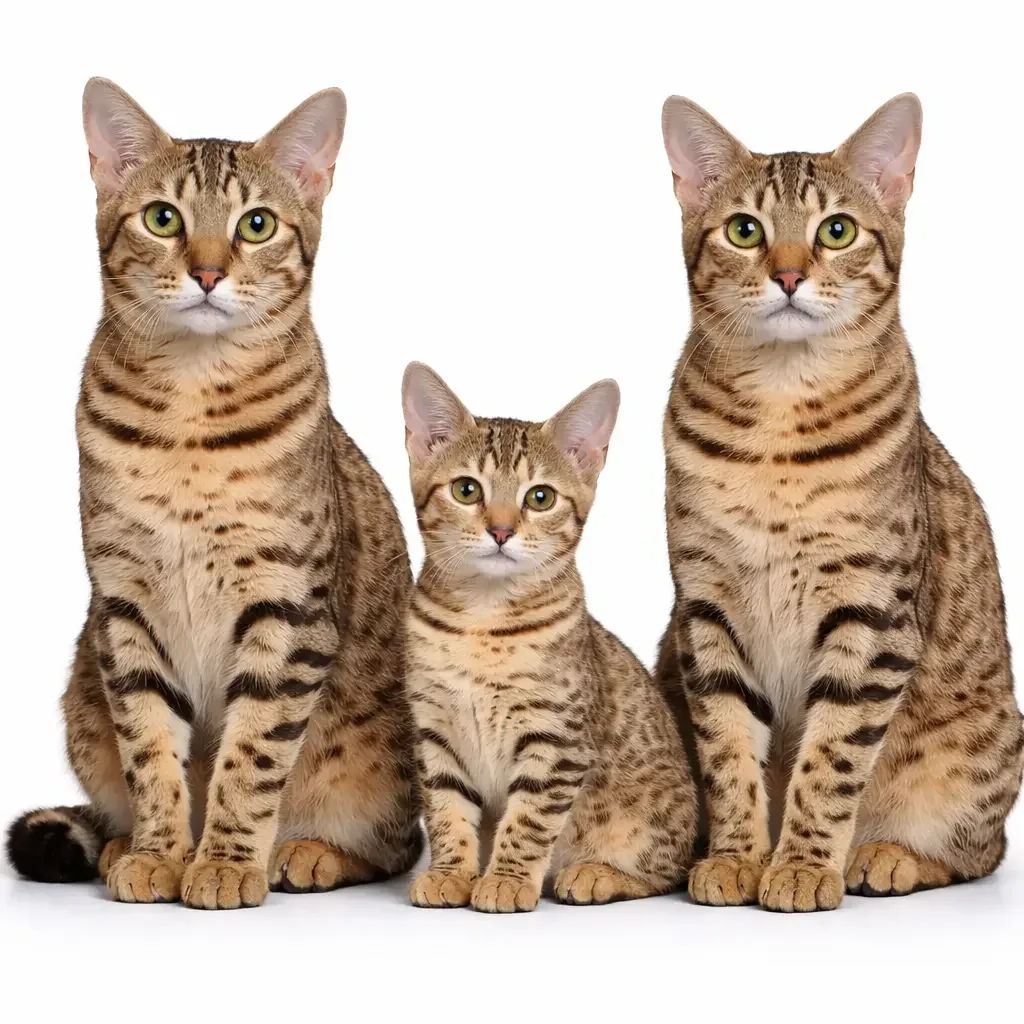
The Ocicat is a medium to large, fully domestic cat breed developed in the United States in the 1960s, bred to resemble the wild Ocelot in appearance while carrying no wild cat genetics whatsoever. Athletic, spotted, and strikingly exotic in appearance, the Ocicat is the result of an accidental cross between an Abyssinian-pointed Siamese and an American Shorthair, producing a cat with the bold spotted coat of a wild cat and the social, outgoing personality of a deeply domestic breed.
Ocicats are confident, highly social, and energetic cats that thrive on human interaction and activity. They are among the most dog-like of purely domestic breeds, known for greeting visitors at the door, learning their name, walking on a leash, and playing fetch with enthusiasm. Unlike many exotic-looking breeds, the Ocicat has no special legal restrictions, no hybrid health complications, and no unusual care requirements, making it an accessible and practical choice for active households and farm families.
Origin and History
Origin: United States
Geographic Area: Michigan; developed by breeder Virginia Daly
Development: Accidental discovery in 1964 when Virginia Daly crossed a chocolate point Siamese with an Abyssinian-pointed Siamese; an unexpected spotted kitten appeared in the litter
Founding Cat: Tonga, a spotted male kitten born in 1964, was the first Ocicat; the name was coined by Daly's daughter who thought the kitten resembled an Ocelot
Breed Development: Daly recreated the cross deliberately; American Shorthairs were later introduced to add size and the silver gene
Wild Cat Genetics: None; the Ocicat is entirely domestic despite its wild appearance
Recognition: TICA and CFA both recognize the breed; CFA granted full championship status in 1987
Genetic Makeup: Carries Siamese, Abyssinian, and American Shorthair ancestry; the combination produces the distinctive spotted pattern
Current Status: Moderately popular worldwide; particularly appreciated by owners who want an exotic appearance without exotic breed complications
Physical Characteristics
Size: Medium to large
Weight: Males 9 to 15 lbs; Females 6 to 9 lbs
Body Type: Long, substantial, and well-muscled; powerful without being bulky
Build: Athletic and agile; built for speed and endurance
Coat Length: Short
Coat Texture: Fine, tight, and satiny; close-lying with a distinctive sheen
Coat Pattern: Spotted tabby only; large, well-defined thumbprint-shaped spots arranged in a bulls-eye pattern across the sides and back
Coat Colors: Tawny, chocolate, cinnamon, blue, lavender, fawn, and all four colors in silver; 12 colors total accepted by CFA
Eye Color: All colors except blue accepted; large, almond-shaped, and expressive
Head: Modified wedge with a broad muzzle; strong chin; slight curve from muzzle to cheek
Ears: Medium to large, wide-set, angled slightly outward; may have light tufting at the tips
Legs: Medium length, well-muscled, and proportional to the body
Paws: Oval and compact; firm
Tail: Medium to long, slim, slightly tapered with a dark tip
Overall Appearance: Wild and athletic; the spotted coat and muscular build give a convincing big-cat impression in a fully domestic package
Reproduction and Breeding
Sexual Maturity: Females 7 to 10 months; Males 8 to 12 months
Breeding Age: Best to wait until 12 to 18 months
Heat Cycle: Every 2 to 3 weeks during breeding season
Gestation Period: 63 to 65 days (approximately 9 weeks)
Litter Size: Average 4 to 5 kittens (range 3 to 6)
Birthing: Generally straightforward; attentive mothers
Kitten Development: Active and curious from a very early age; spot pattern visible at birth
Coat Development: Full adult coat and spot clarity develop by 12 to 18 months
Weaning: 8 to 10 weeks
Breeding Frequency: Limit to 1 to 2 litters per year for health of queen
Fertility Period: Productive breeding years 2 to 7 years old
Maturation: Reaches full size by 2 years
Lifespan and Health
Average Lifespan: 12 to 18 years
Health Status: Generally healthy with no breed-specific conditions unique to the Ocicat
Primary Health Concern: Hypertrophic cardiomyopathy (HCM); inherited from Siamese and Abyssinian ancestry; cardiac screening recommended in breeding animals
Other Concerns: Renal amyloidosis possible due to Abyssinian ancestry; pyruvate kinase deficiency (PKD) possible; DNA testing recommended in breeding lines
Dental Health: Prone to periodontal disease inherited from Siamese ancestry; regular dental care essential
Weight Management: High energy means weight is rarely an issue in active cats; monitor in less active individuals
Vaccinations: Standard feline vaccines (FVRCP, rabies)
Parasite Control: Regular flea and tick prevention for outdoor cats
Hardy Constitution: Hybrid vigor from three distinct breed lines contributes to generally robust health
Temperament and Personality
The Ocicat combines the outgoing, social nature of the Siamese with the athletic confidence of the Abyssinian and the even-tempered adaptability of the American Shorthair. The result is a cat that is bold without being aggressive, affectionate without being clingy, and energetic without being destructive. They are widely regarded as one of the most sociable and trainable of all domestic cat breeds.
Ocicats are intensely people-oriented. They greet visitors without hesitation, adapt to new people and environments with confidence, and actively seek out human interaction throughout the day. Unlike many breeds that bond closely with one person, Ocicats tend to be equally social with all members of a household, making them well suited to busy family environments.
Their intelligence is high and their trainability is exceptional. Ocicats learn their name, come when called, walk on a leash, and play fetch reliably. They respond well to clicker training and can learn a range of commands and tricks with consistent positive reinforcement. This trainability, combined with their confident and curious nature, makes them outstanding working companions in environments where adaptability and engagement are valued.
One important consideration is that Ocicats do not do well when left alone for extended periods. They are social animals that need interaction and stimulation, and a bored, isolated Ocicat will become vocal, destructive, and anxious. They are best suited to households with other pets or frequent human presence, and ideally benefit from having a feline companion.
Hunting and Working Ability
Prey Drive: High; Abyssinian ancestry contributes strong natural hunting instinct
Hunting Skills: Fast, agile, and focused; excellent at tracking and pursuing moving prey
Target Prey: Mice, rats, moles, voles, insects, small birds, lizards
Hunting Style: Active and energetic pursuit hunter; uses speed and agility over patient ambush
Working Ability: Effective mouser and ratter in barn and outdoor environments; high energy sustains extended patrol
Size Advantage: Medium to large build handles standard farm pest control effectively
Territory: Will actively patrol a defined area with enthusiasm and consistency
Stamina: High; built for sustained activity and does not tire quickly
Alertness: Highly alert and reactive; will investigate any movement or sound with immediate interest
Leash Work: Leash-trainable for supervised outdoor patrol in areas requiring controlled access
Care and Maintenance
Grooming: Minimal; short, satiny coat requires only weekly brushing
Coat Care: Fine coat stays clean and close-lying with little intervention; a rubber grooming mitt works well
Shedding: Light to moderate year-round; no dramatic seasonal coat blow
Bathing: Rarely needed
Nail Trimming: Every 2 to 3 weeks
Dental Care: Weekly tooth brushing strongly recommended; prone to periodontal disease
Feeding: High-quality, high-protein diet; 1/3 to 1/2 cup daily split into 2 meals
Caloric Needs: Moderate to high due to active lifestyle; free feeding not recommended
Water: Fresh water always available; many Ocicats enjoy water fountains
Litter Box: Standard size; kept clean as Ocicats are fastidious
Exercise: High; needs daily vigorous interactive play and ideally outdoor access
Enrichment: Puzzle toys, leash walks, fetch games, climbing structures, and feline companionship all important
Companionship: Does best with another cat or frequent human presence; not suited to long periods of solitude
Climate Adaptability
Climate Tolerance: Good; short coat and active metabolism handle a wide range of conditions
Cold Tolerance: Moderate; short coat provides limited insulation; indoor shelter essential in cold climates
Heat Tolerance: Very good; lean build and short coat manage warm conditions well
Temperature Range: Best suited to temperate to warm climates
Best Climate: Adaptable to most climates with appropriate indoor shelter
Indoor/Outdoor: Benefits greatly from outdoor access; well suited to enclosed farm environments
Shelter Needs: Must have warm, dry indoor shelter in cold or wet conditions
Adaptability: Highly adaptable to varied living and working environments
Advantages for Farmhouse Living
Striking wild appearance with no exotic breed complications or legal restrictions
High prey drive and strong hunting ability for effective pest control
Exceptional trainability; leash-walks, fetches, and responds to commands reliably
Highly social and adaptable; settles into new farm environments with confidence
Active and energetic; well suited to the demands of outdoor farm life
Low grooming requirement; short coat needs minimal maintenance
Long lifespan (12 to 18 years) for extended farm service
Gets along well with children, dogs, and other cats
No wild cat genetics means no legal restrictions or insurance complications
Bold and fearless temperament; not easily startled by farm activity or large animals
Intelligent and curious; engages actively with the farm environment
Good with frequent visitors and new people; does not hide or withdraw
Disadvantages for Farmhouse Living
Does not tolerate extended solitude; needs consistent companionship or a feline companion
High energy demands significant daily interaction and stimulation
Moderate cold tolerance; short coat not ideal for cold climate farms without warm shelter
Can become vocal, anxious, and destructive when under-stimulated or isolated
Prone to periodontal disease; dental care is an ongoing commitment
Medium build less effective against larger prey than heavier working breeds
Niche availability in some regions; may require sourcing from a specialist breeder
Inherited health concerns from Siamese and Abyssinian lines require responsible sourcing and health testing
Best Suited For
Active farms and homesteads with frequent human presence
Properties requiring reliable indoor and outdoor rodent control
Families with children, dogs, and other cats
Warm to temperate climate homesteads with indoor shelter available
Owners who want an exotic-looking working cat without hybrid breed complications
Multi-pet households where the Ocicat will always have company
Experienced cat owners who appreciate a highly social and trainable personality
Operations seeking a leash-trainable, adaptable, and visually distinctive farm cat
Economic Considerations
Initial Cost: $800 to $1,500 from reputable breeders; show quality $1,500 to $2,500+
Availability: Moderately available; specialist breeders in North America and Europe
Annual Vet Care: $250 to $500 (vaccines, checkups, dental cleanings, cardiac monitoring)
Food Costs: $300 to $500 annually (active cat with moderate to high appetite)
Grooming Supplies: $20 to $40 annually; minimal grooming requirement
Spay/Neuter: $75 to $200
Pest Control Value: Very good; high prey drive and active hunting style effective in barn and outdoor environments
Long-term Value: 12 to 18 year lifespan; strong working and companionship value for the right household
Fun Facts
The Ocicat was created entirely by accident; breeder Virginia Daly was attempting to produce an Abyssinian-pointed Siamese when an unexpected spotted kitten appeared in the litter
The name Ocicat was coined by Daly's daughter, who thought the spotted kitten looked like a baby Ocelot
Despite the wild appearance, the Ocicat carries no wild cat DNA of any kind; it is entirely domestic
Tonga, the founding Ocicat born in 1964, was sold as a pet before anyone realized his significance; the breed had to be recreated from scratch
The American Shorthair was introduced to the breeding program specifically to add size and bring in the silver coat gene
Ocicats are one of the few spotted domestic cat breeds where the spots are true spots rather than broken mackerel tabby markings
The spots on an Ocicat are arranged in a distinctive bulls-eye pattern radiating from the spine, a pattern not found in most other spotted breeds
Ocicats have been trained to perform in cat agility competitions and consistently rank among the most trainable breeds in that sport
They are known to play fetch with the reliability and enthusiasm more commonly associated with retrieving dog breeds
The Ocicat was one of the first breeds to be developed with a deliberate goal of producing a wild appearance from entirely domestic stock
CFA granted the Ocicat full championship status in 1987, just over two decades after the founding accidental litter
Ocicats are known to mourn the loss of companion animals deeply; owners report significant behavioral changes after the death of a bonded pet
The silver varieties of the Ocicat, particularly silver tawny and silver chocolate, are among the most visually striking coat patterns in the domestic cat world
Ocicats are reported to be one of the breeds most likely to greet strangers at the door, an unusual trait in a species generally known for caution with unfamiliar people
The breed's Siamese heritage contributes to a tendency for strong, lifelong bonds with their primary human family members