
Pixie-Bob
Overview
The Pixie-Bob cat is a large, naturally occurring domestic breed from the Pacific Northwest of the United States, developed to resemble the wild North American Bobcat in appearance while maintaining a fully domestic and family-friendly temperament. First documented in the mid-1980s by breeder Carol Ann Brewer in Washington State, the Pixie-Bob is named after one of the founding cats, a short-tailed female named Pixie, and has since developed a devoted following among cat owners who want the look of a wild cat with the manageability of a domestic breed.
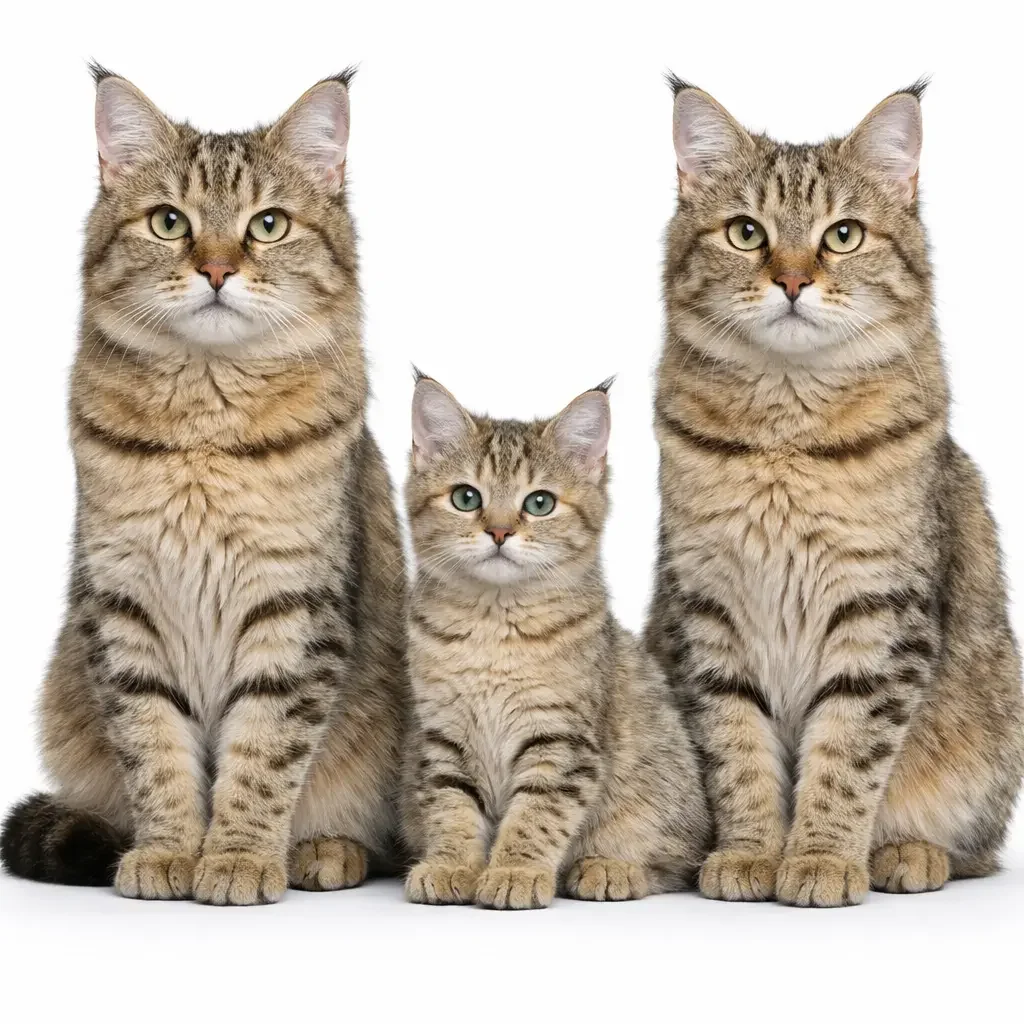
Pixie-Bobs are muscular, heavy-boned, and deeply athletic, with a distinctive spotted tabby coat, naturally bobbed or short tail, and a broad, pear-shaped head that closely echoes the Bobcat. Despite their wild appearance, they are calm, loyal, and remarkably dog-like in temperament, known for walking on a leash, playing fetch, and bonding intensely with their families.
For homesteaders and farm families, the Pixie-Bob offers an outstanding combination of size, hunting instinct, cold-weather hardiness, and stable temperament. They are among the best-suited working companion cats for rural and farm environments.
Origin and History
Origin: Pacific Northwest, United States
Geographic Area: Washington State; developed in the Cascade Range foothills
Development: Founded by Carol Ann Brewer in 1985 after acquiring a large polydactyl male with a short tail in the Cascade Mountains
Founding Cats: Pixie, a female born in 1986, became the foundation of the breed; the name Pixie-Bob derives from her
Claimed Ancestry: Brewer originally claimed the breed descended from naturally occurring Bobcat and domestic cat matings; DNA testing has not confirmed Bobcat genetics, and the breed is considered fully domestic by all major registries
Recognition: TICA accepted the Pixie-Bob for registration in 1994 and granted full championship status in 1998
Polydactyly: Pixie-Bobs are one of the few breeds where polydactyly (extra toes) is accepted as a breed standard trait; up to 7 toes per paw permitted by TICA
Natural Development: The wild Bobcat appearance is the result of selective breeding for natural domestic mutations rather than actual wild cat hybridization
Current Status: A dedicated niche breed with a loyal following; most popular in North America
Physical Characteristics
Size: Large
Weight: Males 12 to 17 lbs; Females 8 to 12 lbs; some males reach 20+ lbs
Body Type: Heavy-boned, muscular, and deep-chested; substantial and powerful
Build: Stocky and athletic; low-slung, powerful hindquarters; moves with a rolling, deliberate gait
Coat Length: Shorthair and longhair varieties; longhair is the more common of the two
Coat Texture: Shorthair is woolly and standing; longhair is soft with a slight wave; both are dense
Coat Pattern: Brown spotted tabby; heavy ticking and muted spotting gives a wild, natural appearance
Coat Colors: Tawny to reddish-brown; always brown spotted tabby within breed standard
Eye Color: Gold, brown, or gooseberry green; deep-set and hooded; gives an alert, wild expression
Head: Pear-shaped and broad; heavy brow, prominent cheekbones, wide nose, and full muzzle; strongly resembles Bobcat
Ears: Medium, wide-set, with tipping or light lynx tips; upright and alert
Legs: Long, heavy-boned, and muscular; rear legs slightly longer than front
Paws: Large, round, and often polydactyl; heavily tufted
Tail: Naturally bobbed; ranges from 2 inches to hock length; can be kinked, curved, or straight
Overall Appearance: Unmistakably wild; one of the most convincing Bobcat-resembling domestic breeds
Reproduction and Breeding
Sexual Maturity: Females 8 to 12 months; Males 9 to 14 months
Breeding Age: Best to wait until 18 to 24 months given the larger, slower-maturing build
Heat Cycle: Every 2 to 3 weeks during breeding season
Gestation Period: 63 to 65 days (approximately 9 weeks)
Litter Size: Average 3 to 4 kittens (range 2 to 6); smaller litters common in the breed
Birthing: Generally uncomplicated; attentive and protective mothers
Kitten Development: Active and bold from an early age; polydactyl kittens are common and accepted
Tail Variation: Tail length varies naturally within litters; some kittens born with longer tails than breed standard, still registered as Pixie-Bobs
Coat Development: Full adult coat and spotted pattern develop by 2 years
Weaning: 8 to 10 weeks
Breeding Frequency: Limit to 1 to 2 litters per year for health of queen
Fertility Period: Productive breeding years 2 to 8 years old
Maturation: Slow-maturing; full size and coat reached at 3 to 4 years
Lifespan and Health
Average Lifespan: 13 to 16 years
Health Status: Generally robust and healthy with few breed-specific hereditary concerns
Primary Health Concern: Hypertrophic cardiomyopathy (HCM); cardiac screening recommended in breeding animals
Other Concerns: Dystocia (difficult birth) possible due to large kitten size; cryptorchidism reported in some males
Polydactyly Health: Extra toes are generally healthy and cause no functional issues; nail care requires attention on polydactyl paws
Tail Health: Short or kinked tails are a natural breed trait and do not cause pain or mobility issues when naturally occurring
Dental Health: Regular dental care recommended
Vaccinations: Standard feline vaccines (FVRCP, rabies)
Parasite Control: Regular flea and tick prevention for outdoor cats
Hardy Constitution: Large, naturally developed build contributes to a robust and resilient constitution
Temperament and Personality
The Pixie-Bob is frequently described as the most dog-like of all domestic cat breeds. They are loyal, confident, and deeply attached to their families, bonding closely with all members of the household rather than selecting a single favorite. They greet owners at the door, follow them through the home, and participate actively in household activity with an engaged, curious presence.
Vocalization in the Pixie-Bob is unusual and distinctive. Rather than meowing, they communicate primarily through chirps, chatters, and trills, giving them a quiet but expressive voice that owners find highly endearing. They rarely yowl or meow loudly, making them one of the more pleasant breeds in terms of noise level.
Trainability is exceptional. Pixie-Bobs learn to walk on a leash, ride in vehicles, play fetch, and respond to commands with a reliability that surprises many first-time owners. They travel well, adapt to new environments with confidence, and are generally unflappable in the face of unusual situations, loud noises, or unfamiliar animals.
Their temperament with children, dogs, and other animals is reliably excellent. They are patient, tolerant, and gentle, using their size and confidence rather than aggression to navigate multi-pet environments. For farms and homesteads, this combination of boldness, intelligence, and calm makes the Pixie-Bob an outstanding working companion that is equally capable in the field and relaxed at home.
Hunting and Working Ability
Prey Drive: High; strong natural hunting instinct reflecting Pacific Northwest working cat ancestry
Hunting Skills: Powerful stalker and ambush predator; uses size and strength effectively
Target Prey: Mice, rats, moles, voles, rabbits, squirrels, birds, insects
Hunting Style: Patient and powerful; stalks slowly and strikes with decisive force; well suited to larger prey
Working Ability: Highly effective on farms and rural properties; large build and high prey drive make it one of the best working cat options available
Size Advantage: Large, heavy build allows tackling prey significantly larger than most domestic cats can manage
Territory: Will confidently patrol extensive property areas; bold and fearless outdoors
Stamina: Very good; built for sustained outdoor activity and patrol
All-Weather Performance: Dense coat provides good insulation for outdoor work in cool and cold conditions
Jumping: Strong jumper; rear legs built for powerful launches; effective at catching airborne prey
Polydactyl Advantage: Extra toes provide enhanced grip and stability on varied terrain
Care and Maintenance
Grooming (Shorthair): Minimal; weekly brushing sufficient
Grooming (Longhair): Moderate; brush 2 to 3 times weekly to prevent matting around the neck and belly
Coat Care: Dense coat benefits from a steel comb or slicker brush; resists matting better than most longhaired breeds
Shedding: Moderate year-round; heavier shed in spring
Bathing: Rarely needed; many Pixie-Bobs tolerate and enjoy bathing
Nail Trimming: Every 2 to 3 weeks; polydactyl paws require careful attention to all extra nails to prevent ingrowth
Dental Care: Weekly tooth brushing recommended
Feeding: High-quality, high-protein diet; 1/2 to 3/4 cup daily split into 2 to 3 meals; raw diet well tolerated
Caloric Needs: Higher due to large size and active lifestyle
Water: Fresh water always available
Litter Box: XL boxes required; one per cat plus one extra recommended
Exercise: High; needs outdoor access, interactive play, and space to roam and patrol
Enrichment: Leash walks, fetch games, puzzle toys, and climbing structures all well received
Leash Training: Highly recommended; Pixie-Bobs take to leash walking more readily than almost any other breed
Climate Adaptability
Climate Tolerance: Very good; developed in the Pacific Northwest where weather is cool, wet, and variable
Cold Tolerance: Very good; dense coat provides solid insulation in cool and cold conditions
Heat Tolerance: Good; manages warm climates well with access to shade and water
Temperature Range: Adaptable to a wide range of temperate climates
Best Climate: Thrives in cool to temperate environments; Pacific Northwest origin
Indoor/Outdoor: Strongly benefits from outdoor access; well suited to supervised rural and farm environments
Shelter Needs: Appreciates warm, dry indoor shelter; more cold-hardy than average domestic shorthair
Adaptability: Highly adaptable; confident and calm in varied outdoor environments
Advantages for Farmhouse Living
Large, powerful build for highly effective pest control including larger prey
Very high prey drive refined through Pacific Northwest working cat ancestry
Exceptional trainability; leash-walks, fetches, and responds to commands reliably
Dog-like loyalty and engagement; bonds deeply with the entire farm family
Dense coat provides meaningful insulation for outdoor work in cool climates
Polydactyl paws provide enhanced grip on varied terrain
Calm, unflappable temperament; not easily startled by farm activity, machinery, or large animals
Excellent with children, dogs, and other farm animals
Quiet vocalization; chirps and trills rather than loud meowing
Slow to mature but very long useful working life once fully developed
Hardy natural breed with very few hereditary health concerns
Travels well and adapts to new environments with confidence
Outstanding combination of working ability and affectionate companion temperament
Disadvantages for Farmhouse Living
Slow to mature; full working capability not reached until 3 to 4 years of age
Large size means higher food costs
Longhair variety requires regular grooming commitment
Polydactyl nails require careful and consistent trimming to prevent ingrowth
Niche breed; limited availability outside North America
Higher purchase price than more common working breeds
Strong prey drive is a risk to poultry and small farm animals if not managed
Needs significant outdoor space and activity to remain mentally healthy
HCM screening important in breeding animals; cardiac health should be verified in sourced cats
Can become bored and destructive if confined without adequate stimulation
Best Suited For
Active farms and rural properties with significant rodent and pest pressure
Cold to temperate climate homesteads and ranches
Families with children, dogs, and other larger farm animals
Owners who want a highly trainable, leash-walkable working cat
Homesteaders seeking a large, bold, and capable outdoor working companion
Properties with sufficient space for a confident, roaming cat
Experienced cat owners who appreciate an independent, dog-like personality
Farms free of vulnerable small animals such as poultry and rabbits, or with secure separation
Operations seeking a distinctive, visually striking working and companion cat
Economic Considerations
Initial Cost: $800 to $1,500 from reputable breeders; show quality $1,500 to $2,500+
Availability: Niche breed; dedicated breeders primarily in North America; waitlists common
Annual Vet Care: $250 to $450 (vaccines, checkups, preventatives, nail care for polydactyl paws)
Food Costs: $400 to $600 annually (large, active cat requiring high-protein diet)
Grooming Supplies: $30 to $60 annually (shorthair); $60 to $100 (longhair)
Spay/Neuter: $80 to $250
Pest Control Value: Excellent; large size and high prey drive make it one of the most effective working cats available
Long-term Value: 13 to 16 year lifespan; outstanding working and companionship value for the right property
Fun Facts
The Pixie-Bob is named after Pixie, a short-tailed female cat born in 1986 who became the foundation of the entire breed
Founder Carol Ann Brewer originally believed her founding cats resulted from natural Bobcat and domestic cat matings in the wild Cascade Mountains; DNA testing has since found no Bobcat markers
Pixie-Bobs are one of the only domestic cat breeds in which polydactyly is accepted and included in the official breed standard
TICA permits Pixie-Bobs to have up to 7 toes on a single paw
Despite having no confirmed wild cat genetics, the Pixie-Bob's resemblance to the North American Bobcat is strikingly convincing
They are known for communicating almost entirely through chirps, chatters, and trills rather than traditional meowing
Pixie-Bobs are among the most reliably leash-trainable cat breeds in existence
Their rolling, deliberate gait is a distinctive physical trait that gives them an unmistakably wild movement quality
Pixie-Bobs have been documented retrieving thrown objects with a consistency and enthusiasm more typical of sporting dog breeds
The breed's tail length varies naturally from almost tailless to near-full length; all lengths are accepted in the breed standard
Pixie-Bobs are known to travel in vehicles without distress, making them unusually practical for owners who move between properties
They are one of the few cat breeds that many dog owners report finding genuinely compatible with their lifestyle and expectations
The longhair variety of the Pixie-Bob was not part of the original breed but developed naturally within early breeding programs
Pixie-Bobs are known for their patience and gentleness with young children, tolerating handling that many other breeds would not accept
The breed remains most popular in the Pacific Northwest, where its origins and the terrain it was developed for are most closely matched