
Russian Blue
Overview
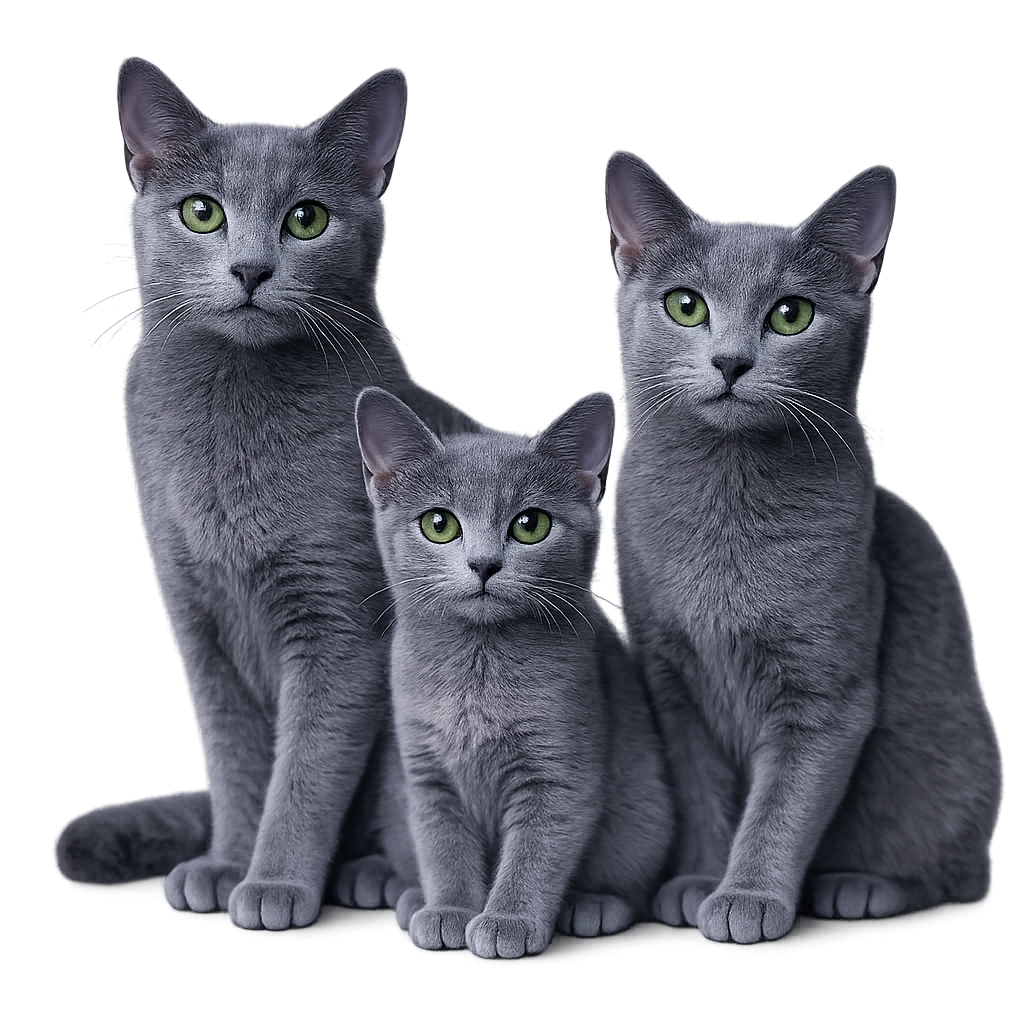
The Russian Blue cat is an elegant, naturally occurring breed originating from the port city of Arkhangelsk in northern Russia, where it developed over centuries in one of the coldest and most demanding climates in the world. Refined, reserved, and strikingly beautiful, the Russian Blue is best known for its distinctive short blue-grey coat, vivid green eyes, and quietly devoted personality.
Russian Blues are gentle, intelligent, and loyal cats that form deep bonds with their families while remaining cautious and reserved around strangers. They are not demanding or vocal, but they are consistently affectionate with people they trust, following their owners quietly through the home and seeking companionship on their own terms. Their calm, observant nature and low-maintenance coat make them one of the most practical and rewarding cat breeds for homestead and farm life.
Of additional note for allergy-sensitive households: Russian Blues produce relatively low levels of the Fel d 1 protein and are considered by many owners and breeders to be among the more tolerable breeds for people with mild cat allergies.
Origin and History
Origin: Arkhangelsk (Archangel), northern Russia
Geographic Area: Northern Russia; port city on the White Sea
Development: Ancient natural breed; believed to have developed naturally in the harsh Arctic climate of northern Russia
Cultural Heritage: Said to have been a favorite of Russian Czars; kept by Russian nobility
Early Name: Known as the Archangel Cat or Archangel Blue in early Western records
Discovery by West: Arrived in Western Europe via sailors from the port of Arkhangelsk in the late 19th century
First Show: Exhibited at the Crystal Palace cat show in London in 1875
Breed Development: Nearly extinct after World War II; rebuilt through careful breeding programs in Scandinavia and the UK
Recognition: Recognized by all major cat registries worldwide
Current Status: Consistently popular worldwide; prized for appearance, temperament, and low-allergen qualities
Physical Characteristics
Size: Medium
Weight: Males 10 to 12 lbs; Females 7 to 10 lbs
Body Type: Long, graceful, and fine-boned; elegant and lithe
Build: Athletic and slender; stronger than appearance suggests
Coat Length: Short
Coat Texture: Dense double coat; plush and fine; stands away from the body giving a distinctive soft appearance
Coat Color: Blue only; a uniform blue-grey with a silvery sheen caused by silver-tipped guard hairs
Eye Color: Vivid green; a defining breed characteristic; kittens are born with yellow eyes that transition to green by adulthood
Head: Wedge-shaped, broad at the top, with prominent whisker pads that give the appearance of a gentle smile
Ears: Large, wide-set, pointed; skin of the ears is thin with little interior furnishing
Legs: Long and slender; fine-boned
Paws: Small, rounded, slightly turned out
Tail: Long, tapering, in proportion to the body
Overall Appearance: Refined, aristocratic, and luminous; the silver sheen of the coat is one of the most distinctive visual traits of any cat breed
Reproduction and Breeding
Sexual Maturity: Females 8 to 12 months; Males 9 to 12 months
Breeding Age: Best to wait until 12 to 18 months
Heat Cycle: Every 2 to 3 weeks during breeding season
Gestation Period: 63 to 65 days (approximately 9 weeks)
Litter Size: Average 3 to 5 kittens (range 2 to 6)
Birthing: Generally straightforward; attentive and calm mothers
Kitten Development: Eyes open 7 to 10 days; quiet and observant from an early age
Eye Color Development: Kittens born with yellow eyes; green color develops gradually between 4 months and 1 year
Coat Development: Full adult coat and silvery sheen develops by 12 to 18 months
Weaning: 8 to 10 weeks
Breeding Frequency: Limit to 1 to 2 litters per year for health of queen
Fertility Period: Productive breeding years 2 to 7 years old
Maturation: Reaches full size by 2 years
Lifespan and Health
Average Lifespan: 15 to 20 years; one of the longest-lived domestic cat breeds
Record Lifespan: Some individuals documented beyond 20 years
Health Status: Exceptionally healthy natural breed with very few hereditary conditions
Primary Health Concern: Prone to obesity if diet is not carefully managed; their quiet nature means they can become sedentary
Other Concerns: Bladder stones possible in some individuals; monitor urinary health
Heart Health: Hypertrophic cardiomyopathy (HCM) rare but possible; screening recommended in breeding animals
Allergen Profile: Produces relatively low levels of Fel d 1 protein; often better tolerated by mild allergy sufferers
Dental Health: Regular dental care recommended
Vaccinations: Standard feline vaccines (FVRCP, rabies)
Parasite Control: Regular flea and tick prevention for outdoor cats
Hardy Constitution: Northern climate origins contribute to a naturally robust and resilient constitution
Temperament and Personality
The Russian Blue is a study in quiet devotion. They are not the most outwardly demonstrative of breeds, but their loyalty and affection run deep. They attach firmly to their immediate family, often choosing one person as their primary companion, and will seek out that person consistently for closeness and quiet companionship. They are not lap cats in the demanding sense, but they are reliably present, gentle, and attentive.
With strangers, the Russian Blue is noticeably reserved. They will typically withdraw or observe from a distance when unfamiliar people enter the home, and it may take time for them to warm to new individuals. This is not aggression or anxiety but rather a natural caution that reflects the breed's self-contained character. Once trust is established, they are consistent and warm.
Intelligence is a strong trait. Russian Blues are observant problem-solvers who learn household routines quickly and remember them reliably. They are sensitive to changes in schedule or environment and prefer a calm, predictable home. Loud, chaotic environments cause them stress. They do best in households that are relatively settled and where their need for quiet companionship is respected.
Their moderate energy level makes them well suited to farm and homestead life where they are expected to be functional and present without constant management. They hunt effectively, patrol their territory methodically, and return to the household for rest and companionship. They are not destructive, not excessive in vocalization, and not demanding of attention, making them one of the most manageable and rewarding working companion breeds available.
Hunting and Working Ability
Prey Drive: Moderate to high; alert, focused, and methodical hunter
Hunting Skills: Patient and precise; excellent at tracking and ambush; quiet and stealthy in approach
Target Prey: Mice, rats, moles, voles, insects, small birds
Hunting Style: Silent, careful, and deliberate; uses stealth and patience over speed
Working Ability: Effective mouser in barn, granary, and household environments; historically used as a working cat in Russian homes and ships
Size Consideration: Medium build suitable for standard farm rodent control
Territory: Will establish and patrol a defined home territory methodically
Stamina: Good; capable of sustained patrol without becoming overexcited or erratic
Alertness: Highly observant; notices and responds to subtle changes in the environment
Cold Weather Performance: Dense double coat provides good insulation for outdoor work in cool conditions
Care and Maintenance
Grooming: Minimal; weekly brushing sufficient to maintain the coat and manage shedding
Coat Care: Dense double coat benefits from a fine-toothed comb or soft bristle brush; the coat should stand away from the body
Shedding: Moderate; heavier shed twice per year in spring and fall
Bathing: Rarely needed; self-grooming is thorough
Nail Trimming: Every 2 to 3 weeks
Dental Care: Weekly tooth brushing recommended
Feeding: High-quality, high-protein diet; 1/3 to 1/2 cup daily split into 2 meals; measure carefully to prevent obesity
Caloric Needs: Moderate; quiet nature means calories can accumulate quickly without portion control
Water: Fresh water always available; some individuals prefer running water fountains
Litter Box: Standard size; kept very clean as Russian Blues are fastidious
Exercise: Moderate; daily interactive play important to maintain healthy weight and mental engagement
Enrichment: Puzzle toys, window perches, and interactive play sessions; does not require excessive stimulation but benefits from consistent engagement
Climate Adaptability
Climate Tolerance: Very good; adapted to cold northern climates but versatile across conditions
Cold Tolerance: Very good; dense double coat provides meaningful insulation in cool and cold conditions
Heat Tolerance: Good; manages warm climates well with access to shade and water
Temperature Range: Adaptable to a wide range of temperate climates
Best Climate: Thrives in cool to temperate environments; origins in Arctic northern Russia
Indoor/Outdoor: Comfortable as an indoor cat with outdoor access; adapts well to supervised outdoor environments
Shelter Needs: Appreciates warm, dry shelter but is more cold-hardy than many shorthaired breeds
Adaptability: Highly adaptable to varied living conditions; equally comfortable in rural homestead and quieter household environments
Advantages for Farmhouse Living
Exceptionally long lifespan (15 to 20 years) for extended farm service and companionship
Quiet, calm temperament; not disruptive to farm routines or other animals
Low grooming requirement; short dense coat needs minimal maintenance
Effective and methodical mouser; historically a working cat in Russian homes and vessels
Dense double coat provides good insulation for outdoor work in cool climates
Low-allergen breed; suitable for many mildly allergy-sensitive households
Intelligent and observant; learns farm routines and boundaries quickly
Not destructive or demanding; easy to manage alongside farm work
Good with other cats and calm dogs when properly introduced
Reserved with strangers; natural alertness makes them an effective early warning presence
Hardy natural breed with very few hereditary health concerns
Low veterinary cost relative to many other breeds given strong natural health
Disadvantages for Farmhouse Living
Reserved and cautious nature means they need time to settle into new environments
Not suited to chaotic, loud, or unpredictable farm environments; prefers calm and routine
Moderate prey drive; not as high-output a hunter as larger working breeds
Tendency toward obesity if diet and exercise are not actively managed
Can become anxious if moved frequently or exposed to significant environmental disruption
Not ideally suited to households with very young children due to sensitivity to noise and chaos
Reserved with strangers; may not be welcoming to frequent visitors or new farm workers
Medium size limits effectiveness against larger pests compared to bigger breeds
May take significant time to bond with new owners if acquired as an adult
Best Suited For
Calm, settled farm households and homesteads with predictable routines
Properties requiring reliable indoor and barn rodent control
Cold to temperate climate farms and rural properties
Allergy-sensitive households seeking a low-allergen working cat
Owners who appreciate quiet, reserved, and deeply loyal companionship
Multi-cat households with other calm, non-aggressive cats
Homesteaders seeking a long-lived, low-maintenance working companion
Households without very young children or highly chaotic activity levels
Experienced cat owners who understand and appreciate reserved breed temperaments
Economic Considerations
Initial Cost: $400 to $900 from reputable breeders; show quality $900 to $1,800+
Availability: Widely available from reputable breeders in North America and Europe
Annual Vet Care: $200 to $400 (vaccines, checkups, preventatives)
Food Costs: $250 to $400 annually (medium-sized cat with moderate appetite)
Grooming Supplies: $20 to $50 annually; minimal grooming requirement
Spay/Neuter: $75 to $200
Pest Control Value: Good; effective and methodical mouser with centuries of working history
Long-term Value: 15 to 20 year lifespan; exceptional longevity relative to initial investment
Allergen Value: Low-allergen profile may reduce or eliminate allergy medication costs in sensitive households
Fun Facts
The Russian Blue is believed to have been a favorite cat of Russian Czar Nicholas I and other members of the Russian imperial family
Their distinctive coat produces a silvery sheen due to silver-tipped guard hairs over a blue-grey base; no other breed has quite the same visual effect
Russian Blue kittens are born with yellow eyes that gradually transition to vivid green over the first year of life
The breed was first exhibited in the Western world at the Crystal Palace cat show in London in 1875, where it was shown alongside other blue cats under the name Archangel Cat
During World War II the breed nearly went extinct; Scandinavian and British breeders rebuilt the population through careful outcrossing with British Shorthairs and Siamese
Russian Blues are known to be sensitive to their owner's emotions and will often seek out a distressed family member to offer quiet companionship
Their prominent whisker pads give them a permanent gentle smile that many owners find distinctly charming
The breed is associated in Russian folklore with bringing good luck to the households they inhabit
Russian Blues have been documented opening doors and retrieving small objects, reflecting their quiet but genuine intelligence
They are known to be highly routine-oriented and will remind owners of feeding times with quiet, persistent presence
Despite their reserved nature with strangers, Russian Blues are intensely loyal to their chosen family members
The dense double coat of the Russian Blue stands away from the body in a way that allows owners to draw patterns in the fur that hold their shape
Russian Blues are one of a small number of breeds associated with lower Fel d 1 production, making them of significant interest to allergy researchers
The breed has been used in the development of several other blue-coated cat breeds including the Nebelung
Sailors from the port of Arkhangelsk are believed to have introduced Russian Blues to Western Europe in the 19th century, making the breed one of the few to have arrived by sea trade