
Black Copper Marans
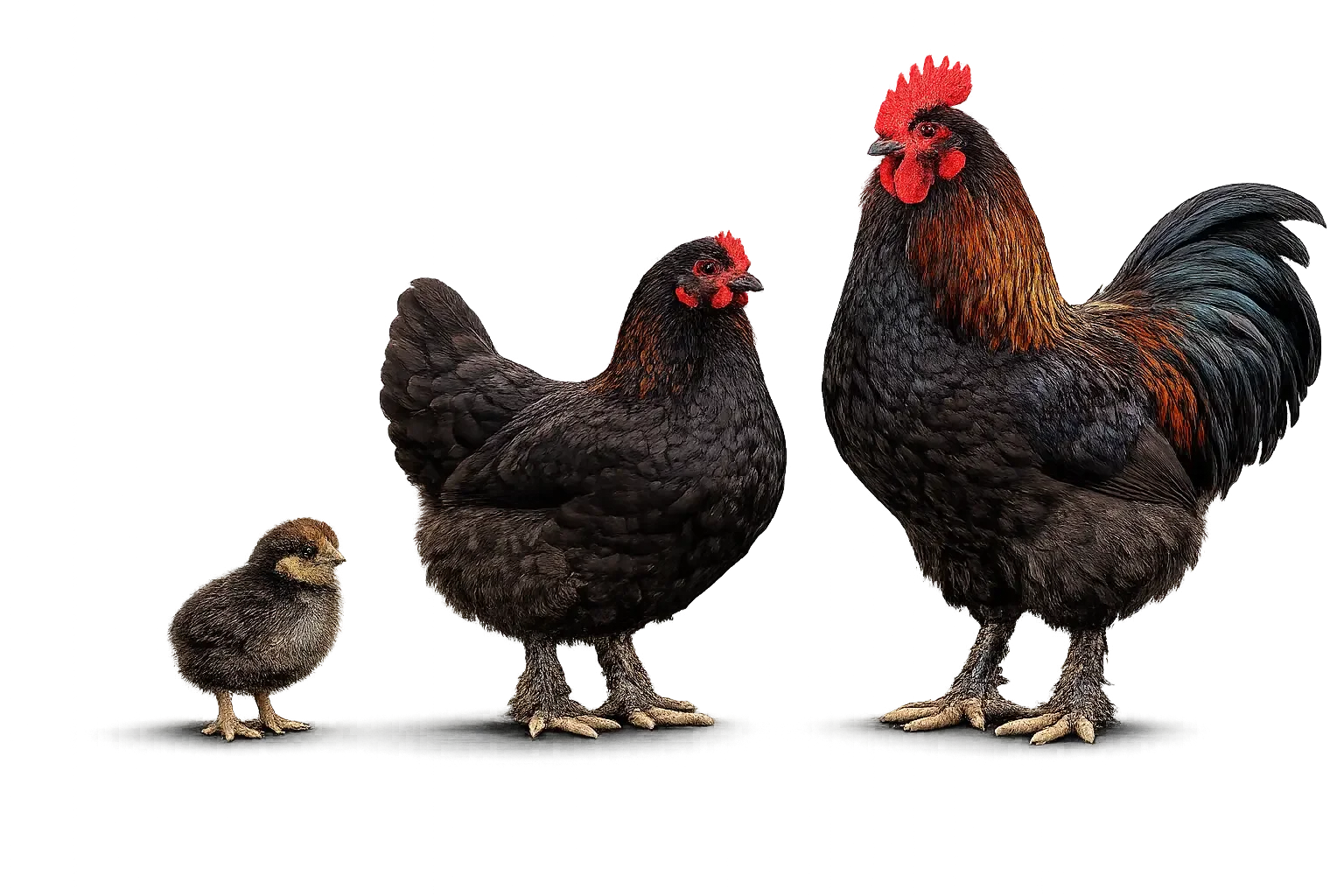
The Black Copper Marans produces the darkest brown eggs of any chicken breed in the world, and that single fact has driven more interest, more breeding investment, more social media posts, and more premium pricing than almost any other characteristic in the heritage poultry community over the past two decades. The eggs are not merely dark brown. They are chocolate: a deep, glossy, rich brown that photographs like something from a luxury chocolate box and that stands in a mixed egg carton the way a dark raisin stands among pale grapes. The color is produced by protoporphyrin, a pigment deposited on the eggshell surface during the final hours of formation in the oviduct, drying to a glossy finish that can be gently wiped to reveal a lighter shell beneath, which is part of what makes it immediately clear that the color sits on rather than penetrates the shell, unlike the inside-out blue of an Ameraucana egg. The breed that lays these eggs originated in the port town of Marans in the Nouvelle-Aquitaine region of southwestern France, where English sailors trading gamecocks with local farmers as far back as the 12th century produced the hybrid stock that local breeders eventually developed into the Marans breed. The Black Copper variety is the most widely kept Marans variety in the United States, the darkest egg layer of all Marans varieties, and the first to receive APA recognition in 2011. It nearly went extinct during World War II, was rescued by a French government breeding program in the postwar period, and gained its most famous cultural endorsement when Ian Fleming named the Black Copper Marans egg as the favorite egg of James Bond in From Russia with Love. For the homestead keeper who wants the most dramatic egg color available from a heritage dual-purpose breed, with a bird that is genuinely calm, genuinely attractive, and genuinely useful beyond its eggs, the Black Copper Marans is one of the most satisfying breeds in the directory.
Quick Facts
Class: Continental (APA)
Weight: Roosters approximately 8 to 8.5 lbs; hens approximately 6.5 to 7 lbs
Egg Production: Approximately 150 to 200 large dark brown eggs per year; 3 to 4 eggs per week
Egg Color: Deep chocolate brown; darkest of all Marans varieties and all chicken breeds; color deposited on shell surface as protoporphyrin pigment
Egg Size: Large; typically 65 to 80 grams in mature hens
Primary Purpose: Dual purpose; eggs and meat; also exhibition
Temperament: Generally calm, docile, and friendly; described as quiet and non-disruptive; roosters variable but often manageable; good foragers
Brooding: Variable; some hens go broody; those that do are good mothers
Flight Capability: Low; body weight and calm disposition make sustained flight unlikely
APA Recognition: 2011; first Marans variety recognized by the APA; Continental Class
Country of Origin: Marans, Nouvelle-Aquitaine, France
Varieties (APA): Black Copper, Wheaten, Black, White; many additional varieties recognized in the French standard
Comb Type: Single comb; frostbite risk in hard winters requires management attention
Leg Type: Feathered legs required by APA standard; lightly feathered shanks with feathered outer toes
Distinctive Trait: Deepest chocolate brown eggs of any breed; dramatic black plumage with beetle-green iridescence and rich copper hackle on the rooster
Conservation Status: Not at risk; recovering from historical near-extinction
Lifespan: 7 to 8 years
Breed Overview
The Marans breed's history begins not with a deliberate breeding program but with the practical realities of maritime trade. The port town of Marans, located near La Rochelle on the Atlantic coast of southwestern France, was a stopping point for English sailors from at least the 12th century onward. Those sailors, who kept gamecocks on their ships as entertainment during long voyages, would trade surviving birds with local farmers in exchange for provisions. These imported gamecocks crossed with the indigenous local chickens of the Marans region over generations, producing a vigorous, hardy, meat-oriented local bird that became the foundation stock for the breed that eventually bore the town's name. In the latter half of the 19th century, French chicken breeders refined this local stock by crossing it with two Asiatic breeds, the Brahma and the Croad Langshan, which contributed the dark brown egg color that became the breed's defining characteristic. Additional influences from Faverolles and other French breeds contributed to the feathered legs that the French and American standards require.
The first Marans breed society was established in 1929, and the first formal breed standard was written in 1931. Around the same time, the breed reached Britain when Charles Kelvynge Greenway, the second Baron Greenway, brought Marans eggs back from France and showcased his resulting birds at Crystal Palace in 1934. The British standard diverged from the French in one important characteristic: British Marans are clean-legged, while the French standard calls for lightly feathered shanks and outer toes. The American Poultry Association, when it recognized the Black Copper Marans in 2011, followed the French standard in requiring feathered legs, making feathering on the shanks and outer toes a breed standard requirement in the United States.
World War II was catastrophic for the Marans breed. Large portions of the French countryside where the breed was maintained were devastated by the war, and the Marans chicken nearly went extinct during the conflict and its aftermath. The French Department of Agriculture recognized the cultural and agricultural significance of the breed and launched a dedicated post-war breeding program to rescue it. That program increased the breed's production from what had been documented pre-war figures to approximately 200 eggs per year by 1952, significantly improving the laying rate alongside preserving the breed's survival. When the government program ended, amateur enthusiasts continued the work of maintaining and improving Marans across France and eventually across Europe and North America.
The Black Copper Marans reached the United States in meaningful numbers only in the 1990s, and its growth in popularity accelerated through the 2000s as the heritage breed revival and the rainbow egg basket trend intersected. Ian Fleming's fictional endorsement of the breed through James Bond's egg preference added cultural cachet. The breed's social media visibility, driven by the photographic impact of chocolate brown eggs in colorful egg cartons, drove further demand. APA recognition in 2011 formalized the breed's status in North American exhibition and heritage breed circles.
One important naming note: the breed is always spelled Marans with a final S. This is because it is named after the town, and the S is part of the town's name. The S is silent in the French pronunciation: the correct pronunciation is Muh-ran, not Muh-ranz. The name Maran without the S, while commonly used, is technically incorrect.
Plumage and Appearance
The Black Copper Marans is one of the most dramatically attractive dual-purpose breeds in the APA standard, combining the deep glossy black plumage of a Black Sumatra or Black Australorp with the rich copper-red hackle and saddle feathering of the rooster that gives the variety its name and its most visually striking characteristic.
The rooster's plumage is the showpiece of the variety. The body feathers are deep black throughout, carrying a beetle-green iridescent sheen in direct sunlight similar to the Black Australorp and Black Jersey Giant. The hackle feathers, encircling the neck and upper chest, are a rich copper-red that transitions from copper at the base to reddish-gold at the tips, cascading over the shoulders. The saddle feathers across the lower back are similarly copper-red, framing the black tail in a combination that exhibition breeders and keeper accounts consistently describe as one of the most beautiful color contrasts in the poultry world. The rooster's eyes are orange-red; the beak is strong and horn-colored; the comb is a single comb of medium size, upright and red.
The hen's coloration is more subdued but still distinctive. The body feathers are deep black with the same beetle-green iridescence. The hackle carries softer copper tones than the rooster's, often described as lightly penciled copper rather than the bold copper-red of the male. The overall impression of a Black Copper Marans hen is of a clean, glossy black bird with a subtle warm accent at the neck, carrying itself with the alert, active posture of a breed with gamecock heritage in its background.
The leg feathering required by the APA standard is lightly expressed: feathering on the outer shanks and outer toes, not the profuse foot feathering of a Brahma or Sultan. This light feathering is a practical management consideration in wet or muddy conditions, where the shank and toe feathers can accumulate dirt and moisture, but it is far less demanding to maintain than the heavy feathering of fully feathered-footed breeds.
The body is medium to large, well-muscled, broad through the shoulders, and carried with the slightly upright, active posture of a bird that likes to be on the move. The French standard describes the body as forming a wide elongated V when viewed from the side, with a strong back and well-developed saddle. The breed's solid build reflects its dual-purpose design and contributes to its useful meat character alongside its egg production.
Egg Production
The Black Copper Marans egg color is the reason most keepers choose the breed, and understanding it fully requires understanding the protoporphyrin pigmentation mechanism that produces it. Unlike the blue egg of the Ameraucana, which is produced by a pigment that penetrates the shell during formation making it blue throughout, the chocolate brown of the Marans egg is produced by protoporphyrin, a pigment deposited on the outer surface of the shell during the final stages of egg formation in the oviduct. This surface deposition produces the glossy finish characteristic of a fresh Marans egg and the fact that the color can be partially removed with a damp cloth to reveal a lighter shell underneath. It also means that the egg is brown only on the outside: the inside of the shell, if scratched, reveals a lighter color than the exterior, unlike the blue egg's consistent inside-out color.
The protoporphyrin deposition mechanism has several practical implications for egg color management. First, color intensity varies through the laying cycle: eggs laid at the beginning of a new laying period after a rest are typically the darkest, and the color lightens progressively as the hen continues laying without interruption, then deepens again after a break. This means that the darkest eggs from a Black Copper Marans hen come after she has had time off from laying, and that a photograph of the darkest eggs from a given hen does not represent the typical daily output. Second, color intensity depends significantly on genetics: hens from well-selected breeding lines with documented dark egg color selection produce consistently darker eggs than hatchery birds selected primarily for production volume or general hardiness without specific egg color selection. Third, nutrition and calcium availability affect shell quality and pigmentation uniformity; free-choice oyster shell and adequate protein support the deepest and most consistent shell color.
The Marans egg color scale, a standardized reference tool used by French breeders and adopted by serious Marans enthusiasts internationally, rates eggs from 1 to 9, with 1 being the lightest tinted and 9 being the deepest possible chocolate. The French standard requires Marans eggs to score at minimum 4 on this scale; well-bred Black Copper Marans from dedicated breeding programs targeting dark egg color routinely produce eggs in the 6 to 8 range. Hatchery birds from lines not specifically selected for egg color may produce eggs in the 4 to 5 range, which are noticeably dark but not the true chocolate that characterizes the breed at its best.
Annual production of approximately 150 to 200 large eggs per year, or 3 to 4 per week, places the Black Copper Marans in the reliable moderate layer category. This is below the production volume of high-output heritage breeds like the Black Australorp or the Rhode Island Red, but the premium value of the chocolate eggs compensates for the production shortfall in direct-sale markets where egg color creates meaningful pricing differentiation.
Hens begin laying at approximately 6 to 7 months of age, with some slow-maturing individuals not coming into lay until 8 to 9 months. The breed lays through winter with some reduction in output but generally maintains production better than lighter-framed breeds given its moderate body mass and the temperature hardiness of its French coastal origin.
Meat Quality
The Black Copper Marans is a genuine dual-purpose breed with useful meat quality alongside its egg production, and this dual utility is historically central to the breed's identity. The original Marans chickens of southwestern France were developed as much for the table as for the egg basket, and the breed's solid build, broad breast, and good muscle development reflect this. Mature roosters at 8 to 8.5 pounds produce a well-fleshed carcass with yellow-tinged skin that presents well at the table. The meat is described by heritage breed cooks as flavorful and well-textured, consistent with the gamecock heritage that contributes to the breed's muscle character.
As with all heritage breeds, the Black Copper Marans grows more slowly than commercial broiler strains and is not competitive with Cornish Cross production on economic terms at commercial scale. For homestead operations where the economics of heritage meat quality rather than commercial volume drive the decision, the Black Copper Marans produces a worthwhile table bird from surplus roosters and older hens without requiring a separate meat breed in the flock.
Temperament and Behavior
The Black Copper Marans is consistently described across keeper accounts as one of the calmer, quieter, and more manageable dual-purpose heritage breeds, with a temperament that falls between the active independence of a Leghorn and the deliberate docility of a Brahma. Hens are generally calm, curious, and tolerant of handling, following their keeper around the yard with an investigative interest that many keepers find pleasant and engaging without the demanding attention-seeking of more people-oriented breeds. The breed is described as quiet: not the egg-song cackle and constant vocalization of some productive breeds, but a low-key flock that communicates softly and does not generate the noise levels that concern suburban or semi-urban neighbors.
Roosters are more variable in temperament than hens, as is typical of most breeds, with the gamecock ancestry in the Marans background occasionally expressing as assertiveness toward other roosters or wariness toward humans. Well-socialized roosters raised with regular calm handling from young are generally manageable; roosters from lines with less handling history can develop the protective assertiveness typical of breeds with game heritage. Most keeper accounts describe Black Copper Marans roosters as protective and alert without being human-aggressive, and multiple accounts note roosters that were passive or even subordinate in mixed-breed flocks rather than dominant.
The breed forages actively and prefers open range access when it is available. Its gamecock-influenced active character means it uses range efficiently, covering ground and foraging for insects and plant material throughout the day. This foraging efficiency provides practical feed cost savings in range management situations and contributes to the breed's self-sufficient character that homestead keepers value.
Climate Adaptability
The Black Copper Marans' French coastal origins in the Nouvelle-Aquitaine region, with its temperate, occasionally wet winters and warm summers, translate into reasonable cold hardiness alongside good heat tolerance in most North American climates.
The single comb is the primary cold-climate management consideration. Unlike pea-combed or rose-combed breeds, the Black Copper Marans requires comb monitoring during sustained hard freezes, with petroleum jelly application as a preventive measure for roosters whose larger combs are most vulnerable. Hen combs are generally smaller and present less frostbite risk. Dry, well-ventilated, wind-protected housing handles the breed's winter needs in most North American cold-winter regions without additional heat intervention.
The feathered leg and toe trait requires attention in wet and muddy conditions regardless of temperature. Wet feathering on the shanks and outer toes accumulates mud and debris that if left unattended can mat, dry into hard deposits, and restrict the bird's movement. Clean, dry litter management and covered run access during persistently wet weather prevent most feathered-leg maintenance problems. This is a more moderate management requirement than the fully feathered breeds, but more demanding than clean-legged breeds in wet conditions.
Heat tolerance is good. The breed's moderate body size and active ranging behavior allow it to manage summer conditions with standard shade and cool water access without the heat stress risk of very large, heavy breeds.
Housing and Management
Standard dual-purpose breed housing applies. Four square feet of indoor floor space per bird is the baseline minimum; the breed's active character benefits from generous outdoor run space or range access. Standard four-to-five-foot fencing contains the breed adequately given its low flight tendency and calm disposition.
Nest box access and egg collection timing are worth specific attention given the protoporphyrin pigmentation mechanism. The chocolate color is freshest and most intense immediately after laying and can be affected by prolonged nest box contact with wet or soiled bedding. Keeping nest boxes clean and dry with regular litter changes protects egg appearance for direct-sale purposes where the visual impact of the chocolate shell is a primary product value.
Feed management should include consistent calcium supplementation through free-choice oyster shell to support the thick, large shells that quality Marans eggs require. Adequate protein in the layer ration, at 16 to 18 percent, supports the pigmentation process and overall shell quality. Some keepers specifically note that diet quality has a visible effect on the depth of their Marans' egg color, with higher-quality feeds producing somewhat darker shells than minimum-standard rations.
Egg color selection is the most important breeding management practice for keepers who want to maintain or improve the chocolate color across generations. Recording egg color from individual hens, maintaining a reference scale, and selecting only the darkest-laying hens as breeding stock across multiple generations gradually deepens the color in a managed breeding program. Keepers who breed without egg color selection see the chocolate color dilute over generations as the less pigmented genetics in the flock express more broadly.
Sourcing Considerations
The Black Copper Marans is widely available from mainstream hatcheries across North America, making it more accessible than most heritage dual-purpose breeds of similar quality. Cackle Hatchery, Meyer Hatchery, Murray McMurray, and most regional hatcheries carry Black Copper Marans as a standard or seasonal offering. This wide availability is a practical advantage for first-time Marans keepers who want to evaluate the breed without waiting list delays or specialty sourcing research.
The significant sourcing caveat is egg color. Hatchery lines selected primarily for production volume and general hardiness without specific egg color selection programs produce birds whose eggs may score in the 4 to 5 range on the Marans color scale, which are noticeably dark but not the true chocolate that dedicated breeding programs produce. Keepers who specifically want the deepest chocolate eggs for direct-sale premium pricing or for personal satisfaction with the breed's most distinctive characteristic should research hatchery reviews for egg color documentation, or source from breeders active in the Marans Club of America who specifically track and select for egg color using the standardized scale.
The French versus standard Marans naming distinction creates some confusion in sourcing contexts. As Meyer Hatchery correctly notes, all Marans are technically French Marans since the breed originates from France. The label French Black Copper Marans does not necessarily indicate better egg color or more authentic breed type than Black Copper Marans from the same hatchery; what matters is whether the source is selecting for egg color and maintaining feathered legs per the APA standard.
Pros and Cons
Pros
The deepest chocolate brown eggs of any chicken breed; unmatched egg color in any direct-sale or rainbow egg basket market
Genuinely dual-purpose; produces useful meat from surplus roosters and older hens without requiring a separate meat breed
Calm, quiet, manageable temperament; one of the quieter dual-purpose heritage breeds; good for suburban and semi-urban settings
Good cold hardiness for a medium-large breed; handles North American winters adequately with standard housing
Active forager; efficient on range and contributes to pest control
Strong visual presence; rooster's black-and-copper plumage is among the most attractive of any dual-purpose breed
APA recognized since 2011; active breed community with Marans Club of America supporting breed standards
Widely available from mainstream hatcheries; accessible without specialty sourcing
Cultural cachet: James Bond's favorite egg, Julia Child reportedly cooked exclusively with Marans eggs
Cons
Single comb requires frostbite monitoring in hard winters; more cold-comb management than pea-combed or rose-combed breeds
Feathered legs require dry litter management and attention in wet or muddy conditions
Egg color varies through the laying cycle; darkest eggs come after rest periods rather than consistently every day
Hatchery stock egg color often lighter than dedicated breeder lines; sourcing research needed for deepest chocolate color
Production of 150 to 200 eggs per year is moderate; below high-production heritage breeds and far below hybrid layers
Slow maturity; some hens do not begin laying until 8 to 9 months
Premium pricing relative to production breeds; not economical as a pure egg-volume operation
Profitability
The Black Copper Marans' profitability is built on the premium value of its chocolate eggs rather than production volume, and this premium is genuinely substantial and consistently achievable in direct-sale markets. Chocolate brown eggs in a mixed heritage carton alongside blue Ameraucana eggs, green Whiting True Green eggs, and cream eggs create the rainbow carton that farmers market and direct-sale customers seek most actively, and the Marans egg is the anchor of that visual impact. Keepers who maintain a flock that consistently produces dark eggs, through proper sourcing and ongoing egg color selection in their breeding program, command reliable price premiums that compensate meaningfully for the breed's moderate production volume.
The breed's genuine dual-purpose utility adds secondary revenue from heritage table birds when surplus roosters are processed and marketed directly. Heritage breed meat at farm gate or farmers market prices carries premium over commercial chicken for buyers who seek it, and the Black Copper Marans produces a worthwhile carcass that meets this market.
Exhibition breeding of the Black Copper Marans variety is active within the Marans Club of America, which supports show standards and breeder education. Quality exhibition birds from lines with documented dark egg color and correct plumage type command premium prices from the show community.
The breed's social media appeal drives secondary profitability through farm marketing: photographs of chocolate eggs, particularly alongside blue and green eggs for contrast, generate the engagement that builds the customer following driving direct-sale revenue. The Marans egg is one of the most photographable products in the farm egg category.
Comparison With Related Breeds
Welsummer: The most direct comparison for dark brown egg production among heritage breeds. The Welsummer produces eggs with a matte, terracotta-brown color with occasional dark speckles that many keepers find equally beautiful to the Marans' chocolate, but the Marans egg is glossier and typically darker than even a well-bred Welsummer's output. The Welsummer lays somewhat more consistently at approximately 160 to 200 eggs per year and is slightly more readily available. Both are worthwhile dark egg layer additions to a homestead flock.
Barnevelder: A Dutch heritage breed that lays dark brown eggs, somewhat less dark than the Black Copper Marans but still distinctly darker than standard brown egg breeds. The Barnevelder is calmer and somewhat more docile in temperament, lays approximately 150 to 200 eggs per year, and has a less dramatic plumage contrast than the Black Copper. Both are good homestead dark egg breeds; the Marans edges the Barnevelder on egg darkness and visual impact.
Black Australorp: A useful comparison for a calm, dual-purpose heritage breed of similar size and body type. The Australorp lays significantly more eggs per year at approximately 250 to 300 but produces a standard brown egg rather than the deep chocolate of the Marans. The Australorp's rose-like comb provides better cold hardiness than the Marans' single comb. For keepers prioritizing egg volume over egg color novelty, the Australorp is the more productive choice; for keepers who want the chocolate egg premium, the Marans is the answer.
Cuckoo Marans: The most widely available Marans variety, generally easier to source than the Black Copper and somewhat more productive as a layer. The Cuckoo Marans lays dark brown eggs but typically not as dark as the Black Copper, which is specifically bred and selected for the deepest chocolate. The Cuckoo's barred plumage is less visually dramatic than the Black Copper's black-and-copper contrast. For keepers who want Marans egg color without the sourcing specificity required for true chocolate, the Cuckoo is a practical alternative.
French Black Copper Marans: Not a separate breed from the Black Copper Marans. As Meyer Hatchery correctly explains, all Marans are French Marans since the breed originates from France. The French label does not indicate consistently darker eggs or better breed type from the same source; what matters is the breeding selection program behind the specific birds being purchased.
Final Verdict
The Black Copper Marans is the breed that puts chocolate in the egg basket, and it has done this with a level of practical dual-purpose utility, genuine temperament manageability, and visual attraction in the bird itself that justifies the premium pricing and sourcing attention it requires. The single comb needs winter monitoring, the feathered legs need dry conditions, the egg color varies through the cycle and depends heavily on genetics, and hatchery stock may not deliver the true chocolate that dedicated breeder lines produce. All of these are known and manageable limitations for a keeper who researches them before acquiring birds. What the breed delivers in return, the deepest brown eggs available from any chicken breed in the world, on a calm, attractive, self-sufficient forager that also produces a worthwhile table bird when needed, is a combination no other heritage breed matches. The dual purpose and homestead category is better for including it.
Frequently Asked Questions
Why are Black Copper Marans eggs chocolate colored? The chocolate color is produced by protoporphyrin, a pigment deposited on the outer surface of the eggshell during the final hours of formation in the oviduct. This surface deposition gives the egg its glossy finish and means the color sits on rather than penetrates the shell, unlike the inside-out blue of an Ameraucana egg. The protoporphyrin dries to the characteristic chocolate finish after the egg is laid and can be partially removed by gently wiping the fresh egg with a damp cloth.
Why does egg color vary in my Marans? The protoporphyrin deposition mechanism produces the darkest eggs at the beginning of a new laying cycle after a rest period, with the color lightening progressively as the hen continues laying without interruption, then deepening again after a break. This cyclical variation is characteristic of the breed and not a health concern. Consistent nutrition, adequate calcium, and genetics from well-selected dark-egg lines produce the darkest and most consistent color within this natural variation.
What is the Marans egg color scale? The Marans egg color scale is a standardized reference tool developed by French breeders and used by serious Marans enthusiasts internationally, rating eggs from 1 to 9. A score of 1 represents the lightest tinted brown and 9 represents the deepest possible chocolate. The French standard requires Marans eggs to score at minimum 4 on this scale to qualify as true Marans eggs. Well-bred Black Copper Marans from dedicated egg-color selection programs typically produce eggs scoring 6 to 8. The Black Copper variety is noted for producing the darkest eggs of all Marans varieties.
What is the difference between French Black Copper Marans and Black Copper Marans? There is no meaningful difference. All Marans are French Marans since the breed originates from France; adding the word French to the breed name does not indicate consistently darker eggs, better breed type, or heavier leg feathering from the same source. The APA standard, which follows the French breed standard, requires lightly feathered legs and outer toes for all recognized Marans varieties regardless of how they are labeled by individual sellers.
Do Black Copper Marans roosters get aggressive? Variable. The gamecock ancestry in the breed's background occasionally expresses as rooster assertiveness toward other roosters or wariness toward unfamiliar humans, but the breed is not typically characterized by human aggression. Well-socialized roosters raised with regular calm handling from young are generally manageable. Multiple keeper accounts describe Black Copper Marans roosters as passive or even subordinate in mixed-breed flocks. Rooster temperament varies between individuals more than it does between breeds, and socialization from young is the most reliable factor in producing manageable adult roosters.
Are Black Copper Marans good for cold climates? Moderately good, with one specific management requirement. The breed handles cold winters adequately with standard dry, well-ventilated, wind-protected housing. The single comb is the primary cold-climate concern, requiring monitoring and preventive petroleum jelly application during sustained hard freezes, particularly for roosters with larger combs. The feathered legs and outer toes accumulate mud in wet conditions and require dry litter management year-round. Both requirements are manageable with standard good-housing practice.
Where can I buy Black Copper Marans chicks? From most mainstream hatcheries including Cackle Hatchery, Meyer Hatchery, and Murray McMurray, as well as many regional hatcheries and farm supply stores that carry heritage breed chicks seasonally. For the darkest chocolate egg color, research hatchery reviews specifically for egg color documentation or source from breeders active in the Marans Club of America who use the standardized egg color scale for selection. Hatchery birds are typically hardy and friendly but may produce eggs in the lighter range of the scale compared to dedicated breeder lines.
Related Breeds
French Black Copper Marans
Cuckoo Marans
Blue Copper Marans
Welsummer
Barnevelder
Black Australorp