
Blue Ameraucana
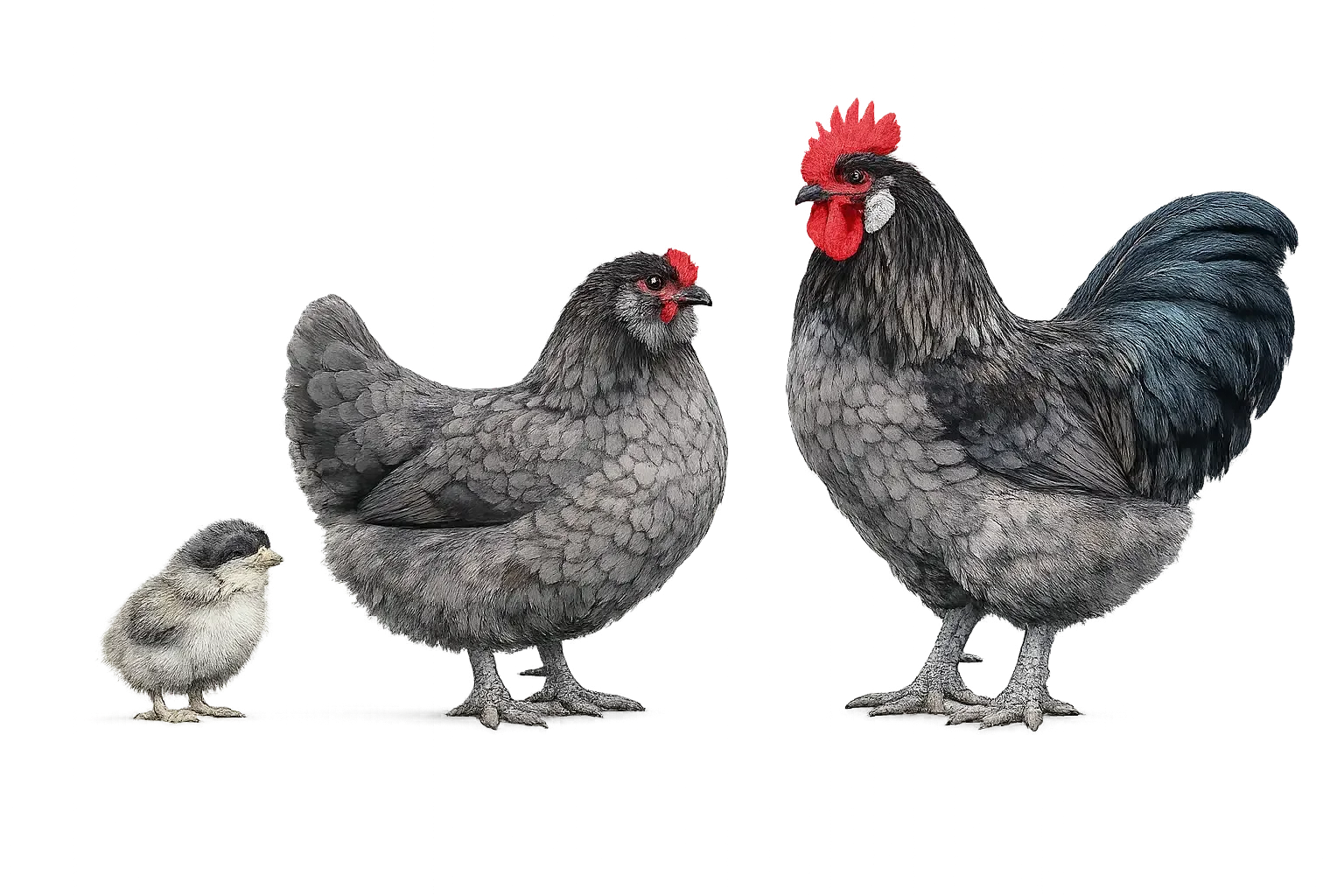
The Blue Ameraucana is one of the most visually distinctive varieties of one of the most practically useful blue egg layers available to the North American homestead keeper. The Ameraucana breed as a whole was built to solve a specific problem: the Araucana chicken of Chile laid beautiful blue eggs but carried two genetic liabilities that made it difficult to breed reliably. The first was rumplessness, the absence of the last two vertebrae and the tail they support, which interfered with mating and fertility. The second was ear tufts, decorative feathers growing from a skin projection near the ear, whose associated gene is lethal when both parents contribute a copy, causing chicks to die in the shell before hatching. American breeders working from the 1930s onward, and particularly accelerating their efforts through the 1970s, set out to preserve the blue egg gene while eliminating both liabilities: giving the breed a proper tail, replacing the ear tufts with the beard and muffs that distinguish the Ameraucana from the Araucana, and selecting for the pea comb, slate legs, and consistent body type that the APA eventually standardized in 1984. The Blue Ameraucana is the variety of this breed that expresses a slate blue feather coloring across the body, produced by the blue dilution gene acting on black base pigment, with darker blue lacing on the hackle, back, and saddle of the rooster and a more uniform blue-gray on the hen. It lays the same blue eggs as every other Ameraucana variety, carries the same cold-hardy pea comb and bearded face, and brings to the homestead flock the same combination of reliable production, strong foraging ability, excellent cold hardiness, and calm enough temperament that has made the Ameraucana breed one of the most recommended heritage layers in North America.
Quick Facts
Class: All Other Standard Breeds (APA); Miscellaneous Class
Weight: Roosters approximately 6.5 lbs; hens approximately 5.5 lbs
Egg Production: Approximately 150 to 250 blue eggs per year; 3 to 4 eggs per week
Egg Color: Blue; ranging from light sky blue to medium pastel blue; blue throughout the shell inside and out
Egg Size: Medium to large
Primary Purpose: Egg production; dual purpose; exhibition
Temperament: Generally calm and friendly; curious and sociable; temperament varies more between individuals than in more standardized breeds; roosters variable
Brooding: Variable; some hens go broody and are good mothers; others rarely do
Flight Capability: Moderate; pea comb and active character mean some individuals may test fencing; standard five-foot fencing adequate for most flocks
APA Recognition: 1984; Blue is one of eight recognized color varieties
Country of Origin: United States; developed in the 1970s from Araucana-derived blue egg laying stock
Varieties (APA): Black, Blue, Blue Wheaten, Brown Red, Buff, Silver, Wheaten, White; Self Blue (Lavender) recognized for large fowl only
Comb Type: Pea comb; minimal frostbite risk; excellent cold-climate advantage
Distinctive Trait: Blue eggs laid consistently throughout the hen's life; beard and muffs; slate or black legs; full tail distinguishing it from the rumpless Araucana; blue feather coloring with darker lacing in the Blue variety
Conservation Status: Not at risk; growing in popularity
Lifespan: 7 to 10 years
Breed Overview
The Ameraucana's history begins not in the United States but in Chile, where indigenous Mapuche people had maintained blue egg laying chickens for centuries before European contact. The two ancient Chilean breeds believed to form the foundation of all subsequent blue egg laying chickens, the Collonca and the Quintero, were crossed at some point to produce the Araucana, a rumpless, tufted bird named for the Araucanian people of Chile that carries the blue egg gene reliably. The first documented arrival of Araucana chickens in the United States occurred in 1925, and the birds immediately attracted significant attention from American breeders who found the blue eggs striking and commercially novel.
The genetic problems that accompanied the blue eggs became apparent quickly. The lethal tufted gene meant that in tufted-to-tufted crosses, a predictable percentage of fertilized eggs would never hatch, a serious practical and economic liability in a breeding program. The rumpless trait interfered with rooster-to-hen mating, reducing fertility rates below what practical production required. American breeders began working to separate the blue egg gene from these two traits as early as the 1930s, crossing Araucana-derived birds with various other breeds to produce tailed, muff-and-bearded, reliably fertile blue egg layers while gradually eliminating the tufted gene from their flocks.
This multi-decade project did not follow a single organized program but developed across numerous breeders working somewhat independently, which is why the Ameraucana's precise genetic history is described by breed historians as complex and contentious. The common thread was the consistent selection for four defining characteristics: beard and muffs replacing ear tufts, a full tail replacing rumplessness, a pea comb, and slate legs. Blue egg production was the goal; the physical standard was the means of ensuring that the bird producing those blue eggs was a consistent, identifiable, reliably fertile breed rather than a variable hybrid. The APA formally recognized the Ameraucana in 1984, establishing the Standard of Perfection that distinguishes true Ameraucanas from the Easter Eggers that hatcheries frequently sell under the misspelled names Americana or Americauna.
The Blue variety specifically expresses the blue dilution gene, which dilutes black pigment to a blue-gray color in the feathering. The resulting plumage is not a single uniform color but a complex blue with darker lacing on the hackle, back, and saddle of the rooster and a more subdued, even blue-gray on the hen. The Blue Ameraucana breeding program follows the blue-black-splash genetics that appear across multiple breeds: breeding two blue birds produces blue, black, and splash offspring in approximately 50, 25, and 25 percent proportions respectively. Breeders maintaining the Blue variety who want consistent blue offspring must understand this genetics and manage their breeding pens accordingly.
Plumage and Appearance
The Blue Ameraucana's most defining visual characteristic is its face: the full beard and muffs of soft, dense feathering that cover the lower face, cheeks, and chin area, creating the distinctive puffy-cheeked appearance that distinguishes all Ameraucanas from clean-faced breeds. The beard and muffs are always present together in a correct Ameraucana; a bird with muffs but no beard, or with ear tufts instead of muffs, is either an Araucana or an Easter Egger rather than a true Ameraucana. The muffs can be sufficiently dense to partially cover the small pea comb when the bird is viewed from the front, adding to the rounded, puffy facial appearance.
The body is medium-sized, moderately well-feathered, and carried with a slight forward lean that experienced observers describe as hawk-like or alert in character. The back is medium in length, the tail is full and well-developed, carried at a moderate upward angle, and clearly present, distinguishing the breed from the rumpless Araucana at a glance. The legs are slate to nearly black, another breed standard requirement and a reliable distinguishing feature from Easter Eggers, whose leg color varies widely.
The Blue variety's plumage is the product of the blue dilution gene acting on black base pigment. The result in the rooster is a slate blue body with darker blue-black lacing visible on individual feathers of the hackle, saddle, and back, and a blue-black tail. The hen presents a more uniform, softer blue-gray throughout, with some lacing variation but less dramatic than the rooster's contrast. The overall impression of a Blue Ameraucana pair is of a genuinely attractive medium-sized bird with a distinctive color that stands out clearly in a mixed flock.
As noted in the breed overview, breeding two blue Ameraucanas produces blue, black, and splash offspring rather than exclusively blue. Keepers who want to maintain the Blue variety consistently need to either breed blue to black and select blue offspring, or accept the color variation that blue-to-blue crossing produces. Exhibition breeders maintaining separate blue, black, and splash breeding pens manage this genetics deliberately; homestead keepers who simply want blue egg production can breed any Ameraucana variety together without affecting egg color, since all varieties lay blue eggs regardless of feather color.
The eyes are a reddish bay color that contributes to the hawkish facial expression some people find striking and others find slightly intense. The beak is horn-colored to dark horn. The walnut-shaped pea comb is small and low-set, with minimal surface area exposed to cold air.
Egg Production
Every Ameraucana variety lays blue eggs, and the Blue Ameraucana is no exception. The egg color is produced by the same oocyanin pigment mechanism as the Whiting True Blue and other blue egg layers: a bile byproduct that penetrates the shell material entirely during formation, producing a shell that is blue from the inside surface to the outside. A genuine Ameraucana egg cut in half shows the same blue color on the interior of the shell that it shows on the exterior, distinguishing it from lightly tinted eggs that are white internally.
Annual production of approximately 150 to 250 blue eggs per year, or 3 to 4 eggs per week, places the Ameraucana in the reliable heritage layer category rather than the high-production hybrid category. Production-focused strains from hatcheries and breeders who have selected for laying rate produce toward the higher end of this range; exhibition-focused breeders who prioritize conformation and type may produce toward the lower end. The egg color is consistent for each individual hen across her laying life: a hen that lays sky blue eggs will continue laying sky blue eggs, not shifting to green or tinted as she ages. The shade of blue varies between individual hens, with some laying a more intense sky blue and others a lighter pastel, but the color produced by each hen is her characteristic shade for life.
Hens begin laying at approximately 6 to 7 months of age, somewhat later than production breeds but comparable to other medium-sized heritage layers. The breed lays year-round with some seasonal reduction in winter, and the pea comb contributes to winter hardiness that supports more consistent winter production than single-combed breeds of similar size.
Broodiness is variable across the breed and the Blue variety reflects this variability. Some Blue Ameraucana hens go broody and are described as attentive, protective mothers; others rarely or never commit to incubation. Keepers who want natural flock propagation should expect variability rather than consistent broodiness, and should not plan natural hatching programs around the Ameraucana the way they might plan them around the Silkie or the Wyandotte. When broody hens do occur, they are reported as good, committed sitters.
Temperament and Behavior
The Blue Ameraucana's temperament is one of the more variable characteristics of the breed, which is worth understanding before adding birds to a flock with specific temperament expectations. The breed's relatively recent development and the variety of foundation stock used across different breeders has produced a wider range of individual temperament outcomes than more uniformly selected heritage breeds. Some Blue Ameraucana flocks are consistently calm, curious, and easy to handle from young with minimal handling effort. Others include more flighty, independent individuals that tolerate handling without seeking it and maintain wariness toward human contact even with regular interaction.
What is consistent across the breed is the absence of human-directed aggression in hens, and its rarity even in roosters, making the Ameraucana a genuinely safe breed around children and in mixed keeper environments. The breed is not the lap chicken that the Silkie or the Sultan is, and it does not seek contact the way those breeds do, but it does not flee from calm human presence and becomes reliably manageable with regular handling.
The breed is curious and active in foraging environments, showing the alert, exploratory behavior that its slightly hawk-like facial expression suggests. Blue Ameraucanas range actively and forage efficiently, which contributes to feed cost savings on pasture and to pest control value in gardens and orchards. The foraging ability is genuine and reflects the breed's heritage from birds adapted to finding food in semi-wild conditions over generations of South American development.
In mixed flocks the Ameraucana generally holds a middle position in the pecking order without aggressive dominance but also without the vulnerability of very gentle breeds. Some keepers report that Ameraucanas in mixed flocks are occasionally on the receiving end of bullying from larger or more dominant breeds, particularly given the muff and beard feathering that can be targeted. Maintaining the breed with comparably sized and temperamented flockmates avoids most mixed-flock tension.
Climate Adaptability
The Blue Ameraucana's pea comb is its primary cold-climate advantage. The pea comb's small size and low profile present minimal surface area to cold air, producing essentially no frostbite risk under standard cold-weather housing conditions. This makes the Blue Ameraucana meaningfully more cold-hardy in hard winters than single-combed breeds of similar size, and supports the breed's documented tendency toward more consistent winter egg production than cold-sensitive breeds.
Cold hardiness overall is strong. The breed handles North American winters well across most regions with standard dry, well-ventilated, wind-protected housing. Its South American heritage in the mountain regions where Araucana-type birds lived, combined with the cold-climate selection pressure of the American breeding program, produced a bird that manages cold better than its relatively moderate body size might suggest.
Heat tolerance is also good, consistent with the breed's adaptability across climate ranges. The pea comb, which limits heat dissipation compared to a large single comb, is less of a heat management disadvantage than might be expected because the breed's moderate body size reduces the metabolic heat generation that makes large heavy breeds struggle in summer. Standard shade and cool water management in summer is sufficient for the Blue Ameraucana without special intervention.
One climate-related management note specific to bearded breeds: the beard and muff feathering can become wet and chilled in cold wet weather, and in very wet conditions can mat and accumulate debris. Managing the beard during wet seasons, and ensuring the waterer design does not require the bird to submerge its beard to drink, are practical management considerations for any bearded breed including the Blue Ameraucana.
Housing and Management
Standard backyard housing requirements apply without significant modification. Four square feet of indoor floor space per bird is the baseline. The Blue Ameraucana's moderate flight capability means that five-foot fencing is generally adequate for containment, though particularly active individuals may occasionally test lower barriers. Covered runs provide complete certainty of containment for keepers where this matters.
Waterer design is a management consideration specific to bearded breeds. Standard poultry waterers whose drinking surface requires the bird to lower its entire face to drink can result in wet beards and muffs throughout the day, which causes discomfort, matting, and in cold weather a chilling effect. Nipple waterers or cup-style waterers that allow drinking without facial submersion are preferred by experienced Ameraucana keepers and reduce beard management requirements significantly.
Feed management follows standard heritage layer guidelines. Quality layer feed with adequate protein at 16 to 18 percent and free-choice oyster shell for calcium supplementation supports the breed's production at its upper range. The breed's active foraging on range supplements feed meaningfully, and flocks with regular range access require less supplemental feed than confined birds.
The most important management consideration for keepers sourcing Blue Ameraucanas is breed verification. The name Ameraucana is frequently misused by hatcheries and sellers who apply it to Easter Eggers, mixed breed blue-egg-adjacent birds that do not meet the APA standard for the breed. True Ameraucanas have a full beard and muffs together, a pea comb, slate legs, and a full tail. They do not have ear tufts, which are the Araucana's characteristic. They do not have the variable yellow, green, or other non-slate leg colors that Easter Eggers commonly show. Sellers using the misspellings Americana or Americauna are almost certainly selling Easter Eggers regardless of the bird's egg color. For homestead purposes an Easter Egger is a fine bird, but a keeper paying Ameraucana prices should verify they are receiving a true Ameraucana.
Sourcing Considerations
True Blue Ameraucanas from verified, exhibition-quality bloodlines are not available from mainstream hatcheries. Hatcheries that list Ameraucanas are almost universally selling Easter Eggers under a misspelled name or under the Ameraucana name applied loosely to mixed blue-egg layers. The Ameraucana Breeders Club maintains a directory of verified breeders and is the most reliable North American sourcing resource for genuine Ameraucanas in any color variety including Blue.
The Blue variety specifically requires a source that maintains the blue dilution genetics properly and understands the blue-black-splash breeding outcomes. Not every breeder listing Blue Ameraucanas is producing birds from a well-managed Blue breeding program; verifying that the breeder understands and manages the color genetics appropriately produces more consistent Blue birds than purchasing from sources where the variety is produced incidentally.
Exhibition-quality Blue Ameraucanas from verified breeders active in the Ameraucana show community command premium prices above Easter Egger equivalents, reflecting the genuine investment in breed standard maintenance and genetic documentation that true Ameraucana breeding requires.
Pros and Cons
Pros
Consistent blue egg production of 150 to 250 eggs per year from a true purebred, APA-recognized breed
Pea comb provides excellent cold hardiness with minimal frostbite risk; one of the best cold-climate medium-sized layers available
Blue eggs are blue throughout the shell, inside and out; genuinely distinctive and premium in any direct-sale egg market
Active forager with good feed conversion on range; practical economic advantage on pasture
Good heat tolerance in addition to cold hardiness; adaptable across a wide climate range
Distinctive Blue variety plumage with slate blue body and darker lacing is visually attractive in the flock
Beard and muffs give the breed a distinctive appearance that stands out from standard layer breeds
Generally non-aggressive temperament; safe around children and in mixed keeper environments
Long productive lifespan of 7 to 10 years
APA recognized since 1984; active breeder community with established standards
Cons
True Ameraucanas require sourcing from verified specialty breeders; mainstream hatcheries generally sell Easter Eggers under the Ameraucana name
Temperament more variable between individuals than in more uniformly selected heritage breeds; some individuals are calm and some are flighty
Blue variety breeding requires understanding of blue-black-splash genetics to maintain consistent blue offspring
Broodiness variable; unreliable for natural flock propagation programs that depend on broody hens
Beard and muff feathering requires appropriate waterer design to prevent chronic wet beard conditions
Production of 150 to 250 eggs per year is solid heritage-breed performance but well below high-production hybrids
Premium pricing from verified breeders reflects the genuine investment in breed maintenance
Profitability
The Blue Ameraucana's profitability for homestead and direct-sale operations is built primarily around the premium value of verified, consistently blue eggs from a named APA-recognized heritage breed. At farmers markets and direct farm sales, blue eggs in a mixed carton command reliable premium pricing, and the ability to describe eggs as coming from a true Ameraucana rather than an Easter Egger adds provenance value for buyers who know and care about the distinction. The Blue variety's visual distinctiveness in the flock adds a secondary marketing angle for farm operations that use social media or farm tours to build customer relationships.
The breed's strong foraging ability reduces feed costs meaningfully on range operations compared to confined heritage layers of similar production volume. Combined with the pea comb's winter hardiness that supports more consistent cold-weather production than single-combed breeds, the Blue Ameraucana delivers solid year-round egg supply from a light-maintenance, self-sufficient forager.
Exhibition breeding produces consistent demand from the active Ameraucana show community for verified, correct-type Blue birds with documented lineage. The complexity of maintaining the Blue variety's color genetics correctly, and the difficulty of sourcing true Ameraucanas from mainstream channels, means that breeders maintaining quality Blue Ameraucana flocks are in a strong position within their niche.
Comparison With Related Breeds
Araucana: The ancestral breed from which the Ameraucana was developed. The Araucana is rumpless, carries ear tufts rather than beard and muffs, and has the lethal tufted gene that makes breeding management challenging. It is genuinely rarer than the Ameraucana and listed as Critical by the Livestock Conservancy. Both lay blue eggs; the Ameraucana is a more practical homestead breed due to its tail, beard, muffs, and the absence of the lethal gene.
Easter Egger: The most commonly sold bird under the Ameraucana name at mainstream hatcheries. Easter Eggers are hybrid birds with varying amounts of Ameraucana or Araucana genetics, inconsistent physical type, variable leg colors, and egg colors ranging from blue to green to pink to brown depending on the individual bird's genetics. They are not a standardized breed and do not breed true. An Easter Egger is a fine homestead bird for color variety, but it is not a Blue Ameraucana regardless of what it is labeled.
Black Ameraucana: Shares all breed characteristics with the Blue variety, with the difference that the Black carries no blue dilution gene and presents as solidly black throughout. Breeding two Black Ameraucanas produces exclusively black offspring, making color management simpler than the Blue variety. All practical homestead characteristics are identical.
Whiting True Blue: A proprietary Murray McMurray exclusive that lays blue eggs at approximately 280 to 300 per year, significantly more than the Ameraucana's 150 to 250. The Whiting True Blue breeds true for egg color but has no defined plumage standard. The Ameraucana has APA recognition, defined breed standards, active exhibition community support, and an established heritage breed history that the Whiting True Blue lacks. For maximum blue egg volume, the Whiting True Blue outperforms the Ameraucana; for exhibition, heritage breed credentials, and defined type, the Ameraucana has no competition from the Whiting line.
Cream Legbar: A British autosexing heritage breed that lays sky blue eggs at approximately 180 to 200 per year. The Legbar's autosexing trait, where male and female chicks are distinguishable at hatch by down color, is a practical management advantage not found in the Ameraucana. The Ameraucana's wider variety of recognized colors and its American heritage breed status differentiate it from the British-developed Legbar.
Final Verdict
The Blue Ameraucana is the heritage breed answer to the blue egg question, and it is a genuinely good answer. It is not the highest-producing blue egg layer available, that position belongs to the Whiting True Blue. It is not the easiest to source correctly, that distinction belongs to any breed available from mainstream hatcheries. What it is is a real, APA-recognized, actively maintained heritage breed with a fascinating origin story reaching back to the Mapuche people of Chile, a pea comb that handles North American winters better than most of its competition, a foraging ability that makes it practical and economical on range, and a blue egg that is blue from the inside of the shell to the outside, produced consistently and reliably by every hen in the flock for her entire laying life.
For the homestead keeper who wants a self-sufficient, cold-hardy, genuinely beautiful blue egg layer with heritage breed credentials and the practical production to contribute meaningfully to a year-round egg supply, the Blue Ameraucana earns its place in the flock. The dual purpose and homestead category is better for including it.
Frequently Asked Questions
Are Blue Ameraucana eggs always blue? Yes. Every Ameraucana variety, including the Blue, consistently lays blue eggs throughout the hen's laying life. The shade of blue varies between individual hens, ranging from light pastel to a deeper sky blue, but the color each hen produces is consistent for her lifetime. A hen that lays sky blue eggs will lay sky blue eggs her entire life. Ameraucana eggs are blue throughout the shell, inside and out, distinguishing them from lightly tinted eggs that are white internally.
What is the difference between a Blue Ameraucana and an Easter Egger? The Blue Ameraucana is a purebred, APA-recognized breed with specific physical standards: beard and muffs together, pea comb, slate legs, full tail, and consistently blue eggs. An Easter Egger is a hybrid bird with varying amounts of Ameraucana or Araucana genetics, inconsistent physical type, variable leg colors, and eggs that may be blue, green, pink, or brown depending on the individual bird's specific genetics. Many mainstream hatcheries sell Easter Eggers under the misspelled names Americana or Americauna; a true Blue Ameraucana must come from a verified breeder maintaining the APA breed standard.
How cold hardy is the Blue Ameraucana? Very cold hardy for a medium-sized heritage breed. The pea comb presents minimal frostbite risk even in hard freezes, and the breed maintains more consistent winter egg production than single-combed breeds of similar size. Standard dry, well-ventilated, wind-protected housing is the primary winter requirement. The breed does not need supplemental heat in most North American winter climates.
Why does breeding two Blue Ameraucanas not always produce blue chicks? The blue feather color is produced by the blue dilution gene acting on black base pigment. Blue birds carry one copy of the blue gene; when two blue birds are crossed, offspring inherit either two copies, one copy, or no copies of the gene in approximately 25, 50, and 25 percent proportions respectively. Two copies produces a splash bird; one copy produces a blue bird; no copies produces a black bird. This blue-black-splash genetics is standard across breeds that carry the blue dilution gene and is why experienced Ameraucana breeders often maintain separate breeding pens for each color rather than crossing blue to blue exclusively.
Where can I find true Blue Ameraucana chicks? The Ameraucana Breeders Club maintains a directory of verified breeders and is the most reliable North American sourcing resource. Exhibition and poultry shows are good venues for meeting Blue Ameraucana breeders directly. Mainstream hatcheries that list Ameraucanas are almost universally selling Easter Eggers; sourcing true Blue Ameraucanas requires verified specialty breeders who maintain APA standard birds.
Do Blue Ameraucanas go broody? Variably. The breed's broodiness is inconsistent between individuals and strains; some hens go broody regularly and are good mothers, others rarely or never do. Keepers planning natural hatching programs should not depend on the Ameraucana as a reliable broody hen the way they might with a Silkie or Wyandotte. When broody hens do occur in the flock, they are reported as committed sitters and attentive mothers.
What does the Blue variety look like compared to other Ameraucana colors? The Blue Ameraucana has slate blue feathering throughout the body with darker blue-black lacing visible on the hackle, saddle, and back of the rooster, and a more uniform, softer blue-gray on the hen. The Blue variety's color is a genuine blue-gray rather than a lavender or silver; it is distinct from the Self Blue variety, which is a true lavender color produced by a different genetic mechanism. Both sexes have slate legs, red pea combs, red wattles, and the characteristic beard and muffs of the breed.
Related Breeds
Black Ameraucana
Splash Ameraucana Bantam
Lavender Ameraucana
Araucana
Easter Egger
Cream Legbar
Whiting True Blue