
California Gray
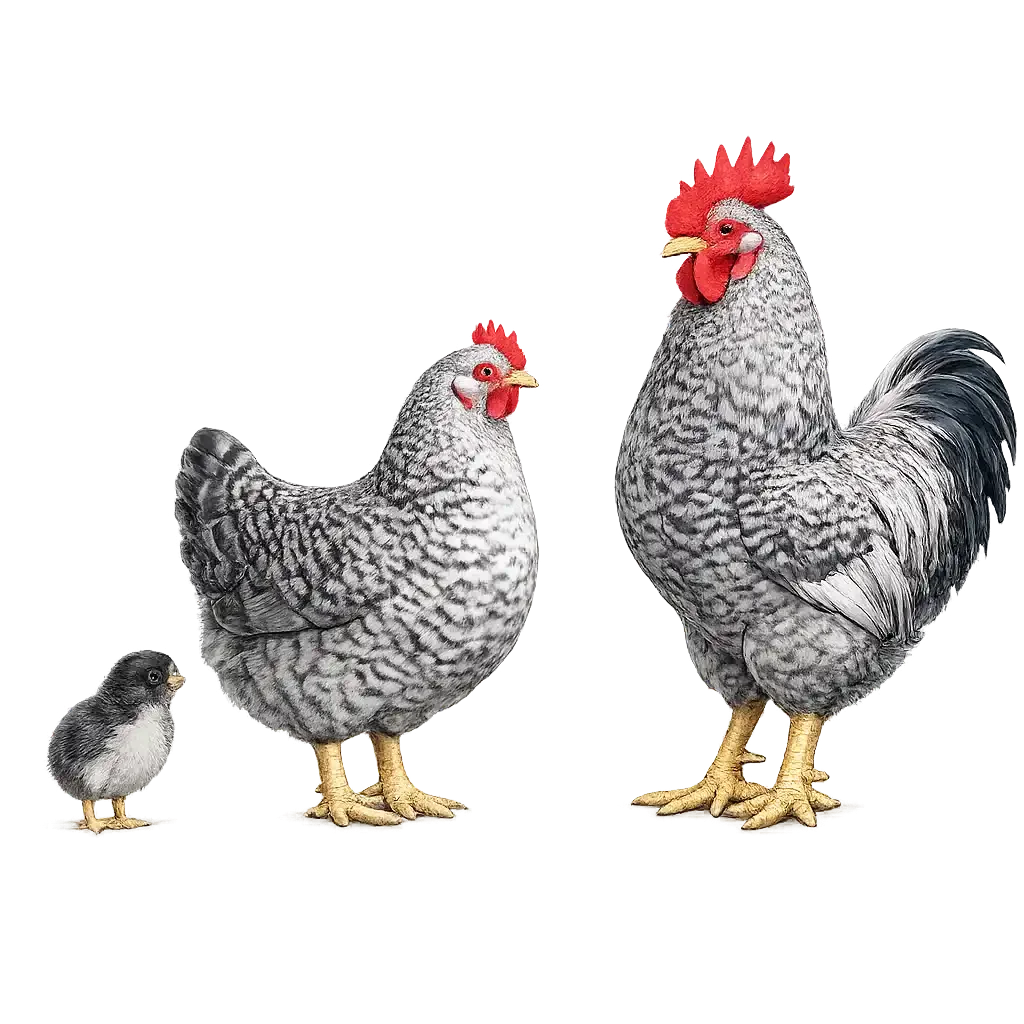
The California Gray occupies an unusual position in American poultry history: it is a rare breed, never APA recognized, not listed by the Livestock Conservancy, and known primarily today as the rooster parent used to produce the California White sex-link hybrid rather than as a standalone flock bird. Yet it is also one of the few genuinely autosexing dual-purpose breeds developed in the United States, a bird whose chicks can be sexed within the breed at hatch without the sex-link cross mechanics that require specific rooster and hen parent pairings, and a productive white egg layer that sits usefully between the White Leghorn's production volume and the Barred Plymouth Rock's body mass and temperament in a package that many experienced homestead keepers find more practically balanced than either pure parent breed.
The breed was developed by Professor James Dryden, a poultry science professor at Oregon Agricultural College in Corvallis, Oregon, who spent decades working to produce a superior white egg layer with good meat qualities and productive longevity beyond the two-year laying life typical of commercial production breeds of the era. Dryden crossed Barred Plymouth Rock roosters with White Leghorn hens to produce an autosexing bird with barred gray adult plumage, heavier than the Leghorn but lighter than the Plymouth Rock, laying large white eggs at strong volumes while carrying the Plymouth Rock's calmer temperament and body substance. After Dryden's death, his son Horace continued the breeding work in Modesto, California, publicly introducing the breed under its current name in 1949. The California Gray was promoted by major hatcheries including Ideal Poultry and Hoover's Hatchery from the 1960s onward, experienced a surge in commercial interest through the 1970s and 1980s, and has seen a modern revival among homestead and backyard keepers seeking the autosexing characteristic and dual-purpose production profile that distinguish it from more commonly available alternatives.
For the homestead keeper who wants a white egg layer calmer than the Leghorn, heavier than the Leghorn, autosexing within the breed without the sex-link parent line dependency of the California White, and genuinely dual-purpose at a useful meat weight, the California Gray is one of the most complete and least commonly known options in the homestead white egg production category.
Quick Facts
Type: Autosexing dual-purpose cross; Barred Plymouth Rock rooster x White Leghorn hen; not APA recognized
Weight: Roosters approximately 5.5 lbs; hens approximately 4.5 lbs; heavier than White Leghorn, lighter than Barred Plymouth Rock
Egg Production: Approximately 240 to 300 large white eggs per year; 5 or more eggs per week; documented as potentially exceeding White Leghorn production in some well-managed flocks; excellent winter layer
Egg Color: Pure white; large to extra-large
Egg Size: Large to extra-large
Primary Purpose: Dual purpose; eggs and meat; rooster parent for California White sex-link production; autosexing flock management
Temperament: Calmer, quieter, and friendlier than the pure White Leghorn; docile and manageable; good forager; suitable for beginners; less flighty than Leghorn parent
Brooding: Low; generally non-broody like the Leghorn parent
Flight Capability: Moderate; less inclined to fly than the pure White Leghorn; standard fencing generally adequate with attentive management
APA Recognition: None; cross breed not eligible for APA recognition or exhibition
Country of Origin: United States; Oregon and California; developed 1930s, introduced publicly 1949
Developers: Professor James Dryden at Oregon Agricultural College; continued by his son Horace Dryden in Modesto, California
Parent Breeds: Barred Plymouth Rock rooster x White Leghorn hen
Autosexing Characteristic: Males hatch lighter barred; females hatch darker barred with more pronounced black; males also carry white head spot at hatch; sexable within the breed without sex-link cross mechanics
Distinctive Trait: One of the few autosexing dual-purpose breeds developed in the United States; barred gray adult plumage in both sexes; hens markedly darker barred than roosters; rooster parent of the California White sex-link hybrid; white eggs at Leghorn-adjacent production volumes from a calmer, heavier bird
Availability: Available from select hatcheries including Hoover's Hatchery and Privett Hatchery; less widely available than California White
Lifespan: 6 to 10 years
Breed Overview
The California Gray's development story begins not in California but in Oregon, where Professor James Dryden was working at Oregon Agricultural College in Corvallis on one of the era's most ambitious practical poultry breeding goals: a dual-purpose chicken that would lay large white eggs prolifically, produce useful meat, remain productive beyond the two-year laying limit of most commercial breeds, and suit the conditions of northern markets where cold winters and variable climates challenged the Mediterranean breeds that dominated white egg production. Dryden was one of the era's most outspoken critics of breeding chickens purely to exhibition standards without regard for production performance, and his work at Oregon Agricultural College focused consistently on utility over ornament.
The cross he developed, Barred Plymouth Rock rooster on White Leghorn hen, was a logical one. The Barred Plymouth Rock contributed body mass, temperament, cold hardiness, and the barring gene that would prove essential to the autosexing mechanism. The White Leghorn contributed the exceptional white egg production that was the cross's primary commercial objective. The resulting offspring were heavier than pure Leghorns, calmer than pure Leghorns, and carried barred gray plumage that varied between the sexes in a way that allowed hatch-day visual sexing within the breed without requiring different parent breeds on each side.
Dryden's crossbreeding work was conducted during a period when crossbreeding chickens was professionally controversial in American poultry circles, where purity of breed lines was considered the measure of serious poultry work and outcrossing was viewed with suspicion by many fanciers and breeders. This professional environment partly explains why the California Gray never achieved APA recognition despite its practical merits: a cross breed was not eligible for the breed standard recognition that purebred birds could earn, regardless of how consistently it performed.
After Dryden's death, his son Horace continued the breeding work, eventually establishing the California Gray in Modesto, California, and formally introducing the breed under its current name in 1949. The name reflected the California location of the breed's final development and public introduction rather than its Oregon origins. Major hatcheries including Ideal Poultry took up the breed in the 1960s, promoting it specifically for its productive white egg laying, good Marek's Disease resistance, and autosexing hatch-day sexing character. The breed experienced its strongest commercial period through the 1970s and 1980s before the consolidation of commercial egg production around industrial White Leghorn and hybrid layer strains made the California Gray's scale impractical for mass commercial operations.
The California Gray's modern role is primarily as the rooster parent in California White sex-link production, where California Gray roosters crossed with White Leghorn hens produce the sex-link hybrid covered in a separate post in this directory. This role as a cross-production tool rather than a standalone breed has kept the California Gray in hatchery catalogs without requiring the breed itself to compete directly with commercial hybrid layers on production metrics. Privett Hatchery in New Mexico is cited in some sources as maintaining original Dryden California Gray genetics, making it a particularly relevant sourcing option for keepers who want verified lineage-traceable stock.
Plumage and Appearance
The California Gray's plumage is the breed's most visually interesting characteristic and the feature that enables its autosexing function. Both male and female California Grays carry barred plumage, similar in pattern concept to the Barred Plymouth Rock from which the barring genetics derive, but the expression of the barring differs significantly between the sexes in a way that allows visual distinction at hatch and into adulthood.
Male California Grays are lightly barred, with relatively narrow dark bars and broader light gray to white areas between them, giving the rooster a lighter, more silvery overall appearance that reflects the Leghorn's white genetics expressing strongly in the male. Female California Grays carry darker, more pronounced barring with narrower light areas and broader dark bars, producing a bird that appears distinctly darker and more strongly patterned than the rooster. This sex-linked difference in barring intensity is consistent and reliable within the breed, allowing experienced keepers to identify males and females visually both at hatch and in adult plumage.
At hatch, the autosexing characteristic expresses through chick down color. Male chicks hatch lighter overall and carry a white spot on the head, similar in mechanism to the sex-link white head spot seen in California White male chicks but arising through different genetics. Female chicks hatch darker and without the prominent head spot. The distinction is visible but requires experience or careful comparison to read accurately at hatch, unlike the more dramatically different black-versus-yellow sexing of some sex-link crosses. This is one of the practical trade-offs of the autosexing mechanism compared to sex-link sexing: autosexing breeds sex reliably within the breed across generations, but the visual distinction at hatch may be subtler than a sex-link cross's dramatic color difference.
The body is compact and active, heavier than the White Leghorn's slight frame but without the broad, substantial build of the Barred Plymouth Rock. Adult hens weigh approximately 4.5 pounds and roosters approximately 5.5 pounds, sitting in the medium weight category appropriate to a bird designed to balance egg production efficiency against useful meat development. The legs are yellow and unfeathered. The single comb is red and of moderate size, carrying the same frostbite risk as other single-combed breeds in hard winters.
Egg Production
The California Gray's egg production is one of its most practically valuable characteristics and the quality that drove its commercial adoption in the mid-20th century. Annual production of approximately 240 to 300 large white eggs per year, with some well-managed flocks documented as matching or exceeding the pure White Leghorn's annual total, places the California Gray at the top of the white egg production category among dual-purpose breeds and among the most productive birds of any type in the directory.
The eggs are pure white, large to extra-large, visually identical to White Leghorn eggs and to commercial production white eggs in color and appearance. There is no cream tinting, coloring, or off-white character to the California Gray's egg that would distinguish it visually from the pure Leghorn's output.
The California Gray's egg production longevity is a specific and documented advantage over the pure White Leghorn. Professor Dryden's original development goal specifically included productive laying beyond two years, and keeper and hatchery accounts consistently note that California Grays maintain strong production into their third and fourth years at levels where pure Leghorn production has typically declined meaningfully. This longer productive lifespan at sustained volumes represents a genuine economic advantage for homestead operations that measure flock value across multiple laying years rather than only in the first year's peak.
Winter laying is excellent, better than the pure White Leghorn in most keeper accounts, reflecting the Plymouth Rock cold-weather genetics moderating the Leghorn's sometimes reduced winter performance. California Grays are specifically cited as one of the better winter white egg layers available from any hybrid or dual-purpose breed.
Broodiness is low, consistent with the Leghorn's non-broody dominance in the cross. Keepers who need reliable natural hatching should use a dedicated broody breed rather than planning incubation programs around California Gray hens.
Meat Quality
The California Gray's meat quality represents a genuine and practical improvement over the pure White Leghorn as a dual-purpose homestead bird. The Plymouth Rock genetics in the cross contribute body mass, breast development, and meat texture that the Leghorn entirely lacks, producing a carcass that is smaller than the Barred Plymouth Rock but meaningfully more useful than the pure Leghorn as a table bird.
The breed's intermediate weight between its two parent breeds means that surplus California Gray roosters and older hens produce reasonable homestead table birds without requiring a dedicated separate meat breed in the flock. The meat is not as substantial or as well-developed as a true dual-purpose heritage breed like the Barred Plymouth Rock, White Rock, or Black Australorp, but it is a genuine improvement over the near-worthless carcass of the pure Leghorn.
For homestead keepers who want to process surplus males and older hens for table use rather than disposing of them without return, the California Gray's modest but real meat utility makes it more suitable than the pure Leghorn while still prioritizing egg production as its primary function.
Temperament and Behavior
The California Gray's temperament is one of its most consistent and practically significant advantages over the pure White Leghorn, and it is the temperament characteristic that most directly determines whether a keeper who finds the Leghorn's nervousness unmanageable might find the California Gray workable.
The breed is described across keeper and hatchery accounts as calm, friendly, and docile by the standards of white egg production breeds, which means calmer than the White Leghorn but still more active and alert than the genuinely docile heritage dual-purpose breeds like the Black Australorp, White Rock, or Barred Plymouth Rock. The Plymouth Rock genetics tempering the Leghorn's extreme nervousness produce a bird that is approachable, manageable, and suitable for beginner keepers in a way that the pure Leghorn is not, while retaining the productive energy and foraging efficiency of its Leghorn heritage.
Keeper accounts consistently note the California Gray as quieter than the White Leghorn, less inclined toward the frequent alarm calling and general vocalization that makes the Leghorn problematic in urban and suburban settings. This noise reduction is a genuine practical advantage for keepers in noise-sensitive environments.
The breed forages actively and efficiently on range, combining the Leghorn's wide-ranging, resource-finding character with the Plymouth Rock's slightly more settled and purposeful movement. California Grays on genuine range access manage their feed intake efficiently from foraged supplements, contributing to feed cost savings in managed pasture operations.
Climate Adaptability
The California Gray's climate adaptability is meaningfully broader than the pure White Leghorn's, with the Plymouth Rock genetics contributing the cold-weather resilience that makes the breed a reliable winter layer across northern climates where the pure Leghorn sometimes struggles.
Cold hardiness is good for a medium-weight single-combed breed, with the Plymouth Rock genetic contribution providing more cold-weather body mass and metabolic heat retention than the Leghorn alone. The breed is specifically documented as an excellent winter layer, one of its most frequently cited practical advantages over the pure Leghorn parent.
The single comb carries the same frostbite risk as all single-combed breeds in hard freezes. Standard petroleum jelly application during cold snaps and dry draft-free housing manage this risk adequately in most North American cold-winter regions.
Heat tolerance is good, consistent with the Leghorn's Mediterranean genetics providing the dominant heat management character of the cross. The California Gray handles warm climates comfortably with standard shade and cool water management.
Housing and Management
The California Gray's most distinctive management advantage over the California White and the pure White Leghorn is its autosexing characteristic within the breed. A keeper who maintains a California Gray breeding flock can hatch replacement chicks and sex them at hatch within the breed without requiring specific California Gray rooster and White Leghorn hen parent pairings as the California White does, and without the sex-link parent line dependency that makes the California White's sexing convenience available only through hatchery sourcing rather than home flock propagation.
This autosexing within the breed means the California Gray is one of the few white egg production birds in this directory that supports a genuinely self-sustaining flock where keepers can propagate their own replacement stock, sex the chicks at hatch within their own breeding program, and maintain the breed's production characteristics across generations without returning to a hatchery each cycle. This is the California Gray's most significant practical advantage over every hybrid and sex-link alternative in this directory, and for homestead keepers who prioritize flock self-sufficiency alongside egg production, it is a compelling and underappreciated characteristic.
The autosexing mechanism does require some experience to read accurately at hatch, as the visual distinction between lighter male chicks and darker female chicks is subtler than the dramatic black-versus-white-spot distinctions of sex-link crosses. Keepers who develop familiarity with the breed's chick sexing can read the distinction reliably; those who are new to the breed may benefit from consulting experienced California Gray breeders or hatchery guidance in their first hatching seasons.
Standard flight management applies: the California Gray is less inclined to fly than the pure Leghorn but retains meaningful flight capability as a lighter-framed active breed. Standard four to five foot fencing contains most California Gray flocks adequately, though some individuals may test lower barriers.
Sourcing Considerations
The California Gray is less widely available than the California White or the White Leghorn, requiring more deliberate sourcing research than those breeds. Hoover's Hatchery and Privett Hatchery are specifically noted as sources for the breed, with Privett cited in some sources as maintaining original Horace Dryden California Gray genetics that connect directly to the breed's development lineage. Ideal Poultry, which promoted the breed from the 1960s onward, is another potential source worth checking for availability.
The breed's role as the rooster parent in California White cross production means that hatcheries primarily interested in producing California White hybrids maintain California Gray roosters as a production tool rather than as a standalone breed, which can affect the quality and dual-purpose balance of the California Gray stock they offer for direct sale. Keepers who want California Gray birds for their own autosexing flock rather than as cross-production stock should specifically seek hatcheries that maintain the California Gray as a self-sustaining breed rather than only as a cross parent.
Pros and Cons
Pros
One of the few autosexing dual-purpose breeds developed in the United States; chicks sexable within the breed at hatch without sex-link cross mechanics
Supports self-sustaining flock propagation; keepers can breed their own replacement stock and maintain the autosexing characteristic across generations
Strong white egg production of 240 to 300 large white eggs per year; documented production longevity beyond the two-year peak typical of commercial layers
Excellent winter layer; better cold-weather production consistency than the pure White Leghorn
Calmer, quieter, and more manageable than the pure White Leghorn; suitable for beginner keepers
Heavier than the White Leghorn; genuinely useful meat from surplus roosters and older hens
Good cold hardiness from Plymouth Rock genetics; handles northern climates better than pure Mediterranean breeds
Active forager; efficient on range with good feed cost savings in pasture management
Rooster parent for California White sex-link production; California Gray roosters have a cross-production utility beyond the standalone breed
Longer productive lifespan than commercial hybrid layers
Cons
Not APA recognized; not suitable for exhibition
Less widely available than California White or White Leghorn; requires more deliberate sourcing research
Autosexing chick distinction at hatch is subtler than sex-link cross distinctions; requires experience to read accurately
Single comb requires frostbite monitoring in hard winters
Not as calm or as heavy as the pure Barred Plymouth Rock or other heritage dual-purpose breeds
Broodiness low; not reliable for natural hatching programs
Less well-known than comparable production hybrids; limited keeper community and sourcing guidance compared to mainstream breeds
Profitability
The California Gray's profitability case for the homestead is built on the combination of sustained white egg production across a longer laying life than commercial hybrids, the autosexing flock self-sufficiency that eliminates ongoing hatchery replacement costs once a breeding flock is established, and the modest but real dual-purpose meat utility that produces table return from surplus males and older hens.
The pure white egg production does not carry the direct-sale premium of colored heritage eggs, but the longer productive lifespan and self-sustaining breeding program reduce the total cost of production across multiple laying seasons in a way that offsets the color premium disadvantage relative to breeds whose eggs command higher direct-sale prices but whose flocks require more frequent and costly replacement cycles.
California Gray roosters have a secondary commercial utility as the cross-production parent for California White sex-link hybrids, which creates a niche revenue opportunity for keepers who maintain verified California Gray breeding stock and can supply California Gray roosters to other keepers or small operations setting up California White production programs.
Comparison With Related Breeds
White Leghorn: The primary parent breed and most direct production comparison. The White Leghorn lays 280 to 320 large white eggs per year on the best feed-to-egg conversion of any recognized breed, but with a nervous, flighty temperament that many backyard and homestead keepers find unmanageable. The California Gray lays 240 to 300 white eggs per year in a calmer, heavier, more beginner-accessible bird that maintains production longer and handles cold winters better. The White Leghorn does not breed to an autosexing standard within the breed; the California Gray does. For keepers who want the maximum possible white egg volume from a single bird and can manage the Leghorn's temperament, the pure Leghorn edges the California Gray on peak production; for keepers who want sustained white egg production in a manageable autosexing self-sustaining flock, the California Gray is the more complete homestead choice.
California White: The sex-link hybrid produced by crossing California Gray roosters with White Leghorn hens, covered in a dedicated post in this directory. The California White lays 280 to 300 pure white eggs per year with sex-link hatch-day chick sexing that is somewhat easier to read at hatch than the California Gray's autosexing distinction. The California White does not breed true and requires hatchery replacement each generation. The California Gray breeds true within the autosexing framework and supports self-sustaining flock propagation. For keepers who want hatchery-sourced sex-linkable white egg production without breeding management responsibility, the California White is more accessible; for keepers who want a self-sustaining autosexing white egg flock they can propagate from their own breeding stock, the California Gray is the better long-term choice.
Barred Plymouth Rock: The other parent breed, representing the calmer, heavier, more truly dual-purpose end of the California Gray's genetic spectrum. The Barred Plymouth Rock lays approximately 200 to 280 large brown eggs per year in a genuinely docile, beginner-friendly dual-purpose heritage bird with APA recognition, exhibition eligibility, and a true-breeding standard. The California Gray lays more white eggs per year in a slightly less calm but still manageable bird that lacks the Barred Rock's APA credentials and exhibition utility. For keepers who want brown eggs, heritage breed credentials, and the full dual-purpose body mass of the Plymouth Rock, the Barred Rock is the better choice; for keepers who want white egg production in an autosexing self-sustaining bird calmer than the Leghorn, the California Gray is the answer.
Austra White: A comparison across the white-adjacent production hybrid category. The Austra White is a Black Australorp and White Leghorn cross laying cream to off-white eggs at 220 to 280 per year without autosexing or sex-link sexing, requiring standard vent sexing for chick identification. The California Gray lays pure white eggs at 240 to 300 per year with autosexing within the breed and a self-sustaining breeding program. The Austra White is calmer than the California Gray and lays cream rather than pure white. Both are more manageable than the pure White Leghorn; the California Gray's autosexing self-sufficiency is its primary advantage over the Austra White for keepers who prioritize long-term flock sustainability.
Final Verdict
The California Gray is the most overlooked breed in the white egg production category for homestead keepers who are thinking beyond the first generation of flock replacement. Its autosexing characteristic within the breed is genuinely rare in North American dual-purpose breeds and genuinely valuable for keepers who want to propagate their own replacement stock without the parent-line dependency of sex-link cross programs or the unsexed chick management burden of non-autosexing breeds. Its white egg production at 240 to 300 per year sustained across a longer productive lifespan than commercial hybrids, combined with the temperament improvement over the pure Leghorn and the modest but real meat utility from the Plymouth Rock genetics, produces a more completely balanced homestead white egg bird than either pure parent breed delivers alone. The limited availability compared to mainstream alternatives and the subtler hatch-day autosexing distinction that requires experience to read accurately are the genuine practical challenges of the breed. For homestead keepers who are willing to research their sourcing, develop their autosexing eye, and invest in establishing a breeding flock rather than ordering replacements annually, the California Gray rewards that investment with the most self-sufficient white egg production flock in this directory. The dual purpose and homestead category is better for including it.
Frequently Asked Questions
What makes the California Gray autosexing and how is that different from sex-link? An autosexing breed can be sexed at hatch within the breed itself, meaning a California Gray rooster crossed with a California Gray hen produces autosexing offspring where male and female chicks are visually distinguishable at hatch. The breed breeds true for this characteristic across generations. A sex-link cross, like the California White, requires specific different parent breeds on each side of the cross, with the sex-distinguishable coloring arising from the interaction between the two parent breeds' genetics rather than from a characteristic within a single breed. Sex-link hybrids do not breed true; autosexing breeds do.
How do you tell California Gray male and female chicks apart at hatch? Male chicks hatch lighter in color overall and carry a white spot on the head from the barring gene. Female chicks hatch darker and without the prominent light head spot. The distinction is real and reliable but subtler than the dramatic differences seen in some sex-link crosses, requiring some familiarity with the breed's chick appearance to read accurately. Keepers new to the breed benefit from consulting experienced California Gray breeders or hatchery guidance in their first hatching seasons.
Is the California Gray the same as the California White? No. The California Gray is an autosexing dual-purpose breed produced by crossing Barred Plymouth Rock roosters with White Leghorn hens. The California White is a sex-link hybrid produced by crossing California Gray roosters with White Leghorn hens. The California Gray is the rooster parent of the California White. The California Gray lays pure white eggs, is autosexing within the breed, and supports self-sustaining flock propagation. The California White lays pure white eggs, is sex-linkable at hatch through a different mechanism, and does not breed true.
Can I breed California Grays and get more California Grays? Yes. Unlike the California White, which is a first-generation hybrid that does not breed true, the California Gray is an autosexing breed that breeds true within the breed. California Gray roosters crossed with California Gray hens produce California Gray offspring that maintain the breed's autosexing characteristic, barred gray plumage, white egg production, and dual-purpose character across generations. This self-sustaining breeding capability is one of the California Gray's most important practical advantages over hybrid alternatives.
Where can I buy California Gray chicks? Hoover's Hatchery and Privett Hatchery in New Mexico are specifically cited sources for the breed, with Privett noted in some accounts as maintaining original Horace Dryden California Gray genetics. Availability is seasonal and less predictable than mainstream breeds. Keepers who want to build a self-sustaining California Gray breeding flock should prioritize sourcing from hatcheries that maintain the California Gray as a standalone breed rather than only as a rooster parent for California White cross production.
How does the California Gray compare to the White Leghorn for a beginner? The California Gray is meaningfully more beginner-accessible than the pure White Leghorn. It is calmer, quieter, less flighty, and more tolerant of human presence and handling. It is not as docile as the Black Australorp, Barred Plymouth Rock, or other genuinely beginner-friendly heritage breeds, but it represents a practical middle ground between the Leghorn's management challenges and the calmer heritage breeds' lower production volumes. For a beginner who specifically wants white egg production and can manage a moderately active bird, the California Gray is a more forgiving starting point than the pure Leghorn.
Related Breeds
California White
White Leghorn
Barred Plymouth Rock
Austra White
White Rock
Bielefelder