
Heavy Assorted (Hatchery Line)
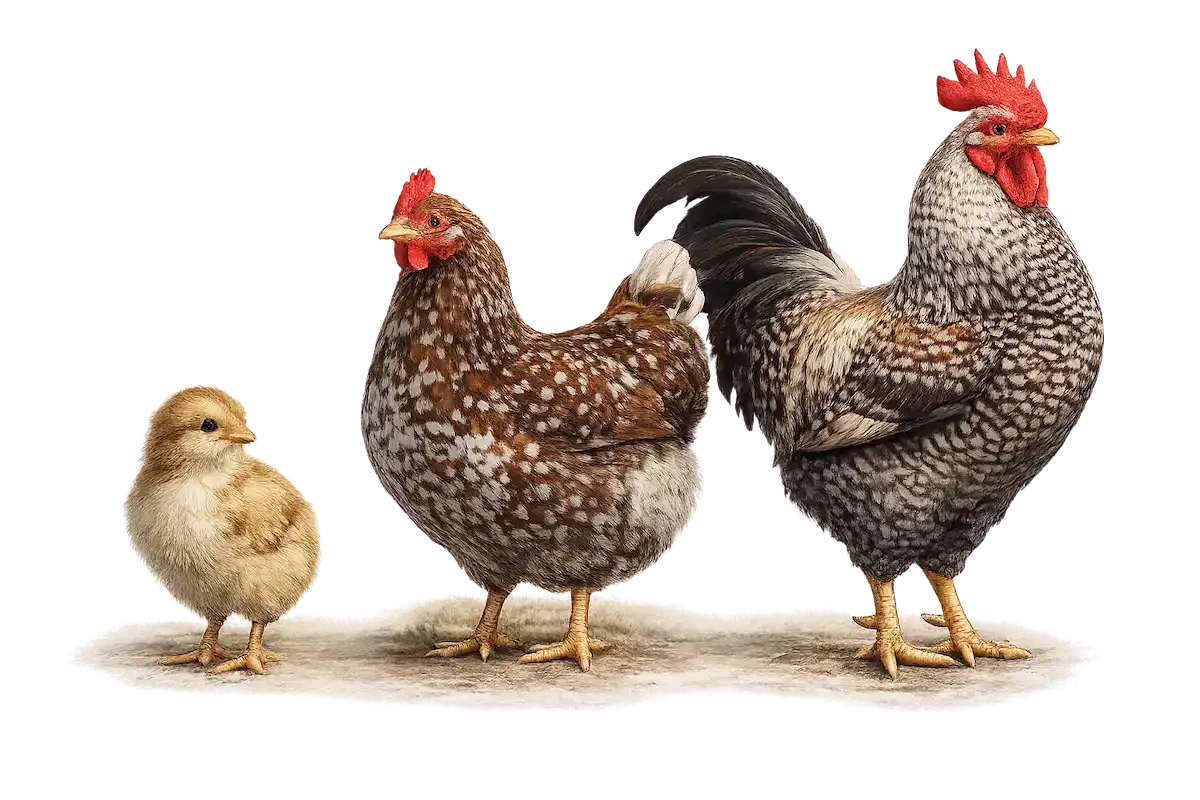
The Heavy Assorted Straight Run is a Murray McMurray Hatchery assortment of unsexed heavy heritage breed chicks drawn from the most established and most widely recognized American and English class dual-purpose breeds in their catalog. McMurray's product description is characteristically direct: "Our Heavy Assorted Straight Run combination is for the customer that wants some heritage chicks at a great price. Straight Run means we didn't sex these, so there are both males and females of truly the best backyard chickens your grandparents would recognize." The breed pool is documented and specific: Australorps, Brahmas, Cornish, Giants, Orpingtons, Reds, Rocks, Sussex, Turkens, and Wyandottes, with at least five different varieties guaranteed in any order. Additional breeds not listed on the product page may also appear.
The Heavy Assorted occupies a specific and clearly defined position in McMurray's assortment lineup. It is not the all-male cockerel assortment that the All Heavies and Super Duper posts cover; it includes both males and females from the heavy heritage breed pool. It is not the all-female assortment that Murray's Choice Layers and the Brown Egg Layers assortment provide; its straight-run composition means approximately half the birds will be cockerels. It is specifically the mixed-sex heavy heritage breed assortment, delivering the dual-purpose homestead flock character that the breeds in its pool were historically developed to provide: large enough to produce a worthwhile table bird from surplus males and older hens, productive enough to supply consistent brown egg laying from the females, and calm and cold-hardy enough to be described accurately as the breeds your grandparents would recognize.
McMurray's customer service team specifically recommends the Heavy Assorted for cold-climate keepers who want hardy breeds without the climate uncertainty of broader assortments that include Mediterranean light breeds, which are less cold-adapted than the heavy heritage breeds that dominate this pool. This cold-hardiness recommendation is well-founded: every breed in the Heavy Assorted pool, from the Black Australorp to the Buff Brahma to the Barred Rock, handles northern winters more reliably than Leghorn-class Mediterranean breeds.
Quick Facts
Type: Hatchery assortment product; straight-run mixed-sex heavy heritage breed chicks; not a breed
Sex: Straight run; unsexed; approximately 50 percent cockerels and 50 percent pullets; specific sex ratio not guaranteed
Variety Guarantee: At least 5 different heavy breeds; drawn from documented pool of Australorps, Brahmas, Cornish, Giants, Orpingtons, Reds, Rocks, Sussex, Turkens, and Wyandottes; additional breeds possible
Breed Pool Highlights: Black Australorps; Light and Dark Brahmas; Dark Cornish; Black and White Jersey Giants; Buff and White Orpingtons; New Hampshire Reds and Rhode Island Reds; Barred, White, Partridge, and Buff Plymouth Rocks; Sussex; Turkens (Naked Necks); Silver Laced, White, and Columbian Wyandottes
Egg Color: Brown from all breeds in the pool; consistent brown egg production from the female component
Egg Production: Variable by breed; 180 to 280 large brown eggs per year from most heavy heritage breed hens; solid heritage layer performance across the pool
Egg Size: Large to extra-large; consistent with heavy breed production
Primary Purpose: Dual purpose; mixed-sex heritage homestead flock; eggs from females, table birds from surplus males and older hens; cold-climate hardy diversified flock
Temperament: Generally calm and beginner-friendly across all breeds in the pool; heavy heritage breeds consistently described as docile, manageable, and suitable for mixed-flock environments; one of the calmest assortment pools available from McMurray
Brooding: Variable by breed; Brahmas and Cochins occasionally broody; most heavy heritage breeds moderate broodiness; some breeds essentially non-broody
Flight Capability: Low across all breeds in the pool; heavy body weight prevents sustained flight; standard fencing adequate for all varieties in the assortment
Available From: Murray McMurray Hatchery exclusively; year-round availability; minimum order size consistent with McMurray standard chick minimums
Climate Recommendation: Specifically recommended by McMurray for cold-climate keepers; all breeds in the pool are cold-hardy heritage breeds
Distinctive Characteristic: The most cold-hardy and most dual-purpose of McMurray's straight-run assortments; all breeds in the documented pool are heavy heritage breeds with genuine dual-purpose utility; consistently calm temperament across the entire breed pool
Understanding the Heavy Assorted
The Heavy Assorted's breed pool is the most cohesive and most thematically unified of any McMurray assortment covered in this directory. Where Murray's Choice Layers draws from four distinct breed groups spanning production Leghorns to Ameraucanas, and the Special Assorted Bargain draws from the full catalog without category constraint, the Heavy Assorted restricts its pool exclusively to the heavy heritage breeds whose shared characteristics, calm temperament, cold hardiness, brown egg production, and genuine dual-purpose body weight, create a more predictable flock outcome than broader assortment pools provide.
This thematic coherence has practical management consequences. A keeper who receives a Heavy Assorted order does not need to manage the temperament diversity of mixing calm Orpingtons with alert Leghorns, or the vision-limitation challenges of mixing standard breeds with crested ornamental varieties, or the altitude and cardiovascular considerations of Cornish Cross commercial broilers alongside heritage chicks. Every bird in the Heavy Assorted pool is a calm, heavy, cold-hardy, brown-egg-laying heritage breed that coexists comfortably with every other breed in the same pool. The management approach appropriate for a Barred Rock is appropriate for a Wyandotte, an Australorp, and an Orpington. This management consistency is a genuine practical advantage for beginning keepers who want diverse breed exposure without diverse management complexity.
The straight-run composition is the primary planning consideration that distinguishes the Heavy Assorted from the Brown Egg Layers and Murray's Choice Layers all-female assortments drawing from overlapping breed pools. Approximately half the Heavy Assorted birds will be cockerels, and planning for their management before the order arrives is essential. In the heavy heritage breed context, surplus cockerels have meaningful dual-purpose utility: processed at 16 to 20 weeks as heritage fryers or held to full maturity as roasting birds, heavy breed cockerels from Barred Rocks, Wyandottes, Orpingtons, and Rhode Island Reds produce worthwhile table birds at heritage scale. This dual-purpose character makes the straight-run composition less of a management burden than it would be in a straight-run ornamental or light breed assortment where cockerels have less practical meat utility.
The Breed Pool
The breeds guaranteed or likely to appear in a Heavy Assorted order represent a roster of the most historically important American heritage breed chickens, the birds that fed farm families through the 19th and early 20th century before commercial specialization separated egg and meat production into distinct genetic products.
Black Australorps from Australia, brought to worldwide recognition through record egg-laying contests in the 1920s, contribute the most prolific laying genetics in the heavy breed pool at 250 to 300 large brown eggs per year alongside genuinely docile, beginner-friendly temperament. The Black Australorp post in this directory covers the breed in detail.
Brahmas, both Light and Dark varieties, contribute the largest body size in the pool alongside feathered feet, exceptional cold hardiness, and a calm, slow-moving temperament that makes them the gentlest and most docile heavy breed in any McMurray assortment. Their slower laying onset and lower production ceiling, at approximately 150 to 200 eggs per year, make them the lowest-production breed in the pool, but their docile character and impressive size more than compensate in a mixed dual-purpose flock.
Dark Cornish contributes a compact, heavily muscled body with exceptional breast development that is specifically valued for table bird quality. Unlike the commercial Cornish Cross, the Dark Cornish is a true heritage breed that grows at a heritage pace but produces a carcass with superior breast muscle development compared to most heritage breeds in the pool.
Jersey Giants, both Black and White, contribute the largest mature body weight in the pool at 10 to 13 pounds for roosters, producing the most impressive single-bird heritage table bird yield alongside 150 to 250 large brown eggs per year from the hens.
Orpingtons in Buff and White varieties contribute the most affectionate and people-seeking temperament in the pool alongside 200 to 260 brown eggs per year from genuinely large, soft-feathered, cold-hardy birds. Orpington hens are among the most reliably broody of the heavy breeds, making them the most useful natural hatching birds in the assortment.
Rhode Island Reds and New Hampshire Reds contribute the highest egg production among the Reds category at 200 to 300 large brown eggs per year from active, hardy, confident birds that are more assertive in flock dynamics than the Orpington or Australorp but not aggressive.
Plymouth Rocks in Barred, White, Partridge, and Buff varieties contribute the most historically significant American dual-purpose breed in the pool, covered in the Barred Plymouth Rock post in this directory. All Plymouth Rock varieties share the breed's cold hardiness, calm temperament, and 200 to 280 brown egg production alongside genuine dual-purpose meat utility.
Sussex, Turkens, and Wyandottes complete the pool with additional dual-purpose heritage breeds that each bring specific strengths: Sussex for reliable production and excellent heat-and-cold adaptability; Turkens for extreme hardiness and active foraging character with the distinctive naked neck that reduces heat stress; Wyandottes for striking plumage patterns, cold hardiness from their rose comb, and 200 to 240 cream to brown eggs per year.
Egg Production
The Heavy Assorted's egg production is solid, consistent, and uniformly brown, which is both a practical advantage and a visual limitation compared to assortments drawing from broader breed pools. Every breed in the Heavy Assorted pool lays brown eggs, ranging from light tan to medium brown depending on the specific breed and individual hen. There are no white eggs from Mediterranean layers and no blue eggs from Ameraucanas in this assortment; the egg basket from a Heavy Assorted flock is a unified display of the brown egg color range rather than the multi-color diversity of Murray's Choice Layers.
Production figures across the pool range from approximately 150 eggs per year from Brahmas and Jersey Giants at the lower end to 250 to 300 eggs per year from Black Australorps and productive Rhode Island Red strains at the upper end, with most breeds in the pool falling in the 200 to 260 range. This range produces a mixed flock that averages strong heritage layer production without the Mediterranean breeds' peak production ceiling.
The female component of the straight-run order, approximately half the birds, provides consistent year-round brown egg production with the winter hardiness characteristic of heavy heritage breeds. All breeds in the pool handle cold winters better than Mediterranean light breeds, and most maintain meaningful production through the coldest months when lighter breeds reduce their output most significantly.
Laying onset varies by breed, with most heavy heritage breeds beginning at 5 to 7 months. Jersey Giants are the notable exception, sometimes delaying onset to 8 to 9 months. The staggered onset across breed types means the flock reaches full production gradually over a two to three month period rather than simultaneously.
Temperament and Management
The Heavy Assorted's temperament is the most uniformly calm of any McMurray assortment pool, and this consistency is the characteristic that most clearly distinguishes it from broader assortments that mix temperament types. Every breed in the guaranteed pool is described across keeper accounts and breed documentation as calm, docile, beginner-friendly, and manageable with children. There are no nervous Leghorns, no vision-limited crested breeds, and no game-influenced assertive varieties in this pool. The temperament range runs from genuinely calm at the Barred Rock and Australorp level to exceptionally docile at the Orpington and Brahma level, without the temperament outliers that create management complexity in broader assortment pools.
This temperament consistency means the management approach appropriate for the calmest breed in the order works adequately for the most active breed in the order, which simplifies daily flock management significantly. A keeper who designs their flock space, handling routines, and companion breed selection for calm heavy heritage breeds has designed correctly for every bird in the Heavy Assorted order.
The cockerel management dimension of the straight-run composition is worth specific planning. Heavy heritage breed roosters are generally among the most manageable of heritage breed roosters when socialized from young, with the pool's breeds consistently producing roosters described as protective flock guardians without the human-aggression problems that game-influenced or Mediterranean rooster temperaments sometimes present. Processing surplus cockerels at 16 to 20 weeks for fryers or at full maturity for roasting birds is the standard management approach, and the heavy breed carcasses are large enough to justify the processing investment.
Climate Adaptability
The Heavy Assorted is specifically recommended by McMurray's customer service for cold-climate keepers, and this recommendation reflects a genuine consensus across the breed pool rather than a marketing assertion. Every breed documented in the Heavy Assorted pool is cold-hardy by heritage breed standards: the Brahma's feathered feet and dense plumage, the Australorp's cold-tested record-laying heritage, the Plymouth Rock's New England origin, the Wyandotte's rose comb that eliminates single-comb frostbite risk, and the Orpington's deep fluffy feathering all contribute to a pool that handles northern winters better than any assortment including Mediterranean light breeds.
The Wyandotte is specifically notable for cold-climate management because its rose comb presents essentially no frostbite risk even in hard winters, making it the most cold-comb-safe breed in a pool that otherwise includes single-combed breeds requiring standard cold management. The Brahma's feathered feet require the same dry litter management considerations as any feather-footed breed, which is worth noting as the one breed-specific housing consideration that applies to part of the pool.
Heat tolerance is good across the pool, with the Turken's naked neck providing a specific heat management adaptation and the other heavy breeds handling moderate to warm summers adequately with standard shade and cool water access.
Sourcing Considerations
The Heavy Assorted's year-round availability and broad breed pool make it one of the more reliably accessible McMurray assortments throughout the full ordering season. Unlike the Ornamental Layer Collection's February through June window or the Super Duper's seasonal availability, the Heavy Assorted can be ordered across the full hatch calendar.
The five-variety guarantee from the documented breed pool gives keepers reasonable confidence that the order will include meaningful breed diversity across the pool rather than a concentration in one or two breeds. Buyer accounts across McMurray's assortment products consistently describe the Heavy Assorted as one of the more reliably varied assortments within its pool, reflecting the breadth of the documented breed list and McMurray's long history of maintaining these specific heritage breed programs.
The straight-run composition requires the standard pre-order planning for cockerel management. In the heavy heritage breed context, processing surplus males for table use at 16 to 20 weeks for fryers or at full heritage maturity for larger roasting birds is the most practical approach. Rehoming heavy breed cockerels is more successful than rehoming ornamental or light breed cockerels given the dual-purpose utility of the breeds and the established heritage breed community that values documented heavy heritage stock for breeding programs.
Comparing the Heavy Assorted to Related McMurray Assortments
Brown Egg Layers: The most directly comparable McMurray assortment, drawing from the same heavy heritage breed pool but sold as all-female sexed pullets. The Brown Egg Layers assortment guarantees at least five different heavy breed varieties from a breed list that substantially overlaps with the Heavy Assorted pool. The Brown Egg Layers costs more per bird than the Heavy Assorted due to the sexing guarantee, and it eliminates the cockerel management planning that the straight-run Heavy Assorted requires. For keepers who want specifically female heavy heritage birds and are not interested in the dual-purpose table bird utility of the straight-run cockerels, the Brown Egg Layers is the more appropriate product. For keepers who want both male and female heavy heritage birds for a complete dual-purpose operation at lower per-bird cost, the Heavy Assorted is the right choice.
All Heavies: The all-male heavy breed cockerel assortment from McMurray, guaranteed to include at least five different heavy breed varieties from a similar pool. The All Heavies is sold as cockerels specifically for heritage meat production, without the egg-laying component of the Heavy Assorted's female birds. Keepers who want exclusively male heavy breeds for a grow-out meat program and are sourcing their laying hens separately would choose the All Heavies; keepers who want a complete mixed-sex dual-purpose heavy breed flock from a single order would choose the Heavy Assorted.
Murray's Choice Layers: The all-female diversified layer assortment drawing from four breed groups including but not limited to the heavy heritage breed pool. Murray's Choice Layers includes White Egg Layers and Ameraucanas alongside heavy breeds, producing more egg color diversity but less temperament and climate-hardiness consistency than the Heavy Assorted. For keepers who specifically want the uniform cold-hardiness, calm temperament, and brown egg consistency of a heavy-breed-only assortment, the Heavy Assorted in straight-run is the more appropriate product even with its cockerel planning requirement.
Super Duper: The all-male straight-run assortment from McMurray's full breed catalog at the lowest per-bird price. Where the Super Duper draws from all breed categories including light breeds and rare breeds, the Heavy Assorted restricts its pool to the heavy heritage breeds only. Keepers who want the breed diversity of the full catalog with all-male composition would choose the Super Duper; keepers who want specifically the heavy heritage breed temperament, cold hardiness, and dual-purpose character in a mixed-sex assortment would choose the Heavy Assorted.
Pros and Cons
Pros
The most uniformly calm and beginner-friendly temperament of any straight-run McMurray assortment; all breeds in the documented pool are heavy heritage breeds with gentle, manageable dispositions
Specifically recommended by McMurray for cold-climate keepers; the most cold-hardy assortment pool available
At least 5 different heavy heritage breeds guaranteed from a documented pool of 10-plus varieties
All breeds produce brown eggs consistently; no egg color uncertainty across the pool
Straight-run males provide meaningful dual-purpose table bird utility from heritage breed carcasses at 16 to 20 weeks or full maturity
Low flight capability across all breeds; standard fencing adequate for the entire pool
Year-round availability without seasonal ordering window constraints
Standard management approach works uniformly across all breeds in the pool; no breed-specific management outliers
No bantam breeds included; all standard-size heritage birds
McMurray's century-long heritage breed preservation program supports consistent breed quality across the documented pool
Cons
Straight-run composition means approximately 50 percent cockerels; cockerel management planning required before ordering
No specific breed guarantee within the documented pool; specific varieties cannot be requested
Breeds not marked or identified in the shipping box; visual identification required as birds feather out
Brown eggs only; no egg color diversity from white, blue, or tinted egg layers in the pool
Heavy breed egg production ceiling below Mediterranean production breeds; not the highest-volume laying assortment
Brahma feathered feet require dry litter management consideration if Brahmas appear in the order
Slower maturity and laying onset than production hybrid assortments; 5 to 9 months to first egg depending on breed
Per-bird cost higher than fully unsexed open assortments like the Special Assorted Bargain, reflecting the breed category restriction
Profitability
The Heavy Assorted's profitability for homestead operations is built on the complete dual-purpose model more completely than any other McMurray assortment covered in this directory. The straight-run composition produces the full dual-purpose flock dynamic: females for egg production, males for table birds, and the breed quality across the pool that supports both functions simultaneously from a single order.
Heritage table bird revenue from surplus Heavy Assorted cockerels processed at 16 to 20 weeks for fryers or at full maturity for roasting birds provides early-season freezer production from the male component. The heavy heritage breed carcasses at 5 to 9 pounds for most breeds in the pool produce genuinely worthwhile individual table birds that the direct-sale heritage poultry market values at premium prices compared to commercially raised alternatives.
Brown egg revenue from the female component at 200 to 280 eggs per hen per year across most breeds in the pool provides the long-term consistent production that sustains the operation across multiple seasons. The uniform brown egg color does not produce the multi-color carton premium of assortments including Ameraucanas, but the heritage breed provenance story, the cold-hardiness documentation, and the dual-purpose flock character all support direct-sale narrative marketing that commands above-commodity pricing.
The per-bird cost advantage of the straight-run Heavy Assorted below the all-female Brown Egg Layers assortment compounds across multiple flock replacement cycles for operations that replace their laying flock periodically, producing meaningful cumulative savings when the male component's table bird value is factored against the per-bird cost differential.
Final Verdict
The Heavy Assorted is the right McMurray assortment for the homestead keeper who wants a complete dual-purpose mixed-sex heritage flock from the most historically proven American heavy breed pool, who is specifically interested in cold-climate performance, and who has planned for straight-run cockerel management from the start. The uniformly calm temperament across the entire documented breed pool makes it the most beginner-accessible straight-run assortment McMurray offers. The cold-hardiness of every breed in the pool makes it the most appropriate assortment for northern region keepers without climate-specific breed research. The dual-purpose utility of the surplus cockerels makes the straight-run composition a meaningful operational advantage rather than a management complication for keepers who process their own birds. For keepers who want all-female birds, more egg color diversity, or ornamental breed character, the all-female assortments and ornamental assortments in this directory serve those needs better. For the dual-purpose cold-climate heritage homestead flock keeper, the Heavy Assorted delivers exactly the flock the name promises.
Frequently Asked Questions
Why does McMurray specifically recommend the Heavy Assorted for cold climates? Every breed in the documented Heavy Assorted pool, including Australorps, Brahmas, Cornish, Giants, Orpingtons, Reds, Rocks, Sussex, Turkens, and Wyandottes, is a heavy heritage breed with documented cold-hardiness that handles northern winters better than Mediterranean light breeds like Leghorns. Broader assortments including Murray's Choice Layers draw from Mediterranean production breeds that are less cold-adapted, making those assortments less suitable than the heavy breed-restricted pool for keepers in consistently cold regions.
What is a Turken and is it a turkey cross? Turkens, also called Naked Neck chickens, are a standard chicken breed with a naturally featherless neck, which gives them a superficial resemblance to turkeys but no genetic relationship. The naked neck is a genetic trait that reduces the bird's total feather coverage, which provides heat dissipation advantages in warm weather while the bird's remaining body feathering maintains cold-weather function. Turkens are genuine heritage breed chickens that lay brown eggs and are fully interfertile with all standard chicken breeds.
How do I manage the surplus cockerels from a straight-run Heavy Assorted order? The most practical approaches are processing for table use at 16 to 20 weeks for heritage fryer-weight birds, or holding to full maturity at 5 to 9 months for larger roasting birds depending on breed. Heavy heritage breed cockerels produce worthwhile carcasses at both processing ages, with the lighter breeds in the pool maturing faster and the Jersey Giants requiring the longest grow-out for maximum carcass weight. Rehoming heavy breed cockerels to other homestead keepers for breeding programs is also more successful than rehoming ornamental or light breed males given the established market for documented heavy heritage stock.
Will I get any variety of Wyandotte, and does comb type matter for cold climates? Wyandottes in Silver Laced, White, and Columbian varieties are documented in the Heavy Assorted pool. All Wyandotte varieties carry a rose comb rather than the single comb of most other heavy breeds in the pool, which eliminates frostbite risk from the comb entirely. If cold-climate comb management is a specific concern, Wyandottes are the only breed in the Heavy Assorted pool whose comb type eliminates the standard cold management requirement.
How does the Heavy Assorted compare to ordering specific individual heavy breeds? Individual breed ordering allows sex selection, specific breed selection, climate-specific breed choices, and minimum quantity flexibility that the Heavy Assorted does not provide. The trade-off is higher per-bird cost and the research burden of identifying and specifying which heavy breeds to order. The Heavy Assorted provides more breed diversity per order than most individual breed minimum quantities allow, at lower per-bird cost, without the research requirement. For keepers who want a specific heavy breed in guaranteed female sex, individual breed ordering is appropriate; for keepers who want broad heavy heritage breed diversity at lower cost in a mixed-sex homestead flock, the Heavy Assorted serves the purpose efficiently.
Related Breeds
Black Australorp
Barred Plymouth Rock
White Rock
Black Jersey Giant
Bielefelder
Malines