
Whiting True Green
The Whiting True Green exists because of fly fishing. That origin story is worth understanding before anything else, because it explains why this breed is so unlike any other green egg layer on the market and why the eggs it produces are so reliably, consistently green. Dr. Tom Whiting grew up in Denver raising backyard chickens and selling eggs to his neighbors at age ten. He went on to earn a Ph.D. in poultry genetics from the University of Arkansas, fully expecting to work in commercial meat and egg production. Instead, a chance encounter with the fly-fishing hackle industry, and the release of the film A River Runs Through It in 1992, which sent a wave of new anglers looking for fly-tying feathers, pulled him toward a niche that had no precedent. He bought out Henry Hoffman's pioneering hackle operation in 1989, established Whiting Farms outside Delta, Colorado, and spent the next three decades developing the most precisely genetically engineered chicken feathers in the world for the fly-tying market. Breeding chickens with extraordinary genetic precision to produce exact feather traits was his core business. Developing reliable egg-color breeds on the side was, for someone of his background, a natural extension of the same discipline. The Whiting True Green, available exclusively through Murray McMurray Hatchery, is the result: a purpose-built green egg layer with the feed efficiency and production output that only a trained poultry geneticist working from a foundation of decades of selective breeding could produce. For backyard keepers who want a reliable, high-volume green egg layer with a genuinely interesting origin story and a calm, foraging-friendly temperament, the Whiting True Green belongs on the short list.
Quick Facts
Class: Not APA recognized; proprietary breed line exclusive to Murray McMurray Hatchery
Weight: Roosters approximately 5 to 7 lbs; hens approximately 3.5 to 4 lbs
Egg Production: Approximately 280 to 300 large green eggs per year; approximately 4 to 6 eggs per week
Egg Color: Green; ranging from light sage to medium olive green; occasionally darker shades
Egg Size: Large; 1.8 oz and above
Primary Purpose: Egg production; green egg specialty layer
Temperament: Calm and docile; friendlier and less flighty than the Whiting True Blue; sociable with handling
Brooding: Non-setter; hens rarely go broody; consistent laying without frequent brood interruptions
Flight Capability: Moderate; standard fencing adequate for most setups
APA Recognition: Not recognized; proprietary breed line
Country of Origin: Delta, Colorado, United States; developed at Whiting Farms by Dr. Tom Whiting
Also Known As: WTG (common abbreviation among keepers)
Comb Type: Single comb; frostbite management required in hard winter climates
Distinctive Trait: Consistent green egg production at high volume from a light, feed-efficient bird; reddish to chestnut plumage with yellow legs
Conservation Status: Not applicable; proprietary commercial breed line
Lifespan: 6 to 8 years; peak production in first two years
Breed Overview
Dr. Tom Whiting holds three university degrees in poultry science and genetics: a bachelor's from Colorado State University, a master's from the University of Georgia, and a doctorate from the University of Arkansas. He founded Whiting Farms in 1989 after acquiring the Hoffman Hackle operation, a pioneering fly-tying feather business developed by Henry Hoffman in Oregon beginning in the 1960s. Hoffman had bred Barred Plymouth Rock bantams for hackle quality and expanded to include white and brown feather lines; Whiting bought the stock, relocated the operation to western Colorado, and began the long process of refining and expanding genetic lines through the kind of rigorous, documented, multi-generation selection program that most commercial poultry operations never undertake for feather traits.
What made Whiting Farms unusual, and what made the development of the True Green and True Blue egg layers possible as a side project, was Whiting's approach to poultry genetics itself. While most commercial poultry geneticists focus on feed conversion, growth rate, and disease resistance in high-volume production birds, Whiting was selecting for precise, specific physical traits, feather length, barb density, color consistency, quill suppleness, in individual birds across carefully documented pedigree lines. This is exactly the kind of selection methodology required to breed reliably for egg color, a trait that is controlled by genetics but varies considerably in expression without disciplined selection against off-type birds.
The Whiting True Green was developed by crossing Whiting True Blue hens with brown-egg-laying roosters. The blue egg gene, carried by the Whiting True Blue line and originating from Ameraucana genetics, when combined with the brown pigment overlay contributed by the brown-egg rooster side of the cross, produces a green shell. This is the same genetic mechanism behind Easter Egger green eggs and olive egger green eggs, but the Whiting True Green's distinction is the consistency with which the cross produces true green rather than the variable results that less rigorously selected crosses deliver. Murray McMurray Hatchery holds exclusive rights to both the genetic lines and the Whiting True Green and Whiting True Blue breed names.
One practical note on breeding true: Murray McMurray is transparent that the Whiting True Green may or may not breed true for egg color in subsequent generations when keepers breed their own birds. The consistency of green egg production is a characteristic of the original hatchery cross, maintained through Whiting's controlled breeding program, and cannot be reliably replicated by keepers breeding their own Whiting True Green flocks without access to the parent lines.
Plumage and Appearance
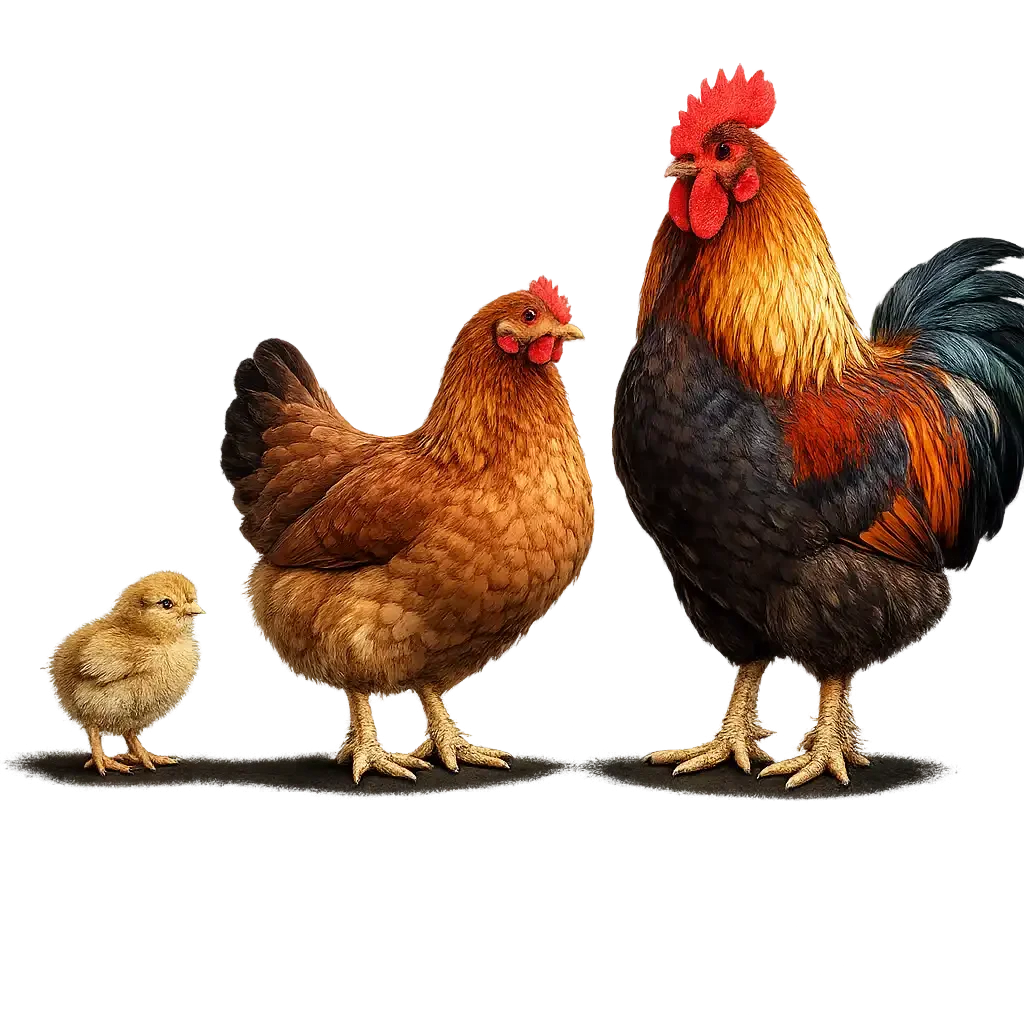
The Whiting True Green is a light to medium-sized bird with a clean, active body type that reflects its Leghorn and Ameraucana ancestry. Mature hens are reddish to chestnut in color, relatively uniform in appearance compared to the wide color variation seen in the Whiting True Blue, which comes in a much broader range of patterns and colors. Day-old chicks range from golden to chestnut to darker reddish brown. The more consistent coloring of the True Green compared to the True Blue is one of the practical ways keepers distinguish between the two varieties when raising mixed batches of chicks.
The comb is a single comb with upright points, red in color, medium in size. Earlobes on most birds are red, though some Whiting True Greens carry white or whitish earlobes reflecting the blue-egg gene ancestry, since white earlobes are genetically associated with the blue egg gene. A greenish tint to the earlobes has been noted by some keepers as a distinguishing characteristic. Legs are yellow throughout, another distinguishing feature from the Whiting True Blue, which comes in a variety of leg colors. The beak is yellow. The body is trim, alert, and upright with a moderately broad breast and clean legs free of feathering.
The overall appearance is that of a productive light breed rather than an ornamental or exhibition bird, which is exactly what the Whiting True Green is. The reddish chestnut coloring gives the flock a warm, attractive appearance in a mixed backyard setting, and the consistency of coloring makes flock identification straightforward for keepers managing multiple breeds.
Egg Production
The Whiting True Green's egg production is the centerpiece of the breed and the reason most keepers choose it. At approximately 280 to 300 large green eggs per year, it delivers green egg production at a volume that no heritage green egg layer approaches and that compares favorably with high-production white and brown egg breeds. The feed-to-egg conversion ratio is described by Murray McMurray as exceptional, meaning the breed converts feed to eggs more efficiently than most layers of comparable production output, a practical economic advantage for keepers managing feed costs.
Eggs are large, consistently above 1.8 oz at full production maturity, and range in color from light sage green to medium olive green with some variation toward darker green shades depending on the individual hen. The green color is produced by the same mechanism as all green and olive eggs: a blue egg shell base from the blue egg gene, with a brown pigment overlay deposited during the final stages of egg formation. The depth of green depends on how much brown pigment is deposited over the blue base, which varies slightly between individual hens and across the laying cycle. Eggs laid earlier in the laying cycle or by younger hens tend toward brighter, more saturated green; eggs laid later in the season or by hens further into their laying career may be slightly lighter or more muted in tone.
A small percentage of Whiting True Green hens from hatchery stock may lay brown eggs rather than green. This occurs when the brown-egg genetic contribution from the rooster side of the cross is not fully overridden by the blue egg gene, producing a bird that carries the blue gene without expressing it strongly enough to push the shell color into green. Murray McMurray has indicated that hens laying brown eggs early in their laying career often transition to green as they establish their laying pattern, though this is not universal. Keepers buying Whiting True Greens specifically for green egg production should be aware of this small percentage and plan accordingly.
Hens begin laying at approximately 16 to 20 weeks of age, notably earlier than many heritage breeds and comparable to high-production commercial layers. First eggs are small and gradually increase in size over the first several weeks of production. The breed is a non-setter and goes broody rarely if at all, meaning the laying cycle is not repeatedly interrupted by brood behavior as it is in strongly broody heritage breeds. This consistent, non-broody production pattern is part of what enables the breed to reach its 280 to 300 egg annual figures under good management.
Temperament and Behavior
The Whiting True Green's temperament is consistently described by keepers as one of its genuine practical strengths, and notably calmer than its sister breed the Whiting True Blue, which has a reputation for being more flighty and independent. True Green hens are docile, friendly, and relatively easy to handle, becoming noticeably tame with regular gentle interaction from young. They are curious birds that approach new objects and situations with interest rather than alarm, and experienced keepers report that their True Green flocks are among the more sociable and manageable of their light-breed layers.
The breed free ranges enthusiastically and takes foraging seriously, which is consistent with its Ameraucana and Leghorn-influenced ancestry. Birds given access to range move actively through the available space, foraging for insects, seeds, and plant material throughout the day. This active foraging behavior contributes to the breed's efficient feed conversion, as birds on range supplement their diet meaningfully. Keepers running pure confinement systems report that the breed manages well in runs given adequate space, but the breed's active character is best expressed with at least partial access to range or a larger outdoor area.
The breed integrates well into mixed flocks and is not known for aggressive or bullying behavior toward other breeds. It holds its own in flock dynamics without being dominant or difficult. Roosters are active and alert but not typically human-aggressive under normal management conditions with regular handling from young.
Climate Adaptability
The Whiting True Green's single comb is the primary climate management consideration. In hard winter climates, the single comb's upright points are vulnerable to frostbite during extreme cold events, and keepers in regions with sustained sub-freezing temperatures should provide dry, wind-protected housing and monitor comb condition during cold snaps. Petroleum jelly applied to the comb before extreme cold events is a standard preventive measure that most experienced keepers with single-comb breeds use routinely.
Cold hardiness overall is solid for a light breed. The Whiting True Green manages winter conditions comfortably in most North American climates with standard insulated, draft-free housing. It is not as cold-robust as heavy dual-purpose breeds with greater body mass, but it is described by keepers in Vermont and similar cold-climate states as winter hardy with appropriate shelter.
Heat tolerance is good, consistent with the light body type and active ranging character of the breed. The Whiting True Green manages summer heat better than heavy or densely feathered breeds, benefits from shade and cool water access during peak summer heat, and does not require special summer management beyond standard practice. Egg production may decrease somewhat during peak summer heat as it does in all laying breeds, but the breed maintains production through normal seasonal temperature variation better than many heritage breeds.
Housing and Management
Standard backyard housing requirements apply without the specialized adjustments needed for long-tailed exhibition breeds or game heritage birds. Four square feet of indoor floor space per bird is the baseline. Outdoor run space should be generous given the breed's active foraging character; the breed performs best with meaningful outdoor access rather than tight confinement. Standard fencing at four to five feet is adequate for most Whiting True Green flocks, as the breed is not a strong flier under normal conditions.
Nest box management is straightforward. The breed is a reliable nest box user and does not require the intensive monitoring that cyclical layers or strongly broody breeds demand. Keeping nest boxes clean and adequately filled with litter is the standard practice; the True Green's consistent non-broody laying pattern means nest boxes stay in regular rotation without the extended occupancy that broody hens create.
Feed management follows standard layer guidelines. Quality layer feed with adequate calcium for shell quality, supplemented with oyster shell offered free choice, supports the breed's high production output without special intervention. The breed's exceptional feed-to-egg conversion means that feed costs per egg are lower than many heritage layers producing comparable egg sizes, a practical economic advantage for keepers focused on cost efficiency.
Chick management is straightforward. Chicks are described as hardy from hatch without the special nutritional requirements that long-tailed breeds or slow-maturing exhibition breeds demand. Standard chick starter feed and appropriate heat management through the brooding period produces robust pullets that come into lay reliably at 16 to 20 weeks.
Sourcing Considerations
The Whiting True Green is available exclusively through Murray McMurray Hatchery. This exclusivity is straightforward: Murray McMurray holds the rights to both the genetic lines and the breed names, and no other hatchery legally supplies genuine Whiting True Green birds. Keepers encountering birds sold as Whiting True Green from other sources should verify the source carefully, as the name is protected.
Murray McMurray ships day-old chicks with the standard minimum order quantities and seasonal availability windows that apply to their other breeds. The breed is popular enough that it sells out in advance during peak ordering periods, and keepers planning spring flocks benefit from ordering well ahead of the desired arrival date. Pricing is in line with other specialty layer breeds from the hatchery rather than the premium pricing associated with rare conservation breeds.
One sourcing consideration worth flagging for keepers interested in self-sustaining flocks: because the Whiting True Green may not breed true for egg color when bred by the keeper rather than through Whiting Farms' controlled parent lines, maintaining a reliably green-laying flock over multiple generations requires continued sourcing from Murray McMurray rather than breeding replacements from existing flock members. Keepers who want a self-sustaining green egg flock should consider heritage breeds like the Olive Egger or breeds with more stable egg-color genetics across self-bred generations.
Pros and Cons
Pros
Approximately 280 to 300 large green eggs per year, the highest consistent green egg production available from any purpose-bred green layer
Exceptional feed-to-egg conversion; more economical per egg than most heritage green egg layers
Large egg size; consistently above 1.8 oz at full production maturity
Calm, docile temperament; friendlier and less flighty than the Whiting True Blue
Non-setter; rarely goes broody; consistent year-round production without frequent brood interruptions
Early maturity; begins laying at 16 to 20 weeks, earlier than most heritage breeds
Good heat tolerance; manages summer conditions well without special intervention
Active forager; integrates foraging nutrition efficiently on range
Straightforward sourcing through Murray McMurray Hatchery; no waiting lists or breeder network navigation required
Cons
Single comb requires frostbite management in hard winter climates
Not APA recognized; not suitable for exhibition showing
Proprietary breed; does not breed true for egg color in keeper-bred subsequent generations
A small percentage of hatchery birds may lay brown eggs rather than green, particularly early in the laying cycle
Exclusive sourcing through Murray McMurray means no alternative supply chain if availability is limited
Not a dual-purpose breed in any practical sense; light body weight makes meat utility negligible
Peak production concentrated in first two years; production declines meaningfully in subsequent years
Profitability
The Whiting True Green's profitability profile is among the strongest of any specialty egg layer for direct-to-consumer farm egg sales. Green eggs command consistent premium pricing at farmers markets, farm stands, and direct sale operations, where colorful egg cartons with a mix of brown, white, blue, and green eggs sell faster and at higher prices than single-color cartons. A flock producing 280 to 300 large green eggs per year per bird, with the feed efficiency the breed delivers, generates meaningful revenue in premium egg markets with lower per-egg feed costs than heritage layers of comparable size.
The breed's non-broody, consistent production pattern means revenue is not interrupted by the extended off-lay periods that strongly broody heritage breeds create. Combined with the early lay onset at 16 to 20 weeks, keepers reach revenue production faster with the Whiting True Green than with slower-maturing heritage breeds.
For farm operations running mixed-color egg production, the Whiting True Green pairs naturally with Cream Legbars or Whiting True Blues for blue eggs, Black Copper Marans or Welsummers for dark brown eggs, and standard layers for white or light brown eggs to produce the colorful mixed cartons that generate the strongest direct-sale interest. The green contribution from the True Green is distinctly different from olive egger green, which tends toward darker, murkier tones; the True Green's bright sage to medium green is visually clean and stands out clearly in a mixed carton.
Comparison With Related Breeds
Whiting True Blue: The sister breed from the same Whiting Farms genetic program, available through the same exclusive Murray McMurray channel. The True Blue lays blue eggs with comparable production volume and feed efficiency. Key practical differences are the True Blue's wider color variation in both plumage and leg color, its pea comb which reduces frostbite risk in cold climates compared to the True Green's single comb, and its more flighty temperament relative to the True Green's calmer disposition. Keepers choosing between the two for a production flock should consider climate and temperament preference alongside egg color.
Easter Egger: The most widely available green and blue egg layer in North America, produced by crossing blue-egg gene carriers with various other breeds. Easter Eggers are not a standardized breed and vary enormously in appearance, temperament, and egg color reliability. Some Easter Egger hens lay green, some blue, some pink, some brown, depending on their specific genetic makeup. The Whiting True Green offers substantially more consistent green egg production than a standard Easter Egger flock and significantly higher annual production, but Easter Eggers are widely available from virtually every hatchery and are less expensive per bird.
Olive Egger: A deliberate cross between a blue-egg breed and a dark-brown-egg breed such as a Marans or Welsummer, specifically to produce dark olive or khaki-colored eggs rather than the brighter green of the Whiting True Green. Olive eggers lay a darker, earthier egg tone that reads differently in a carton from the True Green's brighter green. Production volume in olive eggers is typically lower than the True Green, often 150 to 200 eggs per year depending on the breeds used in the cross. The Olive Egger and True Green serve different market positions within the green egg category.
Cream Legbar: A British autosexing breed that lays sky blue to blue-green eggs reliably, with good production at approximately 180 to 200 eggs per year. The Cream Legbar's autosexing trait, where male and female chicks are distinguishable by color at hatch, is a practical advantage not found in the Whiting True Green. The Legbar's egg is distinctly blue rather than green, making the two breeds complementary rather than directly competitive in a mixed color production flock.
Ameraucana: The pure breed from which the blue egg gene in the Whiting True Green ultimately derives. Standard Ameraucanas lay blue eggs reliably but produce approximately 150 to 200 eggs per year, significantly fewer than the Whiting True Green. Ameraucanas are APA-recognized and available through specialty breeders for exhibition; the True Green offers no exhibition utility but substantially outperforms the Ameraucana on production volume.
Final Verdict
The Whiting True Green is the right answer to a specific question: what is the best chicken for a backyard keeper or small farm operation that wants green eggs in high volume, consistent color, large size, and good feed efficiency from a calm and manageable bird? Nothing else on the market answers that question as cleanly. The Easter Egger comes close on availability but not on consistency or volume. The Olive Egger comes close on novelty but not on production or brightness of shell color. Heritage breeds with green egg genetics come close on temperament and self-sustainability but not on production volume or feed efficiency.
The caveats are real: the single comb needs winter management attention, a small percentage of birds may lay brown, the breed does not self-sustain reliably for egg color across keeper-bred generations, and sourcing is locked to one hatchery. For the keeper who understands those limitations and still wants the best green egg layer available, the Whiting True Green is the answer. The green egg layers category is better for including it.
Frequently Asked Questions
Do Whiting True Greens actually lay green eggs? Yes, consistently. The green shell is produced by the combination of the blue egg gene from the Whiting True Blue side of the cross and a brown pigment overlay from the brown-egg rooster parent. Most hens in a Whiting True Green flock lay reliably green eggs ranging from light sage to medium olive green. A small percentage of birds may lay brown eggs, particularly early in their laying career, though Murray McMurray reports that many of these transition to green as they establish their laying pattern.
How many eggs per year does a Whiting True Green lay? Approximately 280 to 300 large green eggs per year under good management, or roughly 4 to 6 eggs per week per hen. This is among the highest production figures for any colored-egg breed and compares favorably with high-production white and brown egg layers. The breed is a non-setter and goes broody rarely, which supports consistent year-round production without frequent interruptions.
What is the difference between the Whiting True Green and the Whiting True Blue? Both were developed by Dr. Tom Whiting at Whiting Farms in Colorado and are available exclusively through Murray McMurray Hatchery. The True Green lays green eggs, has a single comb, yellow legs, and relatively consistent reddish to chestnut plumage. The True Blue lays blue eggs, has a pea comb which is more cold-hardy, comes in a much wider variety of plumage colors and leg colors, and is generally described as more flighty in temperament than the True Green.
Will Whiting True Greens breed true if I hatch my own eggs? Not reliably. Murray McMurray states that the Whiting True Green may or may not breed true for egg color when keeper-bred rather than produced through Whiting Farms' controlled parent lines. The consistency of green egg production is maintained through the specific cross in the original breeding program. Keepers breeding their own True Green birds may get green egg layers, brown egg layers, or blue egg layers in the offspring depending on how the genetics segregate. For a reliably self-sustaining green egg flock across generations, heritage breeds with more stable egg color genetics are a better choice.
Where can I buy Whiting True Green chickens? Murray McMurray Hatchery is the exclusive source. No other hatchery legally sells genuine Whiting True Green birds, as Murray McMurray holds the rights to both the genetic lines and the breed name. Day-old chicks are available seasonally with the breed selling out in advance during peak ordering periods. Ordering early in the season is recommended for keepers with a specific spring arrival date in mind.
Are Whiting True Greens good for cold climates? Moderately well suited. The breed manages winter conditions comfortably in most North American climates with standard insulated, draft-free housing. The single comb is the primary cold-climate concern, as the upright comb points are vulnerable to frostbite during sustained hard freezes. Keepers in cold-winter regions should monitor comb condition, apply petroleum jelly to the comb before extreme cold events as a preventive measure, and ensure housing keeps birds dry and protected from wind. The breed is less naturally cold-hardy than pea-combed breeds but manageable with basic winter attention.
How does the Whiting True Green egg color compare to an olive egger? They are different shades of green. The Whiting True Green produces a brighter, cleaner green ranging from light sage to medium green, similar to what many people picture when they think of a green egg. Olive eggers, typically crossed from a dark brown egg breed like Marans or Welsummer with a blue egg breed, produce a darker, earthier olive to khaki-green that is noticeably different in tone. Both are appealing in different ways; in a mixed carton the True Green's brighter green reads as clearly distinct from the olive egger's darker shade, which is why some farm egg operations run both breeds to offer the full range of green egg colors alongside blue, brown, and white eggs.
Related Breeds
Whiting True Blue
Easter Egger
Olive Egger
Cream Legbar
Ameraucana
Ameribella