
Whiting True Blue
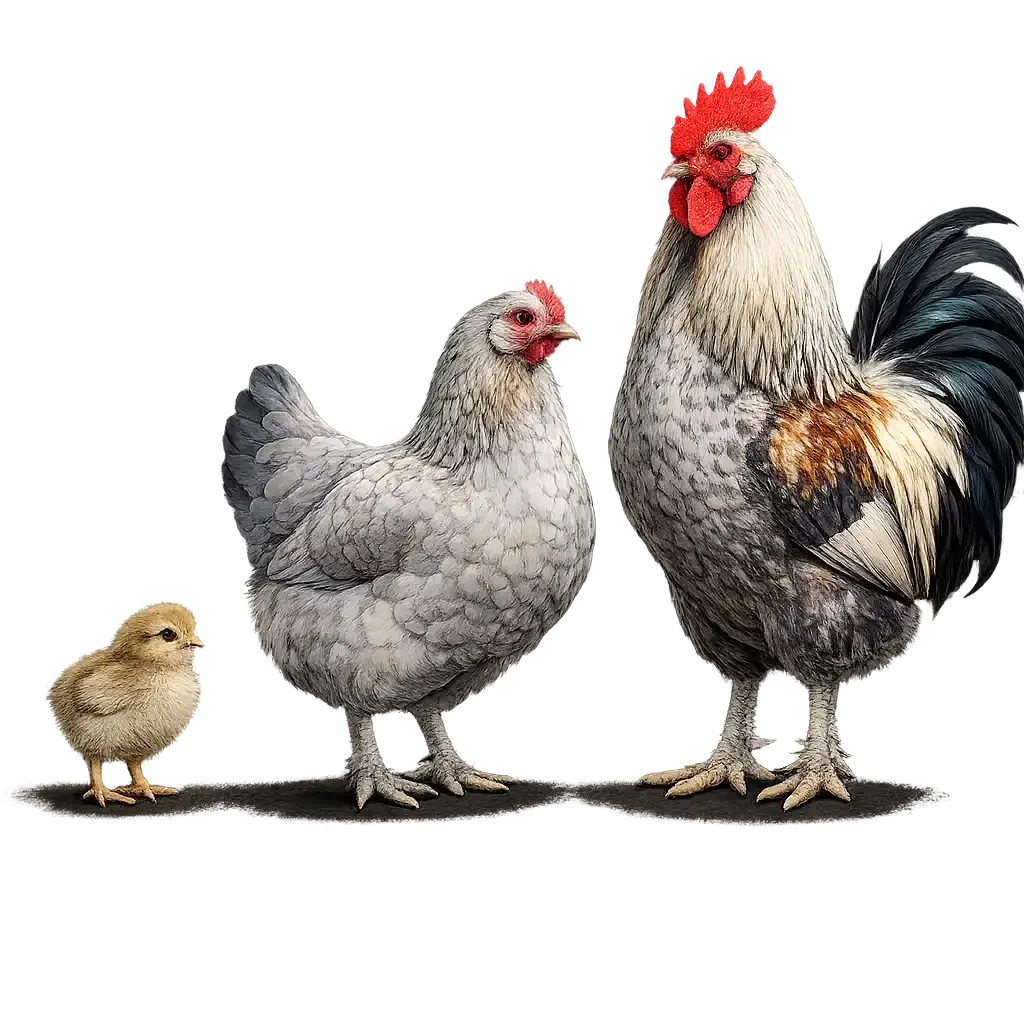
If the Whiting True Green is the answer to the question of what lays a reliable green egg in high volume, the Whiting True Blue is the answer to the same question asked about blue. And the answer is better in one important way: unlike the True Green, the Whiting True Blue breeds true for egg color. Keeper-bred offspring from a Whiting True Blue flock will lay blue eggs reliably across subsequent generations, because Dr. Tom Whiting spent years selecting specifically for homozygous expression of the blue egg gene, meaning birds that carry two copies of the gene rather than one and therefore pass it on with near-certainty to all their offspring. That distinction matters enormously for keepers interested in building a self-sustaining blue egg flock rather than returning to a hatchery every generation. The bird itself is a cross of Ameraucana and White Leghorn genetics, developed by Whiting at his farm in Delta, Colorado, beginning in the 1990s, and available exclusively through Murray McMurray Hatchery. What makes it visually distinctive from almost every other breed in the directory is the complete absence of a breed standard for plumage: Whiting True Blues come in every feather color and pattern imaginable, from solid black to splash to barred to duckwing to wild-type chipmunk, with leg color varying to match. The eggs are always blue. Everything else is a surprise. For backyard keepers who want a high-volume, large-egg, reliably blue-laying bird that adds color, variety, and genuine production muscle to a mixed flock, the Whiting True Blue belongs on the short list.
Quick Facts
Class: Not APA recognized; proprietary breed line exclusive to Murray McMurray Hatchery
Weight: Roosters approximately 6 to 7 lbs; hens approximately 5 to 6 lbs
Egg Production: Approximately 280 to 300 large blue eggs per year; approximately 4 to 6 eggs per week
Egg Color: Powder blue to sky blue; blue throughout the shell, inside and out
Egg Size: Medium to large; starts medium and increases to large with maturity and adequate nutrition
Primary Purpose: Egg production; blue egg specialty layer
Temperament: Active, friendly, and curious; more independent and flighty than the Whiting True Green; non-aggressive toward flock mates
Brooding: Non-setter; hens rarely go broody; consistent laying without frequent brood interruptions
Flight Capability: Moderate to high; five-foot fencing or covered runs recommended given the breed's active, independent character
APA Recognition: Not recognized; proprietary breed line
Country of Origin: Delta, Colorado, United States; developed at Whiting Farms by Dr. Tom Whiting
Also Known As: WTB (common abbreviation among keepers)
Comb Type: Pea comb; minimal frostbite risk in cold winter climates
Distinctive Trait: Breeds true for blue egg color across keeper-bred generations; no breed standard for plumage, producing a flock of endlessly varied feather colors all laying the same powder blue egg
Conservation Status: Not applicable; proprietary commercial breed line
Lifespan: 8 to 10 years; strong production for three to five years, then gradually declining
Breed Overview
The Whiting True Blue shares its origin story with the Whiting True Green: both were developed as side projects by Dr. Tom Whiting at Whiting Farms in Delta, Colorado, the operation he built into the world's leading supplier of fly-tying hackle feathers after acquiring Henry Hoffman's pioneering operation in 1989. Whiting's three degrees in poultry genetics, a bachelor's from Colorado State University, a master's from the University of Georgia, and a doctorate from the University of Arkansas, gave him the technical foundation to approach egg-color breeding with the same precision he applied to feather trait selection for the fly-fishing market. Most poultry breeders working casually with Ameraucana and Leghorn crosses produce Easter Egger-type birds with inconsistent egg colors ranging from blue to green to pink to brown depending on how the genetics segregate. Whiting's approach was different: he selected systematically across multiple generations for the homozygous blue egg gene, ensuring that all offspring carried two copies and passed blue egg color on reliably rather than probabilistically.
The foundational cross was Ameraucana hens with White Leghorn roosters. The Ameraucana contributed the blue egg gene and the pea comb; the Leghorn contributed production volume, feed efficiency, and early lay onset. Early generations of this cross produced inconsistent results in both plumage and egg color, as crossing two genetically distinct breeds always does. Whiting's multi-generation selection program, crossing the brightest blue egg layers back to each other and selecting against any bird that did not carry homozygous blue egg genetics, eventually stabilized egg color production while intentionally leaving plumage entirely unselected. The result is a breed defined entirely by what comes out of the nest box, blue eggs, and completely undefined by what the bird looks like. This was not an oversight but a deliberate choice, giving keepers a flock that is visually dynamic and interesting precisely because no two birds look alike.
Murray McMurray Hatchery holds exclusive rights to both the genetic lines and the Whiting True Blue breed name, the same arrangement that applies to the Whiting True Green. The breed is not available from other hatcheries under the True Blue name, though various Ameraucana-Leghorn crosses sold as Easter Eggers or Prairie Bluebell Eggers share similar genetic ancestry without the same selection history for consistent blue egg production.
Plumage and Appearance
The Whiting True Blue's most discussed visual characteristic is not the bird itself but the flock: because there is no breed standard for plumage, a Whiting True Blue flock contains birds in every feather color and pattern that Ameraucana and Leghorn genetics can produce. Solid black, solid white, splash, blue, barred, duckwing, silver duckwing, blue silver duckwing, wild-type chipmunk, partridge, and combinations not easily named in standard poultry terminology all appear regularly in the same hatch. Leg color varies to match plumage, ranging from yellow to slate to greenish to nearly white. Some birds are clean-faced; others carry the muff and beard characteristic of their Ameraucana ancestry. The variety is genuine and unpredictable, and keepers who order a batch of Whiting True Blue chicks have no way of knowing in advance what their adult flock will look like.
Chick coloring reflects this variety: chipmunk-patterned chicks resembling Easter Egger or Ameraucana chicks are common, as are solid dark chicks, lighter chicks, and combinations. The chick-level variation makes identification in mixed brooder situations challenging, and keepers raising True Blues alongside True Greens note that the True Green chicks are more uniform in their reddish chestnut coloring, while True Blue chicks are all over the color map.
The pea comb is the one consistent physical trait. Where the True Green has a single comb with the frostbite risk that comes with it, the True Blue's pea comb is compact, low, and tightly set, presenting minimal frostbite risk even in hard winters. This is a genuine practical advantage for cold-climate keepers and one of the key differentiating factors when choosing between the two Whiting breeds for a northern flock.
Body type is medium-sized and active, reflecting the Leghorn influence. Hens average five to six pounds at maturity; roosters average six to seven pounds. The build is trim and alert rather than heavy and blocky, consistent with the breed's production-layer character. The overall impression is of a busy, quick, active bird rather than a placid dual-purpose type.
Egg Production
The Whiting True Blue's eggs are powder blue to sky blue and blue throughout the shell, inside and out. This last point is worth understanding clearly because it surprises many first-time keepers: brown eggs are brown on the outside because a brown pigment bloom is deposited over a white shell in the final stages of egg formation. Blue eggs are fundamentally different. The blue pigment, oocyanin, is a byproduct of bile production and penetrates the shell material entirely during formation rather than sitting on the surface. A blue eggshell cut in half shows the same blue color on the interior surface that it shows on the exterior. This makes blue eggs definitively distinguishable from lightly tinted eggs or from eggs that photograph blue under certain lighting conditions.
Production runs at approximately 280 to 300 large blue eggs per year, comparable to the Whiting True Green and consistent with the breed's Leghorn-influenced production genetics. Hens begin laying at approximately 18 to 20 weeks of age. First eggs are small to medium and increase in size over the first several weeks of production as the hen's reproductive system reaches full output capacity. Egg size at full maturity is reliably large with adequate nutrition, specifically adequate protein and calcium supporting the shell quality and production volume simultaneously.
One notable characteristic of the Whiting True Blue's production lifespan is its durability. Multiple sources and keeper accounts describe the breed maintaining strong production for three to five years before declining, with some hens remaining productive at meaningful levels for up to ten years under good management. This extended productive lifespan is longer than many hybrid layers and compares favorably with heritage breeds of similar production volume.
The breed is a non-setter and goes broody rarely, supporting consistent year-round production without the repeated interruptions that strongly broody breeds create. This production consistency combined with early lay onset and strong multi-year durability makes the Whiting True Blue one of the more economically efficient blue egg layers available to the backyard or small farm keeper.
A key advantage over the Whiting True Green for self-sustaining flock management: keeper-bred Whiting True Blue offspring reliably lay blue eggs, because Whiting's selection program established homozygous blue egg gene expression. Keepers can breed their own replacement hens from their existing True Blue flock and maintain blue egg production without returning to Murray McMurray each generation. Plumage colors in offspring will be random and unpredictable, but the egg color will be blue.
Temperament and Behavior
The Whiting True Blue is consistently described as more active, independent, and flighty than its sister breed the Whiting True Green, and this characterization is accurate and worth taking seriously before adding the breed to a flock. Hens are friendly and curious but not particularly people-oriented, taking longer to warm up to human interaction than more docile breeds and never becoming the kind of bird that seeks out contact or approaches voluntarily. Keepers who handle the breed from young, regularly and calmly, produce birds that tolerate handling without excessive alarm response, but the True Blue's baseline independence means it will always be more self-sufficient and less interactive than a Brahma or Orpington-type breed.
The breed's active character is one of its genuine practical strengths in a free-range or large-run environment. True Blues move constantly, forage enthusiastically, and cover ground efficiently, making them effective pest controllers and feed-cost reducers in range environments. They explore their space more thoroughly than more passive breeds and maintain the kind of alert, engaged behavior that suggests contentment in a bird given adequate room to express its natural activity level.
In mixed flocks the breed integrates without significant dominance issues. It is not aggressive toward flock mates and holds its own in the pecking order without requiring special management attention. The non-aggressive character and manageable size make it compatible with most other backyard breeds under normal management conditions.
Roosters are active and alert. Hand-raised Whiting True Blue roosters are reported by multiple keepers as respectful and non-aggressive toward humans when raised with consistent calm handling from young. Roosters raised without regular handling can be more wary and flighty. The standard practice of consistent contact from the brooder stage produces the most manageable adult roosters.
Climate Adaptability
The Whiting True Blue's pea comb is its most significant climate advantage. Where the Whiting True Green's single comb requires active frostbite management during hard winter events, the True Blue's compact pea comb presents minimal frostbite risk under standard winter housing conditions. This makes the breed genuinely better suited to cold winter climates than the True Green without requiring any additional management beyond what good housing already provides.
Cold hardiness overall is strong, with keeper accounts from cold-climate regions including Vermont, Alberta, and similar northern locations describing the breed handling extreme temperature swings, both heat and cold, without significant ill effects given appropriate shelter. The pea comb, combined with the breed's moderately sized body and active foraging character, produces a bird that manages a wide climate range more effectively than either very small or very large breeds.
Heat tolerance is good, consistent with the Leghorn ancestry and light to medium body type. The breed manages summer heat better than heavy or densely feathered breeds and does not require special summer management beyond shade and cool water access.
Housing and Management
Standard backyard housing requirements apply with one adjustment worth noting: the True Blue's more active and independent character compared to the True Green means containment deserves more attention. The breed is a capable flier when motivated, and while standard five-foot fencing contains most birds under normal conditions, particularly active individuals or birds in smaller runs may test the boundary. Covered runs eliminate this concern entirely for keepers who need reliable containment.
Indoor floor space of four square feet per bird is the standard baseline. Outdoor space should be generous given the breed's active foraging character. Tight confinement in small runs produces stressed birds that express their activity level in less desirable ways. The breed thrives with meaningful outdoor access and manages itself efficiently in range environments.
Feed management requires attention to protein and calcium levels given the breed's high production output. Minimum 18 percent protein in starter and grower feed during the development phase supports the breed's active growth. Layer feed at approximately 16 percent protein with free-choice oyster shell for calcium supplementation is the standard adult management approach. The breed's exceptional feed-to-egg conversion means that production costs per egg are lower than heritage breeds of comparable egg size, a practical economic advantage for farm egg operations.
The blue egg color can lighten slightly as hens age or as egg size increases, since the same amount of pigment distributed over a larger shell produces a lighter apparent color. Keepers breeding their own replacement hens and selecting the darkest blue egg layers from their flock for breeding use will maintain the most vibrant blue egg color across generations.
Sourcing Considerations
Murray McMurray Hatchery is the primary source for verified Whiting True Blue birds, holding exclusive rights to the genetic lines and breed name. Unlike the Whiting True Green, the True Blue breeds true for egg color, meaning keeper-bred offspring from a verified True Blue flock maintain blue egg production reliably. This self-sustaining quality opens up a secondary sourcing network of established backyard breeders who maintain verified True Blue flocks and sell hatching eggs and chicks outside of the hatchery channel, which the True Green's non-breeding-true status does not similarly support.
When sourcing from keepers rather than the hatchery, the only reliable quality indicator is egg color. Plumage cannot indicate genetic purity since the breed has no plumage standard. Blue eggs from the flock, ideally from multiple hens across multiple laying cycles to confirm consistency, are the verification standard. Murray McMurray's hatchery stock is the baseline for verified original genetic lines; keeper-bred birds from multiple subsequent generations may have drifted in production consistency depending on how carefully the source flock has been managed.
Chick prices from Murray McMurray are comparable to other specialty layers and significantly lower than exhibition or conservation breeds. The breed's wider availability compared to the Whiting True Green, given its self-sustaining breeding characteristic and the secondary keeper breeder network it supports, generally means shorter wait times and more sourcing flexibility for keepers who plan ahead.
Pros and Cons
Pros
Approximately 280 to 300 large powder blue eggs per year, the highest consistent blue egg production available from any purpose-bred blue layer
Breeds true for egg color across keeper-bred generations, enabling self-sustaining blue egg flocks without returning to the hatchery each generation
Pea comb means minimal frostbite risk; significantly more cold-hardy than the Whiting True Green in winter climates
Exceptional feed-to-egg conversion; economical per egg relative to heritage blue egg layers
Extended productive lifespan; strong production for three to five years with meaningful output continuing beyond that
Non-setter; rarely goes broody; consistent year-round production
Visually dynamic flock with no two birds looking alike; every color and pattern variation possible within Ameraucana and Leghorn genetics
Active forager; excellent pest control in range environments
Secondary keeper breeder network available given the breed's true-breeding egg color characteristic
Cons
More flighty and independent than the Whiting True Green; takes longer to warm up to human handling
Flight capability requires five-foot or covered run containment for reliable management
Not APA recognized; not suitable for exhibition showing
No plumage breed standard makes visual flock identification and predator loss assessment more complex in mixed flocks
Proprietary breed name; verified original genetic lines available only through Murray McMurray
Blue egg color may lighten slightly as hens age or egg size increases
Not a dual-purpose breed in any practical sense; light to medium body weight limits meat utility
More flighty temperament makes the breed a less ideal choice for families with young children who want interactive birds
Profitability
The Whiting True Blue's profitability profile is strong for direct-to-consumer farm egg operations where egg color variety drives premium pricing. Blue eggs in a carton command consistent premium interest at farmers markets and farm stands, and the True Blue's production volume of 280 to 300 large eggs per year per bird delivers that premium color at a volume that no heritage blue egg breed approaches. The breed's self-sustaining true-breeding characteristic also reduces ongoing sourcing costs compared to the True Green, as keeper-bred replacements maintain blue egg production without returning to hatchery pricing each generation.
The Whiting True Blue pairs naturally with the Whiting True Green in a mixed production flock, with the True Blue providing powder blue and the True Green providing sage to medium green, alongside dark brown layers like Black Copper Marans or Welsummers and standard layers for white or light brown, producing the rainbow carton that generates the strongest direct-sale interest and premium pricing. The two Whiting breeds together cover the blue and green segments of the color spectrum more reliably than any other combination of purpose-bred layers available in North America.
For keepers interested in hatching egg sales as a secondary revenue stream, the True Blue's true-breeding egg color characteristic creates a product that keeper breeders can legitimately market as producing reliable blue egg layers, which the True Green cannot. This secondary market in hatching eggs and chicks from verified True Blue flocks supports revenue independent of the direct egg sale channel.
Comparison With Related Breeds
Whiting True Green: The sister breed from the same Whiting Farms genetic program and the most direct comparison. Key differences: the True Green lays green eggs and has a single comb with higher frostbite risk in cold climates, while the True Blue lays blue eggs and has a cold-hardy pea comb. The True Green has a calmer, less flighty temperament. The True Blue breeds true for egg color across keeper-bred generations; the True Green may not. Both deliver comparable production volume and feed efficiency.
Cream Legbar: A British autosexing heritage breed that lays sky blue eggs at approximately 180 to 200 eggs per year, significantly fewer than the Whiting True Blue's 280 to 300. The Cream Legbar's autosexing trait, where male and female chicks are distinguishable at hatch by down color, is a genuine practical advantage not found in the True Blue. The Legbar is APA-recognized and suitable for exhibition; the True Blue is not. Both lay true blue eggs consistently.
Ameraucana: The pure breed whose blue egg gene forms part of the True Blue's genetic foundation. Standard Ameraucanas lay blue eggs reliably at approximately 150 to 200 eggs per year, well below the True Blue's production volume. Ameraucanas have a defined breed standard for multiple recognized color varieties and are APA-recognized for exhibition. The True Blue outperforms the Ameraucana on production volume and feed efficiency; the Ameraucana outperforms on exhibition utility and plumage consistency.
Easter Egger: The most widely available Ameraucana-cross bird in North America, producing blue, green, pink, or brown eggs depending on the individual bird's genetics. Easter Eggers are not a standardized breed and do not breed true for egg color; a flock of Easter Eggers will include hens laying several different egg colors rather than a consistent blue. The True Blue offers substantially more consistent blue egg production and higher annual volume than a standard Easter Egger flock.
Prairie Bluebell Egger: A Hoover's Hatchery exclusive with similar Ameraucana-Leghorn ancestry to the True Blue, producing blue eggs at comparable volume. The Prairie Bluebell is available through a different hatchery and is not subject to Murray McMurray's exclusivity. Both are production-oriented blue egg crosses with similar genetic roots; the True Blue's multi-generation selection history for homozygous blue egg gene expression is its distinguishing technical characteristic.
Final Verdict
The Whiting True Blue is the most productive and most self-sustainable blue egg layer available to North American backyard keepers and small farm operations. The production numbers are genuine, the pea comb is a real cold-climate advantage over single-combed blue egg layers, the extended productive lifespan is documented across multiple keeper accounts, and the true-breeding egg color characteristic is the single most important practical differentiator from any Easter Egger or less rigorously selected blue egg cross. The more independent temperament is a real consideration for keepers who want interaction and tameness from their flock, and the flight tendency requires appropriate containment planning. Neither of those limitations changes the fundamental answer to the question the breed was built to answer: what lays the most blue eggs, the most reliably, in the most sustainable way for a self-managed backyard flock? The Whiting True Blue. The blue egg layers category is better for including it.
Frequently Asked Questions
Are Whiting True Blue eggs really blue? Yes, and blue throughout the shell from inside to outside. The blue color comes from oocyanin, a bile byproduct pigment that penetrates the shell material entirely during formation rather than sitting on the surface as a bloom the way brown pigment does. A genuine Whiting True Blue egg cut in half shows the same blue color on the interior of the shell that it shows on the exterior. This distinguishes true blue eggs from lightly tinted or photographically blue-appearing eggs.
How many eggs per year does a Whiting True Blue lay? Approximately 280 to 300 large blue eggs per year, or roughly 4 to 6 eggs per week per hen. Production begins at 18 to 20 weeks and starts at medium egg size before increasing to large with maturity and adequate nutrition. The breed maintains strong production for three to five years before gradually declining but continues laying meaningfully for up to ten years under good management.
Will Whiting True Blues breed true for egg color? Yes. Unlike the Whiting True Green, which may or may not breed true for egg color in keeper-bred subsequent generations, the Whiting True Blue breeds true for blue egg production. Dr. Whiting's selection program established homozygous blue egg gene expression, meaning birds carry two copies of the gene and pass it on reliably to all offspring. Plumage colors in offspring will be completely random and unpredictable, but the egg color will be blue.
What is the difference between the Whiting True Blue and an Easter Egger? Both descend from Ameraucana genetics and can lay blue or green eggs, but the Whiting True Blue was developed through systematic multi-generation selection for homozygous blue egg gene expression, producing consistent blue eggs in all hens. Easter Eggers are not a standardized breed and produce inconsistent egg colors ranging from blue to green to pink to brown depending on the individual bird's genetics. A Whiting True Blue flock lays blue eggs; an Easter Egger flock lays whatever color each individual bird's specific genetics produce.
How cold hardy is the Whiting True Blue? Very good for a production layer. The pea comb presents minimal frostbite risk even in hard freezes, a meaningful advantage over single-combed breeds. Keeper accounts from cold-climate regions describe the breed handling significant temperature extremes with standard dry, well-insulated, wind-protected housing. It is more cold-hardy than the Whiting True Green specifically because of the pea comb difference.
Why do Whiting True Blues come in so many different colors? Because Dr. Whiting deliberately selected only for blue egg production and left plumage entirely unselected. The breed's Ameraucana and Leghorn ancestry contains genetic variation for nearly every feather color and pattern that domestic chickens can produce. Without selection pressure toward any specific plumage type, that variation expresses freely in every generation. The result is a flock where every bird looks different but every hen lays a blue egg. This was an intentional design choice rather than a breeding program deficiency.
Where can I buy Whiting True Blue chickens? Murray McMurray Hatchery is the primary source for verified original genetic line birds. Because the True Blue breeds true for egg color, a secondary network of established keeper breeders also sells hatching eggs and chicks from their own verified True Blue flocks. When sourcing from keepers rather than the hatchery, egg color from the source flock is the primary quality indicator; plumage cannot confirm genetic purity given the breed's no-standard plumage characteristic.
Related Breeds
Whiting True Green
Cream Legbar
Ameraucana
Easter Egger
Prairie Bluebell Egger
Olive Egger