
Super Duper (Hatchery Line)
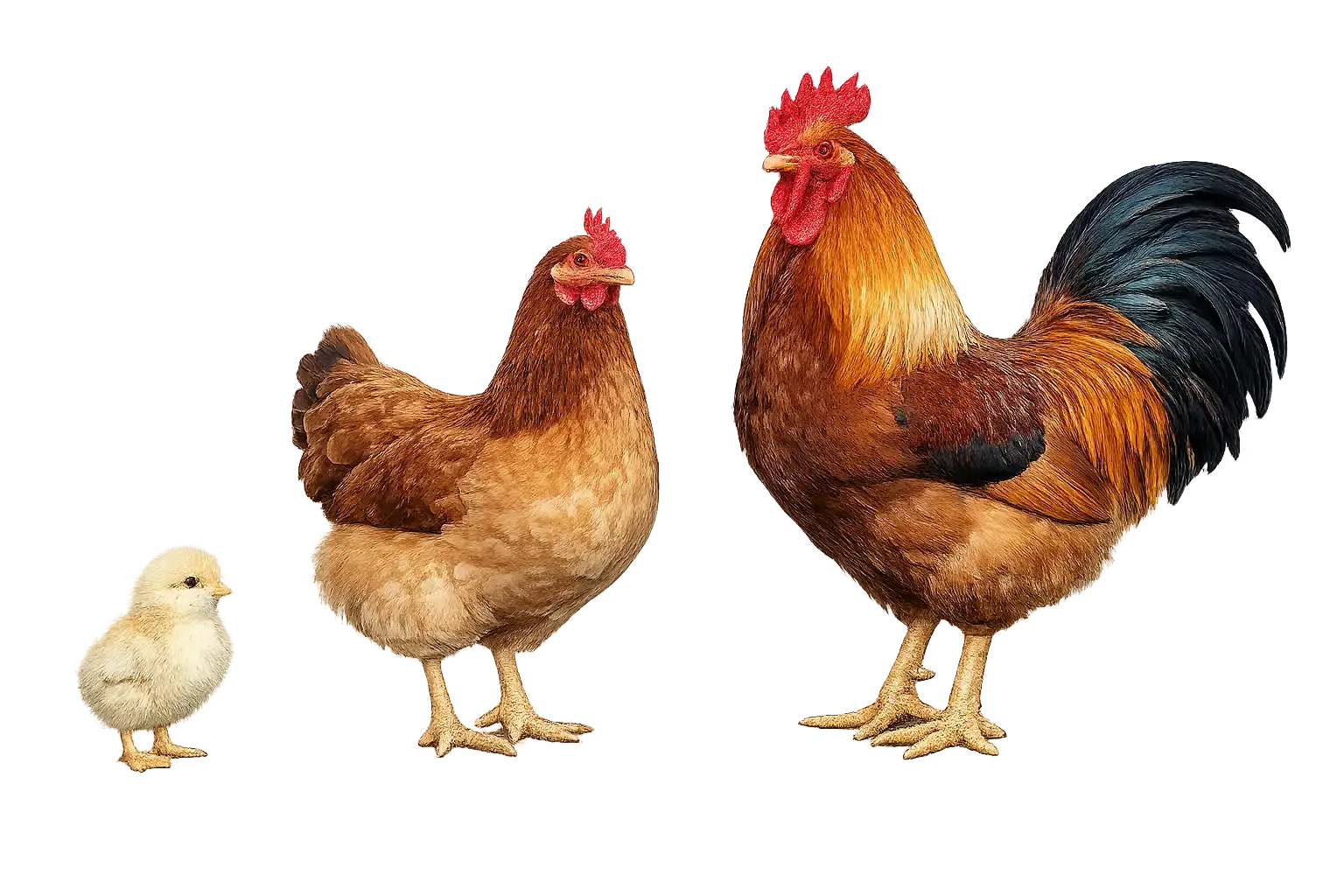
The Super Duper is not a breed. Like the Top Hat Special covered in a separate post in this directory, it is a Murray McMurray Hatchery assortment product, and understanding what it actually is before ordering determines whether it serves a keeper's needs or creates a significant management surprise. Murray McMurray's product description is brief and honest: "A duke's mixture of plain and fancy breeds of all colors and types at a really low price. These will be all cockerels unless our sexors made a mistake but some each of heavy, light, rare, and common breeds."
Two facts in that description carry the entire practical weight of the product. First, the Super Duper is essentially an all-male cockerel assortment. McMurray's standard sexing accuracy is 90 percent, so a small number of pullets may appear in a Super Duper order due to sexing error, but the product is explicitly sold as cockerels and should be planned for as an all-male order. Second, the breed composition is genuinely mixed across the full range of McMurray's catalog: heavy breeds, light breeds, rare breeds, and common breeds can all appear in a single Super Duper order, with no specific breed guarantee and no breed record kept by the hatchery.
The Super Duper's commercial logic is the same as all hatchery surplus assortment products. Murray McMurray hatches over 60 standard purebred varieties each hatch week. Sexed pullet orders fill the demand for laying hens. Specific breed cockerel orders fill the demand for roosters, breeding stock, and meat birds. The surplus males across all breed categories, the cockerels that did not fill specific breed orders, need somewhere to go. The Super Duper is where they go, packaged into minimum 15-bird orders at the lowest per-bird price in McMurray's catalog and sold to keepers who want volume, variety, and economy rather than specific breeds or sexes.
For the homestead or small farm keeper who wants a large batch of diverse cockerels for heritage meat production at bargain pricing, who values the visual diversity and flock interest of a genuinely mixed multi-breed flock, and who has planned for all-male management from the start, the Super Duper delivers exactly what it describes. For the keeper who did not read the description carefully and expected a mixed-breed general flock including laying hens, the Super Duper produces one of the more significant order disappointments in the hatchery assortment market.
Quick Facts
Type: Hatchery assortment product; all-male cockerel assortment; not a breed
Sex: Cockerels; essentially all-male unless standard hatchery sexing error produces occasional pullets; plan for 100 percent males
Breed Guarantee: None; some each of heavy, light, rare, and common breeds from McMurray's full standard catalog; specific breeds not guaranteed or recorded
Typical Variety Pool: Drawn from McMurray's full 60-plus standard breed catalog including heavy breeds such as Black Australorps, Barred Rocks, Wyandottes, Orpingtons, and Giants; light breeds such as Leghorns and Minorcas; rare and unusual varieties from their Rarest of Rare program; common breeds in full season production
Weight Range at Maturity: Highly variable; light breed cockerels 4 to 6 lbs; heavy breed cockerels 7 to 13 lbs or more; mixture expected in any given order
Primary Purpose: Heritage meat production; flock diversity; bargain-price volume cockerel sourcing
Egg Production: None; all-male assortment produces no eggs
Temperament: Variable; depends entirely on which breeds appear in the order; heavy heritage breeds generally docile; Mediterranean light breeds more active and alert; game-influenced rare breeds potentially assertive in the rooster context
Available From: Murray McMurray Hatchery exclusively; minimum order 15 cockerels; sold out seasonally
Pricing: The lowest per-bird price in McMurray's standard chick catalog; approximately $3.09 to $3.11 per bird at 15-bird minimum (prices subject to change)
Distinctive Characteristic: All-male cockerel assortment across the full breed diversity of McMurray's catalog; the most economical entry point for heritage breed cockerel volume from a major hatchery
Understanding the Super Duper
The Super Duper's name reflects its positioning in McMurray's assortment lineup: it is the super deal, the bargain-price surplus option that gives the buyer volume and variety at the lowest possible cost by removing all specification requirements. Where other McMurray assortments guarantee at least a certain number of varieties, or specify female birds, or limit the pool to particular breed categories, the Super Duper removes all these constraints. The result is the most genuinely unpredictable assortment McMurray offers, and also the least expensive.
The all-cockerel character is the most operationally significant fact about the Super Duper and the one most consistently underemphasized in casual discussion of the product. A keeper who orders 15 Super Duper birds and plans for a mixed flock of layers and meat birds is going to receive 14 to 15 cockerels and no useful egg production. This is not a defect or a hatchery error; it is the product as designed and described. The Super Duper is specifically the cockerel surplus assortment, and it is purchased correctly only by keepers who want cockerels.
The breed diversity within the cockerel assortment is genuine and documented by the product description's promise of some each of heavy, light, rare, and common breeds. A 15-bird Super Duper order might contain three Barred Plymouth Rock cockerels, two White Leghorn cockerels, one Silver Laced Wyandotte cockerel, two Black Jersey Giant cockerels, one Rhode Island Red cockerel, two Buff Orpington cockerels, one rare breed cockerel of an unusual variety, and additional common breed males to fill the order. Or it might contain a completely different combination. The specific mix is determined by which breeds are producing surplus males on the hatch date, not by any selection for keeper preference.
This unpredictability is a feature for keepers who approach it correctly. A homestead operation that wants to trial multiple heritage breed roosters for temperament assessment, that wants to grow out a diverse batch of males for comparison processing and flavor evaluation across breed types, or that wants the entertainment and flock interest of an extremely visually diverse male flock at minimal cost, finds the Super Duper's unpredictability genuinely useful. The breed identification challenge, which McMurray consistently describes across their assortment products as part of the fun, is more pronounced in the Super Duper than in breed-specific assortments given the breadth of the pool.
Practical Applications
The Super Duper serves a narrower set of practical homestead purposes than most assortment products precisely because it is all-male, but within those purposes it offers genuine value.
Heritage meat production is the primary and most straightforward use. McMurray's full breed catalog includes heritage breeds whose cockerels at 5 to 7 months produce the flavorful, slow-grown table birds that direct-sale heritage poultry buyers seek. A Super Duper order that contains heavy breed cockerels from Wyandottes, Orpingtons, Barred Rocks, and similar breeds produces a batch of genuinely worthwhile heritage table birds at the lowest possible acquisition cost. The processing timeline varies by breed, with light breed cockerels maturing faster and heavy breed cockerels requiring more time but producing larger carcasses, and the mixed-breed composition means different processing dates for different birds rather than the single batch processing that breed-specific cockerel orders allow.
Breeding flock rooster sourcing is a secondary application, though the lack of breed guarantee makes this a high-risk approach for keepers who need specific breeds for their breeding program. A Super Duper order that happens to contain an excellent Barred Plymouth Rock cockerel provides that bird at bargain acquisition cost; a Super Duper order that contains no Barred Rocks at all in a 15-bird minimum is a genuine outcome. Keepers who need specific breed roosters for documented breeding programs should order specific breed males rather than relying on the Super Duper to provide them.
Flock diversity without female birds is an unusual but occasionally practical use case for keepers who maintain separate male and female flocks, who are adding roosters to an established female flock and want variety, or who are running a cockerel grow-out program separate from their laying operation. The Super Duper's low per-bird cost makes it the most economical way to populate a multi-breed male flock quickly from a single order.
Breed Management Across the Pool
The most significant management challenge of the Super Duper's all-male multi-breed composition is rooster dynamics. A flock of cockerels from multiple breeds, sizes, and temperament backgrounds will establish a pecking order through the natural processes that roosters use, including physical competition, dominance displays, and occasional serious fights. The severity of these dynamics depends on the specific breeds received. A Super Duper order that contains primarily calm heavy heritage breed cockerels from Barred Rocks, Wyandottes, and Australorps will show more manageable rooster dynamics than one containing game-influenced rare breed cockerels or assertive Mediterranean light breed males.
Managing cockerel group dynamics requires adequate space, separate feed stations to prevent food competition, and monitoring for escalating aggression as birds mature into sexual readiness at 4 to 6 months. Processing birds before they reach peak territorial maturity reduces flock aggression significantly and is the standard management approach for grow-out cockerel operations where birds are intended for meat rather than long-term flock maintenance.
The weight and size disparity within a mixed Super Duper order is a secondary management consideration. Heavy breed cockerels at 8 to 13 pounds and light breed cockerels at 4 to 6 pounds housed together create body size differentials that can produce injury when the largest birds dominate the smallest. Monitoring for bullying across the size range and separating significantly mismatched birds when needed is practical flock management for a genuinely diverse multi-breed male assortment.
Meat Quality Across the Pool
The Super Duper's meat quality potential is the highest of any Murray McMurray assortment product in per-bird yield terms, reflecting the all-male composition. Heritage breed cockerels carry more breast and leg muscle development than hens at comparable ages, and the heavy breed males in the pool produce the largest single-bird carcasses available from mainstream hatchery-sourced heritage poultry.
The multi-breed composition means that flavor, texture, and processing timeline will vary meaningfully within a single order. Light breed cockerels such as Leghorn males produce smaller, leaner carcasses with earlier maturity and faster processing readiness than heavy heritage breed cockerels like Jersey Giants or Barred Rocks. Rare breed cockerels in the pool may carry specific flavor characteristics associated with their heritage. Processing the order as multiple batches by apparent breed and size category, rather than as a single-date mass processing event, produces more consistent results from the diverse input.
A Super Duper order that contains primarily heavy heritage breed cockerels at 8 to 13 pounds processed at 6 to 9 months heritage maturity produces the most impressive single-bird table yields available from hatchery-sourced heritage poultry. The unpredictability of which heavy breeds appear in the order is the practical limitation; the ceiling of what the heavy breed cockerels can deliver is genuinely high.
Comparing the Super Duper to Other McMurray Assortments
Understanding the Super Duper within the context of McMurray's full assortment lineup clarifies what it is and is not, and helps keepers choose the right product for their specific goals.
The Special Assorted Bargain is McMurray's broadest standard breed assortment, sold straight run (unsexed) and potentially including bantam breeds alongside standard breeds. It contains the widest possible breed diversity at prices somewhat higher than the Super Duper but includes both males and females, making it appropriate for keepers who want a general mixed flock rather than a specifically male one.
The All Heavies is McMurray's all-male heavy breed cockerel assortment, guaranteed to include at least five different heavy breeds from their documented heavy breed catalog including Black Australorps, Brahmas, Barred Rocks, Wyandottes, Orpingtons, and Jersey Giants. The All Heavies guarantees a minimum variety count and restricts the pool to heavy breeds, producing more predictable processing weight outcomes than the Super Duper's full-catalog pool. For keepers who specifically want heritage table birds of meaningful size and can accept the all-male character, the All Heavies is a more predictable alternative to the Super Duper at somewhat higher pricing.
The Top Hat Special, covered in a dedicated post in this directory, is a crested breed assortment sold straight run that includes at least four different crested varieties from Polish, Spitzhauben, Houdan, and Sultan in the pool. It is the ornamental breed equivalent of the Super Duper's production breed all-male character, but it includes females and is specifically crested rather than breed-random.
The Collection Cockerels is the closest McMurray analog to the Super Duper in concept, being an all-male assortment at discounted pricing, but it draws from a somewhat different pool and pricing structure than the Super Duper. Keepers who want all-male assortments from McMurray should compare both products' current pricing and availability before ordering.
Sourcing Considerations
The Super Duper is available exclusively from Murray McMurray Hatchery and sells out seasonally, reflecting the dependence of the assortment's composition on weekly surplus availability across McMurray's full breed catalog. Weeks when many individual breed orders clear surplus inventory produce smaller Super Duper availability; weeks with larger surplus across multiple breeds produce more availability. Ordering early in the season and selecting the desired hatch date during checkout is the most reliable approach for securing a Super Duper order in a preferred timing window.
The minimum order of 15 birds is lower than many McMurray assortments, and the per-bird pricing is the lowest in their standard catalog, making the Super Duper the most accessible entry point for keepers who want a small number of heritage cockerels from McMurray without committing to larger specific breed orders. At 15 birds, the order is small enough to manage in a modest grow-out setup while still producing meaningful heritage meat volume at final processing.
Pros and Cons
Pros
The lowest per-bird price in Murray McMurray's standard chick catalog; most economical heritage cockerel sourcing available from a major American hatchery
Maximum breed diversity in a single order; heavy, light, rare, and common breeds all potentially represented
Heritage breed cockerels from the pool produce genuinely flavorful slow-grown table birds that direct-sale heritage poultry buyers value
Minimum order of 15 birds is accessible for small homestead operations
Visual diversity of a multi-breed male flock is genuinely interesting for keepers who enjoy breed identification and comparison
All-male composition means no egg laying infrastructure needed for the grow-out flock
Available from McMurray's century-old hatchery operation with documented quality and live arrival guarantees
Cons
Essentially all-male; no egg production; not appropriate for keepers who want laying hens
No breed guarantee; no breed record kept; specific breeds cannot be requested or confirmed
Mixed breed weight and size creates management complexity in multi-breed male flock dynamics
Rooster aggression management required as birds mature; monitoring and intervention planning essential
Variable processing timelines across breed types prevents single-date batch processing
Sells out seasonally; availability not guaranteed for preferred hatch dates
No sex guarantee precision; occasional pullets from sexing error may appear but should not be planned for
Management requirements vary significantly between the heavy, light, rare, and common breeds that may appear
Final Verdict
The Super Duper is exactly what Murray McMurray says it is: a duke's mixture of plain and fancy breeds at a really low price, sold as cockerels, with some each of heavy, light, rare, and common breeds. For the homestead keeper who understands and specifically wants those exact characteristics, it delivers genuine value as the most economical heritage breed cockerel sourcing available from a major American hatchery, with a breed diversity that no specific-breed cockerel order can match at comparable pricing. For the keeper who wants laying hens, specific breeds, or any sex guarantee beyond the explicit cockerel orientation of the product, the Super Duper is the wrong order and the individual breed posts in this directory are the appropriate starting point. Reading the product description before ordering, not after the box arrives, is the entire practical guidance this product requires. The dual purpose and homestead category accommodates it as a heritage meat production tool, which is precisely the purpose it was designed to serve.
Frequently Asked Questions
Will I get any hens in a Super Duper order? Possibly a small number due to standard hatchery sexing error, but the product is explicitly sold as cockerels and should be planned for as an all-male order. McMurray's standard 90 percent sexing accuracy means that in a 15-bird Super Duper order, the statistical expectation is 13 to 15 cockerels and 0 to 2 pullets from sexing error. Relying on Super Duper pullet errors as a meaningful source of laying hens is not a sound planning assumption.
What breeds might I receive? Some each of heavy, light, rare, and common breeds from McMurray's full standard catalog of 60-plus varieties. Heavy breeds in the pool include Black Australorps, Barred Plymouth Rocks, Wyandottes, Orpingtons, Jersey Giants, New Hampshire Reds, and similar. Light breeds include White Leghorns and other Mediterranean varieties. Rare breeds drawn from McMurray's Rare Breed and Rarest of Rare programs may appear. The specific mix depends on which breeds have surplus males on the hatch date and is not recorded or disclosed by the hatchery.
How is the Super Duper different from the All Heavies? The All Heavies is specifically an all-male heavy breed assortment guaranteed to include at least five different heavy breed varieties from McMurray's documented heavy breed list. It draws from a defined pool and guarantees a minimum variety count. The Super Duper draws from the full catalog across all breed categories and guarantees neither specific breeds nor a minimum variety count. The All Heavies produces more predictable processing weight outcomes; the Super Duper produces more breed diversity at lower per-bird cost.
When should I process Super Duper cockerels? It depends on which breeds arrive. Light breed cockerels such as Leghorns reach fryer-weight processing readiness earlier, at 12 to 16 weeks, producing smaller carcasses. Heavy heritage breed cockerels such as Jersey Giants, Barred Rocks, and Wyandottes reach their best processing weight at 5 to 9 months, producing larger, more developed carcasses. Processing the order in multiple batches by apparent breed type and size category rather than as a single-date event produces the most consistent results from a genuinely diverse input.
How do I manage a flock of mixed-breed cockerels? Adequate space is the most important factor: crowded cockerel flocks develop more severe aggression than well-spaced ones. Multiple feed and water stations prevent resource competition. Monitoring for escalating aggression as birds approach 4 to 6 months of sexual maturity is essential, and removing or processing birds whose aggression creates injury risk is the practical intervention when dynamics become problematic. Processing birds before peak territorial maturity significantly reduces management difficulty in grow-out cockerel operations.
Related Breeds
Barred Plymouth Rock
Black Australorp
White Leghorn
White Rock
Black Jersey Giant
Wyandotte