
White Giants (Hatchery Line)
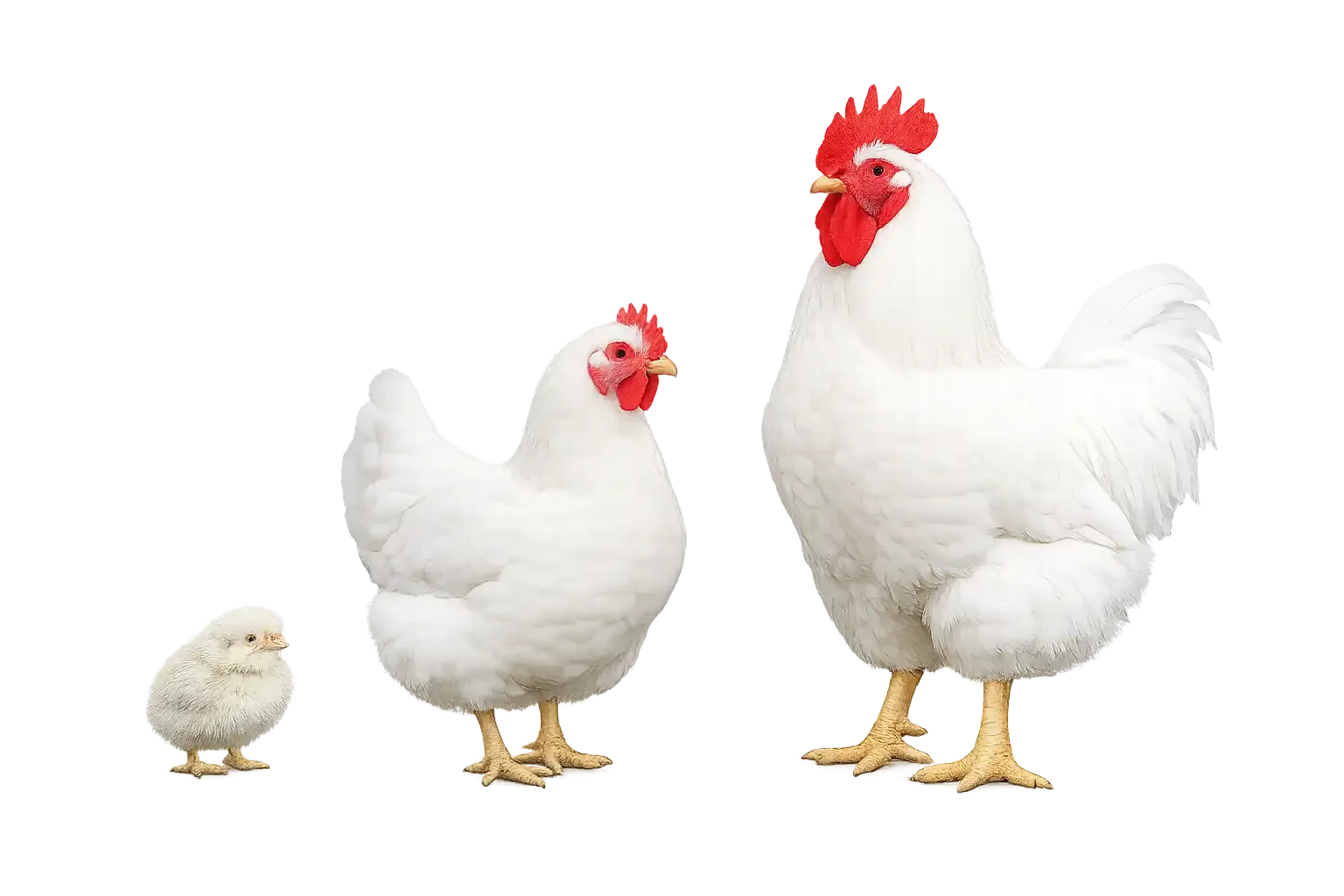
The White Jersey Giant is the largest APA-recognized chicken breed in America, the third-recognized color variety of the Jersey Giant breed, and a bird whose practical homestead value depends more than almost any other breed on a single sourcing decision: whether you acquire birds from a hatchery maintaining production-oriented lines or from a heritage breeder maintaining the full breed weight standard. The distinction matters because hatchery-line White Jersey Giants, which are what most homestead keepers encounter and purchase, typically mature at 8 to 10 pounds for roosters and 6 to 8 pounds for hens rather than the APA standard's 13 to 15 pounds for roosters and 10 pounds for hens. This is not a defect or a misrepresentation unique to disreputable hatcheries; it is a well-documented pattern across commercial hatchery Jersey Giant production that reflects the practical economics of hatchery breeding programs optimizing for laying performance, hatchability, and feed efficiency rather than for maximum mature body weight. The hatchery-line White Jersey Giant is still a large, calm, impressive bird that produces meaningful dual-purpose value in both egg and meat categories. It is simply not the 13-pound rooster of the heritage standard, and keepers who plan their homestead operations around that weight target need to source from the heritage breeder community rather than from mainstream hatcheries.
With that foundational distinction understood, the White Jersey Giant hatchery line delivers a genuinely practical homestead package: pure white plumage that dresses cleanly without dark pin feather spotting, large to extra-large brown eggs at 150 to 260 per year depending on the specific hatchery strain, one of the most docile and beginner-friendly temperaments of any large heritage breed, and a dual-purpose body that produces the most substantial heritage meat bird available from mainstream hatchery sources. For keepers who want the White Jersey Giant's specific combination of white feathering, large body, calm temperament, and versatile dual-purpose utility from a readily sourced and reasonably priced hatchery bird, the breed delivers all of this reliably within the realistic weight expectations of hatchery-line production.
Quick Facts
Class: American (APA)
Weight (Hatchery Line): Roosters approximately 8 to 10 lbs; hens approximately 6 to 8 lbs; notably below the APA heritage standard of 13 to 15 lb roosters and 10 lb hens
Weight (Heritage Standard): Roosters 13 to 15 lbs; hens 10 lbs; capons capable of reaching 16 to 20 lbs
Egg Production: Approximately 150 to 260 large to extra-large brown eggs per year depending on hatchery strain; varies significantly between sources
Egg Color: Brown; ranges from light tan to medium brown
Egg Size: Large to extra-large; one of the largest eggs produced by any heritage breed
Primary Purpose: Dual purpose; meat and eggs; homestead table bird program
Temperament: Docile, calm, and friendly; easygoing with children and beginners; roosters generally non-aggressive; quiet for their size
Brooding: Occasional; some hens go broody; heavy hens can accidentally crush eggs while brooding; pillow or cushioning under nesting material recommended for broody Giants
Flight Capability: Essentially none; body weight prevents sustained flight; minimal fencing adequate for containment
APA Recognition: White variety recognized 1947; Black variety 1922; Blue variety 2003; American Class
Country of Origin: Burlington County, New Jersey; developed 1870 to 1890 by brothers John and Thomas Black
Parent Breeds: Black Java, Dark Brahma, Black Langshan, and later Cornish genetics; developed with the original goal of replacing the turkey as the American farm table bird
Leg Color: Willow to nearly black; willow coloring is specific to the Jersey Giant standard and distinguishes it from other large white-plumaged breeds with yellow legs
Comb Type: Single comb; frostbite risk in hard winters
Distinctive Trait: Pure white plumage with yellow beak; willow to nearly black legs; chicks hatch smoky gray and develop white adult plumage; largest dual-purpose breed available from mainstream hatcheries; hatchery-line birds significantly smaller than APA heritage weight standard; clean-dressing white-feathered carcass
Conservation Status: Watch (Livestock Conservancy); applies to the breed overall with heritage-weight standard birds particularly scarce
Lifespan: 8 to 12 years
Breed Overview
The Jersey Giant's origin story is one of the most clearly documented in American poultry history, which is itself unusual given how many heritage breeds carry disputed or uncertain origins. Brothers John and Thomas Black began their breeding program in Burlington County, New Jersey, between 1870 and 1890 with a specific commercial objective: to develop a chicken large enough to replace the turkey as the American farm table bird. The commercial turkey market of the era was the dominant premium poultry product, and the Black brothers reasoned that a chicken capable of producing turkey-scale carcasses while also laying eggs would be more economically versatile and practically manageable than turkeys, which require more specialized husbandry and present more challenges in flock management.
Their crossing program used Black Java, Dark Brahma, and Black Langshan as the primary foundation breeds, all large-bodied birds that contributed size, temperament, and laying capacity to the developing cross. Cornish genetics were later added to improve growth rate and muscling. The resulting birds were called Black Giants initially, with the name reflecting the brothers' surname rather than the plumage color, and were renamed Jersey Giants to reflect their New Jersey origin as the breed gained recognition beyond the brothers' original operation. The APA admitted the Black variety in 1922, thirty years after the breed's development began, and the White variety followed in 1947 with the Blue variety added as recently as 2003.
The White variety was developed from sports within Black Giant flocks, white-plumaged individuals that appeared in otherwise black breeding programs and were selectively developed into a true-breeding white variety. The White Jersey Giant carries the same leg color, body structure, temperament, and production profile as the Black, distinguished only by its plumage color. The white feathering provides one specific practical advantage over the black: a cleaner-dressing carcass without the dark pin feathers that remain visible in Black Jersey Giant dressed birds and that require more careful processing attention for aesthetically clean presentation.
The hatchery-line versus heritage-standard distinction that defines this post's framing is the most important practical context for understanding what a homestead keeper is actually getting when they purchase White Jersey Giants from mainstream commercial hatcheries. The Jersey Giant's slow maturity to full weight, the breed's primary commercial limitation, means that hatchery programs selecting for laying performance and hatchability over many generations have produced birds that perform well on egg metrics but that mature at weights meaningfully below the breed's original commercial purpose. This is not a criticism of hatchery programs; it is a reflection of the economic logic that drives hatchery selection, and it is why the Livestock Conservancy's Watch listing for the breed specifically addresses the conservation of heritage-weight standard birds as distinct from the hatchery-production birds that most keepers encounter.
Cackle Hatchery has maintained their White Jersey Giant production strain since 1982, making their line one of the more extensively documented hatchery programs for the variety. Their documented production figures of 150 to 200 large brown eggs per year and mature weights of 10 pounds for hens and 13 pounds for roosters represent the upper end of what hatchery-line White Giants typically achieve and reflect a serious long-term strain development effort rather than casual commercial production.
Plumage and Appearance
The White Jersey Giant's plumage is uniformly pure white in adult birds, from the head and neck through the body, wings, and tail. This white extends to the fluffy, soft feathering throughout the body that gives the breed its substantial visual presence even when birds are somewhat below the heritage weight standard. There is no barring, spotting, lacing, or other color pattern in a correctly plumaged White Jersey Giant; the entire bird presents as clean white from any distance.
The most immediately distinctive non-plumage characteristic of the White Jersey Giant, and the feature that most reliably distinguishes it from other large white-plumaged breeds, is the leg color. The Jersey Giant standard specifies willow to nearly black leg and toe coloring, a yellowish-green to dark greenish-gray range that is specific to the breed and that differs clearly from the yellow legs of the White Leghorn, the White Rock, and most other large white breeds. This willow leg color is the fastest visual identification tool for a keeper who wants to verify that a white-plumaged large bird is genuinely a Jersey Giant rather than a White Rock or White Orpington.
The beak is yellow, contrasting with the darker leg color. The single comb is red and upright, of moderate size. The wattles and earlobes are red. The eyes are dark. The body is massive and deep-chested, with a broad back that reflects the breed's original purpose as a table bird of substantial carcass yield. The overall silhouette reads as large, well-muscled, and grounded in a way that distinguishes the Jersey Giant from the more upright, lighter-bodied dual-purpose breeds like the Barred Plymouth Rock or the Black Australorp.
Chicks are one of the breed's most surprising early characteristics: they hatch in a smoky gray down color rather than the yellow or white that many keepers expect from a white-plumaged breed. This smoky gray chick coloring is completely normal for the White Jersey Giant and transitions to the adult white plumage as juvenile feathers develop and replace the down.
Egg Production
The White Jersey Giant hatchery line's egg production varies more between specific hatchery sources than almost any other breed discussed in this directory, reflecting the range of selection emphases across different hatchery programs maintaining the breed. The documented range across reputable hatcheries runs from approximately 150 to 260 large to extra-large brown eggs per year, a span wide enough that a keeper who specifically wants higher or lower production within that range should research specific hatchery strain documentation before purchasing.
Cackle Hatchery's production-oriented strain documents 150 to 200 large brown eggs per year with a noted focus on size, production, and temperament rather than maximum egg volume. The Chick Hatchery documents 220 to 260 eggs per year from their strain. Chicken Coop Company cites approximately 240 extra-large eggs annually. These differences are not marketing inconsistencies but genuine strain variation that reflects different breeding emphasis over the decades each hatchery has maintained their program.
What is consistent across hatchery strains is the egg size, which is one of the Jersey Giant's most genuine and reliable practical advantages. The eggs are large to extra-large, genuinely larger than the standard large egg from most production breeds, and this size consistency is maintained even in hatchery-line birds that do not reach heritage weight standards. Jersey Giant eggs are among the largest produced by any heritage breed and create meaningful visual distinction in a mixed heritage carton or direct-sale presentation.
Hens are noted as strong winter layers across multiple sources, a characteristic inherited from the Black Langshan and Dark Brahma genetics in the breed's foundation and consistent with the heavy-bodied, cold-adapted breeds that dominate the Jersey Giant's ancestry. This winter production consistency is a genuine practical advantage for homestead operations that want year-round egg supply without supplemental lighting.
Laying onset is delayed relative to lighter heritage breeds and production hybrids, with hens typically not beginning production until 6 to 8 months of age, and in some hatchery-line birds as late as 9 to 10 months. Planning for this delayed onset is essential for keepers who want eggs by a specific seasonal target date.
Broodiness is occasional and variable between strains. When White Jersey Giant hens go broody they are described as attentive and protective mothers, but their substantial body weight creates a practical risk of egg crushing during incubation. Keepers who want to hatch eggs under broody Jersey Giants should place cushioning material beneath the nesting substrate to reduce impact pressure on the eggs from the hen's body weight.
Meat Quality
The White Jersey Giant hatchery line's meat quality is the most significant variable between hatchery and heritage stock, and it is the characteristic that most directly reflects the hatchery-line versus heritage-standard distinction that frames this post. The heritage-weight White Jersey Giant at 13 to 15 pounds produces a carcass of genuinely turkey-scale proportions that fulfills the Black brothers' original development vision. The hatchery-line bird at 8 to 10 pounds produces a carcass that is the largest available from mainstream hatchery sources but meaningfully smaller than the heritage standard.
Within the hatchery-line weight range, the White Jersey Giant still produces the most substantial dual-purpose carcass available from any breed readily sourced through mainstream American hatcheries. The broad breast, deep chest, and large frame produce well-proportioned carcasses with good meat coverage across the body, and the yellow skin and white feathering dress cleanly without the dark pin feather issue that creates additional processing labor for black-plumaged breeds.
The meat quality is described across keeper accounts as flavorful, with the slow-growing heritage character of the breed producing more developed muscle fiber than commercially grown Cornish Cross birds. Processing at 8 to 9 months for heritage table birds produces the most developed flavor, though the slow growth means that keepers who are accustomed to Cornish Cross processing timelines of 6 to 8 weeks will need to plan significantly longer growing periods for Jersey Giant table birds.
The feed-to-meat conversion of the White Jersey Giant is less efficient than dedicated meat breeds, reflecting the breed's dual-purpose character rather than single-purpose meat optimization. Jersey Giants require meaningful feed input over a long growing period to reach processing weight, and keepers who want the most economically efficient heritage meat program should evaluate whether the White Jersey Giant's large final carcass justifies the extended feed investment relative to faster-growing heritage meat alternatives.
Temperament and Behavior
The White Jersey Giant's temperament is one of the most consistently and enthusiastically praised characteristics of the breed across virtually all keeper accounts, and it is the quality that makes the breed particularly well-suited to beginning homestead keepers, families with children, and mixed flocks that include smaller and more sensitive breeds. The breed is described as docile, easygoing, calm, friendly, and tolerant of human interaction to a degree that is unusual for birds of its size. Where large body mass in some breeds correlates with assertive or food-aggressive behavior, the Jersey Giant's size is paired with a gentle, non-competitive character that makes it consistently pleasant to work with despite its substantial physical presence.
Roosters are specifically noted as having exceptionally good temperaments relative to roosters of other large heritage breeds. The Jersey Giant rooster is non-territorial and non-aggressive toward humans when socialized from young, which is a meaningful practical advantage for homestead operations where rooster management is a daily reality. Some BackYard Chickens keeper accounts do note variation in rooster temperament in specific hatchery lines, with a minority of accounts describing aggressive roosters from certain hatchery sources, which underscores the value of researching specific hatchery reputation before purchasing.
In mixed flocks the White Jersey Giant is consistently non-aggressive toward smaller breeds, finding a middle position in the pecking order that is comfortable without being dominant or exploitative. Some keeper accounts describe Jersey Giants as taking a mild guardian-adjacent role in mixed flocks, less through active protection behavior and more through the simple deterrent effect of their size on smaller predators and aggressive flock members. The breed is quiet relative to its size, producing less vocalization than active Mediterranean breeds and maintaining the settled, unalarmed flock presence that reduces daily management stress.
Climate Adaptability
The White Jersey Giant's climate adaptability is good for cold weather and moderate for heat, reflecting the heritage of Black Langshan and Dark Brahma foundation genetics that contribute strong cold-weather performance. The breed's substantial body mass retains heat effectively and the dense feathering provides meaningful insulation, supporting the winter laying consistency that makes Jersey Giants specifically valued as winter egg producers.
The single comb is the primary cold-climate management consideration, presenting the standard single-comb frostbite risk in hard winters that requires petroleum jelly application during sustained freezes and dry, draft-free housing at roost level. The comb management requirement is not different from other single-combed heritage breeds but is worth noting for keepers who specifically want a cold-climate bird with minimal frostbite management. Keepers in the coldest northern regions might prefer pea-combed alternatives for this reason.
Heat tolerance is moderate to poor, consistent with the general pattern of large-bodied, heavily feathered breeds in high heat. The dense feathering that supports cold hardiness creates heat retention challenges in sustained summer heat, and White Jersey Giants require adequate shade, cool water, and coop ventilation during hot weather. Keepers in regions with extended periods above 90 degrees Fahrenheit should invest in shade infrastructure and adequate airflow before acquiring Jersey Giants.
Housing and Management
The White Jersey Giant's housing requirements are meaningfully larger than standard heritage breed minimums, and these larger space requirements are the most common management oversight among first-time Jersey Giant keepers. Standard heritage breed guidelines of 4 square feet of indoor space per bird are inadequate for Jersey Giants; 6 square feet per bird indoors and 15 square feet per bird in the run are the appropriate minimums for comfortable, stress-free Jersey Giant management.
Low roost bars are essential, as they are for the Bielefelder, the Malines, and all breeds where body weight makes high-impact landings from standard-height roost bars a genuine injury risk. Roost bars at 12 to 18 inches from the floor, with soft landing areas beneath, eliminate the bumblefoot and joint injury risk that heavy birds jumping from standard roost heights create. This is the most practically consequential housing management consideration for the breed, and keepers who set up standard-height roost bars before acquiring Jersey Giants and then lower them after the first injury have universally described this as the mistake they would most want to prevent.
Nesting boxes should be appropriately sized and padded for the breed's weight. Standard nest boxes designed for 5-pound Leghorns are uncomfortably cramped for a 10-pound Jersey Giant hen and may discourage nest box use. Boxes with adequate floor space and cushioning beneath the nesting material reduce egg crushing risk from broody hens and provide comfortable laying positions for large-bodied hens.
The hatchery-line versus heritage-standard weight distinction discussed throughout this post has a direct practical management implication: a keeper who plans their coop infrastructure, roost heights, and nesting box specifications for 13-pound roosters and 10-pound hens will find that hatchery-line birds at 8 to 10 pounds and 6 to 8 pounds require less space and create less impact than the heritage standard would suggest. Conversely, a keeper who sources heritage-weight standard birds expecting hatchery-line sizes will face unexpected infrastructure demands.
Sourcing Considerations
The most important sourcing decision for the White Jersey Giant is the hatchery-line versus heritage-standard choice, which determines the mature weight, meat yield, and dual-purpose performance the keeper should realistically expect. For homestead keepers who want the breed's gentle temperament, white feathering, large brown eggs, and largest-available hatchery-line dual-purpose body without the sourcing complexity of the heritage breeder network, Cackle Hatchery's documented strain since 1982 and Murray McMurray Hatchery's Jersey Giant programs represent the most established mainstream hatchery sources.
For keepers who specifically want heritage-weight-standard White Jersey Giants approaching the APA standard's 13 to 15 pound rooster and 10 pound hen targets, sourcing from breeders active in the Jersey Giant community and connected to the Livestock Conservancy's heritage breed programs is the appropriate path. These birds are harder to find, more expensive, and require earlier planning than mainstream hatchery sourcing, but they deliver the dual-purpose body weight that makes the Jersey Giant's original development vision meaningful.
Reading specific hatchery reviews for mature weight documentation is valuable given the significant variation between hatchery strains. Keeper accounts that include photographs of mature birds with weight documentation provide more reliable strain quality information than production specifications alone.
Pros and Cons
Pros
The largest dual-purpose breed available from mainstream hatcheries; most substantial heritage table bird carcass in the homestead production category
Pure white plumage dresses cleanly without dark pin feather issue of black-plumaged breeds; cleaner carcass presentation than Black Jersey Giant
Exceptionally docile and beginner-friendly temperament; one of the gentlest large heritage breeds available; excellent with children
Roosters generally non-aggressive; family-safe flock management even with breeding roosters present
Large to extra-large brown eggs; among the largest eggs produced by any heritage breed; consistent winter egg production
Essentially no flight capability; minimal fencing requirements for containment
Quiet relative to size; suitable for suburban homestead settings
APA recognized since 1947; true-breeding heritage breed supporting self-sustaining flock propagation
Good cold hardiness; strong winter layer; well-suited to northern homestead operations
Multiple established hatchery sources with documented strain histories available for mainstream sourcing
Long productive lifespan of 8 to 12 years from heritage-oriented management
Cons
Hatchery-line birds significantly smaller than APA heritage weight standard; keeper expectations must match realistic hatchery-line weights of 8 to 10 lb roosters rather than 13 to 15 lb heritage standard
Slow to reach full weight; 8 to 9 months to processing weight for heritage table birds; poor feed-to-meat conversion relative to dedicated meat breeds
Requires significantly more indoor space than standard heritage breeds; minimum 6 square feet per bird indoors
Low roost bars essential; standard-height roost bars create injury risk for heavy birds
Heavy broody hens can crush eggs; cushioning required under nesting material for brooding management
Single comb requires frostbite monitoring in hard winters
Delayed laying onset; hens may not begin production until 6 to 10 months of age
Heat tolerance moderate to poor; requires shade and ventilation infrastructure in hot climates
Heritage-weight standard birds require specialty breeder sourcing outside mainstream hatchery channels
Livestock Conservancy Watch listing; heritage-weight genetic lines require active conservation support to maintain
Profitability
The White Jersey Giant hatchery line's profitability for the homestead operation is built on the combination of the largest available heritage table bird from mainstream hatchery sources, large to extra-large brown eggs with visual distinction in direct-sale markets, and the breed's growing reputation in the heritage poultry community as a gentle giant that delivers dual-purpose utility in a beginner-accessible package.
The white feathering provides a specific marketing and processing advantage over the Black Jersey Giant: the clean white carcass without dark pin feather spotting presents more professionally in direct-sale heritage table bird marketing and requires less processing labor for aesthetically clean results. Direct-sale heritage poultry buyers who seek large, well-dressed whole birds from documented heritage breeds find the White Jersey Giant's carcass size and clean presentation compelling, particularly when the heritage provenance and slow-growth production method are clearly communicated.
The extra-large egg size commands a meaningful premium in direct-sale egg markets where buyers pay per dozen rather than per egg and receive noticeably larger eggs than commercial alternatives. A dozen White Jersey Giant extra-large eggs is visually impressive alongside smaller standard large eggs from production breeds and creates the kind of direct comparison that direct-sale customers notice and remember.
Capons from heritage-weight standard White Jersey Giant roosters, reached through traditional caponizing and extended growing periods, produce the most impressive single-bird table yields available from any chicken breed, approaching small turkey scale. This capon market, while niche, commands premium pricing from buyers who specifically seek heritage-raised whole birds for significant meal occasions.
Comparison With Related Breeds
Black Jersey Giant: The most direct comparison within the breed, covered in a dedicated post in this directory. The Black and White Jersey Giants are identical in every practical characteristic except plumage: same temperament, same production profile, same body weight at each standard level, same housing requirements, same management considerations. The White variety's clean-dressing carcass without dark pin feathers and the visual distinction of white plumage in the homestead flock are the primary differentiators. For keepers who want the Jersey Giant's specific combination of large body, gentle temperament, and dual-purpose utility and do not have a specific color preference, reading both posts and choosing based on the carcass processing and flock aesthetics considerations is the appropriate approach.
Bielefelder: The autosexing dual-purpose comparison for large-breed homestead keepers. The Bielefelder produces 200 to 280 large brown eggs per year from a bird that autosexes within the breed at hatch, reaches 10 to 12 pounds at full rooster maturity, and carries an equally exceptional temperament to the Jersey Giant. The Bielefelder is smaller than the heritage-weight Jersey Giant standard, comparable to or larger than hatchery-line Jersey Giants at the upper weight range, lays more eggs per year than most Jersey Giant hatchery strains, and offers the specific autosexing hatch-day sexing convenience that the Jersey Giant does not provide. Both breeds require low roost bars and generous indoor space. The choice between them often comes down to autosexing convenience versus maximum single-bird carcass yield.
White Rock: A comparison for keepers evaluating large white-plumaged heritage dual-purpose breeds. The White Rock is lighter at approximately 7.5 to 9.5 pounds for roosters and 6 to 7.5 pounds for hens, lays more eggs at 200 to 280 large brown eggs per year, is APA recognized and widely available from every mainstream hatchery, and matures faster than the Jersey Giant. The White Rock's yellow legs distinguish it from the Jersey Giant's willow legs. For keepers who want a large, white-plumaged dual-purpose heritage breed with faster maturity and stronger egg production, the White Rock is the more practical choice; for keepers who want the largest available heritage body weight from a white-plumaged breed in the most docile package available, the White Jersey Giant is the answer.
Malines: The comparison for keepers interested in the very largest heritage table birds available. The Malines is a Belgian heritage breed reaching 11 to 12 pounds for hens and roosters at full maturity, producing pale, fine-textured, fat-marbled meat of exceptional gastronomic quality at 140 to 160 tinted eggs per year. The Malines is harder to source in North America, more expensive, and produces fewer eggs than the White Jersey Giant hatchery line, but delivers meat quality that the Jersey Giant's heritage provenance cannot match. Both require low roost bars, generous indoor space, and informed cold-climate comb management. The comparison illustrates the tradeoff between accessible hatchery sourcing with strong egg production and specialty European heritage breed sourcing with premium culinary meat quality.
Final Verdict
The White Jersey Giant hatchery line is the most accessible, most beginner-friendly, and most practically complete large white-plumaged dual-purpose heritage breed available from mainstream North American hatcheries, and it delivers this package with the most consistently praised docile temperament of any large heritage breed in this directory. The hatchery-line weight reality, typically 8 to 10 pounds for roosters and 6 to 8 pounds for hens rather than the APA heritage standard's 13 to 15 pounds, is the single most important expectation to calibrate before acquiring birds. Keepers who source from documented hatchery programs with established strain histories, set up appropriate low roost bars and generous indoor space before their birds arrive, and plan for delayed laying onset and extended growing periods for table birds, get a genuinely impressive, genuinely gentle, genuinely large heritage dual-purpose bird that rewards patient, informed management with years of productive dual-purpose utility. The dual purpose and homestead category is better for including it.
Frequently Asked Questions
Why do my White Jersey Giant chicks look gray instead of white? White Jersey Giant chicks hatch with smoky gray down rather than white or yellow, which surprises many keepers who expect white chicks from a white-plumaged breed. This smoky gray coloring is completely normal for the variety and transitions to white adult plumage as juvenile feathers develop and replace the chick down over the first several weeks. The gray chick down is a reliable characteristic of the White Jersey Giant and can help distinguish the breed from other white breeds that hatch with yellow or white chicks.
How do White Jersey Giants differ from other large white chicken breeds? The most reliable distinguishing feature is leg color. White Jersey Giants have willow to nearly black legs and toes, a yellowish-green to dark greenish-gray coloring specific to the Jersey Giant breed standard. Most other large white-plumaged breeds including the White Rock, White Leghorn, and White Orpington have yellow legs. The body mass of the Jersey Giant is also substantially greater than most other white-plumaged breeds at comparable ages, and the smoky gray chick coloring distinguishes newly hatched Jersey Giant chicks from most other white breeds.
Will my hatchery-line White Jersey Giants reach 13 pounds? Unlikely from most mainstream hatchery sources. The 13 to 15 pound rooster weight is the APA heritage standard, maintained by breeders specifically selecting for maximum body weight within the breed's heritage character. Most mainstream hatchery programs select primarily for laying performance, hatchability, and temperament rather than for maximum mature weight, producing birds that mature at 8 to 10 pounds for roosters and 6 to 8 pounds for hens. This is well-documented across multiple hatcheries and is not a defect but a predictable result of different breeding emphasis. Keepers who specifically want heritage-weight-standard birds should source from breeders active in the Jersey Giant conservation community rather than from mainstream hatcheries.
Why do my White Jersey Giant hens sometimes crush their eggs while brooding? Jersey Giant hens that go broody are attentive and willing mothers but their substantial body weight creates pressure on the eggs beneath them that lighter-bodied broody breeds do not generate. Placing a cushioning layer, a folded towel or foam pad, beneath the nesting material distributes the hen's weight more evenly and significantly reduces egg crushing during incubation. This is a standard management recommendation for broody Jersey Giants and for other very heavy heritage breeds.
How long do I need to wait before processing White Jersey Giants for meat? Approximately 8 to 9 months for heritage-style roasting birds at full dual-purpose weight from hatchery-line stock. This is dramatically longer than the 6 to 8 weeks of Cornish Cross commercial broiler production and reflects the Jersey Giant's heritage dual-purpose genetics rather than single-purpose meat optimization. Some keepers process cockerels earlier at 4 to 5 months for smaller fryer-weight birds, which produces more tender meat at a fraction of the final weight. Planning the growing calendar well in advance of any desired processing date is essential given the breed's extended maturity timeline.
Related Breeds
Black Jersey Giant
Bielefelder
White Rock
Malines
Barred Plymouth Rock
Black Australorp