
White Wyandotte
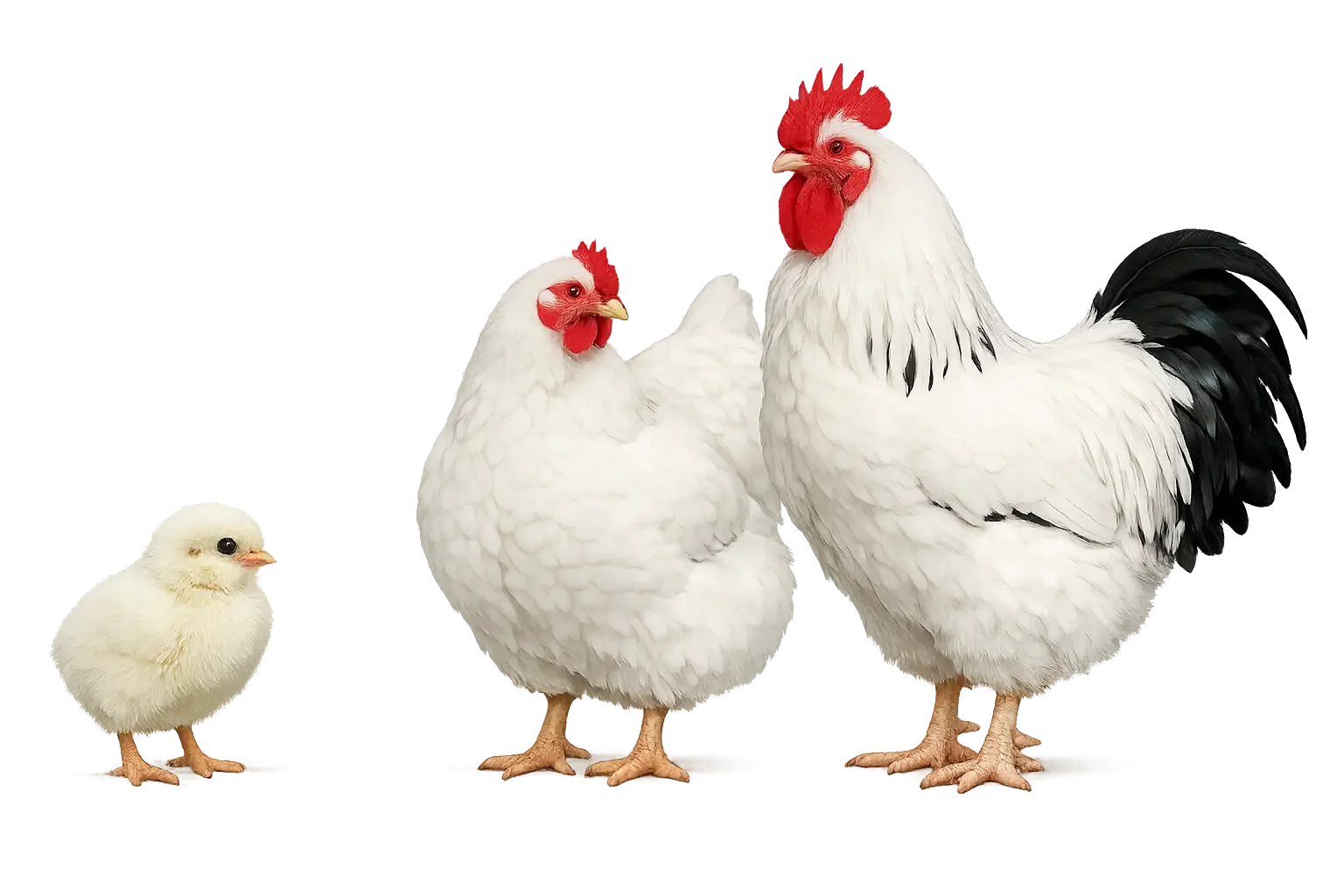
The White Wyandotte is the cleanest expression of one of America's greatest chicken breeds. Where the Silver Laced dazzles with its black and white feather pattern and the Golden Laced commands attention with its warm gold and black contrast, the White Wyandotte makes its case through simplicity: pure snow-white plumage from beak to tail, the same rounded, deep-bodied silhouette that defines the entire Wyandotte family, and the same cold-hardy rose comb and practical dual-purpose utility that made the breed one of the cornerstones of American backyard and homestead poultry in the late 19th and early 20th centuries. It was not a planned variety. It appeared as a sport, a spontaneous genetic mutation, in a Silver Laced Wyandotte breeding flock, was recognized by the American Poultry Association in 1888, and has been a consistently popular choice for backyard keepers ever since. It lays reliably, handles cold winters exceptionally well, carries a calm and manageable temperament, produces a useful table bird when needed, and looks genuinely striking in a mixed flock where its pure white stands out against darker breeds. For the backyard keeper who wants a productive, hardy, beautiful, and beginner-friendly heritage bird with deep American roots, the White Wyandotte is one of the most complete choices in the directory.
Quick Facts
Class: American (APA)
Weight: Roosters approximately 8.5 lbs; hens approximately 6.5 lbs
Egg Production: Approximately 200 to 240 large brown eggs per year; 4 to 5 eggs per week
Egg Color: Cream to light brown to rich brown; varies by strain
Egg Size: Large
Primary Purpose: Dual purpose; eggs and meat; also kept for exhibition and backyard flocks
Temperament: Calm, docile, and friendly; tolerant of children; somewhat reserved with other breeds but not aggressive
Brooding: Moderate tendency; hens go broody occasionally and are excellent mothers when they do
Flight Capability: Low; heavy body weight and docile character mean containment is rarely a concern
APA Recognition: 1888
Country of Origin: United States; developed in upstate New York and the Northeast
Varieties (APA): White is one of nine APA-recognized Wyandotte varieties
Comb Type: Rose comb; minimal frostbite risk; excellent cold-climate advantage
Distinctive Trait: Pure snow-white plumage on the rounded, deep-bodied Wyandotte frame; combination of beauty, cold hardiness, and dual-purpose utility
Conservation Status: Recovered; removed from Livestock Conservancy priority list in 2016
Lifespan: 6 to 12 years
Breed Overview
The Wyandotte breed as a whole has one of the more interesting origin stories in American poultry history. Four breeders working in upstate New York in the 1870s, H. M. Doubleday, John Ray, L. Whittaker, and Fred Houdlette, set out deliberately to create a bird that addressed a gap in the American poultry market: a dual-purpose chicken capable of laying reliably through cold northern winters while also producing a worthwhile table bird, all in a single breed that could be managed practically on a homestead without specialized knowledge or infrastructure. The breeds available at the time were mostly European imports suited to their countries of origin; no single breed delivered the combination of winter hardiness, egg production, and meat yield that American homesteaders needed.
The result was the Silver Laced Wyandotte, admitted to the American Poultry Association Standard of Perfection in 1883 under its current name, having previously been called the American Sebright, Sebright Cochin, and Mooney in various regions. The precise breeds used in its development are not fully documented, but poultry historians generally attribute the rose comb and overall structure to Hamburg genetics and the body type and color patterning to Dark Brahma influence, with possible contributions from Cochin and Polish stock as well.
The White Wyandotte did not come from a planned breeding program. It appeared as a sport, meaning a spontaneous genetic mutation producing an all-white bird, from within a Silver Laced Wyandotte flock. Early White Wyandottes were described as resembling large rose-combed Leghorns with dirty white feathers and occasional black specks, quite different from the clean, uniform white of a well-bred modern specimen. Breeders refined the variety over subsequent years, and standardization by the APA followed in 1888, the same year the Golden Laced was recognized. Some of the improvement in the White Wyandotte's egg production over the base Wyandotte line is believed to have come from strategic crosses with White Leghorns during the development period, which improved laying rate while maintaining the breed's characteristic body type and rose comb.
The White Wyandotte went on to play a direct role in the creation of another APA variety: the Columbian Wyandotte, which resulted from a chance crossing of White Wyandottes with Barred Plymouth Rocks and was named for the Columbian Exposition and World's Fair in Chicago in 1893. This means the White Wyandotte sits not just as a variety of the breed but as part of the genetic foundation for subsequent Wyandotte development.
By the mid-20th century, as industrial poultry production displaced heritage breeds from commercial operations, the Wyandotte family as a whole declined significantly in numbers. The breed was listed on the Livestock Conservancy's priority list but was reclassified as recovering in 2015 and removed from the list entirely in 2016, indicating that population numbers had recovered to a level no longer considered at risk.
Plumage and Appearance
The White Wyandotte's appearance is defined by the contrast between its pure white plumage and the physical characteristics it shares with all Wyandottes: the compact rose comb sitting low and tight to the skull, the broad round body with a full breast and short back, yellow legs and beak, and the deep rounded silhouette that gives the breed its distinctive plump, substantial look from any angle.
The plumage itself must be pure white throughout with no yellow staining, buff tint, or black speckling to meet exhibition standards. Achieving and maintaining this clean white is the primary breeding challenge of the variety. The White Wyandotte carries both dominant white and recessive white genes in its population, and managing these genetics requires attention. Dominant white suppresses black pigmentation but does not inhibit red or gold pigments as completely, which means yellow or straw-colored leaking can appear in the feathers of birds from certain genetic backgrounds. Recessive white suppresses both pigment types more thoroughly but can itself leak red pigments under some conditions. Exhibition breeders selecting for the cleanest possible white evaluate birds carefully for any off-white tinting and select strongly against it across generations.
In practice, well-bred White Wyandottes from reputable sources present as genuinely clean white birds with a slightly satiny sheen to the feathering. The overall impression is of a substantial, healthy, white bird that looks at home in a farm setting without the fussiness of breeds requiring intensive plumage management.
The rose comb is compact and low, following the contour of the skull closely with a slightly bumpy texture and a short spike at the rear. Wattles, earlobes, and face are red. Eyes are a reddish bay. The body is broad and deep with a rounded breast that reflects the breed's useful meat character. Roosters weigh approximately 8.5 pounds at maturity; hens approximately 6.5 pounds, making the White Wyandotte a genuinely substantial bird by backyard breed standards.
Egg Production
The White Wyandotte is a reliable and productive layer by heritage breed standards, delivering approximately 200 to 240 large brown eggs per year, or 4 to 5 eggs per week, from a well-managed hen in her peak laying years. Egg color ranges from light cream to rich brown depending on the individual hen and the specific strain, with some variation between hatchery-sourced birds and those from exhibition-focused breeders who may have selected more for type than for laying rate.
One of the practical strengths of the Wyandotte as a laying breed is its tendency to continue laying through winter months more consistently than many other heritage breeds. The rose comb, which does not require the same blood flow to extremities that a single comb does, allows hens to allocate more energy toward egg production during cold periods rather than thermal management. Keepers in cold-climate regions consistently report that their Wyandottes outperform single-combed breeds in winter laying consistency, though production still decreases somewhat during the shortest days without supplemental lighting.
Hens begin laying at approximately 18 to 20 weeks of age, somewhat later than commercial hybrids but comparable to other heritage dual-purpose breeds. The breed's strong body size means first eggs are already a respectable size rather than the very small first eggs produced by lighter breeds.
Broodiness in the White Wyandotte is moderate. Most hens do not go broody frequently, but when they do commit to a clutch they are diligent, reliable sitters and excellent mothers who hatch their eggs thoroughly and raise chicks attentively. For keepers interested in natural flock propagation, the Wyandotte hen's combination of occasional broodiness and strong maternal instincts when broody is a practical asset. For keepers who want maximum laying consistency without brood interruptions, the moderate brooding tendency means fewer disruptions than strongly broody breeds while still offering the option of natural hatching when desired.
Meat Quality
The White Wyandotte produces a genuinely useful table bird alongside its laying utility, which is the essential definition of a dual-purpose breed. Roosters reach approximately 8.5 pounds and hens approximately 6.5 pounds at maturity, with yellow skin that presents well at the table and a broad breast that yields a meaningful amount of quality meat. As a heritage breed the Wyandotte grows more slowly than commercial meat birds, reaching processing weight at approximately 16 weeks compared to the 8 weeks of a Cornish Cross, but the meat quality and flavor from a heritage bird processed at proper age is considered by many keepers to be meaningfully superior to fast-grown commercial stock.
The White Wyandotte's clean white plumage is a practical advantage at processing time for keepers who dress their own birds. White feathers leave cleaner pin feather stubs than dark-feathered breeds, producing a more visually appealing dressed carcass without the dark spots that remaining pin feather bases create in darker birds.
For homestead operations where year-round utility from a single breed is a priority, the White Wyandotte's combination of steady egg production, useful meat yield, and manageable temperament makes it one of the more complete heritage breed choices available.
Temperament and Behavior
The White Wyandotte's temperament is one of its most consistent practical strengths and one of the main reasons the breed has remained popular with backyard and homestead keepers for well over a century. Hens are calm, quiet, and docile, tolerating handling well and becoming genuinely tame with regular gentle contact. The breed is consistently recommended for families with children and for beginner chicken keepers, and this reputation is earned. Wyandottes are not flighty, do not startle easily, and manage the normal disruptions of a busy backyard environment without producing the alarm responses that more nervous breeds show.
One characteristic worth understanding is the breed's social preference: Wyandottes tend to stick together and relate most comfortably with their own kind in a mixed flock. They are not aggressive toward other breeds, but they can be somewhat aloof and reserved, preferring the company of fellow Wyandottes over constant integration with different breeds. In mixed flocks they establish their position in the pecking order firmly but without the sustained aggression of more assertive breeds. Keepers occasionally report that Wyandottes sit near the middle to upper end of mixed flock hierarchies, which can create tension with very submissive breeds like Silkies or Faverolles.
Roosters are generally docile compared to game-heritage breeds but can show assertiveness in establishing flock hierarchy, and individual rooster temperament varies enough that consistent handling from young is the standard recommendation for producing the most manageable adult males. The breed as a whole is considered quiet, which is a practical advantage in suburban or semi-urban settings where noise is a consideration.
The White Wyandotte is an adequate forager that benefits from range access but does not require it to remain contented. The breed tolerates confinement better than active ranging breeds and manages well in a good-sized run without the pacing or stress responses that more active breeds show in confined environments.
Climate Adaptability
The White Wyandotte's cold hardiness is one of its defining practical characteristics and the feature most consistently highlighted by keepers in northern climates. The rose comb is the primary structural advantage: sitting low and tight to the skull with minimal surface area exposed to cold air, it presents almost no frostbite risk even in hard freezes, a significant advantage over the single-combed breeds that require comb protection management during winter cold snaps. Combined with the breed's dense, heavy feathering and substantial body mass that retains heat effectively, the White Wyandotte is among the most cold-robust heritage breeds available and handles North American winters including those of the upper Midwest and New England without special management beyond standard dry, well-ventilated housing.
Heat tolerance is the breed's climate weakness. The same dense feathering and heavy body mass that make the White Wyandotte exceptional in cold weather create a genuine heat management challenge in summer. The small rose comb, which is such an advantage in winter, provides less cooling surface than a large single comb, reducing the bird's ability to regulate body temperature through comb blood flow during hot weather. Keepers in regions with hot summers report that Wyandottes require more careful management during heat waves than lighter breeds, including consistent shade access, cool fresh water at all times, and avoidance of dense confinement during peak heat. Some keepers in very hot climates have lost birds to heat stress during extreme weather events, and this risk is worth taking seriously when housing and shade planning for a Wyandotte flock in warm regions.
Housing and Management
Standard dual-purpose breed housing applies throughout. Indoor floor space of four square feet per bird is the baseline, with generous outdoor run space supporting the breed's preference for some ranging activity. The White Wyandotte's low flight tendency and docile temperament mean that standard four-foot fencing is adequate for containment in most situations. The breed's heavy body weight makes extended flight effectively impossible under normal conditions.
The primary housing consideration specific to the White Wyandotte is heat management in summer. Coops should be well-ventilated to prevent heat buildup, and shade structures over the run are important for flocks in warm climates or regions with hot summers. Deep litter management during winter works well for the breed, as the composting action generates warmth that supplements the birds' own cold tolerance.
White plumage requires slightly more attention to litter management than darker varieties. Soiled or stained feathers are immediately visible on a white bird and while they do not affect health, they affect the bird's appearance in ways that matter to exhibition keepers and that can indicate litter or run conditions that need attention. Clean, dry litter and adequate run drainage prevent the worst staining in outdoor conditions.
Breeding for exhibition quality requires attention to plumage genetics. Keepers maintaining show birds select against any yellow tinting, buff areas, or black speckling in the white feathering, which requires evaluating birds carefully and understanding the dominant and recessive white gene interactions that can produce off-type feathering.
Sourcing Considerations
The White Wyandotte is widely available from mainstream hatcheries across North America and does not require the specialty sourcing that rare conservation breeds demand. Murray McMurray, Meyer Hatchery, Cackle Hatchery, and most regional poultry hatcheries carry the White Wyandotte as a standard offering. This broad availability makes it one of the most accessible heritage dual-purpose breeds for first-time keepers and established flocks alike.
Hatchery stock and exhibition stock differ in ways that matter depending on the keeper's goals. Hatchery-sourced White Wyandottes are typically selected for production utility, producing birds with solid egg-laying capability and good body weight but potentially less precise plumage type and exhibition conformation than birds from exhibition-focused breeders. For backyard egg production and homestead utility, hatchery stock is entirely appropriate and widely used. For exhibition purposes or for building a breeding program focused on correct breed type, sourcing from breeders active in the Wyandotte community and familiar with the plumage genetics specific to the white variety produces better starting stock.
Pros and Cons
Pros
Outstanding cold hardiness; rose comb and dense feathering make it one of the most winter-robust heritage breeds available
Reliable egg production of 200 to 240 large brown eggs per year with good winter laying consistency
Genuine dual-purpose utility; roosters produce a worthwhile table bird with clean white pin feather presentation at processing
Calm, docile, beginner-friendly temperament; tolerant of children and easy to handle
Quiet breed; suitable for suburban and semi-urban settings
Low flight tendency; standard fencing provides reliable containment
Widely available from mainstream hatcheries; no specialty sourcing required
Long productive lifespan of 6 to 12 years
Visually striking pure white plumage stands out in a mixed flock
Recovered from near-endangered status; no conservation concern
Cons
Heat tolerance is the breed's significant weakness; requires careful shade and water management in hot climates and during heat waves
Dense feathering means lice and mite infestations can establish before becoming visible; regular checks are more important than in lighter-feathered breeds
White plumage shows dirt and staining quickly; requires cleaner litter management than dark-feathered breeds for maintained appearance
Exhibition breeding requires understanding of dominant and recessive white gene interactions to suppress yellow tinting and black speckling
Somewhat aloof toward other breeds in mixed flocks; can create tension with very submissive breeds
Grows more slowly than commercial meat breeds; not suitable for fast-turnaround meat production
Feathering around the vent can accumulate soiling and may require occasional trimming
Profitability
The White Wyandotte's profitability is built on consistent, practical utility rather than novelty or scarcity. At farmers markets and direct farm sales, large brown eggs from a named heritage breed command steady premium pricing above commodity eggs, and the White Wyandotte's production volume of 200 to 240 eggs per year per hen delivers that premium reliably. The breed's winter laying consistency is a particular advantage for direct-sale operations where maintaining egg supply through the low-production winter months differentiates a farm stand from competitors whose hybrid flocks drop off sharply.
The dual-purpose meat utility adds a secondary revenue stream for homestead operations. Heritage breed table birds command premium pricing at farm gate and farmers market sales from customers seeking alternatives to commercial broiler production, and the White Wyandotte's clean dressed carcass and flavor profile support this market. The growth timeline is longer than commercial breeds, but the premium pricing available for heritage table birds from direct-sale channels compensates for the longer feed investment period in most markets.
The breed's wide availability and reasonable chick pricing keep startup costs low compared to rare breeds, and the long productive lifespan reduces replacement flock costs relative to high-production hybrid layers that typically require replacement every two to three years.
Comparison With Related Breeds
Silver Laced Wyandotte: The original Wyandotte variety from which the White descended as a sport. Shares identical temperament, body type, cold hardiness, and production characteristics. The Silver Laced's dramatic black and white laced feather pattern is more visually striking in a mixed flock than the White's clean simplicity, and the laced pattern avoids the white plumage maintenance considerations. Both are equally practical as dual-purpose backyard birds; choice between them is primarily aesthetic.
Buff Orpington: The closest comparison among popular American backyard heritage breeds for temperament, dual-purpose utility, and beginner appeal. The Buff Orpington is slightly more docile and people-oriented than the Wyandotte, carries similar cold hardiness, and produces comparable egg numbers. The Wyandotte's rose comb gives it a slight cold-hardiness edge in extreme winters; the Orpington's larger, more flowing feathering and gentler personality make it marginally more approachable for keepers who want maximum tameness. Both are excellent beginner choices.
Barred Plymouth Rock: Another American heritage dual-purpose breed developed in the same era for the same purpose. The Plymouth Rock lays comparably, handles cold well with a somewhat larger single comb than the Wyandotte's rose comb, and has a similarly docile temperament. The Wyandotte's rose comb advantage in extreme cold and its rounder, more visually distinctive body type differentiate it from the Rock's more angular silhouette. Both are standard recommendations for cold-climate backyard and homestead flocks.
White Leghorn: A comparison that highlights the White Wyandotte's strengths and limitations clearly. The White Leghorn lays significantly more eggs per year, approximately 280 to 320 white eggs, is more feed-efficient as a layer, and matures more quickly. The Wyandotte surpasses the Leghorn in cold hardiness, meat utility, temperament manageability, and broodiness for natural propagation. Keepers choosing between them are choosing between maximum egg production with less cold hardiness and a flightier temperament versus moderate production with superior cold hardiness, dual-purpose utility, and a calmer disposition.
Columbian Wyandotte: The variety directly created from a White Wyandotte cross. Shares the same core characteristics of the Wyandotte family with the addition of the Columbian color pattern, black hackle and tail markings on a white body. Both are APA-recognized, similarly sized, and equally practical as dual-purpose birds.
Final Verdict
The White Wyandotte does not ask much of its keeper and does not deliver surprises. It lays steadily, handles cold winters better than most of what shares a coop with it, grows into a worthwhile table bird when needed, manages itself calmly in daily flock life, and looks genuinely beautiful standing in a yard in full white plumage. It has been doing all of these things reliably since 1888, survived near-endangerment in the mid-20th century, recovered its numbers, and returned to wide availability without the premium pricing or sourcing difficulty of rarer breeds. The heat sensitivity is real and worth planning for. The white feather maintenance is a consideration for exhibition keepers. Neither of these is a reason to choose a different breed for a cold-climate backyard or homestead operation. For the keeper who wants a bird that works hard, stays calm, handles winter without fuss, and looks like it belongs on a farm, the White Wyandotte delivers. The backyard chickens category is better for including it.
Frequently Asked Questions
How many eggs does a White Wyandotte lay per year? Approximately 200 to 240 large brown eggs per year under good management, or 4 to 5 eggs per week. Egg color ranges from light cream to rich brown depending on the individual hen and strain. The breed tends to lay more consistently through winter months than many other heritage breeds, which is a practical advantage for year-round egg supply.
Are White Wyandottes good for beginners? Yes, consistently and reliably so. The calm temperament, low flight tendency, cold hardiness, wide availability, and practical dual-purpose utility make the White Wyandotte one of the most recommended heritage breeds for first-time chicken keepers. The heat sensitivity in hot climates is the one caveat worth knowing before committing to the breed in warmer regions.
How cold hardy are White Wyandottes? Exceptionally cold hardy, among the best of any heritage breed. The rose comb presents almost no frostbite risk even in hard freezes. The dense, heavy feathering and substantial body mass retain heat effectively through cold winters. Keepers in the upper Midwest, New England, and Canada report that White Wyandottes handle their winters reliably with standard dry, well-ventilated housing and no supplemental heat.
Do White Wyandottes go broody? Occasionally. The breed has a moderate broodiness tendency, meaning most hens do not go broody frequently but some individuals will commit to a clutch once or twice a year. When they do go broody, Wyandotte hens are excellent, diligent sitters and attentive mothers. For keepers who want the option of natural hatching without constant brood interruptions to the laying cycle, the White Wyandotte strikes a useful balance.
How does the White Wyandotte handle heat? Less well than cold. The dense feathering and small rose comb that make the breed exceptional in winter create heat management challenges in summer. Consistent shade access, cool fresh water at all times, and adequate coop ventilation are essential management practices for White Wyandotte flocks in warm climates or during summer heat waves. Keepers in regions with very hot summers should plan shade infrastructure carefully before acquiring the breed.
Where can I buy White Wyandotte chicks? From most mainstream hatcheries across North America including Murray McMurray, Meyer Hatchery, and Cackle Hatchery, as well as many regional hatcheries and farm supply stores that stock chicks seasonally. The White Wyandotte does not require specialty sourcing. For exhibition-quality birds, contacting breeders active in the American Wyandotte Breeders Association produces better starting stock than hatchery birds for show purposes.
What is the difference between the White Wyandotte and other Wyandotte varieties? All APA-recognized Wyandotte varieties share the same body type, rose comb, temperament, cold hardiness, dual-purpose utility, and production characteristics. The differences are entirely in plumage color and pattern. The White is pure snow-white throughout. The Silver Laced has white feathers with black lacing on each feather. The Golden Laced has gold feathers with black lacing. The Columbian has white body feathers with black hackle and tail markings. The Blue Laced Red has red-gold feathers with blue-gray lacing and is not currently APA-recognized. Choice among varieties is primarily a matter of visual preference since the practical characteristics are identical across the family.
Related Breeds
Silver Laced Wyandotte
Golden Laced Wyandotte
Columbian Wyandotte
Buff Orpington
Barred Plymouth Rock
Sussex