
Allium
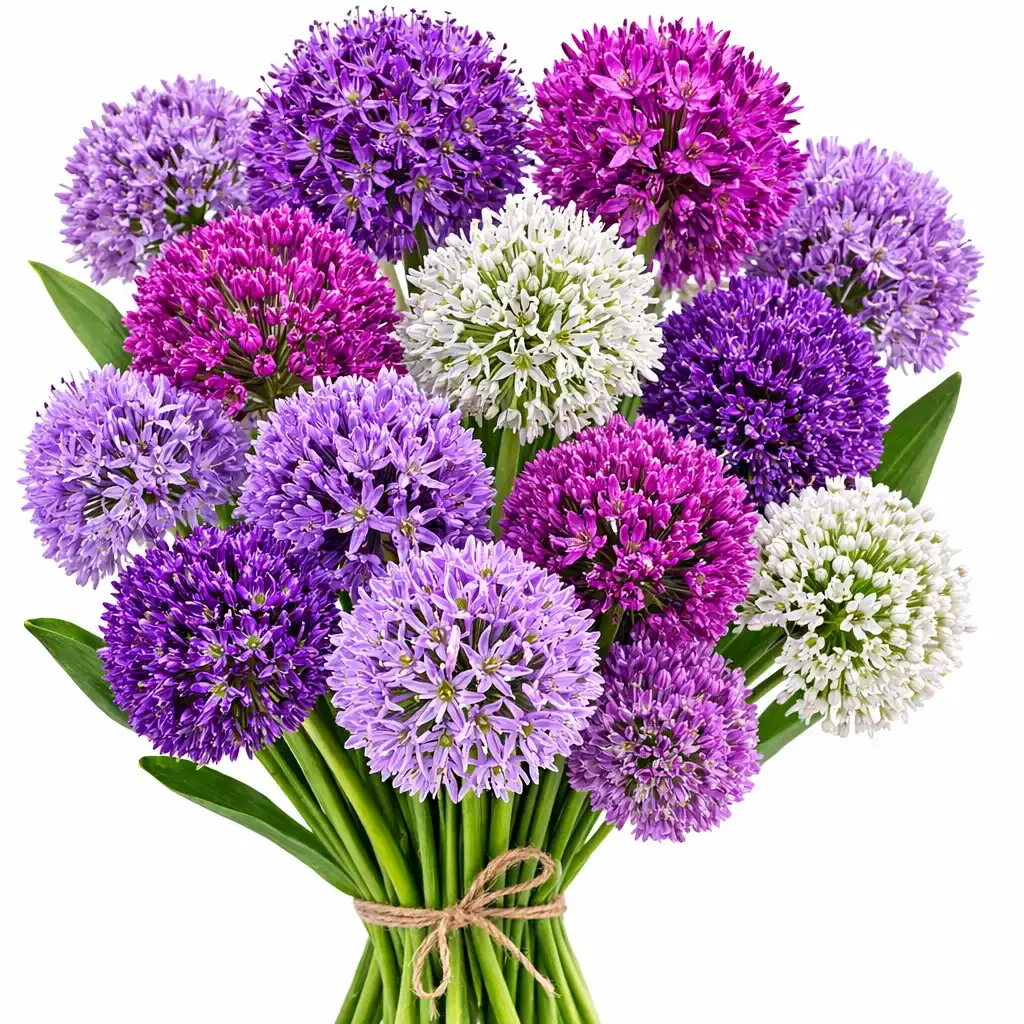
Quick Overview
Common Name: Allium, Ornamental Onion, Giant Allium, Drumstick Allium
Scientific Name: Allium spp.
Plant Type: Perennial Bulb
USDA Zones: 3 to 9 depending on species
Sun Requirement: Full Sun
Soil Type: Well-drained, average to moderately fertile
Bloom Season: Late Spring through Early Summer
Height: 12 to 48 inches depending on species and variety
Pollinator Friendly: Yes, exceptionally so
Edible: Yes, many species are edible members of the onion family
Why Grow Allium on a Homestead
Allium is one of the most architecturally spectacular and commercially distinctive specialty cut flowers available to homestead growers. Its perfectly spherical flower heads, ranging from the golf-ball-sized clusters of Allium moly to the dramatic softball-sized globes of Allium giganteum, each composed of dozens to hundreds of individual star-shaped florets densely packed into a perfect sphere on a tall, straight stem, create a bold geometric statement in arrangements that is genuinely unlike any other commonly grown spring or early summer cut flower. In the professional floral industry Allium is considered one of the most versatile and architecturally powerful specialty flowers available for the late spring season, providing a structural presence and a geometric drama that florists and wedding designers use to anchor and elevate arrangements across every aesthetic from the most contemporary to the most romantic.
For homestead growers, Allium represents one of the most strategically underutilized specialty bulb investments available for the late spring cut flower market. Despite its extraordinary commercial value, dramatic visual impact, and consistent florist demand, Allium remains genuinely rare as a dedicated cut flower crop at most homestead operations. This rarity creates an essentially uncontested local market position for growers who develop productive plantings. As a perennial bulb that naturalizes reliably in appropriate conditions, an established Allium planting provides an expanding supply of harvestable stems each season from a fixed initial investment, with individual bulbs multiplying to create larger clumps and greater stem production year after year.
Here is why Allium deserves a prominent spot on your homestead:
The perfectly spherical flower heads provide a genuinely irreplaceable geometric drama in arrangements. The bold, architectural sphere form of Allium blooms creates a structural quality in arrangements that no other commonly grown spring or early summer cut flower can replicate. This genuine uniqueness creates strong market demand and premium pricing.
It blooms during the peak late spring wedding season when demand for distinctive locally grown specialty flowers is highest. The May through June blooming window of most Allium species aligns precisely with the most commercially active period of the spring wedding and event market.
It is a permanent, naturalizing perennial bulb with improving returns. Established Allium plantings naturalize and expand reliably in appropriate conditions, providing increasing quantities of harvestable stems from a fixed initial investment as bulbs multiply each season.
The dried seed head market provides a significant additional income stream. The perfectly spherical seed heads that develop after blooming are as architecturally dramatic as the fresh flowers and are among the most sought-after dried botanical products available from any spring bulb.
The onion-family connection provides an additional edible and culinary market dimension. Several Allium species provide edible cut stems, flowers, and bulbs alongside their cut flower value, creating additional specialty food market applications.
Growing Conditions
Sunlight
Allium requires full sun to perform its best. It needs at least 6 hours of direct sunlight per day for the strongest stems, most perfectly formed spherical heads, and the most vivid flower colors. In partial shade stems become weak and lean, the perfectly spherical form of the flower heads becomes less well-developed, and flowering is less abundant. Full sun combined with well-drained soil produces the ideal conditions for the tall, straight, commercially valuable stems that make Allium so useful to florists.
Soil
Allium prefers well-drained, average to moderately fertile soil. Excellent drainage is the single most critical soil requirement as Allium bulbs rot quickly in waterlogged or poorly drained conditions, particularly during the summer dormancy period. A loose, well-drained soil with a pH between 6.0 and 7.0 is ideal. Incorporating compost before planting improves soil structure and fertility while maintaining good drainage. In heavy clay soils, building raised beds or incorporating significant amounts of coarse sand and compost is necessary to provide the excellent drainage that prevents bulb rot.
Water
Allium needs consistent watering during its active growing and blooming period in spring. Adequate moisture is important during the development of the flower heads and stems. After blooming as foliage begins to die back in late spring and early summer, reduce watering significantly. Allium bulbs need relatively dry conditions during their summer dormancy period to ripen properly and avoid the rot that destroys bulbs in consistently moist summer soil. In climates with wet summers, excellent drainage becomes even more critical to protect dormant bulbs.
Temperature
Allium is cold hardy and performs reliably across a wide range of climates. Most commonly grown Allium species including Allium giganteum, Allium aflatunense, and Allium christophii are reliably hardy in USDA zones 4 to 8. Allium moly and several other smaller species are hardy in USDA zones 3 to 9. The cold winters that many homestead growers in cold climates view as a production limitation are actually beneficial for Allium as they provide the cold period that bulbs require to develop the strong root systems and flower buds that produce the most impressive commercial stems.
Planting Guide
Allium is grown from bulbs planted in fall in most climates for late spring blooming. The fall planting timing is essential as bulbs require a cold winter period to develop properly and produce the impressive flower heads that create commercial value.
Step 1: Plant Allium bulbs in fall, typically September through November depending on climate, before the ground freezes. This fall planting timing is critical. Allium bulbs planted in spring after the ground has warmed do not receive adequate cold exposure and typically produce poor quality stems or fail to bloom in their first season.
Step 2: Choose a planting location with full sun and excellent drainage. In areas where summer moisture is unavoidable, building raised beds ensures the dry summer dormancy conditions that bulbs require.
Step 3: Plant bulbs with the pointed end facing up at a depth of two to three times the diameter of the bulb. For large Allium giganteum bulbs this means planting at 6 to 8 inches deep. For smaller species bulbs this means planting at 3 to 4 inches deep. Deeper planting provides more stability for the tall stems and reduces the need for staking.
Step 4: Space bulbs according to variety size. Large species such as Allium giganteum need 8 to 12 inches between bulbs. Medium species such as Allium aflatunense need 6 to 8 inches. Small species such as Allium moly need 4 to 6 inches.
Step 5: Water thoroughly after planting to encourage root development before winter. Do not water again until spring growth emerges.
Step 6: Allow foliage to die back completely and naturally after blooming. The foliage continues to photosynthesize and feed the bulb for several weeks after blooming, storing energy for the following season's flowers and supporting bulb multiplication. Never cut back foliage before it has fully yellowed.
Seed vs Bulb: Always grow Allium from bulbs for cut flower production. Growing from seed takes three to five years to produce blooming plants and results are variable. Named variety bulbs from reputable suppliers give the fastest and most reliable path to premium commercial production.
Spacing: 4 to 12 inches apart depending on species size.
Planting Season: Fall, September through November before the ground freezes.
Maintenance
Managing the Post-Bloom Period
The dying foliage of Allium in late spring and early summer is one of the primary garden management challenges with this bulb crop. The large, strap-like leaves of Allium giganteum and similar large species die back untidily after blooming and must be allowed to complete this process naturally for the health of the bulbs. Interplanting with later-emerging perennials or annuals that fill in as Allium foliage declines is the most effective strategy for managing the visual gap left by dying Allium foliage in a production planting.
Dividing and Multiplying
Established Allium clumps that have been in the ground for several seasons gradually increase as bulbs multiply through offsets. Every three to four years, lifting and dividing congested clumps in late summer after foliage has fully died back and separating individual bulbs for replanting at appropriate spacing maintains productive flowering and provides free additional bulbs for expanding the planting.
Fertilizing
Apply a balanced bulb fertilizer or bone meal at planting time incorporated into the soil around the bulbs. A light application of balanced fertilizer in early spring as foliage emerges supports vigorous stem development and flower head formation. Avoid high-nitrogen fertilizers which promote excessive foliage at the expense of flower development.
Pest Control
Allium is largely pest resistant due to its characteristic onion-family compounds. Most insect pests avoid Allium. The onion fly can occasionally damage bulbs but is rarely a significant problem in well-managed plantings with good drainage and soil health. Narcissus bulb fly can occasionally infest Allium bulbs in warmer climates. Firm the soil around emerging shoots in spring to discourage egg laying.
Disease Prevention
Allium leaf blight and various fungal diseases can affect foliage in warm, humid conditions. Good air circulation through appropriate spacing and avoiding overhead watering are the most effective preventive measures. The most important disease prevention practice is ensuring excellent drainage to prevent bulb rot during the summer dormancy period.
Harvesting
When to Harvest Fresh Cut Flowers
Harvest Allium stems when the spherical flower head is fully developed and the individual florets are beginning to open around the circumference of the sphere, with approximately one quarter to one third of the florets open. At this stage the sphere continues to fill out and fully open after cutting, creating a progressively more complete and impressive display in the vase. Stems harvested when the head is fully open have shorter remaining vase life. Harvest in the early morning when stems are fully hydrated.
Note that freshly cut Allium stems emit a characteristic onion-like odor from the cut stem end. This is normal and does not indicate poor quality. The odor dissipates after conditioning in water and is not detectable in properly conditioned stems used in arrangements.
How to Cut
Use clean, sharp scissors or pruners. Cut stems as long as possible at the base of the stem near the bulb neck, ideally 18 to 30 inches for large species. Remove all foliage from the stem as Allium foliage emits a stronger onion odor than the stem alone and detracts from the clean architectural quality of the flower head on its bare stem. Place stems immediately into a bucket of cool water.
Conditioning
After cutting and removing all foliage, place stems in cool water in a cool, dark location for several hours or overnight. The characteristic onion odor of freshly cut stems dissipates during conditioning. Properly conditioned Allium stems are essentially odor-free and hold up extremely well in arrangements.
When to Harvest for Drying
For dried seed head production, allow blooms to remain on the plant after the petals have fallen and the seed head has fully developed into the characteristic open, starry, spherical seed structure. Harvest when seed heads are fully formed and firm. The open, starry seed heads of dried Allium are among the most architecturally beautiful and most commercially sought-after dried botanical products available from any spring bulb.
Drying
Stand stems upright in a dry container without water and allow to dry in place, or hang upside down in small loose bundles in a warm, dry, well-ventilated space away from direct sunlight. The spherical seed heads retain their spectacular open, starry form through the drying process with exceptional fidelity. Drying takes approximately two to three weeks.
How Often to Harvest
The blooming window for each Allium species is relatively brief, typically two to four weeks. Harvest stems every two to three days as individual heads reach the correct stage. With multiple Allium species planted with staggered bloom times, the overall harvest window can be extended to six to eight weeks.
Vase Life
Allium typically lasts 10 to 14 days or more as a fresh cut flower with proper conditioning. This exceptional longevity is one of its most commercially valuable qualities. Strip all foliage before placing in water, recut stems at an angle, and place in fresh water with a floral preservative. Change water every few days to maximize longevity.
Uses on a Homestead
Cut Flower Use
Allium is grown primarily as a bold architectural accent and structural focal element in mixed late spring and early summer bouquets and arrangements. Its perfectly spherical heads on tall straight stems create a geometric drama and structural presence that is genuinely unlike any other spring cut flower. It pairs magnificently with peonies, roses, Delphiniums, Foxgloves, and other late spring flowers in grand mixed arrangements that benefit from the bold architectural counterpoint of Allium spheres. Even a single Allium stem completely transforms the character and visual impact of any arrangement it appears in.
Dried Seed Heads
The open, starry dried seed heads of Allium are among the most architecturally spectacular and most commercially valuable dried botanical products available from any spring bulb. Their perfect spherical open structure, delicate individual star-shaped seed capsules, and exceptional longevity when dried create premium products that sell consistently well at craft markets, through specialty gift shops, and through online platforms throughout the year.
Wedding and Event Flowers
Allium is enormously popular in the contemporary wedding and event flower market for garden-style, botanical, and architectural design aesthetics. The bold spherical heads provide an immediately dramatic and visually distinctive element in bridal bouquets, ceremony installations, and event centerpieces. Wedding florists working with late spring weddings specifically seek reliable local sources of quality Allium stems and pay premium prices for them.
Farmers Market
Fresh Allium stems at a late spring farmers market create an immediately extraordinary display that stops customers with their dramatic spherical heads. The genuine rarity of fresh Allium as a cut flower at most market stands creates strong impulse purchasing and premium pricing conditions throughout the brief production window.
Culinary Use
Several Allium species provide edible flowers that are genuinely useful as culinary garnishes. The flowers of Allium schoenoprasum (Chives), Allium tuberosum (Garlic Chives), and several other edible species are used in cooking and as garnishes. Selling edible Allium flowers to restaurants and specialty food producers provides an additional premium income stream from the established planting.
Can You Make Money With Allium
Yes, Allium is a profitable specialty bulb cut flower crop for homestead operations. The combination of genuine market rarity, premium per-stem pricing, peak spring wedding season timing, exceptional dried seed head value, and the naturalizing bulb system that expands production capacity each season creates a sound commercial foundation.
Genuine market rarity creates uncontested premium positioning. Fresh Allium as a dedicated cut flower crop is genuinely rare at most farmers markets and in most local florist supply chains. Local availability creates an essentially uncontested market position that supports premium pricing.
Peak spring wedding season timing maximizes commercial value. Most Allium species bloom from late May through June precisely when the spring wedding season is most active, creating natural alignment with peak commercial demand.
Permanent naturalizing bulbs with improving returns. Established Allium plantings multiply reliably each season, providing increasing quantities of harvestable stems year after year from a fixed initial investment.
Exceptional dried seed head premium. The architecturally spectacular dried seed heads of large Allium species command premium prices as dried botanical products and provide year-round income from seasonal production.
Farmers Market: Fresh Allium stems sell for 2 to 4 dollars per individual stem for large species. Bundles of smaller species stems sell for 8 to 14 dollars per bunch. Dried seed head bundles sell for 10 to 18 dollars per bunch at craft and specialty markets.
Florists and Wedding Designers: Allium is in consistent demand from florists and wedding designers for late spring work. Wholesale pricing reflects the premium specialty positioning of locally grown Allium stems.
Dried Flower Market: Dried Allium seed heads are among the most commercially compelling dried botanical products available. Their perfect spherical open structure and exceptional shelf life create premium products that sell consistently through craft markets and online platforms.
Companion Plants
Allium grows beautifully alongside other late spring and early summer flowering plants with complementary bloom times and growing requirements.
Peonies: Both bloom in late spring and early summer and complement each other magnificently in grand mixed arrangements where Allium provides bold spherical structural drama and peonies provide lush, opulent focal blooms.
Roses: Both bloom in late spring and early summer and the bold spherical heads of Allium provide beautiful geometric contrast to the round, layered form of rose blooms in mixed arrangements.
Delphiniums: Both produce tall, dramatic vertical or architectural flowering structures in late spring and early summer and complement each other beautifully in large mixed arrangements.
Foxgloves: Both bloom in late spring and early summer and complement each other in romantic mixed arrangements where Foxglove provides tall pendant spikes and Allium provides bold geometric sphere accents.
Iris: Both bloom in late spring at overlapping times and complement each other naturally in mixed seasonal arrangements with complementary blue-purple tones and architectural forms.
Catmint: The soft, billowing purple-blue of Catmint provides a beautiful naturalistic contrast to the bold, geometric spheres of Allium in mixed arrangements and in the garden landscape.
Common Problems
Bulb Rot During Summer Dormancy
The most common cause of production failure with Allium. Caused by consistently moist or waterlogged soil during the summer dormancy period. Prevention through excellent drainage, building raised beds in areas with heavy summer rainfall or poor native drainage, and reducing irrigation after foliage has died back is the only effective management strategy.
Flopping Stems
Can occur in large species such as Allium giganteum when bulbs are planted too shallowly or in windy exposed locations. Plant at the correct depth of two to three times the bulb diameter, which provides stability for the tall stems. Installing horizontal support netting in exposed locations helps prevent wind damage to tall stems.
Premature Foliage Decline Reducing Bulb Vigor
Cutting back Allium foliage before it has fully yellowed and died back naturally reduces bulb vigor and decreases the following season's flower production. Always allow foliage to complete its natural die-back process even though it is untidy. Interplanting with other plants that fill in as Allium foliage declines addresses the visual management challenge without harming the bulbs.
Onion Odor from Cut Stems
The characteristic onion odor of freshly cut Allium stems can be off-putting to customers and florists who encounter it for the first time. Always inform customers and florists that this odor dissipates completely after conditioning in water. Properly conditioned stems are essentially odor-free. Removing all foliage from harvested stems significantly reduces the odor as foliage emits more volatile compounds than the stem alone.
Failure to Bloom After First Season
Usually caused by bulbs planted in spring rather than fall, insufficient cold exposure, bulb rot from poor drainage, or foliage cut back prematurely before adequate energy was stored for the following season. Always plant bulbs in fall for the correct cold period, ensure excellent drainage year-round, and allow foliage to die back completely and naturally after each blooming season.
Varieties to Consider
Large Spherical Varieties for Premium Cut Flower Production
Allium giganteum (Giant Allium): The most dramatic and most commercially premium Allium species for cut flower production. Large, perfectly spherical heads of 4 to 6 inches across composed of dozens of tiny lilac-purple florets on stems reaching 36 to 48 inches. Commands the highest per-stem prices of any commonly grown Allium species. Hardy in USDA zones 5 to 8.
Allium christophii (Stars of Persia): Extremely large, open, starry spherical heads of 8 to 10 inches across composed of metallic violet-purple florets on shorter stems of 18 to 24 inches. The most spectacular species for dried seed head production as the open, starry form is particularly dramatic when dried. Hardy in USDA zones 4 to 8.
Allium aflatunense Purple Sensation: Deep, rich violet-purple spherical heads of 3 to 4 inches across on strong stems reaching 24 to 36 inches. One of the most widely grown and most reliable Allium varieties for cut flower production. The intense purple color commands premium prices from florists. Hardy in USDA zones 4 to 8.
Allium hollandicum Mount Everest: Pure white spherical heads on strong stems reaching 24 to 30 inches. Very popular with wedding florists for the clean white color that complements virtually every wedding color palette. Commands premium prices for the unusual white color in a genus dominated by purple tones. Hardy in USDA zones 4 to 8.
Medium Varieties for Mixed Production
Allium Ambassador: Very large, deep violet-purple heads on extra-tall stems reaching 48 to 60 inches. One of the tallest commonly grown Allium varieties. Commands premium prices for the extraordinary height and intense color.
Allium Gladiator: Large, bright violet-purple heads on strong stems reaching 36 to 42 inches. Very reliable and productive. One of the most widely grown Allium varieties for commercial cut flower production.
Allium Lucy Ball: Large, vivid lilac-pink to purple heads on strong stems reaching 36 to 48 inches. Very popular at farmers markets for the vivid color and reliable production.
Drumstick and Specialty Types
Allium sphaerocephalon (Drumstick Allium): Small, egg-shaped heads in deep burgundy-purple to wine red on wiry stems reaching 24 to 30 inches. Blooms later than most Allium species in early to midsummer, extending the overall Allium harvest season. Very popular with florists for the small, dense, richly colored heads and the long, wiry stems that provide a different visual quality from the large spherical types. Hardy in USDA zones 4 to 8.
Allium moly (Golden Garlic): Small, open clusters of vivid yellow flowers on stems of 12 to 18 inches. Provides a completely different color and scale from the purple spherical types. Very popular at farmers markets for the unusual vivid yellow that is rare among Allium species. Hardy in USDA zones 3 to 9.
Final Thoughts
Allium is one of the most architecturally spectacular, most commercially distinctive, and most genuinely underutilized specialty bulb cut flower crops available to homestead growers. Its perfectly spherical flower heads that provide geometric drama available from no other spring cut flower, the peak late spring wedding season timing that creates maximum commercial value, the naturalizing bulb system that builds production capacity year after year from a fixed initial investment, and the extraordinarily dramatic dried seed heads that create year-round premium botanical product income together create a specialty cut flower investment with a commercial and aesthetic profile that is genuinely exceptional relative to the modest ongoing management it requires. Plant bulbs in fall at the correct depth in well-drained soil, never cut back foliage before it has fully died, manage summer drainage carefully to protect dormant bulbs, harvest at the correct stage when approximately one quarter to one third of florets are open for maximum vase life, allow selected stems to develop into the spectacular dried seed heads that are among the finest dried botanical products available, and Allium will reward your homestead with some of the most architecturally extraordinary, most commercially sought-after, and most personally magnificent spring cut flower stems available from any bulb planting.
FAQ
Why do Allium stems smell like onions after cutting? Allium is a member of the onion genus and shares the characteristic volatile sulfur compounds that give all members of the Allium family their distinctive onion and garlic odors. When the stem is cut these volatile compounds are released from the damaged cells, creating the characteristic odor. The odor dissipates relatively quickly as the volatile compounds evaporate and is essentially undetectable in properly conditioned stems that have been in cool water for several hours or overnight. Removing all foliage from harvested stems significantly reduces the odor as the foliage contains higher concentrations of these volatile compounds than the stem alone. Always inform florist and market customers that freshly cut Allium stems have a temporary onion odor that dissipates completely after conditioning to prevent unnecessary concern about product quality.
Do Allium bulbs need to be lifted and stored in cold winter climates? Most commonly grown ornamental Allium species including Allium giganteum, Allium aflatunense, Allium christophii, and Allium sphaerocephalon are reliably cold hardy in USDA zones 4 to 8 and do not need to be lifted and stored in most cold winter climates. They overwinter successfully in the ground and actually benefit from the cold period that provides the chilling they need for strong spring growth and flowering. In the coldest climates at USDA zone 3 and below, a protective layer of straw mulch applied after the ground has frozen provides additional cold protection for the slightly less cold-hardy large species. Allium moly is particularly cold hardy and performs reliably in USDA zone 3 without any special protection.
How do I get the largest, most perfectly spherical heads from Allium giganteum? The most important factors for maximizing head size and spherical perfection in Allium giganteum are planting the largest, highest-quality bulbs from reputable specialist suppliers, providing a cold winter period of adequate length and cold intensity, allowing foliage to complete its natural die-back process completely in the previous season rather than cutting it back prematurely, ensuring excellent drainage year-round particularly during summer dormancy, and providing adequate soil fertility through bone meal or balanced bulb fertilizer at planting time. The quality of the initial bulb is the single most important factor as large, healthy bulbs store more energy for the following season's flower development. Purchasing the largest grade of bulbs available from specialty cut flower bulb suppliers rather than smaller, less expensive grades gives the most impressive and commercially valuable first-season results.
Can Allium be used in cut flower arrangements without the onion smell bothering customers? Yes, properly conditioned Allium is essentially odor-free in arrangements. The key is thorough conditioning in cool water for a minimum of four to six hours and preferably overnight after cutting and removing all foliage. This conditioning period allows the volatile sulfur compounds responsible for the onion odor to dissipate from the cut stem surfaces. Additionally removing all foliage from stems before use eliminates the primary source of ongoing volatile compound release. Properly prepared Allium stems in arrangements are indistinguishable from any other cut flower in terms of odor and customers who are concerned about the onion smell when purchasing fresh-cut stems can be reassured that the odor will not be present in their arranged flowers after proper conditioning.