
Alstroemeria
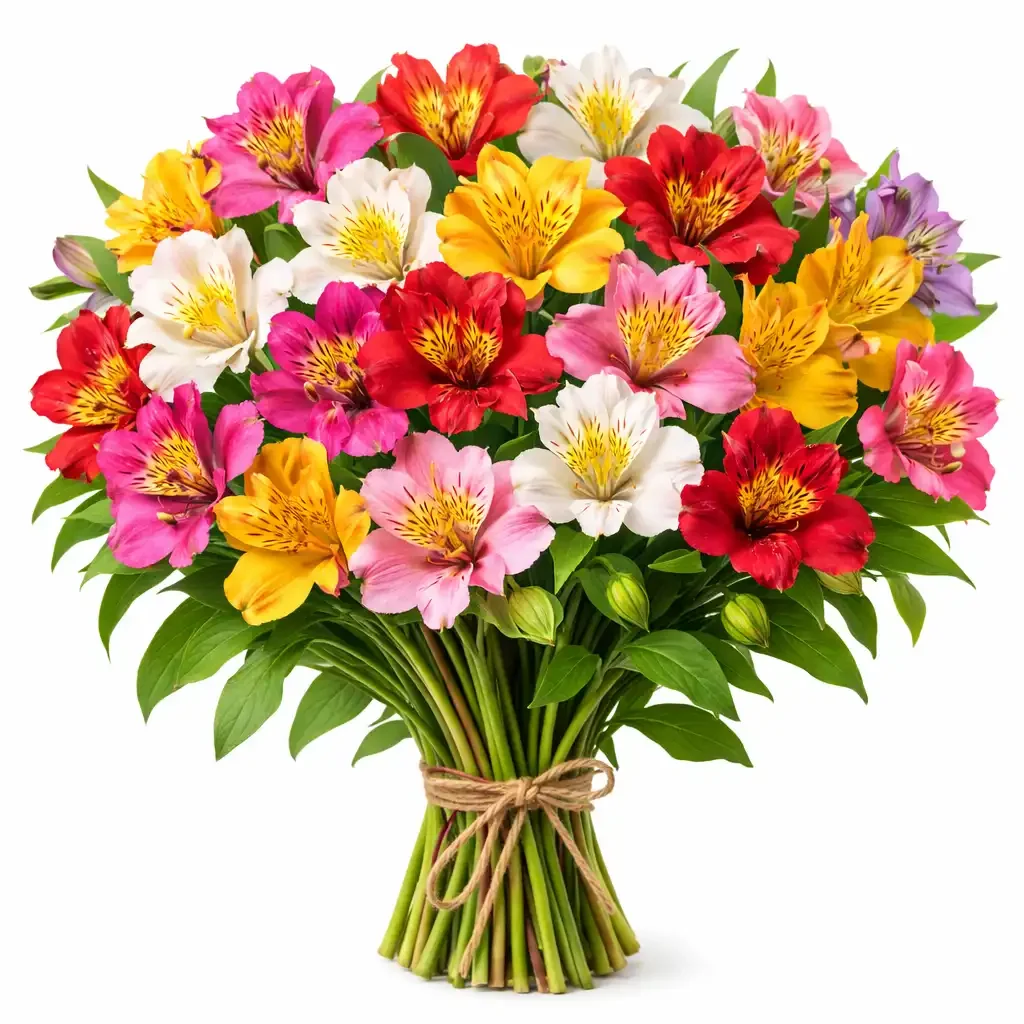
Quick Overview
Common Name: Alstroemeria, Peruvian Lily, Lily of the Incas, Parrot Lily
Scientific Name: Alstroemeria spp.
Plant Type: Tender to Hardy Perennial grown from rhizomes
USDA Zones: 5 to 10 depending on variety
Sun Requirement: Full Sun to Partial Shade
Soil Type: Well-drained, moderately fertile
Bloom Season: Late Spring through Fall, nearly year round in mild climates
Height: 18 to 36 inches depending on variety
Pollinator Friendly: Yes
Edible: No, toxic if ingested
Why Grow Alstroemeria on a Homestead
Alstroemeria is one of the most commercially important and most underestimated cut flower opportunities available to homestead growers. Its clusters of elegant, trumpet-shaped blooms in the most sophisticated and unusual color combinations available from any commonly grown cut flower, spanning soft white and cream through delicate pink, rich salmon, vivid orange, golden yellow, deep purple, lavender, and complex bicolors and multicolors with intricate streaking, spotting, and flecking patterns on the inner petals, create a quality of refined, exotic beauty that florists and customers consistently describe as one of their favorite flowers across every market level. In the professional floral industry Alstroemeria is considered one of the five most commercially important cut flowers in the world, consistently ranking alongside roses, carnations, chrysanthemums, and tulips in global sales volume.
For homestead growers, the Alstroemeria opportunity is strikingly similar to the Carnation opportunity described elsewhere in this series. The conventional wisdom holds that Alstroemeria cannot be profitably grown at small scale because the commercial market is dominated by large-scale greenhouse and open-field production from South America and other low-cost growing regions. This conventional wisdom is correct for standard commercial Alstroemeria grades but entirely wrong for the specialty, long-stemmed, highly fragrant, and unusual-colored varieties that homestead growers can produce and that commercial operations rarely grow in premium quality. The locally grown fresh Alstroemeria advantage, where flowers that arrive at the florist or market within hours of harvest have noticeably superior freshness, fragrance, and vase life compared to commercially shipped alternatives that have traveled for days, creates a genuine and immediately recognizable quality differential that sophisticated florists and customers respond to enthusiastically.
Here is why Alstroemeria deserves a prominent spot on your homestead:
The extraordinary vase life of Alstroemeria creates the most commercially compelling value proposition available from any cut flower. At fourteen to twenty-one days or more in the vase, Alstroemeria delivers the longest vase life of any commercially important cut flower, creating exceptional perceived value per dollar that supports premium pricing and generates the most loyal repeat purchasing of any flower in the homestead cutting garden.
It is a permanent, expanding perennial that delivers improving returns year after year. Once established in appropriate conditions, Alstroemeria rhizomes spread progressively each season, creating expanding clumps that produce increasing quantities of harvestable stems from a fixed initial investment. The combination of perennial permanence and progressive expansion creates long-term financial returns that annual crops cannot match.
The intricate, multicolored inner petal markings create a flower of unique, sophisticated beauty that no imitation or substitute can replicate. The distinctive streaking, spotting, and contrasting color patterns on the inner petals of Alstroemeria blooms create a visual complexity and botanical interest that customers and florists find immediately compelling and genuinely unlike any other commonly grown cut flower.
It blooms over an extraordinarily long season in appropriate conditions. In mild climates, Alstroemeria can bloom from late spring through fall and nearly continuously year-round in the mildest conditions, providing one of the longest single-crop harvest windows available from any perennial cut flower.
The locally grown fresh quality advantage creates a genuine and immediately recognizable premium over commercially shipped alternatives. Fresh Alstroemeria cut within hours of harvest and delivered to local florists and market customers provides a vase life and fragrance advantage that commercially shipped alternatives arriving days after harvest simply cannot match.
Growing Conditions
Sunlight
Alstroemeria performs well in full sun to partial shade. It needs at least 4 to 6 hours of direct sunlight per day for the most abundant flowering and the strongest, longest stems. In full sun it produces the most productive and longest-stemmed cuts, particularly in cool to moderate climates. In hot summer climates some afternoon shade actually improves performance by reducing the heat stress that causes premature stem decline. The shade tolerance of Alstroemeria gives it more planting flexibility than many other perennial cut flowers, making it an excellent choice for locations with some afternoon shade in warmer growing areas.
Soil
Alstroemeria prefers well-drained, moderately fertile soil. Good drainage is critical as the fleshy rhizomes rot quickly in waterlogged or poorly drained conditions. A loose, well-drained soil with a pH between 6.0 and 7.0 is ideal. Incorporating generous amounts of compost before planting improves soil structure and fertility while maintaining good drainage. In heavy clay soils, building raised beds or incorporating significant amounts of coarse sand and compost ensures the excellent drainage that prevents rhizome rot during the growing season and particularly during wet winter periods in cold climates.
Water
Alstroemeria needs consistent watering during its active growing and blooming season. Adequate moisture is important during bud development and blooming but the rhizomes must never sit in waterlogged soil. Water deeply and allow the top inch or two of soil to dry slightly between waterings. In mild climates where Alstroemeria grows semi-continuously, consistent moisture throughout the growing season maintains productive stem production. After the main flowering period in late summer, reduce watering to allow rhizomes to ripen and prepare for the following season.
Temperature
Temperature requirements vary significantly between Alstroemeria varieties and this variation determines which production strategy is most appropriate for each specific climate. Most commonly grown Alstroemeria varieties are cool to moderate season performers that produce their best quality and most productive stems when temperatures during the blooming period are consistently between 50 and 75 degrees Fahrenheit. In hot summer climates temperatures above 80 to 85 degrees Fahrenheit during the main blooming period reduce stem length and quality significantly. Heat-tolerant varieties have been developed that extend productive blooming into warmer summer conditions.
Cold hardiness varies considerably between varieties. Standard varieties are typically hardy in USDA zones 7 to 10. Some hardier varieties perform reliably in USDA zones 5 to 6 with appropriate mulching and winter protection. In cold winter climates within USDA zones 5 to 6, growing in raised beds with excellent drainage and providing a generous winter mulch significantly improves survival and productivity.
Planting Guide
Alstroemeria is best established from rhizomes or nursery container plants. Growing from seed produces variable quality and takes two to three years to produce blooming plants. Named variety rhizomes or container plants from specialist suppliers give the fastest and most reliable path to premium commercial quality.
Step 1: Choose a planting location with appropriate sun exposure for your climate, full sun in cool climates and light afternoon shade in hot climates, and excellent drainage. This is the most critical planting decision.
Step 2: Prepare the planting bed thoroughly by incorporating generous amounts of compost to a depth of at least 12 inches. Good soil preparation done once before planting supports many years of productive growth from the expanding rhizome clumps.
Step 3: Plant rhizomes horizontally at a depth of 6 to 8 inches. Deeper planting provides cold protection for the rhizomes in borderline climates and promotes more vigorous growth. Space rhizomes or container plants 12 to 18 inches apart.
Step 4: Water thoroughly after planting and keep soil consistently moist until establishment. For rhizomes, emergence can take four to eight weeks and patience is required during this establishment period.
Step 5: In cold winter climates within USDA zones 5 to 6, apply a generous layer of straw or shredded leaf mulch over the planting area in fall after the ground has cooled to protect rhizomes from freezing. Remove mulch in spring as new growth emerges.
Step 6: Note that Alstroemeria rhizomes are extremely brittle and must be handled very carefully during planting. Never squeeze, bend, or drop rhizomes as even minor mechanical damage significantly reduces establishment success.
Seed vs Rhizome: Named variety rhizomes or nursery container plants are strongly recommended. Growing from seed is slow and produces variable quality.
Spacing: 12 to 18 inches apart for cut flower production.
Planting Season: Spring in most climates. Fall planting works well in mild climates within USDA zones 7 to 10.
Maintenance
The Pulling Harvest Technique
The most important and most distinctive management practice specific to Alstroemeria production is the pulling harvest technique. Unlike most cut flowers where stems are cut with scissors or pruners, Alstroemeria stems should be harvested by grasping the stem near its base and pulling upward with a firm, smooth motion that cleanly separates the stem from the rhizome below the soil surface. This pulling technique stimulates new stem production from the rhizome at a significantly higher rate than cutting, effectively increasing the total seasonal yield from each established rhizome clump. Cutting rather than pulling reduces subsequent stem production. The pulling technique is counterintuitive but essential for maximum Alstroemeria productivity and should be learned and practiced by every homestead Alstroemeria grower.
Managing Rhizome Expansion
Established Alstroemeria rhizomes spread progressively each season. While this expansion is generally desirable for increasing production, it must be managed to prevent overcrowding that reduces stem quality and individual plant productivity. Every three to four years, lift and divide overcrowded clumps in early spring before new growth emerges. Separate rhizome sections and replant at appropriate spacing, discarding any damaged or diseased portions.
Fertilizing
Apply a balanced fertilizer at planting and a light application every four to six weeks throughout the growing season to support the vigorous stem and flower production that maximizes commercial yield. Adequate potassium supports the strong stem development and vivid petal color that create commercial value. Avoid excessive nitrogen which promotes lush vegetative growth at the expense of flower production.
Pest Control
Alstroemeria is generally pest resistant in appropriate growing conditions. Thrips can occasionally damage developing buds and open flowers, reducing their commercial value. Monitor regularly with sticky traps and treat with neem oil or spinosad at the first sign of thrip activity. Spider mites can be a problem in hot, dry conditions. Maintain adequate moisture and treat with neem oil or insecticidal soap if spider mite populations develop. Slugs and snails can damage emerging growth in spring.
Disease Prevention
Rhizome rot caused by poor drainage or waterlogged soil is the most serious disease threat. Prevention through excellent drainage and appropriate watering is the only effective management strategy. Botrytis can affect flowers and foliage in cool, humid conditions. Good air circulation through appropriate spacing and removing spent flowers and declining foliage promptly are the most effective preventive measures.
Harvesting
When to Harvest
Harvest Alstroemeria stems when the first one to two florets in the cluster are just beginning to open with the remaining buds still tightly closed or showing color. The remaining florets open progressively over the following days after harvest, providing a long and evolving display that is one of Alstroemeria's most commercially important characteristics. Stems harvested when too few florets are open may not develop fully after cutting. Stems harvested when multiple florets are already open have a shorter remaining vase life. Harvest in the early morning when stems are fully hydrated.
How to Pull
Rather than cutting, grasp the stem near its base at soil level and pull upward with a firm, smooth motion to cleanly separate the stem from the rhizome. The stem should release cleanly from the rhizome with a clean break rather than tearing. If stems do not pull cleanly, they may be too immature and benefit from another day of development before harvesting. Remove all foliage from the lower half of the stem. Place stems immediately into a bucket of cool water with a floral preservative.
Conditioning
After pulling and stripping lower foliage, place stems in deep cool water in a cool, dark location for several hours or overnight before sale or arrangement. Alstroemeria conditions readily and the additional florets continue to open progressively during the conditioning period, creating beautifully developed stems for sale.
How Often to Harvest
During peak bloom, harvest every two to three days as new stems reach the correct stage. The regular pulling harvest stimulates continuous new stem production from the rhizomes, maintaining productive harvesting throughout the long blooming season.
Vase Life
Alstroemeria has an exceptional vase life of fourteen to twenty-one days or more with proper conditioning, making it one of the longest-lasting cut flowers available. Strip all foliage below the waterline, recut stems at an angle if using scissors rather than the pull technique, and place in fresh water with a floral preservative. Remove spent individual florets as they fade to maintain the arrangement's appearance and to extend the effective display period of the remaining florets. Change water every two to three days to maximize longevity.
Uses on a Homestead
Cut Flower Use
Alstroemeria is grown primarily as a premium fresh cut flower valued for its extraordinary vase life, intricate multicolored blooms, and the generous cluster of florets per stem that provides exceptional visual value per stem. It pairs beautifully with roses, Lisianthus, carnations, stock, and other premium cut flowers in mixed arrangements that balance the delicate cluster form of Alstroemeria with bolder focal flowers. Even a few stems of Alstroemeria in a mixed arrangement significantly extend the overall vase life of the bouquet as the progressive opening of new florets maintains fresh visual interest long after other flowers have faded.
Wedding and Event Flowers
Alstroemeria is a consistent staple in wedding and event floristry across every price point and design aesthetic. The extraordinary vase life is particularly important for wedding work where arrangements may need to remain fresh through a long ceremony and reception. The extraordinary color range, particularly the complex multicolored and spotted varieties, provides options for virtually any wedding color palette. Wedding florists who access locally grown fresh Alstroemeria consistently note the quality advantage of local supply over commercially shipped alternatives.
Farmers Market
Fresh Alstroemeria at a summer or fall farmers market provides one of the most compelling value propositions available to customers: a visually beautiful flower with an extraordinary vase life that delivers exceptional value per dollar spent. The progressive floret opening that provides fresh visual interest for two to three weeks genuinely differentiates it from most other cut flowers, and this value story, which customers readily understand and respond to, supports consistent purchasing and strong repeat customer loyalty.
CSA Flower Subscriptions
Alstroemeria is one of the most strategically valuable additions to a CSA flower subscription program because its extraordinary vase life means that subscribers still have fresh flowers from the previous week's delivery when the new box arrives. This overlap of freshness creates a genuinely exceptional subscription experience that generates strong subscriber loyalty and word-of-mouth promotion.
Can You Make Money With Alstroemeria
Yes, Alstroemeria is a profitable perennial cut flower crop for homestead operations. The extraordinary vase life that creates unmatched customer value, the permanent expanding rhizome system that grows production capacity each season, the locally grown fresh quality advantage over commercially shipped alternatives, and the consistent florist and retail demand throughout its long productive season create a commercial foundation of exceptional strength.
The extraordinary vase life creates the strongest cut flower value proposition available. No other commonly grown cut flower provides vase life of fourteen to twenty-one days. This exceptional longevity creates a genuine and immediately demonstrable value advantage that customers and florists recognize and respond to, justifying premium pricing and generating the most loyal repeat purchasing of any cut flower in the homestead operation.
Permanent expanding perennial with improving returns. Established Alstroemeria rhizomes expand progressively each season, producing increasing quantities of harvestable stems year after year from a fixed initial investment. The pulling harvest technique that stimulates new stem production further maximizes the commercial yield from each established clump.
Locally grown fresh quality advantage is genuine and immediately recognizable. Fresh Alstroemeria delivered within hours of harvest has noticeably superior vase life, color vibrancy, and fragrance compared to commercially shipped alternatives. This quality advantage is immediately recognizable to florists and experienced customers and creates strong loyalty to local supply.
Long productive season provides consistent income. In mild climates, Alstroemeria blooms from late spring through fall and nearly continuously year-round, providing one of the longest single-crop harvest windows available from any perennial cut flower.
Farmers Market: Fresh Alstroemeria bundles sell for 8 to 15 dollars per bunch depending on color, stem count, and quality. The extraordinary vase life story significantly enhances the perceived value at market and justifies premium pricing that customers accept readily.
Florists and Wedding Designers: Alstroemeria is in consistent year-round demand from florists. The quality advantage of locally grown fresh supply commands premium wholesale pricing. Wedding florists who experience locally grown Alstroemeria quality become extremely loyal customers.
CSA Flower Subscriptions: Alstroemeria is the single most strategically valuable addition to a flower subscription box because its extraordinary vase life creates a genuinely exceptional subscriber experience that no other cut flower can match. Subscribers who receive Alstroemeria consistently describe it as one of their favorite and most anticipated subscription inclusions.
Companion Plants
Alstroemeria grows beautifully alongside other perennial and summer cut flowers with similar growing requirements and complementary bloom times.
Roses: The most classic Alstroemeria companion. Both are long-vase-life premium cut flowers that complement each other beautifully in mixed arrangements where Alstroemeria provides cluster form and intricate color and roses provide bold focal blooms.
Lisianthus: Both are premium long-vase-life summer cut flowers that complement each other magnificently in high-end mixed arrangements.
Carnations: Both are exceptionally long-lived cut flowers with complementary forms that pair naturally in mixed arrangements and in the garden.
Lavender: Both prefer well-drained soil and complement each other beautifully in fragrant mixed arrangements where Alstroemeria provides bold color clusters and lavender provides aromatic spikes.
Snapdragons: Both bloom over long seasons and complement each other in mixed summer arrangements where Alstroemeria provides cluster form and snapdragons provide vertical color accents.
Agapanthus: Both are South American-origin perennials with similar growing requirements and complementary spherical and cluster flower forms.
Common Problems
Rhizome Rot
The most serious and most commonly fatal problem for Alstroemeria. Caused by consistently waterlogged soil or poor drainage. Prevention through excellent drainage, raised beds in heavy soils, and appropriate watering is the only effective management strategy. Once rhizome rot is established the affected sections typically cannot be saved. Remove and destroy affected rhizome sections immediately to prevent spread.
Failure to Emerge After Planting
Common with rhizome plantings that experience rot during the establishment period, rhizomes planted at the wrong season, or rhizomes that were mechanically damaged during planting. Always handle rhizomes extremely gently, plant at the correct season for your climate, and ensure excellent drainage before and after planting. Patience is required as emergence can take four to eight weeks from planting in appropriate conditions.
Reduced Flowering in Hot Conditions
Standard Alstroemeria varieties show significantly reduced stem length and production in temperatures consistently above 80 to 85 degrees Fahrenheit. Provide afternoon shade in hot climates, maintain consistent moisture during heat waves, and choose heat-tolerant varieties specifically developed for warm summer conditions. In very hot summer climates, Alstroemeria may go partially dormant during the hottest weeks before resuming production as temperatures moderate in late summer and fall.
Short Vase Life from Cutting Rather Than Pulling
Using scissors or pruners rather than the pulling harvest technique significantly reduces subsequent stem production from the rhizomes and can reduce vase life compared to properly pulled stems. Practice the pulling technique consistently for all harvest operations to maximize both vase life and long-term productivity.
Thrips Damage
Thrips feeding on developing buds causes browning and distortion of florets that significantly reduces commercial value. Monitor preventively with sticky traps and treat with neem oil or spinosad before populations build to damaging levels. Early detection and treatment are essential as thrips damage is difficult to reverse once visible.
Varieties to Consider
Hardy Varieties for Cold Winter Climates
Alstroemeria Third Harmonic: A hardy variety with vivid orange-red blooms on strong stems. Very reliable performance in cooler climates and one of the most cold-tolerant commonly grown Alstroemeria varieties. Hardy in USDA zones 5 to 9 with appropriate mulching.
Alstroemeria Summer Break: A hardy series with good cold tolerance and a range of warm colors including orange, yellow, and salmon. Strong stems and reliable production in cool climates. Hardy in USDA zones 5 to 9.
Premium Commercial Varieties
Alstroemeria Inca Series: A widely grown commercial series developed specifically for cut flower production with exceptional stem length, outstanding vase life, and a wide range of vivid and unusual colors. Available in individual colors including deep purple, vivid orange, soft pink, white, yellow, and numerous complex multicolors. The standard commercial series for homestead cut flower production targeting the florist market.
Alstroemeria Princess Series: A series with very large individual florets and particularly vivid, saturated colors. Very popular with florists and wedding designers for the more substantial, impressive individual blooms. Commands premium pricing for the larger floret size.
Alstroemeria Butterfly Hybrids: A series with unusually complex, heavily spotted and streaked inner petals creating a particularly intricate, butterfly-wing-like inner petal appearance. Very popular with specialty florists and wedding designers for the extraordinary visual complexity of the inner petal markings.
Fragrant Varieties
Alstroemeria Colorita Series: A series developed for strong fragrance alongside good cut flower performance. The fragrance of Alstroemeria is often not mentioned in commercial production as standard commercial varieties have had fragrance reduced through breeding, but the Colorita series offers a genuine aromatic dimension that locally grown homestead production can leverage for premium pricing.
Final Thoughts
Alstroemeria is one of the most commercially powerful, most personally rewarding, and most strategically underutilized perennial cut flower crops available to homestead growers. The extraordinary vase life that delivers the strongest cut flower value proposition available to any florist or market customer, the permanent expanding rhizome system that grows production capacity every season, the genuine and immediately recognizable fresh quality advantage of locally grown supply over commercially shipped alternatives, and the consistent, year-round florist and retail demand that provides reliable commercial income across every market channel combine to create a perennial cut flower investment of genuinely exceptional long-term financial and personal value. Handle rhizomes with extreme care during planting, ensure absolutely excellent drainage to protect against the rhizome rot that is the primary management threat, master and consistently practice the pulling harvest technique that maximizes both stem yield and vase life, tell the vase life story to every market customer and florist who encounters your locally grown Alstroemeria for the first time, and this remarkable Peruvian Lily will reward your homestead with one of the most commercially distinctive, most customer-loyal, and most personally satisfying cut flower harvests available from any perennial planting.
FAQ
What is the pulling harvest technique and why is it important? The pulling harvest technique is the practice of harvesting Alstroemeria stems by grasping each stem near its base at soil level and pulling upward with a firm, smooth motion rather than cutting with scissors or pruners. When performed correctly, the stem separates cleanly from the rhizome below the soil surface with a clean break. This technique is important for two specific reasons. First, it stimulates new stem production from the rhizome at a significantly higher rate than cutting, effectively increasing the total seasonal stem yield per established rhizome clump compared to cutting-harvested plants. Second, stems harvested by pulling have been demonstrated to have longer vase life than cut stems in commercial trials, likely because the complete stem is removed from the base without leaving a cut end that can become a site for bacterial entry. Learning and consistently practicing the pulling technique is one of the single most impactful management practices for maximizing the commercial productivity and vase life quality of homestead Alstroemeria production.
Why does Alstroemeria have such an exceptionally long vase life? The extraordinary vase life of Alstroemeria, typically fourteen to twenty-one days or more under proper care conditions, results from a combination of biological characteristics that distinguish it from most other cut flower genera. The cluster of multiple florets per stem opens progressively over many days rather than simultaneously, meaning that as older florets age and drop, fresh new florets continue to open and maintain the visual freshness of the stem. The relatively thick, waxy cuticle on the petals slows moisture loss. And the absence of ethylene sensitivity that causes premature aging in many other flowers makes Alstroemeria particularly tolerant of the room temperature conditions typical of home and office environments. Removing spent individual florets as they fade maintains the attractive appearance of the cluster and focuses the stem's energy on the remaining developing florets, extending the effective display period even further.
Can Alstroemeria be grown successfully in containers? Yes, Alstroemeria grows well in large containers and container growing is an excellent option for growers who want to protect rhizomes from winter frost in cold climates, control the aggressive spreading habit in small growing spaces, or maximize drainage in areas with heavy soil. Use very large containers of at least 15 to 20 gallons with excellent drainage holes and a well-drained potting medium. Alstroemeria in containers will be somewhat smaller and produce fewer stems than ground-planted specimens but can still generate commercially useful quantities of cut material with appropriate management. Container-grown plants need more frequent watering and fertilizing than ground-planted specimens as containers dry out and deplete nutrients more quickly.
Is Alstroemeria fragrant? Standard commercial Alstroemeria varieties have had most of their natural fragrance reduced or eliminated through decades of commercial breeding that prioritized vase life, stem strength, and color range over fragrance. However, older heritage varieties and some specialty series including the Colorita series retain meaningful fragrance that ranges from a light, sweet floral scent to a more pronounced and distinctive honey-like fragrance. For homestead growers who want to offer fragrant Alstroemeria as a specialty product that commercial operations do not provide, seeking out the specifically fragrant varieties is worthwhile. The fragrance premium that intensely scented flowers command at market, as described throughout this series, applies to fragrant Alstroemeria as much as to fragrant roses or carnations.