
Amaranth
Quick Overview
Common Name: Amaranth, Love Lies Bleeding, Tassel Flower, Prince's Feather, Joseph's Coat
Scientific Name: Amaranthus spp.
Plant Type: Annual
USDA Zones: 2 to 11
Sun Requirement: Full Sun
Soil Type: Well-drained, average to moderately fertile
Bloom Season: Summer through First Frost
Height: 24 to 60 inches depending on variety
Pollinator Friendly: Yes
Edible: Yes, leaves, seeds, and flowers are edible and highly nutritious
Why Grow Amaranth on a Homestead
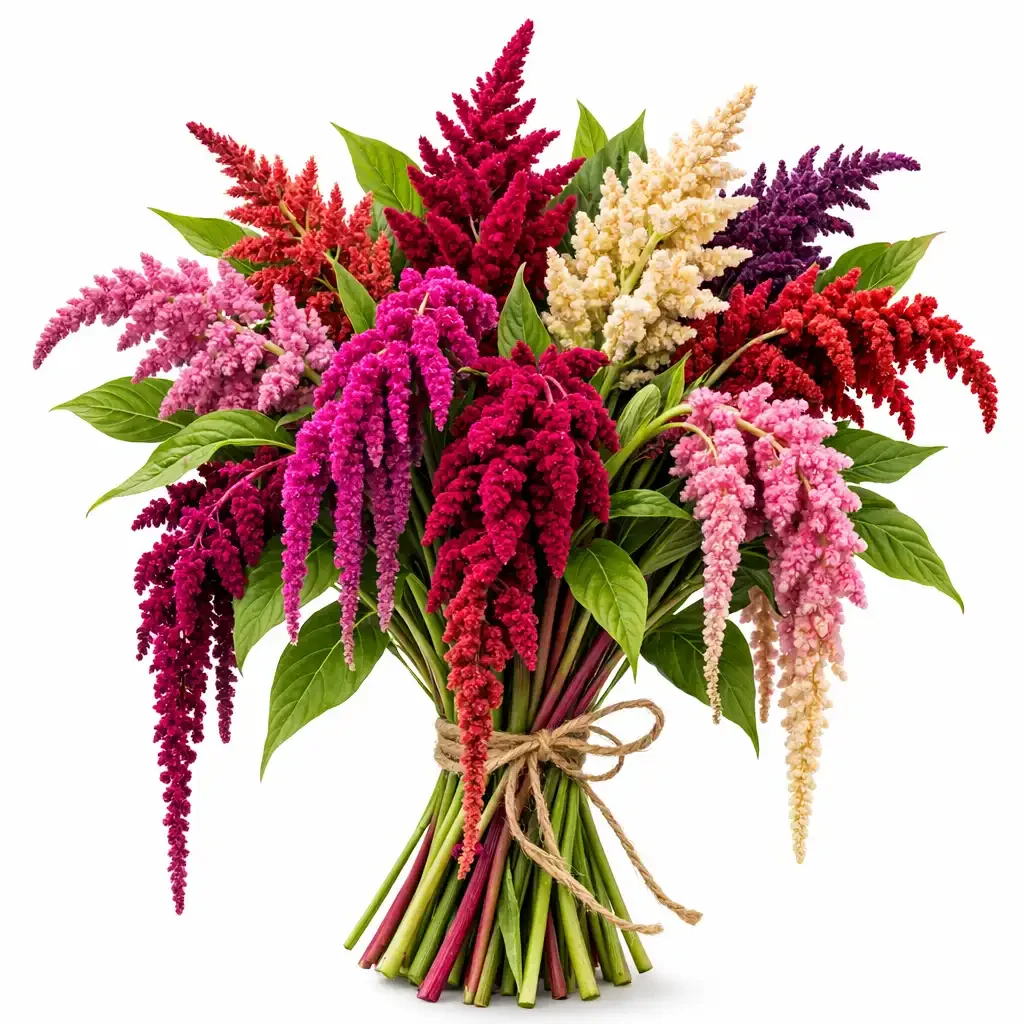
Amaranth is one of the most dramatically beautiful, most ecologically generous, and most genuinely multi-functional plants available to homestead growers. Its sweeping, rope-like cascading tassels in deep crimson and burgundy, its bold upright plumes in gold, orange, and rich red, and its dramatic architectural foliage in striped and multicolored combinations create a range of visual textures and forms that no other single annual genus can replicate. In the professional floral industry Amaranth is considered one of the most distinctive and sought-after summer and fall specialty cut flowers available, providing a quality of bold, saturated, almost theatrical beauty that florists and wedding designers use to create the most visually impactful and architecturally compelling arrangements of the late summer season.
For homestead growers, Amaranth represents one of the most strategically sound and personally rewarding multi-use annual investments available. It is extraordinarily heat tolerant, producing its best quality during the hottest periods of summer when many other cut flower crops show reduced productivity. It is one of the finest dried flower crops available, retaining its vivid colors and dramatic forms with exceptional fidelity. It is a genuinely nutritious edible crop with leaves, seeds, and flowers all providing valuable food resources. It provides exceptional wildlife habitat. And it grows with extraordinary vigor from inexpensive seed with minimal ongoing management, delivering some of the most commercially distinctive stems available from any summer annual at a per-stem cost that rivals the most economical crops in the homestead cutting garden.
Here is why Amaranth deserves a prominent spot on your homestead:
It provides genuinely irreplaceable dramatic forms that no other summer annual replicates. The cascading rope-like tassels of Amaranthus caudatus, the bold upright plumes of Amaranthus cruentus, and the dramatic foliage of Amaranthus tricolor occupy visual niches in arrangements that no other commonly grown summer annual can fill. This genuine uniqueness creates strong market demand and premium pricing.
It thrives in the hottest midsummer conditions when many other cut flower crops struggle. Amaranth is one of the most heat-tolerant annual cut flower crops available, performing at its absolute peak during the hottest periods of summer when many other crops show heat stress and reduced production.
It dries magnificently with extraordinary color retention. Amaranth is one of the finest summer annuals for the dried flower market, retaining its vivid deep reds, rich purples, and warm golds with exceptional fidelity when properly dried. This dried flower capability creates year-round income from seasonal production.
The edible value creates multiple additional income streams. Amaranth grain is among the most nutritious grains available with high protein content. Amaranth leaves are used as a nutritious cooking green in many culinary traditions. The combination of ornamental, edible, and dried flower value creates a genuinely comprehensive multi-use crop.
The extraordinary wildlife value supports homestead ecological health. Amaranth seeds are one of the most important food sources for songbirds including goldfinches in late summer and fall.
Growing Conditions
Sunlight
Amaranth requires full sun to perform its best as a cut flower crop. It needs at least 6 to 8 hours of direct sunlight per day for the strongest stems, most vivid colors, and most abundant flower production. In partial shade stems become weak and floppy, the characteristic vivid red and purple colors become less saturated, and overall plant vigor decreases significantly. Full sun is the single most important growing requirement for productive Amaranth cut flower production. Amaranth is one of the few cut flower crops that performs better as summer heat and light intensity increase, making it an ideal midsummer production crop.
Soil
Amaranth prefers well-drained, average to moderately fertile soil. It performs well in average garden soil with a modest amount of compost incorporated before planting but does not need heavily amended or richly fertile beds. Overly rich soil, particularly soil with excessive nitrogen, produces lush, dark green, vegetative plants with reduced flower production and overly soft, floppy stems. Good drainage is important as Amaranth does not tolerate waterlogged conditions. Soil pH between 6.0 and 7.5 is suitable. The modest soil requirements of Amaranth make it a flexible and economical summer cut flower crop that performs well in areas of the homestead with average soil conditions.
Water
Amaranth is moderately drought tolerant once established and actually performs better in somewhat dry to moderate moisture conditions than in consistently moist soil. It needs regular watering during establishment but after that requires only moderate supplemental irrigation during extended dry periods. Overwatering and consistently moist soil, particularly combined with rich soil, promotes excessive vegetative growth at the expense of the bold flower and tassel production that creates commercial value. In most average summer climates, established Amaranth needs only occasional supplemental irrigation.
Temperature
Amaranth is one of the most heat-loving annual cut flower crops available. It performs at its absolute best in warm to hot conditions and actually increases in production quality as summer heat intensifies. It does not tolerate frost and should not be planted until after the last frost date when soil has warmed reliably. In cool summer climates Amaranth may produce somewhat shorter tassels and less vivid colors than in warm, hot conditions. In hot, humid climates Amaranth excels, providing bold, dramatic cut material during the midsummer period when many other crops struggle with heat stress.
Planting Guide
Amaranth can be started from seed indoors for the earliest possible production or direct sown outdoors after the last frost date. Both approaches work well and the choice depends on the target harvest dates and available growing season length.
Step 1: For the earliest possible production, start seeds indoors 3 to 4 weeks before the last frost date. Amaranth grows rapidly and requires a shorter indoor starting period than many other cut flower annuals. Starting too early produces overgrown transplants that can be difficult to manage at transplanting.
Step 2: Amaranth seeds are very small and germinate best in warm conditions at 70 to 75 degrees Fahrenheit. Sow seeds on the surface of moist seed starting mix or cover with only the thinnest possible dusting of fine vermiculite. Germination typically occurs within 5 to 10 days in warm conditions.
Step 3: Once seedlings have developed two to three sets of true leaves, transplant into individual pots and grow on in a warm, sunny location until outdoor planting time after the last frost date.
Step 4: After the last frost date when conditions are reliably warm and soil has warmed, transplant outdoors to a location with full sun and well-drained, average fertility soil. Space plants 12 to 18 inches apart for cut flower production.
Step 5: Direct sowing outdoors after the last frost date in warm soil is also highly reliable for Amaranth. Direct-sown Amaranth germinates quickly in warm conditions and produces blooming plants within eight to ten weeks of sowing. Thin seedlings to 12 to 18 inches apart after germination.
Step 6: For a continuous harvest throughout the summer and fall season, succession plant every three to four weeks from the last frost date through midsummer. Later successions planted into warm summer conditions establish and grow very rapidly.
Seed vs Transplant: Both approaches work well. Direct sowing in warm conditions is the most economical and practical approach for large plantings. Indoor starting gives slightly earlier first harvests.
Spacing: 12 to 18 inches apart for cut flower production.
Planting Season: After last frost when soil has warmed reliably. Succession plant every three to four weeks through midsummer.
Maintenance
Pinching
Pinching the central growing tip when plants reach 10 to 12 inches tall encourages branching and increases the number of harvestable stems per plant. This is particularly effective for upright plume-type Amaranth varieties where a single unpinched plant produces one large central plume while a properly pinched plant produces multiple well-sized, marketable stems. For Love Lies Bleeding, Amaranthus caudatus, pinching is less commonly practiced as the single large central cascading tassel is itself the primary commercial product, though some growers choose to pinch for multiple smaller tassels.
Deadheading
For upright plume varieties, removing spent or declining plumes promptly encourages the development of new lateral flowering stems. Regular harvesting replaces deadheading for commercially grown plants as every stem should be harvested at the correct stage.
Fertilizing
Amaranth does not need heavy feeding and performs significantly better in average to moderately fertile conditions than in heavily fertilized beds. A light application of balanced fertilizer at planting is sufficient for most soils. Avoid excessive nitrogen which produces the lush, dark green, vegetative growth that reduces flower production and stem quality.
Pest Control
Amaranth is largely pest resistant. Its slightly rough, textured foliage deters many insect pests. Aphids can occasionally appear on young plants and developing flower stems. Treat with a strong spray of water or neem oil if populations become significant. Tarnished plant bugs can occasionally damage developing flower heads.
Harvesting
When to Harvest Fresh Cut Flowers
Harvest timing varies significantly between Amaranth types.
For Love Lies Bleeding, Amaranthus caudatus, harvest when the cascading tassels have fully developed and are hanging at their full length with the characteristic rope-like, deeply textured surface fully formed. The tassels should feel dense and fully developed rather than sparse or immature. Harvest when the tassel has reached its full color intensity before any browning or seed shattering begins at the tip.
For upright plume varieties, Amaranthus cruentus and related species, harvest when the plume is fully developed and at peak color but before the individual tiny flowers begin to shed and the plume starts to lose its density. The plume should feel dense and well-formed. Harvest in the early morning when stems are fully hydrated.
How to Cut
Use clean, sharp scissors or pruners. Cut stems as long as possible at the base of the stem near a lateral shoot, ideally 18 to 36 inches for tall varieties. The long, dramatic stems of Amaranth are one of its most commercially valuable characteristics. Remove any foliage that would be below the waterline. Handle the cascading tassels of Love Lies Bleeding carefully as they can be damaged by rough handling. Place stems immediately into a bucket of cool water.
Conditioning
After cutting, place stems in deep cool water in a cool, dark location for several hours or overnight before sale or arrangement. Amaranth conditions readily and the dramatic tassels and plumes hold their form and color well through the conditioning period. For the cascading tassels of Love Lies Bleeding, store and transport stems vertically to maintain the natural downward cascade of the tassels.
When to Harvest for Drying
For dried flower production, harvest at the same stage as for fresh use for upright plume varieties. For Love Lies Bleeding tassels, harvest when the tassel is fully developed and at peak color but slightly before the tassels have fully matured and begun to shed seed as this gives the best color retention when dried.
Drying
Gather stems into small loose bundles and hang upside down in a warm, dry, well-ventilated space away from direct sunlight. For Love Lies Bleeding hung upside down the tassels will hang downward naturally, which is the correct dried presentation. Drying takes approximately two to three weeks. The vivid deep reds, purples, and warm golds of Amaranth retain their colors with exceptional fidelity when properly dried.
How Often to Harvest
During peak bloom from midsummer through early fall, harvest every two to three days as new stems reach the correct stage. Regular cutting encourages upright plume varieties to produce new lateral stems. For Love Lies Bleeding, the main central tassel and then the lateral tassels that develop after cutting provide the primary harvest sequence.
Vase Life
Amaranth typically lasts 7 to 14 days as a fresh cut flower with proper conditioning depending on variety and conditions. Strip all foliage below the waterline, recut stems at an angle, and place in fresh water with a floral preservative. Change water every two to three days to maximize longevity.
Uses on a Homestead
Cut Flower Use
Amaranth is grown primarily as a bold architectural accent and focal element in mixed summer and fall bouquets and arrangements. The cascading tassels of Love Lies Bleeding draping gracefully over the edge of arrangements create a quality of dramatic, romantic abundance that is genuinely unlike any other cut flower material. Upright plume varieties add bold, saturated color and architectural height to mixed arrangements. Both types pair magnificently with dahlias, zinnias, celosia, grasses, and other late summer and fall flowers in arrangements that capture the full theatrical warmth and abundance of the peak summer season.
Dried Flower Use
Dried Amaranth is one of the most commercially valuable and visually dramatic dried flower products available from any summer annual. The vivid deep reds, rich purples, and warm golds of the dried tassels and plumes create premium dried products with a shelf life of one to two years or more. Dried Love Lies Bleeding in particular creates some of the most visually spectacular and most commercially distinctive dried botanical products available from any homestead garden.
Wedding and Event Flowers
Amaranth is enormously popular in the contemporary wedding and event flower market, particularly for bold, romantic, maximalist, and naturalistic design aesthetics. The cascading tassels of Love Lies Bleeding are a signature element of the most visually dramatic and emotionally powerful wedding floral designs available. Wedding florists who work with late summer and fall weddings specifically seek quality Amaranth stems and pay premium prices for locally grown material.
Edible Use
Amaranth has extraordinary nutritional value across multiple plant parts. The grain produced from Amaranthus cruentus and Amaranthus hypochondriacus is exceptionally high in protein and contains all essential amino acids. The young leaves of most Amaranth species are a nutritious cooking green used widely in African, Asian, and Latin American culinary traditions. The flowers can be used as edible garnishes. Selling Amaranth grain, edible leaves, and edible flowers to specialty food markets, restaurants, and direct customers provides meaningful additional income streams from the established planting.
Wildlife Habitat
Amaranth seed heads that are allowed to mature provide one of the most important late summer and fall food sources for goldfinches, house finches, and other seed-eating songbirds. Leaving a proportion of plants to go to seed in a designated area of the homestead creates exceptional songbird habitat and one of the most rewarding wildlife spectacles of the fall season.
Can You Make Money With Amaranth
Yes, Amaranth is one of the most financially efficient and commercially versatile summer annual cut flower and dried flower crops available to homestead operations. Its combination of dramatic, genuinely irreplaceable visual forms, exceptional dried flower performance, multiple edible income streams, peak midsummer production when many other crops are less productive, and near-zero ongoing input costs creates an exceptional commercial profile.
Genuinely irreplaceable forms command consistent premium pricing. The cascading tassels of Love Lies Bleeding and the bold upright plumes of cruentus types occupy visual niches in arrangements that no other commonly grown summer annual fills. This genuine uniqueness creates strong demand and supports premium pricing that more familiar summer flowers cannot command.
Peak midsummer production fills the most challenging production window. Amaranth performs at its peak during the hottest midsummer weeks when many other cut flower crops show reduced productivity, effectively filling the commercial gap and maintaining market presence through the full summer season.
Exceptional dried flower value creates year-round income. The vivid color retention and dramatic forms of dried Amaranth create premium dried products that generate consistent income throughout the year from seasonal production.
Near-zero ongoing input costs maximize financial return. Amaranth needs minimal fertilizing, moderate water once established, and has essentially no pest management requirements. The financial return per seed investment is exceptional.
Farmers Market: Fresh Love Lies Bleeding stems sell for 3 to 6 dollars per individual stem given their dramatic cascading form. Fresh upright plume bundles sell for 8 to 14 dollars per bunch. Dried Amaranth bundles sell for 10 to 18 dollars per bunch at craft markets.
Florists and Wedding Designers: Amaranth is in consistent demand from florists and wedding designers throughout the late summer and fall season. Love Lies Bleeding in particular is a sought-after specialty element for romantic and maximalist wedding designs. Local supply is valued and commands premium wholesale pricing.
CSA Flower Subscriptions: Amaranth is one of the most visually dramatic and unexpected additions to late summer and fall flower subscription boxes. The cascading tassels of Love Lies Bleeding create immediate subscriber excitement and generate the most memorable and shareable subscription box experiences of the late summer season.
Companion Plants
Amaranth grows beautifully alongside other heat-loving summer and fall cut flowers with similar growing requirements and complementary forms.
Dahlias: Both bloom through late summer and fall and complement each other magnificently in mixed arrangements where the cascading tassels of Amaranth drape dramatically over the bold focal blooms of dahlias.
Celosia: Both are heat-loving summer annuals with similar growing requirements that complement each other in bold, dramatic summer arrangements with contrasting cascading and crested or plume forms.
Zinnias: Both are heat-loving summer annuals with vivid colors that complement each other in bold mixed summer and fall arrangements where Amaranth provides dramatic architectural form and zinnias provide bold focal color.
Ornamental Grasses: Fine-textured grasses provide beautiful movement and a naturalistic quality that complements the bold, saturated forms of Amaranth in mixed arrangements and in the landscape.
Sunflowers: Both are heat-loving summer annuals that complement each other in bold, dramatic late summer bouquets where Amaranth provides dramatic cascading or upright form and sunflowers provide bold golden focal interest.
Cosmos: Both are heat-tolerant summer annuals that complement each other in naturalistic mixed arrangements where the airy, delicate quality of Cosmos provides a beautiful foil for the bold, saturated drama of Amaranth.
Common Problems
Floppy Stems
Can occur in overly rich or recently fertilized soil, insufficient sun, or overcrowded conditions. Grow in average soil with full sun and proper spacing. Avoid high-nitrogen fertilizers. Install horizontal support netting in exposed locations. The most effective solution is always choosing appropriately lean growing conditions from the beginning.
Seed Shattering Before Harvest
Love Lies Bleeding tassels that are left on the plant too long after reaching peak maturity begin to shed their tiny seeds, causing the tassel to thin and lose its characteristic dense, rope-like texture. Monitor tassels carefully and harvest promptly when they reach peak color and density before any shattering begins. Harvesting slightly before full maturity gives better dried results than waiting for complete maturity.
Tarnished Plant Bug Damage
Tarnished plant bugs can feed on developing Amaranth flower buds and stems, causing distortion and browning. Monitor regularly and treat with insecticidal soap or pyrethrin-based organic pesticides if populations become significant. Row covers during early establishment protect young plants from tarnished plant bug damage.
Color Fading in Dried Product
Amaranth colors can fade if dried or stored in direct sunlight or under UV-rich lighting. Always dry and store away from direct sunlight. Display dried Amaranth products away from direct light to maximize color longevity in retail settings.
Root Rot
Can occur in consistently waterlogged or poorly drained soil. Ensure excellent drainage and avoid overwatering. Amaranth performs significantly better in somewhat drier conditions than in consistently wet soil.
Varieties to Consider
Love Lies Bleeding Types (Amaranthus caudatus)
Amaranthus caudatus Love Lies Bleeding: The classic variety with extraordinarily long, deep crimson to burgundy cascading tassels on tall, vigorous plants reaching 48 to 60 inches. The standard commercial variety for homestead cut flower and dried flower production. The tassels can reach 24 inches or more in length in optimal conditions. The most dramatic and most commercially distinctive Amaranth variety available.
Amaranthus caudatus Coral Fountain: A variety with unusual soft coral to salmon-pink tassels rather than the standard deep crimson. Very popular with florists for its unusual, romantic soft color that is genuinely different from standard Love Lies Bleeding tones. Commands premium prices for the distinctive color.
Amaranthus caudatus Green Tails: An unusual variety with lime green cascading tassels that are genuinely unlike any standard Amaranth color. Very popular with florists working with green and naturalistic palettes. Commands premium prices for the unusual green color that provides architectural drama without the saturated red tones of standard varieties.
Upright Plume Types
Amaranthus cruentus Hot Biscuits: A distinctive variety with unusual warm tan to caramel-bronze upright plumes in a color range quite different from the standard deep red and purple types. Very popular with florists working with warm, earthy, autumn color palettes. Commands premium prices for the unusual warm tone.
Amaranthus cruentus Coral Fountain Upright: Bold, warm coral to orange-red upright plumes on strong stems. Very popular at farmers markets for the warm, saturated color.
Amaranthus hybridus Pygmy Torch: A compact variety reaching 18 to 24 inches with vivid deep burgundy-red upright plumes. Good for growers who want manageable plant heights without sacrificing plume quality.
Foliage and Multicolored Types
Amaranthus tricolor Joseph's Coat: Dramatic multicolored foliage in vivid combinations of red, yellow, orange, and green creating stunning ornamental leaf effects quite different from the flower-focused types. Very popular with florists as a distinctive foliage accent material providing bold, saturated color from the foliage rather than the flowers.
Amaranthus tricolor Illumination: A selected variety with particularly vivid red, gold, and green tricolored foliage. Very popular at markets for the spectacular foliage display that is unlike any other summer annual foliage material.
Final Thoughts
Amaranth is one of the most genuinely extraordinary and most personally rewarding multi-use crops available to any homestead grower. Its combination of dramatically irreplaceable visual forms that create premium market positions in both the fresh cut flower and dried flower markets, peak midsummer production during the most challenging production period of the summer calendar, the genuine nutritional and culinary value of its leaves, seeds, and flowers, the extraordinary wildlife habitat it provides for songbirds, and the near-zero ongoing input costs that make it one of the most financially efficient summer annuals available creates a comprehensive crop profile that rewards every dimension of homestead values simultaneously. Grow it in full sun with average soil, provide moderate water once established, avoid heavy fertilizing that reduces flower quality, harvest at the correct stage before shattering begins, dry with excellent air circulation and away from direct sunlight for maximum color retention, and Amaranth will reward your homestead with some of the most dramatically beautiful, most ecologically generous, and most commercially distinctive stems available from any summer annual planting.
FAQ
Is Love Lies Bleeding the same as Amaranth? Yes, Love Lies Bleeding is one of several common names for Amaranthus caudatus, which is a specific species within the Amaranthus genus. The name Love Lies Bleeding refers to the long, cascading, deep crimson tassels that have inspired poetic and romantic associations throughout its long cultivation history in European gardens. Other common names for Amaranthus caudatus include Tassel Flower and Pendant Amaranth. The genus Amaranthus includes numerous species with different commercial and culinary applications, so when discussing Amaranth generally it is worth specifying whether one means the cut flower species, the grain species, or the leaf vegetable species as these are distinct plants with different commercial applications.
How long do dried Amaranth tassels last? Properly dried and stored Amaranth tassels retain their vivid deep red and burgundy colors and their characteristic rope-like texture for one to two years or more in appropriate conditions. The key requirements for maximum longevity are harvesting at the correct stage before any shattering has begun, drying in a warm, well-ventilated location completely away from direct sunlight which causes rapid color fading, and storing in a location away from moisture and UV light after drying is complete. The extraordinary color retention of dried Amaranth is one of its most commercially important qualities as the vivid deep reds and purples remain visually compelling long after most other dried materials have faded to brown or cream tones.
Can Amaranth grain be harvested from the same plants grown for cut flowers? The grain-producing Amaranth species such as Amaranthus cruentus and Amaranthus hypochondriacus are closely related to the ornamental cut flower types but are distinct varieties selected for maximum grain production rather than ornamental stem and tassel development. Growing grain Amaranth and cut flower Amaranth as separate dedicated plantings gives the best results from both products. However in a diversified homestead planting context, allowing a proportion of cut flower Amaranth plants to go to seed at the end of the season provides some grain harvest alongside the primary cut flower production. The grain is nutritious and edible from all Amaranthus species though the specifically grain-selected varieties produce significantly higher seed yields.
What is the best way to transport Love Lies Bleeding tassels to market without damaging them? The long, cascading tassels of Love Lies Bleeding are relatively delicate and can be damaged by compression, tangling, or being transported horizontally where the tassels cannot hang naturally. The most effective transport approach is keeping stems in buckets or containers of water with the tassels hanging freely in a vertical position. If dry transport is necessary, loosely wrapping individual stems in paper sleeves and placing vertically in boxes or tall containers protects the tassels from compression damage. Never pack Love Lies Bleeding stems tightly together as the tassels tangle and become difficult to separate without damage. Arriving at market with fresh, perfectly formed, undamaged tassels is the single most important factor for achieving the premium pricing that this spectacular material deserves.