
Anemone
Quick Overview
Common Name: Anemone, Windflower, Poppy Anemone
Scientific Name: Anemone coronaria, Anemone x hybrida
Plant Type: Tender Perennial grown from corms
USDA Zones: 7 to 10 for perennial growth, grown as annual in cooler zones
Sun Requirement: Full Sun to Partial Shade
Soil Type: Well-drained, moderately fertile
Bloom Season: Late Winter through Spring in mild climates, Spring through Early Summer in cool climates
Height: 12 to 18 inches
Pollinator Friendly: Yes
Edible: No, toxic if ingested
Why Grow Anemone on a Homestead
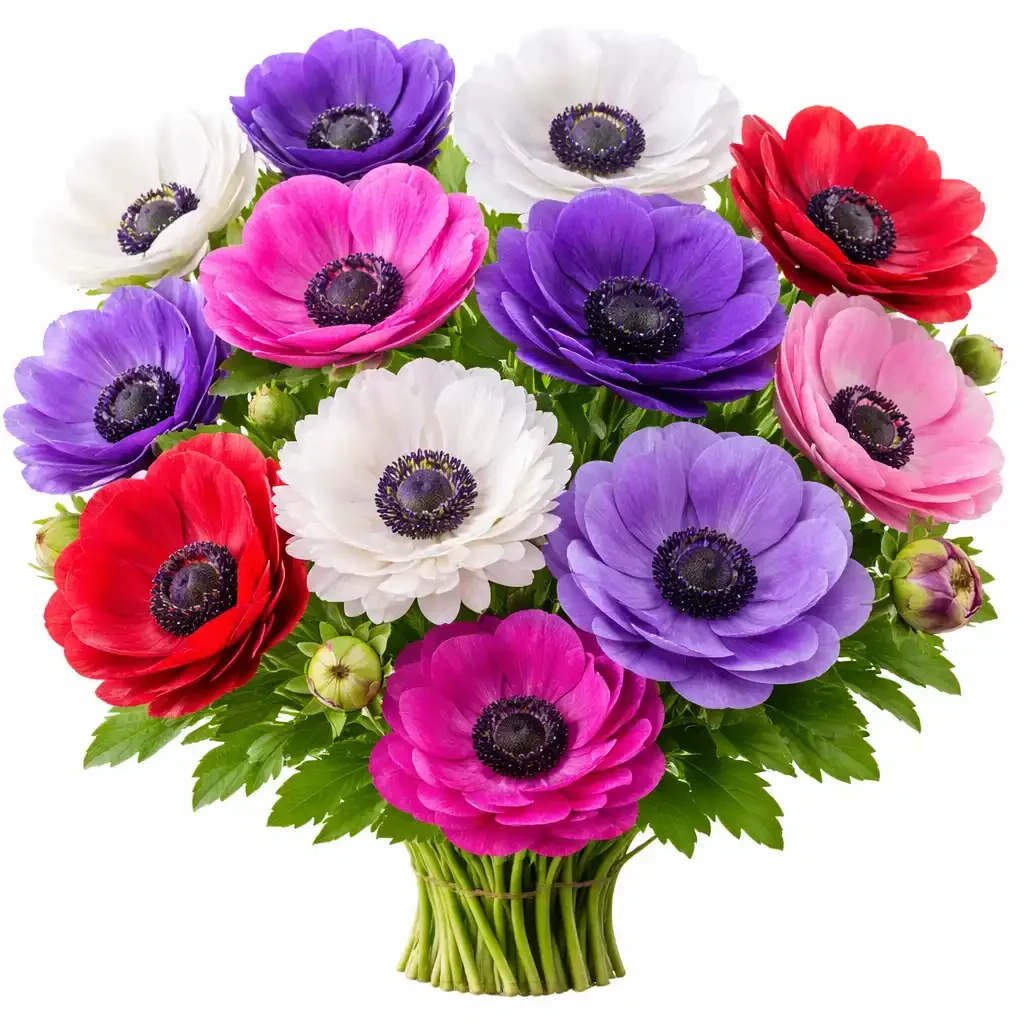
Anemone is one of the most exquisitely beautiful and commercially commanding cool season cut flowers available to homestead growers. Its large, poppy-like blooms with their distinctive dark, button-like centers ringed by prominent stamens, in the most vivid and jewel-like color range available from any cool season bulb, spanning pure white, the most intense deep blue and purple available from any spring flower, vivid magenta, rich red, soft pink, and dramatic bicolor combinations, create a quality of bold, saturated, jewel-bright beauty that customers and florists find immediately irresistible. At the spring farmers market or in a late winter flower subscription box, a bunch of freshly cut Anemone in full color is one of the most visually arresting and commercially powerful products a homestead flower grower can offer during the cool season.
For homestead growers, Anemone represents one of the most strategically exciting cool season specialty cut flower opportunities available, particularly in mild winter climates where fall-planted corms provide an extended winter through spring harvest that covers the most commercially underserved period of the annual cut flower calendar. The combination of extraordinary jewel-like colors unavailable from any other cool season flower, the distinctive dark center that creates a visual signature unlike any other spring bulb, and the genuine rarity of locally grown fresh Anemone at most farmers markets and in most local florist supply chains creates a premium market position of exceptional commercial strength.
Here is why Anemone deserves a prominent spot on your homestead:
The jewel-like color range, particularly the deep blues and purples unavailable from any other cool season bulb, creates a genuinely irreplaceable specialty market position. The intense, saturated blue and purple Anemone coronaria varieties deliver colors during the cool season that no other commonly grown spring bulb can replicate, creating a specialty market position with genuine rarity value.
It blooms during the most commercially underserved period of the cool season cut flower calendar. In mild winter climates, fall-planted Anemone blooms from late winter through spring, precisely when the local cut flower market is most starved for something vivid, locally grown, and seasonally spectacular.
The distinctive dark-centered flower form is immediately recognizable and universally beloved. The combination of vivid petals and the dramatic dark button center with prominent stamens creates a flower form that customers recognize and respond to with immediate purchasing enthusiasm regardless of whether they know the name.
It is extraordinarily productive per corm. A single Anemone corm planted in appropriate cool season conditions can produce ten to twenty or more harvestable stems over its productive season, delivering an exceptional return on the modest corm investment.
The peak spring wedding season alignment in mild climates creates maximum commercial value. In mild winter climates within USDA zones 8 to 11, Anemone blooms through late winter and spring precisely when the spring wedding season is most active and the demand for vivid, distinctive cool season specialty flowers is highest.
Growing Conditions
Sunlight
Anemone performs well in full sun to partial shade. It needs at least 4 to 6 hours of direct sunlight per day for the strongest stems and most abundant flowering. In full sun it produces the most upright, strongest stems with the most vivid flower colors. In partial shade stems become somewhat taller and more delicate but still produce excellent quality flowers. This shade tolerance gives Anemone more planting flexibility than many cool season bulbs and makes it a good choice for locations with some afternoon shade, particularly in warmer climates where afternoon shade reduces heat stress during the cool season production period.
Soil
Anemone prefers well-drained, moderately fertile soil. Good drainage is important, particularly during the summer dormancy period in mild climates when standing water around dormant corms causes rot. Moderately fertile soil amended with compost supports vigorous stem development and the most productive blooming. Soil pH between 6.0 and 7.0 is ideal. In heavy clay soils, incorporating compost and coarse sand to improve drainage is important for long-term corm health.
Water
Water consistently during the active growing and blooming season to maintain even soil moisture. Anemone needs regular moisture during its cool season growth period but must never sit in waterlogged soil. Water at the base of plants rather than overhead to keep foliage dry and reduce the botrytis risk that can affect the delicate petals in cool, humid conditions. Reduce watering as temperatures rise in late spring and foliage begins to die back. Allow corms to dry down naturally through the summer dormancy period.
Temperature
Anemone is a cool season crop that performs best in moderate temperatures between 45 and 65 degrees Fahrenheit. It does not tolerate hard frost when in active growth but established plants and dormant corms can tolerate light frosts. It declines rapidly when temperatures consistently exceed 70 to 75 degrees Fahrenheit. In mild winter climates within USDA zones 7 to 10, fall-planted corms bloom through winter and spring in the natural cool conditions they prefer. In cold winter climates, Anemone corms can be planted in spring for summer blooming but the compressed cool season window in these climates limits productivity compared to mild climate production.
Planting Guide
Anemone is grown from small, irregular, dried corms that require specific pre-planting preparation for the most reliable establishment.
Step 1: Before planting, soak dried Anemone corms in cool water for four to eight hours. This rehydration step is one of the most important and most often overlooked aspects of successful Anemone establishment. Dry, shriveled corms that have not been rehydrated before planting establish slowly and erratically. After soaking, corms expand noticeably and establish much more reliably.
Step 2: In mild winter climates within USDA zones 7 to 10, plant corms in fall, typically October through December, for late winter and spring blooming. This timing allows corms to establish through cool winter conditions before blooming in late winter and spring. In cold winter climates, plant corms in spring after the last frost date for late spring and early summer blooming.
Step 3: Choose a location with full sun to partial shade and well-drained, moderately fertile soil. Avoid any location where water pools after rain.
Step 4: Plant corms with the pointed end facing downward if visible, or horizontally if the orientation is unclear, at a depth of 2 to 3 inches. Space corms 4 to 6 inches apart for cut flower production.
Step 5: Water gently after planting and keep soil lightly moist until growth emerges. Overwatering before emergence is one of the most common causes of corm rot.
Step 6: For succession harvesting in mild climates, make two to three plantings spaced four to six weeks apart beginning in October through December. Each planting provides a flush of stems approximately eight to twelve weeks after planting depending on conditions and temperature.
Seed vs Corm: Always grow Anemone from corms for cut flower production. Growing from seed takes two to three years and produces highly variable quality.
Spacing: 4 to 6 inches apart for cut flower production.
Planting Season: Fall in mild winter climates within USDA zones 7 to 10. Spring after last frost in cold winter climates.
Maintenance
Corm Storage
In cold winter climates where corms must be lifted after the growing season, allow foliage to die back completely before digging. Lift corms carefully, clean off soil, and allow to dry thoroughly in a warm, well-ventilated location for two to three weeks. Store in mesh bags or shallow trays in a cool, dry location at 50 to 60 degrees Fahrenheit until the next planting season.
Fertilizing
Apply a balanced fertilizer at planting and a light application every three to four weeks during active growth to support the vigorous stem and flower production that maximizes commercial yield. Avoid excessive nitrogen which promotes lush foliage at the expense of flower production.
Pest Control
Anemone is generally pest resistant in cool growing conditions. Aphids can occasionally appear on developing stems and buds. Treat promptly with a strong spray of water or neem oil. Slugs and snails can damage emerging growth in wet spring conditions. Iron phosphate slug bait provides effective control.
Disease Prevention
Botrytis gray mold can affect the delicate petals in cool, humid conditions. Avoid overhead watering, ensure good air circulation through appropriate spacing, and remove any affected plant material immediately. Crown rot caused by poor drainage or overwatering is preventable through excellent soil drainage and avoiding waterlogging.
Harvesting
When to Harvest
Harvest Anemone stems when the flowers are just beginning to open, with the petals parting but the flower not yet fully flat. At this stage the flowers open fully and gracefully in the vase over the following one to two days while maintaining maximum vase life. Stems harvested when flowers are already fully open have significantly shorter vase life. Harvest in the early morning when stems are fully hydrated and temperatures are cool. The distinctive dark center and prominent stamens should be visible but the petals should not yet be fully horizontal.
How to Cut
Use clean, sharp scissors or pruners. Cut stems as long as possible at the base of the stem near the corm, ideally 12 to 16 inches. Remove any foliage that would be below the waterline. Place stems immediately into a bucket of cool water with a floral preservative.
Conditioning
After cutting, place stems in cool water in a cool, dark location for several hours or overnight before sale or arrangement. Anemone conditions readily and the flowers open beautifully in the vase from the half-open stage. Keep conditioned stems at cool temperatures to maximize the conditioning period and the subsequent vase life.
How Often to Harvest
During the productive cool season blooming period, each corm produces stems in succession over several weeks. Harvest every two to three days as individual stems reach the correct stage. A productive planting with multiple corms provides a rolling harvest of fresh stems throughout the cool season.
Vase Life
Anemone typically lasts 5 to 7 days as a fresh cut flower with proper conditioning. Strip all foliage below the waterline, recut stems at an angle, and place in fresh water with a floral preservative. Keep arrangements in the coolest available location as warm temperatures significantly reduce vase life. Change water every two days to maximize longevity.
Uses on a Homestead
Cut Flower Use
Anemone is grown primarily as a premium cool season focal and accent flower in mixed winter and spring bouquets and arrangements. Its vivid jewel-like colors and distinctive dark centers create an immediately striking visual impact that customers and florists find genuinely compelling. It pairs magnificently with ranunculus, tulips, sweet peas, Hellebores, Muscari, and other cool season flowers in romantic mixed bouquets that capture the vivid, jewel-bright beauty of the late winter and spring garden. The blue and purple varieties in particular provide colors that cannot be obtained from any other spring bulb, making Anemone an essentially irreplaceable component of cool season arrangements where deep blue or purple tones are desired.
Wedding and Event Flowers
Anemone is one of the most sought-after specialty flowers for late winter and spring weddings. The combination of vivid jewel-like colors, the distinctive dark center, and the genuine rarity of quality locally grown fresh Anemone creates a specialty positioning that wedding florists deeply appreciate. The blue, purple, and rich red varieties are particularly prized for their unique colors that create immediate visual impact in bridal bouquets and arrangements.
Farmers Market
Fresh Anemone at a late winter or early spring farmers market creates one of the most visually arresting and commercially powerful displays available during the cool season. The vivid, saturated colors stop customers immediately and the genuine rarity of fresh Anemone at most market stands creates strong impulse purchasing and premium pricing without resistance.
Pollinator Support
Anemone provides an important early season nectar source for bees and other pollinators during the cool season when few other flowering plants are available.
Can You Make Money With Anemone
Yes, Anemone is one of the most profitable cool season specialty cut flower crops available to homestead operations, particularly for growers in mild winter climates where fall-planted corms provide a long winter through spring harvest window at the most commercially underserved period of the year.
The most vivid and genuinely irreplaceable cool season colors create premium market positioning. The deep blues and purples of quality Anemone coronaria varieties deliver colors during the cool season that no other spring bulb can replicate. This genuine color rarity supports consistent premium pricing from customers and florists who know exactly what they want and cannot find it elsewhere.
Local scarcity creates essentially uncontested market positioning. Fresh Anemone as a dedicated locally grown cut flower crop is genuinely rare at most farmers markets and in most local florist supply chains. Local availability during the winter and spring season creates a market position with essentially no local competition.
Exceptional per-corm stem productivity. Each Anemone corm planted in appropriate conditions can produce ten to twenty or more harvestable stems over its productive season, delivering an exceptional return on the modest per-corm investment.
Peak wedding season timing in mild climates. In mild winter climates, Anemone blooms through late winter and spring precisely when the spring wedding season is at its most active, creating natural alignment with the most commercially valuable period of the cool season market.
Farmers Market: Fresh Anemone bundles of five to seven stems sell for 10 to 18 dollars per bunch during the cool season. The vivid blue and purple varieties command the highest prices at 12 to 20 dollars per bunch.
Florists and Wedding Designers: Anemone is among the most sought-after specialty cool season flowers for spring wedding work. Local supply during the winter and spring season is rare and commands premium wholesale pricing. Establishing supply relationships with local wedding florists is one of the most financially rewarding channels for homestead Anemone production.
CSA Flower Subscriptions: Anemone is one of the most visually extraordinary and emotionally impactful additions to a late winter or spring flower subscription box. The vivid jewel-like colors create immediate subscriber excitement and signal the peak of the spring specialty flower season.
Companion Plants
Anemone grows beautifully alongside other cool season flowers with similar growing requirements and complementary bloom times.
Ranunculus: Both are premium cool season bulb crops that bloom at overlapping times in late winter and spring and complement each other magnificently in romantic spring arrangements where Anemone provides vivid jewel-like single blooms and ranunculus provides refined, layered focal blooms.
Tulips: Both are spring bulbs that bloom at overlapping times and complement each other beautifully in mixed spring arrangements where the flat, single form of Anemone creates beautiful contrast with the upright cup form of tulips.
Hellebores: Both bloom in late winter and early spring in complementary color ranges and create beautiful seasonal compositions in mixed arrangements that capture the quiet, jewel-bright beauty of the late winter garden.
Muscari: Both bloom in early spring and create beautiful color combinations in mixed spring arrangements where the intense blue of Muscari complements the deep colors of Anemone blooms.
Freesia: Both are fragrant cool season bulb crops that complement each other in mixed spring arrangements, with Freesia adding fragrance and delicate form to the bold visual impact of Anemone.
Sweet Peas: Both are fragrant cool season flowers with similar cool temperature preferences that complement each other naturally in the spring cutting garden and in romantic mixed spring bouquets.
Common Problems
Corm Rot Before Emergence
The most common establishment failure with Anemone. Caused by planting in cold, wet soil or overwatering before growth emerges. Allow the soil to reach appropriate cool but not cold planting temperatures, ensure excellent drainage, and never water again until green growth appears above the soil surface. Pre-soaking corms for four to eight hours before planting and then planting in well-drained soil without further watering until emergence gives the most reliable results.
Failure to Bloom or Very Short Stems
Usually caused by planting corms too late in mild climates when soil is already warming, insufficient cool growing temperatures, or planting in poorly drained waterlogged soil that stressed the corms during development. Plant at the correct fall timing in mild climates for the longest cool season growing period. In cold winter climates, start as early as conditions allow for the most extended cool season production window.
Botrytis on Petals
Can affect the delicate petals in cool, humid conditions particularly when flowers are kept wet from overhead irrigation or rain. Avoid overhead watering, ensure good air circulation through proper spacing, and harvest promptly when flowers reach the correct stage to minimize time on the plant in wet conditions.
Short Vase Life
Usually caused by harvesting when flowers are already fully open rather than at the half-open stage, or by insufficient conditioning before sale. Always harvest at the half-open stage when petals are beginning to open but the flower is not yet fully flat. Condition in cool water overnight before sale or arrangement. Keep arrangements in the coolest available location as warmth is the primary vase life enemy of Anemone.
Orientation Confusion at Planting
Anemone corms are irregular in shape and the correct planting orientation is not always obvious. The pointed end, when visible, should face downward. If the orientation is genuinely unclear, planting horizontally or in groups allows the corms to self-orient. Pre-soaking before planting makes the growth points more visible and reduces orientation confusion.
Varieties to Consider
Anemone coronaria de Caen Series
The most widely grown and most commercially important Anemone series for cut flower production. Single-flowered blooms with the characteristic dark button center in a wide range of vivid colors on stems reaching 12 to 16 inches. The standard commercial series for homestead cut flower production. Available in individual colors and mixed collections.
Anemone coronaria de Caen Meron Series: A series specifically developed for commercial cut flower production with improved stem length, more upright growth habit, and enhanced vase life compared to standard de Caen types. Available in individual colors including deep blue, red, white, pink, and purple. The preferred series for growers targeting the professional florist and wedding market.
Anemone coronaria Meron Ultraviolet: A specific variety with extraordinarily vivid, deep violet-blue blooms that deliver one of the most intense blue-purple colors available from any cool season flower. Commands premium prices for the exceptional color intensity. Very popular with wedding florists for blue and violet palette designs.
Anemone coronaria Mr. Fokker: A classic variety with vivid, deep violet-blue single blooms. One of the most commercially important and most widely recognized individual Anemone varieties. The standard reference for deep blue Anemone in the cut flower trade.
Anemone coronaria The Bride: Pure white single blooms with the characteristic dark center. One of the most popular white Anemone varieties for wedding work. Very popular with florists for its clean white color and dramatic dark center contrast.
Anemone coronaria Hollandia: Vivid scarlet red blooms. One of the most widely grown red Anemone varieties. Very popular at farmers markets for the intense, vivid red color.
Anemone coronaria Saint Bridgid Series
Semi-double to double-flowered Anemone with more petals than the standard de Caen single forms. The additional petals create a more substantial, luxurious appearance that commands premium prices from florists seeking a more opulent alternative to standard single forms.
Anemone coronaria Saint Bridgid Lord Lieutenant: Deep violet-blue semi-double blooms. Very popular with florists for the more substantial petal count and the deep blue color.
Anemone coronaria Saint Bridgid The Governor: Deep red semi-double blooms. Commands premium prices for the combination of semi-double form and vivid red color.
Final Thoughts
Anemone is one of the most vivid, most commercially exciting, and most genuinely premium specialty cool season cut flower crops available to homestead growers in appropriate climates. The combination of jewel-bright colors that are genuinely unavailable from any other cool season bulb, the distinctive dark-centered flower form that creates immediate customer recognition and purchasing enthusiasm, the exceptional per-corm stem productivity that delivers outstanding financial returns on the modest corm investment, and the natural alignment with the peak spring wedding season in mild climates creates a specialty cool season cut flower with a premium market positioning of exceptional strength. The production requirements are specific and must be respected, particularly the critical fall planting timing in mild climates, the pre-soaking preparation that dramatically improves corm establishment reliability, the cool growing conditions that are essential for quality stem development, and the correct harvesting at the half-open stage for maximum vase life. Honor those requirements and develop the florist and wedding designer relationships that recognize and value the extraordinary jewel-bright colors and distinctive visual quality that quality Anemone provides, and this remarkable cool season bulb will reward your homestead with some of the most vivid, most commercially powerful, and most personally thrilling cool season cut flower stems available from any spring bulb planting.
FAQ
Why do Anemone corms need to be soaked before planting? Anemone corms are sold and stored in a dry, partially desiccated state that allows for long-term storage without deterioration. In this dry state the corms have suspended their metabolic activity and will establish slowly and erratically if planted without rehydration. Soaking in cool water for four to eight hours before planting allows the corms to reabsorb moisture and resume metabolic activity, dramatically improving the speed and reliability of establishment. After soaking, the corms visibly expand from their dry, shriveled state, indicating successful rehydration. Planting rehydrated corms gives significantly more uniform and reliable emergence than planting dry corms directly, which is one of the most common and most easily prevented causes of poor Anemone establishment in homestead production.
Can Anemone be grown successfully in cold winter climates? Yes, Anemone can be grown in cold winter climates but the production dynamics are significantly different from mild climate production and the commercial results are generally less impressive. In cold winter climates corms must be planted in spring after the last frost date and bloom in late spring through early summer during the brief cool period before summer heat arrives. The compressed cool season window in cold climates typically gives a shorter productive period and somewhat shorter stems than the extended fall through spring production achievable in mild climates. For maximum commercial production, mild winter climates within USDA zones 7 to 10 where fall planting gives an extended winter and spring blooming period are the most favorable growing environments. Cold winter climate growers can supplement with cold frame or low tunnel production that extends the effective cool season.
What makes the blue Anemone varieties so commercially valuable? True blue is one of the rarest and most consistently demanded colors in the spring cut flower market. The deep blue and violet-blue Anemone coronaria varieties, particularly the de Caen Meron Ultraviolet and Mr. Fokker varieties, deliver a blue-purple color during the cool season that is genuinely unavailable from most other commonly grown spring bulbs. Tulips have very few reliable blue varieties. Ranunculus does not come in blue. Hyacinths offer blue but in a very different flower form and fragrance context. The fact that Anemone delivers this rare, vivid blue in a large, visually dramatic poppy-like flower form during the late winter and spring season creates a specialty market position of genuine rarity that supports premium pricing from wedding florists and specialty customers who specifically need blue elements in their spring designs.
How do I get the longest possible vase life from Anemone? The most important factors for maximum Anemone vase life are harvesting at the correct stage when petals are beginning to open but the flower is not yet fully flat, conditioning in deep cool water overnight in a cool, dark location before any sale or arrangement use, maintaining the coldest possible temperatures throughout storage and display, using commercial floral preservative in conditioning and vase water, and changing water every two days. Anemone is particularly sensitive to warm temperatures which accelerate the opening and aging process dramatically. Keeping cut Anemone as cool as possible throughout its post-harvest life, in refrigeration if available, is the single most effective strategy for maximizing vase life beyond the basic harvesting and conditioning practices.