
Aster
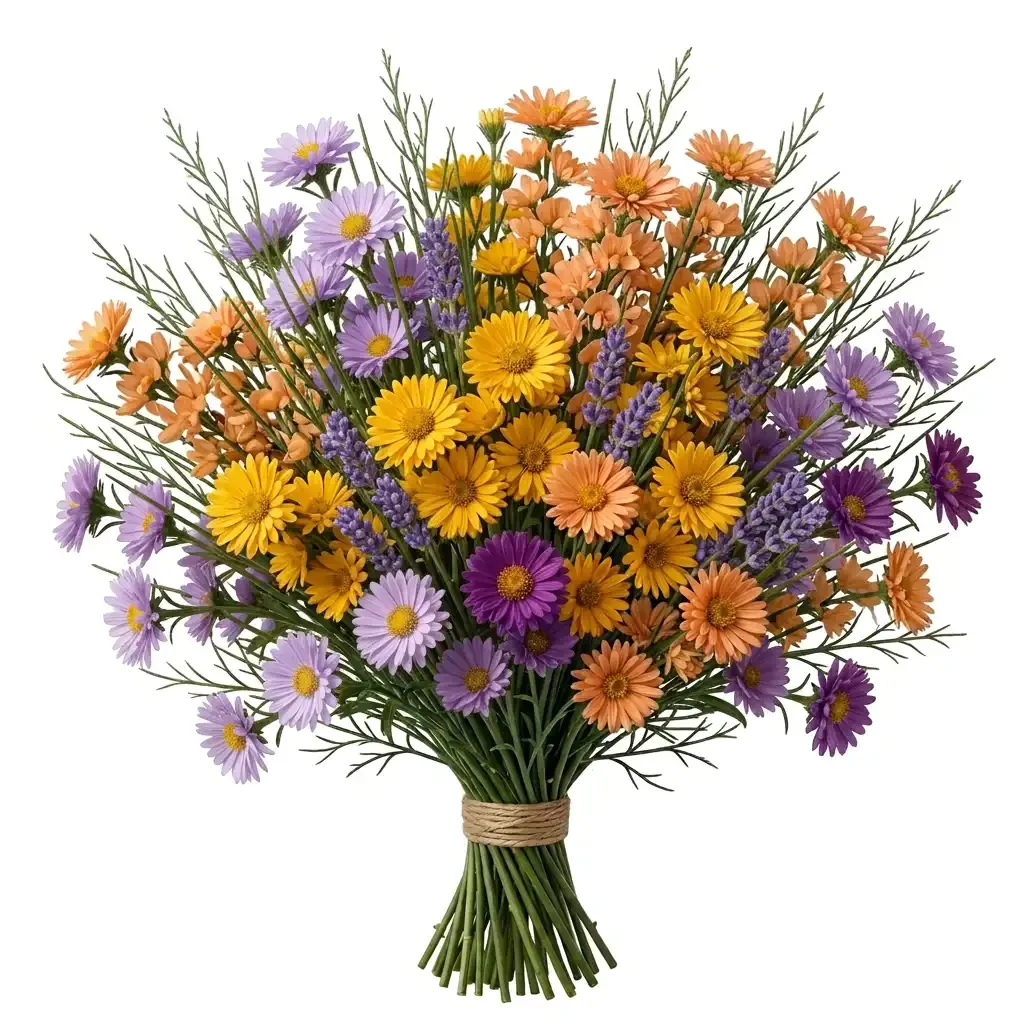
Quick Overview
Common Name: Aster, Fall Aster, Michaelmas Daisy, China Aster
Scientific Name: Symphyotrichum spp. (perennial), Callistephus chinensis (annual)
Plant Type: Perennial and Annual
USDA Zones: 4 to 8 for most perennial types
Sun Requirement: Full Sun to Partial Shade
Soil Type: Well-drained, moderately fertile
Bloom Season: Late Summer through Fall for perennial types, Summer for annual types
Height: 18 to 48 inches depending on species and variety
Pollinator Friendly: Yes, exceptionally important for fall pollinators
Edible: No
Why Grow Aster on a Homestead
Aster is one of the most commercially important and ecologically irreplaceable fall cut flowers available to homestead growers. Its abundant, daisy-like blooms in shades of deep purple, rich violet, soft lavender, bright pink, rose, white, and bicolor combinations create the quintessential fall wildflower aesthetic that customers reach for with immediate, instinctive enthusiasm at autumn farmers markets. There is something genuinely and deeply seasonal about Aster that resonates with customers in a way that few other fall flowers can replicate. The sight of richly colored Aster blooms at an October market stand communicates the full emotional weight of the autumn season with an immediacy and a clarity that is genuinely moving and that translates directly and powerfully into sales.
For homestead growers, Aster represents one of the most strategically important fall cut flower investments available across two distinct and complementary commercial categories. The perennial native Asters, principally the Symphyotrichum species formerly classified as Aster that now include New England Aster, New York Aster, and related native species, provide permanent, naturalizing perennial plantings that return year after year with minimal management and produce the most commercially authentic and ecologically significant fall cut material available from any native perennial. The annual China Aster, Callistephus chinensis, provides a completely different and enormously commercially valuable specialty cut flower with large, pompom-like, fully double blooms in an extraordinary range of colors that florists and customers consistently seek as a distinctive and premium-priced summer and early fall specialty.
Here is why Aster deserves a prominent spot on your homestead:
Perennial native Asters are the defining flower of the autumn cut flower market with the most genuine seasonal resonance. No other fall cut flower communicates the emotional depth and seasonal authenticity of autumn as powerfully and as universally as a mass of native Aster in full bloom. This emotional resonance creates some of the most reliable and enthusiastic customer purchasing available at any fall market.
Annual China Aster provides one of the most commercially distinctive and premium-priced specialty cut flowers of the summer and early fall season. The large, fully double pompom heads of quality China Aster varieties command some of the highest per-stem prices available from any summer annual and are specifically sought by wedding florists and specialty customers who recognize their genuine rarity and distinctive beauty.
Perennial native Asters are among the most ecologically important plants available for fall pollinator support. Native Aster species provide critical late-season nectar for Monarch butterflies, native bees, bumblebees, and beneficial insects at a time when most other flowering plants have finished. An established native Aster planting is one of the most significant ecological contributions a homestead can make to the local pollinator community.
The fall blooming window of perennial Asters coincides with the most commercially active autumn market season. Perennial Asters bloom from late August through October precisely when autumn market enthusiasm is highest and when the demand for genuinely seasonal, locally grown fall flowers is most commercially powerful.
The two Aster categories serve complementary market segments simultaneously. Growing both native perennial Asters for the fall market and annual China Asters for the summer specialty market creates a comprehensive Aster production program that covers two distinct and highly profitable market windows with relatively different management requirements.
Growing Conditions
Sunlight
Aster requirements vary between the two primary commercial categories. Perennial native Asters perform best in full sun to light partial shade, needing at least 6 hours of direct sunlight for the most abundant blooming and the strongest stems. In too much shade stems become weak and floppy and flowering is significantly reduced. Annual China Asters are somewhat more shade tolerant, performing well with 4 to 6 hours of direct sun, which can actually reduce the heat stress that causes quality problems in hot climates. Both types benefit from good air circulation to reduce the powdery mildew and fusarium wilt that are their most common disease challenges.
Soil
Both Aster types prefer well-drained, moderately fertile soil. Perennial native Asters are adapted to average to lean conditions and actually perform better in moderately lean soil than in heavily amended beds, which can produce excessive vegetative growth at the expense of flowering. Annual China Asters benefit from somewhat richer soil than native perennial types but still require excellent drainage. For China Asters in particular, fresh soil that has not previously grown China Asters or other aster family plants is important to reduce fusarium wilt pressure. Soil pH between 5.5 and 7.0 is suitable for both types.
Water
Both types need consistent watering throughout their growing and blooming seasons. Perennial native Asters develop moderate drought tolerance once established but produce the most abundant flowering with consistent moisture during bud development and blooming. Annual China Asters need more consistent moisture than native perennials and are more sensitive to drought stress, which causes reduced stem length and poor flower development. Water at the base of all Aster plants rather than overhead as wet foliage promotes the powdery mildew and botrytis that are ongoing management challenges.
Temperature
Temperature requirements vary significantly between Aster types. Perennial native Asters are extremely cold hardy, performing reliably across USDA zones 4 to 8 and handling cold winters without protection. They are short-day plants that initiate blooming as day length decreases in late summer and fall, making their blooming calendar essentially self-managing based on natural seasonal day-length changes. Annual China Asters perform best in moderate temperatures between 60 and 75 degrees Fahrenheit. In hot summer climates quality problems including heat-related flower distortion and fusarium pressure increase significantly, making cool season or early season production preferable.
Planting Guide
Perennial Native Asters (Symphyotrichum spp.)
Step 1: Plant nursery transplants in spring after the last frost date. Perennial native Asters can also be established from seed but named variety transplants from specialist nurseries give the fastest path to consistent commercial-quality stems.
Step 2: Choose a location with full sun and well-drained, average to moderately fertile soil. Avoid recently heavily amended beds with large amounts of compost or fertilizer.
Step 3: Space plants 18 to 24 inches apart for cut flower production. Proper spacing is particularly important for native perennial Asters as their naturally spreading habit and susceptibility to powdery mildew both require adequate air circulation.
Step 4: Water thoroughly after planting and keep soil consistently moist until plants are well established. After establishment, native Asters need only moderate supplemental irrigation.
Step 5: Pinch plants back two to three times during the summer, the last pinch no later than July 4th to July 15th in most cold winter climates, to encourage compact, well-branched growth and prevent the tall, floppy stems that develop in unpinched plants.
Annual China Aster (Callistephus chinensis)
Step 1: Start seeds indoors 6 to 8 weeks before the last frost date. China Asters are sensitive to root disturbance and benefit from being started in individual biodegradable pots that can be planted out without disturbing roots.
Step 2: Maintain seed trays at 65 to 70 degrees Fahrenheit. Germination typically occurs within 10 to 14 days.
Step 3: After the last frost date when conditions are reliably warm, transplant outdoors to a location with full sun to light partial shade and well-drained, moderately fertile soil. Space plants 9 to 12 inches apart.
Step 4: For succession harvesting, make plantings every three to four weeks from the last frost date through early summer. Each succession provides stems for approximately four to six weeks before declining.
Step 5: Never plant China Asters in the same location in consecutive years as this dramatically increases fusarium wilt pressure. Strict rotation is essential for consistent production.
Seed vs Transplant: Nursery transplants are recommended for perennial native types. Starting from seed is standard for annual China Asters.
Spacing: 18 to 24 inches for perennial types. 9 to 12 inches for annual China Asters.
Planting Season: Spring after last frost for both types.
Maintenance
Pinching Perennial Native Asters
Pinching is the most important ongoing management practice for native perennial Aster cut flower production. Unpinched native Asters grow very tall, sometimes reaching 4 to 5 feet, with weak, floppy stems that produce a single large flush of terminal blooms that are difficult to harvest efficiently. Pinching creates compact, well-branched plants with multiple stems of appropriate commercial length.
Make the first pinch when plants reach 6 to 8 inches in spring, removing the top 1 to 2 inches of the main stem. Make a second pinch when lateral branches reach 6 to 8 inches. Make a final pinch no later than July 4th to July 15th in most cold winter climates. This final pinch timing is critical as pinching too late delays fall blooming beyond the peak market window.
Dividing Perennial Native Asters
Divide every two to three years in early spring when new growth is emerging. Regular division maintains vigor and prevents the center die-out that develops in overcrowded clumps. Division also provides free new plants to expand the productive planting. Each divided section should have several healthy crowns with good root systems.
Fertilizing
Perennial native Asters need minimal fertilizing. A light application of balanced fertilizer in early spring is sufficient. Avoid excessive nitrogen which produces the lush, tall, floppy growth that makes cut flower production more challenging. Annual China Asters benefit from a moderate balanced fertilizer program throughout their growing season to support the vigorous stem and flower development that produces the largest, most commercial-quality blooms.
Disease Prevention for China Aster
Fusarium wilt is the most serious disease of annual China Asters. It is a soil-borne disease that causes rapid wilting and plant death and has no effective treatment. Prevention through strict crop rotation, never planting in the same location in consecutive years, using disease-free planting stock from reputable suppliers, and maintaining good soil drainage is the only effective management strategy. Botrytis and aster yellows disease are also potential problems. Good air circulation, avoiding overhead watering, and removing affected plants immediately are the most effective preventive measures.
Harvesting
When to Harvest Perennial Native Asters
Harvest native Aster stems when approximately half to two thirds of the individual flowers on each branching stem are open and the remaining buds are showing their characteristic color. At this stage the remaining buds open progressively after cutting, providing a long and evolving display. Harvest in the early morning when stems are fully hydrated.
When to Harvest Annual China Asters
Harvest China Aster stems when the central pompom or button of the bloom is fully developed and the outer ray petals have fully extended, with the flower at approximately three quarters to full open stage. China Asters harvested in tight bud often fail to open properly after cutting. The flower should be fully formed but not yet showing any signs of petal edge browning or center softening. Harvest in the early morning.
How to Cut
For both types, use clean, sharp scissors or pruners. Cut stems as long as possible at the base of the stem near a lateral shoot. Remove all foliage from the lower half of the stem immediately after cutting. Place stems immediately into a bucket of cool water with a floral preservative.
Conditioning
After cutting, place stems in deep cool water in a cool, dark location for several hours or overnight before sale or arrangement. Both types condition readily with proper hydration.
How Often to Harvest
For perennial native Asters during their fall bloom period, harvest every two to three days as new stems reach the correct stage. For annual China Asters during their production period, harvest every two to three days. Regular cutting encourages the plant to produce new lateral stems continuously.
Vase Life
Perennial native Asters typically last 7 to 10 days as fresh cut flowers with proper conditioning. Annual China Asters typically last 7 to 12 days. Strip all foliage below the waterline, recut stems at an angle, and place in fresh water with a floral preservative. Change water every two to three days to maximize longevity.
Uses on a Homestead
Cut Flower Use
Both Aster types serve important but distinct functions in cut flower arrangements. Perennial native Asters provide the quintessential fall wildflower filler and accent material that defines the autumn bouquet aesthetic, pairing magnificently with Chrysanthemums, dahlias, ornamental grasses, and fall foliage in seasonal arrangements that capture the warmth and abundance of autumn. Annual China Asters provide bold, fully double focal blooms in extraordinary colors that function more like miniature peonies or dahlias in premium mixed summer and fall arrangements, pairing beautifully with roses, Lisianthus, and other premium summer focal flowers in high-end market offerings.
Wedding and Event Flowers
Both types are valued for wedding work but serve different functions. Perennial native Asters are sought for fall weddings and events where their genuine seasonal character creates an authentically autumnal quality. Annual China Asters are particularly sought by wedding florists for the large, fully double blooms in unusual colors that are genuinely unavailable through most commercial wholesale channels.
Farmers Market
Perennial native Asters are among the most commercially powerful fall flowers at any farmers market. Their rich purple, violet, and pink tones signal the full arrival of autumn and generate the most genuinely seasonal purchasing enthusiasm of any fall cut flower. Annual China Asters at the summer and early fall market provide a distinctive, premium-priced specialty cut flower that stands out from more familiar summer offerings.
Pollinator Support
Native perennial Asters are among the most ecologically significant plants available to homestead growers for fall pollinator support. They provide critical late-season nectar for Monarchs migrating south in fall, for native bees and bumblebees building winter reserves, and for many beneficial insects. An established native Aster planting makes a genuinely important ecological contribution to the local pollinator community.
Can You Make Money With Aster
Yes, both Aster categories represent profitable cut flower opportunities for homestead operations, with each offering distinct commercial strengths.
Perennial native Asters provide the most commercially powerful fall market presence available from any native wildflower cut flower. The universal seasonal recognition and emotional resonance of native Aster at fall markets creates some of the most reliable and enthusiastic customer purchasing of the entire year.
Annual China Asters provide genuinely rare premium specialty cut stems. The large, fully double China Aster blooms in unusual colors are specifically sought by wedding florists and specialty customers who recognize their genuine rarity and pay premium prices for quality locally grown stems.
Permanent perennial investment with improving returns for native types. Established native Aster plantings return year after year with minimal care, forming expanding clumps that produce more harvestable stems each season.
Strong dual market across both casual buyers and wedding florists. Both Aster types serve different but complementary market segments, with native Asters providing accessible, universally loved fall seasonal material and China Asters providing premium specialty bouquet elements.
Farmers Market: Fresh native Aster bundles sell for 6 to 10 dollars per bunch during peak fall season. Annual China Aster bundles sell for 10 to 18 dollars per bunch depending on variety and color.
Florists and Wedding Designers: Annual China Aster is specifically sought by wedding florists for its unusual, premium double forms. Native Aster is valued for authentic fall seasonal work. Both command premium wholesale pricing for quality locally grown stems.
CSA Flower Subscriptions: Native Asters are among the most eagerly anticipated fall additions to any flower subscription box. Their genuine seasonal character and vivid fall colors create immediate subscriber enthusiasm throughout the fall subscription season.
Companion Plants
Both Aster types grow beautifully alongside other fall cut flowers and native perennials.
Chrysanthemums: Both are fall-blooming perennials that complement each other magnificently in mixed autumn arrangements where Asters provide delicate daisy-like accent and Chrysanthemums provide bold focal color.
Rudbeckia: Both are fall-blooming native perennials that complement each other beautifully in warm and cool-toned mixed autumn bouquets.
Echinacea: Both are native perennials that bloom at complementary times and provide important pollinator habitat.
Ornamental Grasses: Provide beautiful movement and a naturalistic quality that complements the abundant small blooms of native Asters in mixed fall arrangements.
Dahlias: Both reach peak production in late summer through fall and complement each other in mixed autumn arrangements where Asters provide naturalistic filler and dahlias provide spectacular focal blooms.
Goldenrod: Both are native fall-blooming perennials that grow naturally together and complement each other beautifully in wildflower-style autumn bouquets.
Common Problems
Powdery Mildew on Perennial Native Asters
The most common and most visually impactful disease of native perennial Asters. White powdery coating on foliage in late summer and fall is almost universal in conditions of poor air circulation or warm days with cool nights. Choose mildew-resistant varieties, space plants at 18 to 24 inches for good air circulation, avoid overhead watering, pinch regularly to create well-ventilated plant structure, and apply preventive organic fungicide. Powdery mildew is primarily a foliage aesthetic problem and rarely significantly reduces cut flower production but does reduce the visual appeal of the growing plants.
Fusarium Wilt in Annual China Asters
The most serious disease of annual China Asters with no effective treatment. Prevention through strict crop rotation, never planting in the same soil in consecutive years, using disease-free seed from reputable suppliers, maintaining excellent drainage, and removing affected plants immediately is the only effective management strategy. Plants affected by fusarium wilt show rapid, progressive wilting beginning with the lower leaves and moving upward regardless of watering.
Aster Yellows Disease
A bacterial disease spread by leafhoppers that affects both Aster types, causing distorted, greenish, stunted growth and non-opening buds. No effective treatment. Remove and destroy affected plants immediately. Manage leafhopper populations to reduce transmission risk. Avoiding planting near weedy areas where leafhoppers breed reduces exposure.
Floppy Stems in Native Perennial Asters
The most common production quality problem with native perennial Asters. Almost always caused by insufficient pinching, overly rich soil, or insufficient sun. The pinching program is the single most effective management tool for producing upright, commercial-quality stems. Never fertilize heavily and always grow in full sun.
Failure to Open After Cutting in China Asters
China Asters harvested too early in tight bud frequently fail to open properly after cutting. Always harvest when the flower is at approximately three quarters to full open stage with the outer petals fully extended.
Varieties to Consider
Perennial Native Asters (Symphyotrichum spp.)
Symphyotrichum novae-angliae Purple Dome: One of the most widely grown compact native Aster varieties for cut flower production. Rich, deep purple flowers on compact, well-branched plants reaching 18 to 24 inches. Excellent mildew resistance and outstanding reliability. Hardy in USDA zones 3 to 8.
Symphyotrichum novae-angliae Alma Potschke: Vivid, deep rose-pink flowers on upright stems reaching 36 to 42 inches. One of the most vividly colored native Aster varieties available. Very popular at farmers markets for the unusually intense rose-pink color. Hardy in USDA zones 4 to 8.
Symphyotrichum novae-angliae Vibrant Dome: Deep magenta-pink flowers on compact plants with excellent mildew resistance. One of the most reliably productive and disease-resistant native Aster varieties available for commercial cut flower production.
Symphyotrichum novi-belgii Professor Anton Kippenberg: Lavender-blue double flowers on compact stems. The double form provides a more substantial, refined appearance than standard single native Asters. Hardy in USDA zones 4 to 8.
Symphyotrichum oblongifolium October Skies: Soft lavender-blue flowers that bloom later than most native Asters, extending the fall harvest window into October. Hardy in USDA zones 3 to 9 and exceptionally tolerant of heat and drought.
Annual China Asters (Callistephus chinensis)
Callistephus chinensis Matsumoto Series: The most widely grown China Aster series for commercial cut flower production globally. Excellent stem length, good vase life, and a wide range of vivid and unusual colors including apricot, salmon, hot pink, white, blue-violet, and scarlet. The standard commercial series for homestead China Aster production. Very popular with wedding florists for the wide color range and reliable quality.
Callistephus chinensis Perfection Series: A widely grown series with large, fully double pompom blooms in a range of vivid colors on strong stems. Very popular at farmers markets for the full, luxurious appearance of the double blooms.
Callistephus chinensis Duchess Series: A series with large, incurved pompom blooms on extra-long stems. Very popular for premium cut flower production where maximum stem length is important for florist use.
Callistephus chinensis Andrella Mix: A unique variety with unusual, spidery, quill-petaled flowers quite different from the standard pompom form. Very popular with specialty florists for the distinctive, unusual petal structure that is genuinely unlike standard China Aster forms.
Callistephus chinensis Tower Mix: A tall series specifically selected for cut flower production with extra-long stems reaching 24 to 30 inches. Excellent stem length and reliable production across a wide color range.
Final Thoughts
Aster represents two of the most commercially distinct and strategically important cut flower opportunities available to homestead growers, one for the fall market through native perennial types and one for the summer specialty market through annual China Asters. The genuine emotional resonance of native Aster at autumn markets, the ecological significance of supporting one of North America's most important fall pollinator plants, and the permanent, improving perennial investment that native Aster plantings represent make this crop one of the most personally and commercially rewarding fall cut flower specialties available from any homestead operation. And the extraordinary, genuinely rare double blooms of quality China Aster varieties provide a summer specialty cut flower with premium market positioning and genuine florist demand that few other summer annuals can match. Establish native perennial Asters for the permanent, ever-expanding fall production foundation, pinch consistently throughout the summer for compact, commercial-quality stems, grow China Asters with strict crop rotation and careful disease management for premium summer specialty income, harvest both types at the correct stage for maximum vase life, and Aster will reward your homestead with some of the most seasonally resonant, most ecologically important, and most commercially reliable cut flowers available from any fall and summer annual planting.
FAQ
What is the difference between perennial Aster and annual China Aster? Perennial Asters, now classified in the genus Symphyotrichum after botanical reclassification, are native North American wildflowers that return year after year from established root systems. They produce abundant smaller daisy-like flowers in purple, violet, pink, and white on branching stems in late summer and fall and are among the most important native pollinator plants available. Annual China Asters, Callistephus chinensis, are a completely different species originating in China that must be replanted each season from seed. They produce much larger, fully double pompom-like blooms in a much wider range of colors and bloom in summer and early fall rather than late fall. The two types serve different and complementary commercial functions and are best grown as part of a comprehensive Aster production program rather than as alternatives.
Why is crop rotation so critical for annual China Asters? Annual China Asters are exceptionally susceptible to fusarium wilt, a soil-borne fungal disease that builds up in soil where China Asters or other susceptible plants have previously grown. Once fusarium is established in a particular area of soil it persists for many years and causes rapid, fatal wilting in new China Aster plantings in that soil. Rotating China Asters to a completely different growing area each season prevents the cumulative buildup of fusarium inoculum that causes increasingly severe production losses in growers who plant in the same location repeatedly. The minimum rotation period recommended is three to four years between China Aster plantings in the same soil. For homestead growers with limited growing space, this rotation requirement is one of the primary planning challenges of China Aster production.
How do I prevent powdery mildew on native perennial Asters? Powdery mildew is so prevalent on native perennial Asters in late summer and fall conditions that some degree of mildew is essentially unavoidable in most climates. The most effective preventive strategy combines multiple complementary practices: choosing the most mildew-resistant varieties available such as Symphyotrichum novae-angliae Purple Dome and Vibrant Dome, spacing plants at the widest practical spacing of 18 to 24 inches for maximum air circulation, implementing a consistent pinching program that creates compact, well-ventilated plant architecture rather than tall dense growth, watering only at the base with drip irrigation rather than overhead, and applying preventive organic fungicide sprays based on potassium bicarbonate or neem oil beginning in late July before mildew typically appears. Even with all these measures some late-season mildew is common but rarely significantly impacts cut flower production.
When is the best time to pinch native perennial Asters for fall production? The pinching schedule for native perennial Asters requires careful timing to balance the goals of compact, well-branched plant architecture and timely fall blooming. Most experienced growers make two to three pinches during the summer, with the final and most important pinch made no later than July 4th to July 15th in most cold winter climate growing zones. Pinching later than this delays fall blooming by four to six weeks or more, pushing the main bloom period beyond the peak fall market window. The first pinch when plants reach 6 to 8 inches in spring creates the initial branching. A second pinch in early to mid June on the developing lateral branches creates further branching. The final pinch by July 4th to July 15th sets the stage for the fall bloom timing. Growers in colder zones or those wanting the earliest possible fall blooms should make the final pinch closer to July 4th, while those in warmer zones can push to July 15th.