
Baby's Breath
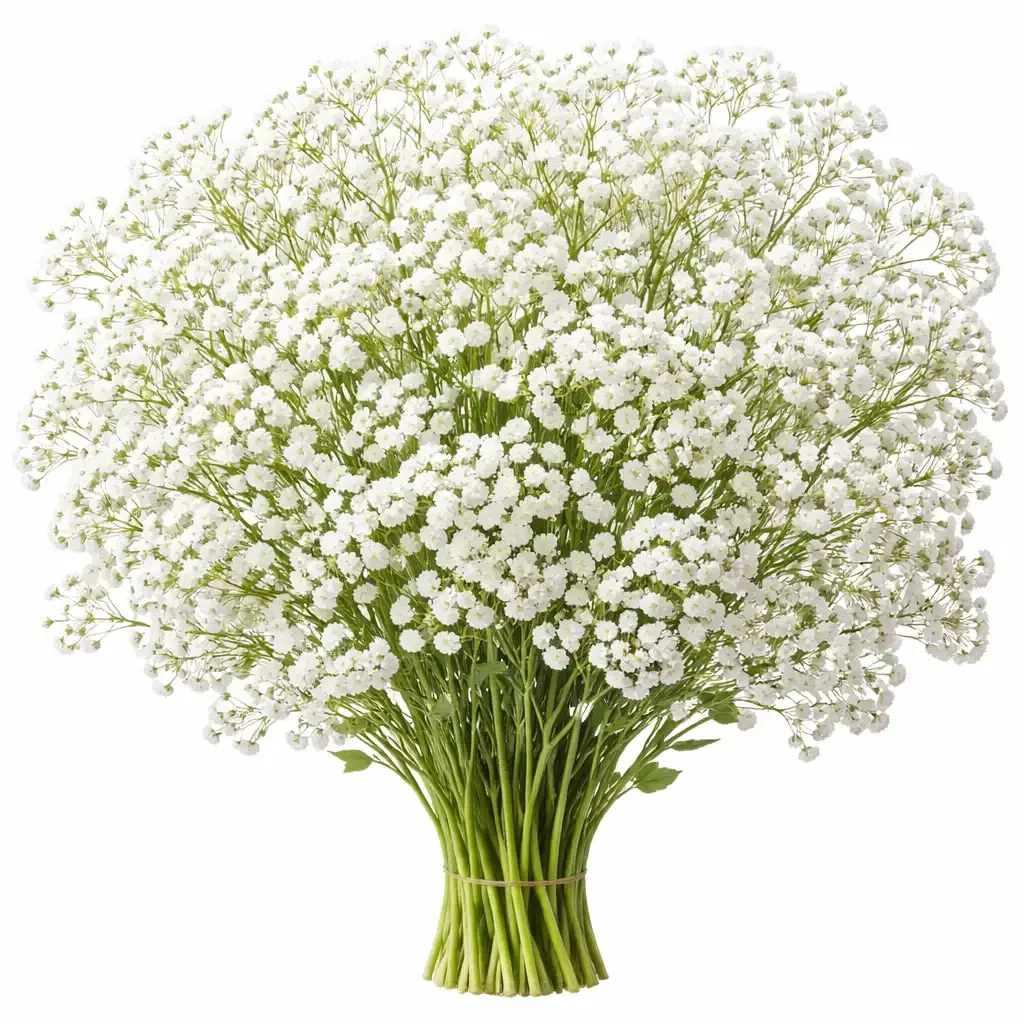
Quick Overview
Common Name: Baby's Breath, Gypsophila, Chalk Plant
Scientific Name: Gypsophila paniculata, Gypsophila elegans
Plant Type: Perennial (G. paniculata) and Annual (G. elegans)
USDA Zones: 3 to 9 for perennial types
Sun Requirement: Full Sun
Soil Type: Well-drained, alkaline, average to poor fertility
Bloom Season: Summer for perennial types, Late Spring through Summer for annual types
Height: 24 to 48 inches depending on species and variety
Pollinator Friendly: Yes
Edible: No
Why Grow Baby's Breath on a Homestead
Baby's Breath is one of the most universally recognized and commercially indispensable filler flowers in the entire cut flower industry. Its clouds of tiny, airy, white or soft pink flowers carried on delicate, intricately branching stems create the most classic, most immediately recognizable filler effect in floral design, providing a quality of soft, ethereal airiness that has made it a constant presence in florist arrangements for more than a century. From the most traditional wedding bouquet to the most casual farmers market bunch, Baby's Breath provides a timeless, universally understood filler quality that florists and customers return to with consistent reliability across every design trend and every market period.
For homestead growers, the commercial opportunity with Baby's Breath is somewhat different from most other cut flower crops discussed in this series. The standard commercial Baby's Breath market is dominated by large-scale wholesale production from South America and other major growing regions, making direct price competition for standard commercial grades impractical for most homestead operations. The genuine homestead opportunity lies instead in several specific specialty applications: the locally grown fresh quality advantage that gives homestead Baby's Breath exceptional fragrance and vase life compared to commercially shipped alternatives, the double-flowered and tinted specialty forms that commercial operations rarely grow in sufficient quantities, and the exceptional dried flower market where Baby's Breath is one of the most commercially important and consistently demanded products available.
Here is why Baby's Breath deserves a prominent spot on your homestead:
The dried flower market for Baby's Breath is consistently strong and year-round. Dried Baby's Breath is one of the most commercially important and widely used dried flower products available, appearing in dried wreaths, arrangements, and craft products throughout the year. The dried market provides consistent year-round income from seasonal fresh production.
Locally grown fresh Baby's Breath is dramatically superior to commercially shipped alternatives in fragrance and vase life. Fresh Baby's Breath cut and delivered within hours of harvest has a delicate, sweet fragrance and a vase life that commercially shipped alternatives cannot approach. This genuine quality advantage supports premium local pricing.
The specialty double-flowered and naturally tinted forms command premium prices from florists. Double-flowered varieties like Gypsophila paniculata Perfecta and the naturally blush-tinted forms are genuinely sought after by wedding florists and specialty customers and are not always readily available through standard wholesale channels.
It is a permanent perennial in appropriate climates that improves with age. The perennial Gypsophila paniculata returns year after year with increasing productivity, delivering improving returns from a fixed initial investment as established plants develop into large, productive clumps.
The alkaline soil preference creates a natural fit for homesteads with limestone-based or naturally alkaline growing areas. Baby's Breath thrives in the alkaline conditions that challenge many other cut flower crops, making it an excellent choice for homesteads with naturally alkaline soil.
Growing Conditions
Sunlight
Baby's Breath requires full sun to perform its best. It needs at least 6 to 8 hours of direct sunlight per day for the strongest, most densely branched stems and the most abundant, well-developed flower clouds. In partial shade stems become weak and open, the characteristic cloud-like density of the flowers decreases significantly, and plants become more susceptible to the fungal diseases that can affect Baby's Breath in poor growing conditions. Full sun is non-negotiable for commercially productive Baby's Breath growing.
Soil
Baby's Breath has one of the most distinctive and specifically alkaline soil requirements of any commonly grown cut flower crop. It strongly prefers well-drained, alkaline soil with a pH between 7.0 and 7.5. The common name Chalk Plant reflects its natural preference for the chalk and limestone-based soils of its native European and Asian range. In acidic soils below pH 6.5 Baby's Breath performs poorly, with reduced vigor, shortened stem length, and increased disease susceptibility. If your soil is acidic, incorporating garden lime to raise pH before planting is one of the most effective single improvements available for Baby's Breath productivity. Excellent drainage is equally critical as Baby's Breath is very susceptible to crown rot in waterlogged conditions. Sandy or chalky, well-drained soil is ideal.
Water
Baby's Breath is moderately drought tolerant once established and performs better in somewhat dry conditions than in consistently moist soil. The perennial Gypsophila paniculata in particular develops deep roots that access moisture well below the surface and needs minimal supplemental irrigation once established in appropriate well-drained soil. Water consistently during establishment and during extended dry periods that cause stem shortening. Avoid overwatering and never allow water to pool around the crown. Drip irrigation is preferred over overhead watering which promotes the fungal diseases that can affect the dense, airy stem structure.
Temperature
Perennial Baby's Breath, Gypsophila paniculata, is extremely cold hardy and performs reliably in USDA zones 3 to 9. It tolerates the coldest winters of most continental climates and returns vigorously each spring from deep, established root systems. The deep taproot that perennial Baby's Breath develops provides significant frost protection and drought tolerance. Annual Baby's Breath, Gypsophila elegans, is a cool season annual that germinates readily in cool conditions and blooms in late spring through summer before declining in heat. In mild winter climates within USDA zones 8 to 9, Gypsophila elegans can be grown as a fall through spring cool season annual.
Planting Guide
Perennial Baby's Breath (Gypsophila paniculata)
Perennial Baby's Breath is best established from nursery container plants or from rooted cuttings. It develops a deep, fleshy taproot that makes transplanting difficult after establishment, making careful initial site selection essential.
Step 1: Choose a planting location with full sun, excellent drainage, and naturally alkaline or lime-amended soil with a pH of 7.0 to 7.5. This is the single most critical planting decision. Test soil pH before planting and amend with garden lime if needed to achieve the correct pH range.
Step 2: Prepare the planting area by loosening the soil to at least 18 inches to accommodate the deep taproot. In heavy clay soils incorporate coarse sand and fine gravel to improve drainage. Add garden lime to achieve the target alkaline pH if your soil is acidic.
Step 3: Plant container plants at the same depth they were growing in their containers. Do not plant too deeply as burying the crown increases crown rot risk. Space plants 24 to 36 inches apart to allow the large, spreading mature clumps adequate room to develop.
Step 4: Water thoroughly after planting and provide consistent moisture throughout the first growing season to support taproot development.
Step 5: Note that perennial Baby's Breath does not transplant well once established. Choose the permanent planting location carefully.
Annual Baby's Breath (Gypsophila elegans)
Step 1: Direct sow seeds outdoors in early spring in cool to warm soil. Annual Baby's Breath germinates readily in a wide range of soil temperatures and can be succession sown every three to four weeks from early spring through early summer for continuous harvest.
Step 2: Sow seeds thinly on the soil surface and cover with a very thin dusting of fine soil. Thin seedlings to 9 to 12 inches apart after germination.
Step 3: Provide full sun and well-drained, slightly alkaline soil for the best stem length and flower density.
Seed vs Transplant: Direct sowing outdoors is preferred for annual types. Nursery container plants are recommended for perennial types.
Spacing: 24 to 36 inches for perennial types. 9 to 12 inches for annual types.
Planting Season: Spring for perennial transplants and annual direct sowings. Fall sowing for annual types in mild winter climates.
Maintenance
Supporting Perennial Clumps
Large, mature Gypsophila paniculata clumps produce a tremendous volume of delicate, intricately branching stems that become top-heavy as they develop. Installing horizontal support netting at 18 to 24 inches above the soil surface in early spring before stems emerge prevents the flopping and tangling that reduces both stem quality and harvestability in unsupported plants.
Cutting Back After First Bloom
Perennial Gypsophila paniculata typically produces a main flush of blooms in early to midsummer. After this first flush cutting back the entire plant by approximately one third to one half stimulates a second bloom flush later in the summer that provides additional harvestable material. Apply a light balanced fertilizer after cutting back to support vigorous new growth and the second bloom period.
Fertilizing
Baby's Breath does not need heavy feeding. A light application of balanced, low-phosphorus fertilizer at planting is sufficient for most soils. Excessive nitrogen produces lush, floppy growth at the expense of the airy, well-branched stem structure that creates its commercial value. In alkaline soils that are naturally lean, a light annual application of balanced fertilizer in early spring supports vigorous seasonal growth.
Pest Control
Baby's Breath is largely pest resistant. Leafhoppers can occasionally appear and may spread aster yellows disease. Remove and destroy any plants showing symptoms of aster yellows including distorted or stunted growth. Aphids occasionally appear on young growth. Treat promptly with a strong spray of water or neem oil.
Disease Prevention
Botrytis gray mold can affect the dense, airy stem structure in cool, humid conditions. Good air circulation through proper plant spacing and avoiding overhead watering are the most effective preventive measures. Crown rot caused by poor drainage or excessive moisture at the crown is the most serious threat to perennial plants. Prevention through excellent drainage and never allowing water to pool at the base of plants is essential.
Harvesting
When to Harvest Fresh Cut Flowers
Harvest Baby's Breath stems when approximately half to three quarters of the individual tiny flowers in the cloud are open and showing their characteristic white or soft pink color. Stems harvested at this stage have the best vase life and continue to develop fully after cutting. The remaining unopened buds open progressively after cutting, extending the display period. Stems harvested when too few flowers are open may not fully develop after cutting. Harvest in the early morning when stems are fully hydrated and the delicate flowers are at their freshest.
How to Cut
Use clean, sharp scissors or pruners. Cut stems as long as possible at the base of the stem near the crown or at a strong lateral shoot, ideally 18 to 30 inches. The intricately branching stem structure of Baby's Breath means that a single long cut stem provides a generous, well-developed cloud of flowers. Remove any dense foliage from the lower portion of the stem before placing in water. Place stems immediately into a bucket of cool water with a floral preservative.
Conditioning
After cutting, place stems in deep cool water in a cool, dark location for several hours or overnight before sale or arrangement. The delicate flowers of Baby's Breath benefit significantly from thorough conditioning before handling and arrangement. Adding a commercial floral preservative to the conditioning water significantly extends vase life.
When to Harvest for Drying
For dried flower production, harvest at a slightly earlier stage than for fresh use, when approximately one quarter to one third of the individual flowers are open and the remainder are still in bud. Stems dried at this slightly earlier stage retain more of their airy, cloud-like appearance when dried. Avoid harvesting for drying during humid or damp weather conditions as moisture trapped in the dense stem structure causes mold during drying.
Drying
Gather stems into small loose bundles and hang upside down in a warm, dry, well-ventilated space away from direct sunlight. Good air circulation is critically important for drying the dense, intricate stem structure. Drying takes approximately two to three weeks. Properly dried Baby's Breath retains its characteristic airy cloud form and white to cream color for years in appropriate storage conditions.
How Often to Harvest
During peak bloom in summer, harvest every three to four days as new stems reach the correct stage. The compressed main bloom period of perennial Baby's Breath makes intensive, consistent harvesting during the main flush essential for capturing maximum commercial value. The second flush after cutting back provides additional harvesting opportunities later in the season.
Vase Life
Baby's Breath typically lasts 5 to 7 days as a fresh cut flower with proper conditioning. The significant advantage of locally grown fresh Baby's Breath over commercially shipped alternatives is that the vase life of truly fresh stems is noticeably longer and the delicate sweet fragrance is fully intact, creating a genuine quality differential that customers and florists notice immediately. Strip all foliage below the waterline, recut stems at an angle, and place in fresh water with a floral preservative. Change water every two days to maximize longevity.
Uses on a Homestead
Cut Flower Use
Baby's Breath is grown primarily as a classic filler flower in mixed bouquets and arrangements. Its clouds of tiny white flowers add an instantly recognizable softness and airiness to any arrangement, providing a delicate, ethereal backdrop that makes every other flower in the bouquet appear more beautiful by contrast. It is used constantly in wedding bouquets, mixed market bouquets, single-variety statement bundles, and large-scale floral installations where the airy cloud-like quality of the stems creates a soft, romantic atmosphere.
Dried Flower Use
Dried Baby's Breath is one of the most widely used and most consistently demanded dried flower products available. Its airy, cloud-like form, pure white to cream color, and exceptional shelf life when properly dried make it a standard component of dried wreaths, arrangements, and craft products that generates consistent year-round income from seasonal production. Selling dried Baby's Breath through online platforms, at craft markets, and to florists who use dried botanicals in their designs provides a reliable and significant additional income stream.
Wedding and Event Flowers
Baby's Breath is one of the most consistently requested flowers for weddings across every design aesthetic from the most traditional to the most contemporary. Classic white Baby's Breath in bridal bouquets, ceremony installations, and table arrangements provides the timeless, universally understood romantic filler quality that has made it a wedding flower staple for generations. The specialty double-flowered varieties available from homestead growers provide a more luxurious, full-petaled alternative to standard single forms that sophisticated wedding florists specifically seek.
Tinted and Specialty Products
Dried Baby's Breath can be tinted in a range of colors using spray paint or floral dye to create specialty colored products for the craft and event market. Tinted in pale blush, soft lavender, dusty rose, or other soft tones, dried Baby's Breath becomes a versatile craft and event decoration material that sells at premium prices through online platforms and at craft markets.
Farmers Market
Fresh Baby's Breath at a summer farmers market provides an instantly familiar and universally appreciated filler option that customers recognize and purchase with minimal consideration. Mixed bundles of Baby's Breath combined with other summer flowers provide accessible, beautiful mid-price-point bouquets that appeal to the broadest possible market demographic.
Can You Make Money With Baby's Breath
Yes, Baby's Breath is a profitable specialty cut flower and dried flower crop for homestead operations, particularly when the focus is on the specific advantages that homestead production provides over commercial wholesale alternatives: fresh quality superiority, specialty double-flowered and tinted forms, and the year-round dried flower market.
Fresh quality superiority creates genuine premium positioning over commercial alternatives. Truly fresh Baby's Breath cut within hours of harvest has noticeably better fragrance, color, and vase life than commercially shipped alternatives. Florists and customers who experience genuinely fresh local Baby's Breath recognize the quality difference immediately and become enthusiastic repeat buyers.
Year-round dried flower income provides consistent revenue beyond the fresh season. Dried Baby's Breath is one of the most consistently demanded dried flower products available year-round. Producing and marketing dried Baby's Breath provides income throughout the winter months when fresh production is unavailable.
Specialty double-flowered forms command premium pricing. Double Baby's Breath varieties including Gypsophila paniculata Perfecta and related improved doubles produce fuller, more luxurious flower clouds than standard single forms and are specifically sought by wedding florists for premium bouquets. These specialty forms support premium pricing over standard commercial grades.
Permanent perennial investment with improving returns. Established Gypsophila paniculata develops into large, productive plants that generate increasing quantities of harvestable stems year after year, delivering improving financial returns from the initial investment.
Farmers Market: Fresh Baby's Breath bundles sell for 5 to 10 dollars per bunch. Premium double-flowered varieties command higher prices at 8 to 14 dollars per bunch.
Florists and Wedding Designers: Fresh local Baby's Breath is valued by florists for its superior quality. Wholesale pricing reflects the genuine quality premium of locally grown fresh over commercially shipped alternatives.
Dried Flower Market: Dried Baby's Breath bundles sell for 6 to 14 dollars per bunch at craft markets and through online platforms. Tinted specialty products command premium prices of 10 to 20 dollars per bunch.
CSA Flower Subscriptions: Baby's Breath is a reliable and universally appealing filler addition to summer flower subscription boxes that enhances the professional quality and visual completeness of every bouquet it appears in.
Companion Plants
Baby's Breath grows well alongside other full-sun perennials and summer cut flowers with similar alkaline soil preferences.
Lavender: Both prefer well-drained, alkaline to neutral soil and full sun. The purple of lavender and the white of Baby's Breath create one of the most classic and commercially powerful fragrant combination plantings available for the summer market.
Roses: The most classic Baby's Breath companion in the cut flower tradition. Both are summer-blooming and complement each other in the most timeless and universally beloved mixed arrangement combination in floral design.
Gypsophila repens (Creeping Baby's Breath): A low-growing perennial species that provides beautiful ground cover alongside taller Gypsophila paniculata plantings and produces smaller but still useful cut stems.
Lisianthus: Both are summer cut flowers that complement each other beautifully in high-end mixed arrangements where Baby's Breath provides airy filler and Lisianthus provides refined focal blooms.
Dianthus: Both prefer alkaline soil conditions and complement each other beautifully in the garden and in mixed arrangements where the fragrant, fringed Dianthus blooms are beautifully framed by the airy Baby's Breath cloud.
Statice: Both are summer perennials with similar alkaline soil preferences that complement each other as dried flower products and as fresh filler and accent materials in mixed summer arrangements.
Common Problems
Crown Rot
The most serious and most commonly fatal disease of perennial Baby's Breath. Caused by poorly drained or waterlogged soil at the crown. Prevention through excellent drainage, never planting too deeply, keeping organic mulch away from the crown, and avoiding overwatering is the only effective management strategy. Once crown rot is established in the deep fleshy taproot the plant typically cannot be saved.
Aster Yellows Disease
A bacterial disease spread by leafhoppers that causes stunted, distorted, yellowing growth and significantly reduced flower production. No effective treatment exists and affected plants must be removed and destroyed immediately to prevent spread. Manage leafhopper populations to reduce transmission risk.
Failure to Thrive in Acidic Soil
Baby's Breath in soil with pH below 6.5 shows reduced vigor, shortened stems, yellowing foliage, and increased disease susceptibility. Test soil pH before planting and amend with garden lime to achieve the target pH of 7.0 to 7.5. Annual re-testing and lime reapplication maintains the alkaline conditions that Baby's Breath requires for peak performance.
Short Vase Life from Bacterial Contamination
Baby's Breath is particularly susceptible to vase life reduction from bacterial contamination in the conditioning water because the dense, intricately branching stems provide many surfaces for bacterial growth. Use clean buckets and fresh water with commercial floral preservative for conditioning. Change water every two days throughout the vase life period. Remove all foliage below the waterline before conditioning.
Floppy, Tangled Stems
Common in large mature perennial clumps without adequate support. Install horizontal support netting at 18 to 24 inches early in spring before stems emerge. Properly supported stems grow upright and are significantly more harvestable and marketable than tangled unsupported growth.
Varieties to Consider
Perennial Varieties (Gypsophila paniculata)
Gypsophila paniculata Perfecta: The most widely grown and most commercially important double-flowered Baby's Breath variety for cut flower production. Fully double, brilliant white flowers significantly larger than single forms on strong, well-branched stems. This is the gold standard double Baby's Breath variety and the most consistently sought-after form by wedding florists. Hardy in USDA zones 3 to 9.
Gypsophila paniculata Bristol Fairy: The classic double-flowered variety that established the standard for Baby's Breath cut flower production. Pure white double flowers on well-branched stems reaching 36 to 48 inches. One of the most widely grown Baby's Breath varieties for cut flower production globally.
Gypsophila paniculata Flamingo: A double-flowered variety with distinctive soft pink blooms rather than the standard white. Very popular with wedding florists for its unusual soft pink color that complements blush and rose wedding palettes beautifully. Commands premium prices for the distinctive non-white color.
Gypsophila paniculata Schneeflocke (Snowflake): A vigorous double-flowered variety with excellent stem length and very high flower density. Very popular for cut flower production due to the impressive cloud-like effect created by the extraordinary density of the double white flowers.
Annual Varieties (Gypsophila elegans)
Gypsophila elegans Covent Garden: The most widely grown annual Baby's Breath variety for cut flower production. Large, pure white single flowers on strong, well-branched stems reaching 18 to 24 inches. Very reliable germination and consistent cut flower quality. The standard annual variety for homestead production.
Gypsophila elegans Kermesina: A distinctive annual variety with vivid deep rose to carmine pink single flowers. Unusual in the Baby's Breath color palette and very popular at farmers markets for the vivid pink variation on the standard white.
Gypsophila elegans Giant White: A tall annual variety with particularly large individual flowers for the species and strong stem length. Very popular for cut flower production where maximum stem length and flower size are priorities.
Final Thoughts
Baby's Breath occupies a unique position in the homestead cut flower operation. It is simultaneously one of the most universally recognized and most commercially important filler flowers in the entire cut flower industry and one of the most genuinely specialized opportunities for homestead growers who understand where their production advantage over commercial wholesale lies. That advantage is specific and real: the fresh quality superiority of truly local product that reaches florists and customers within hours of harvest rather than days after cutting in a distant greenhouse, the specialty double-flowered and naturally tinted forms that wholesale channels never reliably supply, and the year-round dried flower market where Baby's Breath is one of the most consistently demanded and most durably commercial products available from any summer garden. Provide the alkaline, well-drained soil that is the single most critical growing requirement, support the large perennial clumps to prevent tangling, harvest at the correct stage for maximum vase life, dry with excellent air circulation for year-round market income, and Baby's Breath will reward your homestead with one of the most universally beloved, most commercially consistent, and most financially enduring filler and dried flower crop combinations available from any summer perennial planting.
FAQ
Why does Baby's Breath need alkaline soil when most plants prefer slightly acidic conditions? Baby's Breath, Gypsophila, is native to the chalky, limestone-based soils of central Europe and temperate Asia where naturally alkaline conditions prevail. Over many generations this plant adapted specifically to high-pH conditions and developed internal chemistry optimized for nutrient uptake in alkaline soil. When grown in the acidic conditions that most other garden plants prefer, Baby's Breath cannot efficiently absorb the calcium, magnesium, and other nutrients it needs, resulting in reduced vigor, stunted growth, and increased disease susceptibility. The name Gypsophila literally means gypsum-loving, with gypsum being a calcium sulfate mineral associated with alkaline, chalky soil conditions. Testing soil pH before planting and amending to 7.0 to 7.5 with garden lime is one of the most straightforward and most effective single improvements a grower can make for Baby's Breath productivity.
What is the difference between single and double Baby's Breath and why does it matter commercially? Single Baby's Breath produces flowers with a single row of five petals around a central disk, creating delicate, airy clouds of small, simple flowers. Double Baby's Breath produces flowers with multiple rows of petals creating fuller, more substantial individual blooms that look more like tiny pompoms than simple open flowers. The double form creates a denser, more luxurious cloud effect that florists and wedding designers consistently prefer for premium work. Double varieties including Perfecta and Bristol Fairy are specifically what wedding florists mean when they request Baby's Breath for bridal bouquets and premium arrangements, and they command premium pricing over single forms. For homestead growers targeting the wedding florist market the double varieties are the commercially correct choice, while single annual varieties are more appropriate for farmers market mixed bouquet production where the cost difference matters more than the subtle quality distinction.
How do I prevent Baby's Breath from flopping over? Perennial Gypsophila paniculata develops into very large, expansive clumps that produce extraordinary volumes of delicate, intricately branching stems. Without support these stems inevitably flop outward and tangle as they grow. The most effective prevention is installing horizontal support netting at 18 to 24 inches above the soil surface in early spring before any stems have emerged, when netting installation is easiest and least likely to damage developing growth. As stems grow up through the netting they are individually supported and grow upright. A second layer of netting at 36 inches provides additional support for tall varieties. Attempting to install support after stems are already tall and beginning to flop causes stem damage and is much less effective than early spring installation.
Can Baby's Breath be grown in containers? Perennial Gypsophila paniculata is difficult to grow in containers because it develops a large, deep fleshy taproot that needs considerable soil volume to establish and thrive. Very large containers of at least 20 to 25 gallons with excellent drainage and alkaline growing medium can support container-grown perennial Baby's Breath but the plants will be significantly less productive than ground-planted specimens. Annual Gypsophila elegans is much better suited to container growing and can produce very good cut flower stems in medium to large containers with well-drained alkaline growing medium. For growers who want to trial Baby's Breath before committing to a permanent ground planting, starting with annual Gypsophila elegans in containers is a practical and low-investment option.