
Bachelor's Button
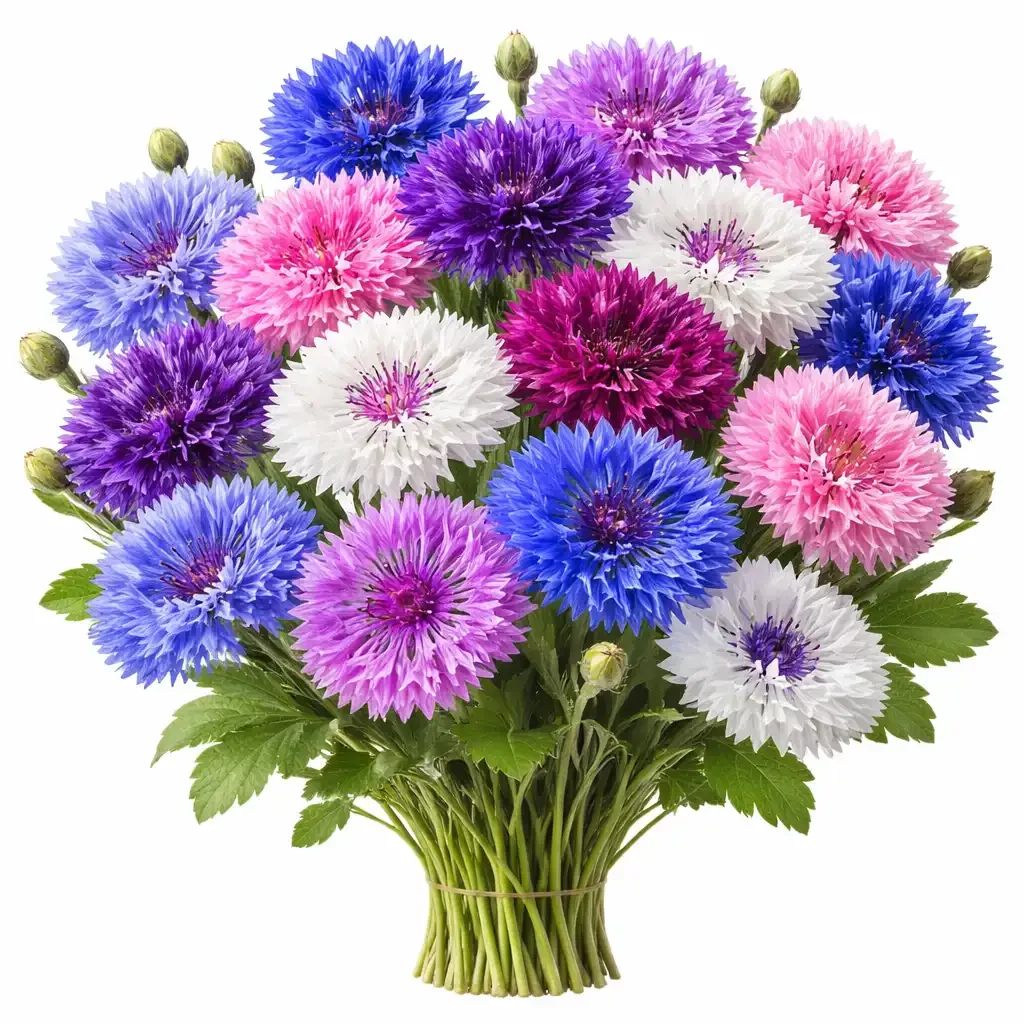
Quick Overview
Common Name: Bachelor's Button, Cornflower, Blue Bottle, Bluebottle
Scientific Name: Centaurea cyanus
Plant Type: Annual
USDA Zones: 2 to 11
Sun Requirement: Full Sun
Soil Type: Well-drained, average to poor fertility
Bloom Season: Late Spring through Early Summer, Fall in mild climates
Height: 18 to 36 inches depending on variety
Pollinator Friendly: Yes
Edible: Yes, petals are edible and widely used as a culinary garnish
Why Grow Bachelor's Button on a Homestead
Bachelor's Button is one of the most commercially important and personally beloved cool season cut flowers available to homestead growers. Its distinctive fringed, button-like blooms in the most intense and genuinely rare true blue available from any commonly grown cool season annual, alongside the rose-pink, white, burgundy, lavender, and bicolor forms that round out its extraordinary color range, create a quality of fresh, spontaneous, wildflower beauty that customers and florists respond to with immediate, instinctive enthusiasm. There is something genuinely irreplaceable about the blue forms of Bachelor's Button in particular. True blue is one of the rarest and most commercially valuable colors in the cut flower world, and Bachelor's Button delivers it in a form that is both unmistakably distinctive and universally recognized across every market from the most casual farmers market customer to the most sophisticated wedding florist.
For homestead growers, Bachelor's Button represents one of the most strategically sound cool season annual investments available. It direct sows readily in cool soil with essentially no special treatment, germinates quickly and reliably, establishes rapidly with minimal care, and blooms prolifically over a generous cool season period that coincides with the late spring market season when demand for distinctive, locally grown specialty flowers is at its peak. Its lean-soil preference means it performs best in conditions that would challenge more demanding cool season crops. And as a prolific self-seeder, once established in a garden it effectively becomes a self-renewing resource that returns each season with minimal additional seed investment.
Here is why Bachelor's Button deserves a prominent spot on your homestead:
It provides the most commercially important and genuinely rare true blue color available from any cool season annual cut flower. True blue is one of the most sought-after and consistently demanded colors in the cut flower market. Bachelor's Button delivers it in the most vivid, distinctive, and immediately recognizable form available from any easily grown cool season annual.
It blooms during the peak late spring wedding and market season when locally grown specialty flowers command the highest prices. The late spring blooming window aligns precisely with the most commercially active period of the spring cut flower calendar, creating natural alignment with the highest market demand and premium pricing conditions of the year.
It thrives in lean, cool conditions that challenge more demanding cool season crops. Bachelor's Button is adapted to the lean, well-drained conditions of its native Mediterranean and European meadow habitat and actually performs better in average to lean conditions than in rich, amended beds.
The edible petals create an additional premium income channel. Bachelor's Button petals are among the most widely used and most commercially recognized edible flowers available, commanding premium prices from restaurants, bakeries, and specialty food producers who use them as culinary garnishes.
Once established it self-seeds prolifically to provide a self-renewing annual supply. Bachelor's Button self-seeds so freely that after the first planting it typically returns year after year from self-sown seed with minimal additional input, creating an increasingly established and productive cool season cutting garden resource.
Growing Conditions
Sunlight
Bachelor's Button requires full sun to perform its best. It needs at least 6 hours of direct sunlight per day for the strongest stems, most abundant flowering, and the most vivid blue color intensity. In partial shade stems become weak and floppy, color intensity decreases, and the open, fringed form of the flower becomes less well-developed. Full sun is the single most important growing requirement for productive Bachelor's Button cut flower production.
Soil
Bachelor's Button strongly prefers well-drained soil with average to poor fertility. It is native to the lean, disturbed soils of European and Mediterranean agricultural fields and performs significantly better in these lean conditions than in rich, heavily amended garden beds. Overly fertile soil, particularly soil high in nitrogen, produces lush, dark green, floppy plants with abundant foliage but dramatically shortened stems and reduced flower production. Sandy or well-drained loam with minimal organic matter enrichment is ideal. Soil pH between 6.0 and 7.5 is suitable. This lean-soil preference makes Bachelor's Button an excellent choice for growing in areas of the homestead with average or below-average soil conditions.
Water
Bachelor's Button is moderately drought tolerant once established and performs better in somewhat dry conditions than in consistently moist soil. Consistent moisture during establishment is important but after that only regular deep watering during extended dry periods is needed. Overwatering and consistently moist soil, particularly combined with rich soil, dramatically reduces stem length and increases floppy growth that makes stems less commercially valuable. In most climates with regular spring rainfall, established Bachelor's Button needs minimal supplemental irrigation.
Temperature
Bachelor's Button is a cool season annual that performs best in moderate temperatures between 45 and 65 degrees Fahrenheit. It tolerates light frost and germinates best in cool soil. It declines and stops blooming reliably when temperatures consistently exceed 75 to 80 degrees Fahrenheit. In cold winter climates it is grown as an early spring through early summer annual. In mild winter climates within USDA zones 8 to 11 it can be grown as a fall through spring crop for an extended productive period.
Planting Guide
Bachelor's Button grows best from direct sowing. It has a taproot that makes transplanting somewhat difficult and germinates most reliably when sown directly outdoors in cool conditions.
Step 1: In cold winter climates, direct sow Bachelor's Button as early as possible in spring, four to six weeks before the last frost date while soil is still cool. Bachelor's Button tolerates light frost and germinates best in soil temperatures between 55 and 65 degrees Fahrenheit. Sowing while light frosts are still possible is entirely appropriate.
Step 2: In mild winter climates within USDA zones 8 to 11, direct sow in fall for winter and spring blooming. Fall sowing takes advantage of the cool growing season and produces the longest possible blooming period before summer heat arrives.
Step 3: Choose a location with full sun and well-drained, average to lean fertility soil. Avoid recently heavily amended beds with large amounts of compost or fertilizer.
Step 4: Sow seeds directly into the ground, covering with approximately one quarter inch of soil. Seeds are large enough to handle individually and can be spaced deliberately at 6 to 9 inches apart, or broadcast sown and thinned to appropriate spacing after germination.
Step 5: Water gently after sowing and keep the soil surface lightly moist until germination, which typically occurs within 7 to 14 days in cool soil.
Step 6: For a continuous harvest throughout the cool season, succession sow every two to three weeks from the initial sowing date through mid spring. Allow a proportion of plants to self-seed naturally at the end of each season for free renewal the following year.
Seed vs Transplant: Direct sowing is strongly preferred. Bachelor's Button has a taproot that makes transplanting somewhat unreliable and it germinates so readily from direct-sown seed that indoor starting provides minimal advantage.
Spacing: 6 to 9 inches apart for cut flower production.
Planting Season: Very early spring, four to six weeks before the last frost date in cold winter climates. Fall in mild winter climates within USDA zones 8 to 11.
Maintenance
Deadheading
Regular deadheading of spent blooms is essential for keeping Bachelor's Button productive throughout its cool season. Bachelor's Button that is allowed to set seed stops producing new stems quickly. Remove spent blooms by cutting back to just above a lateral shoot or set of leaves. For cut flower production, regular harvesting replaces deadheading and is the most efficient way to keep plants productive.
Pinching
Pinching the central growing tip when plants are 6 to 8 inches tall encourages branching and increases the number of flowering stems per plant. This practice is particularly valuable for tall varieties where pinching produces more, somewhat shorter but still marketable stems rather than fewer very tall stems.
Staking
Tall Bachelor's Button varieties, particularly those reaching 30 to 36 inches, benefit from light support in exposed locations to prevent flopping in wind and rain. Install horizontal support netting or brushy branch supports early in the season before stems reach their full height. Choosing compact to medium-height varieties reduces or eliminates the need for staking.
Fertilizing
Bachelor's Button does not need fertilizing and performs significantly worse with supplemental fertilization, particularly nitrogen. Never fertilize established Bachelor's Button plantings. In very poor soils, an extremely light single application of balanced fertilizer at planting is the absolute maximum that should ever be applied.
Pest Control
Bachelor's Button is largely pest resistant. Aphids can occasionally appear on stems and developing buds. Treat with a strong spray of water or neem oil. Slugs and snails can damage young plants in wet spring conditions. Iron phosphate slug bait provides effective control.
Harvesting
When to Harvest
Harvest Bachelor's Button stems when the central button of the flower is just beginning to open and the outermost ring of fringed petals is fully extended. At this stage the flower continues to fully open in the vase over the following day or two while maintaining maximum vase life. Stems harvested when flowers are already fully open have shorter remaining vase life. The vivid blue color is most intense and most commercially valuable at this correctly timed half-open stage. Harvest in the early morning when stems are fully hydrated.
How to Cut
Use clean, sharp scissors or pruners. Cut stems as long as possible by cutting low on the plant near the base of the lateral shoot, ideally 18 to 24 inches for tall varieties. Cut just above a lateral shoot or set of leaves to encourage new stem production. Remove all foliage from the lower half of the stem immediately after cutting. Place stems immediately into a bucket of cool water with a floral preservative.
Conditioning
After cutting, place stems in deep cool water in a cool, dark location for several hours or overnight before sale or arrangement. Bachelor's Button conditions readily and holds up well when properly hydrated before sale or arrangement.
How Often to Harvest
During peak bloom, harvest every two to three days as new stems reach the correct stage. Regular cutting encourages the plant to produce new lateral shoots continuously throughout the cool season blooming period.
Vase Life
Bachelor's Button typically lasts 5 to 8 days as a fresh cut flower with proper conditioning. Strip all foliage below the waterline, recut stems at an angle, and place in fresh water with a floral preservative. Change water every two to three days and keep arrangements in a cool location to maximize vase life.
Uses on a Homestead
Cut Flower Use
Bachelor's Button is grown primarily as a fresh cool season cut flower providing the most vivid and genuinely rare true blue available from any easily grown cool season annual. Its distinctive fringed blooms add an immediately fresh, wildflower quality to spring arrangements. It pairs magnificently with ranunculus, sweet peas, poppies, Nigella, and other cool season flowers in romantic mixed spring bouquets that capture the beauty of the late spring garden. The blue varieties in particular provide a color that genuinely cannot be replicated by any other cool season flower, making it an essentially irreplaceable component of spring arrangements where a true blue accent is needed.
Wedding and Event Flowers
Bachelor's Button is a sought-after specialty flower for spring and early summer weddings. The blue varieties are particularly prized for the rare true blue that wedding florists working with blue, lavender, and cool palette designs specifically seek. The delicate, fringed flower form adds a wildflower, garden-at-its-peak quality to wedding bouquets and arrangements that sophisticated wedding clients deeply appreciate.
Farmers Market
Bachelor's Button is one of the most reliably popular cool season specialty flowers at any late spring farmers market. The vivid blue varieties in particular create an immediately striking market display that draws customers to the stand. Mixed color bundles in the full range of blue, pink, white, and burgundy provide a visually comprehensive spring offering that sells consistently throughout the brief cool season market window.
Edible Petals
Bachelor's Button petals are among the most commercially recognized and widely used edible flowers available. The vivid blue petals are used as garnishes in salads, on cakes and desserts, in cocktails, and in a wide range of culinary applications where their brilliant blue color creates immediate visual impact. Selling fresh and dried Bachelor's Button petals to restaurants, bakeries, and specialty food producers provides a meaningful additional income stream from the established planting.
Natural Dye
The blue petals of Bachelor's Button produce a delicate blue to gray-blue dye on natural fibers, providing an additional specialty market connection to the natural dyeing community.
Can You Make Money With Bachelor's Button
Yes, Bachelor's Button is a profitable cool season cut flower crop for homestead operations, particularly for growers who leverage the genuinely rare true blue color, the peak spring wedding season timing, and the premium edible petal market.
Genuinely rare true blue color commands consistent premium pricing. True blue is one of the rarest and most consistently demanded colors in the cut flower market. Bachelor's Button is one of the very few easily grown cool season annuals that delivers genuine true blue, creating a market positioning that supports premium pricing without resistance from customers and florists who understand and value what they are getting.
Peak spring wedding season timing maximizes commercial value. The late spring blooming window of Bachelor's Button aligns precisely with the most commercially active period of the spring wedding market, creating a natural premium pricing environment at the most financially rewarding time of the annual cut flower calendar.
Near-zero ongoing production costs after establishment. Bachelor's Button is one of the most economical cut flower crops available. Seeds are inexpensive, the plant needs no fertilizing, self-seeds freely for future seasons, and has minimal pest and disease management requirements.
Edible petal premium adds significant additional income. Bachelor's Button petals are among the most commercially recognized and highly priced edible flowers available. The premium pricing of edible flower petals sold to culinary markets significantly enhances the overall financial return from the Bachelor's Button planting.
Farmers Market: Fresh Bachelor's Button bundles sell for 6 to 10 dollars per bunch. Blue variety bundles command the highest prices at 8 to 12 dollars per bunch. Mixed color bundles sell consistently throughout the cool season.
Florists and Wedding Designers: Blue Bachelor's Button is in consistent spring demand from florists and wedding designers for blue accent applications. Local supply during the spring season is valued and commands premium wholesale pricing.
Edible Petals: Fresh and dried Bachelor's Button petals sell to restaurants and specialty food producers at 8 to 20 dollars per container depending on quantity and presentation.
CSA Flower Subscriptions: Bachelor's Button is one of the most visually striking and color-distinctive additions to late spring flower subscription boxes. The vivid blue color creates immediate subscriber enthusiasm and signals the arrival of the peak spring flower season.
Companion Plants
Bachelor's Button grows beautifully alongside other cool season flowers with similar growing requirements and complementary bloom times.
Nigella: Both are cool season annuals with similar lean-soil preferences and direct-sowing approaches that complement each other beautifully in mixed spring arrangements where Bachelor's Button provides vivid blue round heads and Nigella provides delicate blue-purple flowers and feathery foliage.
Poppies: Both are cool season annuals that perform best with direct sowing in cool conditions and complement each other magnificently in loose, romantic spring arrangements where poppies provide delicate silky blooms and Bachelor's Button provides vivid blue accent.
Larkspur: Both are cool season annuals with similar lean-soil direct-sowing preferences that complement each other in romantic mixed spring bouquets where Larkspur provides tall vertical blue-purple spikes and Bachelor's Button provides rounder blue accents at a different scale.
Calendula: Both are cool season annuals that complement each other beautifully in bold spring arrangements with contrasting blue-purple and orange-yellow color combinations that are among the most visually dynamic in the cool season palette.
Ranunculus: Both bloom in cool spring conditions and complement each other magnificently in mixed spring arrangements where the delicate, layered blooms of ranunculus are beautifully accented by the vivid blue of Bachelor's Button.
Sweet Peas: Both are fragrant cool season flowers with similar cool temperature preferences that complement each other naturally in the spring cutting garden and in romantic mixed spring bouquets.
Common Problems
Floppy Stems
The most common commercial quality problem with Bachelor's Button. Caused almost entirely by growing in overly fertile or recently fertilized soil. Never fertilize Bachelor's Button. Always grow in average to lean, unfertilized soil. Also caused by insufficient sun or overcrowded planting. Grow in full sun at proper spacing of 6 to 9 inches. Horizontal support netting helps manage floppy growth but the most effective solution is always choosing appropriately lean growing conditions from the beginning.
Powdery Mildew
Can appear on foliage in late spring as temperatures warm and air circulation decreases in maturing plantings. Space plants properly for air circulation, avoid overhead watering, and remove affected foliage promptly. Powdery mildew typically arrives near the natural end of the cool season productive period and rarely significantly impacts the most commercially important early and mid-season harvest.
Bolting in Heat
Bachelor's Button bolts and stops blooming reliably when temperatures consistently exceed 75 to 80 degrees Fahrenheit. This is a natural seasonal characteristic that cannot be prevented. Plan for succession with heat-tolerant summer crops as Bachelor's Button naturally declines.
Aphids
Occasionally appear on stems and developing buds particularly in warm spring conditions. Usually managed naturally by beneficial insects. A strong spray of water or neem oil can be used if populations become problematic.
Poor Stem Length
Usually caused by the same conditions that produce floppy stems: overly fertile soil and excessive nitrogen. Also caused by insufficient sun or starting seed too late so that plants bloom under warming spring temperatures. Grow in lean soil with full sun from the earliest possible sowing date for the longest, strongest stems.
Varieties to Consider
Blue Varieties for Premium Market Production
Centaurea cyanus Blue Boy: A classic tall variety with vivid, deep true blue flowers on strong stems reaching 30 to 36 inches. One of the most widely grown and most commercially reliable blue Bachelor's Button varieties. The standard benchmark for blue Bachelor's Button cut flower production.
Centaurea cyanus Classic Blue: A reliable variety with consistent, deep blue coloring and good stem length. Very popular at farmers markets and with florists for its reliable, vivid blue color.
Centaurea cyanus Blue Diadem: A double-flowered variety with very full, densely petaled deep blue blooms that are more substantial and opulent in appearance than standard single forms. Commands premium prices for the more refined double flower form. Very popular with wedding florists seeking a more luxurious blue accent.
Centaurea cyanus Blue Fleece: A compact to medium-height variety with vivid blue blooms on strong stems. Good performance for growers who want manageable plant height without sacrificing color intensity.
Mixed Color Series for Market Diversity
Centaurea cyanus Boy Series: A widely grown tall mixed series reaching 30 to 36 inches in a full range of colors including deep blue, rose pink, white, burgundy, and lavender. The standard commercial series for mixed color cut flower production. Strong stems and reliable production across all colors in the mix.
Centaurea cyanus Polka Dot Mix: A compact series reaching 18 to 24 inches with a good color range. Useful for smaller growing spaces and for growers who want manageable plant heights with a full color range.
Centaurea cyanus Tall Mix: A tall, vigorous mixed series specifically selected for cut flower production with the longest stems available from commonly grown Bachelor's Button varieties. Available from specialty cut flower seed suppliers.
Specialty Colors
Centaurea cyanus Black Ball: A distinctive variety with unusual deep burgundy to near-black blooms that are genuinely unlike the standard blue-purple Bachelor's Button colors. Very popular with florists working with dark, dramatic color palettes. Commands premium prices for the unusual deep color.
Centaurea cyanus Burgundy: Deep wine-red to burgundy blooms that complement the classic blue varieties beautifully in mixed arrangements. Popular at farmers markets for the rich, unusual warm-toned variation on the standard Bachelor's Button palette.
Centaurea cyanus Snowman: Pure white blooms that provide clean white accent in mixed arrangements. Very popular with wedding florists for its pure white color that complements the blue varieties in classic blue and white wedding palette designs.
Final Thoughts
Bachelor's Button is one of the most commercially reliable, most ecologically generous, and most personally joyful cool season cut flower crops a homestead grower can plant. Its genuine true blue, the rarest and most consistently demanded color in the cut flower world, delivered in the most easily grown and most economically produced cool season annual available, creates a market positioning of extraordinary value relative to its minimal production demands. The combination of peak spring wedding season timing, near-zero production costs, edible petal premium income, prolific self-seeding that makes it essentially free in subsequent seasons, and the immediate, enthusiastic customer response that the vivid blue flowers generate at any market stand creates a cool season cut flower investment with one of the most favorable financial profiles available from any spring annual planting. Sow early in cool conditions, grow in lean unfertilized soil with full sun, harvest every two to three days at the half-open stage, allow a proportion of plants to self-seed for free future seasons, and Bachelor's Button will reward your homestead with some of the most vivid, most commercially sought-after, and most personally satisfying cool season cut flower stems available from any spring annual planting.
FAQ
Is Bachelor's Button the same as Cornflower? Yes, Bachelor's Button and Cornflower are two common names for exactly the same plant, Centaurea cyanus. The name Cornflower refers to the plant's historical association with European grain fields, particularly cornfields in the British usage of the term corn to mean grain, where it was once a common wildflower before modern agricultural practices reduced its wild populations dramatically. The name Bachelor's Button refers to the traditional custom of young men wearing the flowers in their buttonholes to signal romantic interest. Both names are used in the cut flower trade and both refer to the same plant. For market purposes, either name can be used depending on the preferences of the specific market and customer base, though Cornflower is increasingly used in the specialty cut flower trade.
Why is the blue color of Bachelor's Button so commercially valuable? True blue is one of the rarest flower colors in nature. Most flowers that appear blue are actually violet, purple, or lavender rather than true blue. Bachelor's Button is one of a very small number of commonly grown cut flowers that produces a genuinely true, vivid blue color, and it does so more intensely and more unmistakably than most other blue-flowering plants. This genuine rarity creates consistent and strong demand from florists and customers who specifically need a true blue element in arrangements and who cannot find it anywhere else among easily grown cool season flowers. The commercial value of this specific color is consistently reflected in the premium pricing that blue Bachelor's Button commands over the pink, white, and other color forms.
Can Bachelor's Button be started indoors? Yes, Bachelor's Button can be started indoors but direct sowing outdoors in cool early spring conditions is generally more reliable and more practical for most homestead growers. The taproot that Bachelor's Button develops makes it somewhat sensitive to transplanting, and carefully transplanting into individual biodegradable pots that can be planted out without disturbing the roots gives the best results when indoor starting is chosen. Starting indoors provides minimal time advantage over direct sowing as Bachelor's Button germinates and grows so rapidly in cool conditions that direct-sown plants quickly catch up with transplanted seedlings. If indoor starting is chosen, sow 3 to 4 weeks before the target outdoor planting date, maintain cool temperatures of approximately 55 to 65 degrees Fahrenheit, and transplant carefully without disturbing roots.
How do I dry Bachelor's Button petals for culinary use? Harvest flowers when they are fully open and at peak color on dry mornings after any dew has evaporated. Gently pull the petals from the flower head, discarding the central button and calyx which are bitter and not used culinarily. Spread petals in a single thin layer on paper-lined drying screens or trays in a warm, dry, well-ventilated location away from direct sunlight which fades the vivid blue color rapidly. Drying takes approximately one week in ideal conditions. Test for complete dryness by checking that petals are completely crisp and papery with no flexibility remaining. Store dried petals in sealed glass jars in a cool, dark location. Properly dried and stored Bachelor's Button petals retain their vivid blue color for six to twelve months, making them one of the most commercially attractive dried edible flower products available for culinary sales.