
Banksia
Quick Overview
Common Name: Banksia, Australian Honeysuckle, Bottlebrush Banksia
Scientific Name: Banksia spp.
Plant Type: Perennial Shrub and Tree
USDA Zones: 9 to 11
Sun Requirement: Full Sun
Soil Type: Well-drained, sandy, very low fertility, acidic
Bloom Season: Variable by species, many bloom Fall through Spring
Height: 3 to 30 feet depending on species
Pollinator Friendly: Yes, exceptional wildlife value
Edible: No
Why Grow Banksia on a Homestead
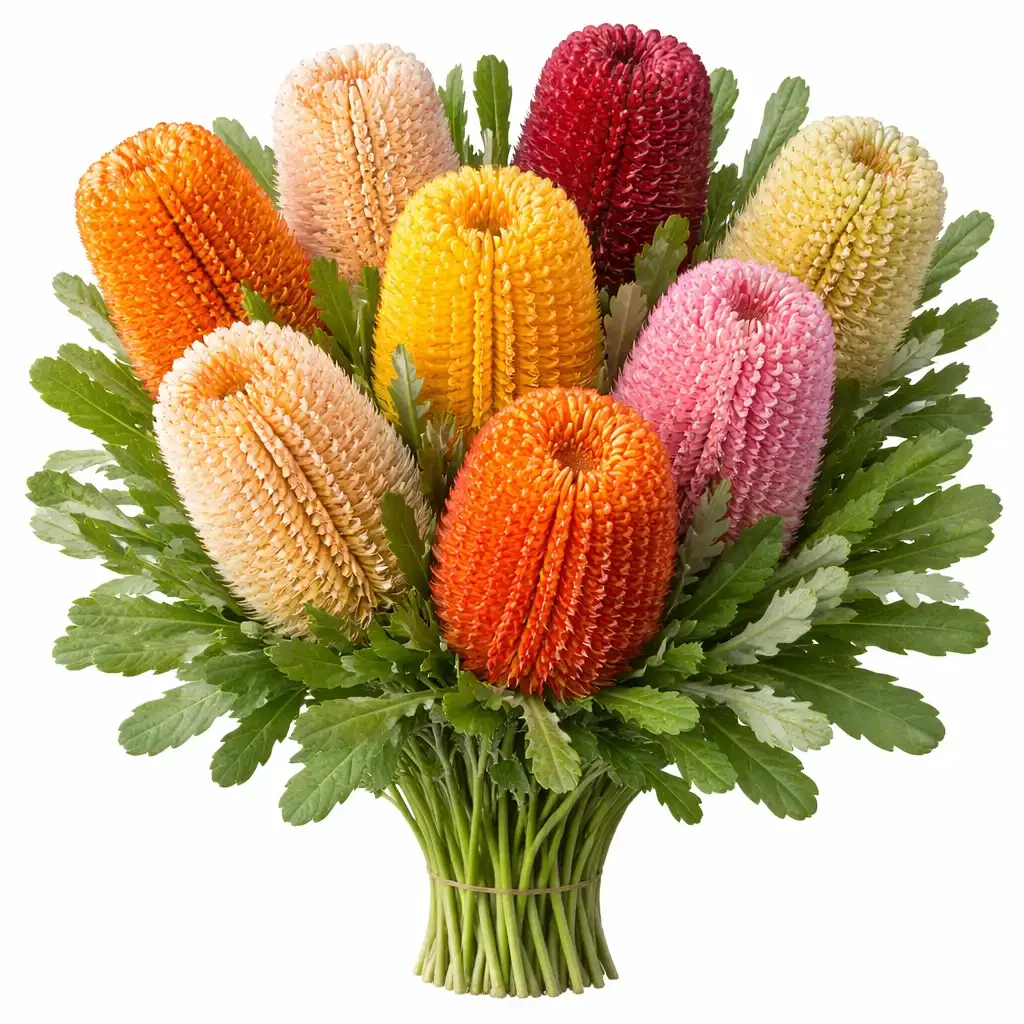
Banksia is one of the most architecturally extraordinary and commercially premium specialty cut flowers available to homestead growers in appropriate mild climates. Its dramatic, sculptural flower spikes, ranging from the bold cylindrical cones densely covered in hundreds of tiny individual flowers to the more open, torch-like forms, in colors spanning vivid yellow, rich orange, warm red, deep burgundy, soft cream, and the unusual silvery-gray of some species, create a quality of bold, exotic, genuinely otherworldly beauty that florists and wedding designers in the premium market find immediately compelling and genuinely irreplaceable. Banksia occupies a specific and uncontested position in the high-end cut flower and dried flower market as the most dramatically architectural and botanically distinctive of all the Australian native cut flower genera, providing a visual presence in arrangements that no other commonly grown cut material can replicate.
For homestead growers in appropriate mild climates within USDA zones 9 to 11, Banksia represents one of the most strategically significant and financially rewarding long-term perennial shrub investments available. The initial establishment period of two to four years before meaningful cut flower production begins requires patience and planning, but once established, Banksia shrubs produce an extraordinary abundance of premium-priced cut stems from a permanent planting with minimal ongoing input requirements. The combination of premium per-stem pricing that reflects the genuine rarity of locally grown fresh Banksia in most markets, year-round harvest capability in appropriate climates, exceptional dried flower performance that creates a permanent income stream from seasonal production, and the extraordinary ecological value of these remarkable plants as wildlife habitat creates a long-term homestead investment with exceptional financial and personal rewards.
Here is why Banksia deserves serious consideration for homestead growers in appropriate climates:
It occupies the most premium and genuinely uncontested specialty position in the Australian native cut flower market. Banksia is the most architecturally dramatic and most commercially premium of all the Australian native cut flower genera, commanding the highest per-stem prices available from any Australian native and consistently occupying the most exclusive specialty florist and wedding market positions.
The dramatic sculptural flower spikes are genuinely irreplaceable in the premium floral design market. The bold, architectural cones and torch-like spikes of Banksia provide a structural and visual quality in arrangements that no other cut flower genus can replicate. Florists and wedding designers who work with architectural and botanical design aesthetics specifically seek Banksia and pay premium prices for quality locally grown stems.
It provides both exceptional fresh cut flower and dried flower value from the same permanent planting. Banksia dries magnificently, retaining its extraordinary sculptural form and attractive coloration for years. The dried market provides year-round income from seasonal fresh production.
Once established it requires minimal ongoing input. Banksia is adapted to the extreme lean-soil, low-phosphorus conditions of its native Australian habitat and requires essentially no fertilizing, minimal watering once established, and has limited pest and disease management requirements in appropriate growing conditions.
The ecological value of an established Banksia planting is genuinely extraordinary. Banksia is one of the most important wildlife habitat plants in Australian ecosystems, providing exceptional nectar resources for birds, bees, and insects. An established Banksia collection creates a genuinely spectacular and ecologically rich garden environment that supports agritourism and creates compelling social media content.
Growing Conditions
Sunlight
Banksia requires full sun to perform its best. It needs at least 6 to 8 hours of direct sunlight per day and most species perform significantly better with maximum sun exposure throughout the day. The vigorous growth and prolific flowering that produces commercially valuable cut stems requires the maximum solar energy that full sun provides. In partial shade growth becomes open and reduced, flowering is less abundant, and the overall health and longevity of established plants is compromised. Full sun in a sheltered, well-drained position is the ideal growing environment for productive Banksia cut flower production.
Soil
Banksia has the most demanding and specific soil requirements of any cut flower crop discussed in this series, and understanding and providing these requirements is the single most important factor for successful establishment and long-term production.
Banksia is native to the highly phosphorus-deficient, extremely well-drained sandy soils of coastal and heath environments in Australia. It has evolved a specialized root system called proteoid or cluster roots that is extraordinarily efficient at extracting minimal phosphorus from very lean soils. This adaptation makes Banksia exquisitely sensitive to phosphorus toxicity. Standard garden fertilizers, potting mixes with added fertilizers, and even phosphorus-containing water can cause rapid death in established Banksia plants through phosphorus toxicity.
The requirements are specific: very well-drained, ideally sandy or gravelly soil, very low to zero phosphorus content, acidic pH between 5.5 and 6.5, and essentially no organic matter enrichment. Growing in native sandy soil, purpose-formulated Australian native potting mix with zero phosphorus, or mineral-based growing medium with coarse sand and fine gravel is essential for long-term survival and productivity.
Water
Banksia is extremely drought tolerant once established. Young plants need regular watering during establishment but established plants need very little supplemental irrigation in appropriate climates with winter rainfall. The single most important watering rule for Banksia is to never apply fertilizers containing phosphorus through irrigation water or soil dressing. Use only phosphorus-free water and never apply standard garden fertilizers, compost, or organic matter to established Banksia plantings. In climates with summer rainfall, ensure that drainage is excellent to prevent waterlogging during the wet season.
Temperature
Banksia is adapted to the mild climates of coastal and heath Australia and performs best in USDA zones 9 to 11 where frost is minimal or absent. Most commonly grown Banksia species do not tolerate hard freezes below approximately 25 to 28 degrees Fahrenheit. A few hardier species including Banksia integrifolia can tolerate temperatures down to approximately 15 to 20 degrees Fahrenheit with appropriate site selection and establishment care, extending the range for some species into USDA zone 8 with protection. In climates with cold winters, growing Banksia in large containers that can be moved to frost-free indoor locations during winter is a practical option for growers outside the optimal hardiness range.
Planting Guide
Banksia is best established from nursery container plants. Growing from seed is slow, taking three to five years to produce blooming plants, and results are variable in terms of flower form and commercial quality. Named variety or species-selected nursery plants give the most reliable path to the premium flower quality that commands the highest market prices.
Step 1: Choose a planting location with full sun and the best-drained, leanest soil available on the homestead. If your native soil is heavy clay or high in organic matter, building raised beds or mounds with a purpose-formulated Australian native growing medium with zero phosphorus is necessary for successful Banksia establishment.
Step 2: Test soil pH before planting and adjust to the 5.5 to 6.5 range if necessary using acidifying agents such as elemental sulfur. Never apply lime or alkaline soil amendments to Banksia growing areas.
Step 3: Plant container plants at the same depth as they were growing in their containers. Do not incorporate compost, standard fertilizers, or organic matter into the planting hole. Plant directly into the prepared lean growing medium.
Step 4: Water thoroughly after planting and provide regular irrigation throughout the first growing season. After establishment, transition to the minimal, drought-adapted watering schedule appropriate for these plants.
Step 5: Apply a coarse gravel mulch around the base of plants rather than organic mulch, which adds phosphorus and nitrogen as it decomposes. Coarse gravel maintains dry conditions at the crown and provides the lean growing environment that Banksia requires.
Step 6: Be patient during establishment. Banksia grows slowly in its first two years as it develops its specialized root system before transitioning to more vigorous above-ground growth in subsequent seasons. First commercial harvests are typically possible in years three to four from establishment.
Seed vs Transplant: Named species or variety nursery container plants are strongly recommended. Growing from seed is slow and commercially impractical for most homestead operations.
Spacing: 6 to 10 feet apart depending on the mature size of the specific species.
Planting Season: Fall or spring in mild climates. Avoid planting during the heat of midsummer or during any frost-risk period.
Maintenance
Pruning for Cut Flower Production
Regular harvesting of flowering stems is itself the primary management practice that maintains productive, well-branched Banksia shrubs for cut flower production. After each flowering stem is harvested, new lateral shoots develop below the cut, gradually building a dense, well-branched framework of productive flowering wood.
Beyond harvesting, a light tidy-up pruning in late spring after the main blooming period removes any dead or declining stems and encourages vigorous new growth for the following season's flowers. Never cut into completely bare, leafless old wood as most Banksia species do not regenerate reliably from old bare wood.
Fertilizing
Never apply standard garden fertilizers containing phosphorus to Banksia. Phosphorus is acutely toxic to Banksia and even small applications can cause rapid decline and death in established plants. If any supplemental nutrition is needed for very slow-growing young plants, use only specifically formulated Australian native fertilizers that are clearly labeled phosphorus-free and low in nitrogen. Most established Banksia plantings in appropriate lean soils need no fertilizing whatsoever.
Pest Control
Banksia is generally pest resistant in appropriate growing conditions. In North American growing regions the most commonly encountered problems are fungal diseases related to inappropriate growing conditions rather than insect pest damage. Scale insects can occasionally appear on stems. Treat with horticultural oil applied when scale crawlers are active.
Disease Prevention
Phytophthora cinnamomi, the water mold responsible for Cinnamon Root Rot, is the most serious disease threat to Banksia and many other Australian native plants. It thrives in waterlogged conditions and spreads through contaminated soil and water. Prevention through excellent drainage, avoiding overwatering, using clean planting stock, and not introducing soil from unknown sources into Banksia growing areas is the most effective management strategy. Once established, Phytophthora cinnamomi is extremely difficult to control. Never allow water to pool around Banksia plants.
Harvesting
When to Harvest Fresh Cut Flowers
Harvest Banksia flower spikes when they are fully developed and showing their most vivid color, typically when the individual flowers along the spike are opening progressively from the base upward. The spike should feel firm and well-developed. For most Banksia species the ideal harvest stage is when approximately one third to one half of the individual flowers along the spike have opened. The remaining flowers continue to open progressively after cutting, giving the stem a long and evolving display period. Harvest in the early morning when stems are fully hydrated.
How to Cut
Use clean, sharp pruners. Cut stems with as much length as possible, cutting back to a strong lateral shoot or set of leaves. For most Banksia species this produces stems of 18 to 36 inches depending on the species and the architecture of the specific shrub. The woody stems of Banksia benefit from a fresh angled cut and optionally a short split cut at the base of the stem to improve water uptake through the woody tissue. Place stems immediately into a bucket of cool water.
Conditioning
After cutting, place stems in deep cool water in a cool, dark location for several hours or overnight before sale or arrangement. Banksia conditions readily and the dramatic flower spikes hold their form and color well through the conditioning period.
When to Harvest for Drying
For dried flower production, harvest at the same stage as for fresh use or slightly later when more florets have opened. Banksia dries magnificently, retaining its extraordinary sculptural form and characteristic colors with exceptional fidelity. The seed cones that develop after flowering are equally or more dramatic than the fresh flower spikes as dried botanical products.
Drying
Stand stems upright in a dry container without water and allow to dry in place, or hang upside down in small loose bundles in a warm, dry, well-ventilated space away from direct sunlight. Drying takes approximately three to four weeks for fresh flower spikes. The dried product retains its form for years and is among the most enduring and commercially valuable dried botanical products available.
Harvesting Seed Cones
The mature seed cones of Banksia that develop after flowering are among the most distinctive and commercially valuable dried botanical products available from any garden plant. The woody, intricately structured cones with their characteristic follicle openings are dramatic, long-lasting, and genuinely irreplaceable as dried botanical design elements. Harvest cones when they have fully matured and hardened on the plant. They require no special drying treatment and last for years as dried specimens.
How Often to Harvest
In mild climates where Banksia blooms over extended periods, harvest stems every three to five days as new spikes reach the correct stage. Different Banksia species bloom at different times of year, allowing growers with a diverse collection of species to harvest throughout most of the year.
Vase Life
Banksia typically lasts 10 to 21 days or more as fresh cut material with proper conditioning, making it one of the longest-lasting cut flowers available. Strip all foliage below the waterline, recut stems at an angle, and place in fresh water. Change water every few days to maximize the already excellent longevity.
Uses on a Homestead
Cut Flower Use
Banksia is grown primarily as a premium architectural focal and accent flower in high-end mixed arrangements and wedding work. Its dramatic flower spikes add an immediately exotic, botanical quality to arrangements that is genuinely unlike any other cut flower material. Even a single Banksia spike completely transforms the character and perceived value of any arrangement it appears in. It pairs magnificently with Protea, Leucadendron, Eucalyptus, and other Australian native materials in dramatic, contemporary arrangements, and provides an extraordinary focal element alongside more traditional cut flowers in mixed arrangements that benefit from a dramatic architectural counterpoint.
Dried Flower and Seed Cone Products
Dried Banksia flower spikes and seed cones are among the most premium and most commercially distinctive dried botanical products available anywhere. The woody seed cones with their intricate natural architecture are genuinely collectible objects that sell at premium prices through online platforms, specialty gift shops, and directly to customers who appreciate extraordinary botanical specimens. Dried flower spike bundles sell consistently well at craft markets and through florists who use dried botanicals in their designs.
Wedding and Event Flowers
Banksia is one of the most sought-after specialty flowers for high-end botanical and contemporary wedding designs. Wedding florists who work with architectural, exotic, and Australian native design aesthetics specifically seek Banksia as one of the most premium and most distinctive elements available for this market. Local supply of quality Banksia stems is genuinely rare and commands the highest premium pricing available from any locally grown specialty cut flower.
Farmers Market
Fresh Banksia stems at a farmers market create an immediately extraordinary display that generates intense customer fascination and enthusiasm from customers who have never encountered these spectacular flowers before. The combination of dramatic sculptural beauty and genuine botanical rarity creates the strongest premium pricing conditions available from any specialty cut flower crop.
Wildlife Habitat
An established Banksia collection is one of the most ecologically significant wildlife habitat plantings available to any homestead. The extraordinary nectar resources that Banksia provides support birds, bees, and beneficial insects at a level that very few other garden plants can match. This ecological value creates powerful agritourism content and farm identity storytelling.
Can You Make Money With Banksia
Yes, Banksia is one of the most financially rewarding long-term perennial shrub investments available to homestead growers in appropriate mild climates. The premium per-stem pricing, year-round harvest capability, exceptional dried flower value, and the permanent and improving nature of an established Banksia collection create a long-term financial profile that is genuinely exceptional.
Premium per-stem pricing reflects genuine rarity and demand. Fresh Banksia cut stems command some of the highest per-stem wholesale and retail prices available from any locally grown specialty cut flower. The genuine rarity of locally grown fresh Banksia in most North American markets creates a premium pricing environment with essentially no local competition.
Year-round harvest from a diverse species collection. By planting multiple Banksia species with different natural bloom times, homestead growers in mild climates can achieve near-year-round fresh cut stem availability from a single permanent planting, providing consistent income throughout the year.
Exceptional dried flower and seed cone market. Dried Banksia products, particularly the extraordinary woody seed cones, are premium collectible botanical products that command remarkable prices through online platforms and specialty gift markets. The long shelf life of dried Banksia products means they can be produced during peak fresh harvest periods and sold throughout the year.
Permanent investment with improving returns. Established Banksia shrubs produce increasing quantities of harvestable stems as they mature, delivering improving financial returns year after year from a fixed initial investment.
Farmers Market: Fresh Banksia stems sell for 4 to 8 dollars per individual stem given their dramatic size and rarity. Bundles of smaller stems sell for 15 to 30 dollars depending on species and flower quality.
Florists and Wedding Designers: Fresh Banksia stems command wholesale prices of 3 to 6 dollars per stem or more for premium species. Wedding florists working with botanical and architectural design aesthetics pay the highest prices and are the most financially rewarding market channel for homestead Banksia production.
Dried Products: Dried Banksia flower spikes sell for 5 to 15 dollars per stem. Banksia seed cones sell for 3 to 10 dollars per individual cone or significantly more for large, spectacular specimens through online platforms.
Companion Plants
Banksia grows naturally alongside other Australian native plants with similar growing requirements and is most effectively combined with these in a dedicated Australian native cut flower planting.
Protea: The most natural and complementary Banksia companion. Both are southern hemisphere proteaceae family plants requiring similar lean, well-drained, phosphorus-free growing conditions. Together they create the most premium and commercially powerful Australian native cut flower planting available.
Leucadendron: Another proteaceae family companion with similar growing requirements. The colored foliage and cone-like flower structures of Leucadendron provide beautiful complementary material alongside Banksia in mixed arrangements and in the growing environment.
Grevillea: Another Australian native in the proteaceae family with similar lean-soil requirements. Various Grevillea species provide complementary cut flower and cut foliage material with the distinctive spider flower form of the genus.
Eucalyptus: While not in the same plant family, Eucalyptus shares similar Mediterranean-climate adaptations and provides beautiful silver-blue foliage material that complements Banksia magnificently in arrangements.
Ornamental Grasses: Drought-tolerant ornamental grasses provide beautiful movement and structural contrast to the bold, static architectural forms of Banksia flower spikes in arrangements and in the landscape.
Common Problems
Phosphorus Toxicity
The most serious and most rapidly fatal problem for Banksia in cultivation. Caused by the application of standard garden fertilizers, phosphorus-containing potting mixes, or compost to Banksia growing areas. Symptoms include yellowing of foliage, progressive dieback, and rapid plant decline. Prevention through never applying any phosphorus-containing products to Banksia growing areas and using only specifically formulated Australian native growing media with zero phosphorus is the only effective strategy. Once phosphorus toxicity is established the plant typically cannot be saved.
Phytophthora Root Rot
The most serious disease threat, caused by the water mold Phytophthora cinnamomi that spreads in waterlogged conditions. Prevention through excellent drainage, avoiding overwatering, and using clean planting stock from reputable nurseries is the only effective management approach. Once established, Phytophthora is essentially impossible to eradicate from affected soil.
Slow Establishment
Banksia grows slowly in its first two to three years as it develops its specialized root system. This slow early growth requires patience and should not be interpreted as a sign of poor health. Resist the temptation to apply fertilizers to speed establishment as this will cause phosphorus toxicity. Adequate water and full sun during establishment support the fastest possible natural root development.
Cold Damage
Most Banksia species are damaged by temperatures below 25 to 28 degrees Fahrenheit. In climates at the edge of the hardiness range plant in sheltered locations against south-facing walls, provide frost cloth protection during unusual cold events, and mulch over the root zone with coarse gravel after the ground cools. Growing in large containers that can be moved to frost-free locations during winter is the most reliable approach in borderline climates.
Varieties to Consider
For Cut Flower Production
Banksia coccinea (Scarlet Banksia): Produces the most vividly colored and most commercially sought-after cut flower spikes in the genus. Compact, precisely structured cylindrical flower spikes in vivid scarlet-red and white creating a striking two-toned effect. One of the most premium-priced Banksia species in the cut flower trade. Requires excellent drainage and cool, dry conditions. Best suited to USDA zones 9 to 10.
Banksia hookeriana (Hooker's Banksia): Large, cylindrical flower spikes in vivid orange that are among the most commercially important Banksia species for cut flower production. The bold orange color and impressive spike size make this one of the most visually dramatic and commercially powerful Banksia cut flower species. Good vase life and excellent dried flower performance.
Banksia baxteri (Bird's Nest Banksia): Produces unusual, open, bowl-shaped flower structures quite different from the cylindrical spikes of other species. Golden-yellow flowers surrounded by distinctive silver-gray involucral bracts. Very popular with florists for the unusual, open, nest-like flower form. USDA zones 9 to 11.
Banksia prionotes (Acorn Banksia): Large, pale yellow to cream flower spikes with distinctive orange-tipped buds that create a beautiful two-toned effect as the spike develops. One of the most widely grown Banksia species for commercial cut flower production globally. Strong stems and excellent vase life.
For Dried Product and Seed Cones
Banksia grandis (Bull Banksia): Produces the largest flower spikes and seed cones of any commonly grown Banksia species, reaching up to 12 inches in length. The extraordinary size of the seed cones makes them among the most spectacular and highest-priced dried botanical products available from any garden plant. Large tree species requiring significant space.
Banksia serrata (Old Man Banksia): Produces distinctive large, textured seed cones with a gnarled, ancient quality that is immediately compelling as a dried botanical product. The seed cones have an exceptional shelf life and are popular as collectible natural objects.
For Mild Climate Perennial Production
Banksia integrifolia (Coast Banksia): One of the hardiest and most adaptable Banksia species for cultivation outside Australia. Pale yellow flower spikes on a large shrub or small tree with attractive silver-backed leaves. The most cold-tolerant commonly grown Banksia species, surviving temperatures down to approximately 15 to 20 degrees Fahrenheit in protected positions. Good cut flower and dried flower quality. USDA zones 8 to 11.
Banksia spinulosa (Hairpin Banksia): A compact to medium-sized shrub with vivid golden-yellow to orange flower spikes on strong stems. Very reliable and productive in appropriate conditions. One of the most widely grown Banksia species for homestead cut flower production due to its manageable size and consistent productivity.
Final Thoughts
Banksia is the most dramatically architectural, most botanically extraordinary, and most financially premium of all the specialty cut flower shrub crops available to homestead growers in appropriate mild climates. The patience required during the two to four year establishment period before meaningful commercial harvest begins, combined with the exacting soil requirements that demand lean, phosphorus-free growing conditions and excellent drainage, represents a genuine investment of planning and horticultural attention that differentiates successful Banksia production from simply planting a shrub and waiting. But for homestead growers in USDA zones 9 to 11 who make that investment carefully and who develop the florist and wedding designer relationships that recognize and pay the premium prices that extraordinary Banksia cut stems genuinely command, the long-term financial and personal rewards are among the most exceptional available from any single perennial shrub crop in the homestead cut flower repertoire. Provide lean, phosphorus-free, extremely well-drained growing conditions, never apply standard garden fertilizers, ensure complete protection from waterlogging and Phytophthora risk, harvest at the correct stage for maximum vase life, dry the most dramatic specimens for the premium botanical product market, and Banksia will reward your homestead with some of the most extraordinary, most commercially powerful, and most personally magnificent flowering shrubs available from any planting in an appropriate climate.
FAQ
Why is phosphorus so toxic to Banksia when it is essential for most plants? Banksia and other plants in the Proteaceae family evolved in the ancient, extremely phosphorus-deficient soils of Australia and South Africa over millions of years. This extraordinarily long evolutionary pressure led to the development of highly specialized cluster root systems, sometimes called proteoid roots, that are exceptionally efficient at extracting the tiny amounts of phosphorus available in these ancient soils. This specialization came at a cost: the internal regulatory mechanisms that protect most plants from phosphorus excess are essentially absent or greatly reduced in Proteaceae plants. When Banksia encounters the phosphorus levels that are normal for most garden soils or that are present in standard garden fertilizers, it cannot regulate its uptake and accumulates toxic levels rapidly, causing the characteristic yellowing, dieback, and death that growers unfamiliar with this requirement sometimes mistake for nutrient deficiency and attempt to treat with more fertilizer, worsening the problem dramatically.
Can Banksia be grown in containers for growers outside the ideal hardiness range? Yes, container growing is a genuinely practical and commercially viable option for growing Banksia in climates outside the ideal USDA zones 9 to 11 hardiness range. Use very large containers of at least 25 to 30 gallons with excellent drainage holes and a purpose-formulated Australian native growing medium that is clearly labeled phosphorus-free. Never use standard potting mixes which contain phosphorus. Grow in the fullest sun available, water sparingly once established, and move containers to a frost-free indoor location during any cold periods that would damage the specific species being grown. Container-grown plants will be smaller and produce fewer cut stems than ground-planted specimens but can still generate commercially useful quantities of premium cut material with appropriate management.
How long does it take for Banksia to produce commercial-quality cut flower stems? Most Banksia species begin producing some harvestable stems in their second to third year from nursery-sized container plants, but meaningful commercial quantities typically develop in years three to four as established plants develop the dense, well-branched framework of productive flowering wood that comes from regular harvesting. Some species including Banksia spinulosa and Banksia integrifolia can produce harvestable stems somewhat earlier than larger species. The slow establishment phase is the primary patience requirement for Banksia production and should be planned for in any homestead business model that includes Banksia as a commercial crop. Planning for a three to four year lead time before significant Banksia revenue begins, and using more rapidly productive crops to generate income during this establishment period, is the most realistic and financially sound approach.
What makes Banksia seed cones so commercially valuable as dried products? Banksia seed cones are among the most architecturally extraordinary natural objects produced by any plant. The woody cones develop from the fertilized flower spikes and consist of densely packed woody follicles arranged in intricate patterns around a central woody axis, each follicle containing seeds that are protected behind sealed valves that only open in response to heat, typically from a wildfire in the natural environment. The visual and tactile quality of a mature Banksia seed cone is genuinely like nothing else in the plant world. The largest cones of species such as Banksia grandis and Banksia serrata can reach 12 inches or more in length and are immediately compelling as natural sculptures of extraordinary complexity and beauty. The commercial value of these cones reflects their genuine rarity in most markets combined with their immediate, universal appeal as natural objects of exceptional botanical character.