
Bells of Ireland
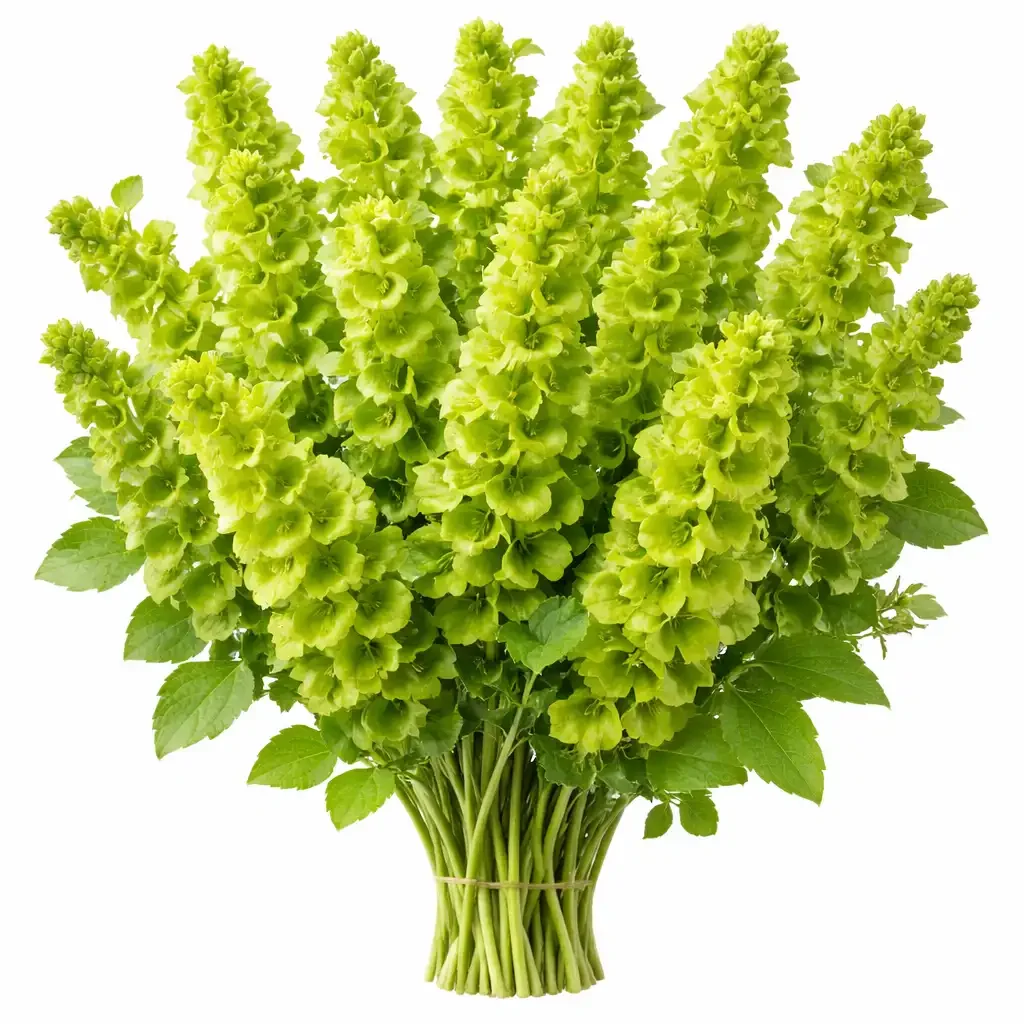
Quick Overview
Common Name: Bells of Ireland, Shell Flower, Molucca Balm
Scientific Name: Moluccella laevis
Plant Type: Annual
USDA Zones: 2 to 11
Sun Requirement: Full Sun to Partial Shade
Soil Type: Well-drained, average fertility
Bloom Season: Late Spring through Summer
Height: 24 to 36 inches
Pollinator Friendly: Yes
Edible: No
Why Grow Bells of Ireland on a Homestead
Bells of Ireland is one of the most architecturally distinctive and commercially underutilized specialty cut flowers available to homestead growers. Its tall, upright stems densely clothed in large, shell-like, bright green calyces, each containing a tiny white fragrant flower, create a bold structural statement in arrangements that is genuinely unlike any other commonly grown cut flower. In the professional floral industry Bells of Ireland is considered an essential and irreplaceable green accent and architectural element, providing the kind of tall, bold, purely green vertical presence that florists and wedding designers use to anchor, frame, and add structural depth to arrangements across every style from the most traditional to the most contemporary.
For homestead growers, Bells of Ireland represents one of the most commercially distinctive and genuinely specialty-positioned annual cut flower opportunities available. Despite its consistent and strong florist demand, it remains genuinely rare as a dedicated cut flower crop at most homestead operations, creating an essentially uncontested local market position for growers who develop productive plantings. The fact that it provides purely green stems with no traditional petal flower, a significant commercial advantage in arrangements where florists need green structural material rather than additional flower color, means it serves a different and complementary market function from every other cut flower crop. And its excellent performance as a dried flower with remarkably good green color retention creates year-round income potential from seasonal production.
Here is why Bells of Ireland deserves a prominent spot on your homestead:
It provides genuinely irreplaceable tall green structural stems that no other commonly grown cut flower replicates. The bold architectural form of Bells of Ireland on tall, straight stems creates a structural and visual quality in arrangements that florists and wedding designers specifically seek and that cannot be substituted with any other green accent material.
It is in consistent demand from florists year-round but genuinely rare as a locally grown fresh cut material. Florists use Bells of Ireland constantly in mixed arrangements and wedding work throughout the year. Local fresh supply is extremely rare and creates a genuinely uncontested premium market position.
It dries beautifully with remarkable green color retention. Bells of Ireland is one of the best summer annuals for the dried flower market, retaining a pleasant, soft green color when properly dried. This dried flower capability creates year-round income from seasonal production.
The cool season growing preference creates a natural fit with the spring wedding season. Bells of Ireland performs best in cool to moderate temperatures, making it a natural cool season specialty that aligns well with the peak spring and early summer wedding market.
The purely green, architectural quality fills a specific florist need that no other cut flower fills. Florists often need tall green structural material that adds presence without adding more flower color to an already complex arrangement. Bells of Ireland is essentially the only tall, purely green architectural cut stem available in this specific format.
Growing Conditions
Sunlight
Bells of Ireland performs well in full sun to partial shade. It needs at least 4 to 6 hours of direct sunlight per day for the strongest, tallest, most well-branched stems. In full sun it produces the most robust plants with the densest, most well-filled stems. In partial shade stems become somewhat taller and more open but still produce good quality cut material. The slight shade tolerance of Bells of Ireland gives it more planting flexibility than many other cut flower crops and makes it a good choice for locations with some afternoon shade.
Soil
Bells of Ireland prefers well-drained, average fertility soil. It performs well in average garden soil with a modest amount of compost incorporated before planting but does not need heavily amended or richly fertile beds. Good drainage is important as it does not tolerate waterlogged conditions. Overly rich soil can produce excessive vegetative growth. Soil pH between 6.0 and 7.0 is suitable. The modest soil requirements of Bells of Ireland make it a flexible and economical cool season cut flower crop.
Water
Water consistently throughout the growing season to maintain even soil moisture. Bells of Ireland needs regular moisture during active growth and stem development but does not tolerate waterlogged conditions. Water at the base of plants rather than overhead to reduce the risk of fungal diseases on the dense, overlapping calyces that can trap moisture. Once established it develops moderate drought tolerance but produces the tallest, most well-filled stems with consistent moisture throughout the growing period.
Temperature
Bells of Ireland is a cool season annual that performs best in moderate temperatures between 50 and 70 degrees Fahrenheit. It tolerates light frost and germinates best in cool soil. It declines and can bolt in very hot conditions above 80 to 85 degrees Fahrenheit. In cold winter climates within USDA zones 3 to 7 it is grown as a cool season spring annual direct sown early in spring. In mild winter climates within USDA zones 8 to 11 it can be grown as a fall through spring crop for an extended productive period. The cool season preference makes Bells of Ireland a natural complement to other cool season cut flower crops and an excellent choice for maximizing the spring market season.
Planting Guide
Bells of Ireland is one of the more challenging annual cut flowers to establish from seed and requires specific germination conditions that differ from most other cool season annuals. Understanding and accommodating these specific germination requirements is the most important factor for successful Bells of Ireland production.
Step 1: Bells of Ireland seeds require light and cool temperatures to germinate reliably. This is one of the most important and most commonly misunderstood aspects of growing this plant. The seeds need to be exposed to light during germination and must not be covered with soil. They also germinate best at cool temperatures between 50 and 55 degrees Fahrenheit.
Step 2: Many experienced growers recommend a cold stratification period to improve germination reliability. Place seeds in a damp paper towel in a sealed plastic bag and refrigerate for one to two weeks before sowing. This cold moist period mimics the natural winter conditions that trigger germination and significantly improves germination rates.
Step 3: After cold stratification, sow seeds on the surface of moist seed starting mix without covering. Press seeds gently into the surface to ensure good contact but do not cover. If starting indoors, maintain seed trays at cool temperatures of 50 to 55 degrees Fahrenheit rather than the warm conditions recommended for most cool season annuals.
Step 4: Direct sowing outdoors is often more reliable than indoor starting for Bells of Ireland. Direct sow seeds on the soil surface in early spring while conditions are still cool and frost is still possible. Press seeds gently into the soil surface without covering. The natural cool soil conditions of early spring often give better germination rates than attempting to replicate these conditions indoors.
Step 5: Once seedlings have emerged and developed their first true leaves, thin to 9 to 12 inches apart for cut flower production. Proper spacing is essential for developing the tall, straight stems most commercially valuable for cut flower use.
Step 6: For succession harvesting, make two to three plantings spaced three to four weeks apart in early spring to extend the overall harvest window. Each sowing provides stems for approximately four to six weeks before declining in summer heat.
Seed vs Transplant: Direct sowing is generally more reliable than indoor starting for Bells of Ireland due to its specific cool germination requirements. If starting indoors, maintain genuinely cool temperatures and do not cover seeds.
Spacing: 9 to 12 inches apart for cut flower production.
Planting Season: Very early spring, four to six weeks before the last frost date in cold winter climates. Fall in mild winter climates within USDA zones 8 to 11.
Maintenance
Pinching
Pinching the central growing tip when plants are 6 to 8 inches tall encourages branching and increases the number of harvestable stems per plant. This is particularly useful for creating more stems of moderate length rather than fewer very tall central stems. For markets that prefer very tall single stems, some growers choose not to pinch to maximize the height and impressiveness of the main central stem.
Staking
Tall Bells of Ireland plants, particularly in exposed locations, may benefit from support to prevent the tall stems from falling over before harvest. Install horizontal support netting or individual stakes early in the season. The tall, dense stems of Bells of Ireland are top-heavy when fully developed and can be damaged by wind and rain without adequate support.
Fertilizing
Bells of Ireland does not need heavy feeding. A light application of balanced fertilizer at planting is sufficient for most soils. Avoid excessive nitrogen which promotes excessive vegetative growth at the expense of the dense, well-filled stems that create commercial value.
Pest Control
Bells of Ireland is largely pest resistant. Aphids can occasionally appear on young plants and developing stems. Treat promptly with a strong spray of water or neem oil as aphid damage to developing calyces can distort the characteristic shell shape that creates its commercial appeal. Slugs and snails can damage young seedlings in wet spring conditions. Iron phosphate slug bait provides effective control.
Harvesting
When to Harvest Fresh Cut Flowers
Harvest Bells of Ireland stems when the calyces are fully developed and a vivid bright green along most of the stem length, with the upper portion of the stem still carrying developing buds. The lower calyces should be firm and well-formed with the characteristic shell shape fully developed. The tiny white flowers inside the calyces are secondary to the ornamental value of the calyces themselves. Harvest in the early morning when stems are fully hydrated. Note that fresh Bells of Ireland stems have a somewhat unpleasant musty or slightly fishy odor from the sap that dissipates after conditioning. This is normal and does not indicate poor quality.
How to Cut
Use clean, sharp scissors or pruners. Cut stems as long as possible at the base of the plant, ideally 24 to 36 inches. Remove all leaves from the stem, leaving only the calyces. Leaf removal is important for both aesthetic reasons, as the leaves detract from the architectural clarity of the calyces, and practical reasons, as leaves left on the stem in water accelerate bacterial growth and shorten vase life. Place stems immediately into a bucket of cool water.
Removing Leaves
Removing all leaves from harvested Bells of Ireland stems is an essential post-harvest step that significantly improves both the visual quality and the vase life of the stems. Pull leaves downward and off the stem carefully to avoid damaging the calyces. This leaf stripping is time-consuming but essential for producing the clean, architectural stems that florists and customers expect.
Conditioning
After cutting and stripping leaves, place stems in deep cool water in a cool, dark location for several hours or overnight before sale or arrangement. The somewhat unpleasant fresh sap odor that characterizes newly cut Bells of Ireland stems dissipates during the conditioning period and is not detectable in well-conditioned stems. Properly conditioned stems are essentially odor-free.
When to Harvest for Drying
For dried flower production, harvest at the same stage as for fresh use. The calyces dry with good green color retention when harvested at their freshest, most vivid green stage. Harvesting at the correct stage before any yellowing begins is the single most important factor for good dried color retention.
Drying
Remove all leaves and hang stems upside down in small loose bundles in a warm, dry, well-ventilated space away from direct sunlight. Drying takes approximately two to three weeks. Bells of Ireland dried at the correct stage and in appropriate conditions retains a pleasant, soft green color that makes it one of the most commercially distinctive dried green botanical products available.
How Often to Harvest
During the productive cool season growing period, harvest every two to three days as new stems reach the correct stage. The productive window for each sowing is approximately four to six weeks in most climates before summer heat causes plants to bolt and decline.
Vase Life
Bells of Ireland typically lasts 10 to 14 days or more as a fresh cut flower with proper conditioning and leaf removal. Strip all leaves from stems before placing in water, recut stems at an angle, and place in fresh water with a floral preservative. Change water every two to three days to maximize longevity.
Uses on a Homestead
Cut Flower Use
Bells of Ireland is grown primarily as a bold green architectural accent and structural element in mixed bouquets and arrangements. Its tall, dense stems provide the kind of purely green vertical presence that adds structural depth and visual complexity to arrangements without adding more flower color. It is used constantly in high-end mixed wedding bouquets and arrangements, in tall pedestal arrangements and event installations where its architectural height is particularly valuable, and in single-variety bundles as a striking green specialty item that customers find immediately compelling and unusual.
Wedding and Event Flowers
Bells of Ireland is one of the most consistently sought-after specialty green stems for wedding and event floristry. Its architectural quality, distinctive pure green color, and the genuine visual interest of the shell-like calyces create an immediately distinctive element in arrangements that adds sophisticated structural complexity. Wedding florists consistently seek out local sources of fresh Bells of Ireland and pay premium prices for quality stems during the spring and early summer wedding season.
Dried Flower Use
Dried Bells of Ireland is a sought-after specialty dried botanical product that sells well at craft markets, through florists, and online. The soft green color retained through the drying process is unusual among dried botanicals, most of which dry to brown or cream tones, making dried Bells of Ireland a genuinely distinctive dried product. Dried stems can also be bleached to a natural ivory-cream tone and sprayed with various colors for additional product diversity.
Farmers Market
Fresh Bells of Ireland at a spring or early summer farmers market creates an immediately striking display that stops customers with its unusual appearance. Many customers who have never seen it before find the shell-like green structures immediately fascinating and often purchase it purely on the basis of its visual curiosity value. The genuine rarity of fresh Bells of Ireland at most market stands creates premium pricing conditions that the more familiar spring flowers cannot always support.
Can You Make Money With Bells of Ireland
Yes, Bells of Ireland is a profitable specialty cut flower crop for homestead operations, particularly through direct relationships with wedding florists who consistently seek this distinctive and difficult-to-source locally grown specialty stem.
Genuine market rarity creates essentially uncontested premium positioning. Fresh Bells of Ireland as a dedicated locally grown cut flower crop is genuinely rare at most farmers markets and in most local florist supply chains. Being a reliable local source creates a premium market position with essentially no local competition.
Consistent and year-round florist demand. Florists use Bells of Ireland throughout the year in mixed arrangements and wedding work. Local fresh supply during the spring growing season is extremely valued. Dried supply from the same seasonal production provides a year-round income stream.
Peak spring wedding season timing. Bells of Ireland blooms during the cool spring season precisely when the spring wedding market is most active, creating natural alignment with peak commercial demand.
Excellent vase life maximizes florist value. At ten to fourteen days or more in the vase, Bells of Ireland delivers outstanding value per stem to florists and customers, making premium pricing easy to justify.
Farmers Market: Fresh Bells of Ireland bundles sell for 8 to 15 dollars per bunch depending on stem length and calyx density during the brief spring season. Individual tall statement stems sell for 2 to 4 dollars each.
Florists and Wedding Designers: Bells of Ireland is in consistent demand from florists and wedding designers throughout the spring wedding season. Local supply is rare and commands premium wholesale pricing. Establishing relationships with local wedding florists before the spring blooming season ensures maximum commercial value from the brief production window.
Dried Flower Market: Dried Bells of Ireland bundles sell for 10 to 18 dollars per bunch at craft markets and through online platforms. The unusual retained green color makes dried Bells of Ireland one of the most distinctive dried botanical products available.
Companion Plants
Bells of Ireland grows well alongside other cool season cut flowers with similar growing requirements and complementary bloom times.
Sweet Peas: Both are fragrant cool season flowers that bloom at overlapping times and complement each other beautifully in romantic mixed spring bouquets where Bells of Ireland provides green architectural structure and sweet peas provide fragrant color.
Larkspur: Both are cool season annuals with similar direct-sowing preferences that complement each other in romantic mixed spring arrangements where Larkspur provides tall vertical color and Bells of Ireland provides tall vertical green structure.
Ranunculus: Both bloom in cool spring conditions and complement each other beautifully in mixed spring arrangements where the delicate, layered blooms of ranunculus are beautifully framed by the architectural green structure of Bells of Ireland.
Snapdragons: Both are cool to warm season cut flowers that complement each other in mixed spring and early summer arrangements where Bells of Ireland provides green structural framing for the vertical colorful spikes of snapdragons.
Peonies: Both bloom in late spring and early summer and complement each other magnificently in romantic mixed arrangements where Bells of Ireland provides architectural green framing for the lush, opulent focal blooms of peonies.
Stock: Both are fragrant cool season flowers that bloom at overlapping times and complement each other in mixed spring arrangements where the fragrance and color of stock is beautifully highlighted by the architectural green stems of Bells of Ireland.
Common Problems
Poor or Erratic Germination
The most common and most frustrating challenge with Bells of Ireland. Seeds have specific germination requirements including light exposure, cool temperatures, and often benefit from cold stratification that differ significantly from most other cool season annuals. Never cover seeds with soil. Maintain genuinely cool germination temperatures of 50 to 55 degrees Fahrenheit. Use cold stratification by refrigerating seeds in a damp paper towel for one to two weeks before sowing. Consider direct outdoor sowing in early spring as an alternative to indoor starting, as the natural cool spring soil conditions often give more reliable germination than attempting to replicate these conditions indoors.
Bolting in Heat
Bells of Ireland bolts and stops producing commercially valuable stems when temperatures consistently exceed 80 to 85 degrees Fahrenheit. The productive window is limited to the cool spring and early summer period in most cold winter climates. Time plantings carefully to maximize the cool season growing period and plan for succession with heat-tolerant summer crops as Bells of Ireland naturally declines in heat.
Unpleasant Odor from Fresh Cut Stems
Freshly cut Bells of Ireland stems have a somewhat unpleasant musty or slightly fishy odor that can be off-putting at first encounter. This is entirely normal and results from volatile compounds in the sap that dissipate during proper conditioning. Inform market customers and florists that this odor dissipates completely after overnight conditioning in cool water. Properly conditioned stems are essentially odor-free.
Leaf-Related Vase Life Problems
Failing to remove all leaves from harvested stems is one of the most common causes of short vase life in Bells of Ireland. Leaves left on stems in water decompose rapidly and significantly increase bacterial load in the water, shortening vase life from fourteen days to sometimes only three to four days. Remove all leaves from stems immediately after cutting and before placing in conditioning water.
Floppy Stems
Can occur in overly rich soil, insufficient sun, or overcrowded conditions. Grow in average soil with adequate sun and proper spacing. Install support netting in exposed locations. Avoid high-nitrogen fertilizers.
Varieties to Consider
Moluccella laevis (Standard Bells of Ireland): The standard species is the only commonly available variety for cut flower production. There is limited variety diversity within the species compared to most other cut flower crops. Seeds are sold primarily as the species type by most specialty cut flower seed suppliers. Selecting seed from reputable specialty cut flower seed suppliers rather than general garden suppliers gives the most reliable germination rates and stem quality for commercial cut flower production.
Moluccella laevis Pixie Bells: A compact variety reaching 18 to 24 inches with good calyx density on somewhat shorter stems than standard varieties. Useful for growers who want a more manageable plant height or for markets where somewhat shorter stems are acceptable.
Final Thoughts
Bells of Ireland is one of the most architecturally distinctive, most consistently demanded by florists, and most genuinely specialty-positioned cut flower crops available to homestead growers. Its irreplaceable tall green structural stems, consistent year-round florist demand despite limited local availability, natural alignment with the peak spring wedding season, excellent vase life, and remarkable dried flower capability combine to create an annual cut flower crop with a premium commercial profile that rewards the patience required to master its specific germination requirements. The germination challenge is real and requires genuine attention to the specific cool temperature and light requirements that make Bells of Ireland more demanding to establish than most cool season annuals. But growers who solve that germination challenge and develop the florist relationships that create consistent demand for locally grown specialty green stems will find Bells of Ireland to be one of the most financially rewarding and commercially differentiated specialty cut flower crops available from any spring annual planting. Stratify seeds before sowing, direct sow in cool early spring conditions, remove all leaves from harvested stems immediately, condition thoroughly overnight before every sale, and Bells of Ireland will reward your homestead with some of the most architecturally striking, most florist-demanded, and most genuinely rare specialty cut flower stems available from any cool season annual planting.
FAQ
Why are Bells of Ireland so difficult to germinate? Bells of Ireland has specific and somewhat unusual germination requirements that differ significantly from most other cool season annuals and that cause consistent germination failure when not understood and accommodated. The seeds require light to germinate and must never be covered with soil. They also germinate most reliably at genuinely cool temperatures of 50 to 55 degrees Fahrenheit rather than the warm conditions recommended for most other cool season flower seeds. Many experienced growers also find that cold stratification, placing seeds in a damp paper towel in a sealed bag in the refrigerator for one to two weeks before sowing, significantly improves germination rates by mimicking the natural winter conditions that break seed dormancy. Direct sowing outdoors in very early spring while conditions are still genuinely cool often gives the most reliable germination results as the natural cool spring soil conditions more accurately replicate the ideal germination environment than most indoor seed starting setups.
What causes the unpleasant smell in freshly cut Bells of Ireland? The somewhat musty or slightly fishy odor of freshly cut Bells of Ireland stems comes from volatile organic compounds released from the cut stems and sap. This is an entirely normal characteristic of this plant and not an indication of poor quality or disease. The volatile compounds responsible for the odor dissipate during proper conditioning in cool water and well-conditioned stems that have been in cool water overnight are essentially odor-free. The key is to inform florist and market customers who encounter freshly cut stems for the first time that the odor is temporary and will dissipate completely after conditioning. Failing to mention this when selling to new customers can create unnecessary confusion and concern about product quality.
Can Bells of Ireland be grown in warm climates? Bells of Ireland is fundamentally a cool season plant that declines rapidly when temperatures consistently exceed 80 to 85 degrees Fahrenheit and is genuinely challenging to grow productively in climates where the spring season is brief or non-existent. In mild winter climates within USDA zones 8 to 11, growing as a fall through spring crop planted in September through November for production during the cool winter and spring months gives the best results and often the longest productive window. In warm summer climates with brief springs the productive window may be only three to four weeks in early spring before summer heat causes premature bolting. Growers in these climates should manage expectations accordingly and focus on maximizing the brief cool season window rather than attempting extended summer production.
How do I dry Bells of Ireland for the best color retention? The most important factors for good dried color retention are harvesting at the correct stage when calyces are at their freshest, most vivid bright green before any yellowing begins, and drying in conditions with good air circulation away from direct sunlight which fades the green color rapidly. Remove all leaves before drying. Hang stems upside down in small loose bundles rather than large dense bundles that trap moisture between the calyces. A warm location with good air movement gives the best results. Avoid any direct sunlight during drying as UV exposure is the primary cause of rapid green color fading in dried Bells of Ireland. Properly dried stems retain a pleasant soft green color that darkens somewhat from the vivid fresh green but remains clearly green rather than fading to the brown or cream tones that characterize most other dried botanical products.