
Black-eyed Susan
Quick Overview
Common Name: Black-eyed Susan, Rudbeckia, Brown-eyed Susan, Coneflower
Scientific Name: Rudbeckia hirta, Rudbeckia fulgida, Rudbeckia laciniata
Plant Type: Annual, biennial, and perennial species available
USDA Zones: 3 to 9
Sun Requirement: Full Sun to Partial Shade
Soil Type: Well-drained, average to poor fertility
Bloom Season: Midsummer through Fall
Height: 18 to 48 inches depending on species and variety
Pollinator Friendly: Yes
Edible: No
Why Grow Black-eyed Susan on a Homestead
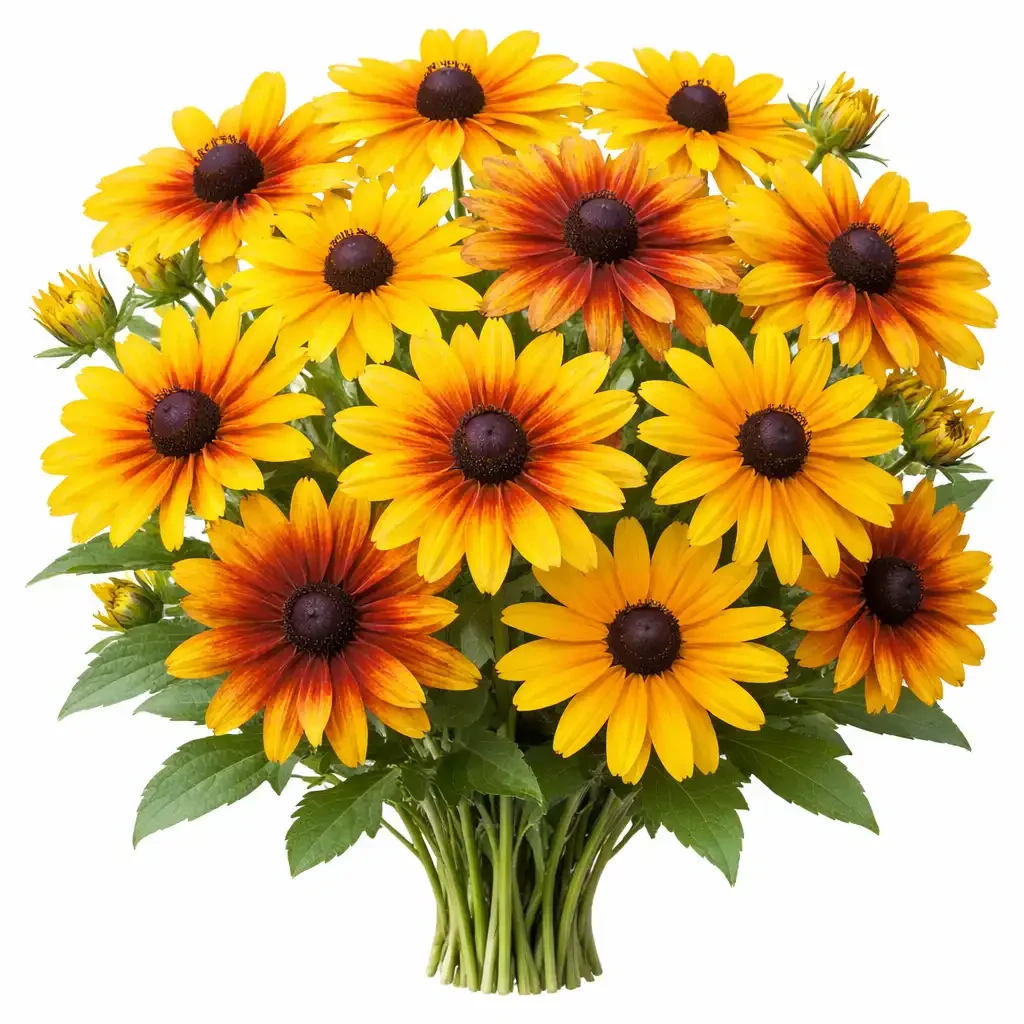
Black-eyed Susan is one of the most cheerful, most ecologically important, and most reliably commercial native cut flowers available to homestead growers. Its vivid golden-yellow to orange-yellow ray petals surrounding the distinctive dark brown to black central cone create the quintessential warm-season wildflower bloom that customers at farmers markets reach for with immediate, instinctive enthusiasm. There is something genuinely emotionally resonant about Black-eyed Susan that transcends simple flower preference, a deep familiarity and warmth that connects customers to childhood meadows, roadside summer color, and the uncomplicated joy of the most abundant months of the year. At the farmers market from midsummer through fall, a bucket of freshly cut Black-eyed Susans glowing with golden summer warmth is one of the most reliably purchased and emotionally compelling flower displays a homestead grower can offer.
For homestead growers, Black-eyed Susan represents one of the most strategically sound and ecologically rewarding perennial cut flower investments available. The species within the Rudbeckia genus span a remarkable range of commercial applications, from the annual and biennial Rudbeckia hirta varieties that provide prolific cut flower stem production in their first and second years to the reliable perennial Rudbeckia fulgida that returns year after year with expanding clumps and increasing stem production. All perform best in the lean, well-drained conditions that challenge more demanding crops, making them excellent choices for areas of the homestead with average or below-average soil. And as one of the most important native prairie pollinator plants available, a productive Black-eyed Susan planting provides ecological benefits that extend far beyond the commercial harvest.
Here is why Black-eyed Susan deserves a prominent spot on your homestead:
The universal emotional recognition and warmth that customers feel toward Black-eyed Susan creates the most reliable impulse purchasing available from any summer wildflower. Customers do not need to be convinced to buy Black-eyed Susans. The golden blooms create an immediate, instinctive, positive response that converts to sales with exceptional reliability.
It blooms from midsummer through fall at the most commercially active period of the annual cut flower calendar. The long blooming window of established Black-eyed Susan plantings covers the peak summer and fall market season when customers and wedding clients are most actively purchasing locally grown flowers.
It thrives in lean, well-drained conditions where more demanding crops struggle. As a native prairie plant, Black-eyed Susan is perfectly adapted to the lean-soil, full-sun conditions that characterize many homestead growing areas, requiring minimal ongoing input while providing maximum seasonal productivity.
The dried seed heads provide an additional botanical product for fall and winter markets. The distinctive, spiny dark seed cones of Black-eyed Susan dry beautifully and are a sought-after dried botanical product at craft markets and through florists who use them in dried and preserved floral designs.
It is one of the most important native pollinator plants available. The open, accessible blooms of Rudbeckia provide critical midsummer and fall nectar for bees, butterflies including Monarchs, and beneficial insects, making a productive planting an ecological asset of genuine significance.
Growing Conditions
Sunlight
Black-eyed Susan performs best in full sun. It needs at least 6 hours of direct sunlight per day for the strongest stems, most abundant flowering, and the most vivid golden color intensity. In partial shade stems become somewhat taller and leaner, colors slightly less saturated, and powdery mildew pressure increases. For cut flower production with the longest, strongest stems and the most vivid color that creates commercial value, full sun is always the preferred growing condition. Rudbeckia tolerates partial shade better than many other native prairie plants and can produce acceptable cut flower material with four to five hours of direct sun, but full sun gives the most productive and commercially valuable results.
Soil
Black-eyed Susan strongly prefers well-drained, average to poor fertility soil. As a native prairie plant it is adapted to lean conditions and performs better in average to lean soil than in rich, heavily amended garden beds. Overly fertile soil promotes lush, floppy foliage growth at the expense of the upright stem production and flowering that create commercial value. Good drainage is more important than fertility. Soil pH between 6.0 and 7.5 is suitable. This lean-soil preference makes Black-eyed Susan an excellent choice for areas of the homestead with average or below-average soil conditions that would limit the productivity of more demanding cut flower crops.
Water
Black-eyed Susan is moderately drought tolerant once established and performs better in average to somewhat dry conditions than in consistently moist soil. It needs regular watering during its first growing season to establish a strong root system but after that requires only occasional deep watering during extended dry periods. Overwatering and consistently wet soil increase the risk of the crown rot and powdery mildew that are its most common disease problems. In most average summer rainfall climates, established perennial Rudbeckia fulgida needs essentially no supplemental irrigation.
Temperature
Black-eyed Susan is cold hardy and adaptable, performing reliably across a very wide range of climates within USDA zones 3 to 9. Annual and biennial Rudbeckia hirta varieties thrive in the warm to hot summer conditions of most continental climates. Perennial Rudbeckia fulgida is one of the most cold-hardy and heat-tolerant perennial cut flowers available, performing reliably from the coldest cold winter climates to the warmest end of its range. The combination of cold hardiness and heat tolerance makes Black-eyed Susan one of the most universally reliable summer perennial cut flower crops available across every continental climate type.
Planting Guide
Black-eyed Susan can be started from seed, planted from nursery transplants, or established from divisions. The best approach depends on which species and variety type is being grown.
Step 1: For annual and biennial Rudbeckia hirta varieties that provide the most prolific first-year cut flower production, start seeds indoors 6 to 8 weeks before the last frost date. Rudbeckia seeds germinate readily in warm conditions at 65 to 70 degrees Fahrenheit. Germination typically occurs within 7 to 14 days.
Step 2: For perennial Rudbeckia fulgida, nursery transplants are the fastest path to productive plants. Direct sowing or transplanting from smaller seedlings also works but takes two seasons to reach full productive maturity.
Step 3: Choose a location with full sun and well-drained, average to lean soil. Do not plant in recently amended, richly fertilized beds as this promotes the floppy, vegetative growth that reduces cut flower quality.
Step 4: After the last frost date when conditions are reliably frost-free, transplant outdoors to the prepared location. Space plants 12 to 18 inches apart for cut flower production. Proper spacing provides adequate air circulation and reduces powdery mildew pressure.
Step 5: Direct sowing outdoors is also effective for Rudbeckia hirta varieties. Sow directly after the last frost date in well-prepared soil. Direct-sown plants typically bloom approximately 8 to 10 weeks from sowing.
Step 6: For established perennial plantings, divide clumps every two to three years in early spring to maintain vigor and expand the productive planting area.
Seed vs Transplant: Both approaches work well. Annual types from seed provide the most economical and prolific first-year production. Perennial types from nursery transplants give the fastest path to permanent productive clumps.
Spacing: 12 to 18 inches apart for cut flower production.
Planting Season: After last frost in most climates. Fall planting works well for perennial types in mild climates.
Maintenance
Deadheading and Harvesting
Regular harvesting of all stems that reach the correct market stage is the most important maintenance practice for maximizing Black-eyed Susan productivity. For annual Rudbeckia hirta types, regular harvesting encourages the development of new lateral stems continuously throughout the season. For perennial Rudbeckia fulgida, deadheading spent blooms that are not being harvested extends the productive season. Allow a proportion of late-season blooms to develop into seed heads for the dried botanical market and for natural seed head dispersal that helps the planting self-renew.
Dividing Perennial Types
Divide established perennial Rudbeckia fulgida clumps every two to three years in early spring when new growth is just emerging. Regular division maintains plant vigor, prevents center die-out that develops in older clumps, and provides free new plants to expand the productive planting area. Each divided section should have several healthy crowns with good root systems. Discard the woody central portions of older clumps and replant only the vigorous outer sections at appropriate spacing.
Fertilizing
Black-eyed Susan does not need fertilizing in average soil. A light application of balanced fertilizer at planting is sufficient even in poor soils. Avoid high-nitrogen fertilizers which promote lush foliage at the expense of the upright, well-branched stem production and flowering that create commercial value.
Pest Control
Black-eyed Susan is largely pest resistant. Aphids can occasionally appear on young growth but are usually managed naturally by beneficial insects. The open blooms attract extraordinary numbers of beneficial insects that naturally control most pest populations around productive Rudbeckia plantings.
Disease Prevention
Powdery mildew is the most common disease problem with Black-eyed Susan, particularly in conditions of poor air circulation, warm days, and cool nights in late summer. Choose mildew-resistant varieties, space plants properly at 12 to 18 inches for good air circulation, avoid overhead watering, and remove affected foliage promptly. Powdery mildew rarely significantly affects flower quality but can reduce the visual appeal of the planting.
Harvesting
When to Harvest
Harvest Black-eyed Susan stems when the ray petals have fully extended from the central cone and are showing their most vivid golden-yellow color. The central cone should be fully formed and firm. Unlike some flowers that are harvested in bud, Black-eyed Susan has the best vase life when harvested at or near full bloom. The ray petals should be fully reflexed and flat rather than still partially furled around the cone. Harvest in the early morning when stems are fully hydrated and temperatures are cool.
How to Cut
Use clean, sharp scissors or pruners. Cut stems as long as possible by cutting low on the plant near a lateral shoot, ideally 16 to 24 inches. Cut just above a lateral shoot or set of leaves to encourage new stem production below the cut. Remove all foliage from the lower half of the stem immediately after cutting. Place stems immediately into a bucket of cool water with a floral preservative.
Conditioning
After cutting, place stems in deep cool water in a cool, dark location for several hours or overnight before sale or arrangement. Black-eyed Susan conditions readily and holds up well in arrangements and at market displays when properly hydrated.
Harvesting Seed Heads for Drying
Allow selected late-season blooms to develop fully into the distinctive dark, spiny seed cones. Harvest when the cone has fully matured and hardened but before the seeds begin to disperse. Cut stems at the base and hang upside down in a warm, dry, well-ventilated location to complete drying. The dark seed cones retain their distinctive form for years and are a sought-after dried botanical product at fall and winter craft markets.
How Often to Harvest
During peak bloom from midsummer through early fall, harvest every two to three days as new stems reach the correct stage. For annual Rudbeckia hirta types, regular cutting is essential for stimulating continued new stem production. For perennial Rudbeckia fulgida, established clumps produce stems in flushes that require frequent harvesting during the main bloom periods.
Vase Life
Black-eyed Susan typically lasts 7 to 10 days as a fresh cut flower with proper conditioning and care. Strip all foliage below the waterline, recut stems at an angle, and place in fresh water with a floral preservative. Change water every two to three days to maximize longevity.
Uses on a Homestead
Cut Flower Use
Black-eyed Susan is grown primarily as a warm-toned focal and accent flower in mixed summer and fall bouquets. Its vivid golden-yellow ray petals and prominent dark central cone add an immediately cheerful, naturalistic quality to arrangements that captures the warmth and abundance of the late summer and fall seasons. It pairs beautifully with Echinacea, Liatris, ornamental grasses, dahlias, zinnias, and other summer and fall cut flowers in naturalistic mixed bouquets that consistently sell well throughout the long summer and fall market season.
Dried Seed Heads
The distinctive dark seed cones of Black-eyed Susan are among the most recognizable and sought-after dried botanical products available from any native perennial. They sell consistently well at fall and winter craft markets, through online platforms, and to florists who use them in dried and preserved designs. Their distinctive form, interesting texture, and long shelf life make them ideal products for the botanical craft market throughout the fall and winter selling season.
Wedding and Event Flowers
Black-eyed Susan is a sought-after specialty flower for wildflower, garden-style, and naturalistic wedding designs. Its warm golden color and genuine native plant character add an authentically seasonal and regional quality to late summer and fall wedding arrangements that sophisticated clients and florists specifically seek when creating designs connected to the natural landscape of their region.
Pollinator Garden Experience
A productive Black-eyed Susan planting in full midsummer bloom is one of the most ecologically rich and visually spectacular pollinator garden displays available to any homestead. Monarchs, swallowtails, bumblebees, native bees, goldfinches, and beneficial insects visiting a mass planting create a living display that generates powerful social media content, attracts farm visitors, and establishes the homestead's identity as an ecologically responsible and nature-connected operation.
Can You Make Money With Black-eyed Susan
Yes, Black-eyed Susan is a reliably profitable native perennial cut flower crop for homestead operations. The combination of universal emotional recognition and purchasing enthusiasm, lean-soil adaptability, near-zero ongoing input costs, extended summer and fall blooming, and the additional dried seed head botanical market creates a sound commercial foundation across multiple income channels.
Universal emotional recognition drives reliable impulse purchasing. The instinctive positive response that virtually every customer has to fresh Black-eyed Susans at a summer farmers market creates one of the most reliable impulse purchasing dynamics available from any native wildflower cut flower. Customers do not need persuading.
Permanent perennial with improving returns. Established Rudbeckia fulgida returns year after year with minimal care, forming expanding clumps that produce more harvestable stems each season. The return on investment improves every year as established clumps mature.
Near-zero ongoing input costs maximize financial return. Black-eyed Susan needs no fertilizing, minimal watering once established, and has virtually no pest or disease management requirements in appropriate growing conditions. The financial return per established plant per year is excellent given the near-absence of ongoing production costs.
Strong dual market across fresh cut flowers and dried botanical products. The same productive planting provides fresh cut flower stems for the summer and fall market and dried seed head botanical products for the fall and winter craft market, providing year-round income from a single permanent planting.
Farmers Market: Fresh Black-eyed Susan bundles sell for 6 to 10 dollars per bunch depending on stem count and quality. Mixed summer bouquets featuring Black-eyed Susan as a key component consistently sell strongly throughout the long summer and fall season.
Florists and Wedding Designers: Black-eyed Susan is in consistent demand from florists working with naturalistic, garden-style, and wildflower design aesthetics. Local supply from small farms is valued for the genuine native plant character that imported commercial alternatives cannot provide.
Dried Seed Head Market: Dried Black-eyed Susan seed head bundles sell for 6 to 12 dollars per bunch at fall and winter craft markets. Their distinctive native plant character and long shelf life make them consistently popular botanical craft products.
CSA Flower Subscriptions: Black-eyed Susan is one of the most reliably popular and emotionally resonant additions to summer and fall flower subscription boxes. Its universal recognition and warm golden color consistently generate subscriber enthusiasm throughout its long blooming season.
Companion Plants
Black-eyed Susan grows beautifully alongside other native prairie perennials and summer cut flowers with similar growing requirements and complementary bloom times.
Echinacea: Both are native North American prairie perennials that bloom at overlapping times in midsummer, share similar lean-soil preferences, and create beautiful naturalistic combinations in mixed bouquets and cutting garden beds.
Liatris: Both are native perennials that bloom at overlapping times in midsummer through fall. The tall purple spikes of Liatris provide beautiful vertical contrast to the round, horizontal form of Black-eyed Susan blooms in mixed naturalistic arrangements.
Heliopsis: Both are golden-yellow daisy-family plants with similar lean-soil preferences that bloom at overlapping times and complement each other in warm-toned wildflower bouquets.
Monarda: Both are native perennials that bloom at similar times and create beautiful pollinator-rich combinations in the cutting garden and in naturalistic mixed bouquets.
Ornamental Grasses: Native grasses pair beautifully with Black-eyed Susan in naturalistic arrangements and in the landscape, adding movement and a prairie quality that complements the bold, stationary form of Rudbeckia blooms.
Agastache: Both are drought-tolerant summer perennials that attract similar pollinator communities and complement each other in naturalistic mixed arrangements.
Common Problems
Powdery Mildew
The most common disease problem with Black-eyed Susan, particularly in conditions of poor air circulation, warm days, and cool nights in late summer and early fall. Choose mildew-resistant varieties such as Rudbeckia fulgida var. sullivantii Goldsturm and its selections, space plants properly at 12 to 18 inches for good air circulation, avoid overhead watering, and remove affected foliage promptly. Powdery mildew typically arrives late in the season after the main bloom period and rarely significantly affects cut flower production.
Floppy Stems
Can occur in overly rich or recently fertilized soil or in insufficient sun. Grow in average to lean soil with full sun and avoid fertilizing. Horizontal support netting can help manage floppy stems in exposed locations but the most effective solution is always choosing appropriately lean growing conditions.
Center Die-Out
Common in perennial Rudbeckia fulgida clumps after three to four years as the original planting point becomes woody and unproductive. Divide every two to three years in early spring, discarding the woody central portion and replanting only the vigorous outer sections at appropriate spacing.
Short Vase Life from Incorrect Harvesting
Can occur when stems are harvested before the ray petals have fully extended from the central cone. Always harvest at full bloom when petals are fully extended and flat, not when they are still partially furled around the cone. Proper overnight conditioning in deep cool water before sale also significantly improves vase life.
Annual Types Failing to Rebloom
Annual Rudbeckia hirta types naturally complete their life cycle after flowering and setting seed. Allowing too many flowers to go to seed signals the plant to direct energy toward seed production rather than continued stem production. Regular deadheading and harvesting prevents premature seed set and maintains productive blooming throughout the season.
Varieties to Consider
Perennial Types (Rudbeckia fulgida)
Rudbeckia fulgida var. sullivantii Goldsturm: The most widely grown perennial Black-eyed Susan for both landscape and cut flower production. Vivid golden-yellow ray petals surrounding a prominent dark central cone on strong stems reaching 24 to 30 inches. Outstanding mildew resistance and exceptional reliability. Hardy in USDA zones 3 to 9. The standard commercial variety for homestead perennial cut flower production.
Rudbeckia fulgida Little Goldstar: A compact selection of Rudbeckia fulgida with vivid golden blooms on strong stems of 18 to 24 inches. Excellent mildew resistance and very reliable production. Useful for growers who want a more compact plant while maintaining full bloom quality.
Rudbeckia fulgida American Gold Rush: A newer selection with exceptional mildew resistance and outstanding vigor. Very reliable production and strong stems. One of the best perennial varieties for commercial cut flower production where disease resistance is a priority.
Annual and Biennial Types (Rudbeckia hirta)
Rudbeckia hirta Indian Summer: A widely grown annual type with very large, vivid golden blooms of 6 to 9 inches across on strong stems reaching 24 to 36 inches. Award of Garden Merit recipient. Very popular at farmers markets for the exceptional size of the golden blooms. Excellent cut flower performance.
Rudbeckia hirta Toto Series: A compact annual series reaching 12 to 16 inches with abundant vivid golden blooms. Useful for smaller-scale mixed market bouquet production where compact plant size is an advantage.
Rudbeckia hirta Prairie Sun: A distinctive variety with golden-yellow ray petals surrounding an unusual green central disk rather than the standard dark brown cone. Very popular with florists for its unusual, fresh appearance. Commands premium prices for the distinctive green center.
Rudbeckia hirta Cherry Brandy: An unusual variety with deep mahogany-red to burgundy ray petals surrounding a dark central cone. Very popular at farmers markets for its unusual, rich color that is quite different from the standard golden-yellow palette. Commands premium prices for its distinctive and unusual coloring.
Rudbeckia hirta Sahara: A series in warm, unusual tones including bronze, terracotta, mahogany, and bicolors that are quite different from the standard golden-yellow color. Very popular with florists working with autumn and earth-toned palettes.
Cut-Flower Specific Varieties
Rudbeckia hirta Denver Daisy: A vivid golden-yellow variety with a distinctive mahogany zone at the base of each ray petal creating a beautiful two-toned appearance. Very popular at farmers markets for the distinctive bicolor pattern. Strong stems and reliable production.
Rudbeckia hirta Cappuccino: Warm mahogany to bronze-orange blooms with a dark center. Very popular with florists and customers for its warm, coffee-toned color that complements autumn color palettes beautifully.
Final Thoughts
Black-eyed Susan is one of the most emotionally resonant, most ecologically valuable, and most commercially reliable native cut flower crops available to homestead growers. Its combination of universal customer recognition and purchasing enthusiasm, extraordinary climatic adaptability, lean-soil preference that makes it productive in areas challenging for other crops, the extended midsummer through fall blooming window that covers the most commercially active period of the annual cut flower calendar, and the genuine ecological significance of supporting one of North America's most important native prairie pollinator plants creates a permanent planting with commercial and ecological value that compounds every season. Establish perennial Rudbeckia fulgida clumps for the permanent, low-maintenance foundation of the planting and supplement with annual Rudbeckia hirta varieties for prolific first-season stem volume and color range diversity. Grow in lean, well-drained soil with full sun, divide perennial clumps every two to three years to maintain vigor, harvest at full bloom with thorough overnight conditioning, allow late-season blooms to develop into the distinctive dark seed cones for the dried botanical market, and Black-eyed Susan will reward your homestead with some of the most cheerful, most commercially reliable, and most ecologically enriching flowers available from any summer and fall native perennial planting.
FAQ
What is the difference between annual, biennial, and perennial Black-eyed Susan varieties? The Rudbeckia genus includes species with different life cycle strategies that have distinct commercial characteristics. Rudbeckia hirta, the most commonly grown species for cut flower use, includes annual and biennial types that germinate and bloom in their first year or second year respectively and then complete their life cycle. Annual Rudbeckia hirta varieties, including most of the specialty cut flower cultivars such as Indian Summer, Prairie Sun, and Cherry Brandy, provide the most prolific and diverse first-season production and the widest color range. Rudbeckia fulgida is a true perennial that returns year after year from established root systems, expanding into productive clumps that generate increasing quantities of stems each season. For a complete homestead production program, growing both annual Rudbeckia hirta varieties for immediate prolific production and diverse colors and perennial Rudbeckia fulgida for permanent, ever-expanding, low-maintenance cut flower production provides the most comprehensive commercial coverage across both the short and long term.
Can Black-eyed Susan be grown in hot, humid climates? Yes, Black-eyed Susan performs well in hot, humid climates within its hardiness range of USDA zones 3 to 9. In hot, humid climates powdery mildew is the primary management challenge. Choosing mildew-resistant varieties such as Rudbeckia fulgida Goldsturm, American Gold Rush, and Little Goldstar, spacing plants at 12 to 18 inches for good air circulation, and avoiding overhead watering are the most effective preventive measures. Even in climates with high summer humidity, well-managed Black-eyed Susan plantings typically perform well enough for profitable cut flower production with appropriate variety selection and cultural management.
How do I dry Black-eyed Susan seed heads for the botanical market? Allow selected late-season blooms to develop fully into mature seed cones. The ray petals will fall naturally and the cone will harden and darken to its characteristic dark brown to near-black color. Harvest when the cone is fully mature and firm but before seeds begin to disperse, which typically occurs in September through October in most climates. Cut stems at the base with as much length as possible. Gather into loose bundles and hang upside down in a warm, dry, well-ventilated location away from direct sunlight. Drying takes approximately two to three weeks. The distinctive dark seed cones retain their form and color for years in appropriate dry storage conditions. Sell in bundles of five to ten stems at fall and winter craft markets, or incorporate into dried botanical wreaths and arrangements.
Is Black-eyed Susan the same as Rudbeckia? Yes, Black-eyed Susan is the common name for plants in the Rudbeckia genus. The name is used most commonly for Rudbeckia hirta and Rudbeckia fulgida, the two most widely grown species for garden and cut flower use, but technically applies to any plant in the Rudbeckia genus. In the cut flower trade the plants are sold and marketed under both the common name Black-eyed Susan and the botanical name Rudbeckia. For homestead growers the most important distinction is between the different species within the genus, particularly between the annual or biennial Rudbeckia hirta varieties and the perennial Rudbeckia fulgida varieties, as these have fundamentally different commercial characteristics and production approaches.