
Broom (Cytisus)
Quick Overview
Common Name: Broom, Scotch Broom, Common Broom, Spanish Broom
Scientific Name: Cytisus scoparius, Cytisus x praecox, Genista spp.
Plant Type: Perennial Shrub
USDA Zones: 5 to 9 depending on species
Sun Requirement: Full Sun
Soil Type: Well-drained, sandy, average to poor fertility
Bloom Season: Spring through Early Summer
Height: 3 to 10 feet depending on species and variety
Pollinator Friendly: Yes
Edible: No, toxic if ingested
Important Note: Cytisus scoparius is invasive in many regions of the Pacific Northwest, California, and parts of the eastern United States. Check local invasive species lists before planting and consider non-invasive alternatives such as Cytisus x praecox varieties where Scotch Broom is restricted.
Why Grow Broom on a Homestead
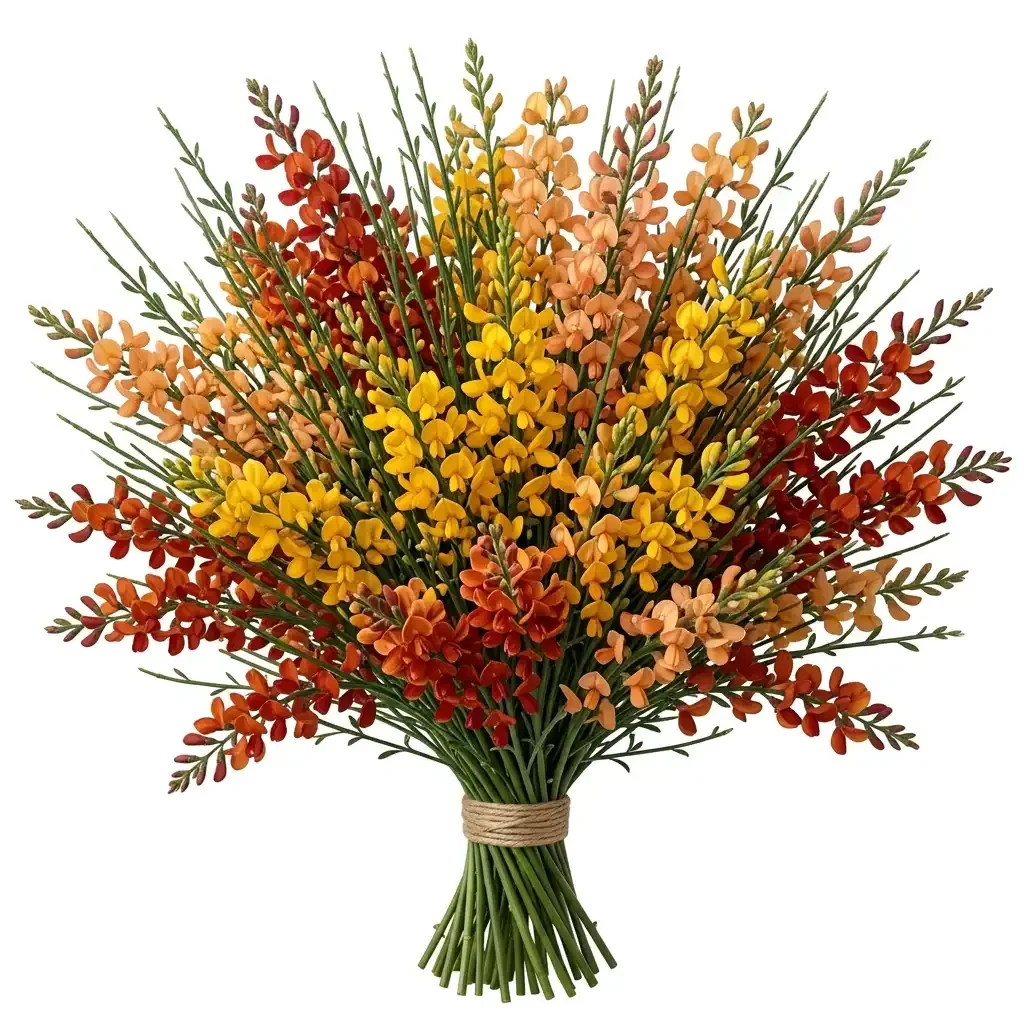
Broom is one of the most visually spectacular and commercially underutilized spring cut flower and cut foliage shrubs available to homestead growers in appropriate climates. Its long, arching, bright green stems densely clothed in small, vivid pea-family flowers in shades of pure yellow, gold, cream, white, deep rose-red, bicolor, and the most intense combinations create a sweeping, fountain-like display of spring color that florists and wedding designers find immediately compelling and genuinely distinctive from all other spring cut materials. The long, whippy stems laden with flowers have an architectural grace and a generous, cascading quality that is genuinely irreplaceable in large spring arrangements, wedding arches, and ceremony installations where their sweeping form and abundant small flowers create the kind of loose, romantic, garden-at-its-peak quality that the most celebrated contemporary floral designers consistently seek.
For homestead growers in appropriate climates, Broom represents one of the most strategically valuable permanent spring cut shrub investments available. Once established, Broom shrubs produce an extraordinary abundance of harvestable stems each spring with minimal ongoing management. The flowering window, while relatively brief at two to four weeks per variety, occurs precisely during the peak spring wedding season when demand for distinctive, locally grown spring cut materials is highest. And the genuine rarity of Broom as a dedicated cut flower crop at most homestead operations, combined with its genuinely irreplaceable sweeping form and spring freshness, creates a market position with essentially no local competition and strong demand from the florists and wedding designers who know it and seek it out each spring.
Here is why Broom deserves consideration for your homestead in appropriate non-invasive climates:
It provides genuinely irreplaceable sweeping, arching form in the spring cut flower market. The long, fountain-like, flower-laden stems of Broom create a structural and aesthetic quality in large spring arrangements and wedding installations that no other commonly grown spring shrub can replicate.
It blooms during the peak spring wedding season precisely when demand for distinctive locally grown spring materials is highest. The April through May blooming window of most Broom species aligns precisely with the peak spring wedding and event season, creating natural alignment with the most commercially valuable market timing.
Once established it requires essentially no ongoing input. Broom is drought tolerant, requires no fertilizing in appropriate lean soil, and has virtually no pest or disease management requirements. The ongoing production cost of an established Broom planting is essentially just the time required to harvest and market the stems.
It is a permanent shrub that improves in productivity with age. Well-established Broom shrubs produce increasing quantities of long, arching flowering stems as they mature, delivering improving returns from a fixed initial investment.
Growing Conditions
Sunlight
Broom requires full sun without compromise. It needs at least 6 to 8 hours of direct sunlight per day and actually performs better with maximum sun exposure throughout the day. In partial shade growth becomes open and leggy, flower production decreases significantly, and the dense, arching stem structure that creates its commercial value becomes less well-developed. Full sun is the single most important growing requirement for productive Broom cut flower production.
Soil
Broom strongly prefers well-drained, sandy or gravelly soil with average to poor fertility. It is adapted to the lean, dry, acidic to neutral conditions of its native European and Mediterranean habitats and performs significantly better in lean conditions than in rich, heavily amended garden beds. Overly fertile soil produces excessive vegetative growth, reduces flowering density, and can shorten the productive life of established shrubs. Excellent drainage is the most critical soil requirement. Broom is very susceptible to root rot in waterlogged or poorly drained conditions. Soil pH between 5.5 and 7.0 is suitable with slightly acidic conditions preferred by most Cytisus species.
Water
Broom is extremely drought tolerant once established and actually performs better in dry conditions than in consistently moist soil. It requires regular watering during its first growing season to establish a strong root system but after that needs only occasional deep watering during extended dry periods. Overwatering and consistently moist soil are more likely to cause problems than drought in established plantings, increasing the risk of root rot and reducing the lean-condition performance that produces the most abundant flowering.
Temperature
Temperature requirements vary between Broom species. Cytisus scoparius is reliably hardy in USDA zones 5 to 8. Cytisus x praecox varieties are similarly hardy. Genista species vary in hardiness with some tolerating only mild winter climates. In climates at the cold edge of hardiness, planting in sheltered, south-facing positions and choosing the hardiest varieties within the intended species provides the best winter survival rates. All Broom species perform their best spring blooming after a cold winter that provides adequate chilling.
Planting Guide
Broom is best established from nursery container plants. It has a sensitive taproot that makes transplanting difficult after establishment, making careful initial site selection essential.
Step 1: Choose a planting location with full sun and excellent drainage. This is the single most critical planting decision. Any location with a tendency toward waterlogging or where soil remains consistently moist is entirely unsuitable for Broom without significant drainage improvement. South-facing slopes, raised beds, or any location with naturally fast-draining soil is ideal.
Step 2: Prepare the planting area by loosening the soil. In most average to lean soils no amendment is needed. In very heavy clay soils incorporating significant coarse sand and fine gravel to improve drainage is beneficial before planting. Do not add compost or fertilizer.
Step 3: Plant container plants at the same depth as they were growing in their containers. Do not plant too deeply as this increases root rot risk. Water thoroughly after planting.
Step 4: Space plants 4 to 6 feet apart for cut flower production depending on the mature size of the specific variety. This spacing gives adequate room for the naturally sweeping, arching form to develop fully while allowing efficient access for harvesting.
Step 5: Water regularly throughout the first growing season to support root establishment. After the first season, reduce irrigation to the occasional deep watering needed by this drought-tolerant shrub.
Step 6: Note that Broom does not transplant well once established due to its sensitive root system. Choose the permanent planting location carefully as established plants are best left undisturbed.
Seed vs Transplant: Nursery container plants are strongly recommended. Growing from seed is slow and produces variable quality. The taproot sensitivity that makes transplanting difficult after establishment makes purchasing good-quality named variety container plants the most reliable approach.
Spacing: 4 to 6 feet apart for cut flower shrub production.
Planting Season: Spring or fall in most climates. Avoid planting in the heat of midsummer.
Maintenance
Pruning
Proper pruning is the single most important ongoing maintenance practice for productive Broom cut flower production and for maintaining the health and longevity of established shrubs. Broom blooms on wood produced the previous season and must be pruned immediately after flowering each spring to maintain productive, well-branched shrubs.
Immediately after the spring flowering period ends, cut back all flowering stems by approximately two thirds of their length, cutting back to healthy growth lower on the stem but never cutting into completely bare, leafless old wood. Broom does not regenerate reliably from old bare wood and cutting back into leafless stems can kill those stems permanently.
This annual post-bloom pruning stimulates the vigorous production of new stems throughout summer and fall that will carry next year's flowers, maintains the shrubs at a manageable and productive height, and prevents the progressive woodiness and bare base that develops in unpruned Broom shrubs.
Fertilizing
Broom does not need fertilizing and performs significantly better in lean conditions than in fertilized beds. Never apply high-nitrogen fertilizers to Broom as this promotes excessive vegetative growth at the expense of flowering and can shorten the productive life of established shrubs.
Pest Control
Broom is largely pest resistant. Broom gall mite can cause unusual swellings or distortion on stems in some regions. Remove and destroy affected stems. In most well-managed plantings pest problems are rare and insignificant.
Harvesting
When to Harvest
Harvest Broom stems for cut flower use when approximately one quarter to one third of the individual flowers on each stem are open and the remaining buds are showing their characteristic color but still closed. At this stage the remaining buds continue to open progressively after cutting, giving the stem a long and evolving display in the vase. Stems harvested when too few buds are open may not develop fully after cutting. Stems harvested when most flowers are already open have significantly shorter vase life. Harvest in the early morning when stems are fully hydrated.
How to Cut
Use clean, sharp pruners. Cut stems at the desired length, typically 24 to 48 inches for the most commercially valuable long arching stems. Cut at a point where the stem has adequate supporting side branches to continue producing new growth from the cut point. Remove any spent or damaged sections of stem below the cut. Place stems immediately into a bucket of cool water.
Conditioning
After cutting, place stems in deep cool water in a cool, dark location for several hours or overnight before sale or arrangement. Broom conditions readily and the small, delicate flowers hold their quality well through the conditioning period.
How Often to Harvest
The blooming window for each Broom variety is relatively brief, typically two to four weeks. During this period harvest stems every two to three days as new stems reach the correct stage. The compressed blooming window creates an intensive harvest period that requires planning and preparation to capture maximum commercial value. Having florist and wedding designer relationships established well before the bloom period ensures that harvested stems reach premium buyers promptly.
Vase Life
Broom typically lasts 7 to 10 days as a fresh cut flower with proper conditioning. Strip any foliage from the lower portion of the stem before placing in water, recut stems at an angle, and place in fresh water with a floral preservative. Change water every two to three days to maximize longevity.
Uses on a Homestead
Cut Flower Use
Broom is grown primarily as a distinctive spring cut stem providing sweeping, arching, flower-laden branches for mixed spring arrangements and large-scale floral installations. Its long, graceful stems make it particularly valuable in large mixed spring bouquets alongside tulips, ranunculus, sweet peas, peonies, and other spring flowers where the sweeping Broom stems provide structural framework and abundant small-scale flower texture. Its generous, cascading form is particularly effective in large pedestal arrangements, wedding ceremony installations, and arch decorations where its natural sweeping character creates an instantly garden-inspired quality.
Wedding and Event Flowers
Broom is particularly sought-after for spring weddings and events where its sweeping, flower-laden stems create the most romantic and garden-at-its-peak quality available from any spring cut shrub. Florists and wedding designers working with large-scale spring installations, ceremony arches, and tall pedestal arrangements specifically seek out Broom for the distinctive structural grace and abundant small-flower texture that no other spring cut material provides.
Farmers Market
Fresh Broom stems at a late April or May farmers market create an immediately distinctive and striking display that stands out from the more familiar spring flowers. Their long, arching, flower-laden stems create a generous, abundant visual impression that customers find immediately beautiful and compelling. The genuine rarity of fresh Broom as a cut material at most farmers markets supports premium pricing.
Can You Make Money With Broom
Yes, Broom can generate meaningful cut flower income for homestead growers in appropriate non-invasive climates, particularly through direct relationships with wedding florists and event designers who specifically seek this distinctive spring material.
Peak spring wedding season timing maximizes commercial value. The late April through May blooming window aligns precisely with the peak spring wedding market, creating natural alignment with the most commercially valuable period of the spring cut flower calendar.
Genuine market rarity creates uncontested premium positioning. Fresh Broom as a dedicated cut flower crop is genuinely rare at most farmers markets and in most local florist supply chains. Local availability creates an essentially uncontested market position.
Permanent shrub with improving returns. Once established, Broom shrubs produce increasing quantities of harvestable stems as they mature, delivering improving returns from a fixed initial investment.
Near-zero ongoing input costs. Drought-tolerant, lean-soil-adapted Broom needs no fertilizing, minimal watering, and has essentially no pest or disease management requirements after establishment.
Farmers Market: Fresh Broom stem bundles sell for 8 to 15 dollars per bunch depending on stem length and bloom density during the brief spring season.
Florists and Wedding Designers: Broom is genuinely sought-after by spring wedding florists for large installations and ceremony work. Establishing relationships with local wedding florists before the spring blooming season ensures that the brief harvest window generates maximum commercial value.
Companion Plants
Broom grows well alongside other spring-blooming shrubs and cool season cut flowers with similar lean-soil preferences.
Lavender: Both prefer well-drained, lean soil and full sun. Lavender blooms after Broom and provides complementary aromatic stems for the late spring and summer market.
Rosemary: Both are Mediterranean-climate shrubs with similar lean-soil requirements that complement each other in the garden and provide complementary aromatic cut materials.
Tulips: Both bloom in spring at overlapping times and complement each other magnificently in mixed spring arrangements where Broom provides sweeping structural stems and tulips provide bold, upright focal color.
Iris: Both bloom in spring and complement each other beautifully in mixed seasonal arrangements.
Common Problems
Root Rot
The most serious disease threat to Broom. Caused by poorly drained or waterlogged soil. Prevention through excellent drainage and appropriate watering is the only effective management strategy. Never plant Broom in areas with poor drainage or where water pools after rain.
Failure to Rebloom After Incorrect Pruning
The most common management mistake with Broom. Cutting back into old, bare wood without foliage kills those stems and significantly reduces the following year's flowering. Always prune immediately after flowering, cutting back to healthy foliage-bearing growth but never into bare wood. Established shrubs that have been incorrectly pruned into bare wood may take two to three years to recover productive flowering capacity.
Invasive Behavior
Cytisus scoparius is invasive in many regions of the Pacific Northwest, California, and parts of the eastern United States where it escapes cultivation and displaces native plant communities. Always check current local invasive species regulations before planting any Broom species. In regions where Cytisus scoparius is invasive or restricted, choose non-invasive alternatives such as Cytisus x praecox varieties or selected Genista species that are not listed as invasive in your specific region. The responsibility to prevent invasive plant spread is both a legal obligation in many jurisdictions and an ethical obligation to the broader natural environment.
Short Productive Life in Poor Growing Conditions
Broom shrubs are relatively short-lived, typically twelve to fifteen years under good growing conditions. In unsuitable conditions including rich soil, excessive moisture, or inappropriate climate the productive life is significantly shorter. Choosing the correct growing conditions from the beginning and following the annual post-bloom pruning program that maintains productive, well-branched shrubs are the most important factors for maximizing the productive life of a Broom planting.
Varieties to Consider
Cytisus x praecox (Warminster Broom)
The most widely recommended Broom group for homestead cut flower production in most climates as the varieties in this group are generally considered less invasive than Cytisus scoparius while providing excellent cut flower quality. Always verify the invasive status of specific varieties in your region before planting.
Cytisus x praecox Allgold: A compact variety with long, arching stems densely covered in rich golden-yellow flowers. One of the most widely grown Cytisus x praecox varieties for garden and cut flower use. Hardy in USDA zones 6 to 9.
Cytisus x praecox Albus: A white-flowered form with the characteristic sweeping arching stems of the praecox group but with pure white blooms. Very popular with wedding florists for its clean white color and elegant form.
Cytisus x praecox Hollandia: A bicolor variety with cream and rose-pink flowers creating a distinctive soft, romantic two-toned effect. Very popular with florists and wedding designers for its unusual bicolor coloring.
Cytisus scoparius Varieties
These varieties should only be considered where Cytisus scoparius is not listed as invasive. Always check current local regulations before planting.
Cytisus scoparius Burkwoodii: Deep cerise-red and yellow bicolor blooms on arching stems. One of the most dramatically colored Broom varieties. Commands premium prices for its unusual rich color.
Cytisus scoparius Lena: Deep red and yellow bicolor flowers. Very popular for its intense, rich color combination.
Genista (Broom relatives)
Several Genista species provide Broom-like cut flower material and are generally considered less invasive than Cytisus scoparius in most North American regions, though local invasive status should always be verified.
Genista lydia (Dwarf Genista): A low-growing species with bright yellow flowers on arching stems reaching 24 to 36 inches. Useful for smaller-scale arrangements and as a groundcover companion planting.
Final Thoughts
Broom is one of the most architecturally beautiful and commercially distinctive spring cut shrubs available to homestead growers in appropriate non-invasive climates. Its sweeping, flower-laden arching stems provide a quality of loose, generous, spring abundance in arrangements and wedding installations that is genuinely irreplaceable and that florists and wedding designers who know it seek out with enthusiasm each spring season. The brief but intense annual bloom window requires advance market relationship development to capture maximum commercial value, and the critical responsibility to avoid planting invasive species requires careful local research before establishment. But for homestead growers in appropriate climates who make those preparations, Broom provides a permanent spring cut shrub planting with exceptional commercial potential, near-zero ongoing input costs, and a genuinely irreplaceable seasonal specialty that fills a gap in the spring cut flower market that no other commonly grown shrub can occupy. Always verify invasive status in your specific region, choose the non-invasive Cytisus x praecox varieties wherever possible, prune correctly immediately after blooming each year to maintain productive well-branched shrubs, and Broom will reward your homestead with some of the most sweeping, most architecturally beautiful, and most commercially distinctive spring cut stems available from any flowering shrub planting.
FAQ
Is Broom invasive and should I be concerned about planting it? This is the most important question to research before planting any Broom species. Cytisus scoparius, Common or Scotch Broom, is listed as invasive in many regions of the Pacific Northwest including Oregon and Washington, in California, and in parts of the eastern United States and Canada where it escapes cultivation and aggressively displaces native plant communities, outcompeting native vegetation and significantly altering habitat quality. In regions where it is listed as invasive, planting Cytisus scoparius may be illegal or strongly discouraged by environmental authorities. Always check the current invasive species list for your specific state, county, or municipality before planting any Broom species. Cytisus x praecox varieties are generally considered less invasive than Cytisus scoparius in most regions, though their local status should also be verified. The ethical and ecological responsibility to prevent invasive plant spread is a primary consideration that must take precedence over the commercial opportunity Broom represents in any region where it poses an invasive risk.
Why does my Broom shrub stop flowering after a few years? Reduced flowering in established Broom shrubs is almost always caused by one of two management failures: incorrect pruning that cuts back into old, bare wood without foliage from which Broom cannot regenerate, or failure to prune at all after blooming which causes the shrub to become increasingly woody and bare at the base. Broom blooms on stems produced the previous season and must be pruned immediately after flowering each spring, cutting back flowering stems by approximately two thirds but never cutting into leafless bare wood. This annual pruning stimulates vigorous new stem production each summer and fall that carries the following year's flowers. Shrubs that have never been pruned or that have been pruned incorrectly into bare wood may take two to three seasons of correct management to restore productive flowering.
Can Broom be grown in containers? Yes, Broom can be grown in large containers, which is an excellent option for growers who want to maintain flexibility in placement and avoid potential invasive spread concerns, and who want the option of moving plants to protected locations in climates at the cold edge of the hardiness range. Use large containers of at least 15 to 20 gallons with excellent drainage and a very well-drained, lean growing mix. Allow the growing medium to dry significantly between waterings. Container-grown Broom will be smaller and produce fewer stems than ground-planted specimens but can still generate commercially useful quantities of cut flower material during the spring blooming period.
What other spring shrubs provide similar cut flower value to Broom without invasive concerns? Several spring-blooming shrubs provide somewhat similar sweeping, flower-laden stems for cut flower use without the invasive concerns of Cytisus scoparius. Forsythia provides sweeping yellow stems in very early spring and is extensively used as a cut forcing shrub. Flowering Quince, Chaenomeles, provides beautifully colored stems in early spring that force well indoors. Spirea varieties provide graceful arching stems with small white or pink flowers slightly later in spring. Deutzia provides arching white flower-laden stems in late spring. None of these perfectly replicates the specific visual quality of Broom but each provides valuable spring cut shrub material with well-established non-invasive horticultural status in most North American regions.