
Calendula
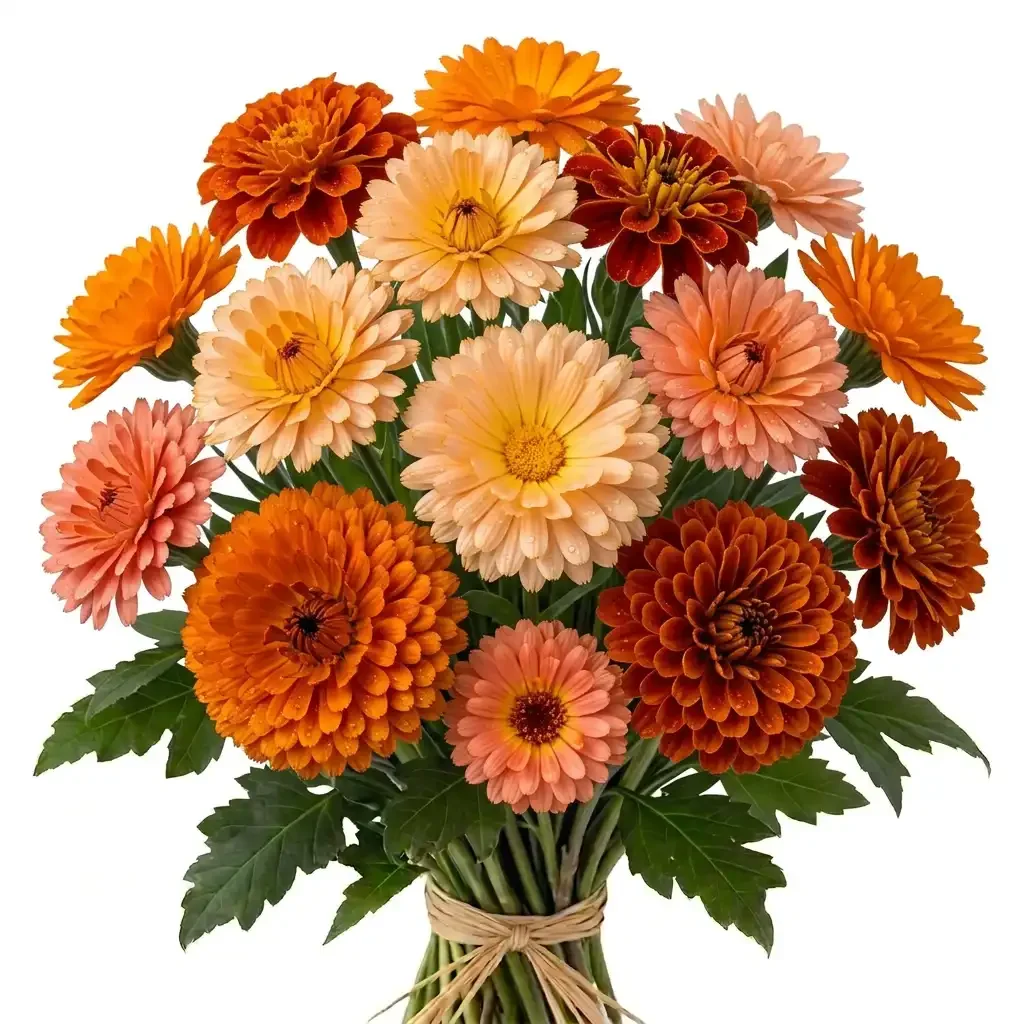
Quick Overview
Common Name: Calendula, Pot Marigold, Garden Marigold
Scientific Name: Calendula officinalis
Plant Type: Annual, self-seeding in mild climates
USDA Zones: 2 to 11
Sun Requirement: Full Sun to Partial Shade
Soil Type: Well-drained, average fertility
Bloom Season: Cool season, Spring through Early Summer, Fall in mild climates
Height: 12 to 24 inches depending on variety
Pollinator Friendly: Yes
Edible: Yes, petals widely used in cooking, herbal medicine, and skincare
Why Grow Calendula on a Homestead
Calendula is one of the most genuinely multi-dimensional and strategically valuable plants available to homestead growers. Its warm, cheerful blooms in shades of vivid orange, golden yellow, soft cream, apricot, and bicolor combinations create bold, colorful cut flower material during the cool seasons of spring and fall when warm-toned flowers are most commercially compelling. But what truly distinguishes Calendula from most other homestead cut flower crops is its extraordinary range of additional commercial applications that extend far beyond the cut flower market into herbal products, culinary uses, skincare formulations, and natural dyeing, creating a plant that earns its place on the homestead in ways that multiply with every additional income stream that a homestead operation chooses to develop.
For homestead growers, Calendula represents one of the most financially efficient and strategically versatile annual investments available. It direct sows readily in cool soil, requires minimal ongoing care after establishment, blooms prolifically over a generous cool season period, and provides harvestable petals for herbal and culinary use from the same flowers that appear in cut flower bouquets. The growing consumer market for locally grown, organically produced herbal ingredients including Calendula-infused oils, salves, and skincare products creates a high-margin value-added product opportunity that transforms the commercial potential of a Calendula planting from simple cut flower income into a genuinely comprehensive specialty botanical operation that can support a meaningful portion of a homestead's overall revenue.
Here is why Calendula deserves a prominent spot on your homestead:
It provides genuinely exceptional multi-channel commercial value across cut flowers, edible petals, herbal products, and culinary uses. No other commonly grown homestead cut flower provides the same breadth of legitimate, well-documented, and commercially viable additional uses that Calendula delivers alongside its cut flower income.
It blooms during the cool season gap when warm-toned flowers are most commercially compelling. Calendula blooms in spring and fall when warm orange and yellow flowers are most seasonally appropriate and when few other warm-toned cool season flowers are available, creating a natural premium market positioning.
It is extraordinarily economical to produce. Seeds are inexpensive, the plant needs minimal fertilizing and pest management, it direct sows readily without indoor starting infrastructure, and it self-seeds prolifically so that after the first season it returns without additional seed investment in mild climates.
The growing market for locally produced herbal and botanical products creates extraordinary value-added income potential. Calendula-infused oil is the foundation of the most widely used natural skincare ingredients available, and locally grown, organic Calendula commands premium prices from natural product producers, herbalists, and direct consumers that make the herbal product income stream potentially more valuable than the cut flower income.
The vivid orange of Calendula provides one of the most effective natural food and fiber dyes available from any garden plant, creating an additional specialty market connection.
Growing Conditions
Sunlight
Calendula performs best in full sun to partial shade. It needs at least 4 to 6 hours of direct sunlight per day for the strongest stems and most abundant flowering. In full sun it produces the most compact, well-branched plants with the most vivid, saturated flower colors. In partial shade stems become somewhat taller and more delicate but still produce commercially useful flowers. The slight shade tolerance of Calendula gives it more planting flexibility than many other cut flower crops.
Soil
Calendula prefers well-drained soil with average fertility. It performs well in average garden soil with a modest amount of compost incorporated before planting but does not need heavily amended or richly fertile beds. Good drainage is more important than high fertility. Overly rich soil can produce excessive vegetative growth at the expense of flower production. Soil pH between 5.5 and 7.0 is suitable. Calendula's modest soil requirements make it an excellent choice for areas of the homestead with average soil conditions.
Water
Water consistently throughout the growing season to maintain even soil moisture. Calendula needs regular moisture during active growth and blooming but does not tolerate waterlogged conditions. Water at the base of plants rather than overhead to reduce the risk of the fungal diseases, particularly powdery mildew, that can affect Calendula in humid conditions with wet foliage. Once established it is moderately drought tolerant but produces the most abundant and longest-lasting blooms with consistent moisture.
Temperature
Calendula is a cool season annual that performs best in moderate temperatures between 45 and 65 degrees Fahrenheit. It tolerates light frost and actually produces its most vivid colors and strongest stems in cool growing conditions. It declines and stops blooming reliably when temperatures consistently exceed 75 to 80 degrees Fahrenheit. In cold winter climates within USDA zones 3 to 7 it is grown as an early spring through early summer annual and again as a fall annual in climates with long enough growing seasons. In mild winter climates within USDA zones 8 to 11 it can be grown from fall through spring for an exceptionally long productive period.
Planting Guide
Calendula grows best from direct sowing. It germinates readily in cool soil and establishes most successfully when sown directly in the garden at the correct time.
Step 1: In cold winter climates direct sow Calendula as early as possible in spring, three to four weeks before the last frost date. Calendula tolerates light frost and germinates best in cool soil between 50 and 60 degrees Fahrenheit. It can also be direct sown in late summer or early fall for a fall bloom period.
Step 2: In mild winter climates within USDA zones 8 to 11, direct sow in fall for winter and spring blooming. Fall sowing takes advantage of the cool growing season and produces the longest possible bloom period before summer heat arrives.
Step 3: Choose a location with full sun and well-drained, average fertility soil. Calendula is flexible in its soil requirements and performs well in most average garden soils.
Step 4: Sow seeds directly into the ground, covering with approximately one quarter inch of soil. Seeds are large enough to handle individually and can be spaced deliberately at 6 to 9 inches apart, or broadcast sown and thinned to appropriate spacing after germination.
Step 5: Water gently after sowing and keep the soil surface lightly moist until germination, which typically occurs within 7 to 14 days in cool soil.
Step 6: For a continuous harvest throughout the cool season, succession sow every three to four weeks from early spring through mid spring in cold winter climates. In mild winter climates, a single fall sowing often provides blooms through the entire cool season without succession sowing.
Seed vs Transplant: Direct sowing is strongly preferred and is the most practical approach for large plantings. Calendula can also be started indoors 4 to 6 weeks before the last frost date if early transplants are desired.
Spacing: 6 to 9 inches apart for cut flower and petal production.
Planting Season: Early spring, three to four weeks before last frost in cold winter climates. Fall in mild winter climates within USDA zones 8 to 11.
Maintenance
Deadheading
Regular deadheading of spent blooms is essential for keeping Calendula productive throughout its cool season. Calendula that is allowed to set seed stops producing new stems quickly. Remove spent blooms by cutting the stem back to just above a lateral shoot or set of leaves. For herbal petal production, harvesting all open blooms every few days replaces deadheading and is the most efficient way to keep plants producing.
Pinching
Pinching the central growing tip when plants are 4 to 6 inches tall encourages branching and significantly increases the number of flowering stems per plant. This simple early pinch can double or triple the total stem and petal yield from a single plant over the course of the season and is strongly recommended for both cut flower and petal production.
Fertilizing
Calendula does not need heavy feeding. A light application of balanced fertilizer at planting is sufficient for most soils. In very poor soils a midseason application of balanced fertilizer supports continued production through the cool season. Avoid excessive nitrogen which promotes lush foliage at the expense of flower production.
Pest Control
Calendula is largely pest resistant. Aphids can occasionally appear on stems and developing buds but are usually managed naturally by the beneficial insects that Calendula attracts. Slugs and snails can damage young plants in wet conditions. Iron phosphate slug bait provides effective control. The slightly sticky, resinous foliage of Calendula deters many insect pests naturally.
Disease Prevention
Powdery mildew is the most common disease problem with Calendula, appearing as white powdery coating on foliage particularly in late spring or fall as temperatures fluctuate and humidity increases. Choose mildew-resistant varieties, space plants properly for good air circulation, and avoid overhead watering. Remove affected foliage promptly. In climates with consistently cool, humid conditions powdery mildew can become a significant problem late in the season.
Harvesting
When to Harvest Cut Flowers
Harvest Calendula cut flower stems when the bloom is fully open and showing its most vivid color with the central disk fully formed. Unlike many cut flowers that benefit from early harvesting in bud, Calendula has the best vase life when harvested at full bloom. The central disk should be fully formed and firm rather than soft or showing signs of seed development. Harvest in the early morning when stems are fully hydrated.
How to Cut
Use clean, sharp scissors or pruners. Cut stems as long as possible by cutting low on the plant near the base of the lateral shoot, ideally 12 to 18 inches. Cut just above a lateral shoot or set of leaves to encourage new stem production. Note that the slightly sticky, resinous stems and foliage of Calendula can stain clothing and may cause skin irritation in sensitive individuals. Wear gloves if you have sensitive skin. Place stems immediately into a bucket of cool water.
When to Harvest Petals for Herbal Use
For herbal petal production, harvest flower heads when they are fully open and at peak color. The petals should be fully extended and the flower head should feel firm and dry, not wet from dew or rain. Harvest in the morning after any dew has dried. This dry condition is important as wet petals develop mold during the drying process.
Drying Petals for Herbal Products
Spread harvested flower heads in a single layer on drying screens or paper-lined trays in a warm, dry, well-ventilated location away from direct sunlight. Alternatively, gently pull petals from the flower head before drying and spread in a thin layer on drying screens. Drying takes approximately one to two weeks depending on conditions. Properly dried petals should be completely crisp and paper-like, not leathery or bendable, before storage. Store in sealed glass jars in a cool, dark location.
Conditioning Cut Flowers
After cutting, place stems in deep cool water in a cool, dark location for several hours or overnight before sale or arrangement. Calendula conditions readily and holds up well in arrangements when properly conditioned.
How Often to Harvest
For both cut flower and petal production, harvest every two to three days as new blooms reach the correct stage. Regular harvesting is both the commercial goal and the most important maintenance practice for keeping plants continuously productive throughout the cool season.
Vase Life
Calendula typically lasts 5 to 7 days as a fresh cut flower with proper conditioning. Strip all foliage below the waterline, recut stems at an angle, and place in fresh water with a floral preservative. Change water every two to three days and keep arrangements in a cool location to maximize vase life.
Uses on a Homestead
Cut Flower Use
Calendula is grown primarily as a fresh cool season cut flower providing bold, warm-toned stems in the spring and fall markets when warm orange and yellow flowers are most seasonally compelling. Its cheerful, bold blooms pair beautifully with tulips, snapdragons, stock, ranunculus, and other cool season flowers in bright, warm-toned spring arrangements. In fall it pairs beautifully with chrysanthemums, ornamental kale, and other autumn flowers in harvest-season market bouquets.
Herbal Skincare Products
Calendula-infused oil is one of the most widely used natural skincare ingredients available, prized for its anti-inflammatory, skin-soothing, and wound-healing properties. Infusing dried Calendula petals in a carrier oil such as olive or jojoba oil creates the foundation for an extraordinary range of value-added skincare products including salves, balms, lotions, soaps, and lip balms. The growing consumer market for natural, locally produced skincare ingredients creates significant premium pricing opportunities for homestead-grown organic Calendula petals and finished skincare products.
Culinary Use
Calendula petals have a long history of culinary use as a saffron substitute for coloring rice and other dishes, as a salad garnish, incorporated into herbal teas, and as a decorative edible element in baked goods. Selling fresh and dried Calendula petals to restaurants, bakeries, and specialty food producers provides an additional premium income stream from the established planting.
Herbal Medicine
Calendula has a well-documented history in herbal medicine for wound healing, skin inflammation, and topical antimicrobial applications. Selling dried Calendula petals and flower heads to herbalists, natural health product producers, and direct consumers interested in herbal medicine provides a significant additional income channel. Always research current regulations regarding the sale of medicinal herbs in your jurisdiction before marketing Calendula for medicinal use.
Natural Dyeing
The vivid orange of Calendula petals produces warm yellow to orange tones on natural fiber when used as a natural dye. Selling dried Calendula petals to natural dyeing enthusiasts and fiber artists provides an additional specialty market connection that is well-served by online platforms and natural dyeing communities.
Pollinator Garden
Calendula is an excellent pollinator plant. Bees, hoverflies, and beneficial insects visit its blooms constantly throughout the cool season, providing one of the most important early-season and late-season nectar sources available from any annual cut flower crop.
Can You Make Money With Calendula
Yes, Calendula is one of the most financially versatile and potentially highly rewarding multi-use crops available to homestead operations. The combination of cut flower income, herbal product income, culinary petal sales, and natural dye applications creates a revenue profile that few other single crops can match when fully developed.
Multiple premium income streams from a single planting. Cut flowers, dried petals for herbal products, fresh petals for culinary use, and natural dye material all provide viable and complementary income channels from the same planting. The total revenue potential when all channels are developed is genuinely exceptional relative to the modest production costs.
The herbal skincare market represents the most financially significant income stream. Calendula-infused oil is a widely used and highly valued ingredient in natural skincare products. A homestead that produces organic Calendula and processes it into finished skincare products occupies a premium market position with high margins and growing consumer demand.
Near-zero ongoing production costs after establishment. Seeds are inexpensive, the plant self-seeds in mild climates for effectively free crop renewal, and it needs minimal ongoing fertilizing, watering, or pest management. The ongoing production cost is essentially just harvest time.
Growing consumer demand for locally produced botanical ingredients. Consumer interest in locally grown, organically produced botanical ingredients for natural health, culinary, and beauty products continues to grow strongly, creating expanding market opportunities for homestead Calendula producers.
Farmers Market: Fresh Calendula cut flower bundles sell for 6 to 10 dollars per bunch. Fresh and dried petal containers sell for 5 to 12 dollars depending on quantity and presentation. Calendula-infused skincare products sell for 12 to 35 dollars depending on product type and size.
Herbal and Specialty Markets: Dried Calendula petals sell to herbal product producers and direct consumers at premium prices reflecting the growing market for locally grown, organic herbal ingredients.
Culinary Market: Fresh and dried Calendula petals for culinary use sell to restaurants and specialty food producers at prices that reflect their genuine rarity as locally grown, food-safe edible flowers.
Companion Plants
Calendula grows beautifully alongside other cool season cut flowers and beneficial insect plants with similar growing requirements.
Snapdragons: Both are cool season flowers with overlapping bloom times that complement each other beautifully in bold, warm-toned spring arrangements where Calendula provides round orange focal blooms and snapdragons provide tall, colorful vertical accents.
Ranunculus: Both are cool season favorites that bloom at overlapping times. The delicate, layered blooms of ranunculus provide beautiful contrast to the bold, flat form of Calendula blooms in mixed spring arrangements.
Stock: Both are fragrant cool season flowers that complement each other in warm and cool-toned mixed spring bouquets where Stock adds fragrance and Calendula adds bold warm color.
Nigella: Both are cool season annuals that complement each other beautifully in mixed spring bouquets where Calendula provides bold warm focal color and Nigella provides delicate blue-purple accent.
Sweet Peas: Both are fragrant cool season flowers that bloom at overlapping times and complement each other in the spring cutting garden and in romantic mixed bouquets.
Bachelor's Button: Both are cool season annuals with similar growing requirements and overlapping bloom times that complement each other beautifully in mixed spring arrangements with contrasting blue-purple and orange-yellow tones.
Common Problems
Powdery Mildew
The most common disease problem with Calendula. White powdery coating on foliage, particularly on older leaves and in conditions of poor air circulation. Space plants properly at 6 to 9 inches for good air circulation, avoid overhead watering, remove affected foliage promptly, and apply preventive organic fungicide sprays in climates where mildew is consistently problematic. Choose mildew-resistant varieties where available. Mildew rarely significantly affects flower production but can reduce the visual appeal of plants and reduce petal quality for herbal use.
Aphids
Occasionally appear on stems and developing buds. Usually managed naturally by the hoverflies, ladybugs, and other beneficial insects that Calendula consistently attracts. A strong spray of water or neem oil can be used if populations become problematic before natural predator populations build up.
Bolting in Heat
Calendula bolts and stops blooming reliably when temperatures rise above 75 to 80 degrees Fahrenheit. There is no way to prevent bolting once summer heat arrives. Time plantings carefully to maximize the cool season blooming period. Allow plants to self-seed before removing them in preparation for heat-tolerant summer crops.
Short Vase Life Without Proper Conditioning
Calendula that is not properly conditioned in cool water before sale or arrangement wilts more readily than conditioned stems. Always condition overnight in deep cool water before sale. The slightly resinous stem sap can also reduce water uptake in stems that are not recut immediately before conditioning.
Sticky Sap Residue
The resinous sap from Calendula stems and foliage can stain clothing and cause skin irritation in sensitive individuals. Wear gloves when harvesting large quantities and wash hands thoroughly after working with the plants. This stickiness is not a disease or pest problem but a natural characteristic of the plant.
Varieties to Consider
For Cut Flower Production
Calendula officinalis Pacific Beauty Series: One of the most widely grown Calendula series for cut flower production. Large, fully double blooms in a range of warm tones including orange, yellow, apricot, cream, and bicolors on strong stems reaching 18 to 24 inches. Excellent cut flower performance and reliable production throughout the cool season. Available in individual colors and mixed collections.
Calendula officinalis Touch of Red Mix: A distinctive variety with blooms that have orange or yellow petals tipped with deep red, creating an unusual and striking bicolor effect. Very popular at farmers markets for the unusual two-toned appearance. Commands premium prices for its distinctive color.
Calendula officinalis Snow Princess: A pure cream to white variety that is quite unusual in the Calendula color palette which is typically dominated by orange and yellow. Very popular with florists and wedding designers for its soft, unusual color. Commands premium prices for its distinctive pale cream tone.
Calendula officinalis Flashback Mix: A variety with unusual color combinations including bicolors and picotee edges in orange, yellow, and red combinations. Very popular at farmers markets for the complex, multi-toned color range.
For Herbal Production
Calendula officinalis Resina: A variety specifically selected for high resin content, making it particularly valuable for herbal and skincare product applications where the medicinal resin compounds are the primary commercial asset. Not the most visually dramatic variety for cut flower use but the most commercially valuable for herbal product production. Recommended for growers who want to develop the herbal product income stream.
Calendula officinalis Radio: An unusual variety with quilled, cactus-like petals creating a distinctive spiky appearance quite different from the flat, smooth petals of standard varieties. Very popular at farmers markets for its unusual texture and appearance.
Final Thoughts
Calendula is one of the most genuinely multi-functional and financially versatile plants a homestead grower can cultivate. Its combination of cool season cut flower production, extraordinary herbal and culinary petal value, the growing premium market for locally produced natural skincare ingredients, and the near-zero ongoing production costs of a self-seeding annual creates a commercial profile that no other single cut flower crop can match in terms of the breadth of income opportunities it creates from a single, simple, economical planting. The homestead grower who treats Calendula purely as a cut flower crop captures only a fraction of its commercial potential. The grower who develops all its income channels simultaneously, harvesting the most beautiful stems for cut flower sales while drying the remaining petals for herbal product formulation and selling both fresh and dried petals directly to culinary and herbal customers, creates one of the most financially productive and personally rewarding specialty botanical operations available from any single annual planting. Sow early in cool conditions, pinch seedlings for maximum branching, harvest every two to three days throughout the cool season, dry petals carefully for herbal use, and let some plants self-seed for free renewal. Calendula will reward your homestead with one of the most cheerful, most prolific, and most commercially comprehensive botanical crops available from any cool season annual planting.
FAQ
What is the difference between Calendula and Marigold? Calendula and Marigold are entirely different plants that are commonly confused because of overlapping common names. Calendula officinalis is sometimes called Pot Marigold but has no botanical relationship to true Marigolds which belong to the genus Tagetes. Calendula has a long history of herbal and culinary use and its petals are safe for internal consumption as food and medicine. Tagetes marigolds are generally considered not suitable for internal use in the same way. The flowers look somewhat similar but Calendula petals are typically narrower and the plants have a distinctive resinous, slightly sticky foliage quite different from the pungent, non-sticky foliage of Tagetes marigolds. For herbal and culinary applications it is essential to use Calendula officinalis specifically and not Tagetes marigold varieties.
How do I make Calendula-infused oil for skincare products? The most common and reliable method is the cold infusion method. Fill a clean, dry glass jar approximately half to two-thirds full with completely dried Calendula petals or whole flower heads. Cover completely with a carrier oil such as olive oil, jojoba oil, or sweet almond oil. The oil must completely cover all the plant material to prevent mold. Seal the jar and place in a warm, sunny location such as a windowsill. Infuse for four to six weeks, shaking the jar gently every few days. After infusion, strain the oil through cheesecloth, squeezing to extract as much oil as possible from the petals. Store the finished infused oil in sealed dark glass bottles in a cool, dark location. The resulting Calendula-infused oil can be used directly as a skin treatment or as the base for salves, balms, and lotions. Ensure petals are completely dry before infusing as any moisture in the petals promotes mold growth in the oil.
Is Calendula truly medicinal or is it just traditional folklore? Calendula has both traditional herbal use spanning centuries and a growing body of modern scientific research supporting several of its traditional applications. Research has demonstrated anti-inflammatory, antimicrobial, and wound-healing properties in topical Calendula preparations. The European Medicines Agency recognizes Calendula topical preparations for the treatment of minor skin inflammations and small wounds. While the evidence base is more robust for topical applications than for internal use, the traditional culinary and herbal tea uses are generally considered safe for most people in normal dietary amounts. For homestead growers, the most commercially significant and best-supported application is the topical skincare use which has both strong traditional backing and increasing scientific support and which drives the premium pricing of Calendula in the natural skincare ingredient market.
How do I dry Calendula petals for the best herbal quality? Harvest flower heads when they are fully open and completely dry, ideally in the late morning after any dew has dried but before the afternoon heat. Either spread whole flower heads in a single layer on drying screens, or gently pull petals from the heads before drying and spread in a thin layer. A single layer is essential as overlapping petals or heads retain moisture and develop mold. Dry in a warm location between 70 and 95 degrees Fahrenheit with good air circulation away from direct sunlight which degrades the medicinal compounds and causes color loss. Drying takes one to two weeks. Test for complete dryness by crumbling a petal between your fingers. Properly dried petals should be completely crisp and papery with no flexibility or moisture. Store in sealed glass jars in a cool, dark location. Properly dried and stored Calendula petals retain their medicinal quality and vibrant color for twelve to eighteen months.