
Carnation
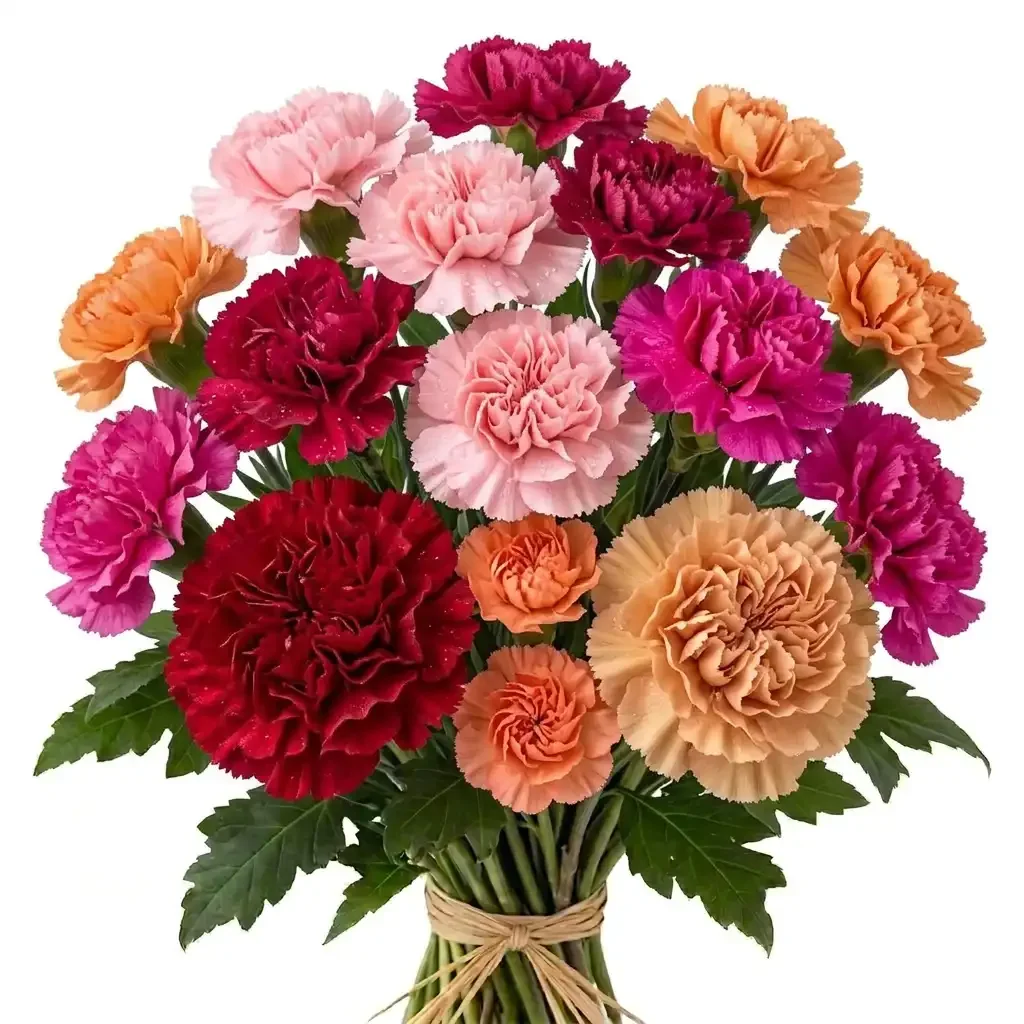
Quick Overview
Common Name: Carnation, Clove Pink, Gillyflower
Scientific Name: Dianthus caryophyllus
Plant Type: Tender Perennial grown as Annual in most climates
USDA Zones: 7 to 10 as perennial, grown as annual in cooler zones
Sun Requirement: Full Sun
Soil Type: Well-drained, moderately fertile, slightly alkaline
Bloom Season: Late Spring through Fall, nearly year round in mild climates
Height: 18 to 36 inches
Pollinator Friendly: Yes
Edible: Yes, petals are edible with a spicy, clove-like flavor
Why Grow Carnations on a Homestead
Carnations are one of the most commercially important cut flowers in the world and one of the most strategically misunderstood opportunities for homestead growers. The conventional wisdom holds that carnations cannot be profitably grown at small scale because the commercial market is dominated by large-scale greenhouse production from South America and other low-cost growing regions. This conventional wisdom is correct for standard, mass-produced florist carnations but entirely wrong for the fragrant, heritage, specialty, and unusual-colored carnation varieties that homestead growers can produce and that commercial operations never grow. The specialty carnation market, centered on the intensely fragrant old-fashioned varieties, the lace carnations with their dramatically frilled petals, the picotee and bicolor forms, and the richly fragrant Chabaud and Grenadin heritage varieties, is a genuinely premium specialty market with strong and growing demand from wedding florists, specialty customers, and anyone who has experienced the extraordinary difference between a freshly cut, intensely fragrant specialty carnation and the virtually scentless commercial imports that dominate the standard flower market.
For homestead growers, the carnation opportunity is specifically about fragrance and specialness rather than volume. The clove-spice fragrance of a well-grown heritage carnation variety is one of the most powerful and universally appealing floral scents available from any cut flower and is the single most powerful commercial differentiator available to homestead carnation growers. Customers who receive a bunch of intensely fragrant specialty carnations, who have likely never experienced a truly fragrant carnation before given the dominance of scentless commercial varieties, consistently react with immediate, enthusiastic purchasing enthusiasm that translates into loyal repeat customers and strong word-of-mouth marketing.
Here is why Carnations deserve a prominent spot on your homestead:
Specialty fragrant carnations occupy a genuinely premium market position that commercial production cannot contest. Intensely fragrant heritage and specialty carnation varieties are simply not produced by commercial wholesale operations. Growing them creates a product with zero direct competition from commercial channels and extraordinary premium pricing potential.
The fragrance alone creates one of the most powerful commercial market draws available at any farm stand. The rich, spicy, clove-like fragrance of quality carnations is one of the most immediately appealing and universally recognized floral scents available. At a farmers market, fresh fragrant carnations fill the surrounding area with an extraordinary scent that draws customers from across the market before they even see the flowers.
They bloom over an extraordinarily long season with appropriate management. Carnations can provide harvestable stems from late spring through fall and nearly year round in mild winter climates, providing one of the longest production windows of any cut flower crop.
The lace and specialty forms available to homestead growers command genuine premium pricing from florists and wedding designers. Lace carnations, double frilled forms, unusual picotee colors, and the full range of specialty types that homestead growers can access are genuinely unavailable through commercial wholesale channels and command the premium prices that genuine rarity always supports.
Growing Conditions
Sunlight
Carnations require full sun to perform their best as cut flower crops. They need at least 6 to 8 hours of direct sunlight per day for the strongest stems, most abundant flowering, and the most intense fragrance. Fragrance intensity in carnations is directly related to the amount of sunlight the plants receive, making full sun not just important for productivity but essential for the fragrance quality that creates commercial differentiation. In partial shade stems become weak, flower production decreases, and fragrance intensity is significantly reduced.
Soil
Carnations prefer well-drained, moderately fertile soil with a slightly alkaline pH between 6.5 and 7.5. This slightly alkaline preference differentiates carnations from most other cut flower crops and is important for both plant health and fragrance quality. In acidic soils below pH 6.0 carnations often show reduced growth vigor, increased disease susceptibility, and reduced fragrance intensity. If your soil is acidic, incorporating a light application of garden lime before planting can significantly improve performance. Excellent drainage is critical as carnations are very susceptible to the crown rot and Fusarium wilt that thrive in waterlogged conditions. Sandy loam with adequate organic matter is ideal.
Water
Water consistently throughout the growing season to maintain even soil moisture. Carnations need consistent moisture during active growth and blooming but must never sit in waterlogged soil. Water deeply at the base of the plant rather than overhead to keep foliage and flowers dry. Overhead watering promotes the Alternaria leaf spot and botrytis that are among carnation's most common disease problems. Drip irrigation is the ideal watering system for carnation production. Reduce watering somewhat as plants approach the end of their productive cycle.
Temperature
Carnations perform best in moderate temperatures between 50 and 65 degrees Fahrenheit. They tolerate light frosts and actually produce the strongest stems and most intense fragrance in cool growing conditions. In hot summer climates above 85 degrees Fahrenheit production often slows and some varieties may go semi-dormant before resuming in fall. In mild winter climates within USDA zones 7 to 10 carnations can be grown as perennials that bloom nearly continuously. In cold winter climates they are grown as cool season to warm season annuals.
Planting Guide
Carnations can be started from seed or propagated from stem cuttings taken from established plants. Specialty heritage varieties are best started from seed or purchased as small plants from specialist suppliers.
Step 1: Start seeds indoors 10 to 12 weeks before the last frost date. Carnation seeds require this long indoor growing period to produce transplant-ready plants with adequate size for good first-season production.
Step 2: Sow seeds on the surface of moist seed starting mix or cover with only the thinnest dusting of fine vermiculite. Maintain seed trays at 65 to 70 degrees Fahrenheit. Germination typically occurs within 7 to 14 days.
Step 3: Once seedlings have developed three to four sets of true leaves, transplant into individual pots and grow on in a bright, cool location at approximately 55 to 60 degrees Fahrenheit. The cool growing period during the indoor seedling phase supports strong root and stem development.
Step 4: After the last frost date when conditions are reliably frost-free and soil has warmed, transplant outdoors to a location with full sun and well-drained, slightly alkaline soil. Space plants 12 to 15 inches apart for cut flower production.
Step 5: In mild winter climates within USDA zones 7 to 10, fall planting of transplants establishes plants over the cool winter months for the most abundant late winter through spring blooming season that aligns with peak wedding market demand.
Step 6: Water thoroughly after transplanting and maintain consistent moisture until plants are well established.
Seed vs Cutting: Starting from seed is the most practical approach for most homestead growers. Stem cuttings from established perennial plants in mild climates provide an economical way to expand a planting.
Spacing: 12 to 15 inches apart for cut flower production.
Planting Season: After last frost in cold winter climates. Fall in mild winter climates within USDA zones 7 to 10.
Maintenance
Pinching
Pinching the central growing tip when plants reach 6 to 8 inches tall with five to seven pairs of leaves is one of the most important practices for cut flower production. Pinching forces the plant to develop multiple lateral branches, significantly increasing the total number of harvestable stems throughout the season. A second pinch when lateral branches reach 6 to 8 inches further increases branching and total stem yield. This two-pinch system is standard practice for commercial carnation production and dramatically increases the financial return from each planted transplant.
Staking and Support
Carnation stems become increasingly top-heavy as flower buds develop and must be supported to prevent falling over. Install horizontal support netting at 12 inches above the soil surface at planting time and raise additional layers to 24 to 36 inches as plants grow. This netting supports stems individually without requiring labor-intensive individual staking and prevents the stem damage that occurs when plants fall over before support is provided.
Disbudding
For the largest individual blooms on the longest stems, remove the side buds that appear alongside the main terminal bud on each stem, leaving only the main terminal bud to develop. This disbudding concentrates the plant's energy into a single large bloom per stem. For spray carnations where multiple smaller blooms per stem is the desired product, remove only the main terminal bud from the central stem to encourage the simultaneous development of the side buds into the characteristic spray form.
Fertilizing
Apply a balanced fertilizer at planting and follow with regular applications every three to four weeks throughout the growing season. Adequate calcium in the fertilization program helps prevent the calyx splitting that is a common quality problem with carnation production. A fertilizer formulation with adequate calcium and potassium alongside balanced nitrogen and phosphorus gives the strongest stems and the best bloom quality. Avoid excessive nitrogen which promotes lush, soft, disease-prone growth.
Pest Control
Thrips are the most serious commercial pest for carnation production. They feed on developing petals causing silvery streaking, browning, and distortion that significantly reduces market value. Monitor regularly with sticky traps and treat preventively with neem oil or spinosad before populations build. Aphids can appear on new growth and developing buds. Spider mites can be a problem in hot, dry conditions. Both are manageable with prompt treatment.
Disease Prevention
Fusarium wilt is the most serious soil-borne disease of carnations and causes progressive wilting and plant death. Prevention through excellent drainage, slightly alkaline soil pH, crop rotation, and purchasing disease-free planting stock is the only effective management strategy. Crown rot and Alternaria leaf spot are also common. Prevention through drip irrigation, excellent drainage, and removing affected plant material promptly is the most effective approach.
Harvesting
When to Harvest
Harvest carnation stems when the outer petals are beginning to unfurl from the tightly packed bud but the flower has not yet fully opened. At this stage the flower continues to open slowly and gracefully after cutting and has its maximum vase life. Harvesting when flowers are already fully open significantly shortens remaining vase life. The fragrance of carnations is strongest when flowers are at this stage of partial opening and continues to intensify as the flower fully opens in the vase. Harvest in the early morning when fragrance is at its peak and stems are fully hydrated.
How to Cut
Use clean, sharp scissors or pruners. Cut stems as long as possible by cutting just above a node or lateral shoot. For heritage and garden carnation varieties this produces stems of 14 to 20 inches. Remove all foliage from the lower third of the stem immediately after cutting. Place stems immediately into a bucket of cool water with a commercial floral preservative.
Conditioning
After cutting, place stems in cool water in a cool, dark location for several hours or overnight before sale or arrangement. The fragrance of well-conditioned carnations intensifies as the flower fully opens in the vase over the following one to two days, creating a progressively more powerful aromatic experience that customers find genuinely extraordinary. If refrigeration is available, conditioning at 34 to 38 degrees Fahrenheit gives the best results for vase life.
How Often to Harvest
During peak bloom, harvest every two to three days as new stems reach the correct stage. Regular harvesting encourages the development of new lateral flowering stems throughout the season.
Vase Life
Carnations have excellent vase life, typically lasting 10 to 14 days or more with proper conditioning. This outstanding longevity is one of their most commercially important qualities. Strip all foliage below the waterline, recut stems at an angle, and place in fresh water with a floral preservative. Change water every few days to maximize longevity.
Uses on a Homestead
Cut Flower Use
Specialty and heritage carnations are grown primarily as fragrant, distinctive fresh cut flowers that offer something genuinely different from commercial alternatives. Their extraordinary fragrance transforms the sensory experience of any bouquet they appear in. They pair beautifully with roses, sweet peas, ranunculus, and other premium cut flowers in mixed bouquets where their fragrance adds an irreplaceable aromatic dimension.
Wedding and Event Flowers
Specialty carnations, particularly the lace and frilled double forms, are sought-after by wedding florists who want something genuinely different from standard commercial alternatives. The extraordinary fragrance of heritage varieties adds a meaningful aromatic dimension to wedding bouquets that scentless commercial carnations cannot provide.
Fragrance at the Farm Stand
Fresh specialty carnations create one of the most powerful and immediately compelling fragrance experiences at any farmers market. The rich, spicy, clove-like scent fills the area around the stand and draws customers before they even see the flowers. Few other cut flowers create this kind of olfactory marketing draw during the summer season.
Edible Petals
Carnation petals are edible with a pleasant, spicy, clove-like flavor. Selling fresh carnation petals to restaurants and specialty food producers provides an additional premium income stream from the established planting.
Can You Make Money With Carnations
Yes, specialty fragrant carnations are a profitable cut flower crop for homestead operations that focus on the heritage, lace, and intensely fragrant varieties that commercial operations do not produce.
Fragrance premium creates the most powerful commercial differentiator available. The extraordinary clove-spice fragrance of quality heritage carnations commands a fragrance premium that scentless commercial carnations cannot approach. Customers who experience genuinely fragrant carnations for the first time consistently become enthusiastic repeat buyers.
Genuine specialty variety differentiation supports premium pricing. Lace carnations, picotee forms, bicolors, and heritage varieties are genuinely unavailable through commercial wholesale channels. This genuine rarity supports premium pricing that commodity carnation production cannot sustain.
Long blooming season provides extended income. With appropriate management, specialty carnations provide harvestable stems from late spring through fall and nearly year round in mild climates, covering most of the annual cut flower calendar.
Farmers Market: Fresh specialty carnation bundles sell for 10 to 18 dollars per bunch depending on fragrance intensity, variety, and color. Individual large lace carnation stems can sell for 2 to 4 dollars each. The fragrance premium alone justifies pricing two to three times that of scentless commercial alternatives.
Florists and Wedding Designers: Specialty fragrant and lace carnation forms are sought-after by florists who want genuine market differentiation. Local supply is genuinely rare and commands premium wholesale pricing.
Companion Plants
Carnations grow beautifully alongside other fragrant and cool-season cut flowers with complementary growing requirements.
Roses: The most classic carnation companion. Both are intensely fragrant flowering plants that complement each other beautifully in mixed fragrant bouquets and in the garden.
Stock: Both are intensely fragrant cool season flowers that create the most powerfully aromatic mixed bouquets when combined.
Sweet Peas: Both are fragrant cool season flowers that complement each other naturally in the spring cutting garden and in romantic mixed bouquets.
Snapdragons: Both are cool to warm season cut flowers with similar growing requirements and overlapping bloom times that complement each other in mixed spring and summer arrangements.
Lavender: Both prefer well-drained, slightly alkaline soil and complement each other beautifully in fragrant Mediterranean-inspired mixed bouquets.
Common Problems
Fusarium Wilt
The most serious soil-borne disease of carnations. Causes progressive wilting and plant death with no effective treatment once established. Prevention through excellent drainage, slightly alkaline soil pH, strict crop rotation, and using disease-free planting stock is the only effective management strategy. Never replant carnations in soil where Fusarium wilt has been detected.
Calyx Splitting
A common quality problem where the calyx, the green cup behind the petals, splits vertically before the flower fully opens, causing the petals to burst out unevenly. Caused by rapid temperature fluctuations, calcium deficiency, or inconsistent watering. Maintain consistent moisture, ensure adequate calcium in the fertilization program, and choose varieties selected for strong calyx integrity.
Thrips Damage
The most commercially damaging pest. Causes silvery streaking, browning, and distortion of petals. Monitor preventively with sticky traps and treat with neem oil or spinosad before populations build. Early detection and treatment are essential as thrips damage reduces market value significantly.
Crown Rot
Caused by poor drainage or excessive moisture around the crown. Prevention through excellent drainage and avoiding overwatering is the only effective management strategy.
Short Vase Life
Usually caused by harvesting when flowers are too fully open, insufficient conditioning before sale, or water quality problems. Harvest at the correct half-open stage, condition overnight before sale, and use commercial floral preservative in conditioning water.
Varieties to Consider
Heritage and Fragrant Varieties
Dianthus caryophyllus Chabaud Giants Mix: The most widely grown heritage carnation series for homestead production. Fully double, strongly fragrant blooms in a range of colors including red, pink, white, yellow, and bicolors on strong stems reaching 20 to 24 inches. Much more fragrant than modern florist carnations. Very popular with customers seeking genuinely fragrant carnations.
Dianthus caryophyllus Grenadin Series: A classic heritage carnation series with compact, well-branched plants producing fully double, intensely fragrant blooms in deep red, scarlet, white, and pink. One of the most reliably fragrant carnation series available. Excellent performance as an annual in cold winter climates and as a short-lived perennial in mild winter climates.
Dianthus caryophyllus Enfant de Nice: A classic heritage variety with large, fully double, intensely fragrant blooms in soft tones of pink, white, and lavender. One of the oldest and most historically important carnation varieties for garden and cut flower production. Excellent fragrance and charming, slightly informal appearance.
Lace and Specialty Forms
Dianthus caryophyllus Laced Pink: A classic lace carnation with white petals delicately edged in a contrasting rose-pink lace pattern on each petal. Very popular with florists and customers for the unusual lace pattern that is genuinely distinctive from standard carnation forms. Commands significant premium pricing.
Dianthus caryophyllus Picotee Mix: Varieties with contrasting edge colors on the petals creating a distinctive two-toned picotee appearance. Very popular with florists for the unusual bicolor pattern. Commands premium pricing for the distinctive specialty form.
Compact Varieties for Cut Flower Production
Dianthus caryophyllus Vienna Mix: A compact, well-branched series reaching 16 to 20 inches with good stem length and a range of colors. Good performance as a cut flower annual in cold winter climates. Reliable production and consistent quality throughout the summer season.
Final Thoughts
Carnations represent one of the most misunderstood and most genuinely exciting specialty cut flower opportunities available to homestead growers. The key insight is that the commercial opportunity for homestead operations lies entirely in the specialty fragrant, lace, and heritage varieties that commercial wholesale operations cannot and do not produce, rather than in competing with the mass-produced scentless commercial carnations that dominate standard flower markets. A homestead grower who brings intensely fragrant heritage carnation varieties to a farmers market is not competing with commercial carnation producers. They are offering something genuinely and fundamentally different, a flower that customers have likely never experienced before, that generates an immediate, powerful aromatic response, and that creates the kind of enthusiastic purchasing loyalty that makes specialty fragrant flowers one of the most financially rewarding specialties available to small-scale homestead flower operations. Grow in full sun with well-drained, slightly alkaline soil, pinch for maximum stem production, protect from thrips preventively, never overhead water, harvest at the half-open stage for maximum vase life, and specialty fragrant carnations will reward your homestead with some of the most aromatically extraordinary, most commercially differentiated, and most personally satisfying cut flower stems available from any summer planting.
FAQ
Why do most commercial carnations have no fragrance? The fragrance was systematically bred out of commercial carnation varieties over the past fifty years as the commercial cut flower industry prioritized vase life, stem strength, color range, and production efficiency over fragrance. Modern commercial carnation breeding programs in South America, Kenya, and the Netherlands focus on varieties that pack and ship efficiently, last as long as possible in the supply chain, and produce in the highest volumes per square foot of greenhouse space. None of these commercial priorities involve fragrance. The result is that virtually all carnations available through standard wholesale and retail channels today are essentially scentless, creating a significant market gap for the intensely fragrant heritage and specialty varieties that homestead growers can produce.
What makes lace carnations different from standard carnations? Lace carnations are varieties of Dianthus caryophyllus that have a distinctive contrasting color edging on each petal, creating a delicate lace-like pattern around the petal margins. The body of each petal is typically white or pale-colored while the edges are marked with a contrasting color such as rose-pink, deep red, or purple, creating the characteristic lace appearance. Lace carnations have a long history in garden cultivation dating back hundreds of years and are among the most refined and sought-after carnation forms available. They are essentially never available through commercial wholesale channels, making locally grown lace carnation stems a genuinely exclusive specialty product.
Can carnations be grown in hot climates? Carnations can be challenging in hot climates above USDA zones 8 to 9 where summer temperatures consistently exceed 85 to 90 degrees Fahrenheit. In hot climates the most effective strategy is growing carnations as cool season crops in fall through spring rather than attempting midsummer production under heat stress. In USDA zones 8 to 10 carnations can be grown as perennials if overwatering and poor drainage are avoided, with the most productive blooming occurring during the cooler fall through spring period. In very hot summers carnations may go semi-dormant before resuming production in fall.
How do I prevent calyx splitting in carnations? Calyx splitting, where the green calyx behind the petals splits vertically before the flower opens properly, is one of the most common quality problems in carnation production. Prevention requires consistent watering that avoids the wet-dry cycles that cause rapid turgor changes in the developing calyx, adequate calcium in the fertilization program as calcium deficiency weakens calyx tissue, moderate temperatures without rapid fluctuations during bud development, and choosing varieties specifically selected for strong calyx integrity. Some heritage varieties are more prone to calyx splitting than modern varieties and this is considered part of their charming, informal character by customers who specifically seek heritage types.