
Celosia
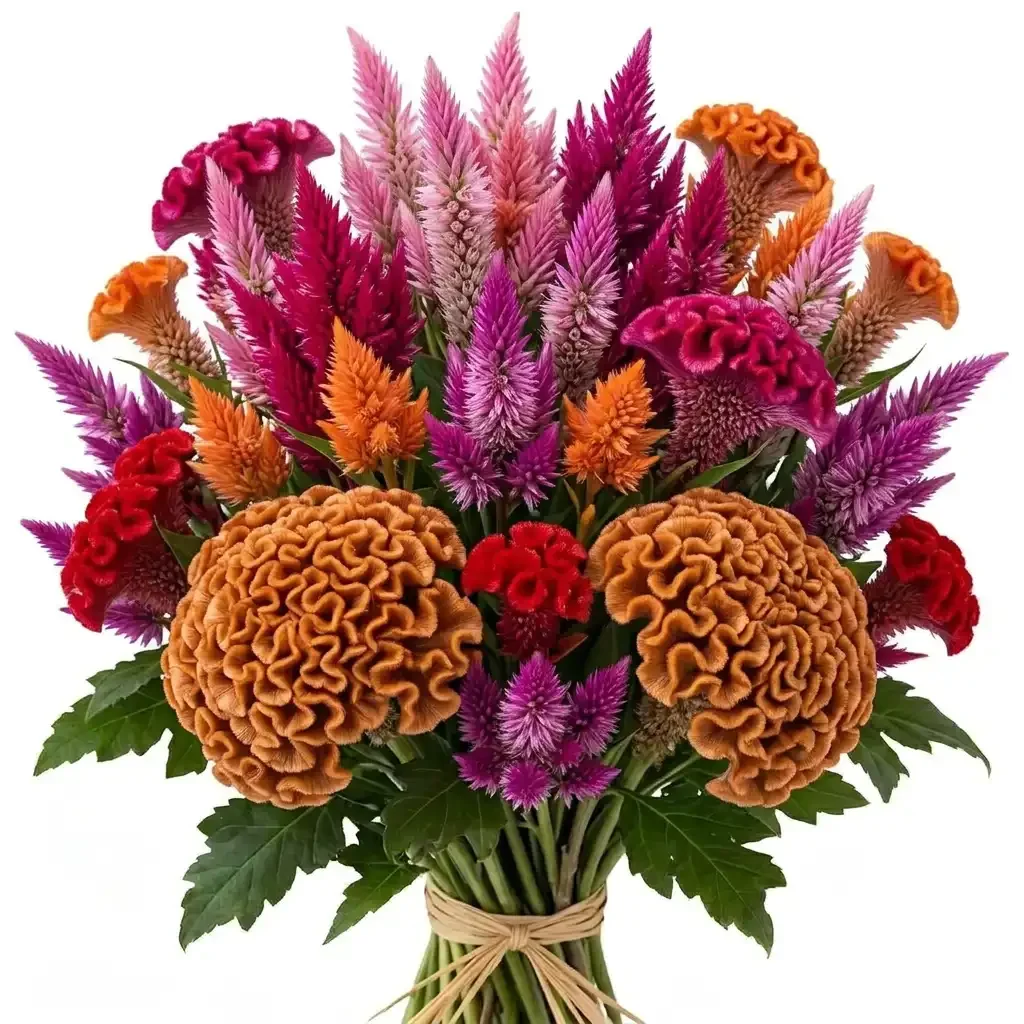
Quick Overview
Common Name: Celosia, Cockscomb, Woolflower, Plume Celosia, Brain Flower
Scientific Name: Celosia argentea var. cristata, Celosia argentea var. plumosa, Celosia argentea var. spicata
Plant Type: Annual
USDA Zones: 2 to 11
Sun Requirement: Full Sun
Soil Type: Well-drained, moderately fertile
Bloom Season: Summer through First Frost
Height: 12 to 36 inches depending on variety
Pollinator Friendly: Yes
Edible: Yes, leaves and flowers used in African and Asian cuisine
Why Grow Celosia on a Homestead
Celosia is one of the most visually extraordinary and commercially versatile cut flowers available to homestead growers. Its three dramatically different flower forms, the crested cockscomb with its convoluted, brain-like velvety heads, the plume type with its feathery, flame-like spires, and the wheat type with its elegant, upright, dense spikes, each in the most vivid and heat-saturated color palette available from any summer annual, create a range of visual textures that no other single genus of cut flower can replicate. In the professional floral industry Celosia is considered one of the most indispensable and versatile summer and fall cut flowers, providing the bold, saturated, structural color that florists and wedding designers use to anchor and intensify arrangements across every aesthetic from the most bold and contemporary to the most romantic and garden-inspired.
For homestead growers, Celosia represents one of the most financially strategic summer annual investments available. It is a heat-loving annual that performs at its absolute peak during the hottest months when many other cut flower crops are showing heat stress and reduced production, effectively filling the midsummer production gap that challenges many homestead flower operations. Its dual capability as both a premium fresh cut flower with good vase life and one of the finest dried flower products available, retaining its vivid colors and dramatic forms with exceptional fidelity when dried, creates year-round income potential from seasonal production. And the genuinely unusual visual quality of all three Celosia forms, particularly the crested cockscomb varieties that never fail to generate immediate customer fascination at market stands, creates a genuine market differentiation that more familiar summer flowers cannot provide.
Here is why Celosia deserves a prominent spot on your homestead:
It provides three entirely different flower forms from a single genus, serving every market segment simultaneously. The crested, plume, and wheat forms of Celosia are so visually different from each other that growing all three provides the commercial equivalent of three separate specialty cut flower crops from the same growing area and management program.
It peaks in production during the hottest midsummer period when many other cut flower crops struggle. Celosia is one of the few summer annuals that actually increases in quality and production as summer heat intensifies, effectively filling the midsummer production gap that challenges homestead flower operations dependent on cool-season or heat-sensitive crops.
It dries magnificently with extraordinary color retention across all three flower forms. Celosia is one of the finest and most commercially valuable dried flower genera available, retaining the most vivid reds, magentas, oranges, and purples of any dried summer annual. This dried flower capability creates year-round income from seasonal fresh harvest.
The crested cockscomb varieties generate immediate, powerful customer fascination at every market. The convoluted, velvety, brain-like heads of crested Celosia are genuinely unlike any other commonly grown cut flower and create an immediate, fascinated response in customers who have never seen them before that converts powerfully into purchasing enthusiasm.
It is heat tolerant, drought tolerant, and essentially pest-free. Celosia is one of the most self-sufficient summer annuals available, requiring minimal ongoing management once established.
Growing Conditions
Sunlight
Celosia requires full sun without compromise. It needs at least 6 to 8 hours of direct sunlight per day and actually performs better with maximum sun exposure throughout the day. The vivid, saturated colors that are Celosia's primary commercial asset are most intense in full sun conditions. In partial shade the characteristic velvety or feathery textures become less well-developed, colors become less saturated, and stems become weak and floppy. Full sun is the single most important growing requirement for productive, commercially valuable Celosia.
Soil
Celosia prefers well-drained, moderately fertile soil. Good drainage is important as it does not tolerate waterlogged conditions. Moderately fertile soil amended with compost supports the vigorous growth needed for the long, strong stems most commercially valuable in cut flower use. Unlike some cut flower crops that perform better in lean conditions, Celosia benefits from adequate fertility to support its rapid, vigorous summer growth. Avoid excessively rich soil which produces overly lush growth that can reduce flower quality. Soil pH between 6.0 and 7.0 is ideal.
Water
Water consistently throughout the growing season to maintain even soil moisture. Celosia is moderately drought tolerant once established but produces the best stem length and largest, most well-developed flower heads with consistent moisture during active growth. Drought stress during the bud development and early blooming phase causes shortened stems and smaller flower structures that are less commercially valuable. Water at the base of the plant rather than overhead to reduce the risk of fungal diseases on the dense, moisture-retaining flower heads.
Temperature
Celosia is one of the most heat-loving annual cut flower crops available. It performs at its absolute best in warm to hot conditions above 70 degrees Fahrenheit and actually increases its production rate as temperatures rise through the summer. It does not tolerate cold temperatures and is damaged by any frost. Do not transplant outdoors until conditions are reliably warm, typically two to three weeks after the last frost date when soil has warmed adequately. Transplanting into cold soil stresses Celosia and can cause the premature bolting that produces tiny, commercially worthless flower heads on short stems.
Planting Guide
Celosia requires a careful approach to timing and transplanting as it is very sensitive to root disturbance and cold temperatures during establishment.
Step 1: Start seeds indoors 3 to 4 weeks before the target outdoor transplanting date. Celosia requires less indoor growing time than many other cut flower annuals as it grows rapidly once conditions are warm. Starting too early produces overgrown transplants that are more prone to transplant stress and premature bolting.
Step 2: Celosia seeds are very small and germinate best in warm conditions at 70 to 75 degrees Fahrenheit. Sow seeds on the surface of moist seed starting mix or cover with only the thinnest possible dusting of fine vermiculite. Germination typically occurs within 5 to 10 days in warm conditions.
Step 3: Once seedlings have developed two to three sets of true leaves, transplant into individual pots carefully, disturbing the roots as little as possible. Celosia is sensitive to root disturbance and should be handled gently throughout the transplanting process.
Step 4: Wait to transplant outdoors until two to three weeks after the last frost date when both air and soil temperatures are reliably warm. This timing is critical. Transplanting Celosia into cold soil or during a cold weather period causes the check in growth that triggers premature bolting and the tiny flower heads that make plants commercially worthless.
Step 5: Space plants 9 to 12 inches apart for cut flower production. Closer spacing within this range encourages taller, straighter stems as plants reach upward for light.
Step 6: For a continuous harvest throughout the summer and fall season, succession plant every three to four weeks from the initial transplanting date through midsummer. Later successions planted into warm summer conditions establish and grow very rapidly and provide fresh, peak-quality stems through fall.
Seed vs Transplant: Starting from seed is the standard approach. Handle carefully during transplanting to avoid root disturbance that causes premature bolting.
Spacing: 9 to 12 inches apart for cut flower production.
Planting Season: Two to three weeks after last frost when soil has warmed reliably. Succession plant every three to four weeks through midsummer.
Maintenance
Pinching
Pinching the central growing tip when plants are 8 to 10 inches tall encourages branching and significantly increases the number of flowering stems per plant. This is particularly important for plume and wheat-type Celosia varieties where a single unpinched plant produces one large central head while a properly pinched plant produces multiple well-sized, marketable stems. The crested cockscomb types are not typically pinched as the single large crested head is itself the primary commercial product of these varieties.
Deadheading
For plume and wheat types, remove spent or declining flower spikes promptly to encourage the development of new lateral flowering stems. Regular harvesting replaces deadheading for commercially grown plants as every stem should be harvested at the correct stage before it can decline.
Fertilizing
Apply a balanced fertilizer at planting and follow with light applications every three to four weeks throughout the summer season. Adequate potassium and phosphorus support the development of the vivid colors and dense flower structures that create Celosia's commercial value. Avoid excessive nitrogen which produces lush vegetative growth at the expense of flower quality and can cause the overly leafy, poorly flowered plants that result from overly rich growing conditions.
Pest Control
Celosia is largely pest resistant. Aphids can occasionally appear on young plants but are usually managed naturally by beneficial insects. Spider mites can be a problem in very hot, dry conditions on stressed plants. Maintain adequate moisture and treat with neem oil if spider mite populations develop. The heat tolerance and vigorous growth of well-established Celosia in appropriate conditions makes it naturally resistant to most pest problems.
Disease Prevention
Botrytis gray mold can be a serious problem in the dense flower heads of crested cockscomb types in cool, humid conditions. Good air circulation through proper plant spacing and avoiding overhead watering are the most effective preventive measures. Fungal root rot can occur in waterlogged soil. Ensure excellent drainage and avoid overwatering.
Harvesting
When to Harvest Fresh Cut Flowers
Harvest timing varies by Celosia type. For crested cockscomb types, harvest when the crest has reached its full size and the velvety surface is showing its most vivid color. The crest should feel firm and well-developed. For plume types, harvest when the feathery plumes are fully developed and at peak color but before the individual tiny flowers within the plume begin to shed. The plumes should feel dense and well-formed. For wheat or spicata types, harvest when the spikes are fully developed and at peak color with the individual flowers along the spike mostly open. Harvest all types in the early morning when stems are fully hydrated.
How to Cut
Use clean, sharp scissors or pruners. Cut stems as long as possible at the base of the stem near the crown of the plant. Remove all foliage from the lower half of the stem immediately after cutting. Handle freshly cut stems of crested cockscomb types carefully as the heavy velvety heads can break from the stem at the point where the crest joins the stem. Place stems immediately into a bucket of cool water.
Conditioning
After cutting, place stems in deep cool water in a cool, dark location for several hours or overnight before sale or arrangement. Do not crowd stems in the conditioning bucket as the large crests and dense plumes need air circulation to condition properly without trapping moisture.
When to Harvest for Drying
For dried flower production, harvest at the same stage as for fresh use. Celosia dries with exceptional color retention across all three types. The vivid magentas, deep purples, rich oranges, and saturated reds retain their intensity to a degree that few other summer annuals can match.
Drying
Hang stems upside down in small loose bundles in a warm, dry, well-ventilated space away from direct sunlight. Good air circulation is particularly important for drying the dense crested and plume types to prevent moisture retention and mold. Drying takes approximately two to three weeks. The dried flower products retain their dramatic forms and vivid colors for one to two years or more in appropriate storage conditions.
How Often to Harvest
During peak bloom from midsummer through early fall, harvest every two to three days as new stems reach the correct stage. Regular harvesting of plume and wheat types encourages the development of new lateral flowering stems throughout the season. Crested types produce primarily a single main crest per plant so the timing of that single main harvest is particularly important for commercial quality.
Vase Life
Celosia typically lasts 7 to 14 days as a fresh cut flower with proper conditioning and care. Strip all foliage below the waterline, recut stems at an angle, and place in fresh water with a floral preservative. Change water every two to three days to maximize longevity.
Uses on a Homestead
Cut Flower Use
Celosia is grown primarily as a fresh cut flower providing bold, vivid color and extraordinary textural variety to mixed summer and fall bouquets. The three very different forms serve distinct but complementary functions in arrangements. Crested cockscomb provides dramatic, unusual textural focal interest. Plume types provide feathery, flame-like vertical color accent. Wheat types provide refined, elegant vertical structure. Together they make Celosia one of the most versatile single cut flower genera for mixed summer and fall production.
Dried Flower Use
Dried Celosia is one of the most commercially valuable and visually extraordinary dried flower products available from any summer annual. All three forms dry magnificently with exceptional color retention. Dried crested cockscomb creates some of the most visually striking and collectible dried botanical products available. Dried plume and wheat types provide vibrant filler material for wreaths, arrangements, and craft products. Dried Celosia bundles sell consistently well at craft markets, specialty gift shops, and through online platforms throughout the year.
Wedding and Event Flowers
Celosia is enormously popular in contemporary wedding and event floristry across all three forms. The crested cockscomb varieties have become a signature element of the bold, textural, maximalist floral aesthetic that has gained strong market presence. Plume types provide the vivid, feathery vertical accents that wedding florists use to add color and movement to large-scale installations. Wheat types provide refined, elegant structure in monochromatic and neutral palette designs.
Farmers Market
Celosia is one of the most visually striking and customer-engaging summer and fall specialty flowers at any farmers market. The crested cockscomb varieties in particular generate immediate, fascinated customer responses that create strong impulse purchasing. Vivid plume types in bold magentas, oranges, and reds create powerful display presence. The combination of extraordinary visual distinctiveness and genuine rarity at most market stands creates the premium pricing conditions that maximize revenue from every stem sold.
Edible Uses
The leaves and flowers of Celosia are eaten as a leafy vegetable in many parts of West Africa and Southeast Asia where they are an important nutritional food crop. Selling Celosia as an edible garden plant, cooking vegetable, or culinary herb to customers from these cultural backgrounds provides an additional income stream from the same planting.
Can You Make Money With Celosia
Yes, Celosia is one of the most financially rewarding summer annual cut flower and dried flower crops available to homestead operations. The combination of three distinct commercial flower forms, exceptional dried flower capability, peak production during the commercially demanding midsummer period, and the genuine visual uniqueness that creates market fascination and premium pricing creates an exceptional commercial profile.
Three distinct flower forms provide the commercial equivalent of three specialty cut flower crops. Growing all three Celosia forms, crested, plume, and wheat, provides genuinely different specialty products that serve different market segments simultaneously, maximizing the commercial return from a single growing program and production investment.
Peak midsummer production fills the most challenging production gap. Celosia performs at its peak during the hottest midsummer weeks when many other cut flower crops show reduced production, effectively filling the commercial gap and maintaining market presence and florist supply relationships through the full summer season.
Exceptional dried flower value creates year-round income. The vivid color retention and dramatic forms of dried Celosia create premium dried products that sell throughout the year at craft markets, through online platforms, and to florists who use dried botanicals in their designs. The dried market effectively multiplies the seasonal income from fresh production.
Crested cockscomb generates disproportionate market fascination and premium pricing. The genuinely unusual visual quality of crested cockscomb creates an immediate market response from customers who have never seen it that converts very efficiently into purchasing. This fascination premium means that crested cockscomb typically commands the highest per-stem prices of all Celosia types.
Farmers Market: Fresh crested cockscomb stems sell for 3 to 6 dollars per individual stem given their dramatic size and unusual form. Plume Celosia bundles sell for 7 to 12 dollars per bunch. Wheat Celosia bundles sell for 6 to 10 dollars per bunch. Dried Celosia bundles sell for 8 to 16 dollars per bunch at craft markets.
Florists and Wedding Designers: All three Celosia forms are in consistent demand from florists throughout the summer and fall season. Crested cockscomb and specialty plume colors command the highest wholesale pricing.
CSA Flower Subscriptions: Celosia is one of the most visually impactful and distinctive additions to summer and fall flower subscription boxes. Any of the three forms creates immediate visual impact and subscriber enthusiasm throughout the long summer and fall blooming season.
Companion Plants
Celosia grows beautifully alongside other heat-loving summer and fall cut flowers with similar growing requirements and complementary bloom times.
Zinnias: Both are heat-loving summer annuals that grow in similar conditions and complement each other beautifully in bold mixed summer and fall arrangements where Celosia provides unusual texture and zinnias provide familiar, vivid focal color.
Dahlias: Both bloom through late summer and fall and complement each other magnificently in high-end mixed arrangements where Celosia provides bold textural accent and dahlias provide spectacular focal blooms.
Gomphrena: Both are heat-loving summer annuals with similar growing requirements and similar dried flower capabilities that complement each other in mixed summer bouquets with contrasting round and crested or plume forms.
Marigolds: Both are heat-tolerant summer annuals that grow in similar conditions and complement each other in warm-toned mixed summer arrangements.
Ornamental Grasses: The fine-textured movement of ornamental grasses provides beautiful contrast to the bold, static forms of all three Celosia types in mixed arrangements and in the landscape.
Amaranth: Both are heat-loving summer annuals with dramatic vertical flower forms that complement each other in bold, naturalistic mixed summer arrangements.
Common Problems
Premature Bolting
The most commercially damaging problem with Celosia cut flower production. Premature bolting causes plants to produce tiny, undersized flower heads on short stems before the plant has developed adequate size for commercial quality. Almost always caused by transplanting into cold soil or during a cold weather period, starting seeds too early indoors so that overgrown transplants experience root disturbance, or growing plants in conditions of severe stress including extreme drought or nutrient deficiency. Transplant only into warm soil at least two to three weeks after the last frost date, start seeds no more than three to four weeks before the planned outdoor transplanting date, and avoid all sources of stress during the transplanting and establishment period.
Botrytis in Crested Cockscomb
The dense, velvety surface of crested cockscomb heads traps moisture and provides an ideal surface for botrytis gray mold in cool, humid conditions. Provide excellent air circulation through proper spacing, never water overhead onto the crest surfaces, and remove any affected heads immediately. In climates with consistently cool, humid fall conditions, completing the crested cockscomb harvest before the worst fall humidity conditions arrive is the most effective protective strategy.
Color Fading in Stored Stems
Celosia colors can fade if stored or displayed in direct sunlight. Always condition and store cut Celosia away from direct sunlight and display at market in shaded or sheltered positions. The vivid colors that make Celosia commercially valuable are best preserved by minimizing direct light exposure throughout the post-harvest chain.
Root Rot
Can occur in waterlogged or poorly drained soil. Celosia does not tolerate consistently wet conditions. Ensure excellent drainage before planting and avoid overwatering throughout the season.
Aphids on Young Plants
Can occasionally appear on new growth particularly during cool, wet spring conditions. Treat promptly with a strong spray of water or neem oil. Aphid pressure typically diminishes as plants mature and summer heat arrives.
Varieties to Consider
Crested Cockscomb (Celosia argentea var. cristata)
Celosia Chief Series: One of the most widely grown crested cockscomb series for cut flower production. Large, deeply convoluted crests in vivid colors including deep red, salmon, gold, rose, and mixed. Very popular at farmers markets and with florists for its large, dramatic crests. Strong stems and reliable production.
Celosia Big Chief Mix: Very large crested heads in a range of vivid colors on strong stems reaching 18 to 24 inches. One of the most commercially important crested cockscomb varieties for cut flower production due to the exceptional size and dramatic appearance of the crests.
Celosia Bombay Series: A more compact crested series with well-proportioned crests on strong stems reaching 12 to 18 inches. Good for growers who want manageable plant size without sacrificing crest quality. Available in a range of vivid colors.
Plume Celosia (Celosia argentea var. plumosa)
Celosia Fresh Look Series: A widely grown plume series with vivid, densely packed feathery plumes in a range of colors including gold, orange, red, and yellow on strong stems reaching 18 to 24 inches. Very popular at farmers markets for its vivid colors and reliable production.
Celosia Intenz: An unusual variety with deep, vivid magenta to purple plumes that have unusually intense, saturated color. Very popular with florists and customers for its extraordinary color intensity. Commands premium prices for its exceptional color.
Celosia Sunday Series: A series with extra-large plumes on strong stems with good branching habit after pinching. Excellent for cut flower production where large, impressive plumes on long stems are the priority.
Wheat or Spicata Celosia (Celosia argentea var. spicata)
Celosia Flamingo Feather: The classic wheat-type Celosia with elegant, densely packed upright spikes in soft pink to lavender-pink tones on tall, strong stems reaching 24 to 36 inches. Very popular with wedding florists for its refined, elegant appearance and soft romantic color. One of the most commercially important wheat-type Celosia varieties.
Celosia Coral Garden: A wheat-type variety with warm coral to salmon-pink spikes on strong stems. Very popular at farmers markets for its warm, unusual coral tone.
Celosia Asian Garden: A series with elegant, refined spikes in a range of soft tones including white, pink, and lavender. Very popular with florists working with soft, sophisticated palettes. Commands premium prices for the refined, elegant form and soft coloring.
Final Thoughts
Celosia is one of the most versatile, most heat-reliable, and most visually extraordinary specialty cut flower crops available to homestead growers. The combination of three dramatically different flower forms that provide the commercial equivalent of three separate specialty cut flower crops, peak production during the hottest and most commercially challenging midsummer period, exceptional dried flower performance with extraordinary color retention, and the genuine market fascination that the crested cockscomb varieties generate creates a summer annual with a commercial profile that rewards even a modest investment in quality seeds and appropriate growing conditions with exceptional financial returns. Transplant into warm soil at the correct late-spring timing, grow in moderately fertile well-drained soil with full sun, pinch plume and wheat types for maximum stem production, harvest the crested cockscomb at peak crest development, and dry the excess for year-round craft market income. Celosia will reward your homestead with some of the most visually extraordinary, most heat-reliable, and most commercially versatile summer cut flower stems available from any annual planting.
FAQ
Why are my Celosia plants producing tiny flower heads on short stems? This is the classic symptom of premature bolting, which is the most common and most commercially damaging problem with Celosia production. Premature bolting is almost always caused by one or more of the following conditions: transplanting into cold soil or during a period of cold weather, starting seeds too early indoors so that overgrown transplants with root-bound root systems experience stress at transplanting, or severe drought or nutrient stress during the establishment period. Celosia responds to any significant stress during its early establishment phase by immediately initiating flowering at a tiny, immature size as a survival response. Prevention requires transplanting only into soil that has been warm for at least two to three weeks, starting seeds no more than three to four weeks before planned outdoor transplanting, using biodegradable pots if possible to minimize root disturbance at transplanting, and maintaining consistent moisture and warmth throughout the establishment period.
What is the difference between the three Celosia forms? Celosia produces three dramatically different flower forms that represent three distinct commercial products. The crested or cockscomb form produces the extraordinary convoluted, brain-like, velvety heads that are immediately recognizable and universally fascinating. These are produced by a genetic mutation that causes the growing tip to fascinate, or flatten and fold back on itself, rather than growing normally. The plume form produces feathery, flame-like upright spires of tiny individual flowers massed together into a soft, densely packed plume structure. The wheat or spicata form produces elegant, upright, cylindrical spikes of densely packed small flowers that dry particularly beautifully and have a refined, architectural quality quite different from the boldness of the crested and plume forms.
How do I get the largest possible crests from crested cockscomb varieties? Maximizing crest size requires starting with varieties specifically selected for large crests such as the Chief Series and Big Chief Mix, transplanting at the correct warm temperature timing to prevent premature bolting which dramatically reduces crest size, providing adequate but not excessive fertility that supports vigorous growth without producing weak, watery tissue, ensuring full sun throughout the growing season, and maintaining consistent moisture during the critical crest development phase. The size of the mature crest is largely determined by the genetics of the variety, so choosing varieties specifically developed for large commercial crests is the single most important factor.
Can Celosia be grown in humid climates? Yes, Celosia performs well in hot, humid climates and is actually one of the more humidity-tolerant summer annuals available for cut flower production. The main challenge in humid climates is the botrytis gray mold that can affect the dense, moisture-trapping surfaces of crested cockscomb heads in very humid conditions with poor air circulation. Proper plant spacing at nine to twelve inches for good air circulation and avoiding overhead watering are the most effective preventive measures. Plume and wheat types are significantly less susceptible to botrytis than crested types and can be grown very reliably in humid summer climates with minimal disease pressure.