
Delphiniums
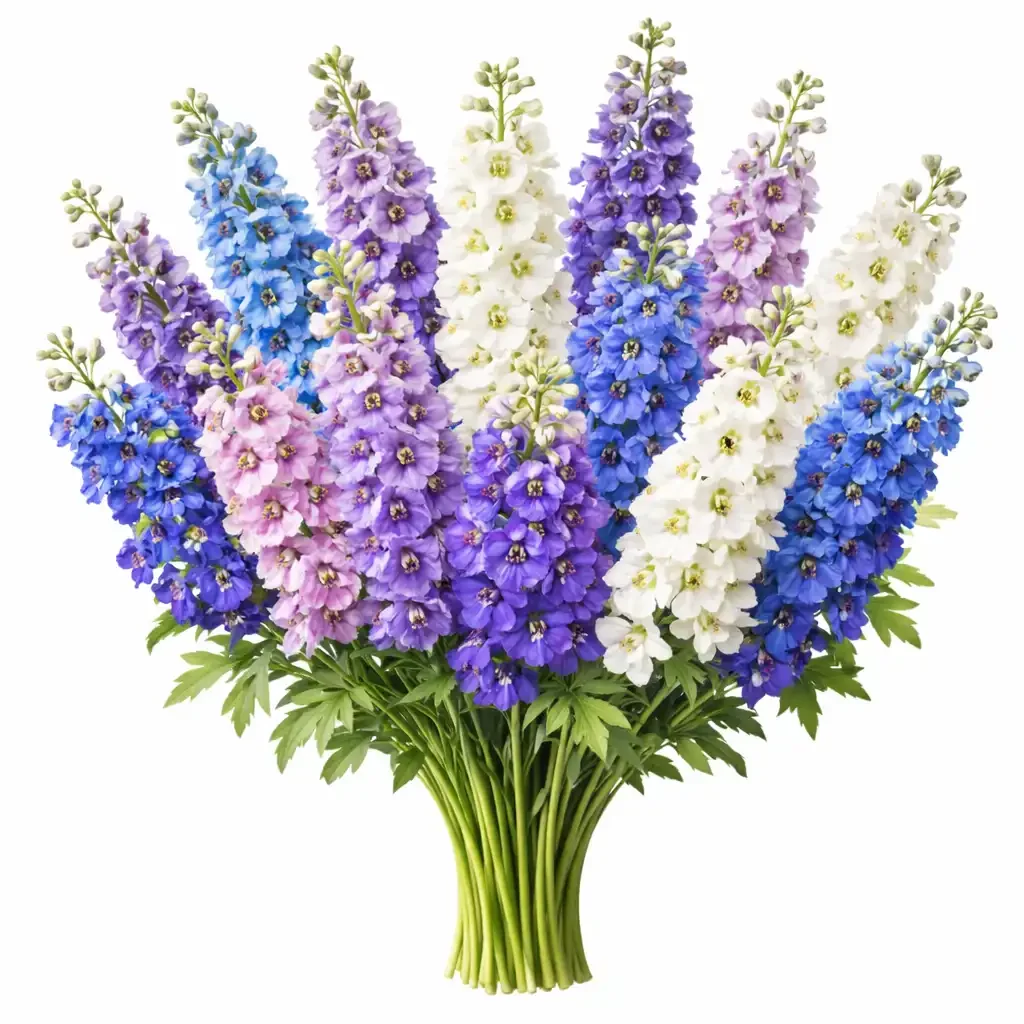
Quick Overview
Common Name: Delphinium, Larkspur, Candle Larkspur
Scientific Name: Delphinium elatum, Delphinium x belladonna, Delphinium x elatum hybrids
Plant Type: Perennial
USDA Zones: 3 to 7
Sun Requirement: Full Sun
Soil Type: Well-drained, rich, deeply cultivated
Bloom Season: Early Summer, with second flush in Late Summer to Fall
Height: 36 to 72 inches depending on variety
Pollinator Friendly: Yes
Edible: No, all parts are toxic if ingested
Why Grow Delphiniums on a Homestead
Delphiniums are among the most majestic and commercially sought-after cut flowers available to homestead growers. Their tall, densely packed spikes of large, ruffled florets in the most extraordinary range of true blues available from any commonly cultivated garden plant, spanning the palest sky blue through rich mid-blue, deep cobalt, intense violet-blue, and deep purple, create a vertical drama and a color intensity that is genuinely irreplaceable in the late spring and early summer cut flower market. In the professional floral industry Delphiniums are considered one of the most important and most commercially powerful tall vertical accent flowers available, providing the kind of bold, majestic height and the rare genuine blue color that florists and wedding designers actively seek and that no other commonly grown cut flower can fully replicate.
For homestead growers in cold winter climates, Delphiniums represent one of the most strategically exciting and commercially rewarding specialty perennial cut flower investments available. They are plants that demand cold winters to perform at their best, making them ideally suited to USDA zones 3 to 7 where their performance is exceptional and where growers have a genuine production advantage over warmer-climate competitors. Their brief, spectacular blooming season in early summer aligns precisely with the peak spring wedding season when the demand for tall, blue, dramatic vertical cut flowers is highest. And their rarity as a locally produced cut flower, despite their extraordinary commercial value, creates a market positioning with essentially no local competition at most farmers markets and in most local florist supply chains.
Here is why Delphiniums deserve a prominent spot on your homestead in appropriate climates:
They provide the most commercially important and genuinely rare true blue color available from any tall summer cut flower. True blue is one of the rarest and most commercially valuable colors in the cut flower world. Delphiniums deliver it in the most dramatic and visually impressive form available, on tall, densely packed spikes reaching 48 to 72 inches that create the most powerful blue statement available from any summer perennial.
They are the defining vertical accent flower of the most commercially active late spring and early summer wedding season. The peak Delphinium blooming period in early summer coincides precisely with the most commercially active period of the spring and early summer wedding market. Wedding florists who work with blue, lavender, and cool palette designs consistently seek out and pay premium prices for quality Delphinium stems.
Cold winter climates provide a genuine production advantage. Delphiniums perform at their absolute best in climates with cold winters and cool summers within USDA zones 3 to 7. Growers in these climates have a genuine and significant production advantage over warm-climate competitors for whom growing Delphiniums reliably is genuinely difficult.
They are essentially unavailable from local sources in most markets. Despite their extraordinary commercial value, Delphiniums are rarely grown as dedicated cut flower crops by homestead operations. Being a reliable local source creates a premium market position with essentially no local competition that commands the highest per-stem prices available from any tall summer vertical accent flower.
A second flush of blooms provides additional income in late summer and fall. With appropriate management including cutting back after the first bloom, Delphiniums produce a second flush of flowering spikes in late summer and early fall, effectively doubling the commercial harvest from a single established planting within a single growing season.
Growing Conditions
Sunlight
Delphiniums require full sun to perform their best. They need at least 6 hours of direct sunlight per day for the strongest stems, most densely packed spikes, and the most vivid flower colors. In partial shade stems become weak and lean, spikes are less densely packed, and the vivid blue colors become less intense. For cut flower production with the tallest, strongest, most commercially valuable spikes full sun is essential. In the hottest climates at the warm edge of their range, some afternoon shade can reduce heat stress and improve the quality of the second bloom flush in late summer.
Soil
Delphiniums are heavier feeders than most other perennial cut flowers and perform best in deeply cultivated, rich, well-drained soil. Prepare Delphinium beds thoroughly before planting by incorporating generous amounts of compost or well-rotted manure to a depth of at least 18 inches. Good drainage is critical as Delphiniums do not tolerate waterlogged conditions and are very susceptible to the crown rot that kills plants in poorly drained soil. Soil pH between 6.0 and 7.0 is ideal. The investment in thorough soil preparation before planting pays significant dividends throughout the productive life of the planting.
Water
Delphiniums need consistent, generous watering throughout their growing and blooming season. Adequate moisture is particularly critical during the spike development phase when the plant is producing the tall stem and filling out the florets along the spike. Drought stress during this period causes shortened spikes with fewer and smaller florets that are less commercially valuable. Water deeply at the base of the plant two to three times per week during the growing season, more frequently during hot and dry conditions. Drip irrigation is ideal as it delivers water to the root zone without wetting the foliage which can promote the fungal diseases that are Delphinium's most serious disease challenges.
Temperature
Delphiniums are cool climate perennials that perform at their absolute best in climates with cold winters and cool to moderate summers within USDA zones 3 to 7. They require a period of winter cold to develop their characteristic vigor and bloom production. They perform best when daytime temperatures during the blooming period are consistently below 75 to 80 degrees Fahrenheit. In climates with hot summers they bloom early and quickly before summer heat shortens the season. In the warmest climates within USDA zones 8 and above reliable perennial Delphinium production becomes very challenging as both winter warmth and summer heat reduce the vigor and longevity that produce the most impressive commercial stems.
Planting Guide
Delphiniums can be started from seed, planted from nursery transplants, or established from divisions. For the fastest path to commercially valuable premium-quality stems, named variety nursery transplants from specialist growers are strongly recommended.
Step 1: Choose a planting location with full sun, excellent drainage, and rich, deeply cultivated soil. This is the most critical planting decision. A location in full sun with good drainage and deep soil preparation provides the foundation for the vigorous growth that produces the most impressive commercial spikes.
Step 2: Prepare the planting bed thoroughly. Dig to a depth of at least 18 to 24 inches and incorporate generous amounts of compost, well-rotted manure, and a balanced fertilizer. This intensive soil preparation is one of the most important investments in long-term Delphinium productivity.
Step 3: Plant nursery transplants in early to mid spring as soon as the soil can be worked and frost danger has significantly decreased. Early spring planting gives the longest possible establishment period before the first blooming season. In mild climates, fall planting allows root establishment over winter for the strongest possible first bloom performance.
Step 4: Plant the crown at the same depth it was growing in the container. Do not plant too deeply as burying the crown increases the risk of crown rot. The crown should be at or just slightly below the soil surface.
Step 5: Space plants 18 to 24 inches apart for cut flower production. Proper spacing provides adequate air circulation around the large plants and prevents the overcrowding that increases disease pressure.
Step 6: Install support stakes or horizontal netting immediately at planting time before stems emerge. Delphinium stems are extremely top-heavy when the tall spikes are fully developed and will fall over in any significant wind or rain without adequate support. Staking at planting prevents damage to developing stems that occurs when staking is delayed.
Seed vs Transplant: Named variety nursery transplants are strongly recommended for commercial cut flower production. Growing Delphiniums from seed takes two years to produce blooming plants of consistent quality and named variety seed is often difficult to source. Purchasing named variety transplants from specialist perennial nurseries provides the fastest and most reliable path to premium commercial production.
Spacing: 18 to 24 inches apart for cut flower production.
Planting Season: Early spring in most climates. Fall planting in mild climates.
Maintenance
Staking
Staking is the single most important ongoing maintenance practice for productive Delphinium cut flower production. The tall, densely flowered spikes reaching 48 to 72 inches are extremely top-heavy and will fall over in any significant wind or rain without support. Install bamboo stakes, wooden stakes, or horizontal support netting at the time of planting or early in the growing season before stems reach 12 inches tall. Individual bamboo stakes for each main stem, secured with soft ties as stems develop, give the most reliable support for commercial cut flower production. Do not attempt to stake after stems are already tall as this damages the developing spikes.
Cutting Back for Second Flush
After the first bloom flush is complete and the main spikes have been harvested, cutting the entire plant back to approximately 8 to 12 inches above the ground encourages the development of secondary stems that produce a second flush of flowers in late summer and early fall. This second flush typically produces somewhat shorter spikes than the first flush but still provides commercially valuable cut flower material. Apply a balanced fertilizer and ensure adequate moisture after cutting back to support the vigorous new growth needed for good second-flush production.
Dividing
Divide Delphinium clumps every two to three years in early spring when new growth is just emerging. Regular division maintains plant vigor and prevents the center die-out that develops in overcrowded clumps. Each divided section should have two to four healthy eyes with good root systems. Replant immediately at the correct depth and spacing. Division also provides free new plants to expand the planting.
Fertilizing
Delphiniums are heavy feeders that require regular fertilization throughout their growing and blooming season. Apply a balanced fertilizer at planting and follow with regular applications every three to four weeks throughout the season. A fertilizer program that includes adequate potassium and calcium supports the strong stem development critical for cut flower quality. Avoid excessive nitrogen which promotes lush, soft growth that is more susceptible to disease. After cutting back for the second flush, a fresh application of balanced fertilizer supports the vigorous growth needed for good second-flush production.
Pest Control
Slugs and snails are the most common pests of Delphiniums, particularly damaging to young emerging shoots in spring. Use iron phosphate slug bait around plants in early spring as new growth emerges. Aphids can appear on stems and developing spikes and should be treated promptly with a strong spray of water or neem oil. Cyclamen mites can cause distorted, stunted growth in developing spikes. Remove and destroy affected material immediately.
Disease Prevention
Powdery mildew is the most common disease problem with Delphiniums, appearing as a white powdery coating on foliage and sometimes stems in late summer. Choose mildew-resistant varieties, space plants properly at 18 to 24 inches for good air circulation, water only at the base, and apply preventive organic fungicide sprays in climates where mildew is consistently problematic. Crown rot caused by poor drainage or excessive moisture at the crown is the most serious disease threat. Prevention through excellent drainage and keeping the crown area free of accumulated soil and mulch is the only effective management strategy.
Harvesting
When to Harvest
Harvest Delphinium spikes when approximately one quarter to one third of the florets on the spike are open, starting from the bottom of the spike upward. The remaining florets continue to open progressively after cutting, giving the stem a long and evolving display in the vase. Harvesting when too few florets are open results in spikes that may not fully develop after cutting. Harvesting when most florets are already open significantly shortens remaining vase life. Harvest in the early morning when stems are fully hydrated and temperatures are cool. Note that all parts of Delphiniums are toxic. Always wear gloves when harvesting and wash hands thoroughly afterward.
How to Cut
Use clean, sharp pruners. Cut spikes as long as possible at the base of the stem near the crown. Remove any leaves from the lower two thirds of the stem immediately after cutting. Some growers make a long split cut up through the base of the thick, hollow stem for two to three inches to improve water uptake. Place cut spikes immediately into deep cool water with a commercial floral preservative.
Conditioning
After cutting, place spikes in deep cool water in a cool, dark location for several hours or overnight. Delphinium spikes are geotropic and their tips will curve upward if stems are stored or transported horizontally. Always store and transport Delphiniums vertically to prevent tip curving that reduces their commercial value.
How Often to Harvest
Harvest the main central spikes as they reach the correct stage, then harvest the lateral spike production that follows. With a well-managed second flush from cutting back after the first bloom period, two productive harvest windows per season are achievable from established perennial plantings.
Vase Life
Delphiniums typically last 7 to 10 days as fresh cut flowers with proper conditioning. Strip all foliage below the waterline, recut stems at an angle, and place in fresh water with a floral preservative. Change water every two to three days and recut stems to maximize longevity. Keep arrangements in cool locations away from heat as warm temperatures significantly shorten vase life.
Uses on a Homestead
Cut Flower Use
Delphiniums are grown primarily as dramatic tall vertical accent flowers in mixed late spring and early summer bouquets and arrangements. Their towering spikes of densely packed blue, purple, and white florets create a bold, majestic quality that is genuinely impossible to replicate with any other summer cut flower. They pair magnificently with roses, peonies, sweet peas, and other romantic late spring flowers in grand arrangements that capture the lush, opulent beauty of the early summer garden at its most spectacular. Even a single Delphinium spike transforms the scale and visual impact of any arrangement it appears in.
Wedding and Event Flowers
Delphiniums are among the most sought-after specialty flowers for late spring and early summer wedding and event floristry. Their extraordinary height, dense spike form, and the rare genuine blue color that defines their most commercially important varieties make them genuinely irreplaceable for wedding florists working with blue, lavender, and cool color palettes. Large ceremony installations, altar arrangements, and event backdrops featuring tall Delphinium spikes create some of the most visually spectacular and memorable wedding floral displays available.
Farmers Market
Delphiniums are one of the most visually commanding and immediately attention-generating specialty flowers at any late spring or early summer farmers market. Their towering blue spikes create an immediate, powerful display presence that draws customers from across the market. The combination of exceptional height, extraordinary blue color, and genuine local rarity generates immediate customer enthusiasm and strong purchasing urgency during their brief and brilliant blooming season.
Pollinator Support
Delphiniums attract bumblebees and other long-tongued pollinators that are specifically adapted to access the nectar in the spurred flowers. They provide an important early summer nectar source for pollinator populations at the beginning of the main summer foraging season.
Can You Make Money With Delphiniums
Yes, Delphiniums are one of the most financially rewarding specialty perennial cut flower crops available to homestead growers in appropriate cold winter climates. Their combination of genuine market rarity, extraordinary visual impact, rare blue color, alignment with the peak wedding season, and the cold winter climate advantage that most homestead growers in USDA zones 3 to 7 possess creates a commercial profile that is genuinely exceptional.
Genuine market rarity creates essentially uncontested premium positioning. Despite their extraordinary commercial value, Delphiniums are rarely grown as dedicated cut flower crops by homestead operations. Being a reliable local source creates a premium market position with essentially no local competition that supports the highest per-stem prices available from any tall summer vertical accent flower.
Cold climate production advantage is a genuine competitive moat. The cold winters that most homestead growers in USDA zones 3 to 7 view as a production limitation are actually a significant competitive advantage for Delphiniums. The cold winter requirement that makes Delphiniums difficult to grow in warm climates means that most competing specialty cut flower operations in warmer regions simply cannot produce them reliably.
Peak wedding season timing maximizes commercial value. Delphiniums bloom precisely when the spring and early summer wedding season is most active. This timing creates a natural alignment with the most commercially valuable period of the annual cut flower calendar.
Second flush production effectively doubles seasonal yield. The two bloom flushes achievable with appropriate management provide significantly more total stems per established plant per season than single-flush perennials, maximizing the financial return from the permanent planting.
Farmers Market: Fresh Delphinium spikes sell for 3 to 6 dollars per individual stem given their extraordinary height and dramatic visual impact. Mixed bundles of three to five spikes sell for 15 to 30 dollars depending on spike size and color intensity.
Florists and Wedding Designers: Delphiniums are among the most sought-after and highest-priced specialty vertical accent flowers for spring and early summer wedding work. Wholesale pricing reflects the premium specialty positioning of quality locally grown Delphiniums. Establishing supply relationships with local wedding florists is the most financially rewarding sales channel for homestead Delphinium production.
CSA Flower Subscriptions: A single Delphinium spike in a late spring or early summer subscription box creates an immediately dramatic and visually extraordinary experience for subscribers. Its inclusion signals premium specialty quality and justifies premium subscription pricing.
Companion Plants
Delphiniums grow beautifully alongside other late spring and early summer flowering plants with complementary bloom times and growing requirements.
Peonies: Both bloom in late spring and early summer and complement each other magnificently in grand mixed arrangements where Delphiniums provide towering vertical blue drama and peonies provide lush, opulent focal blooms.
Roses: Both bloom in late spring and early summer and the tall, dramatic spikes of Delphiniums create a beautiful structural contrast with the refined, round form of rose blooms in mixed arrangements.
Sweet Peas: Both are fragrant cool to warm season flowers that bloom at overlapping times and complement each other beautifully in romantic mixed bouquets where Delphiniums provide tall blue vertical drama and sweet peas provide fragrant delicacy.
Foxgloves: Both are tall, dramatic vertical-spiked flowers that bloom at overlapping times in late spring and early summer and complement each other magnificently in large, wild, romantic arrangements where their contrasting blue and pink or purple tones create a spectacular color dialogue.
Allium: Both produce tall, vertical flowering structures in late spring and early summer and complement each other beautifully in mixed arrangements where the spherical form of allium contrasts with the elongated dense spikes of Delphiniums.
Iris: Both bloom in late spring and early summer in complementary color ranges including blues, purples, and whites that pair naturally in mixed seasonal arrangements.
Common Problems
Falling Over
The most common production frustration with Delphiniums. The tall, densely flowered spikes are extremely top-heavy and will fall over in wind and rain without adequate support. Install individual bamboo stakes for each main stem at planting or early in the growing season before stems reach 12 inches tall. Never delay staking as stems become increasingly difficult to stake without damage as they develop. In exposed locations a windbreak or sheltered planting position significantly reduces the staking challenge.
Powdery Mildew
The most common disease problem with Delphiniums. White powdery coating appears on foliage particularly in late summer after the first bloom flush when plants are somewhat stressed. Choose mildew-resistant varieties, space plants properly for air circulation, water only at the base, and apply preventive organic fungicide in climates where mildew is consistently problematic. The second bloom flush production is particularly affected by mildew pressure so managing it effectively is essential for maximizing the value of the second harvest.
Crown Rot
The most serious and most commonly fatal disease of Delphiniums. Caused by poor drainage, excessive moisture at the crown, or soil accumulating against the crown. Prevention through excellent drainage, correct planting depth with the crown at or just at soil level, keeping mulch away from the crown, and avoiding overwatering is the only effective management strategy. Once crown rot is established the plant typically cannot be saved.
Slugs and Snails
The most common pest problem, particularly damaging to young emerging shoots in spring. The hollow stems of young Delphinium shoots are a favorite target. Apply iron phosphate slug bait around plants in early spring as new growth emerges and continue through the establishment period. Check plants regularly in the early morning for slug activity.
Failure to Rebloom After Cutting Back
Can occur when plants are cut back too late in the season leaving insufficient time for the second flush to develop before cold weather, when plants are too stressed or weakened from the first bloom to develop vigorous second-flush growth, or when inadequate fertilizing and watering follow the cutback. Cut back promptly after the first bloom flush is complete, apply fresh fertilizer immediately after cutting back, and maintain consistent moisture to support the vigorous new growth needed for good second-flush production.
Varieties to Consider
Pacific Giant Hybrids
The most widely grown and most commercially important Delphinium group for cut flower production. Tall, dense spikes reaching 48 to 72 inches with large, double and semi-double florets in a wide range of colors.
Astolat: Deep rose-pink to lavender-pink blooms with dark bee center on tall, strong spikes. One of the most commercially important non-blue Delphinium varieties for adding warm tones to the typically cool Delphinium palette.
Black Knight: Deep, intense violet-purple blooms with a distinctive dark bee center on very tall, strong spikes. Commands premium prices for its dramatic, rich color. Very popular with florists working with deep, jewel-toned color palettes.
Blue Bird: Medium blue blooms with white bee center on tall, strong spikes. One of the most widely grown and commercially reliable blue Delphinium varieties. The white bee center provides a clean, fresh contrast to the medium blue petals.
Blue Jay: Intense mid-blue to bright blue blooms with dark bee on very tall, strong spikes. One of the most intensely colored mid-blue varieties available. Very popular for its vivid color intensity.
Camelliard: Pale lavender to soft lilac blooms with white bee center. Very popular with florists and wedding designers working with soft, romantic lavender and blush color palettes.
Galahad: Pure white blooms with white bee on tall, strong spikes. One of the most widely grown white Delphinium varieties for wedding work and for adding clean white vertical accent to mixed arrangements.
Guinevere: Soft lavender-pink blooms with white bee on tall, strong spikes. Very popular with wedding florists for its soft, romantic color that bridges the blue and pink wedding palettes.
King Arthur: Deep royal purple to violet-purple blooms with white bee on very tall, strong spikes. One of the most dramatic and commercially striking Delphinium varieties available. Commands premium prices for its exceptional color intensity.
Summer Skies: Pale sky blue to baby blue blooms with white bee on tall spikes. One of the most delicate and romantic Delphinium colors available. Very popular with florists for its soft, airy blue tone.
Belladonna Group
A distinct Delphinium hybrid group producing more loosely branched stems with smaller individual florets that provide a lighter, more informal quality than the tall Pacific Giants. Hardy in USDA zones 3 to 7.
Delphinium x belladonna Bellamosum: Deep gentian blue blooms on branching stems. More informal and loose in appearance than Pacific Giants. Very popular with florists seeking a lighter, more naturalistic blue accent than the formal tall spikes provide.
Delphinium x belladonna Cliveden Beauty: Soft sky blue blooms on branching stems. One of the most widely grown belladonna varieties for cut flower production. Reliable and productive.
Final Thoughts
Delphiniums are one of the most genuinely magnificent and commercially extraordinary specialty cut flowers that cold climate homestead growers can produce. Their towering blue spikes, dramatic vertical impact, and the rare genuine blue color that is among the most commercially sought-after and difficult-to-source qualities in the entire summer cut flower market create a specialty product with a premium positioning that is genuinely unmatched among tall summer perennial cut flowers. The specific cultural demands that make Delphiniums challenging to grow, the cold winter requirement, the need for rich, deeply prepared soil, consistent moisture, and reliable staking support, are the same demands that limit competition and create the market scarcity that supports premium pricing. Cold climate homestead growers who master these requirements and develop the florist and wedding market relationships that value Delphinium's unique qualities will find that these magnificent blue giants are among the most financially rewarding and personally satisfying specialty cut flower investments their homestead can make. Prepare the soil deeply and generously, stake early and reliably, water consistently, cut back promptly after the first flush for a second harvest, and Delphiniums will reward your homestead with some of the most majestic, most commercially powerful, and most genuinely sought-after tall stems available from any summer perennial planting.
FAQ
Why do Delphiniums not perform well in warm climates? Delphiniums are cool climate perennials that evolved in mountainous environments with cold winters and cool, moderate summers. They require a significant period of winter cold to develop the strong, vigorous root systems that support the most impressive spike production, and they bloom best when daytime temperatures during the blooming period are consistently below 75 to 80 degrees Fahrenheit. In warm winter climates, the lack of winter chilling reduces the vigor that produces impressive commercial spikes. In hot summer climates, high temperatures cause the plants to bloom early and briefly, produce shorter spikes with fewer florets, and then decline rapidly before the summer heat. The warm climate challenges that make Delphiniums difficult for growers in USDA zones 8 and above are the same conditions that create the cold climate production advantage for homestead growers in USDA zones 3 to 7.
Are Delphiniums toxic and how should I handle them safely? Yes, all parts of Delphiniums contain alkaloids including delphinine and other toxic compounds that are poisonous to humans and animals if ingested. The toxicity is most concentrated in the seeds and young plant tissue. When handling Delphiniums for harvesting and market preparation, wear gloves and avoid touching your mouth or eyes. Wash hands thoroughly after handling. Inform customers of the toxicity when selling Delphinium stems, particularly for customers with young children or pets. The toxicity is a handling precaution rather than a contact hazard and Delphiniums are widely and safely grown and sold as cut flowers throughout the world with basic precautions.
How do I get a reliable second flush of blooms? The second flush requires a prompt and properly executed cutback immediately after the first bloom flush is complete. Cut all spent spikes and most foliage back to approximately 8 to 12 inches above the ground as soon as the first flush has finished, without delay. Apply a fresh application of balanced fertilizer immediately after cutting back. Ensure consistent, generous watering to support the vigorous new growth needed for good second-flush production. The second flush typically begins blooming six to eight weeks after the cutback in most climates. Plants that are cut back too late in the season or that receive insufficient fertilization and moisture after cutback produce a weak or absent second flush.
What causes Delphinium stems to curve after cutting? Delphiniums are geotropic, meaning their growing tips and stem tips naturally orient toward gravity and curve upward when stems are placed horizontally. When Delphinium spikes are cut and stored or transported horizontally, the tips curve upward making the stems appear crooked and significantly reducing their market value. Always store and transport cut Delphinium spikes vertically in buckets of water. Conditioning spikes vertically in deep water in a cool location overnight before sale helps maintain their natural upright form. Never lay Delphinium stems horizontally during any stage of the post-harvest process.